Displaying items by tag: Robert Taylor
Saccharine
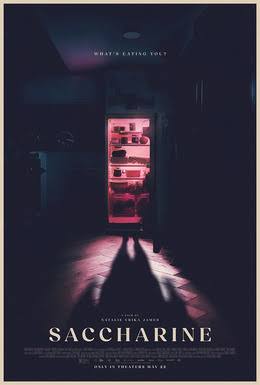
SACCHARINE
Australia, 2026, 113 minutes, Colour.
Midori Francis, Danielle Macdonald, Madeleine Madden, Showko Showfukutei, Robert Taylor.
Directed by Natalie Erika James.
Saccharine is an adjective used to describe something that is overly or sickishly sweet. It typically refers to flavors, but it is most often used to criticize things like a person's demeanor, a voice, or a story as being excessively sentimental, cloying, or insincere. (Google definition)
all
The first 30 minutes of this drama which combines realistic themes with horror hallucinations and ghostly presences… treats its theme of eating problems and consequences in grim but realistic style. Hana is a young medical student, involved with a friendly group of fellow students in autopsy training. But, at home, she keeps on gorging, preoccupied, but attracted by Alanya who runs a 12 week exercise weight reduction course. And then joins up and there are many scenes of her dedication to the exercise and receiving affirmation. And then she meets a friend from school, overweight in the past, but recommending a course of tablets which reduces weight abnormally quickly.
So, on the level of realism, the film is a serious look at body image problems for women, weight and loss, the role of exercise, the role of medication, especially suspicious tablets, the repercussions on the psyche of the overweight woman, the pressure of her caring and fussy slim Asian mother, the background of her obese Australian father.
But the film does not stay on the realistic level. It uses elements of horror, especially body horror (remembering the impact of the recent The Substance), the presence of the obese dead woman who has donated her body for study purposes, but more and more mysteriously present to Hana, trying to persuade her best friend to see this presence, nightmares with the obese body descending on her…
And a lot of emotional consequences, the ghost pressing her to eat more and more, the strange tablets and their contents, rapid weight loss, interactions with the manager of the course, sexual attraction, psychological distortions, some of the sequences not for the cinema fainthearted.
This is very much a female-oriented film, the writer-director and producers and many of the technical staff female. And while the title is saccharine and its overtones of sickly sweet (as is so much of the food that Hana devours), it is the theme of devouring that pervades all of Hana’s life – and a grimly graphic devouring conclusion to the film.
- The meaning and application of the title? Sickly sweet? The surface personality of Hana? Food, confectionery, being sickly sweet?
- An Australian film, the success of small-budget Australian horror films in the 2020s? Sense of menace, a visual horror?
- Themes of body-horror, films of the 2020s?
- The Australian setting, a universal setting, universal themes?
- Preoccupation with health, body image, weight and weight loss, hunger and devouring food, physical implications, mental implications?
- The opening realism for Hana, her body, weight, self-consciousness, eating? Her ethnic heritage, her thin Asian mother, continually fussing and cleaning, the contrast with her obese father, the audience not seeing him till later?
- Hana, living alone, medical student, the range of students, her friends, the laboratory, the autopsies, close-ups of the process?
- Josie has her friend, Josie’s attitude, conversations, advice, concern?
- The encounter with Alanya, attractive, persuasive, the 12 weeks course, Alanaya and her body image, Hana agreeing, the exercise regime, measuring her weight on the chart, the exertion, losing some weight? The attraction to Alanya?
- The encounter with a friend from school, not immediately recognising her, the photo of her past, weight, the new image, discussion about the pills, giving her the pills, taunting, the decision to take one, the range of pills, a drastic loss of weight, charting it, and the contrast with her eating even more, greed, at the shops, taking home the food, the confectionery? Her mother’s arrival and criticisms? The mother leaving?
- Taking the the autopsy, crashing and making them pools of ash by herself?
- The sense of another presence, the transition from the film’s realism to horror tropes? Seeing the reflection of the obese ghost in the back of spoons? Mirrors?
- The obese woman, donation of her body for research, vast size, the close-ups of her corpse, the autopsy? Hana going to see the sister, the encouragement, good comments about the dead woman?
- Trying to get Josie to have a sense of the ghostly presence, failing? The nightmare, the vast corpse descending on her?
- Hana upset, losing weight, but the mystery of how? The visit to her father, antagonism? Nightmares? The sense of the ghostly presence? Devouring more and more food?
- The confrontation with Alanya, the reconciliation, the sexual encounter and the consequences?
- Josie helping, the scenes of the autopsy, the meals together, Hana at home, more and more food?
- The graphic conclusion, the confrontation with Alanya, Hana devouring her?
Kid Snow
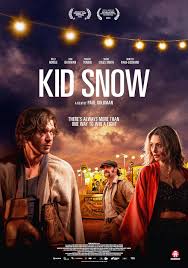
KID SNOW
Australia, 2024, 127 minutes, Colour.
Billy Howle, Tom Bateman, Phoebe Tonkin, Mark Coles Smith, Hunter Page-Lochard, Nathan Philips, Jake La Torre, Robert Taylor, Tristan Gorey, Vito de Francesco, Tasma Walton.
Directed by Paul Goldman.
Once upon a time in Australia, there were travelling fairs, including a boxing troupe, with a boxing tent, featuring boxing stars ready to take on the locals as part of the show. They were popular during World War I and continued. In fact, the story opens in 1961, the main action taking place in 1971. The fairs were very popular, beginning at the time of the introduction of radio, before television, certainly long before social media. In fact, in one sequence here, a boxing bout is watched on television, black-and-white, even in 1971 before the coming of colour TV.
A reviewers noted that this is the kind of film we used to make in Australia. It is a story of ordinary people, very ordinary people, often referred to in the past as “battlers”, and not just because of the boxing, but of the struggles in making a living. The characters here all have these stories, Irish migration, fixed fights and betting, returning from Vietnam, single parents, dancing in Kings Cross nightclubs, aboriginals involved in the boxing troupes, sometimes hand-to-mouth subsistence…
In 1961, we are introduced to two boxing brothers, Rory and Kid. Their father manages them, bets, tough fights, setups, knockouts, Kid knocked down, giving way to his brother – drinking, driving, a disastrous car crash.
1971, Rory, with a limp from his leg injured in the crash, runs the touring fair, Kid being the featured boxer, the backup from some of the aborigines travelling with them. British actor, Billy Howle, plays Kid, looking unkempt, often bewildered, his brother dominating him. British actor Tom Bateman plays Rory. Mark Coles Smith and Hunter Page-Lochard feature in the entourage. Haunting them is the memory of the defeat by the national champion, Hammer (Tristan Gorey) who runs a boxing training centre.
An American journalist, played by Robert Taylor, from Life Magazine is following Hammer, interviewing Rory and Kid, trying to get a story about the boxing world in Australia, such travelling troupes not part of the American boxing scene.
A further complication is Sunny (Phoebe Tonkin), battling with her young son, Darcy, her husband has been wounded in Vietnam, time in jail, slyly picking pockets of the boxing audience, confronted by Rory, becoming a dancer with her own tent, able to survive with her son, a strange relationship with Kid who become something of a babysitter for the boy, creating a bond.
In the background the entrepreneurs are trying to organise a bout between Kid and Hammer (who hates Kid), a set up, betting and profit, Rory indebted to these entrepreneurs, forcing Kid to train.
Which means there are a number of boxing sequences, especially that final fight. However, a lot of the film focuses on personal struggles, the two brothers, resentments, yet brotherly feelings, Sunny and her situation and background, concern for Darcy, the interventions of the American journalist, a truth confrontation between the two brothers.
We know where the story is going but, satisfyingly, it is not exactly what we might have expected and the final, perhaps inevitable, visualising of the meeting leaves the audience satisfied.
- The title and the focus on Kid? In the context of his family? In the context of boxing and the troupe?
- An Australian story, the travelling boxing troupes, the fairs and the fairgrounds, the small country towns, the tents, the shows, boxing, the dancing? The audiences? The tradition from the First World War years to the 1970s?
- The West Australian settings, the small towns, the range of the countryside, deserts, farmland, the coastal sequences? Atmosphere? Musical score?
- The opening fight, the introduction to Kid, Rory, to their father? To Hammer and his trainer, Frank? The situation of the fight, the competition, the bets, the arrangements for knockouts? Kid, his fight, falling? Rory and the arrangement to win? Hammer and his dominance?
- The aftermath, the drive, Kid and his drinking, the arguments, the oncoming truck, the accident? The father’s death? Rory and his leg injury?
- 1971, Rory and the setting up of the travelling fair, the visuals of the tents, exteriors and interiors? The dance tent, the eyes, the lascivious sketches of the women?
- The entourage, Rory as the boss, unable to fight? Kid, the fighter, the locals and taking them on, the bets? The other members of the group, the aboriginal men and their presence, Bill and his being a follower? His later taking Kid’s place in being brutalised by Kid’s antagonists? The atmosphere, their characters, performances, the crowds?
- Sunny, coming into the tent, Rory watching her, picking the pockets, his confronting her, her concern about Darcy in the car? The interactions, the job, her dancing, the money, costumes, the tent and its style, the increasing audiences, their responses to her? Her suspicions of Kid, mellowing, letting him be babysitting for Darcy? The growing attraction? Darcy and his wariness, memories of father, the father and his Vietnam experience? Sunny, her explanations of herself, growing up, jail, dancing at Kings Cross, Betty teaching her? With the bigger audiences, better dresses, more elaborate performances, popularity? Rory and his approach, her resisting, Darcy attacking, her being sent away? Going to the coast, meeting Betty again, the ice cream parlour for the tourists?
- The journalist from Life Magazine, visiting Australia, comparisons with the US, his interviewing Hammer, Hammer at his gym? Interviewing Rory? Interviewing Kid? Rory’s attack on him, typing the story, present at the finale?
- Darcy taking the money, kid in pursuit, Darcy not knowing the money was Kid’s? Returning it?
- Rory, the entrepreneurs, the setting up of the fight against Hammer, Rory and his memories, Kid and his abilities, fixing the match but not telling Kid? Kid the training, the aboriginal trainers and his running, exercise? And continuing with the bouts with the locals?
- The buildup to the confrontation between Kid and Rory, the accident, Rory and his limp, the fixing of matches, treatment of Sunny? Kid leaving, driving, finding Sunny and Darcy, reuniting? The prospect of the fight?
- The decision to fight, going into training, the return, his visit to the entrepreneurs, the bet to win that he could last three rounds? The visuals of the fight, hard, collapsing, lasting the three rounds? Going to the fourth, throwing in the towel, the fans, Rory’s reaction? And the entrepreneur making money, money for Kid?
- The reconciliation with Rory, his going to find Sunny and Darcy, the ice cream parlour, and the way that the final sequence was handled, expected but controlled?
Just a Farmer
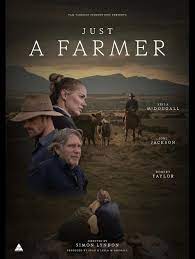
JUST A FARMER
Australia, 2023, 104 minutes, Colour.
Leila McDougall, Susan Prior, Joel Jackson, Robert Taylor, Oliver Overton, Vivian McDougall, Damian Walshe-Howlin, Trevor Jamieson, Louise Siversen.
Directed by Simon Lyndon.
There is something sad in hearing the dismissive phrase about someone, “Just a…”. This is a small but effective Australian film focusing on rural life and issues of mental health. In fact, at the beginning and end of the film, there is the urging for anyone anxious to contact Lifeline or Beyond Blue.
The power behind the film is Leila McDougall, a teacher, a farmer’s wife, with her husband establishing Rule Live in 2014, concerned about mental health and farmers, with the alarming statistic of the number of farmers who do commit suicide each year, interviewing many people and deciding to write the screenplay. She plays the central character, Alison, and much of the filming was done at the family property in Tatyoon, Victoria (including the sequence in the actual local Uniting Church), and many of the locals acting in the film, and local farm equipment used throughout.
Joel Jackson plays Alec, farmer, initial signs of some depression, working with his alcoholic father, Owen, veteran actor Robert Taylor, memories of his growing up, care for his wife, 12-year-old son and little daughter. Soon into the action film, he kills himself.
The screenplay takes up the themes of stoic continuing with life almost as if the tragedy had not happened, Alison persevering with the tasks around the farm. The children are sad, somewhat withdrawn, the boy lashing out during a local football match. Owen continues his drinking at the pub, sad memories of his dead wife in the past, suffering a stroke.
Another theme, as you would expect and hope, is that of how whoever is suffering can unburden themselves, talk to someone, talk to someone who is empathetic, Alison relying on her sister who has come to help, finding a listening ear in the woman who runs the local pub. And, the importance of the mother talking with her children, listening to her children, enabling them to express their sorrow and puzzle.
This is a topical film, made with insight and compassion, a contribution to awareness of Australian mental health.
- The title, the tone, merely a farmer?
- The initial warnings concerning Lifeline and Beyond Blue? Repeated at the end? The concern about mental health, farmers, suicides, consequences for families?
- The setting, the farm, the actual farm and farmhands performing, the actual machinery? The vistas of the countryside, the cattle, the sheep, the shearing? Fences, rescuing sheep? The sheepdogs? Barns, equipment, need for repairs? Authentic atmosphere? Musical score?
- The opening comment by the son, with his parents, the happiest days of his life, parents on horses, the roundup of the cattle, the boy and his sister driving, playing together?
- The portrait of the family, Alec, working hard, the property, his father and drinking, bringing him home from the pub, their talks, Alec less sociable, his worries, his desk, taking medication? The buildup, sympathy, 20 minutes in and his hanging himself?
- Alison, love for her husband, the children, domestic scenes, talking with her sister, her father-in-law and his help on the farm, drinking? The search for her husband, finding him dead? The impact, stoic, keeping to herself, not talking with the children, continuing on with the work, daily life, with the farmhands, the discussion about repairs to the machinery, the neighbour, Oliver, borrowing his harvester? The sister’s arrival, the house in disarray, her cleaning it, cooking? The meals?
- The screenplay not immediately giving indications of Alex’s motives, the desk, the documents, his medication? His moods? The gossip at the football match, the sister confronting the women, Alice and confronting them? The sister asking Oliver, no affair?
- Owen, father to Alec, grandfather, hard work on the farm, his physical state, the pub, yarns and swearing, friends, Jackie managing the pub? Bringing him home, continually drinking the cans, concern about his heart? Quietly sitting, the image of his wife on the tree? The story of her heart attack? The later revelation of the truth, suicidal, the crash, the baby in the car? Owen and his stroke, hospital, Alison devoted to him? The return home, with the grandchildren, giving up the drink?
- Children, the young girl, drawing, playing, devotion? The boy, 12 years old, school, football, the fight and bullying during the match, morose, love for his father, no talking about his death, hard work on the farm?
- Alison, bonding with her sister, able to talk, the sister’s encouragement?
- Alison going to talk to Jackie, able to unburden herself, the puzzle of not talking, the importance of talking with someone sympathetic, therapy? Farmers and wary of therapy, the reference to “shrinks” by Owen? Alison facing up to it? Talking with her children, inviting them to talk about their experience, hurt, guilt?
- Realistic portrait of life on a farm, the actual farm, the local Uniting Church, the minister and his words? Stock, crops and hay, harvesting, weather, machinery, finance?
- In the final poetic words and reflection?
