Displaying items by tag: Peter Malone's Movie Reviews
Mountainhead
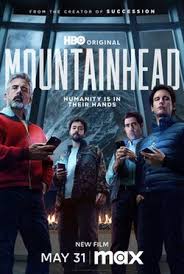
MOUNTAINHEAD
US, 2025, 108 minutes, Colour.
Steve Carell, Jason Schwartzman, Corey Michael Smith, Ramy Yousef.
Directed by Jesse Armstrong.
The aftermath of his worldwide success with the television series, Succession, writer and director, Jesse Armstrong, turned his attention to the world of big business, AI, political and social control, the media magnates and their attempts at controlling world events. The film was made in the atmosphere of the 2024 American election, the campaign by Donald Trump, the influence, financial and personal, of millionaire Elon Musk.
The overwhelming election of Trump, his stances, policies, the imposition of tariffs worldwide, ambiguous involvement in the war in Ukraine, the war in Gaza, certainly serve as a contemporary background in 2025 for the reception of this film, released on television.
Mountainhead is the name of a Utah resort, allusion to author and social commentator, Ayn Rand, and her book The Fountainhead, where several millionaires meet, discuss their projects, ambitions, rivalries, takeovers, the role of AI, implications for government, their wealth, their ruthlessness.
Jason Schwartzman plays the least wealthy of the group, hosting the meeting. Rami Yousef plays the youngest, wealthy, but looked down on by the others, becoming the target of their murderous intentions. Corey Michael Smith is the wheeler-dealer, the wealthiest. Steve Carell is the oldest, ill, wanting to find some AI remedies, with a lot of experience and still manipulating.
The film is often dialogue-driven, audiences needing to be attentive to the details of the wheeling and dealing, and continually being challenged by the statements, stances, the implications of the behaviour of these billionaires.
- The title, the allusion to The Fountainhead and Ayn Rand? The location and implications?
- The work of Jesse Armstrong, Succession, political and business interests? Critique? Satire?
- The state of the world on the 2020s, the state of the US, the corporate world, business, enterprise, political connections, AI, consequences? Rule, control? What accountability?
- The US in the 2020s, the two troubled eras, tech magnates and their influence, the phenomenon of Elon Musk? The second Trump era? The repercussions for business, world politics, security?
- Audience response to the themes and issues, the characters, unlikeable, the nature of their characters, morality and lack of morality? Ambition, greed, power, rivalries, accountability amongst themselves, but no accountability?
- The weekend retreat, the luxury, Utah, the mountains, the range of the staff and advisers? The world situation, business, money in danger, AI, disinformation, interconnections between companies, consequences? Disrupting world order?
- The team, the nickname of The Brewsters, their common interests, liking and disliking each other, the interactions amongst themselves, millionaires, Souper as the least wealthy, the past, coming to the retreat, their purpose, rivalries and plots?
- The characters themselves? Souper, his age, experience, owning Mountainhead, his personal vanities, television programs and watching, exercise, the least wealthy? Ven, the richest, his companies, AI, ambitions, audience attention to the details of his company and deals or not? Jeff, the youngest, his AI, company and the consequences? The contrast with Randall Grant, his age, wealth, power and experience, cancer, his interest in healing, transhumanist cure? His influence on the others?
- The snowmobile, in the mountains, writing the amount of money on their chests with lipstick?
- The business interests, the chaos, their wheeler-dealing, each wanting control?
- The president on the phone, intrigue?
- The attitude towards Jeff, envy, greed, the decision to kill him, the chases, his hiding, the bungling of the attacks, the satirical details of their attempts, the satire on their ineptness?
- The finale, still wheeler-dealing, still intrigues, the consequences for each, going away and their future actions? And Souper staying in his mansion and watching the television?
- A parable/allegory for the contemporary world?
Mountain, The/ Fjallio
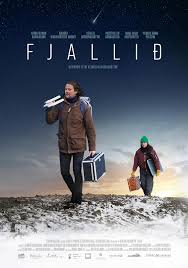
THE MOUNTAIN/ Fjallið
Iceland, 2025, 93 minutes, Colour.
Bjorn Hlynur Haraldsson, Isadora Bjarkardottir Barney, Sovieg Gudmundsdottir.
Directed by Ásthildur Kjartansdóttir
The mountain of the title is to be found in Iceland. It is a mountain where an astronomer goes to try to photograph the trail of the comet that she has discovered. She is excited, has invited her husband and daughter to come with her on this momentous occasion but her husband is caught up in his building work, and the daughter has a singing gig at a club.
It can be said that the themes of the film are life and death, profound as they are. The film offers something of a close-up of the effect of the death on the husband and the daughter, the husband completely overcome, grief, more and more irrational. The daughter, with her own issues, especially the pregnancy with her boyfriend, trying to deal with her grief and, exasperatedly, trying to deal with her father.
The perspective of the film is hope, that no matter what the grief, there is a strength in the human spirit, especially if people help one another, that they can mourn, but continue their life as something of a tribute to the love of the person who has died.
- The title, the mountain and reach into the stars?
- A moral fable about life and living, goals, purpose? Life and death, consequences?
- The setting, the school and the office, astronomy, the home, the building sites and work, the club and the singing? The landscapes, roads, mountains, the house in the mountains? The musical score?
- The initial focus on Maria, astronomy, her interests, discovering the comet, her colleague, excitement? To go to the hut and photograph the comet? Her relationship with her husband, her daughter, their not going? Her being upset, travelling, with her camera, phone call and message to her husband? The news of her death? The sadness of the funeral, the guests and the reception?
- The focus on Atli, at work, his colleagues and friendships, the demanding boss, work on the weekend, not going with his wife? His past and playing in the band? His relationship with his daughter, going to her concert? The aftermath, the phone call from his wife, news of her death, his reaction, grief? After the funeral, women bringing cakes, his friends and their conversation about golf, going outside, his daughter asking him to come in? His refusal? His tantrum at work about the lamps, quitting? Wandering, drinking, going to his friend, the night? In the bar, encountering the man, anger, his being bashed?
- The focus on n, her age, bonds with her mother, father, her boyfriend, the band rehearsals, the drama, not going with her mother, the performance, happy? The pregnancy test, her boyfriend’s reaction, telling his mother, her being upset? Her grief at her mother’s death, the funeral and the aftermath? Resuming the singing? Response to her pregnancy, the discussion with a boyfriend, his acceptance? Not telling her father?
- Atli, the colleague, his offending him, collecting his wife’s goods, the diary, her ambitions, his decision to go? With Anna, the weather forecast, the difficulties of the road, making decisions the right road, the call from the woman about the night, and as reaction? Sleeping in the van, aptly finding the way, going to the hut, the decision to photograph the comet, the climax of the film, success? Calling it Maria?
- The philosophical reflections, the religious reflections, the meaning of life, death, continuity of life, continuity of love? Having a purpose in life and the consequences for relationships?
Second Victims/ Den Andet Offer

SECOND VICTIMS/ DET ANDET OFFER
Denmark, 2025, 92 minutes, Colour.
Ozlem Saglanmak, Trine Dyrholm, Mathilde Arcel F, Olaf Johannessen, Anders Mattesen, Iman Meskini, Jacob Spain Olson, Anders Home Perniolle Hojmark.
Directed by Zinnini Elkington.
This is a drama with a profound emotional impact.
The setting is a hospital, the audience joining one of the doctors as she comes to work, encounters colleagues, medical assistant on her first round, the surgeon who will be important as the day develops. The central character, Alex, is played by Ozlem Saglanmak in an intensely memorable performance.
The first part of the film keeps everyone, including the audience, on the emotional move. Triage, staff organisation, patients coming in needing instant attention, an elderly woman for diagnosis, her anxious son arriving. But, eventually, the main focus of the film is on an 18-year-old young man who has had a turn, brought in by his very anxious mother. The assistant notices something wrong with his neck, but Alex makes a decision that he can go home.
Almost instantly, the young man collapses. Decisions have to be made, consultations with the surgeon, the issue of the neck, the high emotions of the mother, the father eventually arriving and the staff dealing with distraught parents.
Which means then that the second victims of the title, after the first being those who are ill, are the staff, the pressures on them, the decisions have to be made, frankness and honesty, skill in responding to families, and continue questioning of themselves – which puts an enormous pressure on Alex throughout her day.
The screenplay raises the issues of diagnoses, recognition of symptoms, mistakes, culpability – but, importantly, the surgeon reminding Alex that she made an assessment with grounds rather than making an error. An important distinction for anyone in the healing, counselling and guiding, occupations and ministries.
- The title, those who are sick being victims, pressure on the nursing staff and doctors as second victims?
- The hospital setting, filmed in an actual hospital, staff arriving, changing rooms and conversation, meetings and triage, personnel absent, first timers, the range of patients, the continuing pressure, movement along corridors, into wards, with visitors, surgery, ICU? Mounting tension? The musical score?
- The focus on Alex, the strong performance, arriving at the hospital, indication that she was breastfeeding, changing, the presence of the surgeon in the women’s changing room, Emilie and her nervousness, Alex advocating more objective approach to work, not on feelings, not self-centred? The beginning of the day?
- The first part of the film, continual movement, pressure, busy, having to assess situations, control feelings, deal with people, patients, relatives?
- The situation with Winnie, her anxious son, the diagnosis, stroke, symptoms, behaviour, tests of coordination, Alex and her ability with the patients? The decisions, the treatments, the medication? Her son arriving, the pressure on him, overwhelming? Later, Winnie and her recovery, her gratitude, her son and his apology? And, the crucial sending of the flowers and the thanks note at the end during Alex’s trying to cope?
- The various patients in the corridors, Alex able to stop, or not, her assistant and the discussions about the cases? Emilie, nervous, contacting Alex?
- Oliver and his situation, his age, his mother present, suggestion of drinking and hangover? Emilie and her comment about his neck? Alex hearing it but not acting on it? Sending him home? His collapse, drastic, his mother’s concern, brain haemorrhage? Alex and her decisions, the discussions with the doctor, the importance of the coordinator of the scans and his opinion, the cost of scans entering in, his suggestion about Oliver, the surgeon wanting to operate? Alex and her opinion? The decision about the surgery, Oliver in a coma, going to the ICU, his mother present? Aida in the ward, competent, her attention, discussions with Alex? The surgeon’s decisions?
- The focus on Camilla, mother, the difficulties of conceiving, the sudden joy of Oliver? Desperate, insisting something be done, getting more and more emotional? Her husband’s arrival, his calm demeanour, with his wife, the news about the organ donations, Camilla’s refusal, the father more sympathetic, what his son wanted?
- Emilie, her reports, blaming Alex? The consequences for Alex, her being busy, pressure, not eating, having to make decisions about staff, the changing moods, talking with Camilla, with Oliver’s father, the continued pressure, offering hope, the surgeon saying there was no hope?
- Camila, the time passing, touching her son, wanting to talk to him, Alex’s advice, the final decision about his being brain-dead and the testing, machine breathing? The attack on Alex, vicious?
- The police, the head, asking Alex to go to the police, Alex assuming she was being attacked? The reality of charges against Camilla? Alex and the various moments of breaking down, in the corridors, up and down the stairs, sitting on the stairs, the collapse in the corridor, the patient helping her with the breathing and water? The feelings of self-blame?
- The priest, visit, discussions with the parents, his gentle wisdom, persevering love after death? The effect on the parents?
- Alex outside, listening, the father coming out, weeping, then turning on Alex and threatening to sue?
- The end of the day, Camilla and her husband, Camilla going out and looking over the city?
- The end of the day, Alex and the discussions with Emilie, the issue of blame, some reconciliation?
- The discussions with the surgeon, Alex and her blame about Oliver’s neck, the surgeon asking her the statistics of the likelihood for an 18-year-old, his wise advice that this was an assessment not a mistake?
- The return home, with her husband and children, the baby? The scenes paralleling mothers and sons, Camilla and Oliver, Alex and her children?
- The dawn, Alex going into the garden, Oliver appearing to her, holding out his hand, touching, communicating life and forgiveness?
Mission of Honor/ Hurricane

MISSION OF HONOR/ HURRICANE
UK/Poland, 2018, 107 minutes, Colour.
Iwan Rheon, Milo Gibson, Stefanie Martini, Krystof Hadek, Marcin Dorocinski, Manuel Klein.
Directed by David Blair.
A World War II film, almost 80 years after the events. Number of commentators referred to a “belated tribute”.
This is a story of Polish pilots, the disaster with the invasion of Poland, then moving to England. However, there is the difficulty of the RAF accepting them, language and cultural differences. But, given the attack of Nazi Germany on England, especially with the, Blitz, the pilots are welcomed, trained, going out on bombing missions over Europe as well as defending the German attack.
The film opens strikingly with an allegedly Swiss watch-seller in occupied France dealing with the Germans and then stealing one of their planes and flying to the UK. He is, in fact, a Polish pilot and leader.
On the story level, the narrative is more or less as expected, the characters of the Poles, difficulties with some of the British officers, sympathetic leads making good decisions, some romantic interludes, glimpses of the War room and the staff with the vast table indicating locations of planes and flights.
The main distinctive feature is the insertion of so much air warfare, the small planes, open, moments of combat, some disasters, crashes in the sea, injuries…
The film ends with 1946 and the issue of England sending the Polish pilots back to Poland to be present during the communist regime or for them to be allowed to stay in England.
- The role of Polish pilots during World War II? Their careers in Poland, refugee status in England, incorporation into the RAF, the missions, successful, their statistics of success?
- The opening, France 1940, Jan, allegedly Swiss and selling watches, which to the Germans, the discussions, interrogated, credibility? His stealing the plane and flying away?
- The transition to the UK, the RAF, aerodromes, bases? The British in command, offices, training, the poles, language issues, discipline issues, the significance of their traumatic experiences in the war, the range of flashbacks throughout the film, family, wives, girlfriends, imprisonment, executions? Affecting the men and their motivations?
- The focus on Jan, his relationship with the various men, supporting them, with the authorities, the various officials and discussions, plans, training, the status of the men, involvement in the war? The encounters with Phyllis, the bonding, the war stresses on her, their discussions, the developing relationship?
- The presentation of the British officials, Hugh Dowding, decisions, discussions, the various appointees in charge of the Poles? The women and their friendship with the Poles, relationships?
- The War room, the role of the women, the information, the flights and attacks, the status of the various pilots?
- The camaraderie amongst the Poles, the return of the commander, the young man and his feelings, setting up the alter with the candles? Discussions, attitudes towards the British? The impact of the party, the tribute to them, the music, the dancing, the champagne, the food? The men keeping apart? Jan, drinking, his upset, having to leave, the confrontation with Hugh Dowding, the criticism of the extravagance of the party, the contrast with ordinary people? Jan and his bailing out, the parachute, caught, freed by the old couple, their hospitality, his taking the food from the party, going to the house, finding it bombed?
- The years passing, the various action sequences, interspersed throughout the film, action in the air, dangers, the pilots, the Germans, anti-German attitudes, explosions, parachuting, the man drowning in the sea?
- 1946, the experience of the war, the issue of the Poles returning to Poland, public opinion, the Communist regime and their being oppressed? Jan, with Phyllis, the discussions, the outside celebrations? His future?
- The film considered a belated cinema tribute to the Polish pilots?
Quisling: The Final Days/ Quislings Siste Dager
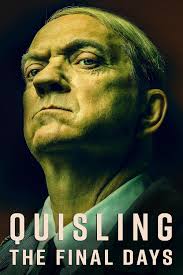
QUISLING: THE FINAL DAYS / Quislings siste dager
Norway, 2024, 146 minutes, Colour.
Gard B Eidsvold, Anders Danielsen Lie, Lisa Carlhed, Lisa Loven Kongsli.
Directed by Erik Poppe.
A film that can be highly recommended for audiences who are interested in stories from World War II. This is a very significant film from Norway, the role of the king, the king and government departure from Norway, the taking over the government by Vidkun Quisling, the Nazi presence, the consequences at the end of the war.
This film has been written and directed by celebrated Norwegian director, Erik Poppe. Audiences might like to track down his previous film, The King’s Choice, a dramatisation of Norway 1939-1940, war, the invasion of Norway, the King’s choice to leave and the accession of Quisling.
The film opens sternly with a declaration by Quisling himself, his vision of his role during the war, his admiration for Hitler. While the main part of the film, as the title indicates, focuses on his behaviour at the defeat of the Nazis, his arrest, the accusations, his imprisonment and trial, there are a number of flashbacks, as might be expected, offering a fuller picture of Quisling himself, his praised social work in Ukraine, the loyalty of his wife, rather than just a disgusted condemnation of his behaviour, the impact of his government on the Norwegian people, SS activity during the war, executions and the deportation of the Jews.
The film is based on the memoirs of the chaplain appointed by the Bishop to attend Quisling in prison, Peder Olsen, a hospital chaplain, sworn to secrecy, initially diffident in dealing with such a prisoner, challenging him with Jesus’ parable of the Pharisee and the publican, the gradual breaking through on both sides. (A useful film for anyone training for prison chaplaincy.)
The film is quite long and immerses the audience in the experience of the war, especially with Peter Olsen’s wife and their hiding a Jewish couple who eventually died in Auschwitz, and Quisling’s explanation of himself, ambitions, self-justification, some face experience before his execution, but going to death still convinced of his own righteousness.
- A film for Norwegians? For world audiences? Memories of World War II?
- The work of the director, Norwegian history, Norway 1940 and the war? The trial and execution of Quisling?
- Re-creation of the period, costumes and decor, Oslo the city, prisons, the court, the church, homes? Authentic feel? Musical score?
- The performances, the impact of the performance for quisling? Understanding him? Pastor Olsen? His mission, the role of prison chaplains?
- The opening, Quisling and his speech, the end of the war, his role, ideology, relationship with Hitler?
- The role of flashbacks throughout the film, building up Quisling’s history, verbal descriptions, his work in Ukraine, the photos of the famine, work for Russia? Political flashbacks, speeches? The massacres?
- Quisling, his age, his work in Ukraine, reputation, humanitarian? The situation in 1940, Hitler’s potential invasion, the departure of the king and the politicians, Quisling taking charge, his image of himself, saving Norway? The contrast with the realities, his government, Hitler, the SS, the Jews and deportations, the population against him? The end of the war, his arrest, the demonstrations against him?
- Quisling, focus upon himself, the testimony in the courts about his shyness when young, competitive, politics, his leadership during the war? His explanation of universalism? His writing, his defence, the explanations to Olsen, his statements in the court?
- His wife, support of her husband, relationship with Hitler, his arrest, her dismay, the visits from Olsen, her explanations about meeting him, his former wife, sent to Italy, possible adoption, their not being married? The importance of the conversations with Olsen, his understanding her? Promise to care for after her husband’s death? Her visits to her husband in prison?
- Olsen, Pastor, his wife and family, the interview with the Bishop, the confidentiality of his mission, his discussion with the pastor who refused and had been prison chaplain during the war? Later meeting him in the church and the discussion? Hospital chaplain? No prison experience? The first visit, tentative, Quisling’s hostility, the discussion about the parable of the Pharisee and the publican? The continued difficulties of getting through to Quisling, bringing his wife’s cakes, the discussions, sharpening the pencil, the varied visits, getting to know Quisling better? Not being able to tell his wife, the scenes of her outbursts against Quisling? Upset when she discovered the truth? Yet her sending the biscuits? The issue of understanding and forgiveness?
- The jailer, young, attitude towards Quisling, turning the lights on and off, shouting at the couple not to touch?
- The visit to the graveside, the uncovering of the bodies, Quisling watching, denying any responsibility?
- The transfers to different jails, his lawyer, the issue of his mental capacity, wanting that is a defence?
- The court room, judges, prosecutor, the witnesses, their testimonies about Quisling, the public reaction? The witness to Quisling as a boy, the Jewish doctor and his work, to Auschwitz, his testimony about the gas chambers, the impact on Olsen, his previous denial, his wife and the concern about the Jewish couple they sheltered? Overcome by the truth about the camps?
- The details of the charges, government, responsibility, the SS, Norwegian soldiers involved in the war?
- The sentence, and Quisling the appeal, visit of Olsen, Quisling’s collapse, the reaction of the young jailer?
- The failure of the appeal, Olsen going to the prison, the setting in talking, the parable of the Pharisee and the publican again, arrogance, forgiveness, Quisling changing, kneeling, at first reducing communion, than accepting, Olsen and receiving communion?
- Ready for going to the execution, Olsen accompanying, against the wall, blindfold, the target on the chest, the shooting?
- Public reaction to Quisling’s death? And his name as synonymous with traitor?
- The impact of the film, based on the diaries of pastor Olsen and his wife?
Book of Clarence, The
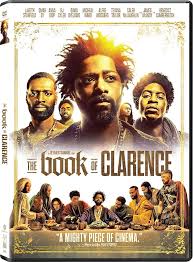
THE BOOK OF CLARENCE
US/Italy, 2023, 129 minutes, Colour.
LaKeith Stanfield, Omar Sy, R.J.Cyler, Anna Diop, David Oyelowo, Alfre Woodard, Teyana Taylor, Micheal Ward, Caleb MacLachlan, Marianne Jean-Baptiste, Eric Kofi Abrefa, James McAvoy, Benedict Cumberbatch, Chase Dillon, Nicholas Pinnock.
Directed by Jeymes Samuel.
The Book of Clarence can be recommended for all kinds of reasons, first of all, that it is nothing like what we might expect! It has been written and directed and musical score, by British musician, Jeymes Samuel, stage name The Bullits. His previous film was The Harder They Fall, a strong Western, a focus on black Americans in the 19th century, victims, dominating, urging the audience to look again at their familiar image of the American West.
The Book of Clarence is billed as a comedy biblical adventure! And it is. And, even though the focus is on Clarence, this can be seen also as a very strong Jesus film, though in plot terms, he is a supporting character.
Once again, the cast is either African-American or of West Indian descent. A glance at the cast indicates popular names like Omar see, David or no, Alfre Woodard, Marianne Jean Baptiste. The exception being Benedict Cumberbatch, playing Benjamin the beggar in the early part of the film and then being transformed, actually by Jesus himself, and making points about false Messiahs at the end of the film. James McAvoy leads the white cast of obnoxiously Roman soldiers.
But, back to Clarence, played engagingly by the very talented LaKeith Stanfield. In fact, the film opens with a kind of Ben Hur chariot race variation, introducing Clarence, avery 21st-century, in fact, in the Jerusalem neighbourhood, the Jerusalem “hood”. He is something of a con man, is in debt to a local loan shark, though in love with his sister, into drugs, but also more often into bad luck.
But, impressed by Jesus and his followers, especially since it turns out that Clarence is, in fact, the apostle Thomas’s twin brother (who is mentioned but not named in the Gospels). Clarence actually applies to the apostles to be the 13th but is turned down, Thomas himself very disdainful of his brother, and Judas urging Clarence to prove his worth by going to a gladiator school and freeing the gladiators – which means that we have besides Ben Hur, homage to Spartacus and gladiator.
But, what makes the Jesus connection even more interesting, and Jesus does appear very sympathetically at various times throughout the film, Clarence is impressed by acclaim for Messiahs and so sets himself up with his friends, refused baptism by John the Baptist, but nevertheless going around preaching, organising fake miracles, profiting highly.
But, can it last? There has been a spoiler right at the beginning of the film with Clarence being crucified. And in suffering, he parallels Jesus, and antagonistic young fellow actually help him carry the cross to Calvary. Clarence does have a conversion experience, compassion, charity beyond himself, some redemption.
It is then that Benjamin emerges, Jesus having giving him money, and a gift for multiplying money which Benjamin spreads around, Benedict Cumberbatch looking like a traditional image of Jesus, but self-seeking and a false Messiah.
The film ends very respectfully of Jesus, a visit to Clarences tomb, and hope of resurrection.
Not what we might have been expecting, but always interesting, entertaining, and, certainly, thought-challenging.
- Title, striking, biblical overtones? The work of the director, writing, directing, music, race issues?
- The locations for Jerusalem, the Italian town of Metairie and its presence in other biblical films? The vistas, buildings, the roads, the sea?
- The first century A.D. variation on Boys in the Hood, the Jerusalem Hood, drugs, gangsters, gambling, debts? Vengeance?
- The musical score, the range of songs, the final credits?
- The three chapters for the Book of Clarence? The introduction, Clarence and his mission, the crucifixion? The beginnings of the parallels with the Gospel story of Jesus?
- The acknowledgement of Roman Empire films, Ben Hur, gladiator…? The influence of biblical films, Jesus films? In the central character and Brian in the Life of Brian?
- The opening race, introducing Clarence, Mary Magdalene and her defiance, Elijah as Clarence’s friend? The chariot race in Ben Hur, the excitement, the Gypsy area, the intervention of Cabbage and his domination, the crashes, taking Clarence’s coat? The bond between a lighter and Clarence, as brothers, his reaction to the loss? The visit to Jedediah, the confrontation, Clarence and his attraction to Marigny, Jedediah’s sister? Her reticence, shyness? The banter between Clarence and Jedediah? The time limit?
- Thomas the apostle, called Didymus, the twin, in the Gospels? The imaginative interpretation of Thomas and his twin? Thomas, leaving their mother, following Jesus, stern, loyal to Jesus, 10 minutes older, but deriding his brother, a nobody, doomed to failure? Their various encounters? Clarence and his challenge, Thomas’s reaction to Clarence’s behaviour? Clarence and his visit to the apostles? His suffering and Thomas coming to apologise, reconciliation? Clarence and the scenes with his mother, his debts, after the race, her encouragement, smelly? Her reflections on his life, on Thomas? Encouragement on the way of the cross, at the crucifixion?
- Clarence and his fascination with Jesus, the significance of the visit to Mary and Joseph, Mary and her explanations, Clarence and the mistaking of the Immaculate Conception for the virgin birth, Mary and her convictions about God’s presence? Joseph, his presence, supporting Mary, calling Clarence a dumb ass?
- Clarence and his need to raise money, his observing of Jesus, the failed Jesus walking through the on guard, the claim of Messiah? Clarence, not believing in God, defying belief? His theory that knowledge was more important? But his idea of impersonating a Messiah, with the help of Elijah? His paralleling of Jesus miracles, raising the dead, curing the sick…, Elijah performing? The taking up of the collection from the crowd gathering? Believing him as a Messiah? His preaching, the effect on him, those collection of money?
- His visit to the apostles, the encounter with Judas, Judas and his taunts, urging him to go to the gladiator slaves, confront the torturer, get the release of the prisoners? Clarence going, the reaction of the torturer, singling out Barabbas, the challenge to the fight, Clarence and his moves, Barabbas and his reactions, the torturer allowing Barabbas to go? Barabbas joining the troop of the wood-be Messiah?
- The encounters with the Romans, white, their arrogance, the reaction to Barabbas, the officer and his javelin is, throwing them out Barabbas, Barabbas and his defiance, escaping, and his nickname of Immortal?
- Clarence, the effect on his charade, the slaves, getting a conscience, taking the money and buying back the slaves, freeing them? Judas and his response?
- The encounter with Jesus, Mary Magdalene, the adultery, the parallel of John chapter 8, Jesus and the stones, is suspending them in the air, their falling, defying the authorities, letting Mary go free, the friendship with her?
- Jedediah, the party, with Varinia, declarations to her, the upset, his feeling betrayed by her?
- The presentation of the Last Supper, acknowledgement of da Vinci’s painting? The two issue with Judas, betrayal, the scenes with the Jewish authority in the 30 pieces of silver, Judas and the promise of betrayal, at the supper, the issue of Mary’s gravy, the taste, his going out?
- Jesus, knowing he was betrayed, waiting for the moment, accompanied by Mary?
- His arrest, the Romans, the encounter with Pontius Pilate, Pontius Pilate and his manner, racial superiority, arrogance, interrogation, the sympathy with Clarence, Clarence and his commitment, defiance, the parallels with Jesus before Pontius Pilate? Condemned to be crucified?
- The visuals of the way of the cross, the Jesus parallel, the defiant crowds, his mother in the crowd, encouraging him, Elijah and the encouragement? On Calvary, the vivid nailing to the Cross, raised, Henning, hanging, the presence of Benjamin, the past encounters with Benjamin and his spurning him, not recognising him, Benjamin and his worldly defiance? The Romans, the decision to pierce Clarence’s side? Again the Jesus parallel?
- Benjamin, the begger, spurned by Clarence, the later scenes of his banking, the encounter with Jesus, the money, his clean himself up, becoming like the traditional portrait of Jesus, his gift of being able to multiply the money? His arrest, a false Messiah accusation, being crucified?
- Clarence, the burial, the stone, the breaking up of the stone, Jesus entering, tender with Clarence, raising him to new life? Immortality?
- The overall effect of the film, the serious, the comic touches, the criticisms of blasphemy, the Christian defences against accusations of blasphemy? The enjoyment of a biblical epic? Jesus figure treated seriously and with respect? And Clarence paralleling Jesus and becoming a Christ figure?
Materialists

MATERIALISTS
US, 2025, 117 minutes, Colour.
Dakota Johnson, Chris Evans, Pedro Pascal.
Directed by Celine Song.
Here is a New York drama which is worth seeing – and, certainly, worth listening to.
Film has been written and directed by Korean-born, Celine Song. H er previous film, Past Lives, received Oscar nominations.
This is a film about a woman who works as a professional matchmaker, in a company which advertises, makes personal contacts, arranges meetings, especially dinners, according to the data they collect. In fact, Celine Song worked for six months in a matchmaking firm. She certainly draws on a lot of information as well as personal experiences.
One reason why the film is worth listening to is that the philosophy behind the matchmaking company, at least in the affluent areas of New York City, is, as the title indicates, materialist. The approach to setting up couples with hope for married unions is very much as what Christians often called “worldly”. And, in the case of Lucy, Dakota Johnson, whom we get to know very well during the film, she is very materialistic in her perspective. When she marries, she wants to marry into wealth, comfort, security, compatibility, not necessarily love as the Romantics would like.
In fact, she was in love with an actor, John, Chris Evans, often impoverished, now working in a catering firm, often servicing lavish materialist winnings. They are still friends, he in love with her, but she with her success ambitions held high. Then, at the wedding of a couple she organised, she encounters the brother of the groom, Harry, Pedro Pascal, and they are attracted to each other. Will this be the fulfilment of all her ambitions and her professional certainties? Maybe they would in another film, or in a television series, but there is much more to Materialists than this.
The three central characters are always interesting, Lucy often exasperating, a sympathy for John, questions about Harry and his motivations (and the rather startling discovery that amongst the criteria for matchmaking, an attraction for women is tall man, and that some men get their legs broken for height extension insertions!).
There is great power in several key speeches, well worth listening to and reflecting on: a long discussion between Harry and Lucy about their attitudes towards the criteria, to wealth, security, compatibility – but finally Lucy able to make a declaration honestly about her feelings, about whether marriages were for love or just deals and partnerships. There is also a very important discussion between Lucy and a client who was assaulted by the allotted partner, some of the shallowness of dating and its dangers, and her angry response. And, again, well worth listening to is a long discussion between John and Lucy, reflecting on their relationship over the years, love, emotions, his declaration of love rather than any deal, his image of growing old together, long-lasting commitment, personal interaction. And the fourth important discussion to listen to, Lucy’s final response.
The title, with its focus on material achievements and satisfactions, with their seeming priority over love, is certainly a challenge. Audiences identifying more immediately with Lucy, will be challenged. Audiences identifying with John be more hopeful, audiences identifying with Harry will have to give some serious thoughts to their attitudes. Materialist matchmaking is very much focused on success in this world, not appreciating the fact there are more profound values, especially love, the transcend the materialist ambitions.
- The emphasis of the title, a story about matchmakers, but the criteria for the matches, the boxes ticked, suitability is, financial issues and status, security, marriage and is business, and deal? The emphasis on the materialist criteria?
- New York City, the office of the matchmakers, the venues for ceremonies, wealthy mansions, sharing squalid apartments, the New York high life, restaurants, the small theatre and performance, out-of-town, the countryside, the country wedding celebration? Atmosphere? The tone of the musical score, the range of popular songs and their lyrics?
- The focus on Lucy, her age, little background of her family, the past and her relationship with John, her being interested in acting, his acting career, love for him, but her expectations for wealthy marriage and comfort? The encounter with Harry, the wedding, his attentions to her, her response, his digging all the right boxes, a “unicorn”? The possibilities for her future?
- The theme of the film and its critique of materialist ambitions and criteria for marriages? As dramatised in the collage of the variety of interviews, clients explaining themselves and their hopes, issues of age, appearance, sociability? Older men for younger women? The lonely women getting older? Sophie and her reactions to criticisms? The range of those working as matchmakers, violent running the office, celebrating their successes, Lucy and her nine successes? Her failure with Sophie and Mark?
- Audience response to the focus on materialist criteria and boxes ticked? The issue of love? Suitability? Values – and the quality of men affirming women as valuable? And the contrast?
- John, his age, or, acting career, some success, working as a caterer, the encounter with Lucy at the wedding, the discussions, the memories of the past, the flashback to Lucy getting out of the car, standing the street and blocking traffic with her confrontation? John and the play, success, the drinks afterwards, seeing Lucy with Harry, his reactions? Seeing him at his apartment, the slovenly behaviour of the partner in the apartment? His love for Lucy, continuing despite her behaviour?
- Lucy, the crisis with Sophie, the phone call to Mark, Sophie and the lawsuit, suing the company, Violet not blaming Lucy? Lucy trying to apologise, Sophie’s fears speech against her? It later, the phone call, Sophie wringing, John driving Lucy to the apartment, Lucy able to soothe Sophie, the embrace, passing the night, John waiting on the steps? And later Sophie’s contact that she had found somebody suitable?
- The strength of the dialogue, the manifestation of the three central characters, raising the issues of marriage, dating, deals, a vision of an ageing partnership?
- The power of several key speeches: the long discussion between Harry and Lucy about their attitudes towards the criteria, to wealth, security, compatibility – but finally Lucy able to say that she did not love him, nor he her, it was just to deal and partnership rather than love? The importance of the discussion with Sophie, and her raising the issues and the shallowness of dating, its dangers? The long discussion between John and Lucy, his declaration of love rather than deal, his image of growing old together, long-lasting commitment, personal interaction? And the final speech of Lucy’s acceptance?
- The happy ending, Lucy to resign but Violet offering her the post of leading the company? And the glimpse of all the people, couples, registry for marriage licenses, the cheerfulness, the atmosphere, and Lucy and John seen amongst them?
- The film and its title as a moral fable about the importance of marriage, commitment, it deeper values than wealth and security?
Elio

ELIO
US, 2025, 98 minutes, Colour.
Voices of: Yonas Kibreab, Zoe Saldana, Remy Edgerly, Brandon Moon, Brad Garrett, Jameela Jamil, Young Dylan, Shirley Henderson, Kate Mulgrew.
Directed by Adrian Molina, Madeleine Sharafian, Domee Shi.
Over the decades, in many of its animated films, the Pixar Studios have focused on young boys. This was the case with the Toy Story series. There was also Luca, Onward, not that Pixar neglected young girl central characters, think the Inside Out series.
This time the young hero is Elio, American, Hispanic background, grieving the death of his parents, not responding well to the care from his aunt who is in space military, supervising space travel. Elio loves space and explorations, eager for contact with aliens. His room at home is covered with posters, photos, all kinds of space paraphernalia. And he works with his radio connections. But, he is bullied at school, gets into trouble with the authorities. And, on visits to the military bases, his curiosity gets him into all kinds of trouble including failures and typing out an appeal message for any creature in space to respond.
While audiences will be sympathetic to Elio in his sadness, they will (at least many of the parent generation will) feel very annoyed with him at times, his wilfulness, stubbornness, and his inability to respond to his aunt’s care.
But, that is the background! Most of the action actually takes place in space. And, for anyone in the young audience, boy or girl, there is the fascination of imagining what it might be like to find oneself in space, with all the technical know-how, to find all kinds of friendly alien creatures, share language with them, make friends – and, especially for Elio, to be thought of as the leader from his planet.
So there are many comic touches with the creatures on the planet he arrives at, and a large group of cultured representatives from various planets. And Elio discovers a special creature, Glordon, who looks and sounds cute and cuddly! But, Glordon’s father is an aggressive warlord, in huge threatening armour, glowering with a whole platoon of similarly fearsome troops. And he has territorial ambitions.
So, a young boys’ fantasy, Elio asserts himself as the leader from earth, confronting the warlord. There is a nice dramatic device where a clone can be made both of Elio and Glordon, clone Elio coming to earth and being absolutely charming and cooperative with his aunt to her shock. The cloned Glordon coming to the warlord and agreeing to be his aggressive successor.
Elio does have success, is also captured, but is well advised and is able to use the real Glordon a bargaining chip for the warlord’s surrender and Elio’s release.
Of course, the final question is whether Elio will want to stay in space. The clone has enabled his aunt to travel to the planet. Will he stay or will he find love and affection and want to go home?
So, apart from Buzz Lightyear in space, this is a different Pixar story, not one of the greatest, but entertaining in its way.
- The popularity of Pixar films. The place of this film in its catalogue? The target audience, younger audiences, the young hero, a boy, his ambitions, space exploration, aliens?
- The imagination of the film, the young boy, the death of his parents, super version by his aunt, his age and grief, assertiveness, intolerance? Bullied at school? His fascination with space technology, the decorations in his room, his creating his own language, his radio and technology?
- The aunt, military service, and space travel supervision? Love for her nephew, strict, difficulties in communicating with him? His getting into trouble, her having to rescue him? At the base, going into the laps, interfering, disasters? Her job?
- With the boys, the friend, the bullying boy, the fight, the principal and the two boys reprimanded? The effect of the bullying boy, the technology, contact?
- Elio, at the base, sending out a message, its being transmitted?
- The Joy of the space contact, his going into space, the planet, the mentally of creatures, their appearance, their voices, their intellect, culture? His being seen as a rescuer? The leader from his planet? The effect on him, his costume, his speeches, his hopes?
- The Lord Grigon, his appearance, armour, voice, his military? Ambitions, takeover, threats to the planet, the inhabitants gathering for culture, not for combat? The assumption that Elio was leader?
- The appearance of Glordon, voice, appearance, the father, the ability to talk and communicate, games together, happy possibilities? The appearance of Glordon, his father, demanding on Glordon?
- The device of the clones, clone Elio going to earth, the opposite of the real Elio, collaborating with his aunt, conversation, work, diligent? The hair, coming alive, the aunt looking beneath the eyepatch, realising he was a clone?
- Cloning Glordon, a tough clone and, the armour, going back to Grigon, Grigon’s delight?
- Grigon, the confrontation with Elio, the truth about him, dominating, the surrender, the effect on the community on the planet?
- Elio and his plan, Glordon as a bargaining chip, the father wanting his child back, the confrontation, the negotiation, Grigon out of his armour, soft and cuddly, embracing Glordon? Peace for everyone?
- The clone of Elio, the bond with the aunt, in the base, getting the equipment, the discovery of the capsule with Glordon? The two clones and then disappearing?
- The aunt in space, the reconciliation with Elio, the peaceful situation, Elio and leadership?
- The return to Earth, on the beach with its memories, the reconciliation with his friend, the bonding with his aunt, a happy life?
Piece by Piece

PIECE BY PIECE
US, 2024, 93 minutes, Colour.
Voices of: Pharrell Williams, Morgan Neville, Kendrick Lamar, Gwen Stefanie, Snoop Dogg, Justin Timberlake, Jay-Z, Buster Rhymes.
Directed by Morgan Neville.
More than something of a surprise. This is a Lego film, all animated Lego. But, it is also something of a documentary on the life and career of music artist, Pharrell Williams.
The title comes from the final song of the film, especially composed by Williams for the finale for this film (and incorporates for more original songs as well as others from his career).
Lego cooperated with creating blocks and figures suitable for presenting African-Americans as well as for presenting musical instruments. Which means then that this is, visually, a delight for Lego fans.
The film traces William’s life and career, opening with an interview with the Dir of this film, Morgan Neville. He traces his origins in the projects in Virginia Beach, his difficulties at school, the fact that he experienced synaesthesia year, seen colours for music. He repeats a year at school, as a musical instrument and opens up to his talent, working with a fellow student, Chad Hugo. They form a group, the Neptunes, and perform at the school, noticed by a popular producer who takes them on and promotes them.
Pharrell Williams worked with quite a number of famous stars whose names can be seen in the credits and who are also interviewed throughout the film.
Eventually, a moving towards rap, becoming a solo artist, and expanding his business interests in all kinds of directions. On the personal level, he met his wife Helen at the party and they married, and there are happy scenes with his son.
During a whole, he contributed to the film Despicable Me, Oscar nomination, interview with Oprah Winfrey.
All in all, with Lego figures and in very bright colours, this is a story of ups and downs but always of optimism, success, and the climax song, Piece by Piece.
I'm Your Venus

I’M YOUR VENUS
US, 2024, 85 minutes, Colour.
Directed by Kimberly Reed.
In 1990, there was a significant documentary, Paris is Burning. Wikipedia entry notes:
Paris is Burning is a 1990 American documentary film directed by Jennie Livingston. Filmed in the mid-to-late 1980s, it chronicles the ball culture of New York City and the African-American, Latino, gay and transgender communities involved in it.
Critics consider the film to be an invaluable documentary of the end of the “Golden Age” of New York City drag balls, and a thoughtful exploration of race, class, gender and sexuality in America.
In 2016, the film was selected for preservation in the United States National Film Registry by the Library of Congress as being “culturally, historically or aesthetically significant”.
One of the personalities featured was young transgender woman, Venus Xtravaganza. Shortly after her appearance in the film, she was found murdered in a New York hotel, an investigation, closed, cold case.
In the 2020s, her brothers, the Kelly Gatti family, of Italian and Puerto Rico background, sought legal advice about reopening the case. This film is about them, the contact with lawyers and receiving more information about the case, though, at the end, because of the 34 years difference in time, not likely to be fully solved.
This film, highlighting Venus, her family, Pelliggatti, Italian and Puerto Rican background, her parents splitting, her brothers, her being gay, imagining herself as a girl, living with her grandmother, joining a group of transgender people in the Xtravaganza House, her lively participation in the culture of drag balls, excerpts from the film and her talking to camera.
The film focuses on the brothers, strong screen presences, their discussions, their reminiscences, their regrets about their sister, their wanting to do right.
They also make contact with the Xtravaganza community decades later, and the audience is introduced to some strong personalities, especially their contact, Gisele, with a lot of information about the culture, the influence of Venus on her, her leadership of the community. And there are some personalities who are following in Venus’ footsteps.
The film opens up issues of transgender, the trans-life and lifestyle, the need for community and affirmation. And, there is still a focus on the balls, drag balls, “and the popularity of “Vogueing”, vigorous dancing and holding poses that might be used as photographs for Vogue.
While there is plenty of flamboyance, there are also serious matters, especially the issue of officially registering the name of Venus Xtravaganza, official documents, changing her original name to this one on her tombstone. And, the very serious sequence where there is a request to make the house she grew up in a landmark, many giving evidence, the board giving unanimous sent, and sequences at the end there now a memorial to Venus.
And, finally, a lot of exuberance but also the serious focus, especially for the brothers and their looking back, that each person, no matter what their behaviour and their problems in life, each is a human being.
