Displaying items by tag: Gard B Eidsvold
Quisling: The Final Days/ Quislings Siste Dager
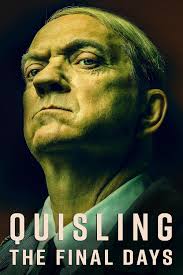
QUISLING: THE FINAL DAYS / Quislings siste dager
Norway, 2024, 146 minutes, Colour.
Gard B Eidsvold, Anders Danielsen Lie, Lisa Carlhed, Lisa Loven Kongsli.
Directed by Erik Poppe.
A film that can be highly recommended for audiences who are interested in stories from World War II. This is a very significant film from Norway, the role of the king, the king and government departure from Norway, the taking over the government by Vidkun Quisling, the Nazi presence, the consequences at the end of the war.
This film has been written and directed by celebrated Norwegian director, Erik Poppe. Audiences might like to track down his previous film, The King’s Choice, a dramatisation of Norway 1939-1940, war, the invasion of Norway, the King’s choice to leave and the accession of Quisling.
The film opens sternly with a declaration by Quisling himself, his vision of his role during the war, his admiration for Hitler. While the main part of the film, as the title indicates, focuses on his behaviour at the defeat of the Nazis, his arrest, the accusations, his imprisonment and trial, there are a number of flashbacks, as might be expected, offering a fuller picture of Quisling himself, his praised social work in Ukraine, the loyalty of his wife, rather than just a disgusted condemnation of his behaviour, the impact of his government on the Norwegian people, SS activity during the war, executions and the deportation of the Jews.
The film is based on the memoirs of the chaplain appointed by the Bishop to attend Quisling in prison, Peder Olsen, a hospital chaplain, sworn to secrecy, initially diffident in dealing with such a prisoner, challenging him with Jesus’ parable of the Pharisee and the publican, the gradual breaking through on both sides. (A useful film for anyone training for prison chaplaincy.)
The film is quite long and immerses the audience in the experience of the war, especially with Peter Olsen’s wife and their hiding a Jewish couple who eventually died in Auschwitz, and Quisling’s explanation of himself, ambitions, self-justification, some face experience before his execution, but going to death still convinced of his own righteousness.
- A film for Norwegians? For world audiences? Memories of World War II?
- The work of the director, Norwegian history, Norway 1940 and the war? The trial and execution of Quisling?
- Re-creation of the period, costumes and decor, Oslo the city, prisons, the court, the church, homes? Authentic feel? Musical score?
- The performances, the impact of the performance for quisling? Understanding him? Pastor Olsen? His mission, the role of prison chaplains?
- The opening, Quisling and his speech, the end of the war, his role, ideology, relationship with Hitler?
- The role of flashbacks throughout the film, building up Quisling’s history, verbal descriptions, his work in Ukraine, the photos of the famine, work for Russia? Political flashbacks, speeches? The massacres?
- Quisling, his age, his work in Ukraine, reputation, humanitarian? The situation in 1940, Hitler’s potential invasion, the departure of the king and the politicians, Quisling taking charge, his image of himself, saving Norway? The contrast with the realities, his government, Hitler, the SS, the Jews and deportations, the population against him? The end of the war, his arrest, the demonstrations against him?
- Quisling, focus upon himself, the testimony in the courts about his shyness when young, competitive, politics, his leadership during the war? His explanation of universalism? His writing, his defence, the explanations to Olsen, his statements in the court?
- His wife, support of her husband, relationship with Hitler, his arrest, her dismay, the visits from Olsen, her explanations about meeting him, his former wife, sent to Italy, possible adoption, their not being married? The importance of the conversations with Olsen, his understanding her? Promise to care for after her husband’s death? Her visits to her husband in prison?
- Olsen, Pastor, his wife and family, the interview with the Bishop, the confidentiality of his mission, his discussion with the pastor who refused and had been prison chaplain during the war? Later meeting him in the church and the discussion? Hospital chaplain? No prison experience? The first visit, tentative, Quisling’s hostility, the discussion about the parable of the Pharisee and the publican? The continued difficulties of getting through to Quisling, bringing his wife’s cakes, the discussions, sharpening the pencil, the varied visits, getting to know Quisling better? Not being able to tell his wife, the scenes of her outbursts against Quisling? Upset when she discovered the truth? Yet her sending the biscuits? The issue of understanding and forgiveness?
- The jailer, young, attitude towards Quisling, turning the lights on and off, shouting at the couple not to touch?
- The visit to the graveside, the uncovering of the bodies, Quisling watching, denying any responsibility?
- The transfers to different jails, his lawyer, the issue of his mental capacity, wanting that is a defence?
- The court room, judges, prosecutor, the witnesses, their testimonies about Quisling, the public reaction? The witness to Quisling as a boy, the Jewish doctor and his work, to Auschwitz, his testimony about the gas chambers, the impact on Olsen, his previous denial, his wife and the concern about the Jewish couple they sheltered? Overcome by the truth about the camps?
- The details of the charges, government, responsibility, the SS, Norwegian soldiers involved in the war?
- The sentence, and Quisling the appeal, visit of Olsen, Quisling’s collapse, the reaction of the young jailer?
- The failure of the appeal, Olsen going to the prison, the setting in talking, the parable of the Pharisee and the publican again, arrogance, forgiveness, Quisling changing, kneeling, at first reducing communion, than accepting, Olsen and receiving communion?
- Ready for going to the execution, Olsen accompanying, against the wall, blindfold, the target on the chest, the shooting?
- Public reaction to Quisling’s death? And his name as synonymous with traitor?
- The impact of the film, based on the diaries of pastor Olsen and his wife?
