Displaying items by tag: Peter Malone's Movie Reviews
Peaky Blinders: The Immortal Man
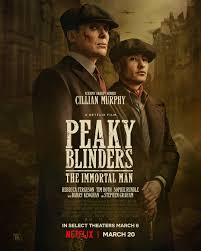
PEAKY BLINDERS: THE IMMORTAL MAN
UK, 2026, 112 minutes, Colour.
Cillian Murphy, Rebecca Ferguson, Barry Keoghan, Stephen Graham, Sophie Rundle, Tim Roth, Ned Dennehy, Pakxy Lee, Jay Lycurgo, Ian.Peck,
Directed by Tom Harper.
The connection with the long-running television series:
AI generated summary from user reviews on the Internet movie database: Reviewers say 'Peaky Blinders' is celebrated for its compelling narrative, intricate characters, and standout performances, especially Cillian Murphy as Tommy Shelby. The series is lauded for its historical accuracy, striking visuals, and unique soundtrack. Central themes include power, loyalty, and betrayal, with a focus on war and class conflict. The Shelby family's interactions and complex storylines captivate audiences, though some critics observe a dip in quality in later seasons. Its aesthetic and immersive atmosphere make it a genre standout.
The television series had a long run and there is often a call for a feature film to gather the themes and characters together. Peaky Blinders ran for over 10 years with 36 episodes, and highlighting the talent of Cillian Murphy (winning a Best Actor Oscar for playing Robert Oppenheimer).
The film takes place some years after the events in the series which moved from World War I into the 1920s and 30s. Now, it is World War II, highlighting an episode where the Third Reich forged an enormous amount of British notes to smuggle into Britain, disrupt the economy, different strategy for obtaining victory. This is visualised for us – and the traitorous go-between is played by Tim Roth.
In the meantime, Tommy Shelby has retired, living quietly, writing his book, The Immortal Man. But, his son, Duke (Barry Keoghan, featured in many films at this period, talented with quite different roles) has a difficult relationship with his father. There are also complications about Shelby and his relationships, his wife, her sister, memories, and the Gypsy community.
And, this community is tough, violence, in the streets, in the pubs…
Eventually, the arrival of the forged money at Liverpool, the British contacts, setting up some contract with the Peaky Blinders and Duke, Stephen Graham appearing in a supporting role, Shelby himself finally having to intervene.
For those familiar with the series, obviously interesting. And, with a sequel series in planning, obviously an introduction.
For those not familiar with the series, a glimpse of gangs, gangsters, violence on the streets, British style.
- The popularity of the series, over 10 years, 36 episodes, Birmingham, Gypsies, crime…?
- A feature film, the impact for those unfamiliar with the series, those who know the series? A satisfactory ending, the death of Tom Shelby?
- World War II, the opening in Germany, the concentration camp, the elaborate forging of the currency, packing, shipping it, the plan to infiltrate the currency, economic collapse, the winning of the war?
- Beckett, sympathetic to the Nazis, in Germany, arranging the transport, the interview with Duke, the sympathiser and his loose lips, Becket shooting him? Duke agreeing?
- The presence of Tom Shelby, his past reputation, World War I and action, the trenches and his memories, his relationship with his brother, the visit to the cemetery, seeing his daughter’s red scarf, his grief about his brother, the revelation of his killing him and his motivations? In the rural house, wandering around, letting go of control, writing his book, Johnny as his helper?
- Duke, son of Tom, the bonding and lack of bonding? His character, brutal, leadership, the issue of the arms and his gang appearing, rounding them up, taking them? Confrontations between the authorities and the Peaky Blinders? Duke and his personal life, leadership, at the pub?
- Tom, his wife, his children? Mysterious presence of Kaulo, sister of Zelda, Tom and his memories, appearances? The presence at the dinner, her role in the city, patriotism, leadership, her son – and her murder? The ceremonies of her burial?
- The old members of the gang, their presence, loyalty to Tom, ageing?
- The pub, the women, the drinking, the gangs? The pub ring the war, the soldiers, Tom and his arrival, control, the confrontation with the soldier, defiance, the hand grenade? Tom and his reassertion of authority?
- Seeing Tom, the relationship with Duke, their meetings, discussions, the count money, Duke and his loyalties?
- Tom, reasserting himself, the various attacks, riding the horse? The Gypsy background? His dreams and imaginings? The discussions with Duke?
- The meetings with their cake, confrontations, shooting fights? Escapes?
- The final plan, and his hold over Duke, to do the shootings, the phone, going Duke and his change of heart?
- The setting up for the arrival of the money, the taking it, the squad, the role of Stagg, his personality, loyalties? On the harbour, the boats, the crash, Tom coming through the tunnel, his dilapidated state, the accident and crash, his getting free, arriving late, the setting of the time of midnight, Becket with Duke, the clock, Tom eventually arriving?
- The final confrontation, the shootout, the death of Becket, his shooting Tom, Duke present?
- The ending of the Peaky Blinders’ tale, the death of Tom, the role of Duke? The finding of the manuscript, giving it to Duke? The final caravan, the fire?
Reminders of Him

REMINDERS OF HIM
US, 2026, 114 minutes, Colour.
Maika Monroe, Tyriq Withers, Zoe Kosovic, Lauren Graham, Rudy Pankow, Jennifer Robertson, Lanie Wilson, Bradley Whitford.
Directed by Vanessa Casswill.
American novelist, Colleen Hoover, has become very popular in recent years. Reminders of Him is the third film from her series of novels.
In looking at the titles, there are clear terms of sadness, but also of looking back in sadness: It Ends with Us, Regretting You, Reminders of Him.
Each of these films focuses on relationships, some harshness in relationships, some violence, deceptions. However, there is more positive hope in Reminders of Him.
We are introduced to Kenna (Maika Monroe), arriving along an open country highway, stopping at an accident sign and removing the memorial notice. She is a loner, not much money, finding some accommodation, doing the rounds of the town trying to find employment. But we soon discover that she also has strong intentions. She has lived in this town before. And, gradually, flashbacks, telling a happy story of love and romance, telling a sad story of a car accident and death, of Kenna and the discovery that she was pregnant, the birth in prison, the immediate taking away of her child, her release and her determination to make contact with her daughter, now looked after by the child’s grandparents, parents of the young man who was killed in the accident.
Already, enough to make the audience feel very sad. And the grandparents, Lauren Graham and Bradley Whitford, have hardened hearts towards Kenna, and protective of their granddaughter.
But, ultimately, this is a film of hope, unlikely as it may seem in the early part of the drama. The key character is the grandparents’ neighbour, best friend of the dead son, Ledger (Tyriq Withers), sports champion with an injury, returning home, running a bar, but become seeing something of a surrogate father/uncle to the little girl, plenty of scenes of their happiness together. A very likeable character.
In our heart of hearts, we know what is going to happen but, of course, there are a great number of difficulties, obstacles, changing relationships, a lot of hurt, but always with the possibilities of understanding, breaking through hard heartedness. And the possibilities also of forgiveness which, over the years, has become unthinkable and therefore impossible.
Tyriq Withers is the sympathetic sports champion, responsible, wonderful with the little girl, encountering Kenna, hostile, seeing her in a different perspective, of course, falling in love, and having to be something of a mediator between Kenna and the grandparents.
Sometimes this kind of material can be dismissed as soap opera (and, sometimes, it is). But, there is a lot of feeling in this storytelling, in the performances, in the issues, some tearful moments for the characters – and for some of us in the audience.
- Popular romance story? The writings of Colleen Hoover? Film versions? Target audience? The female audience?
- The settings, middle America, the town, the countryside, the plains, the mountains, the roads? The musical score?
- The complexity of the plot, the present, Kenna and her story, the return to the town? The importance of the flashbacks? The reminders of him?
- The focus on Kenna, arriving, out of prison, the town, taking the sign from the road, getting accommodation, the small apartment, no furniture, her trying to get a job, the various helps, her reputation and sentence? Going to the club, the encounter with Ledger, his assistant?
- Kenna and her establishing herself, going to the house, her daughter, the significance of the flashbacks, her love for Scotty, the lyrical times together, in love, to marry, the drinking, the drive, the crash, her leaving, wandering, trying to get the lift, his still being alive, her arrest, the trial, her pregnancy, manslaughter, the scenes of her giving birth, the taking of the baby, her never seeing or touching it? Her desire to see the baby?
- At the apartment, the landlady and her reactions, later mellowing and friendship? The daughter, Down syndrome, friendly, at the store, sharing with Kenna? Calling Ledger a jerk?
- The meetings with Ledger, his antagonism, Scotty as his friend, absent at the time of his death, blaming Kenna? The gradual change of heart, giving her a chance, the work, his friend and support, her relying on the work?
- Ledger, across the street from the family, friendship with Scotty, sport, his career, injury, return, acting as a kind of foster father to the little girl, the scenes together, his relationship with the grandparents, their looking after the girl? Their animosity towards Kenna?
- The growing complications, the relationship between Ledger and Kenna, his finding the sign? Falling in love, the difficulties in the relationship with the grandparents? Going to his dream house in the mountains, the grandfather turning up, finding the couple, the reaction?
- Ledger, the fight with the grandfather, his trying to make the case, the grandmother, her reaching out, visiting Kenna?
- The beginnings of the reconciliation, allowing Kenna to see the little girl, play with her, Ledger and his presence?
- The gradual mellowing, the possibilities for the future, the little girl and her immediate response to Kenna, her imagining her mother, the small car, waiting for her to turn up?
- The happy ending, happy/sad, the message of the film in terms of forgiveness rather than holding on to bitterness and the consequent cruel attitudes?
Midwinter Break
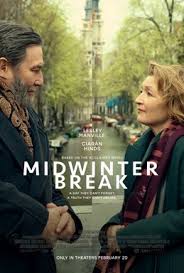
MIDWINTER BREAK
UK/Netherlands, 2025, 90 minutes, Colour.
Lesley Manville, Ciaran Hinds, Julie Lamberton, Ed Sayer, Niamh Cusack, Lewis Harris, David Gallacher.
Directed by Polly Findlay.
There is something quite dour about Irish storytelling, perhaps the experience of their harsh history, perhaps the weather. And midwinter seems to be a very dour time in Ireland.
But, this quietly engaging story is about the midwinter of a marriage, decades passing, husband and wife retreating into their own personal worlds, failures in communication, disappointments, wistful memories of the past.
This is the story of Stella and Jerry, flashbacks to happy memories, but also memories of violence and The Troubles, their marriage, Stella pregnant, the victim of a violent attack in a street upheaval, her giving birth, her having to live with the trauma, possessing her, unable to confide in Jerry. And, Jerry, a talented architect, losing his place in the advancement rung, the couple deciding to leave Ireland and go to live in Glasgow.
And the decades pass. Jerry still has had some work but has remote moments, drinking, also very rationalistic about his wife’s faith. Stella is a churchgoer, a devout woman, a spirituality of some resignation. But, at Christmas, returning from church, she offers Jerry a Christmas gift, a flight and a holiday in Amsterdam.
The drama is quietly effective, though it has some harsh moments, but even some merry moments. Lesley Manville and Ciaran Hinds have been excellent character actors for many decades. It is a great pleasure to see them having a film for themselves, bringing Stella and Jerry empathetically facing this crisis in their life and marriage.
Since we get to know Stella and Jerry so well, there are hopes that this will be a break in their midwinter, a happy break in their lives, enjoying the flight, the hotel, the room, meals, outings together, exploring the city. And, in some way this is a great help.
However, Stella has relied on her prayer and religious spirit over the years, goes to visit an old area of the city where there was a religious community, reflective, devoted to prayer. She encounters the priest, but also a sympathetic woman who lives there (Niamh Cusack), guides her around, gives an explanation of what has happened to the area, listening sympathetically to Stella’s wish to go there, in fact, Stella telling her personal story for the first time, telling Jerry that she wants to leave and that this is where her future is.
But, in Amsterdam, in the church, times have changed, times more secular rather than religiously contemplative.
So, the midwinter break means a challenge for Stella and her hopes, questioning Jerry and his withdrawal into isolation and drinking, possibilities for the future. And we remember that after midwinter, the beginnings of spring.
- The title, a holiday in midwinter, but also a breakdown of wintry marriage?
- The scenes of leaving Ireland, memories of The Troubles and violence, Stella and her pregnancy, the shooting, collapse, the birth? The recurring memories? The transition to Glasgow, life in Scotland, ordinary, Stella going to mass, acquire? Jerry at home? A winter Christmas?
- Stella, the Christmas gift, the ticket to Holland, Jerry, at home, drinking, happy with the idea? Getting ready, packing, the contents of the cases, the taxi, the airport, the flight, landing in Amsterdam?
- Jerry, the long marriage, getting used to each other, taking each other for granted, Stella not able to tell Jerry the details of her emotions from the past, Jerry, architect, having to move, losing his position as architect? The quiet life together? Their absent son and the stories of him and grandchildren?
- The film emphasising the ordinariness of life, Stella, her age, religious, memories, but needing more in her life? Jerry, satisfied with life, his drinking, secretly, openly?
- The time in Amsterdam, audiences identifying with the characters, the tourists, the hotel the room, the meals, wandering the streets, the canals, the buildings, Stella wanting to see the Catholic area, the Catholic Church, the encounter with Cathy and her help, inside the church, Stella’s experience, the story of the reception of the host, the violence, the recovery of the host? In the art work? Jerry is secular comment, the touch of cynicism, his own lack of faith?
- The going out, Stella regretful, then going out, the drinking and the dancing, the aftermath?
- Stella, the return to the area, meeting Cathy again, Stella’s knowledge of the unmarried women who live there, her wanting that kind of quiet life and contemplation, doing something more with her life? Cathy, the revelation of what had happened, the area secularised, the nuns and women no longer there, accommodation, age limits…?
- Stella able to tell her story the first time, Cathy attentive and sympathetic? Still having to go back to Jerry?
- Stella confronting Jerry, her own desires and life, his drinking and deceptions, the winter of life, its breaking down?
- Going back to the airport, and uncertain future, the delay of the plane, the storm, the people at the airport, Jerry and started together, looking out the window, the weather, the possibilities of some kind of a meeting of the storm, some kind of communication, reconciliation?
Sniper: The Last Stand
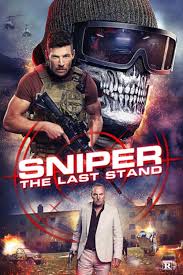
SNIPER: THE LAST STAND
US, 2025, 99 minutes, Colour.
Chad Michael Collins, Ryan Robbins, Sharon Taylor, Manuel Rodriguez-Saenz, Vusi Kunene, Sizo Mahlangu, Noxolo Klamini, Arnold Vosloo.
Directed by Danishka Esterhazy.
The Sniper franchise began in the early 1990s, with Tom Berenger as Beckett, the sniper. There was sequels and, in the 2010s, the beginning of the current series, featuring Chad Michael Collins as Tom Berenger’s son.
Popular action films, few holds barred.
In this episode, the setting is Cape Verde, a corrupt government, the Russian mastermind, his technical adviser, and threats to the US and the world.
A special squad has been set up, under the leadership of Zero who appeared in the previous films, Ryan Robbins. He then reaches out to Beckett, Chad Michael Collins, to help with the siege of the Fort with the technical experiments. He is to train a local sniper.
The film is full of action, the attack at the beginning, then flashbacks, Beckett’s arrival, camaraderie, introduction to the team, the rookie sniper, the local political rebel, and then the details of the attack, plenty of fighting, explosions, deaths… And, it would seem until the final few minutes, the deaths of Beckett and Zero. But, the supporting forces arrive.
There are plans for a further Sniper action film.
- The continued popularity of the Sniper franchise, 30 years.
- Audience knowledge of the central characters, their history, the previous films, their characters, action, capabilities? The situation of the corruption, the siege and attack?
- The Cape Verde setting, the scenery, the political situation, corruption, rebellion?
- The opening, Beckett, the young Sniper, training and action, the attack, the leadership, the team, the scientist and the wealthy owner, the explosion?
- The flashback, Beckett arriving, his background, meeting Zero, the political situation, the members of the team and their experience, working together? Nova, the connection with Beckett and the death of his father? The young Sniper and his history? The bonding, the training?
- The snipers, testing, pulling the trigger, obeying orders?
- The attack, the details of the siege, fights, deaths? The sniper and his work? The confrontation, the villain, the leader, deaths? And the experiments, the detonations, the timing?
- Having to take charge, the attack, the remnant, infiltration?
- Beckett, the fights, wounded, Zero helping, standing together, the attack? The arrival of the reinforcements? Nova, being shot, the end of the mission?
- Beckett and Zero departing, the security of the country? And future Sniper action shows?
Bentornato, Presidente/ Welcome Back, Mr President

BENTORNATO PRESIDENTE/ WELCOME BACK, MR PRESIDENT
Italy, 2019, 96 minutes, Colour.
Claudio Bisio, Sarah Felberbaum, Pietro Sirmonte, Roberta Volponi.
Directed by Giancarlo Fontana, Giuseppe Stasi.
A political satiric film for an Italian audience, contemplating government since World War II, political parties, the Italian public, takeovers, the particular characters ranging from edifying Christian Democrats to Berlusconi.
For Italians, the premise might not be too far-fetched. By accident, a man is elected president, rules for some months, makes a progressive speech and retires back to the country. He marries, has a daughter. The wife, after all this time, is getting restless, wanting to go back to the political world.
In the meantime, there is a display of modern politics, a range of parties, a president retiring, campaigns, compromises, the old President turning up to confront his wife and when her back but being dragooned into taking office again with a range of consequences, a critique of Italian politics, the public, political chicanery and rivalries.
Audiences outside Italy might think that it is highly exaggerated – but the Italian audience might say that it is exaggerated – but not all that highly!
- For Italian audiences? For those who know Italian politics? Worldwide audiences and the political themes?
- The setting, Rome, the city, seats of government, poorer areas? The countryside, the mountains, trout fishing? Homes and country towns? The musical score?
- The initial situation, per Peppino, his name of Garibaldi, mistakenly becoming president, a few months, his positive speech, his resignation, retirement to the countryside, all his friends in the town, marrying Janice, the birth of Guevara, her name, Che? The happy life, contented?
- Eight years later, the elections, Janis and her role, the approach, unhappy with her marriage, isolated, Peppino and his way of life, love for her daughter, her decision to leave, go back to politics? Transferring to Rome, her change of address, manner, formalities, rules and regulations, assisting the president?
- Peppino, upset, not understanding, his friends, the need for therapy, three months and chopping down trees, therapy of the axe? His decision to go to Rome, win back Janis, going to government, being recognised, entree, rough, the need for a time, Janis and her reactions? His B&B, his daughter coming to stay with him, poverty?
- The political backgrounds, the campaigns, the scenes of people voting, the various advertisements, the right-wing candidate, the popular candidate, other nominees, their meetings, squabbles, political stances, the former president, presiding, the factions? The compromise?
- The personalities of the various nominees, the racist right-winger, the popular man who did not go to high school? His media outlets, staff?
- The decision about Peppino, the proposition, his refusing, his motivation for accepting, his daughter and her support?
- Ivan, suspicions, working with Janis? His skills? Peppino giving him the huge workload, his achieving it, thrown into the rubbish? The challenge to Ivan, the fact that he was gay? His working with Janis, surveillance? His own betrayal, the international links, the plan for making money?
- Peppino, all the trivial legislation, the Council meetings, his new draft, its being signed, the reaction of the people, all the support then the insistence on taxes and the popular reactions?
- Peppino deciding that the government would go on strike, lack of transport, electricity, hospitals…?
- The confrontation with Ivan, Janis urging Peppino on, the gay situation and humour? Ivan and his arrest?
- Peppino, Janis admiring him, his daughter, the possibilities of good government – or not, the rivals, their comeuppance, and popular response?
Sen Tai Sai Luang. The Red Line
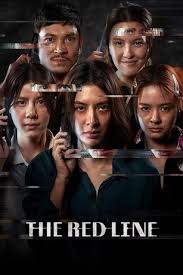
SAN TAI SAI LUANG/ THE RED LINE
Thailand, 2025, 135 minutes, Colour.
Nittha Jirayungyurn, Esther Supreeleela, Ning Chutima Maholakul.
Directed by Sitisiri Mongkolsiri.
Quite some contradictory responses to this film about scamming. All acknowledge the reality of the increasing number of victims of scamming, the elaborate teams who set up scenarios and who trap the unwary, often stealing their life savings. (Australian statistics for scamming victims during 2025, over $1 billion.)
On the one hand, some audiences watched the film as something of the equivalent of a documentary highly critical of the plot, seemingly improbable situations, melodramatic confrontations, condemning the film as being unrealistic.
On the other hand, many audiences who watched the film were very taken by it, watching it not so much for a realistic scenario but as a drama, a creative imagining along the lines of a dramatic then went, an exploring of the mentality of the three women scammed, of the attitudes of the scamming team, a revenge thriller.
For the home audience in Thailand, a strong drama. For outside audiences, an interesting opportunity to look at various strata of Thai society, distinctively Asian, but very much part of the 21st-century world and international issues.
The first part of the film shows three women being victimised, a wife at home, humiliated, worried about her daughter, some seeming indifference from her husband, the physiotherapist, a strong independent-minded woman, then thirdly, a young woman, very 2020s, selling face creams online, a social media following, but upset at her grandmother being scammed.
They meet, the characters well-established, they decide to work together. And then, the film spends quite some time showing the team of scammers at work, personalising the issues, the coordinator, resentments against the rich, indebted to Chinese financial interests, the power over the various members of the team, criminals with their past, trapped in a room at night, working the phones, introducing this themes, victims’ alleged connection with illegal money, tending to be the police, urging the transfer of funds.
The various stories of the three women are interesting in themselves, quite some perplexities, moral perspectives and decisions, the different roles of leadership, the youngest woman getting the aid of a friend expert in technology – and the various steps taken, quite complex, tracking down the identities, renting a room near the headquarters, some very dangerous activities and life threats, car chases, guns, confrontations…
While audiences are interested in documentaries detailing the experiences of scamming, it is a dramatic entertainment like The Red Line which evokes the emotional response and a greater sense of concern.
- The increase of scamming, worldwide, Thailand? Audience interest, response?
- The Thai settings, cross-section of society, homes, hospitals, technology, the scamming offices, the Thai countryside? The musical score?
- The film as realism, far-fetched in action? The film as a revenge drama, audience emotional response, understanding of characters, the scammed, scammers, processes? Motivations of revenge?
- The introduction to the three women, Orn, at home, the phone calls, her response, hesitations, transferring the money, embarrassment, with her husband and his finances, with her daughter, the daughter’s age, music, admiring her mother? Fai, physiotherapist, her background, her work, dedication? WarWow, age, selling online, her following, her grandmother, the grandmother scammed and losing her savings?
- The transfer to the scammers, the office, the large staff, Aood in charge, the motivation, against the rich, greed, celebration of money, the staff at the phone, the hold over them, sequestered in the room? The relationship with the Chinese overlords?
- The details of the scam, the first contact, the transfer to the alleged police, the information about money laundering, the pressure, the persuasion to transfer the money? The triumph with successes?
- The three women, their encounters, the different perspectives? The gradual move towards working together, the details of their work, each contribution, Orn and the money, Fai and her integrity, WarWow and her free and easy style? The contact with the young man, his technical skills, his working with the women? xxxxxxxxxx
- The details of the technology, on the part of the scammers, on the part of the women and their friend, his expertise, his contacts, especially his large friend and the game contacts, their contributions?
- The discovery about the scammers, I would and his going home, his family, his son, school, the later use of the sun to scam him, the alleged kidnapping, Horn and her little daughter, playing, filming, the alleged abduction? The pressure on hey dude to transfer the information?
- The discovery of the centre, the scammers and their moving, the building, a guard, the supervisors? The setup and the technology? The women, discovering the location, renting the room, their own set up, the surveillance, while and infiltration, climbing down from the window, trapped in the room, inserting the USB, the technology, the alleged delivery of the food, the guard believing it, horn and her extricating the young man, the actual delivery arriving? Suspicions?
- The woman with the conscience, the flashbacks to her past, the abduction of the baby, the link with the grandmother? The company and the hold over her, her participating in the scams, the phone calls, influencing the others? Her conscience, her attempts to rectify the situation, her own money given to the grandmother? The interrogations, under suspicion? Vengeance?
- The buildup to the climax, the pressure of the difficulties, All in, withdrawing, change of heart, her husband and his not paying taxes, her final motivation? The setup, the abduction? In the car, the driver, mood and the communication with him, scamming him, the vehicle chase, the crashes? Her final confrontation with him? The contrast with Faye, not wanting the vengeance, her moral stances?
- The grandmother, her death, the woman with the conscience visiting the hospital and leaving the money? Grief?
- The issue of the money, the information, addresses, recovery of money? And links with the authorities?
- The background of the police, the officer, his own investigations, the pursuits, paralleling that of the women, the car Chase, the eventual meeting of them all?
- Audiences and their own experience of scams and their response to the film?
GOAT

GOAT
US, 2025, 100 minutes, Colour.
Caleb McLaughlin, Gabrielle Union, Stephen Curry, Aaron Pierrer, Nicola Coughlin, David Harbour, Nick Kroll, Jennifer Lewis, Patton Oswalt, Jennifer Hudson, Wayne Knight.
Directed by Tyree Dilihay, Adam Rosette.
GOAT – that American accolade, Greatest of all Time. So, what better for the animation fans, and have a literal goat as the hero of the film, an enthusiastic young kid, a fan of basketball, admiring the star player, Jett, and encouraged by his mother to follow his dreams.
GOAT has been very popular in the United States, very American in its presentation of sport, competition, fans and the crowds. And, the sport in question is basketball, eventually playing of games but also the highly challenging and dangerous Roarball (something like a basketball version of cage fighting).
Caleb McLaughlin is the voice of Will Harris, our GOAT hero, eager, ingenuous, learning the realities of the hard life. Gabrielle Union is the voice of Jett, the champion, falling on hard times, getting older. And there are all the fans, especially when they gather at the local diner, a motley group of eccentric characters and their enthusiasm. And there is a regional loyalty to teams, especially when they have not won a competition for years – and an aggressive attitude towards the competitors.
This all comes to a head with the owner of the team, wily Mrs Anderson, Jennifer Lewis, doing financial deals, building up a team of eccentrics, including Jett and Will yet planning all the time for further deals and for Jett and her failure, as well as that of the team.
So, a great range of eccentric characters, visually, and voices. A lesson to be learned from animation films and voices – there is very little distinction between African-American voices and white voices, except some recognition of rhythms and accents. So, here there is racist equality, black and white actors voicing the characters without discrimination. And the same with the two directors.
There is something of a rough and readiness about the animation style, somebody making a reference to street graffiti, paint, brushstrokes, vivid colours, creating something of a tough urban atmosphere. And that applies here to the characters, the visual backgrounds, and especially in the basketball games and their rapid and effective editing.
And, by the end, the underdog team being beaten by the champions and rivals, Will, our hero, overhearing the plans of Mrs Anderson, talking to Jett who is determined to make a last stand for her reputation, disregarding all the teammates. But, as expected and hoped for, she comes to her senses, the team plays, the result is very close, and Will has the opportunity to be the GOAT that his mother encouraged him to be.
Perhaps a warning, anyone intending to see GOAT and who is not enthralled by basketball might be advised to check it out and think again!
Godless
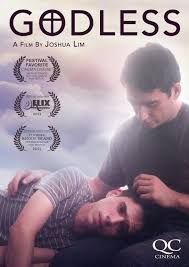
GODLESS
US, 2015, 80 minutes, Colour.
Craig Jordan, Michael E.Pitts, Garrett Young, Michelle Gallagher, Joseph Aloysius McGinn.
Directed by Joshua Lim.
A short drama dealing with an unusual subject, the relationship between two brothers, an incestuous relationship, not usually the subject of cinema.
This is fairly slow-moving film, lots of close-ups, lots of long takes, silent, giving the audience opportunity to respond to the characters, to their situations, to their crises.
The younger brother, by one year, Nate (Craig Jordan) talks to camera throughout the film, narrating his story, ultimately the farewell video indicating that he would commit suicide, a gun near the computer.
Which means that most of the story is told in flashback. The two boys, Nate and Stephen, Stephen the older, two very devoted parents, supportive, the audience finding them sympathetic. The father has cancer and dies. The mother, to whom Nate was devoted, also dies, Stephen coming back from college to help Nate who has been living with his mother and supporting her.
Then the revelation of the intimate relationship, from when they were young boys, continuing, Nate especially involved, depending on his brother, going into listless grief at the death of their mother.
Stephen brings home a boyfriend, obviously causing tension for Nate, some resumption of the intimate relationship, the boyfriend, on his PhD on astrophysics, is weary. In the meantime, a friend at the local gymnasium is in love with Nate.
Some tense sequences, Nate one of the most emotionally needy characters, Stephen needy but much less so than his brother. And the discussions between Nate and his friend at the gym – and some possibilities for the future.
The title? Stephen professes himself as atheist. Nate is not sure, wanting to see his mother again, agnostic. But, with scenes of the heavens and the stars, the work of the boyfriend, there are suggestions that, in fact, we do live in a God-created and sustained world.
The moral and religious implications and judgements are left to the audience.
Carry on Matron
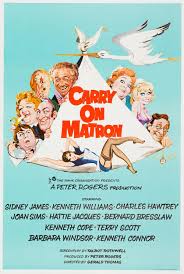
CARRY ON MATRON
UK, 1972, 88 minutes, Colour.
Hattie Jacques, Sidney James, Kenneth Williams, Kenneth Connor, Joan Sims, Bernard Bresslaw, Bill Maynard, Kenneth Cope, Barbara Windsor, Terry Scott, Charles Hawtrey, Patsy Rowlands.
Directed by Gerald Thomas.
Before this episode in the medical Carry on comedies, Nurse, Doctor, Doctor again. And, by this time, the Carry on films had been carrying on for 14 years. Most of the regular cast appear in this film.
There is a story of the hospital, Finisham, with wards named Bunn and Oven. And, there a place on the title at the opening, From Here to Maternity, Womb with a View…
Hattie Jacques, once again, is matron, sympathetic if dominating, but infatuated with the head of the hospital, Sir Bernard Cutting, once again Kenneth Williams doing his shtick, hypochondriac, fearing that he was having a sex change, pursued by the matron.
And there is something of a plot, Sid James leading a gang of crooks, including Bernard Briesslaw and Bill Maynard with Sid James’s son, Kenneth Cope, having to disguise himself as a trainee nurse, infiltrate the hospital and get the plans for where the contraceptive pills are stored so that the gang could steal them and sell them. So, lots of comedy with Cyril, the son, dressed as a nurse, sharing a room with Barbara Windsor, becoming a sensation in helping to deliver triplets in an ambulance! And, the intensity of the robbery, disguises, misadventures, and, ultimately, a gathering in some panic, everybody involved at the hospital.
Kenneth Connor, is able to create another character, a railway man waiting long hours for his pregnant wife to give birth, Joan Sims as the wife, seen continually eating hefty helpings and capitalising on the free meals. There is Terry Scott as a doctor with his eyes on the ladies. And Charles Hawtrey is able to do his shtick as a psychiatrist on the hospital staff, clashing with Kenneth Williams.
Lots of puns, lots of innuendo, some titillation, some slapstick, a typical Carry on comedy.
Sweeney 2
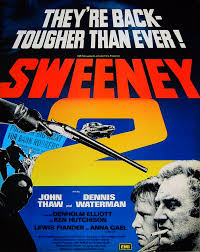
SWEENEY 2
UK, 1978, 109 minutes, Colour.
John Thaw, Dennis Waterman, Denholm Elliot, Ken Hutchison, Anna Gael, Barry Stanton, Nigel Hawthorne.
Directed by Tom Clegg.
The Sweeney was a popular television series in 1975 to 1978, 53 episodes. It starred John for and Dennis Waterman. It featured especially police investigations in London and beyond. It was created by Ian Kennedy Martin and many of the screenplay is written by Troy Kennedy Martin, including this spin-off film.
The first spin-off film came in 1977, Sweeney, large cast including some from the series. The second spin-off, Sweeney 2, in 1978 with the key leads but, mostly, with a different cast. It featured a cameo by Denholm Elliot as a corrupt police officer sent to jail, interrogated by the lead investigator, John Regan (John Thaw) as well as featuring, before Yes, Minister, Nigel Hawthorne as a police superior.
There is a lot of action, daring robberies, car crashes and chases, a long sequence in the disconnecting of a bomb in a hotel, lots of camaraderie and jokes amongst the squad, scenes with the two central characters, and a visit in Malta where the International gang of thieves created a home and a commune with their wives and children.
As a film in itself, it seems fairly conventional. Dennis Waterman had been a child star and made his mark with The Sweeney as well as Mind and New Tricks. John Thaw had appeared in many films, 53 episodes of The Sweeney, 27 episodes of Kavanagh QC and, of course, 33 episodes of Morse. His character in Sweeney seems conventional and somewhat callow compared with the depths in the writing of the character of Morse, his partnership with Lewis, his police style and investigations as well as his personal life.
