Displaying items by tag: Claudio Bisio
Bentornato, Presidente/ Welcome Back, Mr President
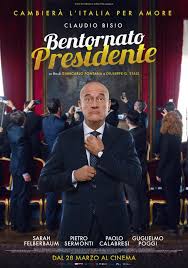
BENTORNATO PRESIDENTE/ WELCOME BACK, MR PRESIDENT
Italy, 2019, 96 minutes, Colour.
Claudio Bisio, Sarah Felberbaum, Pietro Sirmonte, Roberta Volponi.
Directed by Giancarlo Fontana, Giuseppe Stasi.
A political satiric film for an Italian audience, contemplating government since World War II, political parties, the Italian public, takeovers, the particular characters ranging from edifying Christian Democrats to Berlusconi.
For Italians, the premise might not be too far-fetched. By accident, a man is elected president, rules for some months, makes a progressive speech and retires back to the country. He marries, has a daughter. The wife, after all this time, is getting restless, wanting to go back to the political world.
In the meantime, there is a display of modern politics, a range of parties, a president retiring, campaigns, compromises, the old President turning up to confront his wife and when her back but being dragooned into taking office again with a range of consequences, a critique of Italian politics, the public, political chicanery and rivalries.
Audiences outside Italy might think that it is highly exaggerated – but the Italian audience might say that it is exaggerated – but not all that highly!
- For Italian audiences? For those who know Italian politics? Worldwide audiences and the political themes?
- The setting, Rome, the city, seats of government, poorer areas? The countryside, the mountains, trout fishing? Homes and country towns? The musical score?
- The initial situation, per Peppino, his name of Garibaldi, mistakenly becoming president, a few months, his positive speech, his resignation, retirement to the countryside, all his friends in the town, marrying Janice, the birth of Guevara, her name, Che? The happy life, contented?
- Eight years later, the elections, Janis and her role, the approach, unhappy with her marriage, isolated, Peppino and his way of life, love for her daughter, her decision to leave, go back to politics? Transferring to Rome, her change of address, manner, formalities, rules and regulations, assisting the president?
- Peppino, upset, not understanding, his friends, the need for therapy, three months and chopping down trees, therapy of the axe? His decision to go to Rome, win back Janis, going to government, being recognised, entree, rough, the need for a time, Janis and her reactions? His B&B, his daughter coming to stay with him, poverty?
- The political backgrounds, the campaigns, the scenes of people voting, the various advertisements, the right-wing candidate, the popular candidate, other nominees, their meetings, squabbles, political stances, the former president, presiding, the factions? The compromise?
- The personalities of the various nominees, the racist right-winger, the popular man who did not go to high school? His media outlets, staff?
- The decision about Peppino, the proposition, his refusing, his motivation for accepting, his daughter and her support?
- Ivan, suspicions, working with Janis? His skills? Peppino giving him the huge workload, his achieving it, thrown into the rubbish? The challenge to Ivan, the fact that he was gay? His working with Janis, surveillance? His own betrayal, the international links, the plan for making money?
- Peppino, all the trivial legislation, the Council meetings, his new draft, its being signed, the reaction of the people, all the support then the insistence on taxes and the popular reactions?
- Peppino deciding that the government would go on strike, lack of transport, electricity, hospitals…?
- The confrontation with Ivan, Janis urging Peppino on, the gay situation and humour? Ivan and his arrest?
- Peppino, Janis admiring him, his daughter, the possibilities of good government – or not, the rivals, their comeuppance, and popular response?
Non c'e piu Religione/ Messy Christmas
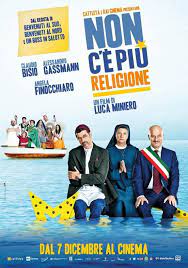
NON C’E PIU RELIGIONE/ MESSY CHRISTMAS
Italy, 2016, 94 minutes, Colour.
Claudio Bisio, Alessandro Gassman, Angela Finocchiaro, Nabiha Akkari, Mehdi Meskar, Laura Adriani.
Directed by Luca Miniero.
This is a comedy for an Italian audience and those who are familiar with Italians and Italian style. It will also be of interest to Catholic audiences and their particular perspectives on the changes in the church after the Second Vatican Council. There is quite an amount of dialogue, especially with a visiting Bishop and his secretary, echoing some of Pope Francis’s comments about clergy being the servants of people, open-mindedness about issues, dialogue with Muslims…
The setting is an island off the coast of Italy, the year is 2015, the year of the increasing numbers of refugees coming from the Middle East into Europe as well as of migrants sailing from Libya to Italy. There is quite some hostility shown by the locals towards the incoming refugees, some bigotry, kebab-eaters…
The main issue is the traditional presentation of a Christmas pageant, important for status and for tourism. However, the child who has been the live baby in the crib is far too large. There are no births in the village. How will they cope? This leads to discussions between the Catholics and the Muslims, especially with the three central characters, the Mayor who grew up on the island and has now returned, a nun who is vigorously different, with whom he was infatuated when he was very young, and their mutual friend who has converted to Islam and has married a Muslim wife.
So, the social theme of the time, attitudes towards refugees, dialogue, getting to know them, accepting the cultural and religious differences.
The wife of the convert is pregnant and so a possible candidate for the baby in the crib – and a lot of discussions about how appropriate this is. However, the Mayor’s daughter has arrived back from London, pregnant, refusing to name who the father is, declaring she is now a Buddhist.
We can see where this might be leading, a local child for the crib, some collaboration between Catholics and Muslims, a young Muslim who has grown up on the island an obvious candidate to be the foster father of the new born child.
So, some audiences will be looking at it for the dialogue about refugees. Others will be looking at the Catholic dimensions and changes. Or all of the above.
- The title? No more religion? Religion in the 21st-century, religion in religious Italy, changes? Open-mindedness? The English title, Messy Christmas?
- The island setting, the Mediterranean, isolation from the mainland? The traditions, the mayor and his election, local but returning, liked and not liked, the importance of the Christmas pageant, having a live baby, the traditions of Mary and Joseph, the Magi, comets and stars…?
- The screenplay and its attitude towards religion, the Catholic Church? Respect for the traditions? But contemporary comments about changes in the church, Pope Francis and his urging clergy not to be clerical, the Bishop and his secretary and the quotes about being humble, the Bishop washing people’s feet, modifying the traditions, not being exact…? Tongue in cheek comments on the Catholic church and changing perspectives?
- The mayor, his past, the friendship with Bilal, with Marta, memories of the kiss or not? The mayor and his daughter, living in England, the farewell? His coping with everybody in the village? The issue of the Nativity pageant, tradition, tourism, the Bishop?
- The film produced in the year of huge migration from the Middle East to Europe? The continued boatloads arriving on the islands of Italy, from North Africa? The acceptance and non-acceptance of Muslims, kebab-eaters, prejudices and bigotry? The baker and the issues of the variety of bread, the customers, Muslim requirements about seeds…?
- The issue of the baby, the boy growing up, too big, collapsing the crib? His mother playing Mary? The issue of the Magi, the baker as the comet/star, the musicians and players, issues of the animals, an ox?
- The enjoyment of the to-ing and fro-ing about the baby, and the other characters? The role of Sister Marta, an unusual nun, dominating presence, with the veil, in the kitchen without the veil, variations on the veil later, the other nuns? Her influence, intervening? Traditions? The pressure on her to change, the gradual changes? And her past with the mayor and Bilal, the references, the discussions, finally the truth?
- Bilal and his conversion to Islam, Italian, fake beard and its itching, his Muslim wife, her pregnancy, his wanting her to be Mary? Her dressing up, the group dancing to the English record? Clashes with the traditional Mary and who would be in the pageant? Bilal and his negotiations?
- The greater acceptance of traditions, the gradual steps and accommodations? The priest, the church and the congregation, the mayor intervening with announcements? The Muslims wanting a prayer space, dividing the church, the Catholics facing the alter, the Muslims facing the other direction all, prayer, increasing loudness…?
- The other members in the town, Ali, young, helpful, growing up in Italy? His friendship with the mayor’s daughter? Her returning pregnant, the mayor going through the list of who could be the father, with the help of Marta, her defying her father, not revealing the father, going into labour, everybody trying to help, Marta running, Ali helping, missing the ferry, on the boat, the procedure? The parallel with the mayor’s daughter, the irony of her name being Maddalena, the parallel to the conception and birth and the unknown father, the presumption of Ali, her declaring that she was Buddhist, the Asian face of the baby – and Ali to be the foster father of the child?
- The Bishop, his arrival with the secretary, in regalia, the mayor upset, warding off, all the discussions about what the Bishop would do, changes in the church, clergy more humble, issues of money, issues of tolerance, not strict letters of laws…?
- The friendship of the older three – a miracle sequence in the sea and their splashing each other?
- Italian humour, perspectives on the history of the Italian church, the issues of migrants, Muslims, welcome or not, coexistence?
