Displaying items by tag: Wayne Knight
GOAT
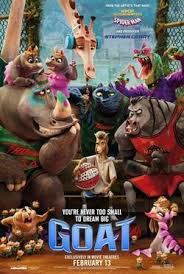
GOAT
US, 2025, 100 minutes, Colour.
Caleb McLaughlin, Gabrielle Union, Stephen Curry, Aaron Pierrer, Nicola Coughlin, David Harbour, Nick Kroll, Jennifer Lewis, Patton Oswalt, Jennifer Hudson, Wayne Knight.
Directed by Tyree Dilihay, Adam Rosette.
GOAT – that American accolade, Greatest of all Time. So, what better for the animation fans, and have a literal goat as the hero of the film, an enthusiastic young kid, a fan of basketball, admiring the star player, Jett, and encouraged by his mother to follow his dreams.
GOAT has been very popular in the United States, very American in its presentation of sport, competition, fans and the crowds. And, the sport in question is basketball, eventually playing of games but also the highly challenging and dangerous Roarball (something like a basketball version of cage fighting).
Caleb McLaughlin is the voice of Will Harris, our GOAT hero, eager, ingenuous, learning the realities of the hard life. Gabrielle Union is the voice of Jett, the champion, falling on hard times, getting older. And there are all the fans, especially when they gather at the local diner, a motley group of eccentric characters and their enthusiasm. And there is a regional loyalty to teams, especially when they have not won a competition for years – and an aggressive attitude towards the competitors.
This all comes to a head with the owner of the team, wily Mrs Anderson, Jennifer Lewis, doing financial deals, building up a team of eccentrics, including Jett and Will yet planning all the time for further deals and for Jett and her failure, as well as that of the team.
So, a great range of eccentric characters, visually, and voices. A lesson to be learned from animation films and voices – there is very little distinction between African-American voices and white voices, except some recognition of rhythms and accents. So, here there is racist equality, black and white actors voicing the characters without discrimination. And the same with the two directors.
There is something of a rough and readiness about the animation style, somebody making a reference to street graffiti, paint, brushstrokes, vivid colours, creating something of a tough urban atmosphere. And that applies here to the characters, the visual backgrounds, and especially in the basketball games and their rapid and effective editing.
And, by the end, the underdog team being beaten by the champions and rivals, Will, our hero, overhearing the plans of Mrs Anderson, talking to Jett who is determined to make a last stand for her reputation, disregarding all the teammates. But, as expected and hoped for, she comes to her senses, the team plays, the result is very close, and Will has the opportunity to be the GOAT that his mother encouraged him to be.
Perhaps a warning, anyone intending to see GOAT and who is not enthralled by basketball might be advised to check it out and think again!
Five Nights at Freddy's 2
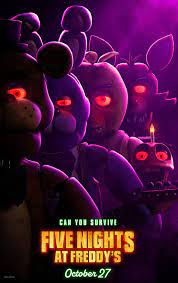
FIVE NIGHTS AT FREDDY's 2
US, 2025, 104 minutes, Colour.
Josh Hutcherson, Piper Rubio, Elizabeth Lail, Matthew Lillard, Skeet Ulrich, Freddy Carter, Wayne Knight, Mackenna Grace.
Directed by Emma Tammi.
In 2023, horror fans were delighted, generally, with a family-friendly and family-hostile horror film based on a popular game. The screenplay was written by the creator of the game, Scott Cawthorn, so he is offering his fans what they want and, of course, what he wants.
Freddy’s was a popular early 1980s pizzeria with families, and some popular characters to delight the kids, but, coming to life in a deadly manner, deaths and sadness. Audiences for this sequel will need to be up-to-date on the details of the first film as many of the characters continue on, especially Josh Hutcherson is Mike, the hero of the first film, looking after his young sister, Abby, their brother disappearing. And there was the sinister creator of Freddy’s who makes a fantasy reappearance. And his daughter, Vanessa, police, offering protection, but this time tormented by the family pressures, the disappearance of her brother, attracted to Mike, teased by Abby, but tension in the relationship.
In fact, this sequel begins with a parallel story to the prologue of the first film, families enjoying themselves at Freddy’s, a little girl sitting brooding, noticing a little boy vanishing, searching for him, carrying him out dead, desperate pleas to the parents who ignore her, harsh responses, push her away. She wants to get vengeance on those parents and, here we are 20 years later.
And the animatronics are back again, larger than life, friendly, sinister, aggressive. And the townspeople are celebrating at Freddy’s feast, upsetting to some of the survivors. And Abby is involved in the school project, robotics, presided over by a complacent Wayne Knight as the superior teacher, she wanting to create a robotic image from the past and submitted to the science exhibition.
Danger looms when a young television crew arrive to take a tour of the ruins of Freddy’s, meet a sinister smiling guide, and then death and mayhem.
So, the feast and robotics exhibition go ahead, the creatures are on the loose, Mike is desperate to destroy their wireless control, Vanessa confronts her childhood friend, the original malevolent girl.
And, audience expectations of the second visit to Freddy’s are fulfilled – and promises of more to come in discussions during the final credits.
- The popularity of the game? The impact of the first film? A sequel and a variation on the original themes?
- The return of so many of the cast of characters, the director? The creator of the game, writing the screenplay, his vision of the game and the film?
- The presupposition is from the original film, Freddie’s, the pizzeria, families enjoying the atmosphere, the games? The haunting of the first film, Mike, Abby, the disappearance of their brother? The role of their aunt? Vanessa, her sinister father, her brother disappeared, the father’s death, her role in the police?
- The prologue of the same as the first film, Charlotte, brooding, families, the disappearance of the boy, her appeal to everyone, the harshness of their ignoring her, putting her down, going to rescue the boy, emerging, her vengeance on the parents present? Her friendship with Vanessa, the bond with her father, the gift of the music box? Freddy’s closing down, but Charlotte present?
- The impact of the animatronics, actual puppets rather than CGI, the variety of characters, friendly, yet sinister, the originals, the developed giant-sized puppets? In the abandoned Freddy’s, yet still able to be activated?
- 20 years later, Mike and Abby at home, her preoccupation with her friends, going to school, teasing Mike and his relationship with Vanessa, the robotics, the teacher, his attitude towards Abbey, crossing her off the list, his manner? The Festival? In the background of the Freddie Festival?
- The Freddy Festival, the atmosphere, celebration, the drawings, the murdered notice on the wall, Michael ringing the number, Charlotte’s father, the music box?
- Mike, edgy, caring for Abby, the relationship with Vanessa, memories of her father in the past? The dinner, tentative? Vanessa, her character, police, strength, yet upset by the past? The sequence of the imagination of her father, confronting him again?
- Abby, watching the TV program, the team going to Freddie’s, Cavalier attitude, encountering Michael, his name, the tour, their wandering around, their torture and deaths? Michael’s relish?
- Abby, going to Freddie’s, sitting, befriending, taking the animatronic character, to the Festival, the teacher’s reaction, his going to his office, the character wanting to know was in his mind, crushing him? The consequent mayhem?
- The frantic conclusion, Mike, the electronics, with Vanessa, her being taken by Charlotte, the past memories, tied up, escaping? Trying to close down the creatures? The lighting up in different places? Michael coming confronting Vanessa, destroyed?
- The buildup to the confrontations, the various characters, coming to life, falling apart, the menace?
- In the credits’ sequences, a new group coming in, opening up possibilities for a sequel?
The Day the World Exploded: a Looney Tunes Movie

THE DAY OF THE EARTH BLEW UP: A LOONEY TUNES MOVIE
US, 2024, 91 minutes, Colour.
Voices of: Eric Bauza, Candi Milo, Peter MacNicoll, Wayne Knight, Laraine Newman, Fred Tatasciore Peter Browngardt.
Directed by Peter Browngardt.
A Loony Tunes feature film, especially for young audiences brought up on cut cartoons. Older audiences who accompany the children can have some nostalgia moments remembering Daffy Duck and Porky Pig.
For decades, Warner Brothers Looney Tunes have entertained millions of audiences, young and old, especially the young but providing many happy memories as audiences grow older. And there was a favourite characters, including Bugs Bunny, Daffy Duck, Porky Pig… And, after madcap adventures, THAT’S ALL FOLKS! And, behind the scenes for many, many years, the voice of Mel or Blanc.
In 2003 there was a combination of animation and live-action in Loony Tunes: Back in Action, with Bugs Bunny and Daffy Duck, and a host of stars led by Brendan Fraser and including Steve Martin and Roger Corman.
This version is completely animation. And, fortunately for the tone of the comedy, voice artist, Eric Bauza, takes on the voices of both Porky Pig and Daffy Duck. He has received an Emmy in the past for his Voice Talent and his ability to be a worthy successor of Mel Blanc.
The title of the film is ominous and it begins with a scientist discovering an asteroid hurtling towards earth, finally arriving, through a town which specialises in a Gum Factory. But, then, there is a very nice flashback, the young Daffy and Porky, their being taken in by the very nice Farmer Jim, the early life, and his disappearance into the heavens. But, in the aftermath, there is an inspection of the house, rather in disrepair, and they have to take on quite a number of jobs to try to raise money for the repairs. The youngsters will enjoy the catalogue of attempted jobs and the more frequent word up there on the screen, Fired.
Enter a new character, Petunia Pig, researching various tastes for the Gum Factory, Porky attracted, she very businesslike, Daffy trying to foster the romance. And that continues throughout.
However, it tends to science fiction, a deadly creature, and invader, wanting to take over the Earth, subduing the scientist to his will, wanting power over the Gum.
What follows, at quite some length perhaps for adults, the youngsters enjoying all the mayhem without analysing the credibility of the proceedings!, all kinds of power takeover by the invader, overcoming the town, then the whole world, with the gum taste that reduces everybody to mad behaviour.
Can the threesome change the world? What about the invader and the scientist? What about the mayor of the town and the haughty House Inspector?
No spoiler in learning that our heroes and heroines win the day, the admiration of everyone, the saving the world from the overpowering taste of the gum. But, unexpectedly, the invader experiencing a change of heart and rejoicing along with everyone else at the saving of the world.
Principally a colourful and action-filled magic action entertainment for younger audiences.
Blindspotting
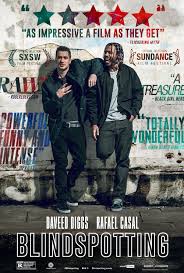
BLINDSPOTTING
US, 2018, 95 minutes, Colour.
Daveed Diggs, Rafael Casal, Janina Gavankar, Ethan Embry, Tisha Campbell, Wayne Knight.
Directed by Carlos Lopez Estrada.
Blindspotting was created by the two stars, Daveed Diggs and Rafael Casal. They worked together in a number of projects, especially short films, music videos. Diggs himself had significant roles in Hamilton. The director is Carlos Lopez Estrada, also noted for music videos.
This film is a variation of the Boyz in the Hood kind of neighbourhood film, focusing on African-Americans, poor situations and lack of opportunities, relationship with white people, racism, the police, crime and arrests. However, the setting is Oakland in the 2010s, comparisons with New York stories, contrasts.
The film creates the atmosphere of Oakland, the inner city, the streets, clubs, the accommodation for those on probation, homes, but also on Oakland society because of the work of the two central characters as removal of this, a variety of locations for their work.
There is also a love for rap throughout the film, various occasions for rap performances – but, especially for Diggs in a confronting finale with a police officer, a tour de force rap presentation.
The title is explained later in the film, a focus on one of those drawings where the observer sees one image and, with suggestion or otherwise, a different image within the same frame (black vase with two white profiles). The observer sees one or the other, the other blindspotted. And this is the case with observing the central characters of this film. Looking at the good or the bad and the of the blindspotted
To be Diggs is sympathetic as Coll in, released from prison, involved in a vicious fight with his friend of Miles outside a club. And witnessed by his girlfriend works at reception in the same removalist company as the two men. The film fast forwards to the last three days of his probation, his living in the halfway house and the demands made of coming in at 11 PM, of doing cleaning chores, the hostile attitude of the manager.
By day, he and his friend, Miles, are well occupied with their jobs – as well as conversations at reception.
Collin and Miles have been friends since childhood, one black, one white. Myles has married an African-American wife and they have a daughter. Miles’s erratic in his attitudes and behaviour, always taking tough attitudes, bursting out, teasing Collin. There are domestic scenes with his ever-patient wife, the little daughter trying to be tough, enjoying games with Collin.
In the latter part of the film, the fight that got Collin into trouble is visualised, a strongly vicious fight, Collin out of control, Miles more than vicious. Last night of his probation, Collin goes to Miles’ house, finds the little girl playing with the gun Miles has bought, desperate feelings to recover the gun. They go to a party, Miles picking a fight, again a vicious outburst.
But the final confrontation sequences are with the policeman. Early in the film, Collin was stopped in his removalist truck at a red light, suddenly sees a young African-American man who runs, a police officer emerging, shooting the man four times – and the news on television of this episode recurring through the film. At a removalist job, Collin finds that his wife has walked out on the policeman who is still in the house, their eyeing each other off, Collin and every rage coming to the surface, in a dramatic rap, the policeman terrified – but Collin, threatening with Miles gun, says he is not a killer and leaves.
The film was so successful that the makers decided to develop the story into a television series which ran to 16 episodes.
12 Mighty Orphans
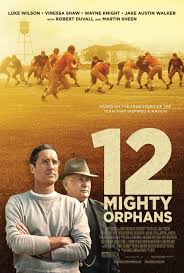
12 MIGHTY ORPHANS
US, 2021, 118 minutes, Colour.
Luke Wilson, Martin Sheen, Wayne Knight, Vanessa Shaw, Jake Austin Walker, Scott haze, Jacob Lofland, Robert Duvall, treat Williams, Larry Pyne.
Directed by Ty Roberts.
This is a film very much in the traditional American spirit, of country and patriotism, love of sport, especially football, appreciation of the underdogs.
It is based on a true story – however, quite a number of the facts and timelines have been altered for the drama.
In the aftermath of World War I (with a number of flashbacks of war action for the central character, Rusty Russell wounded, especially in his eyes but recovering), the film focuses on the Depression and its effect during the 1930s. In particular, it focuses on institutions for orphans, often looked down on in American society as second-class citizens.
Rusty Russell, already a top football coach, takes on the job at the Masonic institution for orphans in Fort Worth, Texas, travelling with his wife and family, his wife a successful English literature teacher. They are played by Luke Wilson and Vinessa Shaw.
The film shows the harsh life of the Institute, especially with one of the staff played by Wayne Knight, in charge of the printing business, exploiting the orphans, physical brutality towards them, and later revealed as embezzling money and colluding with the coach of an opposing team, a vengeful attitude towards Russell.
However, the focus of the film is on the orphans themselves, age 17, rough and ready, one with a particular chip on his shoulder and anger, gradually the group moulding into a team, getting gear from charities, working together with the coach who is inventive in his creation of play, becoming successful, opposed by powers that be with petty regulations and interpretation, the media intervening as well as to and ultimate success. However, with a sober realism, they lose the final championship match.
A number of veteran actors in supporting roles including Martin Sheen, at age 80, as the doctor assistant coach, a glimpse of Robert Duvall at age 90, and Treat Williams and Larry Pine as Roosevelt.
There is a fine tribute to the Russell’s as well as to each of the mighty orphans in the final credits, photos and an admirable list of achievements by each of them.
- Based on a true story? The alteration of facts and timelines? A tribute to Rusty Russell? His wife? Their work with the orphans, football and tactics, love of literature? The final tribute with the details of what happened to Russell and his wife, the 12 orphans themselves, achievement?
- A film of the American spirit, American football, sport, fans, even President Roosevelt, the Depression, the 1930s, poverty, lack of opportunity, the low status of orphans?
- The use of black-and-white photography, for World War I sequences, for the depression, the insertions? The atmosphere of the 1930s, Texas, the family travelling by car, the depressed communities, going to Fort Worth, the Masonic institution? The task of coaching the orphans? Of teaching them? The musical score?
- Russell and his story, the flashbacks to his experience in the trenches, the death of his brother, his blinding, his recovery? The recurring memories? His using his experiences to encourage the orphans? Married to Juanita, giving up a significant post, wanting to help the orphans? His daughters? His appearance and manner, glasses, difficulties with his eyesight? His explanation of his own background as an orphan?
- The Institute, the head, his concern about maintaining the workings, Frank Wynn, the printing, his bullying, hitting the students, his sneering attitudes, the rules, embezzling the money, his link with the rival coach, providing the birth certificate, his mistake, the confrontation with Russell, the hearings, his arrest?
- The orphans, their age, status, back stories, the mother abandoning Wheatie, Hardy, the death of his father, covered in blood, his resentments and anger? The lack of education? Interactions amongst themselves?
- The football theme: the opening, dressing room, the clashes amongst themselves? The rest of the story going back to arrive at this match?
- The boys themselves, their personalities, interactions? Hardy and his resentments, blood, shower, Snoggs trying to help? Continued manifestations of anger? The football field, rough, no shoes? The gradual building up of gear, shoes, pads, jerseys? Football issues? Scenes of training, boys’ reactions? Angers amongst themselves?
- The range of football matches, football scenes, the tactics, Russell’s daughter and her idea, the creative play, Russell changing play styles? The tough matches, the opponents, the referees?
- Doc Hall, age, no salary, his drinking, seeing the boys, a father figure, treating Hardy? Supporting Russell, recommending him? Assistant at the training, intervening in the crises, confronting authorities? At the games? His having to give up the drink?
- Juanita, supportive of her husband? The rough housing, settling in, her classes, enthusiasm, the boys and their learning?
- The rivalries, the hearings, Roy Kidd and the writing of the manual, his wanting to exclude the Mites, Doc Hall and the text? The hearings for their expulsion, his brother-in-law as the smug coach? The intervention of Amon Carter, his newspapers, watching the matches, his bets, links with the journalist, the reporting? The intervention of Roosevelt and the reversal of the decision?
- The hostile coach, setting up the big player to eliminate rivals? The hospitalisation of Fairbanks? Hardy, playing, his success, tactics? Eventually supporting the war cry?
- The failure to win, Hardy blaming himself, yet public support, fans, letters, demonstrations?
- The spirit of the Mites, the coach, love for football?
- The impressive tribute to the end and the careers of Russell and his wife and the orphans themselves, achievements?
