Displaying items by tag: Warwick Thornton
We Don't Need a Map
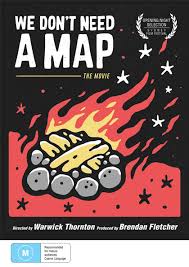
WE DON'T NEED A MAP
Australia, 2017, 85 minutes, Colour.
Directed by Warwick Thornton.
Two compelling reasons to watch this documentary from 2017. First is the subject. Secondly, the writer-director.
The reason for the title is that Warwick Thornton is making a film about the Southern Cross and its role in aboriginal lore, the vastness of the stars, the recognition of the stars in the Southern Cross, its role in guiding people in their travels, its symbolism with various myths.
There is a focus on the Eureka flag, with the Southern Cross, and the suggestion that it could be interpreted as a swastika, something that upset people in 2017. Warwick Thornton has invited quite a range of talking heads, many aboriginal leaders, writer and commentator, Bruce Pascoe, singer, Adam Briggs, and many more.
The narrative of the film encompasses indigenous history, pre-1788, and the relationships between the first peoples of the land and those who came from elsewhere. Thornton uses the device of small creative scrap-iron puppets to dramatise the events.
For those who are familiar with the history from 1788, conflicts, the authorities, the squatters, the hostilities, massacres, this film presents a dramatic visual and thematic overview. For those not familiar, for younger audiences, indigenous audiences to appreciate history, it is interesting and provocative.
The second reason for watching this film is to appreciate the career of Warwick Thornton, his background, photography, filmmaking, early documentaries, his formal training, his work as a cinematographer, his breakthrough feature film, 2009, Samson and Delilah. He often works with his famous cinematographer son, Dylan River. This includes a six part documentary about Thornton and his life, The Beach.
At the time of this documentary, Thornton was making his second feature film, Sweet Country, racist prejudices and wars at the time of World War I and its aftermath, a winner of many awards. Thornton was to make The New Boy, drawing on his time in Catholic education at New Norcia, the continuation of the themes of Sweet Country in Wolfram, the exploitation of indigenous child labour in the search for tungsten. (Thornton also directed some episodes of televisions, Mystery Road.)
A significant contribution to Australian history, race history.
Wolfram
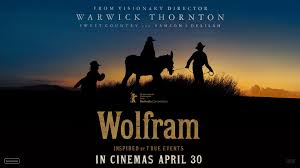
WOLFRAM
Australia, 2026, 100 minutes, Colour.
Deborah Mailman, Pedrea Jackson, Thomas M.Wright, Errol Shand, Matt Nable, Anni Finsterer, John Gibson, Natasha Gorey Furber, Eloise Hart, John Howard Ferdinand Hoang. Aidan Du Chiem.
Directed by Warwick Thornton.
Over the years, writer-director, Warwick Thornton, has become one of Australia’s most important indigenous filmmakers. For almost 20 years, his dramas have highlighted these themes, especially in central Australia, award-winning films like Samson and Delilah, Sweet Country, The New Boy, and, now, Wolfram.
Sweet Country were set in the 1920s, confrontations between white landowners and black uprisings, the police… Wolfram is set in the 1930s, prospectors, white Australians and a number of Chinese, in Central Australia, prospecting for Wolfram/tungsten. They have leases, have charge of aboriginal children, who are able to go down into the mine shafts, small, working in the narrow dark, sending up samples. They are quite young,have lost connection with their parents, now at the mercy of these white men, harsh, drinkers. The re-creation of these mining settlements, out in the harsh desert, is disturbing.
But the drama has several chapters, introducing a range of characters then gradually bringing them together for final confrontations, and some reconciliations.
In many ways and visual styles as well as in the action, Wolfram is in the vein of American westerns. There is the local town, the pub version of the American saloon, the women at the bar, the men customers. And in ride two characters, sinister in look and manner, one, who is ruthlessly violent, played by Errol Shand, and his young associate, naïvely absorbing the racism and enjoying the violence, Joe Bird. They want information about a contact who has a lease, Kennedy, played by Thomas M. Wright. Kennedy is retired now, has a young indigenous man working for him, Philomac, played by Pedrea Jackson, showing the taken-for-granted contempt for the aborigines and the demands made on them.
In the meantime, there is another story element, the aboriginal mother with her baby, played by Australia’s leading indigenous actress, Deborah Mailman. She is travelling with a Chinese miner, but cutting her hair, leaving the tufts and beads on trees, hoping that her children will find them and follow her. She is quiet, sad, another victim of racism in the 1930s. (On the other hand, the Chinese characters, out searching for Wolfram, are sympathetic – and, the audience appreciating their martial skills when they tangle with the white villains of the drama.)
For Warwick Thornton, this is dramatising the harsh past, acknowledging the truth for aboriginal people, holding up an often unwanted mirror to the behaviour of brutal and racist Australians. And, sadly in the time of the Uluru Statement from the Heart, films like this are still a needed challenge.
- Title, the metal, mining, prospectors, labour, white owners, and Chinese working?
- The films of Warwick Thornton, indigenous themes over two decades, Australian indigenous history? Racist? Critique of the remnants of convict culture? Christian and religious references?
- The various strands of the plot, the signalled chapters of the film, the range of characters, connections, coming together?
- The opening, the hammer and the chisels of the rock, mining for Wolfram? The young children, the audience assuming through the film that they were boys, the hard work, the treatment, Billy, his hold over them, his drinking, harshness, the later collapse and his death? The flashbacks and his relationship with Pansy? The children taken from their mother? The back story?
- Pansy, with the baby, grieving, sitting contemplating, patting her hair, the beads, leaving the signs on the trees and branches for her children, her partner, his racial background, travelling the sulky, over the countryside, searching, not going to Queensland? The recurring images of Pansy?
- Kennedy, his lease, his home, the shed, living alone, except for Philomac, servant, Kennedy and his demands, Philomac and his age, no explanation of his background, his work, the treatment? Subservient? Yet intelligent young man?
- Casey Martin and Frank, Casey Martin and his appearance, sinister, rough, riding into town, the pub, the woman at the bar, her dress, attitude, payments, chitchat, the young girl persisting? The men in the pub, attitude towards the visitors? Going to the store, supplies, the owner, his aboriginal wife and their reaction? The issue of the lease, his giving information about Kennedy?
- The couple riding through the countryside, coming to the mining area, the various workers, the tense, the diggings, explosions, the explosions underground? The encounter with Billy? With the children? Riding, finding Kennedy, his paranoia, the reunion, the humiliating Philomac, staying in the shed?
- The children, their hard work, going down into the mines, the gelignite the explosions, Billy, his collapse? The child with the donkey, riding through the countryside, the picture of the child wandering? Finally meeting at Kennedys? The child finding the charred remains of the old aborigine, his having worked for Kennedy, Martin and Frank killing him?
- The presence of the indigenous tribes, suddenly appearing, the Elder, the young girls, the water, the women washing, the young girl watching, Martin and his brutality, the killing? The aborigines meeting with Philomac, not helping, walking away? The ultimate confrontation with Martin, the violence, the women, his being killed?
- Martin and Frank going into the town with Kennedy, searching for Philomac and the children, their ability to hide in the caves, observing the brutality with the aboriginal women? The steering of Kennedy, his collapse, injuries?
- In town, in the bar, the woman at the counter, the discussions with the owner, treating Kennedy, breaking the binding?
- Philomac and the children, encounter and the Chinese, the friendly reception, the meals, sleeping, intending to leave, the work, the discovery that the children were girls, the toilet scene, the laughing, going down into the shaft, the rope, the girl falling down, Philomac falling, the young Chinese falling down? The rescue, the injuries?
- The intention to move, to Queensland, going into the town, the Chinese and his encounter with Frank, the fight, martial arts, the strangling? Martin discovering this, his leaving town with vengeance, his own death?
- Pansy, the travel, seeing the sulky coming through the fields, the happy reunion, including with Philomac?
- The 1930s, Australian history, the treatment of the indigenous people, the brutal white people, exploiting, humiliating, yet their racist attitudes, low intelligence, and brutality? Warwick Thornton’s films and their challenge to the interpretation of post-1788 Australia?
New Boy, The

THE NEW BOY
Australia, 2023, 116 minutes, Colour.
Cate Blanchet, Aswan Reid, Deborah Mailman, Wayne Blair, Shane Brady, Tyrique Brady.
Directed by Warwick Thornton.
An intriguing film, colonial attitudes, First Nations people, religion and faith. As a realistic representation of Australian history, not so much. Writer-director, Warwick Thornton (Samson and Delilah, Sweet Country) references his own boyhood experience with the monks at Western Australia’s, New Norcia, the architecture of the convent, the agricultural background, winter, olives… As a probing of the impact of missionaries (especially Catholics and nuns), quite an allegory to be explored – the lives of the indigenous people, especially focusing on the new boy of the title (about 11 years old, never named though the orphan boys initially called him Darkie, a wonderful screen presence by Aswan Reid). No explanation of his origins except the opening where he throttles a policeman, is taken into custody, in a bag, dumped at the convent at night. There are two indigenous characters at the convent, Sister Mum, the benign cook, and George, the taciturn handyman, (played by veterans Deborah Mailman and Wayne Blair).
Ordinary audiences may be bewildered and/or put off by the focus on Jesus, prayer, piety and devotion and, above all, the large new crucifix, the excited arrival, elevated in the chapel and the nails hammered in. (The final long-held image of the film is the crucifix). But, for religious audiences, there is a fascination with how the new boy responds to the crucifix, identifying with Jesus, embracing, literally, the figure of Jesus, taking him down from the cross, tender towards him, removing the nails, the boy identifying with Jesus, even to wounded hands, becoming what we might call a Christ figure. Which highlights the challenge of the church and the Mission to the indigenous people and their embrace of Jesus in Christian practice and the meeting of Dreaming and lore and the Gospels.
This is embodied in Sister Eileen (and a worldwide audience wanting to see a Cate Blanchett film). Promotion refers to her as a “”renegade nun”. Not really, quite misleading. She is definitely eccentric, deeply committed in her way, sometimes mentally disturbed, sometimes drinking, devoutly prayerful, the crucifix. She exercises power over the small group of under-12 orphan boys, (with a World War II setting) but combines orders and discipline with kindness. And the boys respond. As does the new boy though he is often bewildered (sleeping under the bed, mystified by spoons for porridge, not speaking except a few of his own words, but, ultimately, his word is a repeated Amen. And, mysteriously, he has the power to create fire in his hand, a kind of numinous link. There is no priest, Sister Eileen taking over from Dom Peter, interpreting rules, performing baptisms, stole and chasuble, even the new boy, cleaning and dressing up, but the loss of his power of fire. She has set up her own church but relies on her piety. Cate Blanchet as usual, a tour de force presence. So, a 21st-century perspective by a top filmmaker, provocative on colonial issues, on missionary issues, the consequences, but relying on traditions and art of Catholicism to evoke deeper social and spiritual responses.
1. The title, the introduction to the boy, his age, attacking the policeman, throttling him? Taken into custody, in the bag, dumped at the convent door, aboriginal boy?
2. The setting, Western Australia, the director’s own story at New Norcia, the background of the monks at New Norcia, schools, the sisters? The convent, the accommodation, the rooms, dining room, kitchen? The farm, olives, the wheat, the machinery? The field fires and putting them out? The authentic atmosphere? The Nick Cave-Warren Ellis score?
3. The World War II setting, the West Australian countryside, the train, the passengers, the soldiers, talk about the war? The King’s final speech and peace?
4. The credibility of the plot? The nuns, the death of Dom Peter, the isolation, the covering the death, running the school themselves? Possibilities of discovery? Sister Eileen writing the letters in Dom Peter’s name? To the state protector? Feigning the argument with Dom Peter to deliver the crucifix? The two sisters, isolated? The running of the school, personal lives, relationship with the boys? The acceptance of the new boy, his place in the school, then making exceptions for him?
5. The story of the boy, age, his own language, rarely speaking, the mystery of the convent, the bed, sleeping under the bed? The mysterious fire in his hand? Indication of powers, traditional lore? The food, awkwardness with the spoon? Relationship with the other boys? Matthew punching him, the boys cheering, the new boy knocking down Matthew? The bond between them? The interactions with Sister Eileen? The happy interactions with Sister Mum? Interactions with George, George’s suspicions? In the chapel, the prayer, the arrival of the crucifix, the boy and his reaction to the crucifix, the nails, climbing the crucifix, hanging on to Jesus, the relationship with Jesus, taking out the nails, taking Jesus away, tending to him with the jam, injuring his own hands? Sister Eileen’s reaction? Jobs, the games, putting out the fires, the olives, the wheat? His riding on the wagon? Gradually adapting? Saying amen? Sister Eileen baptising him? Washing him, combing his hair, clothes? The game, the roller up the hill, George urging him to go? His future? And the loss of the fire in his hand?
6. The portrait of Sister Eileen, her piety, prayer, the habit, the chapel, baptising Johnny, wearing the stole, baptism the priestly thing, farewelling Johnny? Johnny and his walking away with a suitcase? Her drinking? Her relationship with Sister Mum? Power, discipline, Michael is the head boy, the caning? Her reaction? The work, out in the fields? Her response to the new boy, caring for him, empathy, making him special, her reaction to him with the crucifix, putting the crucifix back, George hammering in the nails, her decision to baptise the boy? Wearing stole and chasuble? The change in the boy, the game, his leaving? Her future? The deception about Dom Peter, pretending that he was present, his death, signing the documents, for the police, the letters to the protector, the argument about the delivery of the crucifix? Her future?
7. Sister Mum, kindly, cooking, her photo with the children, her vocation, with the boys, happy, prayer?
8. George, aboriginal background, working for the sisters, handyman, the olive crop, the wheat, putting up the crucifix? Finally urging the new boy to run?
9. The boys, their age, orphans, entrusted to the nuns, the background of the war, Johnny, 13, leaving, to work on the farm, the baptism, his suitcase and walking away? Michael in charge, bossy, the caning, the injuries during the fire, in the wheelchair? Matthew, big, the fight with the new boy, the reconciliation? The role of the other boys, in the chapel, the clothes, the work, the meals? Their reaction to the new boy?
10. The background of the police, attitudes towards aboriginals, the rest of the boy, delivery at night? The threat of the police?
11. The film as an allegory of colonial attitudes, missionary attitudes, the indigenous people? The effect?
12. The spirituality themes, the focus on Jesus, the crucifix, the nuns prayer, the boys prayer, the new boy and his response to Jesus? Faith and spiritual themes?
