Displaying items by tag: Matthew Rhys
Watchmen, The, Chapter I
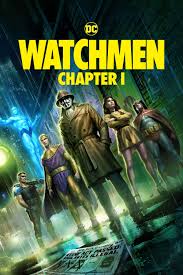
WATCHMEN, CHAPTER I
US, 2023, 83 minutes, Colour.
Voices of: Troy Baker, Adrienne Barbeau, Michael Cerveris, Jeffrey Combs, Max Koch, Geoff Pierson, Matthew Rhys, Katee Sackhoff, Dwight Shultz, Titus Welliver.
Directed by Brandon Vietti.
These are two animated films from the graphic novel, Watchmen, by Dave Gibbons and Alan Moore (1986-1987). Into chapters, they cover the plotlines and characters from the live action version of 2008, directed by Zack Snyder.
There are two main approaches to reviewing a film version of a graphic novel, especially one that has developed a cult following for almost a quarter of a century, as has Watchmen. Firstly, there will be the reviews by the fans, those who know the original so well that they have visualised the films themselves and will be eager to see how accurate the film version is or how well the makers have interpreted the content and characters as well as finding visual parallels to the book. Then there will be the reviews by those who may not be familiar at all with the original but who have an appreciation of films and have built up an experience of film versions of graphic novels. The first kind of review can be found on the Internet Movie Data Base and, prolifically, on the blogs and interactive sites. The second kind of review will come from the critics in the public media, in print, on air, on screen or in cyberspace. This review will be of the latter kind.
Whether it does justice to the original material, created by Dave Gibbons and Alan Moore (1986-7)… It almost goes without saying (so that is why it is being said here) that this is not a film for the wider audience who might be puzzled by its style, by the conventions of the graphic novel, by the intricacy of the plot. Obviously, some audiences will find the visual violence too much for them. Despite the hype and marketing, this is a specialist film.
The opening certainly gets the attention. One of the superheroes. The Comedian is attacked in his apartment by a human or humanoid with superhuman strength and is killed. The voiceover commentary, which recurs at key times, comes from the diary of another, very bizarre, member of the group which began in the 1940s as The Minutemen, and, after saving lives and other heroics (some of which were of a dubious moral and political nature) have retired. This is Dr Rorschach whose bandage-like mask has continually moving and altering blots. Dr Rorschach begins investigating the murder and other attempts on the Watchmen.
Then a fascinating visual trek through mid-20th century American history, from the end of the war, through Vietnam, Cuban crisis, JFK and his assassination and the election of Richard Nixon. It is now 1985 as we move into a parallel world where Nixon has been elected for a third term and is involved in a nuclear standoff with Russia (Henry Kissinger prominent as his adviser). Once we make the switch to the other world with this alteration of history and the murder of The Comedian, we are ready to move with whatever happens, believable or not, in the drama that unfolds.
While there is a thread concerning the five minutes to midnight on the Doomsday Clock (moving to four minutes to twelve), the film is episodic insofar as it focuses in turn on the Watchmen group and gives us the back stories of their heroism (or not) which suggests that victory in Vietnam, Watergate, All the President's Men and other events may have had more sinister implications. Ultimately, this leads to a nuclear confrontation and an insanely intelligent mastermind who feels that the only way to peace is by the sacrifice of millions lives in a nuclear holocaust.
In entering into an alternate world, the audience definitely has to suspend disbelief.
In the back stories, The Comedian does not come out very well though he has an opportunity to see the malice of his ways. Most interesting is the story of Dr Manhattan, a mutant creature with foreknowledge of his own life, not others, who was the victim of an accident in a reactor in 1959. This sends us back to a nice era with some nice people, especially Jon Osterman, who becomes Dr Manhattan, a well-known public figure who becomes the scapegoat of the villain. He loves Laurie Jupiter, once Silk Spectre II, his assistant but is impeded by his work and his sense of doom. (Her mother, Silk Spectre I is now a retired alcoholic, somewhat cynical, veteran of the old days. Laurie also relies on Dan, formerly Nite Owl who has retired but has inherited enough money to continue his engineering of super-vehicles (in a Bruce Wayne kind of way). Dan and Laurie really would like to go into action again and do so, rescuing people from a burning building and getting Dr Rorschach out of prison after he is framed for murder. The prison scenes have most of the violence.
The other member of the group, who has gone public and is feted by the media, is Adrian Veidt, once Ozymandias, wealthy and the owner of many companies.
The following questions refer to the live-action film but can be used for the animation films for comparing and contrasting treatments.
1.The reputation of the graphic novel, its authors, as a landmark in this genre in the 1980s? Graphic novels for adults? Issues? Conventions – and the breaking of conventions?
2.The film and expectations of fans, fidelity to characters, mood, issues, heroic/not? The creation of an alternate world? The visuals for this world?
3.The importance of the visuals in the film: the realistic atmosphere, the darkness for the graphic novel action, the special effects, the flair? Costumes and décor? The creation of the alternate world? Locations in New York City, Washington, the creation of new vehicles and action? Mars? The world of Doctor Manhattan and his appearance? The masks and reality for the Watchmen? The musical score?
4.The title, the introduction to the Minute Men? The 1940s, fighting crime, the era of the creation of comic strip characters, their photos and press conferences? Heroism? Their being used by the governments, for right and wrong, Doctor Manhattan and the victory in Vietnam? The speculation and vision for the assassination of John F. Kennedy? Their personal behaviour, violence, rape by The Comedian, decline? Their Ageing? Anonymity? Their being officially outlawed? The question of who watches the Watchmen?
5.The prologue, the introduction to The Comedian, his age, watching TV, his apartment, the intrusion and the attack, the humanoid who attacked him and killed him? Thrown to his death? The police, their trying to reconstruct the scene and what happened?
6.Doctor Rorschach and his diary, the voice-over, throughout the film, the nature of his investigation?
7.The credits, the overview of US history since World War Two? The focus on Kennedy and the Kennedy era, Castro and the Soviet Union, the war in Vietnam, the election of Richard Nixon, the alternate world of 1985 with Nixon still in power? Echoes of the 1980s and east and west and nuclear fears, on the brink of war? The confrontation? The illustration of the Doomsday Clock, the television debates about the future of the world?
8.The structure of the film: The Comedian’s death and the investigation, Doctor Rorschach and his investigation and diary? The interviews with the various Watchmen? The build-up of suspicions, scientists, deaths? Daniel and Laurie? The role of Doctor Manhattan and his behaviour, framed and arrested? Doctor Rorschach in jail, the rescue? The world situation, Adrian Veidt and his power? The interspersing of back-stories for the Watchmen throughout this narrative?
9.Doctor Rorschach, the nature of his mask and the changing blots? His investigation, his questions? In himself, his being framed for the murder, his visiting the scientists? In prison, the procedures, the treatment? Seeing his face? The brutality in prison, the riot, the confrontation with the dwarf? His being rescued?
10.Doctor Manhattan, his scientific work, Laurie as his assistant, his shifting in space and time? The puzzle about him and his activity, going to the television interview, the barrage of accusations about his being responsible for his friends getting cancer, their coming into the studio? His reaction, his going to Mars for reflection?
11.His back-story, the late 1950s, the visuals of that era, everything nice, Jon and his girlfriend, on the pier, his work, his going back for his watch, being trapped in the laboratory, the transformation effect? His powers, the visualising of his defending the American forces and destroying the Viet Cong in Vietnam? Used by the government? Research?
12.The women amongst the Watchmen? The lesbian relationship? Silk Spectre and her public performances, with The Comedian, the brutality of the rape? Getting old, drinking? Her relationship with her daughter, their clashes? The truth for Laurie about who her father was, the bond with her mother?
13.The Comedian, his initial success, growing old, brutality and the rape, his final repentance, going to the scientist and confessing?
14.The scientists, their research, their retirement, their apartments, the visit by The Comedian, Doctor Rorschach, their deaths?
15.Daniel as Nite Owl? His going to listen to stories from the original Nite Owl? His not having a need for money, his laboratories, his building the vehicles, the friendship with Laurie, with Doctor Manhattan? His ordinary life, going out to meals, restaurants? Relating to Laurie? Their feeling the need for action, the decision to act, his vehicle? Rescuing the people from the building on fire? The decision to rescue Doctor Rorschach, rescuing him?
16.Adrian, not anonymous, his press conferences, his charm, allegedly the most intelligent man? The Veidt organisations? His Watchman name of Ozymandias? His schemes, his use of his power, his nuclear power, setting up all the Watchmen, responsible for their deaths? His setting off the nuclear destruction? A small sacrifice, according to his calculations, for world peace? The Watchmen confronting him? The decision to cover up what he had done for the sake of world peace?
17.The background of President Nixon, his actual history, his being re-elected, the nuclear fears of the mid-80s, the advice from Henry Kissinger, the various meetings and his military advisers, the information about the confrontation with the Soviet Union, his contact with the premier, the nuclear explosions?
18.The finale, the cover-up? The Watchmen and their strengths and weaknesses? The moral ambiguity of this world?
Saturday Night
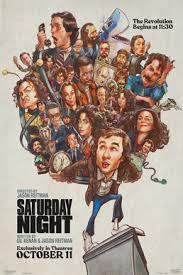
SATURDAY NIGHT
US, 2024, 109 minutes, Colour.
Gabriel LaBelle, Rachel Senott, Corey Michael Smith, Ella Hunt, Dylan O'Brien, Emily Fairn, Matt Wood, Lamorne Morris, Kim Matula, Finn Wolfhard, Nicholas Braun, Cooper Hoffman, J.K.Simmons, Nicholas Podany, Robert Wuhl, Jon Batiste, Willem Dafoe, Paul Rust, Tracy Letts, Matthew Rhys.
This history/comedy/memoir was released at the 49th anniversary of the opening show of what has become an American tradition, Saturday Night Live. While the program is screened in other countries, it is a particularly American television experience, comic experience, social commentary and criticism experience. While it touches the American funny bone, the response of audiences outside the United States might be something of hit and miss.
Which might be also the case with this film, American audiences relishing the re-creation of that first night, the tensions in the last hour and a half before going on air live. And there are many famous names appearing in this film, many of whom through Saturday Night Live became media celebrities – producer Lorne Michaels, comedians Chevy Chase, Jon Belushi, Dan Aykroyd, Jane Curtin, Lorraine Newman, Billy Crystal, George Carlin… And Nicholas Braun as both Andy Kaufmann and Jim Henson.
In many ways, this is a frantic and frenetic film because that is the situation in which Lorne Michaels found himself, the decision to do something new in the mid-1970s, live performances, sketches, satiric songs, social commentary. While NBC allowed it, there was hostility from some of the bosses, dramatised here by the talent director, David Tabet (another sinister performance from Willem Dafoe), and the rivalry with the Johnny Carson show, also dramatised here.
This film purports to be a dramatisation of what actually happened on that night, October 11, 1975. While a lot of this may have happened, putting it all together in the one film means exhaustion for the protagonists, exhaustion for the audience.
So, very much behind the scenes, the young Lorne Michaels and his initiatives, sometimes naive, sometimes shrewd, often the target, trying to get the temperamental Jon Belushi to sign a contract, encouraging his writers, new talent, placating Jim Henson and his concern about the treatment of the Muppets, supported by his wife, Rose Schuster, and all kinds of practical disasters, lighting falling almost on top of the actors, authentic bricks knocked over and having to be reset again, his being squirted with fake blood…
This is very much the show must go on despite… Everything.
The ensemble cast is very effective. Gabriel LaBellel is Lorne Michaels (he had appeared as the young Spielberg in The Fablemans). The impersonators of the famous talent are very good, Michael Wood as Jon Belushi, most credible. Corey Michael Smith as a rather arrogant but quickwitted Chevy Chase. And, surprisingly after seeing him in the Maze Runners and other action films, Dylan O’Brien enjoying himself impersonating Dan Aykroyd. One of the best surprises is the arrival of Milton Berle, arrogant, full of disdain for the younger generation, visiting the set, performing a musical number – and the fact that the performance is by J.K.Simmons rather unlike anything else he has done and making quite an impact.
There are a number of character actors in the supporting roles as well as a number of new faces. It is all put together with speed, momentum, the visuals of the time ticking down, a final crisis as to whether they were permitted to go ahead, the final permission – and, as the cliche says, the rest is history.
