Displaying items by tag: Eamon Farren
Jimpa
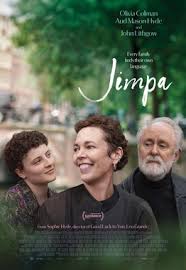
JIMPA
Australia, 2025, 113 minutes, Colour.
Olivia Colman, John Lithgow, Aud Mason-Hyde, Eamon Farren, Daniel Henshalll, Kate Box, Deborah Kennedy.
Directed by Sophie Hyde.
At the beginning of this film, Adelaide filmmaker, Hannah, played by Olivia Colman, is on a zoom interview concerning financing for her next film. She explains that she does not want conflict. The financiers say conflict is essential to drama. Hannah continues with the plan for her film. But, her understanding of conflict is differences talked over, sorted out, aiming for some kind of resolution, reconciliation. She is not talking about conflict in the sense of dominating and conquering.
This is a very personal film for writer-director, Sophie Hyde. So, she makes it film about preparing a film about her father. And, it is a fictional development of actual characters and events, Sophie Hyde’s father, Jim, marrying, having two children, coming out as gay in the late 1970s in Adelaide, continuing to for social issues until his death in 2018.
But, also based on reality, is the next generation of parenting. Hannah is married to quietly genial Daniel Henschel. Their 16-year-old child, Frances, has emerged as non-binary, exploring their self-identity. And, in fact, Frances is played by Aud Mason-Hyde, non-binary. Sophie Hyde and her husband, film editor, Brian Mason, are the parents in real life.
Family life and parenting have become so much more complex in recent times, and this film surfaces the issues, decisions of Jim (now Jimpa), the grandpa, played forcefully by John Lithgow, leaving his family, moving to Amsterdam as a more congenial setting for a gay man, but still in contact with them. Hannah wants to talk to her father about the making of her film, his opinions, his agreement. He is a powerful and dominating character, always talking, argumentative, heavily involved in social academia, often in the company of his ageing gay friends, relying on his assistant, Richard (Eamon Farren).
The film has some moments of direct frankness in its highlighting of Jimpa’s world. And, there is a complex focus on Frances, relationship with Jimpa, parental approval/not, wanting to stay with him in Amsterdam, discovering various personalities and behaviour in the queer community.
But the latter part of the film also focuses on serious illness, Jimpa, communicating or not, family gathering round him, an assessment of his life and influence.
As, with so many of the significant problems of life, issues need continuing probing and resolving
- The personal story of the writer-director, her father, her child, gender identification issues?
- The background of the Adelaide story, Sophie Hyde and her father, marriage, children, divorce, gay, championing gay rights? The background of Sophie Hyde and her partner, Brian Mason, their child, non-binary? And Aud Mason Hyde acting the part that corresponded to her in real life?
- The central character as a filmmaker, her career, preparing her film, the Zoom discussion with the financial backers, her not wanting conflict, their demanding conflict? The interspersing of Zoom interviews with actual actors as potential cast? Her concern, the writing, communicating with her father, getting his opinion, consent?
- The situation at home, Hannah, age and experience, the affable relationship with her husband, his gentleness, quiet, supporting his wife, supporting Frances? Frances, a 16, the issue non-binary, her experience at school, communicating with the students, their reactions against her? Her wanting to get out of the school?
- The family situation, Jim, as played by John Lithgow, the back story, the marriage in the 1970s, two children, the divorce, his coming out, going to Amsterdam, finding life there more congenial, the baths and pickups, his academic work and positions, gay rights, his gay friends, their company, getting older? Richard as his assistant, relying on him, the gay atmosphere?
- The decision for the family to go to Amsterdam, and wanting to discuss with her father, Frances wanting to meet him, the possibility of staying with him?
- Jim, grandfather, Jimpa?, Opinions, talking, taking over people? His response to Frances, to Hannah? The issue of his story, the film? The issue of his job, go to Helsinki, the interview, the rival for the job and meeting her party, his recommendation and the board interview in Finland, and the discussions? His retirement?
- Hannah, her reactions, the discussions, tensions, Hannah and her husband being protective of Francis, the range of discussions with Frances, Frances going out, the group, young, the queer community, the issue of sexual expression, the special friendship, seduction, agreement, the sexual experience, coming back, Jim’s reaction, her parents’ reaction? The possibility of Frances going to London with Hannah on her film work?
- Jim, his collapse, his illness, previous stroke, in the hospital, Hannah and her being with her father, talking, signals of pressing his hand, listening? Frances at the hospital? Hannah and her sister, the relationship, the past, her complaints and demands, with her father?
- The future, Hannah and her film (and Sophie Hyde actually making this film)? Her husband, Brian Mason being the editor of the film? The husband filming within the film? The rest of the family? Frances, decisions, relationships and identity? And the success of the film, Jimpa?
Addition

ADDITION
Australia, 2024, 91 minutes, Colour.
Teresa Palmer, Joe Dempsie, Eamon Farrow, Sarah Peirse, Adrienne Pickering, Lou Baxter, Sara Newman.
Directed by Marcelle Lunam.
A cinema adaptation of a very popular novel by Australian writer, Tony Jordan, published in 2008.
This is a film about mental health, the focus on a young woman and her continued anxiety, manifesting itself in the condition, arithmomania, an obsessive-compulsive need to count. The audience is introduced to her condition by meeting Grace, Teresa Palmer in an ingratiating and challenging performance, suddenly taking a banana from a customer at the supermarket. She has nine and wants to make an even ten. The customer, Seamus (Joe Dempsie from Game of Thrones) has seen what she has done and challenges her. He later encounters her again and a friendship begins.
The audience is invited to spend a great deal of time with Grace, seeing her tutoring students at school with maths, especially her niece, visits with her sympathetic mother, her demanding lawyer sister, becoming more aware of Grace’s long time problems and the family trying to deal with them.
Then, the audience discovers that she has a long time imaginary friend, in fact, the scientist and entrepreneur, Nicholas Tesla (played by Eamon Farren) his presence in the house, the range of their conversations, the discussions of her problems, happy Times, dancing together, a friend and confidante.
One of the features of the film is that the county is visualised, actual numbers and lists of numbers appearing on screen, some indication of what it is like for Agrees to have this experience of counting and the need for reassurance. She counts tables in restaurants looking for free tables, she counts eyelashes and friends, she counts pieces of cake into numbered portions.
Seamus adapts himself to her counting in their relationship, finding it hard, and the subject sometimes of graces self-justifying taunts. But, on the other hand, she does visit a very sympathetic therapist, who is direct, and Molly Connolly, suggests a program, accepts that categories will turn it will not, but provides a listening sensitivity.
The film runs for 90 minutes, and, perhaps, audiences would have liked some more sequences and time to appreciate what has happened, what is happening in graces day by day life, the nature of the opposition, its effect on her, and the possibilities of future coping with it.
One is tempted to say that the title of the novel and film about mathematics is a plus!
- A drama about mental health?
- City setting, Melbourne, and pursuit of the city, homes, flats, school, supermarkets, therapy sessions…? The musical score?
- Grace and her condition, arithmomania, an obsessive-compulsive need to count? The opening at the supermarket, the tent and a knife or neatness, the visualising of the numbers on the screen, her range of counting, eyelids, pieces of cake…? Her anxieties, security and numbers and counting? Affecting her whole life? Her past, family situation, tragedies and feelings, the character of her mother and her kindness and support, Jill, practical, lawyer, hard, exasperated with Grace? Her niece, talent with numbers, coaching her, the competition and practice?
- Grace as a mathematician, training, coaching the students, the sessions with them? With her niece? Possibilities for her career as mathematician, the scene of application for further studies?
- The encounter with Seamus at the supermarket, his conversation about seeing what she did, the arguments about ownership of the banana? The next encounter, the attraction? Grace and her personal life, the response to Seamus, caution, entering the relationship, his response to her?
- Part of her mental condition was admiration for Tesla, the story of his life and success, his later financial and mental collapse, his death? His appearing to her, a companion for so many years, the domestic scenes, the conversations, his encouragement, the dancing together, her explaining this to the therapist? Her finally having to let him go?
- The development of the relationship with Seamus, together, sexual, emotional? The effect on him? The effect on her, the combat compatibility of the relationship with her condition?
- The test, but forgetting, Seamus taking her, her apologies, her knees, the drinking, the escapade with her friends, her mother upset, the reaction to Grace?
- Grace, the difficulties with Seamus, her being demanding, self-centred, alienating him? His absence? The lookalike and the girl at the supermarket and graces reaction?
- The scenes with the therapist, coming and going, the patients and the therapist, sympathetic, clear, medication, the body issues, exercise? The effect, stopping the medication? The return to the therapist?
- Encountering Seamus, his background, England, artist, age, the effect of Greece?
- Audience identification with Grace, as a person, her condition, yet siding with the therapist, sympathy but challenge?
