Displaying items by tag: June Squib
Eleanor the Great
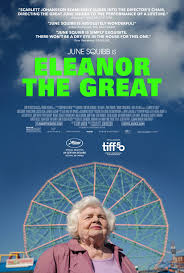
ELEANOR THE GREAT
US, 2025, 98 minutes, Colour.
June Squibb, Erin Kellyman, Chiwitel Ejiofor, Jessica Hecht, Rita Zohar, Will Price, Stephen Singer.
Directed by Scarlett Johansson.
The title of the film does not appear until the end – after we have come to know Eleonor very well. Had the title been at the beginning of the film it might have read: Eleonor the Abrasive. She is a bit of a tough case!
This is a star vehicle for veteran actress, June Squibb, turning 96 when the film was released – though her character is only 94! Recently, June Squibb was seen in an action comedy, Thelma. She is certainly a good advertisement for life in the 90s!
Eleonor is a widow, a convert to Judaism, now sharing an apartment in Florida with her longtime friend, Bessie, also a widow with family (a very moving performance from Rita Zohar). But Bessie is from Poland, lost her family during World War II, Auschwitz, moving to the United States. There are many very moving scenes where, just sitting at the table with Eleonor, Bessie recounts the sad experiences.
When Bessie dies, Elinore has to move back to New York, rather hard on her daughter, more cheery to her grandson. But, in Florida, we have seen some examples of how Eleonor can be more than forthright, sarcastic, rude. We know that she will be changed by the end of the film (or we hope so) but we are wondering how this will be achieved.
Her daughter arranges for Eleonor to go to the local Jewish centre and join a group, in fact a Holocaust survivor group, and, we dread it as she begins, but she tells Bessie’s story as if it is her own. And there are many consequences with Eleonor trapped in this new identity.
And, at the first meeting, there is Nina (a very pleasant Erin Kelleman), wanting to observe, write an article for her journalists’ course. And she is very moved because she has just lost her mother, an artist, in an accident, and her television personality father, Roger (Chiwitel Ejiofor) has become closed in on himself.
One of the directions the film goes in is that Eleonor, a convert, goes to synagogue every Saturday, observing young girls with the bar mitzvah, regretting that she never had one, going to the sympathetic rabbi – and his text for her is the story of Esau and Jacob, Jacob’s deceiving his father, Isaac.
Nina and Eleonor bond, Eleonor beginning to mellow, sharing emotional stories, Eleanor a good listener, shopping with Nina, buying a bright red suit for her bar mitzvah ceremony.
And, then it happens, but you will have to see the drama in the synagogue and how everything will be resolved.
Bessie’s conversations in storytelling with Eleonor are inserted throughout the film and, especially at the end, moved by her sincere sadness, we listen, tearfully, to Bessie’s memories and her grief.
A pleasing film, delight with June Squibb’s portrayal of Eleonor, the tangle of her telling Bessie’s story as her own, friendship with Nina and the reconciliation, Nina and her father, a mixture of laughter and tears.
This is a first feature film directed by well-known actress, Scarlet Johansson.
- An American story, the Jewish story, Holocaust story – in the 21st-century US?
- Florida, apartments, the beach, shops? New York, the Bronx, the apartments, the streets, Jewish centre, the synagogue, the University, television station? Atmosphere? The musical score and atmosphere, the popular songs, and I’m Still Here, Blue Skies?
- The title not appearing until the end, Illinois initially abrasive, the audience anticipating the change – and the joy and sadness of the change?
- Eleanor, midwest background, marrying Harry, family, relationship with her daughter, grandson? That it husband? The friendship with Bessie, Bessie’s background, Poland, the Holocaust, her telling her story, the sadness? The bond between the two, the room, getting up, breakfast, shopping, wanting the Kosher objects, and abrasive with Charlie the attendant? Abrasive with the friend at the checkout counter? Bessie, sad, in hospital, pretending that she was related to the founder of the Stern Hospital, Bessie dying, Eleanor sitting alone at the beach?
- Eleanor and the phone calls with her daughter, the flight, meeting them at the airport, grandson, the bond, clashes with her daughter? Going home, her comments, criticisms? Her daughter, divorced, working, the difficulties with her mother, no affirmation? The prospects for Eleanor, into care?
- In New York, going to the Jewish centre, the initial encounter, the music and singing group and her reaction, going to the Holocaust group, the introduction, Nina and her presence, observing? The question to her, her taking on Bessie’s identity, telling the story, the pathos, the response? Nina and wanting to write her essay, wanting to interview Eleamor? The emails, phone calls, arriving at the apartment?
- Roger Davis, his program, in denial, The Fabric of New York? The audience appreciating Nina as his daughter, the death of her mother, her father’s distance, not mentioning her mother, not really listening, absorbed in his work? Her feeling neglected? Her personality, alone, gay identity, talking with Eleanor, Eleanor understanding, the bond between them, Eleanor continuing her story? Nina writing the story, giving it to her father, her father’s affirmation of the story? Wanting to take it further, Nina and the students and the professor, Eleanor’s wariness, Roger and his wanting a television program? The setup and the synagogue?
- Eleanor, converted to Judaism for her husband, attentive, explaining synagogue to Nina, Nina not practising but being Jewish? Eleanor regretting not having a bar mitzvah, the young girls, the celebration after the ceremony, chattering, Eleanor wanting a bar mitzvah, talking to the rabbi?
- The preparation for the bar mitzvah, the story of Esau and Jacob, deceit for a good purpose and its relationship to Eleanor’s telling the story? The going together shopping to get the red outfits for the ceremony?
- Eleanor, telling the lies, her motivation, sharing Bessie’s story, the response, continuing? Going to the synagogue with her grandson, the roadblock, getting the taxi, her mother and grandson following, and the denunciationat the Synagogue, the members of the group disillusioned, Nina shocked? Eleanor trying to explain, the results?
- Nina and the conversation with her father, his expressing sympathy, on the television program, his telling the truth about Eleanor, her watching it in the aged care home, her daughter and grandson watching it, the members of the group? Roger and his explanations of Eleanor’s background, her long friendship with Bessie, wanting to tell her story and identifying with it? Nina at the studio?
- Nina, visiting Eleanor, the reconciliation, her mother and grandson coming?
- The flashbacks throughout the film, the character of Bessie, the pathos of her story, tearful, the device of having the flashbacks and the audience hearing Bessie’s version of the story, and the final, the two of them together, and coming to terms with the loss of Bessie, and more affable taunts people?
I'll See You in my Dreams/ 2015
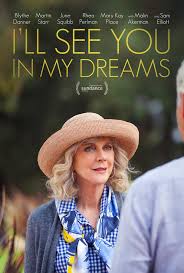
I'LL SEE YOU IN MY DREAMS
US, 2015, 92 minutes, Colour.
Blythe Danner, June Squibb, Rhea Perlman, Mary Kay Place, Martin Starr, Sam Elliott, Max Gail.
Directed by Brett Haley.
The title of the film is that of the popular song of the 40s and 50s, memorably sung by Doris Day in the film with that title.
This is a film for an older audience, especially in older women’s audience. At the centre is a former singer and former teacher, in her 70s, widow of 20 years after the accidental death of her husband, Carol, still living comfortably at home. She is played by veteran actress, Blythe Danner, always sympathetic on screen.
Down the road is a home for aged care with three of her friends, often meeting together, gossiping, playing cards. They are played by veterans Mary Kay Place, Rhea Perlman, there 70s, with June Squibb, still making films into her 90s. They like to gossip about Carol and possible relationships, especially with the young technician, pool cleaner, who visits Carol and has long conversations with her about himself, going to a karaoke bar with her, his composing a song for her. Stop
However, another resident of the aged care home is Bill, played by Sam Elliott with his usual affable charm. Again, a relationship with Carol, together, her being able to reflect on her life more freely with him, on his boat.
The film does not end as we might have expected with a happy relationship. Complications with Bill’s health, complications with the young man’s devotion to Carol, support from the women’s group – and Carol, at this age, having to reassess her life and plan for her future.
- The Title? The old song? Dreams and reality?
- A film about age, ageing, memories of the past, love, coping with the present, into the future? Happiness, sadness?
- The California setting, Carol and her house, garden and pool, the aged care home? The streets, shops, restaurants? Audiences identifying with placing characters? The musical score?
- Carol’s story, widow for 20 years, love for her husband? The past, her singing, the band, her teaching career, stopping singing? Living alone, comfortable? Her friends at the aged care, cards, gossip? The encounter with Lloyd, his reserve, her talking, inviting him for a drink, his relaxing, his attraction to her, karaoke talk, at the bar, their singing, his writing the song for her, singing it? His disappointment at meeting Bill? The later return, Carol encouraging him? Carol playing golf, noticing Bill, his response to her, the invitations, her going out, enjoying the evening, the challenge, listening to Bill’s story, the sexual encounter and the aftermath? With her daughter, the bonds, the discussions, the call to the hospital, Bill’s death? The effect on Carol, plans for the future, travel with her friends?
- The humour of the speed-dating episode, Carol uncomfortable, the range of men and the making conversation within the five minutes?
- The friends and aged care, the different personalities, discussions, gossip, sex issues, playing golf, playing cards, touch of snooping? The response to Carol and Bill?
- Bill, charm, but aged care, his boat, story of his wife leaving and dying, the attraction to Carol, the flirting, the invitation, the dinner, the night together, the plans for the future, on the boat, the proposal, the news of his death?
- Audiences identifying with Carol, with the situation, older generation, younger generation?
