Displaying items by tag: Peter Malone's Movie Reviews
Smashing Machine, The/ 2003
THE SMASHING MACHINE
US, 2003, 93 minutes, Colour.
Directed by John Hyams.
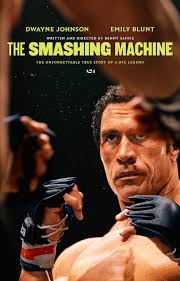
The Smashing Machine was an early film about mixed martial arts, popular documentary on its release, and critically acclaimed.
The focus is on fighter, Mark Kerr, his family background and their disapproval of his fighting, his moving into the world of fighting and wrestling, becoming involved in MMI, his friendship with former rival, Mark Coleman, a focus on his training, various competitions, the visual brutality of his victories, his nickname, his acclaim.
He was a film very much for documentary rests and MMI fans. In 2025, a feature film was released, The Smashing Machine, the life and career of Mark Kerr, played by Dwayne Johnson, his wife by Emily Blunt.
But, for Mark Kerr, despite the reputation, it was not an easy life. There are scenes of his training, the entourage around him and promoting him, the banning of the various fights and television screenings in the US, his going to Brazil, finding development for his career in fights in Japan. There is his friend, Mark Coleman, himself involved in fighting, the bonds between the two men. Then there is Dawn Staples, her relationship with Mark Kerr, her own difficulties, but there bonding and having a child.
This documentary is a film of its time, focusing on Mark Kerr and the fights, his drug dependence, downfall, rehabilitation, professional choices. But it does provide documentary background for the 2025 feature film.
Not Now, Comrade

NOT NOW, COMRADE
UK, 1976, 89 minutes, Colour.
Leslie Phillips, Ian Lavender, Roy Kinnear, Lewis Fiander, Carol Hawkins, Michelle.Dotrice, Ray Cooney, Windsor Davies, June Whitfield.
Directed by Ray Cooney and Harold Snoad.
Not Now, Comrade was one of the famous Whitehall farces of the 1960s. Several of them were written by Ray Cooney who codirected this film as well as writing it. The play was originally Chase Me, Comrade.
This film is a typical example of the British farce, highly exaggerated characters, even more highly exaggerated situations, all kinds of mixups with identities, cover-ups, characters hiding from others, disguises, misunderstandings, suggestive jokes… If one wanted to see a typical example of this kind of farce, this is a good an opportunity as any.
Cooney himself appears as Mr Lever, the representative of MI6, and, having the courage of his convictions, a person appears in all kinds of preposterous situations. Leslie Phillips is very good at this kind of role but giving at least some kind of gravitas to character and situation. Roy Kinnear, on the other hand, is highly bumptious. Australian actor, Lewis Fiander, appears as a Russian ballet dancer – and the highest of camp performances. Carol Hawkins, prominent in the is Carry On series, is rather unabashed in her sexy character, contrasting with Michelle Dotrice as Leslie Phillips’ daughter. June Whitfield appears at the end as Leslie Phillips’ wife. A great deal of the farce depends on the presence and style of Ian Lavender, the straight man in many ways, but having to do all kinds of character impersonations. And, he is remembered as the younger member of the television series, Dad’s Army.
Ray Cooney had his most famous play, Run for your Wife, nine years on stage in the London West End (and a film version in 2012). His co-director, Harold Snoad, directed a great deal of television, including Dad’s Army and, reached out to an even wider audience with 44 episodes of televisions Keeping Up appearances.
A film for the archives of film British comedy.
Take Me High
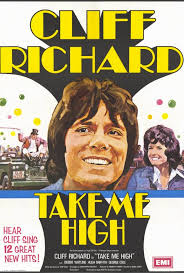
TAKE ME HIGH
UK, 1973, 91 minutes, Colour.
Cliff Richard, Debbie Watling, Hugh Griffith, George Cole, Anthony Andrews, Richard Wattis.
Directed by David Askey.
Not exactly a 21st century entertainment! Rather, of interest for more historical reasons.
This was the last main feature film for popular singer, Cliff Richard, emerging at the age of 19-20 as a singer, and actor in such films as espresso bongo, but then moving to some popular musicals. After Take Me High, his main screen presence was a long list of music videos.
Rather surprisingly in this film, he plays a merchant banker, in Birmingham, working with Anthony Andrews, surprising to see him so early, soon to be in The Scarlet Pimpernel and his key role in Brideshead Revisited. Cliff Richard is not entirely persuasive as this kind of banker, especially when the script asks him to be something of a mastermind in financial deals, one up and ship towards his partner. The deals are between Hugh Griffith, highly overacting at first, then agreeably punctures, remembering his Oscar for Ben Hur as well is his presence in Tom Jones. He is conservative, a Birmingham family traditions, contrast with George Cole as a more left-wing representative.
Debbie Watling plays a manager a restaurant who has financial problems with the company, links up with Cliff Richard, inventing the new hamburger, the Bromberg. Longtime comedian, Richard Wattis, has a role as the head of the banks in one of his final performances.
Filmed on location in Birmingham, the city, the canals, the streets and parades… It has a listed soundtrack of 15 songs. The credits focused close-up of Cliff Richard singing but many of the songs, most of them, directly son as background to the action.
A belated attempt to have Cliff Richard as a film star – but, he continued his long career, is a popular singer.
Beautiful Stranger/ Twist of Fate
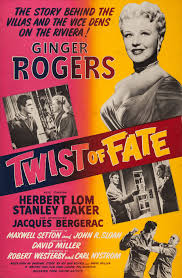
BEAUTIFUL STRANGER/TWIST OF FATE
UK, 1954, 89 minutes, Black-and-white.
Ginger Rogers, Jacques Bergerac, Stanley Baker, Herbert Lom, Eddie Byrne, Margaret Rawlings, Coral Browne, Ferdy Mayne, John Le Mesurier.
Directed by David Miller.
Title and the credits love song indicate that Love is the beautiful stranger. However, it may also be the character of Johnny, former chorus girl dancer, played by Ginger Rogers.
During the 1950s, many of the American stars, with the introduction of television, came to England to star in smaller films, enhancing their reputations. Ginger Rogers had a strong career from the 1930s, dancing with Fred Astaire, an Oscar in 1940 for Kitty Foyle, her later career during the 40s and 50s in comedies and dramas.
The two leading men, 16 and 17 years younger than she, are the seemingly emotionless Stanley Baker and the French heartthrob in American films and television, Jacques Bergerac. He and Ginger Rogers were married at the time of making this film. There is an interesting supporting cast led by Herbert Lom in a rather sinister role, Eddie Byrne as a criminal contact, Corel Browne’s appearance at the hairdressers, Ferdy Mayne as the police officer, John Le Mesurier in a scene in the casino. Direction is by experienced American director, David Miller.
Riviera setting, crime and forgery, gambling, violence, betrayals… An entertainment rather than a serious portrait of credible characters and situations.
- The original title, the theme song: Love is a Beautiful Stranger? The international title and its relationship to plot twists?
- British filmmaking, American actors and directors, British cast? French Riviera locations? Musical score?
- Johnny, the central character, Ginger Rogers, in her early 40s, the leading men 16 and 17 years younger? Her glamour, the range of costumes, her screen presence? Her story, theatre and dancing, hard times, the encounter with Louis, infatuated with him, his wealth, the yacht, the house, the gifts of jewellery, the high life, the casinos? The possibility of marriage? The effect on her, the encounter with Emil, the money, her friend in the sanatorium? Upset with Louis, his marriage, his business, the phone calls, her driving the car, the crash, the encounter with Pierre, the artists, the friendship, the pottery, the return, falling in love? Her dilemmas, Louis and his absences, his return, suspicions, and feels payment with the necklace, his balls conclusions, confrontations with Johnny?
- Louis, business, his wife and relationship, her brothers, the forgeries, his gang, the sale of the coins, the plan for each of forgery, the collection, Emil paying with the necklace and his suspicions, the plan with Luigi, with Johnny, going to Africa? The scenes with his wife, the clash? His suspicions, the confrontations, his unexpected death?
- Emil, past friendship with Johnny, the casino, the money and gambling, the selling of the coins, Luigi, the necklace, Emil and his lies, robbing the safe, the necklace, returning, robbing the safe of the cash, the encounter with Louis, the fight, Louis’s death, putting the body in the car, following, trying to burn the body, the irony of his coat, the money in the fire, pursuing him, the fight, Luigi shooting him?
- Luigi, working with Louis, loyalty, collecting the coins, the money, the final plan, Louis not arriving, following Emil? His death?
- Background characters, life at the casino, the local police and their activities?
- A variation on film noir? An entertainment rather than realistic characters and situations?
Make It Look Real

MAKE IT LOOK REAL
Australia, 2024, 78 minutes, Colour.
Claire Warden, Kieran Darcy Smith, Sarah Roberts, Tom Davis, Albert Zwangi.
Directed by Kate Blakemore.
The “It” of the title of this documentary is movie scenes of intimacy. In recent years, especially with the Me-Too# movement, there have been an increasing number of intimacy coordinators employed on film sets and receiving credits.
Claire Warden, originally from Guernsey, working in the US and around the world is a professional intimacy coordinator. The film gives something of her background, her parents and encouragement, her wanting to be an actress but finding at 6 feet tall, few offers. She is enthusiastic about her work, its importance, the MeToo# Movement, her style in contributing to moviemaking.
The screenplay written and directed by Kate Blakemore, focuses on Australian actor and director, Kieran Darcy Smith, and his screenplay for a film called Tightrope. There are three intimacy scenes in his film. Three actors, who have made contributions to Australian films, have been chosen for key parts. There are to be three intimacy sequences.
Claire Warden arrives in Sydney to work with Kieran Darcy Smith, discussions with him about the three scenes, what is written, his intentions, their contribution to the plot. Audiences will find the sequences of these discussions very interesting as background to how films are made, the attention to details, respect for the actors – and many comments that this was not so in the past, in fact, a collage of voiced testimonies by prominent actresses with the names of the films they are complaining about, highlighting manipulative action by directors. They include Jennifer Lawrence, Keira Knightly, Jessica Lange…
Claire Warden has extensive discussions with each of the three actors, again very interesting in hearing of Claire’s methodology, her sensitivities, her respect for the actors and their choices, helping them to clarify what their attitudes are and noting their expectations. This happens with the three actors.
Then there are the rehearsals, the discussions about the intimate sequences, behaviour, issues of nudity, issues of simulated sexual activity, limits, angles, taking into account the expectations of the actors. Then follows the actual filming, the couple and their relationship, their intimacy, and then their decision to employ a young man from an agency, please continual focus on the sensitivities about the sequences for the threesome, able to suggest the reality of the plot while all the time respecting the actors.
Then, at the end, the sequences are played with the actors watching giving the audience an opportunity to see the finished product and know all the discussions and planning that went into the making of the sequences.
The audience gets a good impression of intimacy coordinators and their challenges, and a good impression where director and actors are involved in dialogue with respect for them and their opinions and expectations.
Loser Takes All
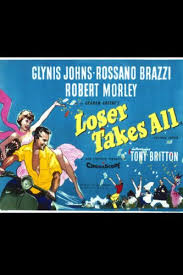
LOSER TAKES ALL
UK, 1956, 88 minutes, Colour.
Glynis Johns, Rossano Brazzi, Robert Morley, Tony Britton, Felix Aylmer, Joyce Carey, Geoffrey Keane, Albert Lieven, A.E.Matthews.
Directed by Ken Annakin.
In retrospect, the biggest surprise about this film is that it is based on a Graham Greene short story and the screenplay has, in fact, been written by Graham Greene. (He is said not to have been so happy about the finished product – he would not have given it a good review in the days when he was a film reviewer!).
It has lavish treatment, a strong cast and Monte Carlo locations and fashions. But, it has a brief running time, a type of British screwball comedy. Characters are not meant to be consistent and, here, they definitely are not. And they are slightly sketched overall.
Rossano Brazzi is a meticulous accountant, wins the favour of businessmen, Robert Morley, who invites him to Monte Carlo for a holiday where he is to marry his fiancee, Glynis Johns. The wealthy man does not turn up and the couple have very limited resources. However, they do get married. A stranger offers a gambling system to the husband and he becomes absorbed, winning a great deal of money and enabling the couple to live something of a high life. But, the husband gets so involved that he neglects his wife and she has caught the eye of a British gambler, played by Tony Britton in his first film.
The plotline is somewhat predictable but the credibility of the characters following the predictable plotline is very doubtful. Perhaps the actors are doing their best, but Rossano Brazzi becomes too serious and avaricious and Glynis Johns more flighty.
There are several character actors in support, a surprising turn by Joyce Carey who has her own schemes in the casinos, Geoffrey Keane as a manager being very superior to the customers.
The film is an early film directed by Ken Annakin who was to have a successful career in the UK and the US, dramas as well is blockbusters.
Feste & Freunde - Ein Hoch auf uns! / Long… Story… Short
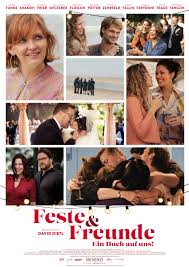
FESTE & FREUNDE - EIN HOCH AUF UNS! / LONG… STORY… SHORT
Germany, 2025, and 107 minutes, Colour.
Laura Tonke, Jasmine Shakeri, Anette Frier, Ronald Zerhfeld..
Directed by David Dietl.
Lightly serious, Long… Story… Short. Its appeal is to audiences in their 30s and 40s, especially their 40s like the main protagonists here, a circle of friends from way back, their meeting on New Year’s Eve, 2019, the experience of Covid, relationships, betrayals, through 2021 to a culmination in 2023. The framework of the screenplay is a number of celebrations, birthdays, marriages, funerals.
Response will depend on identification with each of the characters, sympathetic with the teacher and his fiancee, or puzzles and alienation from most of the others in the group, deception and affairs, marriage breakups, children, a lesbian relationship and adoption of children…
While the issues are serious, there are treated with the light touch, often the comic touch, a Germanic comic touch.
What About Sal?
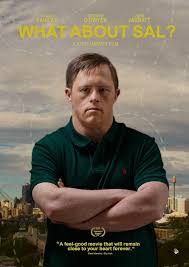
WHAT ABOUT SAL?
Australia, 2023, 97 minutes, Colour.
Gerard O'Dwyer, Kaarin Fairfax, John Jarratt, Peter Hehir, Ric Herbert, Pearl Herbert, Lewis Fitz-Gerald, Joanne Samuel, Roger Ward.
Directed by John Jarratt.
An Australian film with heart, and sometimes some tears. It has been written and directed by veteran actor, John Jarratt, who first starred in films in the 1970s. Now, almost half a century later, he has focused on a drama, the central character, Sal, with Down Syndrome, his mother dying from lung cancer, his father absent and unknown, the only clue his being a rock singer in the 1980s.
The great strength of the film is in the performance by Gerard O’Dwyer, Down Syndrome himself, who has appeared in quite a number of films and television programs. Here he is in his 30s, holds down a job at a store, has good friends, and is devoted to his single mother, Sophie, Kaaren Fairfax.
But, the main thrust of the film is Sal’s search for his father, venturing out on his own, encountering quite a number of characters on the way, an alcoholic homeless man who does offer some good advice even though, at the end, drunk, rejecting him. Then there is the musician from the past, played by Ric Herbert, playing at the club where Sal decides to try to find his father. The musician puts Sal in touch with an agent, Roger Ward, who is able to identify the father.
While everyone is anxious and searching for Sal, he is meeting his alcoholic father, Tommy, played by Jarratt himself, who sings at an aged care home. Clash, difficulties, some acceptance, Tommy eventually going to the hospital and encountering Sophie, her demands about his care for her son, AA meetings, difficulties about Tommy’s parking fines and lapsed driving licence, but, hope for the future.
Besides John Jarratt, there are quite a number of Australian character actors who have been in films and television programs for almost half a century, Kaaren Fairfax, Roger Ward, Joanne Samuel (both from the original Mad Max), Lewis FitzGerald, Peter Hehir.
- An Australian story? Universal? Down Syndrome?
- The Sydney settings, homes, hospitals, clubs, AA meetings…?
- The musical score, the focus on songs and singing, the ballads, the lyrics?
- Gerard O’Dwyer and his performance as Sal? Age, experience? Humanity? Strong personality, direct, honest? His relationship with Sophie, scaring her on the way home, the meals, dancing together, absolute trust, her experience, no memories of the father, the one night stand, but her love for Sal, Salvador?
- Sal, his work at the store, exercise, the friendship with Pearl, the conversations with her? Her support? His concern about his mother, her cough, smoking, lung cancer? Her collapse, taking her to hospital, the long time in hospital?
- Sal and his quest for his father, some clues, June-July 1983, the one night stand, the rock band, his decision to search for his father? Not wanting to go into a group home? Going away, his absence, reassuring his mother, her anxiety, the friendship with Dennis, the karate classes, Dennis as older brother rather than father, his helping the search? On the media?
- Sal, off on his adventures, the search, the encounter with the homeless man, touch of friendship, the drink, his suggestions about bands and clubs? Going to the club, the encounter with Herbie, the music, the fans, Herbie friendly, listening, taking Sal home, his daughter’s room, the guest room, taking him to see the agent?
- Daisy, the agent, his office, the records, the name of the singer, the band, Tommy O’Dwyer?
- Sal going to Tommy’s house, sitting outside, the bad reception, Sal’s declarations, Tommy and his drinking, his neighbour helping sale, going to the home for the elderly, stopping for the alcohol, Tommy and the fans, singing?
- Sal and his pressurising Tommy, Tommy’s reactions, taking him in, the alcohol collapse, Sal listening, his declarations of love, Tommy weeping?
- The credibility of Sal rehabilitating Tommy, Herbie’s help, going to the AA meetings, the success of meetings, the effect on Tommy, becoming sober?
- Sal going to see Sophie hospital, her anxiety, bringing in Tommy, Sophie and her stern response, for Tommy’s care of Sal?
- Sophie’s death, the funeral, the aftermath, the police coming with the authority, Tommy and his debts, the conditions, his return, reunited with Sal?
Grande Maison, Paris, La
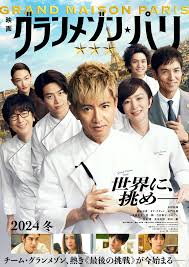
LA GRANDE MAISON, PARIS
UK Japan, 2024, 111 minutes, Colour.
Takuya Kimura, Kyoka Suzuki, Taecyeon, Ai Tominaga, Patrick Descamps, Yannick Rennier.
Directed by Ayuko Tsukahara.
A film about French cuisine. As indicated by the title, it is the name of a significant restaurant in Paris. The difference is that the chef and most of the staff at the restaurant are Japanese.
The writer and director as well as a great number of the cast had appeared in a Japanese television series, Grand Maison, Tokyo. This time they are in Paris, the restaurant having achieved two Michelin stars but the chef ambitious to get the third.
Clearly, this is a film whose target audience is a public who enjoy food films, cooking films, details of menus and recipes, details of action in the kitchen, details of servers in the highest of class restaurants. They will not be disappointed. (However, some audiences who are not au fait with cuisine, not having experienced these kinds of menus, not familiar with so much of the ingredients and cooking and catering styles, may feel overwhelmed.)
At the beginning of the film, especially for those who have not seen the television series, it is very difficult to sympathise with the chef, Obana. He is ambitious. Moody, harsh treatment of some of the staff, he is driven.
The first part of the film is a disastrous preparation for a menu, cooking failures, the special guests to consider Michelin stars finds the meal abhorrent, distaste. This includes a Japanese influencer, very tall with a haughty manner. It also includes a French restaurateur and his son.
There are also personal conflicts in the kitchen, the assistant cook being fired, dealings with the hall manager, a sympathetic character, several of the cooks with their specialties in the kitchen, and a Korean patisserie expert who has borrowed money and is set upon violently by French thugs.
With the return of the fired assistant and her being skilful in welcoming visitors in the restaurant itself, there is a possibility for some kind of reconciliation, to work against the threat of the restaurant being taken over, and a great deal of time and attention given to the preparation of the third star menu, the range of produce to be purchased in the markets in Paris, the details of all kinds of ingredients, with names of countries of origin, flags, details of the ingredients up there on the screen.
No spoiler in saying that every effort is made in preparation for the meal, the same guests, but the opposite results with so many dishes to taste, expressions of appreciation, and the audience, sitting in the cinema without eating, but observing and, most possibly, envying…
- The original Japanese television series? This film spin-off? The continued team of writer-director, cast?
- The Paris settings, restaurant, kitchen, dining area? Outside the restaurant? The streets of Paris? Offices? The musical score?
- A film for food-lovers, recipes, menus, cooking, serving, the guests? Michelin stars? Restaurants and reputations?
- The character of Obana? Age and experience, Japan, in Paris, his ambitions, to move from two stars to 3? No indication of his life outside the restaurant? His attitudes, exacting, the firing of Rinko? Dealing with the Hall Manager, the various assistants, the Japanese, the French, International, French and Japanese language? His manner, irascible, demanding? His visits to the markets, interactions with the dealers? The quality of meat? The vegetables?
- The background characters, Rinko, work in the restaurant, her ambitions in the kitchen, being fired, resignation, going to work with the importer of the meats, with the hall manager, the enthusiasm of the various cooks, their contributions? The Korean, 10 years’ experience, patisserie, school, his own studio, bringing the desserts to the restaurant?
- The menu for the Michelin star, the confusions, the atmosphere in the kitchen, the preparation of the meals, serving? The guests, Louis Blankin, his status, the ownership of the restaurant, the police, his son, Pascal, their opinions, Linda and her reputation as an influencer, the progress of the meal, distaste, disappointment, leaving?
- The challenge to Obana, losing the lease, determined to stay, the discussions with Louis blank and, Pascal and his plan to move in, determination?
- The Korean, his reputation, the money, the thugs, disturbance in the restaurant, demanding the money, coming to his studio, the destruction, the beating? The later apprehension and arrests? His recipes and his goods destroyed? Being taken on by Obana?
- The reappearance of Rinko, working in the main restaurant, her charm, success with the clients?
- The plan for the Michelin star, the range of discussions, Rinko and the better meats, the better fruit and vegetables? The discussion about Japanese cooking, the traditions of French cooking, French cooking changing? The outsourcing of all the ingredients – and the signs, on screen, of the origin country, the details of the product?
- The discussions, the planning of the menu, the various steps, the details of the cooking, mixture, blending, sources, heat…?
- The drama of the preparation, the attention to the detail? The guests arriving, the serving of the meal, the various dishes, the reactions, favourable? The satisfaction at the end?
- The ceremony, Obana and his winning, the third Michelin star? Joy, the achievement?
- The impact of the film for those interested in French cuisine, cooking, menus and ingredients? The non-gourmet audiences?
Divine Sarah Bernhardt, The/ Sarah Bernhardt, La Divine
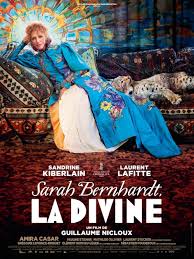
THE DIVINE SARAH BERNHARDT/ Sarah Bernhardt, la divine
France, 2024, 98 minutes, Colour.
Sandrine Kiberlain, Laurent Lafitte, Amira Casar, Pauline Etienne, Laurent Stocker, Arthur Mazet.
Directed by Guillaume Nicloux.
Sarah Bernhardt was a French national treasure, acclaimed in the 19th century as a great actress – and this film is suggesting that when asked about a word to describe her, she suggested Divine. And this reputation flourished in France but with many tours of the United States, to many other countries, including Australia and New Zealand, she was considered divine all around the world.
She was born in 1844 which means that most of her life was in the 19th century. This film, selective in episodes in her life and in her relationships as well as in performances, provides a lot of background, costumes and decor, the world of theatre, of affluence, for Paris during those decades.
The film opens with her performing the dying scene from Camille, then moves to 1916, World War I, hospital, her surgeon and the amputation of her leg – a consequence of injuries sustained during performances, especially when cushions and matting were not in position for a fall sequence. She is cheerful, stoic, visitors from many friends. One of the friends is the young Sacha Guitry whom she has known since he was a boy, and has been in a long relationship with his father, Lucien and there is a history of alienation. She proceeds to tell Sacha the story.
This takes the audience back 10 years, 20 years, demands on the audience to pay attention as to which time era is being dramatised. They offer the opportunity to see Sarah younger, her imperious and confident style (demanding on publicists, directors, theatre owners). There are relationships, especially with Lucien Guitry, with Edmond Rostand, author of Cyrano, and her love but exasperation for her son, not a good manager, and a problem gambler.
So, the 19th century. However, there are some scenes in the 20th century, especially those in 1916, but also her being persuaded about emerging cinema, her appearing in quite a number of silent films, and her dying in 1923 only four years before the introduction of sound.
Prominent French actress, Sandrine Kiberlaine, gives her all to this impersonation and dramatisation of the divine Sarah. (Some audiences may have seen Glenda Jackson as Sarah Bernhardt in 1976, this time The Incredible Sarah.)
- Audience awareness of Sarah Bernhardt? In the history of theatre? National treasure in France? Memorials to her? French theatre, nternational theatre and her travels?
- The prologue, the collage of clips of films with Bernhardt, in real life, her performances?
- The range of settings, 1916, the flashbacks to 20 and 30 years earlier, moving forward to 2022 and her death? The re-creation of the period, lavish costumes and decor, affluence, society, theatre and productions, social life? The musical score?
- The title, her reputation as an actress, her suggestion of the title “Divine”? Her personality in real life, self-focused, highly emotional, her relationships, permissive, intensity, friendships, her son, friends, her surgeon?
- Her relationship with Lucien Guitry, the long relationship, acting together, his relationship with Charlotte, the break with Sarah, her malevolent behaviour, necklace in the bed, her special day and her malevolence towards Charlotte and the consequences? The irony of Charlotte and Sacha and the tree and their relationship in the final explanations?
- The opening, Camille, her death scene, convincing, the applause? Her life in the theatre, the decades, the intensity of her identifying with characters? Rehearsals, the young actress and her criticisms, her whims, hurting people, and ignoring? The poster and her name? Wanting to act in a male role? This background to this portrait of her life?
- 1916, World War I, the ambulances, the surgery, her friends arriving, her son, Lucien, Sacha? The amputation? The background of no mat/cushion for her fall at her hurting her leg? Her manner, offhand, practical?
- The flashbacks, the audience having difficulties with the time period, moving backwards and forwards?
- The portrait of Sarah, as a woman, strong willed, dependent, the relationship with Lucien, the final reconciliation, the final performance together, her death? Her attitude towards her son, loving him, his gambling, spendthrift, lack of managerial skills? Her friendship with Sacha, knowing him as a boy, his speech at her special day, going up, his alienation from his father, her explanations, his relationship with Charlotte? His finally directing the play?
- The significant characters in the background to Sarah’s life, and Edmond Rostand and his writing, Cyrano, the relationship, his wife, her spending him, yet the bonds, his presence of the parties? Louise, lesbian, friendship, her infatuation with Sarah, her support of her in serious moments? Suzanne, companion, made, friend, support?
- The surprise of some of Sarah’s political points of view, a comment about being a national treasure and Clemenceau’s comment during World War I? The episode with Emile Zola, the Dreyfus case, Jewish issues, the personal attack on her, her encouragement of Zola to write? The memories of Victor Hugo and his gift and praise?
- The emotion of the audience in the world of Sarah Bernhardt, over decades, French society, changes, affluence, politics, theatre, World War I, her involvement in French cinema?
- A significant actress – but a temperamental and tempestuous personality?
