Displaying items by tag: Laurent Lafitte
Femme plus riche du Monde, La/ The Richest Woman in the World
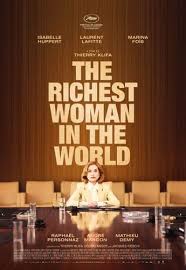
LA FEMME LA PLUS RICHE DU MONDE/ THE RICHEST WOMAN IN THE WORLD
France, 2025, 125 minutes, Colour.
Isabelle Huppert, Laurent Lafitte, Marina Fois, Raphael Personnaz, André Marcon, Mathieu Demy. Paul Beaurepaire.
Directed by Thierry Klifa.
While this is a fictional story, raising of all kinds of emotions as the audience watches some erratic behaviour among the wealthy, is actually based on actual characters in a court case in the early 2000’s. The original was the French Oreol perfume family.
And, perhaps, who better to portray the richest woman in the world in the French film than Isabelle Huppert, by now one of the grandes dames of French cinema? She has a compelling presence even when she is silent or scarcely moving in a scene. Her character, Marianne, has inherited the company from her father and is absolutely devoted to his memory, wary of any threat to his reputation or to his company. She sits on the board, observes, intervenes, has her definite likes and dislikes.
And, into her life comes a rather sweeping character, a photographer, Pierre-Alain, played with zest and gusto by Laurent Lafitte, employed to photograph Marianne for a popular magazine and for company promotion, her being entranced by his lively personality, charm, playing up to her. At first, the audience may be charmed, but then we see his rather narcissistic personality, his ability to exploit situations, his lack of inhibitions in most situations, at times taking over the household, bringing in his partner, the dismay of the rest of the family, a very serious-minded group.
And the enchanted and infatuated Marianne, so much money to disperse and whims, finances him, Gallery and exhibitions, his flattering her, helping her to enjoy life, and making his own ever more comfortable.
There are some background themes of French politics, the film set in the era of President Mitterrand and, the world of business, political ambition and advancement, but also themes harking back to World War II, the Vichy government, the treatment of the Jews, the Resistance.
Eventually, Marianne’s husband dying, her stepdaughter and family deciding to take action, life becomes very unpleasant, lawyers, courts, deals, Pierre-Alain wary, struggling to protect his benefits and to avoid prison. As always Marianne, lost from the world that had been charming and extravagant now experiences her inability to cope with the real world.
There has always been a fascination with lives of the rich and famous, the glitter of wealth, responsibility and irresponsibility, but there is always a price to pay in emotions, relationships, and the question of what is really a worthwhile life.
- Derived from the actual Bettencourt court case, the Oreal family heritage? The basic characters, enhanced with fiction?
- The French settings, the 1980s and 1990s, the political background, President Mitterand, issues, influence, ministers? The world of finance, creativity, board meetings? Wealthy living? The background musical score, atmosphere of the period?
- The title, the focus on Marianne, Isabelle Huppert and her screen presence, her career, the marriage, her older husband, his career, her stepdaughter and attitudes, her husband and son? The family situation with wealth, Marianne and her admiration for her father, his inventiveness, setting up the business, her inheriting the wealth, lavish, bar mitzvah gifts, her behaviour, regal manner?
- The family, her husband, age, political influence, the company, wealth, the revelation of his background, siding with the Vichy government, young, changing his attitude, becoming a partisan? The media raising the issues, the effect on him? His death, the funeral and Marianne’s behaviour?
- The Jewish background, ceremonies, memories of the wall, anti-Semitism. Frederique and her family, ritual celebrations? The role of the board, Marianne and lack of confidence in Jean-Marc?
- Frederique, encouraging Marianne for the photographs, the publicity, the magazines? Hiring Pierre-Alain, his reputation and talents?
- Pierre-Alain, personality, overwhelming, talent as a photographer, his style, control, Marianne and her response, Frederique wary? The sessions, the clothes, his advice, joking, boisterous, taking control?
- Marianne, her response, enlivened, fascinated, amused, attracted, the money granted, his studio? Continually involved, relying on him, his coming to the house, jokes, entertaining her, the reaction of the rest of the family?
- Pierre-Alain, gay, the presence of Raphael, the relationship, Raphael and his observations? The freedom of the house, Marianne accepting them?
- The effect on Marianne, continually extravagant, Pierre-Alain’s exhibitions, the media, criticism? His shrewdness, manipulating Marianne, the freedom of the house, jokes, the pool, meals…?
- Marianne’s husband, his reaction, tolerance? His death? Frederique and her reaction, the finance, the relationship between the two women?
- The consultation of the lawyers, the meetings with lawyers, the advice, finance and advisers? Marianne, bewilderment, personal events, Frederique, the confrontations? With Jean-Marc, the board, Charles and his being on the board, intervening?
- Pierre-Alain, the reactions, his fighting against the impositions, Raphael and his support?
- The court cases, the hearings, the situation, the money, extravagance, arrangements and deals, signing documents, Marianne and Pierre-Alain, issues of jail?
- The aftermath, Marianne by herself, alienation from Frederique and her family, left alone, to die?
Classe Moyenne/ The Party's Over

CLASSE MOYENNE/ THE PARTY’S OVER!
France, 2025, 95 minutes, Colour.
Laurent Lafitte, Elodie Bouchez. Ramzu Bedia, Laure Calamy, Sami Outalbali, Noee Abits, Mahia Zrouki.
Directed by Antony Cordier.
While watching this very French film with very French issues, the audience may be responding with a great variety of moods. The French title simply highlights the middle-class and leaves the implications to the various standpoints of the audience. The English title, on the other hand, suggests a moral and social judgement on the middle class.
At first, the film seems to be something of a family drama with a tone of satire. The middle-class family, and a holiday at their holiday beach house which they use for only three months of the year, the pompous lawyer father, the former actress and film star mother, the daughter preparing for an acting audition, helped by her boyfriend, from a very different class, and ethnically different, from North Africa. So far, so middle-class (or with higher ambitions?).
The lawyer, with a sense of entitlement, makes impetuous demands on their caretaker, he and his family living in a house on the property, with financial arrangements for work and living arrangements, not declared for taxation purposes. And this has been going on for six years.
But, in a moment of carelessness and drinking, an outburst from the caretaker leads to all kinds of emotional, legal eruptions. Then the satire does become more serious, a lot of parody in the characters of both families – with the young lawyer boyfriend caught up in the middle, offering to be a mediator, but a victim from both sides.
The behaviour of each member of the family has its reprehensible moments, some funny to watch for the audience, some calculatingly vicious and alarming but, all the time, a lurking disapproval, amazement at the schemes, betrayals, insults, legal and illegal ploys on offer.
And, just as there seems to be some kind of resolution, there is an extraordinary and an unexpected cynical ending. So, this is the story of the middle-class and its conflicts. This is what the English title means, the party certainly over. But… Is not quite the end, and the screenplay, with a savage parody of an earlier sequence involving acting and tears, means that as the final credits roll, the epilogue ending is even more cynical.
- The title, family expectations? Class issues, the audience identification with each family/not?
- The tone of the title, the English title? The reality of the classes, picturing them, satirical, even cynical?
- The French film, a French story, universal? The tone, French cultural differences, a French class distinctions?
- The setting, the south of France, the mansion, exteriors, interiors and rooms, the grounds? The contrast with the cottage on the property? Interiors? The path between the houses? The land, the sea? The musical score?
- The theme of acting, performance, deception? The introduction with governments and In, choosing a stage name, reversing, dramatising? Reality and fake? Her mother, long career, her films, her daughter inheriting her talent? Preparing for the auditions, her mother’s coach? The issues being able to weep? (And the end?)
- The parents, filling in the law, their careers, middle-class wealthy, the holiday home, three months of the year? The arrangement with the caretakers, the deals, money, cash, tax issues? Security? Their personalities, arrogant manner, the quality of legal Latin? Middle-class better or worse?
- Mehdi and his origins, Africa, studying law, all background, achievement, hopes, in love with The rounds, living in, his intentions, her parents and their tolerance? Her being in love? The discussion about her stage name, rehearsals, the issue of crime? Their time together, her hedonistic style, his being tolerated?
- The caretaker family, the father and his role, of jobs, strong-minded wife, the daughter and her friendship with The rights? The personalities? The security of their home and work? You are treated as inferior, working class?
- The situation, the plot sink, have been going to ask the father to come, wanting instant help, no matter what, the family celebrating their daughter’s birthday, advising to tap, the wife turning it on, the splatter over the work, the result?
- Issues of apology, Philippe and his reluctance, the suggestion to buy gift, the pen?
- Tony, his drinking, his outburst against the family, the issue of his shirt on the stone, class issues? The reaction of the parents, Philippe and his anger?
- The clash, the fight, legal issues? The effect on personalities? Interpretations of the law, privacy, insults, the meetings and discussions? The tactics, each aggressive? The phone in the specially-prepared gourmet meal? Destruction of the vegetables? The sauna and the wife and her dragging the mother into the water? The meeting the two girls, friendship, anger and deceiving her friend? Stealing the cash account? The case and discussions depending on it?
- Mehdi, offering to be a mediator, his attitudes towards both? The meetings, in the middle, the discussions? Mehdi in between the physical violence? The attitudes of everyone there?
- The confrontation, the guns, audience response to the shooting, the death of Mehdi? The results, the discussions and the dealings, the arrangements, contracts? Securities?
- The cynical ending with the death of the sympathetic character, lying dead and abandoned on the beach?
- The even more cynical addendum, the daughter, the audition, her actually weeping at her self-satisfaction?
- The effect of the satire, engine challenge, the services of?
Divine Sarah Bernhardt, The/ Sarah Bernhardt, La Divine

THE DIVINE SARAH BERNHARDT/ Sarah Bernhardt, la divine
France, 2024, 98 minutes, Colour.
Sandrine Kiberlain, Laurent Lafitte, Amira Casar, Pauline Etienne, Laurent Stocker, Arthur Mazet.
Directed by Guillaume Nicloux.
Sarah Bernhardt was a French national treasure, acclaimed in the 19th century as a great actress – and this film is suggesting that when asked about a word to describe her, she suggested Divine. And this reputation flourished in France but with many tours of the United States, to many other countries, including Australia and New Zealand, she was considered divine all around the world.
She was born in 1844 which means that most of her life was in the 19th century. This film, selective in episodes in her life and in her relationships as well as in performances, provides a lot of background, costumes and decor, the world of theatre, of affluence, for Paris during those decades.
The film opens with her performing the dying scene from Camille, then moves to 1916, World War I, hospital, her surgeon and the amputation of her leg – a consequence of injuries sustained during performances, especially when cushions and matting were not in position for a fall sequence. She is cheerful, stoic, visitors from many friends. One of the friends is the young Sacha Guitry whom she has known since he was a boy, and has been in a long relationship with his father, Lucien and there is a history of alienation. She proceeds to tell Sacha the story.
This takes the audience back 10 years, 20 years, demands on the audience to pay attention as to which time era is being dramatised. They offer the opportunity to see Sarah younger, her imperious and confident style (demanding on publicists, directors, theatre owners). There are relationships, especially with Lucien Guitry, with Edmond Rostand, author of Cyrano, and her love but exasperation for her son, not a good manager, and a problem gambler.
So, the 19th century. However, there are some scenes in the 20th century, especially those in 1916, but also her being persuaded about emerging cinema, her appearing in quite a number of silent films, and her dying in 1923 only four years before the introduction of sound.
Prominent French actress, Sandrine Kiberlaine, gives her all to this impersonation and dramatisation of the divine Sarah. (Some audiences may have seen Glenda Jackson as Sarah Bernhardt in 1976, this time The Incredible Sarah.)
- Audience awareness of Sarah Bernhardt? In the history of theatre? National treasure in France? Memorials to her? French theatre, nternational theatre and her travels?
- The prologue, the collage of clips of films with Bernhardt, in real life, her performances?
- The range of settings, 1916, the flashbacks to 20 and 30 years earlier, moving forward to 2022 and her death? The re-creation of the period, lavish costumes and decor, affluence, society, theatre and productions, social life? The musical score?
- The title, her reputation as an actress, her suggestion of the title “Divine”? Her personality in real life, self-focused, highly emotional, her relationships, permissive, intensity, friendships, her son, friends, her surgeon?
- Her relationship with Lucien Guitry, the long relationship, acting together, his relationship with Charlotte, the break with Sarah, her malevolent behaviour, necklace in the bed, her special day and her malevolence towards Charlotte and the consequences? The irony of Charlotte and Sacha and the tree and their relationship in the final explanations?
- The opening, Camille, her death scene, convincing, the applause? Her life in the theatre, the decades, the intensity of her identifying with characters? Rehearsals, the young actress and her criticisms, her whims, hurting people, and ignoring? The poster and her name? Wanting to act in a male role? This background to this portrait of her life?
- 1916, World War I, the ambulances, the surgery, her friends arriving, her son, Lucien, Sacha? The amputation? The background of no mat/cushion for her fall at her hurting her leg? Her manner, offhand, practical?
- The flashbacks, the audience having difficulties with the time period, moving backwards and forwards?
- The portrait of Sarah, as a woman, strong willed, dependent, the relationship with Lucien, the final reconciliation, the final performance together, her death? Her attitude towards her son, loving him, his gambling, spendthrift, lack of managerial skills? Her friendship with Sacha, knowing him as a boy, his speech at her special day, going up, his alienation from his father, her explanations, his relationship with Charlotte? His finally directing the play?
- The significant characters in the background to Sarah’s life, and Edmond Rostand and his writing, Cyrano, the relationship, his wife, her spending him, yet the bonds, his presence of the parties? Louise, lesbian, friendship, her infatuation with Sarah, her support of her in serious moments? Suzanne, companion, made, friend, support?
- The surprise of some of Sarah’s political points of view, a comment about being a national treasure and Clemenceau’s comment during World War I? The episode with Emile Zola, the Dreyfus case, Jewish issues, the personal attack on her, her encouragement of Zola to write? The memories of Victor Hugo and his gift and praise?
- The emotion of the audience in the world of Sarah Bernhardt, over decades, French society, changes, affluence, politics, theatre, World War I, her involvement in French cinema?
- A significant actress – but a temperamental and tempestuous personality?
Count of Monte Cristo/ 2025

THE COUNT OF MONTE CRISTO
France, 2024, 178 minutes, Colour.
Pierre Niney, Bastien Bouillon, Anais Demoustier, Anamaria Vartolomei, Laurent Lafitte, Pierfrancesco Favino, Patrick Mille, Vasdsili Schneider, Julien De Saint Jean, Julie De Bona, Adele Simphal, Stephane Varupenne, Marie Narbonne, Bruno Raffaelli.
Directed by Alexandre de La Patellière, Matthieu Delaporte.
The novels of Alexandre Dumas have been very popular since the 1840s. French history – The Three Musketeers, the Man in the Iron Mask, The Count of Monte Cristo. And, they have provided a great deal of entertainment on the big screen and on the small screen. The Wikipedia entry on the novel lists 25 film versions all films, even in imaginary sequels, which derive from the plot and even more television versions.
The novel gets full attention in this version. It runs for almost 3 hours. And, it can be described as “lavishly-mounted” which covers the visual style of settings and sets, costumes and decor, 19th century atmosphere. And, this time, it is a French version, a national version of a national treasure.
Audiences remembering previous versions, this reviewer remembering Robert Donat, Richard Chamberlain, Jim Caviezel, the injustices that fall on the central hero, Edmund Dantes, especially, his imprisonment on the island, Chateau D’If, near Marseille. The long years that he spent isolated in prison, the tunnelling, his contact with Abbe, Faria the Abbe instructing him, bequeathing him the treasures of Monte Cristo, but no abating the sense of vengeance and revenge. And, then, his escape.
This time Edmond Dantes is played by French actor, Pierre Niney, who has been building a successful career in a variety of roles but who now successfully embodies the complexities of the Count of Monte Cristo. Interestingly, the role of the Abbe Faria is played by very popular Italian actor, Pierfrancesco Favino, most convincing in this role.
However, in this version, all this action takes place in the first hour. It was something of a surprise to find two hours spent on Edmond Dantes and his voyage to Monte Cristo, the treasure, his new identity, his place in the world and the response to this mystery celebrity. Even though the film is long, a lot of the action takes place off screen, the screenplay suddenly moving five years or more in advance, the audience having to fill in their response to the changes in the Count.
But, for the drama, his establishing himself, the long quest for revenge, his activities in the meantime, his international travels, his contacts, there is a huge supporting cast. There is the opening sequence of his rescue of the Napoleonic spy from the sea, his humble family background, the accusations against him, the betrayals. And these characters, years older, quite complex stories in their own right, become the targets of his plotting, manipulations, violent revenge, impoverishment of rivals, deaths.
And, as with the other versions, there are some swashbuckling sequences and swordfights. But, ultimately, the novel and the film versions do raise the perennial and important question from the Gospels, “what does it profit to gain the whole world but to lose one’s soul?”.
- The long popularity of the novel, the historical novels of Alexandre Dumas? The many film versions, television series, imaginative sequels, stories based on the plot – especially unjust imprisonment, escapes, vengeance?
- A lavish 21st-century production? Period, atmosphere, costumes and decor, buildings, mansions, interiors? Courts, jails, the Château d’If? Sequences at sea? The rescue? The isle of Monte Cristo? The treasures?
- The length of the film, audience emersion in the period, the characters and issues?
- The opening, the sea and the ships, in the sea, Dantes and his rescuing of the young woman, the reaction of the Captain, his anger? Meeting with the company owner, his dismissal of the captain, his promotion of Dantes, the identity of the woman, Napoleonic spy?
- Dantes, return home, reunion with his father, his father as a servant (and the later grief at the news of his father’s death), the aristocratic family, the conversation, his love for Mercedes, the friendship with Fernand? The wedding, the interruption, his being arrested, Mercedes lived at the altar?
- The interrogation, the role of the hill fort, the ship’s captain, the owner of the shipping company, Fernand, Danglars and his associate, listening in, Fernand giving up Dantes for the family’s name? Dantes taken away, the imprisonment?
- Four years passing, Dantes alone in his cell, the grating at the top, the roll call for “Living”? His suffering, the appearance? Stone moving, the contact with Abbe Faria? The tunnelling continuing, the discussions, Faria offering to teach Dantes everything, languages, maths, philosophy, history? 10 more years passing, the tunnelling, the saltwater, the collapse, the injuries to Faria, and his explanation of the Knights Templar, the treasures, the island of Monte Cristo? Faria dying, the preparations for his body to be thrown overboard? Dantes, substituting himself, the discovery of the empty cell, his being thrown into the sea, escaping from the canvas, swimming to safety?
- Monte Cristo, the steps, the mausoleum, opening it, the dark and the torch, the vast depths, the discovery of the treasure?
- The screenplay and the passing of time, months, years? The later dialogue filling in what happened to Dantes, his emergence as the Count of Monte Cristo? His buying the mansions, the setup and decor, affluence? His identity? (And his disguising himself as a priest and confronting Danglars’ associate, getting the truth from him, later appearing, to get absolution, and leading his band of thugs?)
- Dantes and his personality, the past experience, the imprisonment, his travels, and the news that Mercedes had married Fernand? A son? His bitterness, wanting vengeance, coldly calculating and planning?
- His finding the woman he rescued, her story about her brother, his mistress pregnant, the birth, de Villefort burying the baby, her rescuing it, bringing him up, going to the institution? Dantes and his visit, meeting Andre, taking him away, the years passing, his educating him, part of his plan? The revelation Andre about his father?
- Haydee, her story, the war, Dantes finding her, her father, the role of Fernand, losing his eye, but killing her father, her being part of Dantes’s plan?
- The stage robbery, Andre, being pursued by Albert, the thugs, Dantes and the rescue of the boy, restoring him to his family, their gratitude? And the assailants all getting up after their performance?
- Meeting Fernand, meeting Mercedes, his reaction, judging her for not waiting? Her suspicions of his identity? Their further meetings, tactics and wordplay? Ultimately, the revelation of the truth, her knowing who he was, her pleading for her son, her story about his loving him, his producing the document of Fernand’s betrayal?
- Danglar5s, his prosperity, fleet, slavery, organised human trafficking in Marseilles, his involvement, his marrying de Villefort’s mistress, their daughter? His self-confidence?
- The various socials, entertaining, Dantes and his being feted? The story of Lord Halifax, ultimately Dantes masking himself, literally, as Halifax, the interview with de Villefort? His psychological manoeuvres? The newspaper, Impartial, and the stories of Danglars’ fleet and disappearance, the reassurance, Danglars and his finance, confident of putting all his hopes in Dantes’s money?
- The romances, Albert and Haydee, Dantes forbidding it, yet their meeting, the romance? Andre, and his attentions to Danglars. daughter, and the fact that she was his half sister?
- Dinner, at the Château where Andre was born and buried? Dantes and his way of telling the story, the guests listening, and Danglars interested, the threat to de Villefort?
- In court, Andre and his previous masquerade as the Spanish count, credibility, rehearsing his lines with Dantes? Exposing the truth, the exposure of his father? And his later arrest? Danglars and the realisation of the truth, Dantes and his self-revelation?
- Albert, his love for Haydee, her love for him, urging him to go? Defying Dantes, the glove, the duel? Mercedes and her pleading for her son? The duel, Dantes shooting away? His return, Haydee and her upset, denouncing him, her love for Albert, his being in the coach, emerging, Dantes urging them to run away to their future?
- The confrontation with Fernand, the duel, swords and knives, injuries, Dantes and his surviving? Mercedes and her leaving her husband?
- The moral issues, the issue of the innocent victim, punishment, torture? The transition to vengeance, literally gaining the whole world, Dantes losing his soul, the possibility of forgiveness, and the final words of:
