Displaying items by tag: Herbert Lom
Young Mr Pitt, The
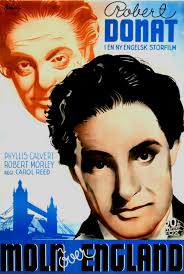
THE YOUNG MR PITT
UK, 1942, 102 minutes, Black-and-white.
Robert Donat, Robert Morley, Phyllis Calvert, John Mills, Raymond Lovell, Felix Aylmer, Max Adrian, Herbert Lom, Jean Kandel.
Directed by Carol Reed.
The film is a star vehicle for renowned British actor, Robert Donat, during World War II. (Comparisons implied between Napoleon and his aggression and the Nazi overwhelming of your about to Hitler. Comparisons between William Pitt and his stances against Napoleon and Churchill confronting Hitler.)
Donat had made a great impression on stage in London but also in the film, especially with his role in The Private Life of Henry VIII, then as the Count of Monte Cristo, a succession of prestigious roles, serious and comic in the latter part of the 1930s, culminating in his Oscar-winning role in Goodbye Mr Chips, 1939.
There was a break between Goodbye Mr Chips and The Young Mr Pitt, three years.
The film is a detailed re-creation of England, especially at the end of the 18th century and the beginning of the Napoleonic wars. Robert Donat also appears as the older Pitt, passing on his political legacy to his son, the credits noting that the speeches by both Pitts came from the actual records.
Pitt is was prime minister for several decades, falling briefly out of favour with the threat from France after the Revolution but then regaining the prime ministership and the confronting of Napoleon. Robert Morley appears as Fox, invited to collaborate with Pitt but refusing, mocking, but eventually coming onto his side.
There is a gallery of British character actors in support and, interestingly, an early John Mills appearance as William Wilberforce. Herbert Lom all yes yes is what is there and stops on’s’s offices are all there is the’s plays Napoleon – and was to do so in 1956 in War and Peace.
The film was directed by Carol Reed who had been emerging during the 1930s with such films as The Citadel. Perhaps his most famous film, from 1949, was his version of Graham Greene’s The Third Man. Reed continued directing during the 1950s and, surprisingly, won the Oscar for Best Director in 1968 for Oliver.
- Audience knowledge of William Pitt, his father, his long prime ministership, during the French Revolution, the rise of Napoleon, the war with France? Nelson?
- British filmmaking in 1942, World War II, dramatising British history, in wartime, the leadership of the Prime Minister, an enemy from the continent (Pitt and Napoleon, Churchill and Hitler)? The public supporting the war effort?
- The film as “intelligent”? The quality of the screenplay language, well articulated, period sequences yet conveying a great deal of history and character? Costumes and decor, vivid recreation of the period? The musical score?
- The introduction, the senior Pitt, his political role, verbatim speeches from history, his evening with his son, passing on the inheritance? The drinking, the respect, the family pride?
- Robert Donat’s presence and performance, credibility, deliverance of speeches, also verbatim from history? His age, his inheritance, his skills, the ridicule of the political opposition, the king, appointing him prime minister? His approach to Charles Fox, refusing? Entry to parliament, the exaggerated mockery? His speeches?
- The screenplay, moving through almost 20 years, not many indications of dates and how much time passing? Audience applying this?
- Pitt, his advisers, the relationship with William Wilberforce, Smith as his assistant and secretary? The other friends? The incident of his being mobbed, the physical training centre, the man coming to the rescue and joining the fight, indicating Pitt’s support amongst the people? The newspaper headlines, Fox losing popularity, Pitt, in Parliament?
- The overview of his social achievements? Hard work?
- Issues in France, the French Revolution, the execution of the king, Fox and his sympathy for the French? His speeches in the parliament, ridiculing of Pitt? Pitt and his stances, national pride?
- Napoleon, his signature, his rise, power, the 1790s, Toulon, the siege, British ships, Pitt and his decision to build up the navy? The collage of huge ships filled and launched? Confrontations with Napoleon? The scenes with Napoleon, building up his presence on par? The visit by Talleyrand, by the American, Pitt and his stances?
- Opposition to his approach, the ridicule and the parliament? The irony of his reading the message about the victory in Egypt? The choice of Nelson, the church sequence, the appointment, Nelson and his achievements, especially Trafalgar?
- Lord Auckland, diplomatic, his daughter, Pitt and the visits, playing games with the children, the attraction to the daughter, the conversations? Her support? The coach and nodding off and driving to the house, her waiting, Pitt turning back to his work?
- The new Prime Minister, appointed by the king, the parallels with 1938 and appeasement of Hitler, the appeasement of Napoleon, focusing on domestic issues rather than defence?
- The further dangers, the appointment by the king, Fox coming to support him, Wilberforce after an initial hesitation, support?
- Pitt and his help, the doctor’s advice, the nanny and her care, his long working hours, drinking, ignoring the medicine?
- The film and its tribute, his achievement, death at 46? And morale boosting in 1942?
Beautiful Stranger/ Twist of Fate
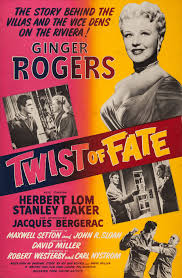
BEAUTIFUL STRANGER/TWIST OF FATE
UK, 1954, 89 minutes, Black-and-white.
Ginger Rogers, Jacques Bergerac, Stanley Baker, Herbert Lom, Eddie Byrne, Margaret Rawlings, Coral Browne, Ferdy Mayne, John Le Mesurier.
Directed by David Miller.
Title and the credits love song indicate that Love is the beautiful stranger. However, it may also be the character of Johnny, former chorus girl dancer, played by Ginger Rogers.
During the 1950s, many of the American stars, with the introduction of television, came to England to star in smaller films, enhancing their reputations. Ginger Rogers had a strong career from the 1930s, dancing with Fred Astaire, an Oscar in 1940 for Kitty Foyle, her later career during the 40s and 50s in comedies and dramas.
The two leading men, 16 and 17 years younger than she, are the seemingly emotionless Stanley Baker and the French heartthrob in American films and television, Jacques Bergerac. He and Ginger Rogers were married at the time of making this film. There is an interesting supporting cast led by Herbert Lom in a rather sinister role, Eddie Byrne as a criminal contact, Corel Browne’s appearance at the hairdressers, Ferdy Mayne as the police officer, John Le Mesurier in a scene in the casino. Direction is by experienced American director, David Miller.
Riviera setting, crime and forgery, gambling, violence, betrayals… An entertainment rather than a serious portrait of credible characters and situations.
- The original title, the theme song: Love is a Beautiful Stranger? The international title and its relationship to plot twists?
- British filmmaking, American actors and directors, British cast? French Riviera locations? Musical score?
- Johnny, the central character, Ginger Rogers, in her early 40s, the leading men 16 and 17 years younger? Her glamour, the range of costumes, her screen presence? Her story, theatre and dancing, hard times, the encounter with Louis, infatuated with him, his wealth, the yacht, the house, the gifts of jewellery, the high life, the casinos? The possibility of marriage? The effect on her, the encounter with Emil, the money, her friend in the sanatorium? Upset with Louis, his marriage, his business, the phone calls, her driving the car, the crash, the encounter with Pierre, the artists, the friendship, the pottery, the return, falling in love? Her dilemmas, Louis and his absences, his return, suspicions, and feels payment with the necklace, his balls conclusions, confrontations with Johnny?
- Louis, business, his wife and relationship, her brothers, the forgeries, his gang, the sale of the coins, the plan for each of forgery, the collection, Emil paying with the necklace and his suspicions, the plan with Luigi, with Johnny, going to Africa? The scenes with his wife, the clash? His suspicions, the confrontations, his unexpected death?
- Emil, past friendship with Johnny, the casino, the money and gambling, the selling of the coins, Luigi, the necklace, Emil and his lies, robbing the safe, the necklace, returning, robbing the safe of the cash, the encounter with Louis, the fight, Louis’s death, putting the body in the car, following, trying to burn the body, the irony of his coat, the money in the fire, pursuing him, the fight, Luigi shooting him?
- Luigi, working with Louis, loyalty, collecting the coins, the money, the final plan, Louis not arriving, following Emil? His death?
- Background characters, life at the casino, the local police and their activities?
- A variation on film noir? An entertainment rather than realistic characters and situations?
Frightened City, The
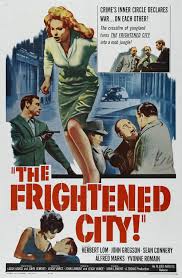
THE FRIGHTENED CITY
UK, 1961, 97 minutes, Black-and-white.
Herbert Lom, Sean Connery, John Gregson, Alfred Marks, Yvonne Romain.
Directed by John Lemont.
The Frightened City is in the early 1960s, a shift in some British films to black-and-white, crime features, corruption, especially in London, films like Expresso Bongo.
The screenplay takes protection rackets in London very seriously, references to Chicago mobs but this time a focus on the police, their pessimism about what was happening to the city, their work, and the presentation of the criminals but in no way glamourising them.
Herbert Lom plays a suave accountant, an influencer and mastermind. John Gregson plays the very serious-minded police inspector. Alfred Marks is a confident criminal, not presented as likeable in any way. Yvonne Romain is a singer.
But, the main interest is in Sean Connery, who had been in films and television for many years but was emerging as a more prominent actor, this film appearing the year before his first James Bond film, Dr No.
- A thriller of its time. Black-and-white, city crime, police, protection rackets? Comparisons with American films, reference to Chicago?
- The situation in London, 1960s, criminals, protection rackets, thugs causing havoc in shops and restaurants, proprietors paying protection? The role of the police, confronting criminals, the arrests?
- Inspector Sayers, his team, serious minded, desperate about the situation in London? Interrogations, confrontations, confessions, persuasion? The other members of the team?
- Waldo, accountant, money matters, schemes, his connections, suave manner, treatment of his secretary, his promotion of Anya, going to the club, her job? His connections, Harry, the protection racket, the interview with Paddy, the transition to injection for big companies, building sites…?
- Harry, criminal activities, the range of thugs, some old-fashioned, codes, the scenes of upset in restaurants, the owners, the havoc, paying protection? Not informing the police?
- Anya, documentation, singing, Waldo and the relationship, the nightclubs, singers, dancers, rehearsals, her success? The encounter with Paddy, the relationship?
- Paddy, a Sean Connery character, petty thief, his partner and his injuries, approached by Harry, interviewed by Waldo, his phone calls, persuasion, at the restaurant, the fake fight, getting protection money? His advice for the protection money from companies, the interviews, suave manner? Seeing Anya, his friendship with Sadie, the relationship, his being used for the killing of the old-time criminal, his reaction, his former partner supporting him to tell the truth, with Inspector Sayers, the pressure, his setting up Waldo, setting up Harry, the final fight, deaths, arrests? The influence of Sadie?
- The protection rackets of the past, the American models, continuous protection in later decades, bikie gangs, corrupt union officials …?
- The dialogue from Inspector Sayers and the very serious minded perspective on crime and criminals rather than sensationalist action films?
