Displaying items by tag: Peter Malone's Movie Reviews
Forgive us All
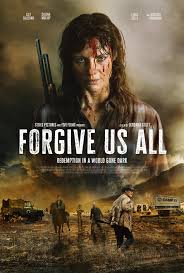
FORGIVE US ALL
New Zealand, 2025, 93 minutes, Colour.
Lily Sullivan, Callan Mulvey, Richard Roxburgh, Lance Giles, Bree Peters.
Directed by Jordanna Stott.
The title has a very grim tone, indicating sins that need to be forgiven.
This is a New Zealand film with some quite magnificent scenery from the South Island. It is a first effort by the by the director and actor, Lance Giles. It was crowd funded.
The beginning has a drama, a family, husband and wife, daughter, father-in-law, and a sad death. It looks to be a story of survival.
Then comes the zombie theme, the post-apocalyptic world infected, cannibalistic zombies. The main drama concerns two men who have escaped the camp, have some kind of cure, on a mission – and being pursued by the relentless guards.
The main part of the drama consists of a journey to the outpost, the mission of help, the widow accompanying one of those fleeing but the continued pursuit, the howling of the zombies, the final arriving at the mission destination – but some grim aspects of the drama.
(The film was not well reviewed and if one looks at the blogging comments on the IMDb, they tend to be quite merciless on the film and the filmmakers, a lot of trotting rather than reviewing.)
- The title, the grim tone? For what sins?
- The resemblance to the Western genre? A New Zealand film? South Island mountainous locations? The remote homes, the countryside, the dark forest? The musical score?
- The virus, the plague, the infections, the living dead? The visualising of the living dead, the attacks, screeching and howling, attacking the dead and devouring them?
- The opening, measured, the measured pace of the film rather than rapid action? The introduction to Rory, isolated, her daughter, infected and attacking? The passing of four years?
- Rory, her relationship with Otto, her dead husband, helping the infected, infected himself, the attack, his daughter, her death? Surviving, isolated? Otto, isolated, strong-minded, work?
- The situation, futuristic, in the house, the surveillance equipment? Electricity? The story of the prison, the population confined in the camps? Two brothers, Runners, the officials from the prison, the pursuits? The brother escaping wounded? The other brother, using his hat as bait, confronted, taunted by Logan? Killed?
- Rory, at the river, finding Noah, his injuries, her suspicions? Putting him on the horse, bringing him to the stable? The story of his son, going to the encampment, stealing the medication? His desperation, his injuries?
- The tension between Otto and Rory, the family relationship? Her looking after Noah? Otto and the discovery? Suspicions? The story?
- Logan, his assistants, their ideology, cruelty? The confrontation with Otto, his defying them, Rory and Noah on the horse, the escape, the shootout, Otto’s death?
- The pursuit through the forest, Logan and the fight with Noah, no less determination, Logan’s cruelty, his death?
- The living dead, emerging in the night, the forest, confronting Rory, her desperation? Her standing still and defying the living dead? Noah and Rory having the scent on them which repelled the living dead? Her escape?
- Daylight, seeing the house, her own condition, going to the house, the grandmother at the door, suspicious, Rory standing back, leaving the bag with the medication, the grandmother taking it inside?
- The end, Rory at the river, with the gun, previous thoughts of suicide, no motivation for living? The experience with the infected? Would she kill herself or make the decision to live?
Appleton Ladies' Potato Race, The
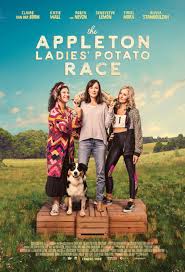
THE APPLETON LADIES’ POTATO RACE
Australia, 2023, 98 minutes, Colour.
Claire van der Boom, Katie Wall, Genevieve Lemon, Tiriel Mora, Robyn Nevin, Olivia Stambouliah, Andrew Ryan, Cecelia Peters, Maggie Dence, Darren Gilshanen. John Gaden.
Directed by Lynn Hegarty.
This is a pleasant piece of Australiana. It is based on a play by Melanie Tate, a play which focused on five women characters and their discussion about life in their town and issues of gender equality. While this core remains the same, the film opens out the action quite extensively, lots of location photography, a wider cast – and the cast are a very welcome assembly of quite a number of veteran Australian stars of stage and screen.
The film is based on a potato race in the southern Highlands of New South Wales country town of Robertson, the home of the playwright. And a lot of the film was filmed in these locations.
So, a lot of pictures of ordinary Australian life in the country. Also, the old traditions for country fairs and potato races. But, a key issue, the prize for the men in winning the race is far more than that allotted for the women. And a lot of satire on male chauvinism.
The sister of the local champion is visiting and takes up the cause, clashes with the men in the town, some sabotaging, and the raising of enough money to have an equal prize.
Easy entertainment but with that gender equality important issue.
- The title and expectations? Based on a successful theatre play? Adapted for the screen by the writer?
- The country town, the countryside, potato crops, homes, doctor’s surgery, meeting all, shops, the atmosphere? The musical score?
- The annual festival, memory of the men working the potato feels, the origin of the race, Aunty Barb and her disguising herself as a man, the establishing of the women’s race? The family tradition, winning the races, Nikki and her 10 years of winning, the trophies?
- Penny as the centre of the story, selling her home in Sydney, packing up, with Mabes, driving, arriving in Appleton, her having left home years before, to meet her family again, the relief practice, the encounter with Joan Bunyan and her strictness, the patients, her hoping to settle?
- The family, Barb and Bob, bringing up Nikki and Penny, Nikki and her husband, Mark, his loss of job, drugs? Ethan, clumsy, his apprenticeship, Elliot, the gift of the guitar, his musical ambitions? The young baby? The irony of Mark being Joan Bunyan’s son? And the revelation of Gavin as Joan’s son? The party, rivalry between Nikki and Penny, the stoush with the cake? Indication of things to come?
- Penny, the encounter with the doctor, his retirement, his training her, his story, his partner, living in the town, the gradual acceptance, revered? His advice for Penny, the scene with him on the horse, getting her to pat the horse and calm down?
- The range of clients, knowing her from the past? Her friendliness?
- Nicky, Barb training her for the race, her wanting to win the last one, turning 40? Difficulties at home, Mark and lack of a job, the drugs, the baby swallowing the drugs and Penny coming to the rescue? The rivalry between the two sisters, their perspectives on staying and leaving the town?
- The issue of the race, the prize money for the race, $2000 for the men, $200 for the women? Penny, taking up the cause, going to the meeting of the committee, Joan and Barb the only ones present? Joan and his strictness with the rules, times, general business, Penny making her case? The decision to pursue it, preparing the posters, around the town, the money box, the collection, Miss Vaughan and her worry about cancer, her donation, feminist? The men and their hostility? Doorknocking, refusals?
- The attitude of the men, the three Bobs, committee, but never going, the old Mann in the town and their memories, Gavin Bunyan as the spokesman for the chauvinist point of view, his harshness, threats to Penny? His speech at the general meeting, his stubbornness, at home with Mark and his mother, his mother’s exasperation? Sack of potatoes and his making the opening, causing the difficulty during the race? The later reprimand, and from his mother?
- The radio announcer, the days before the race, keeping the population up-to-date?
- Hostility towards Penny, people refusing to come for help, the effect on her?
- Nickki’s 40th birthday, the clash and truth telling between the two sisters, Mark and his affectionate speech and memories, Nikki overcome, leaving? Penny feeling very bad? Thinking to go back to the city?
- Nikki and her attitude, not worrying about the money, the training? The news of the money, the meeting, $10,000, the many girls coming from round about to join in the race, the media coverage, the online campaign and its success, Elliot and Miriam and their work? Nickki as a hero to the young women, selfies?
- The race itself, Penny deciding to run, the potatoes spilling, Penny falling, Nikki coming back and not winning, Miriam winning and the celebration, the two sisters reconciled, carrying the sack together and finishing the race? The family’s joy, Barb and Joan kicking the men out of the commentary box?
- The importance of the issues about equality between men and women, the lack, Barb and her looking at the photos, preparing the collage of photos, the history of the race, her determination?
- A pleasant piece of rural Australiana?
Executor
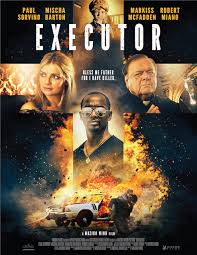
EXECUTOR
US, 2017, 93 minutes, Colour.
Markiss McFadden, Paul Sorvino, Aiden Betesh, Mischa Barton, Eric Roberts.
Directed by Moziko Wind.
An executor is somebody who carries out the will of another – or can be an executioner.
This is a little seen American thriller, written and directed by Israeli cinematographer and editor, Moziko Wind. It is a crime thriller, focusing on a group of hitmen, young orphans trained over the years to act on the command of authorities and wreak vengeance on targets considered to be criminals, hitmen who are vigilantes.
But, there is a great difference with this criminal organisation from crime families and Mafia bosses Antonio,. The head of the organisation is, in fact, a Catholic priest, who, like the crime families, has inherited his role and mission from a father, this time an old priest. With the Catholic background, the priest considers that he is doing God’s vengeful and punishing work, that his hitmen are God’s bullets.
The priest is played by Paul Sorvino, rather huge at this stage of his life and career, a sinister Italianate presence, mouthing misguided theology, choosing out targets who need to be punished, sending out messages throughout the city by lookouts who are able to communicate with the potential hitmen. But Antonio uses the confessional, the secrecy and the seal, urging the hitman to read the Scriptures in the church, given a penance, and then the target.
One hitman, Kyle, played by Markiss McFadden, brought up as an orphan to live this kind of life, is given a target, setting a bomb, but finding that a mother and boy have gone into the shop – and he tries to save them, succeeding only with the boy (who is played by the director’s son, Aiden Betesh).
It is set up as a drama, Kyle not telling Father Antonio about the boy, finding himself in an interesting relationship, caring for the boy, getting his neighbour, Mischa Barton, to help. But, with all his spirituality words, Father Antonio is actually a crime boss, resorting to violence, imposing his own will rather than God’s, leading to a confrontation, more drastic than the audience may have been expecting.
But, there is an epilogue to the film, 10 years later, a young man on the subway and we know that there will be delayed retribution.
- Moral fable? Catholic background?
- The world of American crime, Mafia and mob law and morality, vengeance? The hold of the mob over society?
- The screenplay making the parallels between Mafia mobs and this ecclesiastical vengeance cult?
- The credibility of the plot, the presupposition about a tradition of priests, moral judgements, vengeance, Mafia methods, training orphans and bring them up as killers?
- The tradition of priests on screen? Catholic priests? Religious traditions, the tradition of the sacrament of penance, confessional is? Advice? Penance? Organising networks – here of vigilante moral justice?
- Kyle, the flashbacks, his father and disappearance, an orphan, with the other orphans, his upbringing, with Father Antonio, trained to be an assassin, his personal life, isolated? The messenger in the streets, his going to the church, confessional, Father Antonio explaining the situation and the target, going to the church, the pew, the Scripture reading, the penance? His going out and executing the command?
- The morality of the priest and his executioners wreaking justice on offenders? In the name of God?
- Father Antonio, his presence, in the confessional, his garb, the traditions, advice to pile, the gradual revelation of who he was, his network? His ruthlessness? Violence, weapons? The exercise of controlling power?
- The task, Kyle going to the diner, the bomb, the mother and boy going in, his watching, the timing, tension, his rescuing the boy, the mother killed in the explosion?
- The character of the boy, his age, experiences, his mother and her problems, her death? Going with Kyle? The apartment, secrecy? No questions? The effect on Kyle, the emotional response, new to him? The time together, the dangers, the outings and enjoyment? The neighbour, the conversations, her interest, his trust in her, her help?
- Father Antonio, the discovery of the truth, his vengeance, his henchmen, commanding them, their willingness, unwillingness, his hold over them?
- The drama of the pursuit, Kyle and his determination to protect the boy, against Father Antonio? The thugs in pursuit, the travel, the dangers, the boy almost falling out of the car, leaving the thugs, the rendezvous with the neighbour, the underground tunnels, the escape?
- Father Antonio, with the guns, his anger, shooting Kyle, his explanation of the past, Kyle’s father trained as an assassin, Father Antonio inheriting the network from a previous priest?
- Kyle dying, audience expectations? The boy taken by Father Antonio?
- 10 years later, the boy growing up, going out on mission – and the film ending? Target Father Antonio?
Wicked for Good

WICKED FOR GOOD
US, 2025, 138 minutes, Colour.
Cynthia Erivo, Ariana Grande, Michelle Yeoh, Jeff Goldblum, Jonathan Bailey, Ethan Slater, Marisa Bode, Bowen Yang. Voice of Colman Domingo.
Directed by Jon M. Chu.
The highly anticipated second part of the popular spectacular musical film, Wicked. And, given the immediate box office results, the anticipation seems to have been completely satisfied.
Everyone knows the story of The Wizard of Oz. And, over 85 years, so many audiences have enjoyed the film version with Judy Garland. And there were other’s books about Oz by the author Frank L. Baum (and some film versions like Return to Oz). However, in the 1990s, the author, Gregory Maguire created an alternate interpretation of the Wicked Witch of the West and the good fairy, Glinda.
With enthusiasm, Stephen Schwartz (Godspell, Pippin and scores for several Disney movies) was creative in bringing Wicked to the stage where it has been performed widely for over 20 years. Which means then that there is an eager audience for this film version of the musical.
Most of the enthusiastic audiences who have made Wicked a box office bonanza, know the story, know the characters, have a point of view on them, know the songs, anticipate the choreography.
But, this reviewer did not have these advantages, not the book, not the musical, just a general anticipation of finding out something about the Wicked Witch of the West now called Elphaba. And, for this reviewer, the performance by Cynthia Erivo as Elphaba is most striking, always interesting, the background of her unexpected birth, her green colour, her powers, her place in her family, the attention given to her younger sister, taking her to the school of magic but impressing one of the teachers and being invited to stay. But, the visit with Belinda to the Wizard, the discovery of the machinations of Madame Morrible, her denunciation now means that she has been banished, the people of Oz turned against her, burning her effigy.
One of the disadvantages for the reviewer is knowing only about singer Ariana Grande rather than having seen her perform. It is a bit of a shock to see that she looks something of a rather slight presence, but fully determined, and in the performance of the first part of the film dramatising her supreme self-confidence, doubts not even possible, symbolised by the swish of her hair. By the second half she looks more substantial and she is accepted by everyone, accepting herself, and she is Galinda the Good (though not approved by Madame Morrible).
It is an understatement to say that the film is colourful, elaborate sets, action in motion, and Jonathan Bailey as Flyero, the dashing hero, with an effect on each of the young women, having to make hard choices in the second part.
There is a lot of talk of the Wizard himself, especially by the arch-Wizard teacher in the school, Madame Morrible (an imperious Michelle Yeoh). But, we see the Wizard himself, played by Jeff Goldblum. And the question of whether he is just like the familiar Wizard in the original film or is he up to something else…?
So once again, there are songs, especially the duet of Galinda and Elphaba and the important theme of change for good, E;phaba and her love for Flyero and her hard choices, Galinda being challenged about authenticity, as good or as vain and just relying on the goodwill of the people of Oz.
With the release of the second part, already cinemas are offering the possibility for fans spending a day there for both films, five hours of Wicked entertainment.
- Expectations after the first part? Fulfilled?
- The popularity of Wicked in the theatre? For 20 years? The transition to the screen? The traditions of The Wizard of Oz, Return to Oz, The Wiz…? The opening tribute to The Wizard of Oz, to Frank L Baum, mansions, the glimpse of Dorothy and the Yellow Brick Road, the colourful fields surrounding of this?
- The importance of the sets and decor, Oz? The activities, Oz and the Wizard? The forest, Elphaba’s secret cave, the tunnels, the town square?
- The range of songs, popular, the lyrics, characters, themes, their insertion into the ongoing drama, illuminating the characters?
- The situation at the opening, the animosity towards Elphaba, Galinda, good, the crown and sceptre, the bubble for travel? The response of the people and acclaim? The scenes of the happy crowds and their cheers? Songs and dances? At Madame Morrible in the background, her manipulation of Galinda, her role with the Wizard, disdain for Galinda, humiliating her? The exile of Elphaba, audience sympathy for her, the demonstrations against her, burning the effigy, her initial appearance, with the animals, loosening them?
- The future of Oz, the role of Galinda, the mechanisms of Madame Morrible, the attitudes of the Wizard, in the background?
- The arrival of Flyero, his charm, on display with Galinda, offering to marry her if that’s what you wanted? Yet his love for Elphaba? Going on the expedition, the military, searching for her, the pursuit through the forest, her escape on her broom, hiding in the tree? Her encounter with the animals, their escaping? Her deciding to stay?
- Flyero and his encounter with Elphaba, love for her, deciding to stay, their love? The future?
- Galinda and Elphaba, the past, the separation, the bond between them? Elphaba coming to the Castle, the discussions, the various moods, the song and change for good? Elphaba and her disappearance?
- Galinda, her vanity, liking the acclaim, Flyero and his comments, her being hurt? The encounter with Elphaba, the song, the change for good? Yet the continued temptation for affirmation and flattery?
- Madame Morrible, to track Elphaba, Galinda suggestion of using her sister? The background of Nessa, the relationship, her ruling as Governor, her courtier and his leaving, her reaction, dismissing him, his trying to escape, with the munchkins, his being transformed into the Tin Man?
- Madame Morrible, the tornado and its devastation, Nessa and her death in the house? The references to Dorothy, the house and the whirlwind, arriving in Oz, the line, the Tin Man, Scarecrow, on the Road to Oz, the situation in the context of the conflict in Oz itself, the Wizard and Madame Morrible? The issue of the shoes and Elphaba wanting them back? The experiences of Dorothy?
- After the tornado, Galinda and her disillusionment, the banishing of Madame Morrible, the confrontation with the Wizard, his exposure?
- Galinda and the people and her future? Flyero and his experiences, defeat, disfigurement, his return, the meeting with Elphaba, the going out into the desert for the future? Galinda remaining in Oz?
Old Guard 2, The
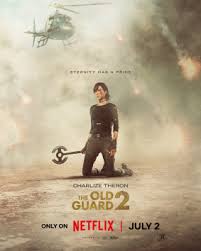
THE OLD GUARD 2
US, 2025, 107 minutes, Colour.
Charlize Theron, Kiki Layne, Matthias Schoenaerts, Marwan Kenzari, Luca Marinelli, Chiwitel Ejiofor, Veronica Ngo, Henry Golding, Uma Thurman.
Directed by Victoria Mahoney.
Audiences who enjoyed the original The Old Guard will be eager for this sequel. Those who come across the sequel first may well be puzzled about who the characters are and what is going on.
The original film explained the old guards, old godlike characters from mythologies of the past, coming alive, missions in the present, champions, clashes, action adventures.
This follow-up has much more of the same – much more, and fairly complicated plots, the return to the past and the origins of the immortals, some steps back into more recent centuries and the plights of some of these old guards, successes, failures, disappointments, retirement.
And, a visit to Korea to consult one of the old gurus and to discover what is really happening – and who is behind a lot of mysterious and complicated goings-on.
The film has a very strong cast, some from the original, and the presence of Uma Thurman as Discord, a malevolent power behind the goings-on.
And, there is a lot of costume drama from the past, some down and out misery in the present, some travel to a range of countries in the present, a mixture of drama and escapism.
The ending and resolved – expectations for the next film?
- Popularity of the original film? Welcoming this sequel? Its ending in mid-plot and the need for the third film?
- The characters from the original film, the situation of the immortals, the origins of their immortality, the range of cultures, legendary backgrounds, no religious backgrounds, working together, clashes? Flashbacks to sequences in history? The surviving, the possibility of dying? Andy and her losing her immortality? Nile and her capacity for injuring people and their losing their immortality? Quynh, partnership with Andy, the battle, Andy and her decisions, Quynh and her imprisonment, the opening of the film and her being drawn out of the sea?
- The range of locations, the Adriatic, Paris, Rome, Italian cities…? The touch of the exotic? And the quick ability to move from place to place! The musical score?
- The situation, the arms dealing, the mysterious identity, the initial action in Croatia, the CIA connection with Copley, his role in the previous film, now aligned?
- The action sequences, the fights, Andy and her martial arts skills? And the later fights with Quynh? The determination to find the mastermind?
- Audience surprise that the mastermind was Discord, the tradition of immortality, her power, vengeance, losing immortality? Her lurking in pursuing? With Quynh, winning her to her side? The buildup to destroy Andy?
- Booker, the past separation, alone, drinking, in Paris, Discord tracking him down, setting him up, his going back to Andy, the message, his change of heart, rehabilitated? Joining in the quest? His wariness of immortality, the fencing sequence, the three, wounded by Nile, willingly losing his immortality, his participation in the final confrontation, his death?
- The visit to Korea, the character of Thua, immortal, his vast library, his activities, Discord stealing the books for studying, Thua and his joining the group, participation in all the activities and fights?
- The buildup to the confrontation with Discord, her plans, the bomb, the plant, the timer?
- Quynh, the sequences with Andy, the explanations, her non-forgiving, siding with Discord, with the timer for the bomb, the meeting and their talk, the decision against Discord?
- The fights, the split second timing, the bomb, the various immortals involved? Andy regaining immortality because of Booker’s sacrifice? Nicky, her powers, not realising them?
- The sudden ending, unresolved, need for a third film?
Problemista
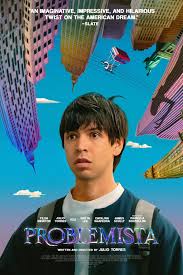
PROBLEMISTA
US, 2023, 105 minutes, Colour.
Julio Tores, Tilda Swinton, RZA, Isabella Rossellini, Catalina Saavedfa, James Scully, Greta Lee.
Directed by Julio Tores.
What is a problemista?
Writer, director, actor, Julio Tores, born in El Salvador, with his strong career in television background, popular in the US, dramatises an answer.
Anybody looking at the cast before watching the film will be quite surprised to find Tilda Swinton and Isabella Rossellini in the cast as well as rapper RZA.
Tores plays Aleyandro, dreaming of being an artist, to design toys, applying for a job with Hasbro, rejected, then connecting with a cryogenic company – and a mission to recover 13 paintings by an artist who is being frozen, the commission from his haughty wife, played by Tilda Swinton, another very different performance. (If one wanted to see a haughty woman, imperiously impatient, continually demanding, momentarily relenting, then Tilda Swinton’s performance is well worth catching.)
All kinds of problems and complications, a range of characters and undermining Aleyandro – but his support from his mother and a reassurance at the end that his dreams well worthwhile.
- Julio Tores, writing, acting, directing? His career and background?
- The title, the tone, creative word? Aleyandro and his life and career?
- The El Salvador background, Aleyandro and his mother, her fostering him, his art, the dream of the cave?
- The surrealist comedy? Realism and fantasy? American style, Latin American style?
- The New York locations, the apartments, business offices, the Freeze Corporation and cryogenics, the art world and galleries, the affluent world, immigration officers? The musical score? Aleyandro, as a child in El Salvador, the relationship with his mother, her fostering his art? The move to New York, his aim, toy design, the Hasbro models, his applications, internship?
- Bobby, the dead artist, the nature of his art, cryogenics, the large paintings, 13 eggs? Aleyandro and the accident and the freezing? 30 days to deporting?
- Elizabeth, Bobby’s wife, her character, sharp, demanding, angry, petulant behaviour? Aleyandro assisting her, planning the exhibition, his migrant status and no pay, subletting his room, Craigslist jobs?
- The character of Bingham, hostile, undermining Elizabeth? The quest for the paintings, finding 12 of the 13, Dalia, past student, Bobby’s affair with her, Elizabeth’s jealousy and harsh review, Aleyandro’s apologetic letter? Dalia giving the 13th painting?
- Disputes with Elizabeth, Aleyandro and the filing system, the bitter phone call and argument, the imagining the dragon in the fights at the cave? Demands for copies, the freight issues and expenses, Aleyandro and his sex work? And the Hasbro development of one of his toys?
- Paralegal, the immigration officer, the development of the show, the dragon dream and Elizabeth? On the cable car? Arriving late, all the paintings sold?
- Aleyandro, reconciliation with his mother?
- Elizabeth, the decision to be frozen, her giving him the name of the Hasbro exploiter of his invention?
- The transition to the future, or reunited, Aleyandro is an old man, his success as a toy designer?
Yurlu/ Country
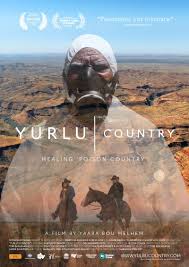
YURLU/COUNTRY
Australia, 2025, 82 minutes, Colour.
Directed by Yaara Bon Melham.
Yurlu/country is in Western Australia’s Pilbara. This perceptive and challenging documentary invites its audience into this land, showing its immediate natural wonder, rock formations, desert, canyons, imposingly beautiful almost travelogue like. But, then the revelation of the scars, the mining sites and their vastness, the contamination of the land.
The host for this documentary is Maitland Parker, a Banjima Elder who has lived in this land, a long time ranger with responsibilities. But, there is such pathos in his story. He is dying, a cancer caused by the asbestos which had been mined, the exposure to the asbestos and the dust for so many miners and the sad irony that Maitland was never a miner but yet is suffering, dying.
The impact of the film works on several levels.
First, emotionally involving, is Maitland ‘s story and his telling of it, and this is shared with his brother and members of his family. The film takes place over his final year of life. Sadly, by the end of the film, he has died. He is a man of the land, the culture, its traditions, the religious dimensions, the bonding of his people with the land.
The challenging impact of the film concerns mining, asbestos and its exploitation. The town of Wittenoomis built, white families come to live there, a comfortable and well stocked town. But, with the exploitation of the asbestos, the land has become contaminated, a reference to its being worst contamination, a Chernobyl in the southern hemisphere. This documentary includes black-and-white footage from the past, the work in the mine, the asbestos tailings. And the spread by wind and water, the poisoned country, travellers and the indigenous people forbidden to enter.
One of the major surprises and challenges of the documentary is the inclusion of interviews with mining entrepreneur, Lang Hancock, many decades ago, discussing asbestos, the profitability of mining – and, alarmingly but probably expected, the taken-for-granted explicit racism in his interview (and contemporary audiences referencing his daughter, Gina Rinehart and her role and wealth in the mining industry).
Another challenging impact of the film is the appeal to the West Australian government, the discussions with the mining company representatives,, their interventions, gradual changes in attitudes – including, finally, the possibility of a group to enter into the contaminated area, to the significant birth tree where many are also buried. A symbol of hope for the people themselves, for a change of attitude and understanding.
Because Maitland Parker has told his story on film, he lives on in this personal invitation to all Australians (and beyond) to look again at mining developments, strengths, weaknesses, exploitations, the need to reassess and the consequences.
Wake Up Dead Man. A Knives Out Mystery
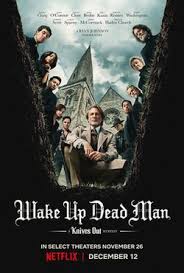
WAKE UP DEAD MAN
US, 2025, 144 minutes, Colour.
Daniel Craig, Josh O'Connor, Glenn Close, Josh Brolin, Mila Kunis, Jeremy Renner, Kerry Washington, Andrew Scott, Cailee Spaeny, Daryl MacCormack, Thomas Hayden Church, Jeffrey Wright, Annie Hamilton, James Faulkner, Bridget Everett.
Directed by Rian Johnson.
In 2019, movie audiences worldwide enjoyed a very entertaining murder mystery, Knives Out, a very starry cast, an offbeat private detective, genteel and from the South, Benoit Blanc, played by Daniel Craig. Three years later, writer-director, Rian Johnson, was successful again with The Glass Onion. And audiences wondered, now three years later again, whether this film, Wake Up Dead Man, could be a successful.
It is.
And, once again Daniel Craig’s charmingly eccentric Blanc, a star cast for character actors, a murder in an equivalently locked room, plenty of suspects, gradual revelations, twists (although many audiences probably pick the murderer but will be surprised at all the motivations and turns in the plot). There are references to Agatha Christie and Roger Ackroyd. And, Benoit Blanc uses the John Dickson Carr thriller, The Hollow Room, as a template for his theories.
No difficulties in recommending Wake Up Dead Man to murder mystery audiences – plenty to entertain, almost 2 ½ hours worth.
But, the surprise is the Catholicism pervading the whole story and treatment. Which meant checking whether writer-director, Rian Johnson is Catholic. In fact he grew up in a close evangelical community.
The filmmaker made Dead Man in large part to excavate his deeply religious youth, a core part of his identity that gradually faded in adulthood. “I slowly realized I was writing this through the lens of me, now,” Johnson says. “I had to step back into me, 30 years ago, and tap back into the things that inspired and drove me as a Christian”. David Canfield, 21 Nov. 2025. Hollywood Reporter.
The events take place in the fictional parish in New York state, Our Lady of Perpetual Fortitude, ruled over by an eccentric parish priest, Msgr Wicks, Josh Brolin rather savage, something of a cult leader in his hold over a group of parishioners, helping them, but exercising power, an angry man (and there is an interesting background to his place in the church), taking a stance against any inroads against him and the church, siege mentality. The common-sensed local Bishop, Jeffrey Wright, appoints an earnest young priest, Father Jud, to bring some balance to the parish. Father Jud is played by Josh O’Connor, one of his best performances, a former boxer with responsibility for death, changing his life, very much focus on Jesus of the Gospels, pastorally earnest. (Perhaps Rian Johnson had seen Mark Wahlberg as Father Stu!) An eventual clashing with the parish priest and his loyal parishioners.
The film introduces quite a range of characters, all potential suspects, the devoted manager of the parish, Glenn Close; the local doctor, Jeremy Renner; the local lawyer, Kerry Washington; an oddball novelist, Andrew Scott; a wheelchair-confined cellist, Cailee Spaeny; the caretaker, Thomas Hayden Church; a young would-be politician, Daryl McCormack (who has a marvellous short scene where he explains how he has campaigned in an enormous litany of every cause, every controversy, every movement in contemporary politics, especially in the USA).
And the murder takes place on Good Friday, and some rather fanatical beliefs and manoeuvrings in rising from the dead.
One of the features prominent in the film is that of confession, several between Msgr Wicks and Father Jud, some revelations of conscience, personality, some twists of conscience. And, Benoit Blanc, who declares himself absolutely rationalist, has to admire Father Jud, wants to save him from all the suspicions, sees that his Gospel compassion has something to commend it and arranges that the final revelation should take place in the church, everybody present, and that the murderer admits guilt in the framework of confession.
Many audiences will just observe this Catholic framework – but, the characters, the situations, the sins, repentance, the contrast between authoritarianism and pastoral enthusiasm make a difference for a Catholic audience.
- Audience enjoyment murder mysteries? Literary tradition from Agatha Christie, John Dickson Carr…? The film tradition? This third Benoit Blanc mystery?
- Audience enjoyment of Daniel Craig as Benoit Blanc, from the south, manner, speaking, clothes, style? The previous films, his status as detective, clues, interrogations, explanations, the dramatic confrontations, the accused, the suspects, the murderer?
- Father Jud and his story, writing up the accounts, his voice-over, his own story, young, boxer, killing his opponent, later saying he hated him, his sense of guilt, his discovery of Jesus, motivations, priesthood, the interview with the Bishop, his being reprimanded by the panel, his manner, vocabulary, talk about his faith and pastoral perspective? The Bishop sympathy, the new appointment?
- The warning about Msgr Wicks, Jud arriving, the encounter, at Wicks’ and his appearance, manner, way of speaking? His long status of the church? The back story, his father, widower, becoming a priest, establishing the church, his daughter and her ways, pregnancy, unknown father, the ministry of her father, his death at the altar, the inheritance, her wanting it, the destruction of the church and her anger, the encounter with Martha as a little girl, her death? The father and the mausoleum? Msgr Wicks, ordained, the church, the small congregation?
- Msgr Wicks, conservative, angry, feeling the church was under siege, his hold over the community, words of help, yet humiliating them, making them dependent? His thundery sermons? The encounter with Jud, the boxing, the sparring and the demonstration of asserting oneself? The issue of confessions, his talk about himself, especially the sexual dimensions of his life, and the later information about his prostate surgery and his assertions? Forcing Jud to confess to him? Jud and the uncomfortable experiences? The prayer penances? Time passing?
- The information about Martha, as a little girl, with the elderly priest and her devotion, the fight with his daughter and her death? The doing all the work in the parish, older, prim and proper, accounts, the organ playing, her devotion to Msgr Wicks? Her reaction to Jud? To the other parishioners? The homilies and her looking in admiration to the monsignor?
- Dr Nat, the doctor, devoted to his wife, her suddenly leaving him, his drinking, wanting her back? Vera, the lawyer, keeping the parish accounts? Cyrus, her looking after him, his growing up, his political ambitions, the sequence of his describing all the issues and causes that he had tried out? His use of the media, filming everything? Simone, her age, playing the cello, her incapacities, retiring, giving her money to the Parish? Lee, author, the lurid titles, his retirement, his house has a fortress with a defensive mode? Supportive of monsignor?
- The image of the Catholic Church, the progressive and pastoral perspectives as embodied by Jud, contemporary involvement in the Gospel and Jesus message for those in need? The contrast with the isolating, the defensive, the exercise of power, and the moral double standards?
- Monsignor and his meetings, the revelation of the meeting where he denounced everyone, their loyalties to him, the humiliations?
- The presence of Samson, gardener, alcoholic, monsignor rehabilitating him, Martha and her devotion? The television, his watching the matches? The interrogations by Blanc?
- Jud, his prayer meeting, their attendance, the reactions, the monsignor coming in, punching Jud? The atmosphere for Holy Week?
- Good Friday, the ceremony, all present, the homily, the singing of the chant with the cross, monsignor exiting, his collapse, Jud going in, dead, stabbed, the blood? The closed room?
- The police, the information, Jud under suspicion, his behaviour? The personality of the investigator, her tough stances, interrogations, suspicions of Jud?
- The calling in of Benoit Blanc, entering the church, the discussions with Jud, his not being a believer, the vocalising of attitudes of agnostics and atheists, criticism of belief? Yet his polite listening to Jud and the others, and his later moments of acknowledgement of faith and belief, his finally organising the final confession? His methods, the reliance on The Hollow Room, John Dickson Carr, going to the various possibilities?
- The developments of the case, the issue of the excavator for the mausoleum, the autopsy, Jud being present, having to leave the room, monsignor being buried in the mausoleum? Martha, her fussing, with the police, with Benoit Blanc, her belief in the resurrection, her continued prayer?
- The resurrection episode, Samson in the coffin, emerging investments, the range of cameras in the church and the mausoleum, motions filming, Jud arriving and slipping in the mud? His seeing the light, discovering Samson, his death? The police and further suspicions? Martha and her acknowledging that monsignor had risen from the dead and gone to heaven?
- The revelation that Cyrus was Msgr’s son, the unknown mother, Vera and her disgust and relationship with Cyrus, his bonding with monsignor, taking his name, being the heir, wanting to discover his grandfather’s inheritance? The keepsake, the apple, the lawyer, the search of documents? Benoit Blanc and Jud and their search?
- The further investigations, going to the doctor’s house, the discovery of monsignor’s body, the doctor dead, the further mystery?
- Jud, his sense of guilt, wanting to confess? Benoit Blanc’s reaction, assembling everybody in the church, the explanations, but his wanting to show compassion like Jud to those in need of compassion? Arranging the confession sequence?
- Martha, the confession, her explanations, the various clues, the background of the old priest, her devotion to him as a little girl, her contempt for his daughter, the truth about the old man’s death, swallowing the jewel, its being buried with him, Martha keeping the secret? Her shock at hearing the truth, turning against monsignor, side issue of the phone call to find out who booked the machine, Jud and his long discussions with Louise, pastoral compassion? That Martha had booked the machine, to get to the body of the old man, to retrieve the jewel? The solution to the mystery, the camera and the experts explanation about time lapse, Jud and his concealing the drink and monsignor’s reputation, but his collapse with the drugs, Martha selling the emblem on to the chasuble (and the background of the visit to the bar and the implement, Jud and his despair, throwing the implement through the window, their being two? The doctor doing the stabbing? Not able to find the alcohol container behind the door? Her plot with the doctor, to resurrect monsignor through Samson, the doctor and his greed, killing Samson, his explanation to Martha, going back to the house, the issue of the poisoned drink, Martha distracting the doctor, switching the cups, his death, her throwing him down the steps? Her retrieving the jewel? Her drinking the poison, her death?
- The aftermath, Vera leaving town, Cy and his further political ambitions, Lee and his book on publication and signing autographs, Simone playing the cello again?
- Jud, the discussions with the bishop, the support from the Bishop, going back to the church, the audience thinking he was using the money from the jewel – the renovations of the church, the restored crucifix – and the final revelation of the jewel buried in the crucifix?
- Satisfying murder mystery, death in the locked room, clues, investigation, solution?
Your Place or Mine
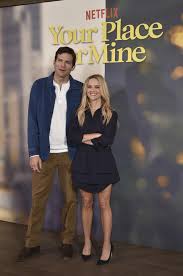
YOUR PLACE OR MINE
US, 2023, 109 minutes, Colour.
Reese Witherspoon, Ashton Kutcher, Zoe Chao, Jesse Williams, Tig Notaro, Wesley Kimmel, Steve Zahn, Griffin Matthews, Shiri Appleby.
Directed by Aline Brosh McKenna.
A romantic comedy which did not do as well at the box office as was expected, especially with Reese Witherspoon as the star and producer. But, it resembles many of the romantic comedies that she starred in.
And, this time, the romantic lead is Ashton Kutcher who also has had a strong reputation in romantic comedies.
This is the first film directed by Aileen Bross McKenna, wrote the screenplay and has written the two Devil Wore Prada films, 27 Dresses, Morning Glory, Cruella…
And, this is a romantic comedy for those in their 40s or older, the age of the central couple here. There is a prologue, an encounter 20 years earlier, but no further marital plans, rather a long two decades friendship, phone calls and emails… She has a young son in Los Angeles, he and his wealth in New York.
This is a change of places comedy, she, Debbie, going for an interview for her studies and exams in New York, he, Peter, coming to Los Angeles to babysit her son. She is an overprotective mother, forbidding her boy all kinds of activities, diets, television watchings… A checklist for Peter for the whole week.
So, the New York story, her studies, her encountering a publisher, her writing, the possibility of a romantic entanglement which does not happen, and the possibilities for her to get a position as a publishing editor. And, of all people, she is aided by Peter’s current girlfriend.
Meantime in Los Angeles, the prepared meals are thrown out, Peter takes the boy who is bullied at school out to a sports event with the bully boys, lets him what watch Alien on television, the young boy blossoming, of course.
Some angers on her part, some goodwill on his part, a finale sequence at the airport on her return and declarations of love – and, of course, happy ever after.
Just the kind of romantic escapism for a quiet night.
- The title, romantic comedy, tone and expectations?
- The early 2000s, the introduction, the commentary on looks, clothing, styles? The transition to 2023 and the changes?
- The initial meeting of Debbie and Peter, the interaction, the night together, the aftermath?
- 20 years later, Debbie, her marriage to the mountain climber, his absences, the divorce, her devotion to her son, overprotective of Jack, mothering/smothering? Her work, precision, love of reading, at the school with Jack, her friendship with Alicia? The continued phone calls and zooming with Peter, best friends over 20 years? Living in LA?
- Peter, 20 years later, not married, his business success, wealth, the New York apartment, nothing personal? The relationship with Minka, her reaction, breaking with him? Seeing him with his business partners and clients? The continued contact with Debbie, best friends, talking about everything, his friendship with Jack?
- The situation, Debbie to go to New York, her course, the qualifications? Relying on her babysitter, the babysitter and her audition, getting the part? Peter and his offering to come to LA to babysit? His arrival, meeting Jack, hopeless with the nicknames? Debbie and all the instructions, the notes, the prepared casseroles, the cautions about diet, medication, sport?
- Debbie in New York, her reaction to the apartment, going to the course, earnest, taking notes? The encounter with Minka, their discussions, insights into Peter, the news about the novel, the temptation to open it and read it, her succumbing, engrossed, even during the lecture? Looking in at the literature lecture and seeing the lecturer at the bar? With Theo, the publisher? Minka and her pushing Debbie to Theo? The meeting, the night together, Debbie and the novel, persuading him to read it, his response, organising the literary editor job for her? Minka and the finding of the trinkets, the memento from 20 years earlier?
- Peter in LA, throwing out the casseroles, the different foods, watching Alien on the television, encouraging the hockey playing? The discussions with Alicia and her advice? Enjoying the week, the bonding of the two? Jack being bullied, the device of the tickets to the hockey game, the boys talk amongst themselves, Jack disappointed? The hockey player, the injury, hospital? Confessing to Debbie?
- Debbie, leaving Theo, leaving Minka, back at LA, the sequence at the airport, each of them on the Treadway, Debbie and her memories of the past, Peter and the admission about the novel, his always thinking that he was not good enough for Debbie? And the happy reconciliation?
- The aftermath, Peter in LA, foster father, love, bonding, happy ever after?
Spin the Bottle
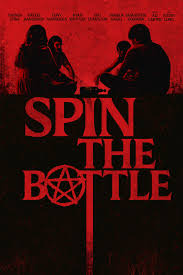
SPIN THE BOTTLE
US, 2024, 124 minutes, Colour.
Tanner Stine, Kaylee Kaneshiro, Tony Amendola, Ali Larter, Justin Long, Christopher Ammanuel, Ryan Whitney, Hal Cumpston, Angela Halili, Scarlett DeMeo, Carlo Mancasola.
Directed by Gavin Weisen.
The popular game with the possibilities of some risque behaviour, Spin the Bottle, is the occasion here for a horror film.
The first part of the film is set in 1978, a group of young teenagers going to the basement of a house, playing spin the bottle – with, literally, diabolical results.
Then the action comes forward a few decades, a focus on a young man and his mother, she being a survivor of the 1978 episode, now in an institution. The young man wants to get possession of the house and resolve all the mysteries associated.
So, with some loud friends and others, especially a religious girl, go to the house and encounter a number of strange horror experiences.
In fact, the material is fairly familiar and runs according to the expected pattern – although there is Justin Long as the local sheriff, very sceptical about the stories of what is happening.
On the other hand, there is Tony Amendola as the local priest, involved in the first episode, still living in the church, now with revelations about what happened and what could happen.
Then there is a buildup to the expected confrontation with the diabolical figure, and the destruction of the sinister bottle.
- A blend of horror, supernatural themes, satanic rites, and the popular game, Spin the bottle?
- The Texas settings, the town, the old house, the interiors, the basement, sinister images? The church, the home of the priest? The sheriff, the countryside? The musical score?
- The prologue, Texas 1978, the group of youngsters, going to the house, Laura relying and being intimidated, going to the basement, the game, the sinister symbols, the bottle, the fumes appearing, atmosphere, appearance, scene cut short and the explanation in flashback not till later in the film?
- Present day, Maura, in the Institute, with Cole, her memories, the house, his going to the town, to check on the house, his not knowing the full story?
- Cole, the drive, arriving, sports, the initial encounter with Kasey, the sports welcome, mocked by Westin and Travis, their comeuppance? Sophie and Mila, eyeing him? The aftermath, going to his house?
- His settling in, examining the house, the basement? The puzzles, his family name, his grandfather’s reputation?
- The spin the bottle, the sinister bottle, the apparitions, Mila, with Travis in the room, fleeing, the neighbour, the apparition, screaming, getting out, the lamppost, her death? The visuals of her skeleton?
- The sheriff, his knowledge of the situation, interviewing Cole, protection of Kasey?
- Kasey, the attraction to Cole, her father’s strictures? The revelation of the story, Paul and his research, newspapers and photos? The satanic rituals, the grandfather’s reputation, exploiting people, Lorelei as a young bride, the photo with her daughter, Cole’s mother, his sense of responsibility?
- The interactions with Westin and Travis, clashes, punch ups? Sophie and her interventions, the gatherings, the search for Mila?
- The further hauntings, the vapours from the bottle, Lorelei and her drawing the breaths from her victims, gradually returning to herself? Kasey and Cole spending the night, her father’s reaction, forbidding her out, her going?
- Westin in the car, his death? Sophie and the pursuit, her death?
- The role of Father Harris, in 1978, driving to the house, his concern, looking in the window, seeing the deaths? His role in the present, his memories of what it happened, the fact that they had not been fully revealed, his knowledge of the grandfather and his sinister behaviour, his discussions with Cole, explanations, encouragement for him to confront Lorelei and contain her in the bottle?
- The buildup to the final confrontation, Lorelei appearing, and Kasey with the bottle, the fire, the confrontation with the Lorelei, the smoke and the bottle, into the fire?
- The end, the house, Cole and Kasey together, and the camera’s focus on the bottle…?
