Displaying items by tag: Peter Malone's Movie Reviews
Touki Bouki
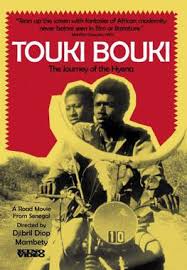
TOUKI BOUKI
Senegal, 1975, 90 minutes, Colour.
Magaye Niang. Myriam Niang.
Directed by Djibril Diop Mambety.
Made in Senegal, released in 1975, only 15 years after the country’s independence from France. It marked the beginning of cinema from African countries, especially French-speaking countries in the succeeding decades.
The director had made only one short film prior to this entry and winner at several festivals at the time. The print was restored in 2008 under the auspices of several financiers including Martin Scorsese.
The film is certainly striking to look at, an enormous range in visuals, the Senegalese countryside and the cattle, the outskirts of the city and the poor camps, the garbage collections, the contrast with the cliffs and the ocean, building up to vistas of the modern city, cars and roads, bridges, 20th century buildings, scenes of the high life contrasting with the streets and markets, ordinary people – but, so often, the beautifully coloured dresses.
While there is a basic plot, a young man formerly employed with the cattle, a young woman who fancies herself and has gone to university despite her background, an ambitious couple, wanting to get out of Dakar arrogantly riding around the city, plans to steal to get the money, and the ship in the port ready to sail to the desired destination, Paris and France, the delineation of the plot is not the most important aspect of the film.
Rather, the writer-director, in his late 20s while making the film, is more poetic in his vision, relying on images, relying on symbols and imagination, inviting the audience to interpret the characters and the action rather than actually delineating and explaining them.
Within the range of Senegalese society in the capital in the 1970s, there are the age-old traditions, cattle, cattle slaughter, some basic Muslim beliefs, some traditional beliefs and sacrifices, hard-work in the carrying of water, washing, cooking, market sales, contrasting with university developments, the espousing of revolutionary ideas, aspects of 20th century life, the postman on his rounds, the police and corruption, the spectacular setting for a wrestling match, motorbikes, fashionable cars.
And, the heightening of the relationship between the two young people, his determination, her continued arrogance, symbolised in their fashionable clothes, the car, driving through the crowded streets of the capital, to great acclaim – in their imaginations.
There is a final crisis, stealing the clothes of a wealthy gay man, trying to rob money from the wrestling match but finding the box that they have stolen contains a skeleton, getting money from the rich man, buying the tickets, the wharf and the shift to France.
At one stage there is a scene on board the ship, characters returning to France, racist and condescending comments, arrogance about education and ignorance, clothing money, the vestiges of the colonial atmosphere – and, the irony of the money going from the wrestling match to a monument for General de Gaulle.
Some of the audiences and bloggers seeing the film after the restoration express quite upset opinions about several slaughtering of animal sequences, throat slitting and blood spurting of the cattle and the sacrificial goat, and some recurring of these sequences – but other bloggers highlighting that these images, repulsive to many 21st-century audiences, are symbolic of the situation of Senegalese youth at the time.
A significant contribution to appreciation of African cinema and its developments, 20th century issues of colonies and independence, and strong images for interpretation of life in Africa and post independence.
mubi release, January 2026
Cracksman, The
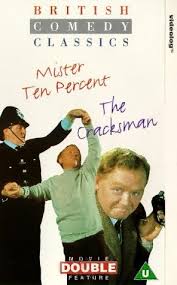
THE CRACKSMAN
UK, 1963, 112 minutes, Colour.
Charlie Drake, George Sanders, Dennis Price, Nyree Dawn Porter, Eddie Byrne, Finlay Currie, Percy Herbert, Geoffrey Keen, Patrick Cargill, Norman Bird, Ronnie Barker.
Directed by Peter Graham Scott.
Despite the notable cast, and the big Cinemascope and colour treatment, this is a comedy that is very much of its time, indication of British cinema in the early 1960s, but not the kind of comedy that lasts.
It is a star vehicle for comedian, Charlie Drake, who had his major successes in television series in the late 1950s and early 1960s – and continued after his slate of films which did not bring him lasting cinema success. While popular at the time, he is very much an acquired taste.
Charlie Drake contributed to the writing of the screenplay, a star vehicle for himself, naivete personified, a completely ingenuous character. He is a locksmith, working in the London streets, content with himself and his ability for being able to unlock any lock, no matter how difficult. So, short in stature, roly-poly in size, naive as well as wisecracking, he is played on by quite a number of characters starting with Dennis Price who passes himself off as a wealthy man and is able to persuade the cracksman to enter a house to rob it. And the police arresting.
The scenario happens over and over again throughout the film, the cracksman being taken in, doing a range of jobs, back in prison where, in fact, he is rather admired – but also played on. (And, for fans of the two Ronnies, here is Ronnie Barker as a prisoner, prior to his television term as Fletcher in Porridge.)
Ultimately, when the cracksman is out of jail, he is used by two gangs for quite an elaborate robbery, one gang led by Eddie Byrne, the other, more suave, led by, of all people, George Sanders. Ultimately, the ingenuous cracksman who has fallen for an undercover policeman, Nyree Dawn Porter, is able to set the two gangs in a fight against each other.
The supporting cast is enjoyable, Patrick Cargill as a snobby guide in the Museum, Finlay Currie as a good old prisoner, Percy Herbert leading the gangs in prison, Geoffrey Keen as a magistrate.
Hell House LLC
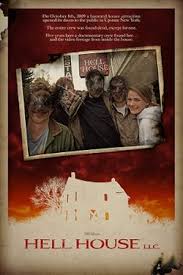
HELL HOUSE LLC
US, 2015, 93 minutes, Colour.
Ryan Jennifer Jones, Danny Bellini, Gore Abrahams, Jared Hacker.
Directed by Steve Cognetti.
“Found Footage” films were very popular in the first decades of the 21st-century with the success of the Blair Witch project. They reported to have film material of mysterious events which were then gathered together and released as feature films.
And, this is the pattern here, although the film received much more favourable reviews than many other found footage features. It was so successful that there were quite a number of sequels.
It is introduced as a documentary, some media commentators giving their opinions, an investigator going to the location of the Hell House with her crew.
The media commentators then show some footage at the Hell House and its opening, as a tourist horror attraction, 2009, crowds arriving, then some panic, chaos and people fleeing, 15 dead.
The surviving member of the staff of the original planners and workers on Hell House comes forward for an interview with the journalist, and provides a bag full of taped material from the period of finding the venue, assessing it, cleaning it out, the plans for the Hell House attraction, the hiring of local artists as characters. But, as the audience gets to know the members of the planning group and stories about the haunting of the house itself, its being changed to Abaddon, the Demon at the gates of hell, indications of some kind of supernatural intervention begin to be revealed, story of the original owner being the leader of a cult, the disappearance of a mother and child, his eventually hanging himself.
There is a lot of handheld camera work showing the various members of the planning, interviews with them, their interactions, humorous, serious, and then the beginning of strange occurrences, clowns moving, attacks, artist, gradually becoming more intense, seeming possessions, further attacks, deaths.
And, the film ends in disbelief, indications that the room for the interview with the surviving member of the staff does not exist – and she has been dead for some time.
This intrigued public interest sufficiently so that the makers moved on to a sequel.
Starring Dick Van Dyke
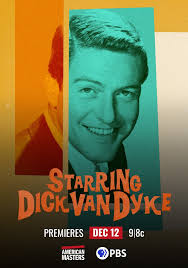
STARRING DICK VAN DYKE
US, 2025, 100 minutes, Colour.
Dick van Dyke, narrated by Fred Applegate. Interviews: Steve Martin, Martin Short, Conan O'Brien, Ted Danson, Larry Matthews, Carol Burnett, Eric Dickens, Pat Boone, Jim Carrey, Victoria Rowell, Karen.Dotrice, Julie Andrews, Colin Firth, Emily Blunt, Morey Amsterdam.
Directed by John Scheinfeld.
A very entertaining tribute to Dick van Dyke on the occasion of his hundredth birthday, December 13, 2025.
This is not a biography. There are some basic facts about his origin, his career, his wife and family, his alcoholism, his divorce, a later marriage, his alcoholism, his extensive charity work.
The aim of this documentary is to celebrate his career and his impact over 80 years, live performances, radio, theatre, television, films, television series – and the winning of six Emmys including one in 2024 for his guest role in Days of Our Lives.
A caption comes up on screen to indicate each step of his varied career. There is a partnership with Phil Ericson and live action the Merry Mutes, including an appearance on the Ed Sullivan Show. There is variety in his work on radio, especially his skill with voices. And, early in his career, he showed an expertise in mugging, especially with his face (and reminders of his contemporary, Jerry Lewis). And, tall as he was, he had an extraordinary mobility with his body, always flexible, extraordinarily supple, an ability to use to his legs very high – all of which was able to be incorporated in the range of his performances.
The film opens with a celebration of The Dick van Dyke show on CBS, its limited success, its cancellation, its popular success.
The main features of his career are given an extensive amount of screen time which will please audiences. There are many sequences from The Dick Van Dyke Show, its creation, especially the contribution of Carl Reiner and Sheldon Leonard, some of them still quite hilarious, especially the issue of how to end the final show and Dick van Dyke’s character’s anxiety with his pregnant wife, thinking the babies have been exchanged – and the hilarious and unexpected resolution when the other couple turns out to be African-American! And there is footage of interviews with Larry Matthews who played the little boy, and footage especially of Mary Tyler Moore.
There is some focus on his performance on Broadway in Bye, Bye Birdie and his being championed by Gower Champion. And there is his performance in the film. But, cinema -wise, there is a great deal of attention to Mary Poppins, comments from Julie Andrews, Karen.Dotrice who played the little girl, and comments about the British reaction to his Cockney accent and Julie Andrews’ spirited defence.
He appeared in number of other films in the 1960s but the greatest attention is given to his performance as the comedian in The Comic, not a commercial success but significant.
There are some lows in his career at various times and the tracing of so many of the programs that he did pilots for, quiz shows, variety shows. Then, there is a surprise of his performance in the television movie about an alcoholic, The Morning After and, from the later television interview that carries throughout this documentary, his comments about his alcoholism.
Then, there was success in his role as the doctor with detective skills in Diagnosis: Murder.
At the end, there is a tribute to the range of his charity work and commitment.
Andthe credits indicate the range of celebrities who pay tribute to Dick van Dyke as can be seen in the list of the credits. Most of them speak very personally and quite moved.
A very enjoyable hundred minutes and an appreciation of someone whom everybody liked, who is a genial presence and a talented actor, comedian, singer, dancer, all-round entertainer.
Dead of Winter
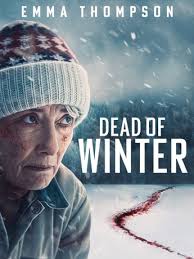
DEAD OF WINTER
Germany, 2025, 98 minutes, Colour.
Emma Thompson, Judy Greer, Marc Menchaca, Laurel Marsden, Gaia Wise, Cuan Hosty-Blaney, Paul Hamilton, Lloyd Hutchinson, Brian F. O'Byrne.
Directed by Brian Kirk.
The emphasis is definitely on winter. But, of course, there is an emphasis on dead.
The setting is Minnesota but the filming was actually done in Finland and Germany, with winter scenes of Finland, snow, iced over rivers and lakes, hills and forests, slippery roads, most of the action taking place over one day, we are immersed in the dead of winter.
Within that day, there are quite a number of flashbacks, cheery and romantic, summer on the lakes. Which means that there is some personalising of the grim story on that fateful day.
And this is very much Emma Thompson’s film, producing it, starring, and, sometimes we might notice in the expression of the actress portraying her in the flashbacks, resemblances, we are right because she is played by Emma Thompson’s daughter, Gaia Wise.
From the 90s, we remember Emma Thompson as archetypally English, Howard’s End, Remains of the Day, Sense and Sensibility (winning an Oscar for writing the screenplay). But, here she is what Americans might call a tough old gal, harsh accent (perhaps channelling something of Glenn Close’s performance as JD Vance’s grandmother in his autobiographical Hillbilly Elegy). And, in some ways, she is moving into what we might call Liam Neeson territory, action hero. But, for most of the films, she has to use her brains rather than brawn though there are quite some physical struggles at the end.
And, why is she here in the dead of winter? Driving slippery roads, getting lost, asking advice from a big tough codger, eventually finding the lake which she and her boyfriend, then husband, used to visit and fish decades ago. And, with some pathos towards the end, we discover that she has a mission to the lake in memory of her husband.
What began as an excursion, turns into something of a deadly thriller. The man who gave her advice is seen pursuing the a young woman with a gun. Barb, our tough adventurer, has a sense of righteousness and goes to investigate, leading her into a complex drama, the young girl abducted and imprisoned, the man under the thrall of his physically and mentally disturbed wife, played by Judy Greer. The screenplay keeps us wondering what exactly is wrong, what exactly the couple are up to, why the young woman has been abducted, and what is her fate.
Some complications when Barb is able to contact two hunters and they approach to investigate the situation, fatally.
So, tough action, an Emma Thompson film – some bloggers have objected to the flashbacks being too romantic and spoiling the thriller atmosphere. This reviewer actually welcomed them, humanising Barb and spelling out her motivation for being there, intervening as well as her skills in action.
- The title and expectations? Landscapes, the US North, Minnesota, filming in Finland and winter? Frozen lakes and rivers, slow, the roads, the woods? Dead of winter atmosphere? In the background ominous score?
- The emphasis on dead, indications of dramatic thriller? Variations on the theme?
- The fishing, revealed as Barbara at the end? Her driving, determination, her age looking her age, the snow, the British, the lake, the fork in the road, the heart, meeting the man, giving directions, her finding the lake, going out to fish, setting up the old shed, the office? Sitting fishing?
- Audience puzzle, who she is, why, the fishing? The effect of the insertions of the flashbacks, the young couple, together, on the lake, fishing, the ring, the bond, the marriage, together and happy, pregnant, the birth, the loss of the child? The flashbacks indicating memories, urging motivations for action?
- The man from hat, the young girl running, the shots, his taking her back to the house? Her initial response, going to the house, careful, finding the girl, trying to get in, writing the promise to stay in the window? Losing her glove? The later consequences, her searching, the wound in her arm, needing cover?
- The arrival of the wife, ill, her nose, the blood, her relationship with her husband? The mystery of her motivations, her frantic behaviour, the rifles and shooting? Personality? The girl, the abduction? Keeping her chained? The husband, lumbering, subservient to his wife? The treatment of the girl?
- The cars, driving, bar and her car stranded? The confrontation on the ice, the husband falling in, frozen, his wife rescuing him? In the car, the confrontation as Barbara, his wanting to go to hospital, her trusting him, his driving away, erratic, the meeting with his wife? Barbara later coming, the car, the hunters, discovering the husband did in the car?
- Barbara, her interventions, going to action, using her wits? The confrontation, her being chained? Her story about keeping going, to encourage the girl?
- Barbara, making communication, the hunters? Her encountering them, their caution, going with her, the house, the car, the wife emerging, shooting dead?
- The container, the tent and the ice, the revelation about the truth, the illicit organ transplantation, the wife, her illness, her intentions?
- The two women, on the ice, in the tent, the young woman on the table, her being marked by wife, the shooting, Barbara and her previously on the shoulder, something the stitches? In the tent, wounded, upsetting the table, the starting the fire, the two women on the ice, the physical confrontation? The young girl, getting free, burnt, watching?
- The rifle, the struggle, the ice, the wife falling through, holding on to Barbara’s and Paul, both women and the water, the flashbacks, the reason for Barbara being the lake, the discussion of the lawyer, the breakfast with her husband, his death? His will and the scattering the ashes in the Lake? Her going down through the ice, scattering the ashes?
- The plausibility of the plot, especially the illicit transplant? The husband and wife out in the backlogs? The abduction of the girl, the intentions? Barbara, her presence, her interventions?
Lurker
LURKER
US, 2025, 100 minutes, Colour.
Theodore Pellerin, Archie Madekwe, Sunny Suljic, Cam Hicks, Zach Fox, Daniel Zolghadri, Havana Rose Liu.
Directed by Alex Russell.
Definitely a film for younger audiences. Older audiences have lived through these experiences, perhaps a long since. (And, if they do watch Lurker, they will recognise the themes from All About Eve, the star, the up-and-coming ambitious star… And, those with classical memories may also recall the Svengali story, the mastermind controlling… Stories and movies which may not be part of the younger generation’s memories.)
Lurker is a story about celebrity in the 21st-century, young celebrities, often self-made, promoted by influencers, stars of social media who create a following who will then listen to the music, stream their songs, go enthusiastically to their concerts.
And, there is a celebrity here, Oliver, played by Archie Madekwe (Gran Turismo, Saltburn, Midsommer), in his 20s, from London, moving to Los Angeles, on the up and upper, not completely self-confident but trying to project confidence, surrounded by an odd entourage, composing his music, turning out albums, the world before him.
But, he is obviously not the lurker. The lurker is the central character, Matthew, played by Theodore Pellerin). He seems to be the quiet type, living at home, working in a kind of upmarket clothing store, asking himself about how happy he is and where he might be in six years’ time. He declares his present contentment – enhanced by encountering Oliver in the store, commenting on his music and making a good impression. Oliver invites him to come to a concert.
Matthew walks eagerly into a strange world, mocked immediately by the entourage, favoured by Oliver, becoming more and more confident, more sure of his influence, able to use his talent with the camera, with artwork and design for covers, intervening with the cinematographer with flattering comments for Oliver.
The older audience will recognise where this is leading. The All about Eve syndrome is Matthew’s taking over the work of the cinematographer, relegating him to the periphery. But, this can also happen to Matthew himself when the young assistant at the clothing store eagerly goes to a party and starts a cycle of intervening with advice, bringing out quite some malice in Matthew. And, it goes on from there, in favour, out-of-favour, Oliver’s moodiness, and the final challenge to the lurker-influencer, to devise a way of complete control of the celebrity.
An immersion in the 21st-century musical, social media, celebrity, influencer universe.
- The title and tone? Lurking, observing, stalking?
- A contemporary story for younger audiences, celebrities, careers, music, concert tours, fans, social media?
- The role of social media, influencers and their podcasts? The effect on fans? The promotion of celebrities? And the repercussions on the popular psyche, and the effect on the individuals concerned?
- Memories of older showbiz stories, the All About Eve theme, the Svengali controller…?
- Introduction to Matthew, camera, question, his view of himself in six years? His self-satisfaction, dissatisfaction? Living at home, his quiet life? At the store, the members of the staff? His prospects? Yet his talent with camera, with recording and editing?
- Oliver in the shop, the reaction to his celebrity, Matthew and the music, Oliver’s response, the bond between them? Oliver and the invitation for Matthew?
- Matthew’s story throughout the film, his age, identity, ambitions, insecurities, going to the concert, the encounter with the entourage, their playing with him, pants down, pants up, joking? Oliver, his personality, his background in England, become a celebrity, the US, his treatment of Matthew, talking about best friends, yet the erratic responses?
- The background of the entourage, their personalities, the reasons for being with Oliver, their influence? Joking? Treatment of Matthew? Jamie and his presence, the filming, his talent? Matthew, his intervening, upstaging Jamie? Taking his place? The effect on Jamie?
- Oliver, his albums, their production, composing, the music, designs and covers, the concerts at the fans? His self-involvement, relationships and lack relationships? Treatment of people? Memories of his past, his creativity, music, rhythms?
- Matthew and his increasing obsession, being feted, the relationship with Oliver, going to London, the co-worker at the store, his talents, going to the party, advice, becoming part of the circle? And, in the background, the agent, her observing, advice, watching? Especially about the visa issue of getting into the UK? His not advising his co-worker, his being taken by the authorities? The agent observing this? And Matthew having to get out of the UK, going home? The effect on him, hurt, determination?
- Matthew, becoming obsessed, more determined, his manoeuvres, the confrontations with Oliver, with the group, his becoming more assertive, threatening, blackmail, advice to Oliver, becoming more and more controlling? The reaction of the group?
- Matthew, his final moves, assertive, dictating to Oliver, Oliver submitting to him? The episode with the young girls, Matthew encouraging, under age, to the media, the agent and her response?
- Matthew, becoming a Svengali character, his hold over Oliver? And audiences wondering about their future?
En Fanfare/ My Brother's Band
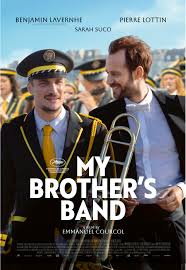
MY BROTHER's BAND/ EN FANFARE
France, 2025, 103 minutes, Colour.
Benjamin Lavernhe, Pierre Lottin, Sarah Suco, Yvon Martin.
Directed by Emanuel Courcol.
Tres, tres geniale. A film with quite some appeal.
This is a film of music, about music, about performance, about audience enjoyment of listening to and experiencing music. In fact, it has quite a wide range of music from Beethoven, Mozart, through Ravel to Charles Aznavour then (via Verdi’s Triumphal March from Aida) to exuberant piano jazz.
The French title does not give the clue to the relationship between the two central characters as the English title does (nor does the American title, The Marching Band). The first of the brothers, Thibaut, we meet (and it is not too long before we discover the second brother) is a world-renowned orchestra conductor as well as composer. He is played convincingly and with some sympathy by Benjamin Lavernhe. We see him vigorously in action, conducting Beethoven, encouraging the players, perfecting their performance – and then his collapsing.
Then, something of a familiar theme from many movies and television shows, leukemia, the need for marrow transplant, his discovery that he has been adopted, and tracking down his blood brother – all very quickly because the film wants to introduce us to Jimmy, cook in an industrial town, local workers long laid off and protesting against closure, a different world from that of Thibault.
The audience is caught up in the drama of encounter, meetings, each man of discovering processing that he has a brother, each wondering about their life and what is might have been had they been brought up together, in the affluent world or the workers world. And, then the music, audiences enjoying growing realisation of Jimmy’s innate talent, and his participation in the town’s local marching band (and, of course, a range of eccentric characters in the band, rehearsing for a competition).
Quite a lot happens with the drama of the relationship between the two brothers, ups and downs, help, misunderstandings, touches of resentment. But, it is the band which brings them together, rehearsing, assistance from Thibaut, Jimmy trying to learn how to conduct, Thibaut meanwhile composing and preparing for a public performance.
But, what brings them musically together is Ravel’s Bolero and the memory that the closer was inspired by a visit to a factory with its industrial rhythms. The band members audition, singing the various rhythms at different pitches. It all comes together in a wonderful performance of Bolero, band and orchestra, audience enraptured (especially us) and what might be described as he is one joy as we come to this and of a story which is both happy and sad.
And with films like this, vive La France.
- Audience response to films of music? Of orchestras? Bands?
- The French atmosphere, the city, orchestras and rehearsals, performance, theatres? The contrast with the country town, the factory, clashes, houses, cafes, the countryside?
- The role of music, orchestral, from Beethoven and Mozart…? The band music, Verdi, Aida? And jazz and popular songs? And Ravel and Bolero?
- The French title music, the Australian title and bands, the American title and the marching band? Emphases?
- The story of the two brothers, the later revelation about their mother, her age, the adoption, the two different families, their not being kept together, no information to either? The leukaemia, the need for marrow transplant, the DNA search, the result?
- Thibaut and his story, inductor and success, seeing him with the orchestra, the intensity, his collapse? His mother, joking with his sister, the transplant, the truth about her DNA? His getting the information about his brother? Meeting, the initial relationship, the development, ups and downs?
- Jimmy, his story, the working family, the photo of his mother, his work, cooking, divorce, daughter, the workers with the food leftovers? In the band? His ability to play the trombone?
- The interaction between the brothers, on a personal level, shared memories, the various resentments? Thibaut appreciating Jimmy and his trombone abilities, perfect pitch and illustrating it?
- Thibaut and his professional world, with the orchestra, training conductors and his style, at home composing, the preparation of his work, the preparations for the performance? His assistant? Relationship with his mother, his sister, with the adoption issue and his not knowing?
- The local band, the characters, the loss of the conductor and the social situation, his going to Romania? The various members and their eccentricities, personalities? Sabrina and the family, her attraction to Jimmy?
- The issue of the conductor, the practices, Aida, the visit from Thibaut, the decisions about his helping, re-seating the positions of the band, the progress? Jimmy and his reactions, talking with his brother, preparing for the audition, her going, is trying out, the barrier, the rejection, and Thibaut recognising his voice, the discussion, Jimmy and his disappointment, withdrawal?
- The issue of food, Jimmy and his defiance, getting the sack? Anthony, Down syndrome, his work in the kitchen, in the band, friendly?
- The issue of the strike and protest, the factory, a place for rehearsals, the fire, the taking of the musical instruments?
- Thibaut, offering to help, the audition for each to sing, overcome the difficulties, his explanation about Bolero and Ravel hearing the sounds in the factory? The rehearsals, Jimmy returning?
- The buildup to the climax, and Thibaut and his composition, the performance, the orchestra, acclaim? The band present in the theatre, the beginning of Bolero, the singing, the effect on the audience, Jimmy conducting, the orchestra beginning to join in, the audience and their singing, the climax?
- The happiness of the ending, tearful, the human spirit, despite setbacks and disappointments?
Bad Shabbos
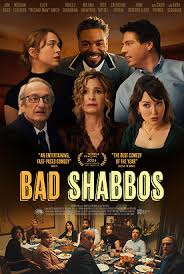
BAD SHABBOS
US, 2024, 84 minutes, Colour.
Milana Vayntrub, Kyra Sedgwick, Catherine Curtin, Ashley Zuckerman, David Paymer, Jon Bass, Josh Mostel, John Bedford Lloyd, Meghan Leathers, Stephen Singer, Theo Taplitz, Cliff "Method Man" Smith.
Directed by Daniel Robbins.
A New York Jewish comedy. It opens with two elderly Jewish men walking down the street telling a joke – and that a body falling in front of them. Going back two hours…
This is a Sabbath story, the older members of the family for strict observance, the next generation not so strict. One of the sons of the family is engaged to a non-Jewish fiancee who is taking lessons in scripture. The family is expecting her parents from Wisconsin to come for the meal.
Already there are troubles. The young son, ultra-moody, wanting to join the IDF to defend Israel, doing push-ups in his room, always touchy, especially about his sister’s boyfriend. He then puts three laxative travels in the way friends drink – forgetting that he suffers from colitis, has a turn and dies. Ultimately, everybody becomes involved, a lot of dithering, a lot of anxiety, the young man continually absolving himself from all blame, the family, though irritated with him, protecting him.
Kyra Sedgwick is the mother, a variation on the tough and demanding Jewish mother, especially on her prospective gentile daughter-in-law, scenes in the kitchen. David Paymer is the father, a pleasant man, writing books, theorising about confrontations and situations, quite inadequate with the crisis. The young man and his fiancee become more involved, especially with the arrival of her parents.
They also involve the and at reception, played by Method Man, eager to help, discovering the truth, but a good friend of the father, wrapping the body, throwing it out the window to land on the garbage truck – but, of course, missing.
As the family huddled together, a detective arrives and reads a note found on the dead man’s body apologising to everyone – and the audience sees that it is being typed by the man at reception.
While it is a variation on The Trouble with Harry and Weekend with Bernie’s films, the responsibility of the young man who put the laxative tablets in the drink, and the desperate moves by the family to defend him provide black humour is also uncomfortable attitudes towards them and their responsibilities.
A pleasure to see Josh Mostel as one of the old men telling jokes.
Dust Devil
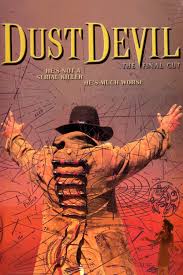
DUST DEVIL
South Africa, 1992, 108 minutes, Colour.
Robert John Burke, Chelsea Field, Zakes Moakae, John Matshikizi, Rufus Swart, William Hootkins.
Directed by Richard Stanley.
South African director, Richard Stanley, had made a science-fiction film, Hardware, not received critically well but becoming a cult film. He followed this with Devil Dust but encountered production difficulties, the production company failing financially, the film recut for an American audience, but the director raising the finance and releasing his version of the film in 2008.
The film was made in Namibia, taking advantage of the various landscapes of this country, adjacent to South Africa, long vast deserts, and the famous sand dunes. The film is based on some Namibian myths, especially the interaction between the supernatural and the world, a character who becomes overpowered by the supernatural, bringing people to judgement and destroying them, and, in this film, especially unfaithful women.
The character is played by American actor, Robert John Burke, dressed in hat and long cloak, wandering the Namibian landscapes, arriving at an isolated dying town. He lies on the road, is given a lift by a woman, a sexual encounter and his killing her, taking her fingers, going back to the house and setting it alight, the police investigating the dead bodies.
At the centre of the film is a woman escaping from the clutches of her demanding husband, driving into the desert – and a similar encounter with Devil Dust, but overcoming him and escaping, and his continued pursuit through the dunes.
There is a local policeman, who lost his wife 15 years earlier after the accidental death of their son. He investigates, encounters a friend who used to be a projectionist at a drive in, who knows his thrillers from programs of those years, but who narrates the story of the mythology and the Dust Devil, the two of them eventually confronting the Devil himself.
The film intends to have an atmosphere of weirdness, which it does, aided by the desert and strange landscapes, the town of the townspeople where the town is in decline, the railway through it, strange houses in the desert, deserted and abandoned houses, as well as the behaviour and character of the central character and his effect on the women – and the fighting back.
Richard Stanley spent four days on the set of The Island of Dr Moreau, the version with Marlon Brando, all kinds of troubles and his being fired – although his being awarded the Razzie for worst screenplay of the year.
Stanley continued to make documentaries but was successful in the horrors and genre once again in 2020 with Color from Outer Space.
Howling V: The Rebirth
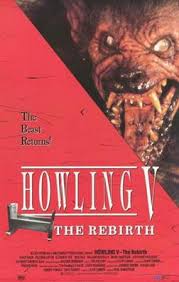
HOWLING V: THE REBIRTH
UK, 1989, 96 minutes, Colour.
Phil Davis, Victoria Catlin, Ben Cole, William Shockley, Mark Sivertsen, Stephanie Faulkner, Mary Stavin, Clive Turner, Nigel Triffit, Jill Pearson.
Directed by Neal Sundstrom.
This is the fifth film in a series based on novels by author, Gary Brandner. The first, The Howling, was released in 1984. Several sequels were produced quickly in succeeding years with a range of directors, including Australian Philippe Mora for Howling II and III.
While this is a film about wolves, they appear explicitly only in the prologue to the film, set in the 15th century, a Castle in Hungary, a massacre, her husband and wife trying to rid the Castle of the curse of the werewolves, murder-suicide – but the realisation that a baby with the werewolf gene has survived.
In the 20th century, account, played by a rather young Phil Davis, wants to get rid of the descendant with the werewolf gene and carefully assembles a group who have a tattoo on their arm and are descendants of the werewolf baby. However, he does not know which has the gene.
So, basically, they all arrive at the Castle, the film turns into something of a haunted house theme with a gradually diminishing cast until the suspect with the gene is exposed and does a final killing as the final credits come up.
The cast is not well known at all and some of the performances are far from convincing. There is some tension, Phil Davis behaving like a latter-day Count Dracula (which he isn’t). So, a motley group, getting lost in the underground coroners of the Castle, squabbles, various deaths, and a final confrontation.
