Displaying items by tag: Benjamin Lavernhe
En Fanfare/ My Brother's Band
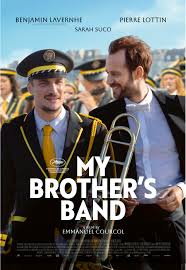
MY BROTHER's BAND/ EN FANFARE
France, 2025, 103 minutes, Colour.
Benjamin Lavernhe, Pierre Lottin, Sarah Suco, Yvon Martin.
Directed by Emanuel Courcol.
Tres, tres geniale. A film with quite some appeal.
This is a film of music, about music, about performance, about audience enjoyment of listening to and experiencing music. In fact, it has quite a wide range of music from Beethoven, Mozart, through Ravel to Charles Aznavour then (via Verdi’s Triumphal March from Aida) to exuberant piano jazz.
The French title does not give the clue to the relationship between the two central characters as the English title does (nor does the American title, The Marching Band). The first of the brothers, Thibaut, we meet (and it is not too long before we discover the second brother) is a world-renowned orchestra conductor as well as composer. He is played convincingly and with some sympathy by Benjamin Lavernhe. We see him vigorously in action, conducting Beethoven, encouraging the players, perfecting their performance – and then his collapsing.
Then, something of a familiar theme from many movies and television shows, leukemia, the need for marrow transplant, his discovery that he has been adopted, and tracking down his blood brother – all very quickly because the film wants to introduce us to Jimmy, cook in an industrial town, local workers long laid off and protesting against closure, a different world from that of Thibault.
The audience is caught up in the drama of encounter, meetings, each man of discovering processing that he has a brother, each wondering about their life and what is might have been had they been brought up together, in the affluent world or the workers world. And, then the music, audiences enjoying growing realisation of Jimmy’s innate talent, and his participation in the town’s local marching band (and, of course, a range of eccentric characters in the band, rehearsing for a competition).
Quite a lot happens with the drama of the relationship between the two brothers, ups and downs, help, misunderstandings, touches of resentment. But, it is the band which brings them together, rehearsing, assistance from Thibaut, Jimmy trying to learn how to conduct, Thibaut meanwhile composing and preparing for a public performance.
But, what brings them musically together is Ravel’s Bolero and the memory that the closer was inspired by a visit to a factory with its industrial rhythms. The band members audition, singing the various rhythms at different pitches. It all comes together in a wonderful performance of Bolero, band and orchestra, audience enraptured (especially us) and what might be described as he is one joy as we come to this and of a story which is both happy and sad.
And with films like this, vive La France.
- Audience response to films of music? Of orchestras? Bands?
- The French atmosphere, the city, orchestras and rehearsals, performance, theatres? The contrast with the country town, the factory, clashes, houses, cafes, the countryside?
- The role of music, orchestral, from Beethoven and Mozart…? The band music, Verdi, Aida? And jazz and popular songs? And Ravel and Bolero?
- The French title music, the Australian title and bands, the American title and the marching band? Emphases?
- The story of the two brothers, the later revelation about their mother, her age, the adoption, the two different families, their not being kept together, no information to either? The leukaemia, the need for marrow transplant, the DNA search, the result?
- Thibaut and his story, inductor and success, seeing him with the orchestra, the intensity, his collapse? His mother, joking with his sister, the transplant, the truth about her DNA? His getting the information about his brother? Meeting, the initial relationship, the development, ups and downs?
- Jimmy, his story, the working family, the photo of his mother, his work, cooking, divorce, daughter, the workers with the food leftovers? In the band? His ability to play the trombone?
- The interaction between the brothers, on a personal level, shared memories, the various resentments? Thibaut appreciating Jimmy and his trombone abilities, perfect pitch and illustrating it?
- Thibaut and his professional world, with the orchestra, training conductors and his style, at home composing, the preparation of his work, the preparations for the performance? His assistant? Relationship with his mother, his sister, with the adoption issue and his not knowing?
- The local band, the characters, the loss of the conductor and the social situation, his going to Romania? The various members and their eccentricities, personalities? Sabrina and the family, her attraction to Jimmy?
- The issue of the conductor, the practices, Aida, the visit from Thibaut, the decisions about his helping, re-seating the positions of the band, the progress? Jimmy and his reactions, talking with his brother, preparing for the audition, her going, is trying out, the barrier, the rejection, and Thibaut recognising his voice, the discussion, Jimmy and his disappointment, withdrawal?
- The issue of food, Jimmy and his defiance, getting the sack? Anthony, Down syndrome, his work in the kitchen, in the band, friendly?
- The issue of the strike and protest, the factory, a place for rehearsals, the fire, the taking of the musical instruments?
- Thibaut, offering to help, the audition for each to sing, overcome the difficulties, his explanation about Bolero and Ravel hearing the sounds in the factory? The rehearsals, Jimmy returning?
- The buildup to the climax, and Thibaut and his composition, the performance, the orchestra, acclaim? The band present in the theatre, the beginning of Bolero, the singing, the effect on the audience, Jimmy conducting, the orchestra beginning to join in, the audience and their singing, the climax?
- The happiness of the ending, tearful, the human spirit, despite setbacks and disappointments?
Discours, Le/ The Speech

LE DISCOURS/ THE SPEECH
France, 2020, 87 minutes, Colour.
Benjamin Lavernhe, Sara Giraudeau, Julia Piaton, Kyan Khojandi, Guillaine Londez, François Morel.
Directed by Laurent Tirard.
This is a brief and amusing French film, French style.
Right from the beginning, the film breaks the fourth wall, the central character addressing the audience, actually speaking out the main credits. And he continues to speak to the audience throughout the film, but taking the audience into his mind, explaining himself, justifying himself, scenes of him, frequently, at a dinner with his family and the audience being told what he is thinking while he does not say it to those of the table. Then there are various sequences of the speech he might have given at his sister’s wedding – and is reluctant to do this. Some of these sequences are very persuasive in his putting his foot in it but then his retreating.
His other dilemma is that his girlfriend is taking a break, like hitting the pause button instead of stop. And we have various flashbacks to his life with his girlfriend, their meeting, mischief in the park with a boy riding his bike, shared happiness, the breakup. And, all the while during the film he is waiting, at the family table, for his girlfriend to read him back on the 38th day of the break. It is that kind of film.
Actually, Adrien, the central character, would be pretty obnoxious to live with! And, while we have his critical version, especially of his potential brother-in-law and criticisms of his parents, we hear their normal conversations as they discuss mundane things and are very cheerful with each other, enjoying the meal.
But, he does get the opportunity to reconcile with everyone – and a bit of rehabilitation for himself.
So, something of a character study in an offbeat kind of way. Also a portrait of relationships in an ordinary French family. And, elaborate wedding celebrations, the conga line, the speeches, the potential for mishaps, and, eventually, some happiness.
Jeanne du Barry
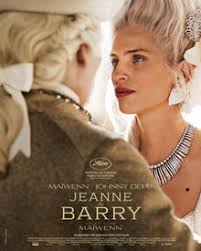
JEANNE DU BARRY
France, 2023, 117 minutes, Colour.
Maiwenn, Johnny Depp, Benjamin Lavernhe, Melville Poupaud, Robin rencci, Pierre Richard, Marianne Basler, Pascal Greggory.
Directed by Maiwenn.
Sets, costumes, the Palace of Versailles, the vast grounds, the magnificent interiors… All suggest the word “Sumptuous”. And, indeed, for any audience eager for looking at the sumptuous, this is a strong contender.
It is the story of a young illegitimate girl, her mother a cook, well educated at a convent, but a more worldly disposition, finding her way in Paris, a prostitute, attracting wealthy clientele, a courtesan. She attracts the attention of the wealthy Count du Barry, politicians and courtiers at the court of Louis XV promote her and, in the film, it is infatuation at first sight. The king has been licentious, many mistresses, and Jeanne takes her place, but a requirement for some acceptance of court is that she should be married and this is arranged with the consent of du Barry.
The screenplay is generally accurate (the Wikipedia entry on Jeanne du Barry is worth consulting for those interested in her). However, it traces the years with the King, her being despised by his haughty and racist daughters, though defended by the eventual Louis XVI, the growing influence on the king and his reliance on her, the enmity of Marie Antoinette, and the king’s eventual illness, death by smallpox, his having advised her to leave the court for her own safety.
Her subsequent life, not without intrigue, is not dramatised here.
This is the middle of the 18th century, France having achieved extraordinary status and influence under the long reign of Louis XIV. Louis XV was far less interested in political affairs. As the film shows, the aristocratic class was in control, fawning on the king, enjoying a spectacularly wealthy lifestyle, caught up in protocols (even to what looks like a comic withdrawing from the King’s presence, backwards, little jumping steps…), ambitions, spite, intrigues, and a vast retinue off to hunt .
For audiences who are of an anti-Royal disposition, who are amazed at the lives of the arrogant and spoilt, the revolution could not come sooner! (And some of this attitude is voiced in the final comments before the credits.)
For many audiences, the casting is intriguing. Here is Johnny Depp again after many personal troubles, playing Louis XV, Depp now at 60 creates an impression of the king who presumes on his status, is not particularly interested in affairs of state, has a sexual appetite, but growing more self-absorbed and disdaining of his family as time goes on. Often he looks as forlorn as Depp did as Edward Scissorhands decades ago.
But, the attention is on Maiwenn, actress, director, who had a hand in the screenplay here, produces, directs, and takes the leading role. Chronologically she is far too old in fact for the role but, relishing it, she combines a love of luxury with a rather ironic detachment from the protocols of the court. She goes through the marriage with du Barry (a cynical Melville Poupaud), is presented with a black boy slave whom she mothers and promotes, establishes herself as indispensable to the King. And, as the film goes on, the audience can’t help liking her and her humorous disdain of expectations, and appreciating her sorrow at the King’s death.
There is a fine supporting cast of French veterans but the standout is the King’s valet, completely loyal, arranging everything the King wants, presenting a very detached demeanour, gradually very loyal to Jean, grief at the King’s death. He is played most effectively by Benjamin Lavernhe.
An immersion in the French court (rather than with the French populace) of the 18th century.
- A sumptuous historical immersion, Versailles in the 18th century? Visually satisfying? Characters? Intrigues? Interactions? The accuracy of the storytelling?
- Re-creation of period, costumes and decor, the grounds of Versailles, the exteriors, the interiors, lavish? Costumes? The musical score and atmosphere of the times?
- Audience knowledge of the Countess du Barry? Of Louis XV and his reign? The impact of Louis XIV, decline in the 18th century, foreshadowing the Revolution?
- The voice-over, tone, indicating episodes, time passing, judgements on Jeannene and other characters?
- The initial outline of her life, information about her parents, her mother, her work as a cook, her patron, is educating Jeanne, attachment, her going to the convent, the years with the nuns, her wide reading, “worldly”? Her being expelled, with her mother, the patron, his attachment, his wife? As a prostitute, her response, survival, increasing clientele, popularity, the brothel, du Barry and his attachment, Marshall Richelieu and the politicians and ambitions for her with the King? du Barry agreeing, her place in his home, the clashes between them?
- Louis XV, wife, many children, licentious and mistresses, age, the pomp of Versailles, the minute protocols, courtiers and their ambitions, fawning on the king, his lack of interest in affairs of state? Hunting? Personality and manner?
- Jeanne, in the line-up, the King passing, the long glimpse, the infatuation, calling for her? The initial encounters, her spirited response, mocking the steps backward? The king amused? The beginnings of the relationship? Her place in the court? The King’s daughters, other courtiers, jealousy and resentment? The scenes with them, their mockery, gossip? The daughter who supported Jeanne? Her retiring from the court and becoming a nun?
- Jeanne as a character, personality, reading men, her experiences, talents, wiles? With the King, the presentation of Zamor and her attachment to him, mothering him, the reaction, racist, of the King’s daughters?
- The character of Le Borde, his role as valet, arranging everything for the king, protocols, personal attention, procuring? His personality, not revealing emotions? His relationship with Jeanne, the formalities, his mellowing in behaviour, supporting her? The king and his dependence?
- Jeanne and her care for du Barry’s son, Adolphe, her attachment, mothering, his responses to her, coming to court, possible engagement, the duel, his death? The grief of his father?
- The years passing, the future Louis XVI and his defence of Jeanne? The arrival of Marie Antoinette, the gossips, poisoning her against Jeanne, the various strategies, arrange meetings, failures? Eventually Marie Antoinette commenting that there were many people at the palace, an indication of victory and acceptance, Jeannes joy?
- The years passing, the king, other liaisons, the death of his wife, grief? The courtiers, the retinues for hunting? The politicians, their meetings, ruling the country? There intrigues?
- The king, the smallpox, Jeanne unwelcome, Le Borde and his allowing her in, the scenes with the King, his urging her to leave for her own sake, the return farewell, the humour of her doing the backward steps, the reaction of the courtiers? His death?
- The courtiers, the candle indicating was alive, blowing out the candle, response to his death? The accession of Louis XVI?
- Jeanne, the years, her mother at court, the help of Le Borde, leaving Zamor, going on her way?
- The final information, the intimations of the revolution, execution of the king, Marie Antoinette, and the execution of Jeanne herself and her association with Versailles?
