Displaying items by tag: Peter Malone's Movie Reviews
Leather
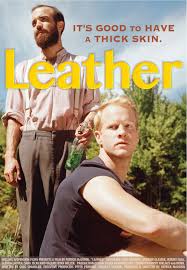
LEATHER
US, 2013, 101 minutes, Colour.
Chris Graham, Andrew Glaszek, Jeremy Neal, Glenda Lauten.
Directed by Patrick McGuinn.
This is a gay-themed film for the target audience. It is one of many films, especially from the United States, during the 2000s and 2010s.
The film opens with two boys on a mountain fishing and then moves to 25 years later. The focus of the story is one of the boys, Birch, who has lost his parents and has moved in with the father of the other boy, working for him, woodwork, leather work, bonding with him as a father figure, helping in his illness with a Christian scientist carer.
Then the audience is introduced to the father-son, Andrew, a gay man travelling to his home after an absence from many years, his homophobic father ridiculing him, and taking his very camp partner, Kyle.
While the screenplay focuses on the relationship between Andrew and Kyle, many audiences find Kyle and his camp manner very difficult to take, Andrew suspicious of Birch and his behaviour with his father, and issues of the ownership of the house.
The gay theme between Birch and Andrew does not emerge until almost an hour into the film, the memories of the past, and his antagonism because of Birch’s relationship with his father and his resentment of his father, suspicions against Birch raised by Kyle, and then out of the woods, the swim, some fantasy-like sequences, and the establishing of the relationship.
There is a sequence where Andrew questions Birch about his sexual orientation, Birch declaring that he had not thought about it at all, his just responding in situations.
There is an interesting interlude when Kyle discusses the situation with the therapist-puppeteer who then dramatises the emotional crisis through the puppets.
A lot of the action is contrived and the film relies a lot not on the acting ability of the cast but on their screen presence. It raises some issues for the target audience and some questions for any non-gay audience who sees the film.
Rogue's Tavern, The
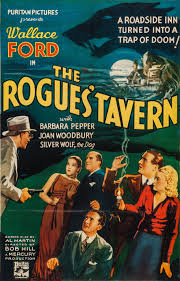
THE ROGUE’s TAVERN
US, 1936, 70 minutes, Black-and-white.
Wallace Ford, Barbara Pepper, Joan Woodbury, Clara Kimball Young, Jack Mulhall, John Elliott.
Robert F. Hill.
Another of the multitude of supporting features from the US in the 1930s, thrillers, murder mysteries, casts of supporting players. However, the leader here is Wallace Ford who has 166 acting credits in the IMDb (and his life, very difficult childhood, then happy marriage and career, is almost a scenario in itself).
Wallace Ford and Barbara Pepper are departments door detectives and want to get married, going to motel, trying to find a justice of the peace, recommended to go to another hotel in which there is a whole range of strange characters. A number of people gather together, called mysteriously from interstate. Then they begin to be killed. And, the tavern being isolated, the murder has to be there – though, not quite, since an eerie character suddenly appears outside (and his part ultimately explained.
There is the host in a wheelchair and his wife. When the murders start, the two detectives take up the role of investigating, lighthouse, bars on Windows, everybody virtually imprisoned. While the female detective does a lot of good work, the male takes a superior role, often ignoring her – possibly offering some grounds of divorce before they are even married!
And, once again one of the least, or the least, possible suspects turns out to be a fierce, even raving, murderer. But justice of the peace does turn up…
Murder by Rope
MURDER BY ROPE
UK, 1936, 64 minutes, Black-and-white.
D.A.Clark-Smith, Wilfrid Hyde-White, Sunday Wilson, Dorothy Hamilton, Guy Bellmore, Donald Reed, Albert Conway.
Directed by Geoffrey Pearson.
One of the many brief supporting features from the 1930s, murder mysteries, detection, black-and-white photography… But, while so many of them were American, this one is English, very British in style and manner.
It has the advantage of several subplots throughout the film, opening with a mad killer in the dock and condemned to death, the meetings of the jury and discussions, the condemnation by the judge.
Then, there are anonymous notes pieces of rope sent to the executioner, to the judge, warning of revenge. There is a British government concerned, and their calling in an expert on writing. There is also a novelist who was written about the case and seems to have a cheerfully morbid approach to crime (and he is played by Wilfrid Hyde-white in jovial form, but 28 years before he was to achieve immortality singing The Rain in Spain with Rex Harrison in My Fair Lady).
Then there is a gathering at a stately mansion, a judge invited, a popular actress, the judges nephew and his wife, a suspicious other guest, as well as the Butler and the maid – which leads into a crime subplot and the theft of a necklace.
And, then the expert goes to the mansion, the playwright suggesting a scenario that they re-enact, lights going out, lights coming on and the judge did. The expert then takes over the investigation, interrogating everyone.
All kinds of suspicions, the judges nephew with a money problem, suspicions on the playwright, phones cut, cast disabled, miles from the police and a phone…
And, the solution which most people would never have guessed and Agatha Christie and her fans would be very pleased.
Carry on Cowboy
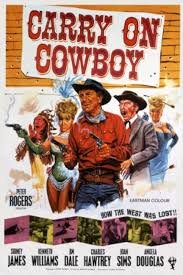
CARRY ON COWBOY
UK, 1965, 93 minutes, Colour.
Sidney James, Kenneth Williams, Jim Dale, Charles Hawtrey, Joan Sims, Angela Douglas, Bernard Bresslaw, Peter Butterworth, Percy Herbert, Jon Pertwee.
Directed by Gerald Thomas.
One of the advantages for this episode in the Carry on a series is that audiences are so familiar with westerns. And, underlying the Carry on humour here, there is a basic plot that could have been in any of the westerns over the decades, a gunfighter, the mayor, the sheriff, the saloon, the Madame, the gamblers, the singers, cattle rustling, the new marshall, the confrontations and the shootout. All very familiar, but generally always welcome with audiences.
So, how does the British cast handle being characters in a Western? And, their accents? Sid James is the gunfighter, with a roving eye and a leer. But, most interestingly, there is Kenneth Williams doing his usual shtick but with a huge moustache and with a heavy American accent (which he said was based on the American director, Hal Roach). And, Joan Sims does her bit as the madame, while Angela Douglas, to appear in several Carry on films, is Annie Oakley.
There is a lot of play on names like Marshall P. Knut. And a joke with Charles Hawtrey being the Indian chief, glasses, British accent and his usual comic style, Big Heap and the large Bernard Bresslaw as Little Heap (looking back one hopes the comedy overcomes any racial offensiveness).
So, the usual jokes and puns, the innuendo, a lot of physical comedy and pratfalls, and variations on the familiar American Western conventions.
And, in retrospect, as with most of the Carry on films, many bloggers saying it is the best and some saying it is the worst. (This reviewer was favourable.)
Dark Hour, The
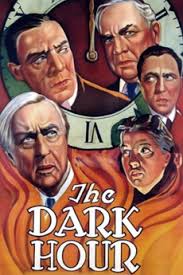
THE DARK HOUR
US, 1936, 64 minutes, Black-and-white.
Ray Walker, Berton Churchill, Irene Ware, Hobart Bosworth, Hedda Hopper, E.E.Clive, Harold Goodwin, William V. Mong, Miki Morita.
Directed by Charles Lamont.
This is what crime supporting features in the mid 1930s were like. And, in retrospect, perhaps at the time, it is very much in the Agatha Christie vein, a body in the library, detectives, interrogations, many suspects, truth and lies, tangled motivations.
A young detective, courting the niece of the murder victim, is the main investigator, relying on the help of the veteran retired detective and neighbour. They are played by Ray Walker and Berton Churchill. An unpleasant businessman is found dead at his desk, stab wounds, no blood, then drops on the floor, a missing weapon, then the discovery of manipulation of gas complicating the deaths.
The two detectives operate rather privately, some connection with the police, but it is definitely not a police thriller mystery. And the range of suspects: the niece herself acting very suspiciously and not telling the truth, very British butler played by E.E.Clive, the niece’s aunt, a vigorous society scene-stealing celebrity, played by veteran Hollywood gossip columnist, Hedda Hopper, the scientist doing experiments next door, a mysterious Asian character, and the rather infirm and bewildered brother of the deceased.
Audiences will enjoy the various unmaskings but, in the last few minutes, there are quite a number of hypotheses showing how so many of the suspects might have committed the murder. Which leaves the audience pondering all these possibilities before they decide whodunnit.
For audiences interested in the B movies of the 1930s – but, younger audiences may find the style of filmmaking too antiquarian.
------------------------
This is a small-budget 1930s murder mystery, nothing particularly special.
We are introduced to a range of characters, especially a mean old millionaire, uncle to the heroine, Elsa, critical of her suitors, clashing with his brother, not popular with the neighbours. After several gruff scenes, he is murdered.
One of the suitors for the niece is a detective who teams up with an elderly detective next door and, together, they pursue solving the mystery.
There are many many suspects including the staff at the house, the butler, the cook, a scientist living in the working who is keen on marrying the niece for her money, they quickly looked in the window, Hedda Hopper playing Mrs Tallman. There are many interviews, hypotheses, and some more murders with people behaving rather suspiciously.
When the murder is solved, it emerges that it is the victim's brother who is jealous, wanting money, defiant. However, when everything seems solved, the various of the hypotheses that could have been in play, included a scenario where the older detective himself is the killer and it scenario where it could have been Mrs Tallman.
Hamnet
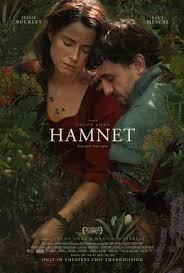
HAMNET
UK, 2025, 125 minutes, Colour.
Jessie Buckley, Paul Mescal, Emily Watson, Joe Alwyn, David Wilmot, Jacobi Jupe, Noah Jupe, Olivia Lynes.
Directed by Chloe Zhao.
Hamnet, or Hamlet, the name of Shakespeare’s son, the title of, perhaps, his most famous play.
In fact, we know very little about Shakespeare’s private life. He was from Stratford-on-Avon, he married Anne Hathaway, had an older daughter, Susanna, and twins, one of whom was Hamnet who died of the plague, very young.
What we have in this film, most arrestingly, a Shakespeare’s story from the imagination Northern Ireland’s novelist, Maggie O’Farrell, her 2020 novel. Oscar-winning director for Nomadland, Chloehao, worked with the novelist on the screenplay, presenting a more straightforward telling of the story, especially of Shakespeare’s wife, here called Agnes.
Agnes is a child of nature, a wild child, said to be connected with witches, knowing the seasons, cultivating fruits and able to make potions. And, she is played by Jessie Buckley, one of her many and varied excellent performances (and Jessie Buckley is also Irish, as is Paul Mescal who plays Shakespeare, quietly restrained). Will Shakespeare teaches at the local school, encounters Agnes, is caught up in the magic of her personality and they marry.
This is story has her staying in Stratford, giving birth to her children, sometimes with great stress, loving her husband but knowing that he has a creative talent, likes to write in his room, gives her asent that he should go to London and develop his work in the theatre. (It is only later in the film that Agnes and the audience eventually come to London.)
Agnes delights in her children, especially the twins, and the likeable and lively Hamnet (attractively played by Jacob Jupe. Hamnet is devoted to his father, practices swordfights, the children doing a rendition of the opening speech of Macbeth’s witches.
But, the plague, and Hamnet willing to take the place of his sick sister, the sadness of his death, Shakespeare’s absence, his being away eventually take its toll on Agnes’s emotions.
The major part of the film stays in Stratford, the green wildness of the forests, the glimpse of the Tudor streets and houses and church spire. But, when Agnes does go to London, sees the crowds coming into the Globe theatre, pushes her way to the stage, and the performance of Hamlet begins, this becomes most moving.
For this reviewer, this last part of the film is one of the most deeply memorable in cinema, Agnes watching as the play unfolds, the theme of death, absence, ghosts, the rejection of Ophelia and the emotions, the final confrontation with Laertes and… the rest is silence. Shakespeare himself, playing the ghost, watches Agnes’s response from the wings of the stage, one of the best dramatisations of what catharsis actually means, Agnes, slowly, surprised, coming to terms with all that has happened to her, some kind of purification of her emotions – and a strong reminder that the audience, involved i the n a play, responding to a tragedy, experiences their own dramatic catharsis.
Hamnet has won a number of awards, Best film, and many well-deserved awards for acting for Jessie Buckley.
- The focus on hand, explanation of the name, Shakespeare’s son, Shakespeare’s play?
- An imagination of Agnes and will Shakespeare and their children, family life, Shakespeare as a playwright, life and work in London? Not history?
- The Stratford settings, the opening with the forest, the trees, the grounds, the locks, holes, the sense of nature? The house, interiors, dimly lit? The town square and the church spire? The atmosphere of 16th-17th century Stratford? The contrast with London, the dark, the streets, the river, the globe theatre, exteriors and interiors? The atmospheric score and final song?
- The focus of Agnes, with the Eagle, swooping on the landing on her wrist, her background, her mother and which, of wild child, the sense of nature, this by her father, alienated from her stepmother? Living in the woods?
- Will, the scene in the classroom, the repetition, his encounter with Agnes, the attraction, for both, the story of Orpheus and you registry, the courting, the opinions of the family, his parents? Bartholomew? The sexual encounter, Agnes and Mary, the questions? The marriage ceremony?
- Jessie Buckley’s presence and performance as a this? Intense? In the forest, her communications, the background of witchery? Her pregnancy, giving birth in the woods, the difficulties, her daughter? Will’s response?
- Passing, will and his room, his writing, parchment, his imagination? Like Agnes? The new pregnancy? Will in London? The difficulty of birth, the size of the twin child, the dead child, Agnes’s response? Her power and its revival? Will’s arrival, his joy?
- Will, dissatisfied, wanting more in life, the decision to go to London? Is in support, his absences, the children, beginnings of alienation? His returns? The children growing up – and the sequence of their playing the role of the witches at the opening of Macbeth?
- Judith, the older daughter, her place in the household, Hamlet and his sister, the change of clothes, interchangeable? Hamlet and his lover’s father, the sword fighting sequence?
- Will, in London, his writings, the growing reputation, this is not the focus of the film?
- The Shadow play of the pestilence, Judas and his illness, Hamlet is generosity, willing to take her place, his illness, suffering, death, the pain for the family? Agnes and her grief? Mary and her support? Will and his return, Agnes upset, the blame? The discussions between the two, the new house, the biggest in Stratford, some compensation, and is in the upstairs room and her memories?
- The religious beliefs, the question background, the church visit? Yet Agnes and her nature believes? Special powers?
- Agnes and his stepmother, the poster for Hamlet? Her being upset? The continued support of Bartholomew?
- The decision to go to London with her brother, arriving, the bewilderment of the city, the globe theatre, the facade, the crowds coming in, the crowds inside,ne, those on the balconies?
- Will, his group in London, to be or not to be, the rivers edge? The glimpses of the rehearsal, the actor, Hamlet’s attitude towards year, will watching, making repetition, the intensity of his feelings of love and rejection?
- The play, and his bewildered, the crowds, the opening, the ghost, the beginning of suggestions for linking Hamlet, his illness, his death, afterlife, with the details of the play? The ghost and his speeches, afterlife, the condemnations, his brother and his wife, the fighting with Laertes, the speeches, everybody becoming more involved, the Queen’s death, the death of the king, and to the front of the stage, in Bloom blonde rather than in dark clothes, looking to the audience, the hands or reaching out, Agnes and the touch, the experience of the catharsis, from the plane, from her inner feelings, some kind of healing and understanding?
- Will, the part of the ghost, the speeches, the intensity of the meaning, his looking at Agnes?
- The glimpse of Hamlet at the end, the bond between will and Agnes, the impact of his son and death, the play and part is a meaning of catharsis of healing?
Caught Stealing
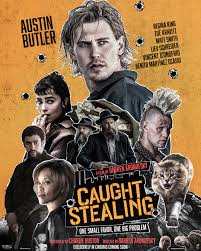
CAUGHT STEALING
US, 2025, 107 minutes, Colour.
Austin Butler, Regina King, Zoe Kravitz, Griffin Dunne, Matt Smith, Liev Schreiber, Vincent D'Onofrio.
Directed by Darren Aronofsky.
50 years ago Martin Scorsese made the striking New York film, Mean Streets, emphasis on the Italians. Caught Stealing takes place 25 years later, moving towards the end of the millennium, but the title of this film as one reviewer suggested would include “sleazy” streets. And this reviewer would add “ugly and insane”.
At the centre of this strange picture of New York gangsters is a hapless young man, Harry/Hank played by Austin Butler who, after his striking performance as Elvis, has proven himself with The Bikeriders, Dune 2, Eddington, a significant American actor who can hold a total film. He is in New York, a transplant from California, prospective baseball player, involved in a deadly car crash, working in a dingy bar, a girlfriend, no major prospects.
But, he is asked by his eccentric roommate, Russ, British actor Matt Smith with a Mohawk, to mind his cat while he goes back to London for his father’s illness. Hank is wary of the cat, it bites, proves itself a nuisance – but, relief for cat lovers, it becomes more important as the narrative goes on, even moments of endearment.
Of course, Russ is unreliable, involved in drugs, in possession of a huge amount of cash which he has hidden in a storeroom. And then the thugs and criminals arrive, assuming that Hank is involved and has all the information. And they want the money.
The old Mean Streets had Italian gangsters. In 1998, there are the Russians, with a capacity for vicious torture. There are also the Hispanic entrepreneurs, running clubs, running drugs. And, most bizarre of all, some Hebrew gangsters – very much Orthodox and observant in Jewish traditions, folksy in their conversations, going home to mother for sabbath and listening to her cautions about driving on that day – but with Hank driving, all is well. And they are played, almost unrecognisable behind the beards and Orthodox clothing, by Liev Schreiber and Vincent D’Onofrio.
And, there is also a corrupt cop, played by Regina King.
Which means then that Hank is often literally on the run, even when he has had serious kidney punctures due to the vicious torture, trusting in the corrupt cop, manipulated by everyone, upset by the treatment of his girlfriend, but all the time phoning his mother in California with great devotion and baseball intensity, “Go, Giants!”
This is a film with plenty of intense and violent moments, some ironic humour, a great deal of betrayal and set-ups, the issues of whom to trust, and the put-upon Hank becoming shrewd and shrewder in how he can possibly escape from this gangster pursuit. No spoiler – he does, a victory for the little man over presumptuous brutes.
- Literally arresting title? The status of Austin Butler as a star? The reputation of Darren often ostia as director?
- 1990s, the mean streets of New York, the shift from Italian gangsters to Russian gangsters, Jewish and Orthodox gangsters…? But the same gangster themes, oppression, innocent victims, torture and killing?
- Hank’s story, young man, baseball hopes, from California, ringing his mother, Go Giants? Incident, the death of his friend, alcohol, dependence? His accommodation, sharing the apartment, relationship with Russ? At the bar, his work, girlfriend? Prospects?
- Russ, British, going back to London, criminal, the drug connections, the money? His cat? Interesting the cat to Hank? And the further involvement with the cat…? The important key in its litter box?
- The Russian gangsters, types, personalities, demands, to the apartment, the brutality with Hank, questioning, assumptions about his guilt, torture, his injuries?? The cat?
- The Hassidic brothers, their garb, beards, observing the Sabbath, their mother and her insistence on the regulations? Jovial manner? Yet ruthless, with Hank, searching the apartment, interrogations, torture, abducting him, at their home, the final drive – and their comeuppance?
- Russians, Colorado, his collaboration, the questions, the complications with Hank, the key, losing, his relationship with his girlfriend, realising she is in danger, her being shot?
- Elise Roman, police, questioning Hank, the information about the dealers? Her involvement with Hank, following leads? The revelation that she was corrupt? Confrontations with Hank? Following him? The final deals, the threats, the information about his girlfriend’s death? The key? Death?
- Confrontation at Paul’s bar, the fights, the shootings, the key, all killed?
- Hank, in the streets, the various encounters, his pain and wounds, the entanglements? Searching for the key, Jason, and leaving the key in his abandoned clothes?
- Russ returning, the storeroom, the amount of money, the Russians, Hank and his handing over Russ, saving the cat?
- Hank and survival, overcoming the Russians, overcoming the Hassidic brothers? The killing his girlfriend, his crashing the car? Getting the money, impersonating Russ, sending have the money to his mother?
Tron: Ares

TRON: ARES
US, 2025, 119 minutes, Colour.
Jared Leto, Greta Lee, Jeff Bridges, Evan Peters, Jodie Turner-Smith, Hasan Minhaj, Arturo Castro, Gillian Anderson.
Directed by Joachim Honning.
Just over 40 years ago, there was a dramatic breakthrough in visual style in movies, focus on computer games in the early years, AI experimentation, IT business rivalries. This was Tron, starring Jeff Bridges. It can be seen as something of an alert to what was to come in imaginative moviemaking.
Then, 25 years later, 2020, the sequel: Tron: Legacy. In this meantime, IT technology, special effects and computer graphics had developed substantially. And the scenario moved from one generation, the Flynns, led initially by Jeff Bridges, and his rival with the ominous American name, Dillinger, David Warner. They have given way to the next generation and technology and business conflicts, Kevin Flynn, Bridges’ character, trapped in The Grid.
It is now only 15 years since Tron: Legacy. And the scenario has moved to the next generation, but the Flynn business taken over by two Korean-American sisters, one dead, the other, Eve Kom, played by Greta Lee, in the struggle with the new Dillinger generation, Julian, played by Evan Peter. One might say that Julian is not bothered by moral scruples – although his mother, a cameo by Gillian Anderson, does raise some questions of integrity. And, 40 years later, here is a venerable Jeff Bridges, a cameo reappearance as Kevin Flynn.
For the running time of the film, the central characters and the audience are confined, practically trapped, in the Grid. And in terms of characters, the scenario is confined to the key characters in the conflicts, Eve and her eager assistant as well as the public relations representative versus Julian. Not too many humans taking major roles. Sometimes, throughout the action, it is reassuring to see that some kind of normal life is going on in the background, the buildings in the streets, cars in the streets, glimpses of actual people…
The main life characters, in fact, are AI created warriors, Ares, with the name of the God of War, played by a rather subdued in comparison with his other performances, Jared Leto. The other is Athena, Jodie Turner-Smith, African-American, with a gold shaved head, named after wisdom but certainly, as the action goes on, female version of Ares.
The technology explains how they are created, the work of Julian Dillinger, a certain time span before they disintegrate and are reassembled, but, as they interact with the humans, developing many human qualities themselves. Which builds up to a confrontation because Ares sees the malice of Julian and becomes an ally of Eve whereas Athena builds up the hostility and confrontations.
But, perhaps the principal impact of this version of Tron is in the visuals, the darkness of the Grid illuminated by flashing light, red light, swift moving, part of the battles as more and more creations take to battling against Eve, rather spectacular confrontations. And, eventually, as we guess, a dramatic one-to-one.
It looks as though Ares has the potential to become a kind of AI superhero if there are to be more adventures (and the screenplay more than indicates that this is the intention) and Ares is given something of a saviour figure status in a momentary recreation of da Vinci’s Last Supper with him at the centre.
Probably best for the fans and for any audiences interested in technological visual developments – and another superhero franchise.
- The franchise, over 40 years, the episode in 2011, 2025, the next generation?
- The original, the plotting, the Flynn family, the rivalry with the Dillingers, AI, the science and technology, the technical possibilities?
- The visuals, locations, labs, machines, special effects, the creation of Ares and Athena? The functioning? The musical score?
- The Flynns, Kevin trapped in the Grid, his reappearance?
- ENCOM, the history of the company, Eve, career, new manager, seth as her assistant, Ajay Singh and his expertise? The contrast with the Dillinger company, Julian, his motives, malicious, rivalries? The intervention of his mother? His staff, achievement, headquarters?
- The creation of Ares and Athena, AI, capacity for absorbing human qualities? Disintegration and reconstruction?
- Ares, his mission, the interactions with Eve, Alaska, the pursuit, the contrast with Athena, working for Julian? The buildup to conflict between the two?
- The character of Ares, machine, superhero qualities, humane qualities, action, interventions, skills, final achievement?
- Julian, his defeat? Eve, her final success?
- A film for the fans, the story and characters, the technology, the musical score, the special effects? Ready for a sequel?
Sacramento
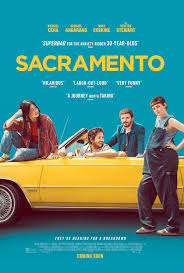
SACRAMENTO
US, 2024, 89 minutes, Colour.
Michael Cera, Kristin Stewart, Michael Angarano, Maya Erskine, Rosalind Chao, Michael P. Angarano Sr.
Directed by Michael Angarano.
Sacramento, the capital of California, is the destination for the journey in this film, a road film from Los Angeles to Sacramento. However, Sacramento is also symbolic of the quest, a state of mind for the two central characters.
Sacramento has been written and directed by actor, Michael Angareno, who started his film career when very young. He is now moving into middle age and this is a middle-aged male story, not just of the character he plays, Ricky, but also of his longtime friend, now alienated, Glenn. It is their road movie.
Over the years Michael Cera has played a number of characters who are edgy, sometimes timid, sometimes forthright, but often with a touch of mental troubles. This time, as Glenn, he has been married for four years, his wife, played by Kristin Stewart, is about to give birth. But, she is the calm person, working, commonsensed, understanding and supportive of her husband even when he is exasperating. And, exasperating he often is, panic attacks, loss of job, prepared to be home parent, but almost throttling a cot they have bought which is not solid enough for him.
And we have been introduced to Ricky, wandering, erratic, casual encounters, one partner, Tally, I didn’t been giving birth but avoiding Ricky, going to live in Sacramento with the child. But, Ricki fancies himself as being able to read people, goes to discussion groups, intervening, and off.
So he decides to make contact with Glenn, persuade him to accompany him to Sacramento to scatter the ashes of his father. On the way, and exasperated, Ricki always on for the con, then the encounters with tally and the baby and matters going completely skew with.
Probably best to be an open mood in approaching Sacramento, maybe some difficulties and accepting the two characters, but, they are what some people are like, they need some help, some affirmation, some possibilities of breaking through past difficulties in finding a future.
- The title, the destination, a state of mind?
- Los Angeles story, the suburbs, homes, social groups? On the road, Northwest, the scenery, the stops along the way? The city of Sacramento, the views, homes, the river? The musical score?
- The introduction to Glenn, sunbaking, reading, the woman calling out, into the water? Then discovering that he was four years married, Rosie pregnant? The introduction to Ricky, seeing with Tallie?
- The film about mental issues? Glenn, anxiety, his job, loss of the job, symbolised in his breaking up the cot, Rosie understanding him, keeping him calm? Can Ricky and his being with Tallie?
- Glenn’s story, his past, nerves, panic attacks, fatherhood, his relationship with Rosie, at home, her commonsense, keeping calm, accepting the pregnancy, going to work, content at being a house parent?
- Ricky, age, temperament, going to the group, intervening, his theories, his jargon, the reaction of the doctor? The other members of the group and his interventions? The doctor warning him off? Yet his enthusiasm?
- The background of Ricky and Glenn, growing up together, the friendship, the distance? Ricky his decision to contact Glenn? Arriving, trying to hide? Rosie’s response?
- The two men talking, the significance of their mental upset, repercussions for their conversations? Behaviour? Glenn trying to avoid Ricky? Ricky persevering?
- Ricky wanting to go to Sacramento, his explanation, the death of his father, coming from Sacramento, to scatter the ashes in the ocean? Glenn’s reaction, unwilling, disbelief? Out and the diner? Glenn and his motivations? Contacting Rosie?
- The journey, an Odyssey, the gradual revelation of Ricky’s intentions, scraping up ashes to scatter, accommodation, his prized car, stopovers on the way, Glenn and his reactions, suspicions? Yet continuing on? The scattering the ashes and the clunk on the concrete?
- Arriving at Tallie’s house, the real reason for coming, the flashbacks and the relationship between the two, the casual acquaintance, her pregnancy? The birth? Her character, reaction to Ricky, wanting gone, his continual perseverance in arguing with her? Wearing her down? Her treatment of the baby?
- Her puzzle about Glenn, his sitting, observing, the phone calls with Rosie, knowing the truth about Glenn’s father? Going to the toilet, going to the baby, the cot and shaking it, taking the baby, driving off? At the service station?
- Tallie’s panic, the scooter, catching Glenn, the arguments, unlocking the car, retrieving the baby? The cathartic moments for them all?
- The year later, Ricky and the group, intervening, the discussions with Sal and his life and his case? The contrast with Glenn, the baby, getting some work done, the friendship with Ricky? Going home to Rosie and the baby?
Sentimental Value/Affeksjonsverdi
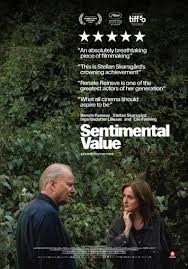
SENTIMENTAL VALUE/ Affeksjonsverdi
Norway, 2025, 135 minutes, Colour.
Renata Reinsve, Stellan Skarsgaard, Inga Ibsdotter Lilleaas, Elle Fanning, Jesper Christensen, Lena Endre, Lars Varinger.
Directed by Joachim Trier.
After watching Sentimental Value , we realise that the English title does not do justice to the drama which has moved and challenged us. One can note that there is the tone of affection in the Norwegian title. A more telling nuance.
Norwegian director, Joachim Trier, has made films in Norway and in the United States. Earlier he had made the film, The Worst Person in the World, with actress Renata Reinsve, to much acclaim. He works with her again in this film, teaming her with Swedish and international star, Stellan Skarsgaard. This makes for a very strong and tangled relationship between daughter and father.
The film opens, strikingly, with the daughter, Nora, full of nerves, having a tantrum before going on stage. But, once there, a superb performance and acclaim. She is a woman of uncertainties as well as talent, craving relationships, alienated from her father, depending on her sister, based on their bonding during their childhood, their parents’ divorce and, later, their mother’s death and the absence of their father.
The film works very well on these themes of family and relationships, even going back to the 1930s, the Nazi invasion, the war, Gustav’s mother in prison as a resistance fighter during the occupation, impact on her later life. Then, Gustav and his wife, the clashes with his daughters, and the focus on the house in which they lived, a house with the girls identify with and are continually return to, but the scene of tragedy.
Gustav has not made a film for a long time, is ageing, not always well. He has a screenplay and encounters a talented American actress, Rachel, played by Elle Fanning. Gustav invites her to play the leading role in his film, rehearsing lines, explaining some tragic sequences, the suicide, but Rachel turns out to be an actress of integrity, questioning whether the film should be made in English, wondering about her capability for playing the part, making the decision of principle.
This is quite a long film, divided into chapters with each section cut into black, pause, then the next chapter. With the range of characters, so well performed and delineated, the audience becomes more and more involved in this family story. Renata Reinsve commands the screen even in the moments where she underestimates herself. Her sister, Agnes, is impressively played by Inga Ibsdottor Lisseaal. We are drawn into the emotional tangles, not always approving at all of some of the characters’ behaviour, but always hope that there can be honest reflection, honest expression, reconciliation.
Sentimental Value won the Grand Prix at the Festival of Cannes, 2025, and received many nominations for Best Picture in the international 2025 awards.
- The title, sentiment, the notion of perfection in the Norwegian title? And? Tone?
- The Norwegian settings, quality perspectives, Nordic filmmaking? Family stories? Back to the wall, post-war, secret in the past?
- The initial focus on the house, symbolising the sisters, the return to the house, is history, furnishings and look, ownership of the house, the daughters, the father? The action taking place within the house?
- The focus on Nora, her performance, the tantrums before going on, nerves, staff, pressure, threats, wanting the slap from the actor? The set, the audience, darkness and pores, her entry, the performance, the claim? Revelations about Nora’s character?
- Agnes, the bond with Nora, her marriage, her husband, love for her son? Nora enjoying the boys company? The home sequences?
- Gustav, his story, the film director, a claim, the screening of the classic film, the audience response, the interview? And this starring in the film? Her not wanting to be in films? During research for her father?
- Plan to make a new film, the screenplay, giving to Agnes, her reluctance? Her reading it, change of heart? Giving it to Nora, Nora reading it and her reaction? Memories of their mother? Going back to Gustav and his history, his mother and the resistance, imprisonment during the war, coming out, giving birth to staff? Pessimism? Suicide?
- Rachel, American actress, watching the screening, the conversations with staff, on the beach, his offering her the part, their discussions, reading the script, testing out the lines, with Ingrid, the emotion? The story of the suicide, the knocking over of the store (actually from IKEA)? The overall impact on Rachel, meeting the family, the conversations? The issue of the film in English or not? Her coming to the conclusion that she should withdraw, the conversation with Gustave, her integrity in appreciating the situation and her role?
- Nora, her continued acting, performances, the relationship with the actor, his being married, the break and his leaving? The background of her suicide attempt?
- Gustav, his moods, in the house, the divorce, memories of his wife, of his mother, the screenplay? The impact of the experience with Rachel? Wanting Eric in the film, and his not wanting him in? The scenes with Eric, at home, with Nora, packing the lunch, going to school?
- Nora, the script, going through the motions, the suicide sequence, the stall, Erik returning, the abrupt stop?
- The alteration of the house, audience puzzle as to what was happening, Nora and her going through the scenario of the suicide attempt, the revelation that it was a set, her performance, the response of staff, Agnes, and the resolution of the family difficulties? The future?
