Displaying items by tag: Robert Pattinson
Drama, The
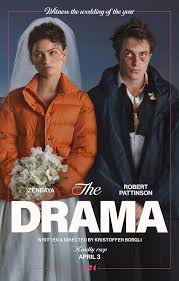
THE DRAMA
US, 2026, 105 minutes, Colour.
Zendaya, Robert Pattinson, Alana Haim, Mamoudou Athie, Hayley Gates, Jordyn Curet.
Directed by Kristoffer Borgli.
Sometimes people play, especially younger people, possibly after a couple of drinks, “what is the worst thing you have ever done?”. And that is the key to the drama in The Drama.
Charlie, Robert Pattinson, sees an attractive young woman reading a book in a cafe. She is Emma, Zendaya, and when he makes his approach, pretending to know the book, she does not respond – he is speaking into her deaf ear. Not the most propitious introduction. (Actually, there will be some very unpropitious developments as the film proceeds.) Nevertheless, they fall in love and are planning the wedding.
Charlie and Emma have friends, a married couple, Mike and Rachel (Mamadou Athie and Alana Haim). He is to be best man. She is to be the maid of honour. One night, drinking, good friends, the ‘worst thing’ game is proposed. They lovingly tell a story, with some reluctance. Emma, unwillingly first, tells the story of school bullying and the other three are aghast.
What follows, suspicions, puzzles, questioning, have some comic elements but, of course, deadly serious consequences. Rachel is vehemently condemned naturally. Mike tries to be supportive. But, it is Charlie who experiences the worst, suspicions, allaying suspicions, trying to communicate, going to his work and an extreme faux pas which has dire consequences during the wedding.
There is a strange and confusing flashbacks to members school days and her relationship with her parents. Violence, gun culture…
The wedding seems to be going well, but one of the most disastrous celebrations of marriage on screen.
Can anything be salvaged in the relationship? Charlie is shamed. Emma is confused, let down and embarrassed.
There is an ending which rather stretches credibility – leaving the audience wondering what will happen next? And, emotionally, wondering whether they have taken sides either with Emma or with Charlie.
- The title? The story as a drama, a touch of the tragic, the touch of the comic, satiric?
- The American setting, Americans in their 30s and 40s? Lifestyle, relationships, friends, marriage and weddings, taken for granted ordinariness?
- The twist in the plot, the two couples, their friendships, casual telling stories, the game of the worst thing ever done, revelations, consequences, suspicions, damage?
- The framework of the story, Charlie, British and American, seeing Emma, attracted, her reading, the music, discovering that she has i hearing in only one ear? Photographing the couple, returning, the discussion about the book, his inadequate answers? Together, the later meetings, the effect of the initial encounter on each of them?
- Charlie, with Mike, writing his wedding speech, the flashbacks, filling the details of the relationship, its development?
- Emma, 30s, her life so far, reading, friends, Rachel, Mike? The developing relationship with Charlie? Audiences liking her, liking Charlie?
- The meal, drinking, talking, the preparations for the wedding, the detail, Rachel as made of honour, Mike as best man, the discussion about the venue, the catering, clothes…?
- The telling of the worst stories, Charlie awkward, Rachel and locking the boy overnight, and her telling her story, gun culture, the flashbacks to her treatment at school, into the water, abused? Imagining the school massacre?
- The reaction of everyone? The audience reaction? Believing her not? Rachel, the indignant response, suspicions, denunciation, breaking contact? Mike, shocked, lower key, supportive of Charlie?
- Charlie, his response to the story, upset, suspicious, believing or not, communicating with Emma? Her attitude, telling the story, drinking, the aftermath?
- The consequences for Charlie and Emma, her story, trying to explain, memories of school, the rival, shooting practice, the group, gun control, her leadership and collection group?
- Charlie, imaginings, dreams, suspicions, that there was worse? Discussions with Mike? And to the office, the secretary, asking her about her relationship, if her boyfriend could commit a gun massacre, his weeping, making a sexual advance, her response, his change? And the later consequences of this episode?
- The preparations for the wedding, going to the venue, Emma’s and her behaviour, the dance practice the wedding, difficult, seeing the DJ allegedly taking drugs, building up to the confrontation, and estates? The food the decisions?
- Charlie and his love for Emma, suspicions, the damage to his psyche, the consequences of the episode in the office?
- The wedding, Emma’s parents coming, Charlie’s, awkwardness? The ceremony?
- The aftermath, the drama, Emma and her parents military background guns? Rachel, her presence, drunk, the violent speech? Emma’s father and his speech, the interruption? The growing awkwardness? Charlie going out, Emma going out, overhearing the secretary, the speech and everything coming out, the secretary boyfriend and punching Charlie? Confusion, and walking out, the kiss and bewilderment?
- The aftermath, Charlie beaten up, at home, going out to the diner, the hamburger, and arriving, going through the ritual as if they were meeting the first time?
- The issues of knowing one’s partner before marriage, secrets, revelations, understanding, forgiveness? Or revelations, too late, destructive for the marriage? And the future for Charlie and Emma?
Die My Love
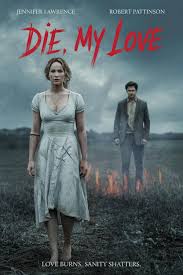
DIE MY LOVE
US, 2025, 119 minutes, Colour.
Jennifer Lawrence, Robert Pattinson, Sissy Spacek, Nick Nolte, LaKeith Stanfield, Kasmere Trice Stanfield.
Directed by Lynne Ramsay.
As the audience watches Grace in this disturbing drama, and thinking about the title, it would seem better as “Destruct, My Love” or, more accurately, “Self-destruct, My Love”.
This film offers a portrait of a woman breaking down, initially seeming in control of her life, arriving with her husband at their new home, her relationship with her husband, passionate, emotional. She is played by Jennifer Lawrence in a performance which becomes more and more intense as the film progresses. Her husband, Jackson, is played by Robert Pattinson, in love with Grace, their both rejoicing in her pregnancy, the birth of their child.
Then the film fills in some background about Jackson’s family, his father, ageing, touches of dementia, a cameo with Nick Nolte. His mother, Pam, offers a welcome performance by Sissy Spacek, ageing, living her memories, but disturbed, sleepwalking, but understanding and encouraging of Grace, caring, offering to mind the baby.
But, soon, erratic behaviour on Grace’s part, yet always devoted to the baby, carrying it, feeding it, constant care. We begin to see her mentally falling apart, isolated in the house away from neighbours, lonely with Jackson away for his work, craving his physical presence, but subject to mood swings, dreams and fantasies (especially for a neighbour who zooms past on his motorcycle and is later seen with his wife at a garage, the audience wondering whether he is real or exists in her imagination).
And Jackson brings home a dog who barks and barks and barks and whines – intolerable for the audience and intolerable for Grace. But, all the time the closeness between mother and child, even clutching the baby.
There are some flashbacks to Grace and Jackson courting, the wedding ceremony and even early indications of Grace’s erratic behaviour during the dance, leaving the wedding, strange behaviour back at the hotel…
Jennifer Lawrence has given some very strong performances over the years and is fully committed to portraying Grace, as a person, as a woman, as wife and mother, as lonely, experiencing post-partum depression, relationship with her husband becoming edgier, deteriorating. Jennifer Lawrence’s performance exposes Grace’s disturbed psyche, and at the end of it Grace is naked, laid bare, fulfilling the title, leaving the audience emotionally alarmed. A film for a female audience, a probing of the depression after birth. A film for a male audience understanding and empathy. And always disturbing.
- The title and expectations? Something of a “Destruct, My Love, Self-destruct, My Love”?
- The rural setting, the house and interiors, parents’ house, the countryside, flat open spaces, the roads? The town? The musical score?
- The impact for the film for a female audience? Pregnancy, post-partum depression? The impact for the film for a male audience, understanding, empathy?
- The introduction to Grace and Jackson, their age, the relationship, the house, looking it over, their passion for each other, manifestations? The pregnancy?
- The flashbacks to their meeting, the proposal, the wedding, Grace at the wedding itself, the ceremony, the dance, her frenzy, going out, signs of what was to come? The wedding night, the hotel and her behaviour? The flashbacks in the light of the development of her pregnancy and after birth?
- The background of the family, Harry, his age, memory, his death? Pam, the relationship with Harry, as Jackson’s mother, the gatherings, the other relations and their comments? Pam, concerned about Grace, her own sleepwalking, waking, dreams? Understanding Grace, visiting, the discussions, care of the baby? Audience response to Pam?
- The focus on Jackson, in the forefront, in the background, in himself, in the light of his relationship to his mother and father, his work, away from home? Love for Grace, concerned? The birth, love for the baby? The issue of the baby’s name? His absences, returning home, Grace and her more erratic behaviour, trying to understand, his patience, impatience?
- Grace, the complexity of her character, her mental health, when she married, the manifestations at the marriage and wedding night? Settling into the house? The birth and its effect? Her love of the baby, forever with it, carrying, tending, feeding it? Her plans for writing, the writer’s block, the visit to the party, the sympathetic comments, her reactions? Her wanting to be by herself? In the fields, crawling along the ground, her sexuality and masturbation? The distancing from Jackson? His exasperation? Her moods, behaviour, the hitting of the horse and the consequences? His bringing the dog, its continued barking, whining, on her nerves, eventually the confrontation, shootings, Jackson burying it? Driving, open the door of the car to get out?
- The cumulative effect for the audience of this portrait of Grace and her experiences?
- Her help from Pam? Having the rifle?
- The neighbour, Karl, and his motorbike, passing, seeing him with his wife, the approach, the sexual encounter, reality or fantasy?
- The final deterioration, naked, her past attitude towards her body, going into the forest, Jackson following, the flames (and the flames and forest fire at the beginning of the film)?
- The impact of seeing a person mentally and physically deteriorating – understanding, sympathy?
Mickey 17
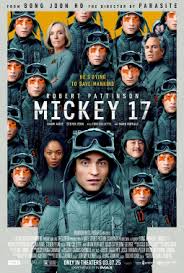
MICKEY 17
US, 2025, 137 minutes, Colour.
Robert Pattinson, Stephen Yeun, Mark Ruffalo, Tony Collette, Naomi Ackie, Patsy Ferran, Holliday Grainger, Daniel Henshell, Thomas Turgoose.
Directed by Bong Joon Ho.
There were high expectations for Mickey 17. Korean director, Bong Joon Ho, has had a prominent career since the 1990s, range of genre films including The Host, Mother, Snowpiercer and his Oscars, including best film, for Parasite. Here he is taken on an American story, and has treated it both seriously and satirically.
It is 2054, much of a muchness like the present in some ways, Mickey and his friend Tivo trying to raise money from a loan shark to start a business, failure, and the violent aggression of the loan shark. But, in this future, there is space exploration and the setting up of planets. There is also a great deal of scientific experimentation – including processes to create multiples of human beings, living, dying, and then being printed out again, identified with successive numbers. The morality of this process is being questioned.
Enter one of those evangelical church leaders, Kenneth Marshall, played with satiric zest and prominent teeth by Mark Ruffalo – aided and abetted by his smiling but domineering wife, played by Toni Collette. Marshall disapproves of the process but agrees that in some ways it could be useful, that the government should set up an expedition on a new planet, four a half years travel there, and set up a process for multiples, but only one at a time. And, with the succession of multiples, they are also described as “expendables”.
But we are also introduced to Mickey 17, Robert Pattinson enjoying his role. On the new planet, out scouting, he falls down a hole, is menaced by some strange creatures, wondering whether they are animals or aliens, not rescued by his colleague, but, saved, in fact by the creatures. Which gives him the opportunity to give a resume of his original life as Mickey Barnes, and the visual succession of all the numbers between one and 17. But, when he is presumed lost killed, Mickey 18 is printed out, Pattinson again, quite a different personality, tough, determined, rebellious…
And there is a range of characters on the planet, the scientists generally kowtowing to Marshall, young Dorothy being an exception and stepping in to help Mickey 17. Marshall has his sycophantic assistant, a yes-man, pandering to all Marshal’s exorcist whims, especially in organised religious television programs for the subservience staff on the planet. His wife is always there, but is experimenting with making sauces! In the meantime, there is an officer, Nasha (Naomie Acker) who is in a relationship with Mickey 17.
We can all this go? The capturing of one of the creatures and killing it, and holding a baby to ransom over a furnace. The two Mickeys confronting each other, Nasha and her coping with each of them, Tivo now involved in drug dealing and threats from the loan shark on earth.
There is a solution but, as with most of the film, not always predictable, always some surprises, some satire, some parody – especially with Kenneth Marshall and his final vanity in confronting the aliens.
The original book, by William Ashton, was published in 2022 and the film began production during the Biden era. But, released in the early days of the Trump era, many audiences will be making links! One reviewer noted that Bong Joon Ho was taking the Mickey out of the United States. Yes!
- Science fiction? Science fantasy? Political fantasy? Space exploration and development? Humanity issues? Moral issues? Philosophical issues?
- The career of the director, films in Korea, range, science fiction, Oscars for Parasite?
- The credibility of the plot, situation on Earth, 2054, ordinary life, Mickey and Vito and their plans, finance, the loan shark, the threats? But the political developments, scientific experimentation, production of multiple persons, moral issues, political? The intervention of Kenneth Marshall, support of his wife? His speech, the panel listening, agreement, setting up the centre on the planet? Moral issues, only one multiple?
- The visuals of the planet, wintry, the spring season, the centre, interiors, rooms, laboratories, meeting room, television programming? The musical score? Songs?
- The prologue, Mickey, the confrontation with the creatures, falling down, Vito and his taunts, no help? Setting up an atmosphere?
- Mickey, Robert Pattinson’s performance, as 17 and 18, his background on Earth, volunteering, is recounting the various stages of his life, further printing after deaths, the range of deaths, the range of personalities, situations, experimentation and testing? His relationship with Nash and her support? Mickey 17, in the snow, the story of his acceptance by the creatures, communication with them, the rescue? And discovering that Mickey 18 had been produced?
- Mickey 18, the different personality, strong minded, confrontational? Encountering 17, their interactions, the episode with Nash, the drugs, sexual encounters? The building up of tension? Especially towards Kenneth Marshall? The agent and her discovery of 17, the attraction, the confrontations with Nasha?
- Kenneth Marshall, the religious background, the church, his moral stances, vanity and position, relationship with his wife, her advice, domineering? His ambitions, the plan, the multiples, overcoming his moral scruples? His ambitions for success? His manner, his teeth, speech, presiding at meetings, his assistant as flattering him all the time, his interactions with the lab managers, their subservience to him? His wife, her manner, the cooking, the sources?
- The confrontation with the aliens, the taking of the baby, the shooting, one creature destroyed? The massing of the aliens, the leader? 17 and his ability to communicate? The work on the translation device? Dorothy, her work, personality, helping the Mickey’s?
- Marshall, his plan, discovering the two, the explosive device to destroy each of them? The flatterers, television, his going out, the speech before destroying them, his continued vanity? His wife waiting at the studio watching?
- The Mickey’s, the previous clashes, the fights, 17 to fall down into the furnace, saved? With Nasha? Her confrontation with Marshall? Strong-minded?
- The contact with the aliens, 17 and his communication, Marshall discovering this, the upset? The aliens and then manoeuvres, massing to conceal the leader, then dispersing, the confusion? The condition of the return of the baby threatened over the furnace? Nasha having to hold the baby’s rope in her mouth?
- The plan is to fire, Marshall unable to give his speech, the explosions, his death? The aliens, the return of the baby? Possibilities for peace?
- Six months later, Spring, the assembly, Mickey 18 sacrificing himself for the explosion, 17 and his presence, Nasha and her speech, the flashback and his memories during her speech, then his pressing of the detonator to destroy the multiples machine?
- The banning of multiples? The machine, Marshall’s wife, her reproducing her husband? She being a multiple?
- The tone of the film, comic and serious, satiric, some parodies, especially Marshall in the Trump era, but issues of science, humanity, ethics, philosophy?
