Displaying items by tag: Mark Ruffalo
Crime 101
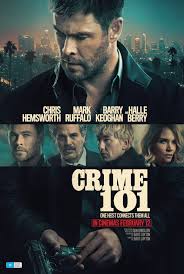
CRIME 101
US, 2026, 139 minutes, Colour.
Chris Hemsworth, Mark Ruffalo, Halle Berry, Barry Keoghan, Corey Hawkins, Monica Barbaro, Nick Nolte, Devon Bostick, Jennifer Jason Leigh, Taie Donovan.
Directed by Bart Layton.
The 101 of the title is actually the highway through Los Angeles. However, Crime 101 sounds like the title of the basic university course. And, those interested in high-class and well-planned heists are provided with what might be called plentiful tutorial material for their hoped-for careers. But ministers will sit back and enjoy it all.
Writer-director, Bart Layton, has adapted a novel by Daniel Winslow and has intended to make a big budget, strong cast, highly colourful Los Angeles drama. Which he does. Immediately we are introduced to Mike, Chris Hemsworth at his charming best, a gentleman thief, meticulous planning, no hurting anyone, but getting away with jewels. We get a glimpse of his patron, sounding more gravellyy-voice than ever, Nick Nolte.
Then we are introduced to the other key characters, Sharon, Halle Berry, 11 years with a high-class insurance firm, discussing with millionaires policies and planning for a society wedding; Mark Ruffalo as Lou, a veteran LA detective, dishevilled, expert profiling criminals but tending to be looked down on by the smarter professionals. Then, an entirely different character, Orman, Barry Keoghan (in so many films these years), a petty, very petty thug with some-confident violent attitudes, who has to follow Mike and report back on his plans – although he too sets up a rather messy bank robbery to build up his credibility.
There is something not quite right in the lives of each of the main characters and, gradually, they are brought together, Sharon and Lou through self-help and yoga classes, Mike and Sharon because he investigates her being passed over, humiliated at her company.
This is all moving towards a buildup for the heist in the luxury Beverly Wilshire hotel, the millionaire and his fiancee, a safe full of cash, jewelry, a security expert coming from Europe – and some substitutions, to catch a thief, an intrusion from the violence Orman.
Bart Layton achieves what he set out to do, nothing more, nothing less – a Los Angeles crime action adventure, heists, investigations, car chases, identity switches, and entertainment.
- The title, like a college course title, but along freeway 101?
- All film traditions of crime set in Los Angeles? The classic traditions? 21st-century version?
- The Los Angeles settings, the opening credits, upside down, angles, the city, the highways, the lights, buildings…? Atmosphere? The streets and the poor sections? The contrast with the Beverly Wilshire, luxury hotels, insurance offices, police precincts, jewelry shops, yoga classes…, The musical score?
- The background of the voice-over, self-improvement, the background from Mike, Sharon listening, the yoga classes, Lou present and learning, so it is and motivation for the characters?
- The morning, the characters getting up, Mike, person, dress, driving, the car and the man in the boot, the shop, the owner, the jewels, the couriers, the fakes, the real jewels of the ankle, the gun, the pursuit, the confrontation, the robbery, the career shooting and a drop of blood in the car for later detection? Letting the man out of the boot? Mike and his robberies, never injuring anyone? Chris Hemsworth, screen presence, the building of a character and personality? The mystery?
- Lou, status in the police force, old-style, theories, the network of authorities, looking down on him, work with his partner, his partner to bring with him, wanting to work with him? At the site of the various crimes? Lou and his theory, the 101? The man, eliminating various criteria and the remnant of crimes along the 101? Lou profiling the criminal? Lou, at home, his wife, intrusion, the later meeting, the anchor, his walking out, the apartment by the ocean? Going to yoga, the encounter with Charlotte?
- Sharon, insurance, see her in action, with Munro and mistaking his wife or girlfriend, the wealth, the discussions about the insurance, the forthcoming wedding? Her age, early years, the promise of promotion, following her off, the men on the staff, the new associate, Fabio, taking Sharon’s job, the achievement and praise, Sharon later telling her the truth in front of the executive? Sharon listening to the tapes, the yoga? Living alone, sleep and its limitations? Upset?
- Money, his age, and Nick Nolte character, raspy voice, the interview with Mike, controlling him? Mike and his rebellion? Wanting to keep his methods, get money, retire? Money and his son summoning All men, knowing Allman’s father, a different kind of criminal, tough, age, look, motorbike, following Mike, Mike observing him, removing the tracer on the car? Observing, Mike’s contact with the IT man, information about peoples access? All finally attacking him, brutally? The scene of the robbery in Santa Barbara, tough, the baby, the locked door, his anger, the victims, the robbery and his escape?
- Mike, the car crash, discussions with Meyer, the date, the discussions, with high class, the mystery of his background? His reticence? The affair, continued seeing each other?
- The information about Sharon, encountering her and was discussion about cars, at the Gallery, his arranging the meeting, his discussions with her, knowing all about her, her resentments, the standing for firm and integrity? The scenes of the office, passed over again, her contacting Mike, the explanation of the situation, the methods, the wedding, the insurance, the protection from Europe?
- The conscience, going to Lou, giving him the information, Lou and the setup outside the jewelry shop, the boy, the shooting, the cover up, his being sacked? The reaction?
- With, the plan, Mike and his taking the place of the security guard, the flight from Europe, the transition, Mike waiting, Lou taking the place of the guard, the conversation about Steve McQueen, bulletin chases, The Thomas Crown Affair and a gentleman thief?
- All in, getting the job at the hotel, getting the number of the room, preparing to ?
- The situation in the room, Mike, the emptying of the safe, the jewels, the gun? Lou pulling the gun, the confrontation, all in, the three games, the woman in fear, the shooting, the wording Munro, the death of Allman? The deals, Lou and his letting Mike go, his previous tracking down Mike’s family, the discussions with his mother?
- The aftermath, Mike and the car, leaving, sending the photo, Maher and the photo of the family? Lou giving the the jeweller diamonds to show? At the yoga?
- The gentleman thief, some integrity, writing background, the crime thriller, detection, the resolution?
Mickey 17
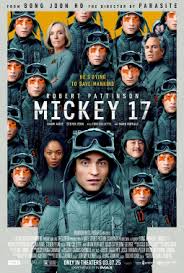
MICKEY 17
US, 2025, 137 minutes, Colour.
Robert Pattinson, Stephen Yeun, Mark Ruffalo, Tony Collette, Naomi Ackie, Patsy Ferran, Holliday Grainger, Daniel Henshell, Thomas Turgoose.
Directed by Bong Joon Ho.
There were high expectations for Mickey 17. Korean director, Bong Joon Ho, has had a prominent career since the 1990s, range of genre films including The Host, Mother, Snowpiercer and his Oscars, including best film, for Parasite. Here he is taken on an American story, and has treated it both seriously and satirically.
It is 2054, much of a muchness like the present in some ways, Mickey and his friend Tivo trying to raise money from a loan shark to start a business, failure, and the violent aggression of the loan shark. But, in this future, there is space exploration and the setting up of planets. There is also a great deal of scientific experimentation – including processes to create multiples of human beings, living, dying, and then being printed out again, identified with successive numbers. The morality of this process is being questioned.
Enter one of those evangelical church leaders, Kenneth Marshall, played with satiric zest and prominent teeth by Mark Ruffalo – aided and abetted by his smiling but domineering wife, played by Toni Collette. Marshall disapproves of the process but agrees that in some ways it could be useful, that the government should set up an expedition on a new planet, four a half years travel there, and set up a process for multiples, but only one at a time. And, with the succession of multiples, they are also described as “expendables”.
But we are also introduced to Mickey 17, Robert Pattinson enjoying his role. On the new planet, out scouting, he falls down a hole, is menaced by some strange creatures, wondering whether they are animals or aliens, not rescued by his colleague, but, saved, in fact by the creatures. Which gives him the opportunity to give a resume of his original life as Mickey Barnes, and the visual succession of all the numbers between one and 17. But, when he is presumed lost killed, Mickey 18 is printed out, Pattinson again, quite a different personality, tough, determined, rebellious…
And there is a range of characters on the planet, the scientists generally kowtowing to Marshall, young Dorothy being an exception and stepping in to help Mickey 17. Marshall has his sycophantic assistant, a yes-man, pandering to all Marshal’s exorcist whims, especially in organised religious television programs for the subservience staff on the planet. His wife is always there, but is experimenting with making sauces! In the meantime, there is an officer, Nasha (Naomie Acker) who is in a relationship with Mickey 17.
We can all this go? The capturing of one of the creatures and killing it, and holding a baby to ransom over a furnace. The two Mickeys confronting each other, Nasha and her coping with each of them, Tivo now involved in drug dealing and threats from the loan shark on earth.
There is a solution but, as with most of the film, not always predictable, always some surprises, some satire, some parody – especially with Kenneth Marshall and his final vanity in confronting the aliens.
The original book, by William Ashton, was published in 2022 and the film began production during the Biden era. But, released in the early days of the Trump era, many audiences will be making links! One reviewer noted that Bong Joon Ho was taking the Mickey out of the United States. Yes!
- Science fiction? Science fantasy? Political fantasy? Space exploration and development? Humanity issues? Moral issues? Philosophical issues?
- The career of the director, films in Korea, range, science fiction, Oscars for Parasite?
- The credibility of the plot, situation on Earth, 2054, ordinary life, Mickey and Vito and their plans, finance, the loan shark, the threats? But the political developments, scientific experimentation, production of multiple persons, moral issues, political? The intervention of Kenneth Marshall, support of his wife? His speech, the panel listening, agreement, setting up the centre on the planet? Moral issues, only one multiple?
- The visuals of the planet, wintry, the spring season, the centre, interiors, rooms, laboratories, meeting room, television programming? The musical score? Songs?
- The prologue, Mickey, the confrontation with the creatures, falling down, Vito and his taunts, no help? Setting up an atmosphere?
- Mickey, Robert Pattinson’s performance, as 17 and 18, his background on Earth, volunteering, is recounting the various stages of his life, further printing after deaths, the range of deaths, the range of personalities, situations, experimentation and testing? His relationship with Nash and her support? Mickey 17, in the snow, the story of his acceptance by the creatures, communication with them, the rescue? And discovering that Mickey 18 had been produced?
- Mickey 18, the different personality, strong minded, confrontational? Encountering 17, their interactions, the episode with Nash, the drugs, sexual encounters? The building up of tension? Especially towards Kenneth Marshall? The agent and her discovery of 17, the attraction, the confrontations with Nasha?
- Kenneth Marshall, the religious background, the church, his moral stances, vanity and position, relationship with his wife, her advice, domineering? His ambitions, the plan, the multiples, overcoming his moral scruples? His ambitions for success? His manner, his teeth, speech, presiding at meetings, his assistant as flattering him all the time, his interactions with the lab managers, their subservience to him? His wife, her manner, the cooking, the sources?
- The confrontation with the aliens, the taking of the baby, the shooting, one creature destroyed? The massing of the aliens, the leader? 17 and his ability to communicate? The work on the translation device? Dorothy, her work, personality, helping the Mickey’s?
- Marshall, his plan, discovering the two, the explosive device to destroy each of them? The flatterers, television, his going out, the speech before destroying them, his continued vanity? His wife waiting at the studio watching?
- The Mickey’s, the previous clashes, the fights, 17 to fall down into the furnace, saved? With Nasha? Her confrontation with Marshall? Strong-minded?
- The contact with the aliens, 17 and his communication, Marshall discovering this, the upset? The aliens and then manoeuvres, massing to conceal the leader, then dispersing, the confusion? The condition of the return of the baby threatened over the furnace? Nasha having to hold the baby’s rope in her mouth?
- The plan is to fire, Marshall unable to give his speech, the explosions, his death? The aliens, the return of the baby? Possibilities for peace?
- Six months later, Spring, the assembly, Mickey 18 sacrificing himself for the explosion, 17 and his presence, Nasha and her speech, the flashback and his memories during her speech, then his pressing of the detonator to destroy the multiples machine?
- The banning of multiples? The machine, Marshall’s wife, her reproducing her husband? She being a multiple?
- The tone of the film, comic and serious, satiric, some parodies, especially Marshall in the Trump era, but issues of science, humanity, ethics, philosophy?
Poor Things
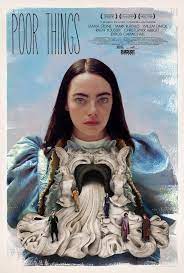
POOR THINGS
Ireland/US/UK, 2023, 140 minutes, Colour.
Emma Stone, Mark Ruffalo, Willem Dafoe, Ramy Youssef, Vicki Pepperdine, Hannah Schygulla, Jarrod Carmichael, Christopher Abbott, Kathryn Hunter, Margaret Qualley.
Directed by Yorgos Lanthimos.
It is safe to say that we have not seen the film like this before. We have watched the unusual films in the unusual career of writer-director, Yorgos Lanthimos, films like Dogtooth, Killing of a Sacred Deer, The Lobster, The Favourite. We have appreciated that he has a different kind of imagination, different stories and storytelling, and, with long experience of music videos, quite a talent for use of different lenses, angles, editing and pacing. Even so, we were not quite ready for Poor Things, but were alerted when it won the Golden Lion at Venice, 2023.
An attempt at a summary-content: an allegorical Odyssey of becoming human.
And the imagined setting, costumes, décor, manners, is 1895 (with a reference to The Importance of Being Earnest).
The initial image is somewhat overwhelming, a woman standing on a bridge, the camera looking up at her, and she falls to her death. But, the echoes of Mary Shelley and Frankenstein immediately come to mind, a strange scientist, Willem Dafoe at his best, with a deeply scarred reconstructed face, Dr Godwin Baxter, happy for people to refer to him as God. And, like Dr Frankenstein of the novel, he experiments to create life, the brain of the woman’s fetus inserted in her head. An different kind of Frankenstein-monster.
He calls his creation Bella. And she is played by Emma Stone, an extraordinary performance, with high demands made on her, dramatic, her having to move, in the adult body, from inarticulate infancy, to childhood and tantrums and uncontrolled behaviour, to learning vocabulary, to think, to move to an adolescent phase, discovering herself, her body, sensuality and sexuality, until she is well on the road to adult consciousness, absolutely devoted to God, her creator, but still wilful, not yet having a moral compass. The doctor has asked one of his students, Max (Ramy Youssef) to continually observe Below, take notes, have a record of her growth.
What will Bella’s place in life be? One obvious conclusion is that she should become engaged to Max who understands her so well. She is not averse to this. However, a foppish, self-centred lawyer Duncan Wedderburn, a surprising performance by Mark Ruffalo, comes to deal with contracts about Bella. He is attracted, seductive, she responding to the sensuality without understanding its consequences, without real emotion, deciding to go off on a trip to Lisbon, to Alexandria, a Mediterranean voyage, life in Paris. On the one hand, she enjoys it, a lot of sensuous “furious jumping”, he finding it hard to keep up with her, a gambler, and Bella, discovering the bodies of impoverished children, moved to tears and without any thought of consequences, taking all the money and giving it to charity (naïvely trusting worldly sailors).
On the voyage, the encounters a wise old woman, Martha (veteran Hannah Schygulla) and a cynical American, Harry (Jarrod Carmichael) who open her mind further, the world of philosophy, thought, books.
If this sounds intriguing, there is still a great deal more, Bella’s strange experience in Paris in a hotel-bordello, her return to England when God becomes unwell, the continued attentions of Max, and her actual husband identifying her, controlling her, and her having to make decisions, but with all kind of moral criteria that she has acquired.
Poor Things sounds a simple title but this is an intriguingly complex film, not quite like anything we have seen before.
- The title, the character who could not even say the word “poor”?
- The film as an allegory of human nature, instinct, intelligence, affections, moral choices? The human Odyssey?
- The unique impact of the film, derived from the novel, interpreted by the dialogue and silences, the visual, black-and-white photography, bright colour, the range of lenses and angles, the period, costumes and decor, the aural music and sound background? Pace?
- The prologue, Victoria, the angle, standing on the bridge, the clothes, falling into the water? Godwin Baxter, her survival, Mrs Pim as his assistant, the surgery, the brain of the fetus, inserted into Victoria’s body? The overtones of the Frankenstein story? Dr Frankenstein, his name Godwin, nicknamed God?
- The “monster”, Bella, as the fetus in her mother, her brain taken out, a child in an adult body, initial articulation, infant behaviour, tantrums, smashing things, moods, food, impulsive, the awkward walk, the issue of discipline? Her brain becoming more mature, yet still a child’s, the issue of sensuality and sexuality?
- Godwin, his scarred face, reconstructed? His continued references to his father and cruelty? His scientific stances, strict, no emotions, Mrs Pim, the experiments? Yet the production of Bella, his becoming attached, no children of his own, a creator-father, God, his providence guiding Bella?
- The lectures, the atmosphere of the 1890s, the doctors, surgeons, the classes, demonstrations, the fops in the class and their arrogance? The reference to The Importance of Being Earnest, 1895? The period, atmosphere?
- Max, for student, devoted to Baxter, defending him against the fops, his being ridiculed? His being employed, taking the notes, diligent, proper in the Victorian way, challenged, Bella’s childish behaviour, his prudish response, spontaneous responses?
- Bella, her brain growing older, reading, opinions, venturesome, going to the roof? Sharing the views with Max? Her relationship with Max, his notes and continued observations?
- Duncan Wedderburn, the lawyer, the interview with Baxter, the legal issues, paternity and family, Duncan as foppish? Curiosity about Bella, the growing infatuation, his foppish behaviour, his pursuing her, his awkwardness and blunders?
- Bella, her brain more adult, the issue of betrothal, Max and his being willing, but his personal cautions? The contrast with the encounter with Duncan, the sensual, the appetites, the act of the furious jumping? Sharing the experiences, their affect?
- The decision to travel with Duncan, Max and his reactions, Baxter and his reactions, thinking it temporary? Going to Lisbon, the experiences, sexuality, the city and its visuals, futuristic? Duncan and his ups and downs, his attitudes towards Bella, behaviour?
- The music, Bella wanting to dance, going onto the floor, the crowds, who awkward motions, Duncan going to dance with her?
- Going to Alexandria, the various encounters, Bella and her wandering, curiosity, her drinking, the effect, Duncan and his behaviour, the ups and downs of the relationship?
- The decision to travel by boat, the effect, the antagonism, the encounter with Martha, her age, experience, encouragement, sharing the books, Bella reading Thoreau, Duncan throwing the book and the water, advanced understandings, Harry and his cynicism, the discussions of philosophy? The effect of these two, the serious discussions with Harry? The contrast with Duncan, his gambling, the irony of his winning so much money, Bella and her seeing the bodies of the babies, taking all the money, giving it away – and the greedy sailors taking the money? The consequences for Duncan, his rage, upset, treatment, put ashore?
- Bella, going to Paris, surviving by herself, using her wits, going to the hotel, meeting the Madame, the explanation of the financial situation of the brothel, her not having any shame, presuppositions, the explanation of the sex, the money, the encounters with the various men, brutal behaviour, her becoming part of the business, the discussions with the Madame, with the other prostitute, the friendship, the lesbian experience? Duncan, arrival, his horror at Bella’s sexual behaviour?
- Bella sending the cards, the writing and their sketching? God and his decline in health, Max with him, urging Bella’s return? The effect of coming back, Mrs Pim, more sophisticated Bella, her judgements? Duncan, and his wanting her?
- The second experiment, the young woman, repeating the experiences of Bella?
- Bella being recognised as Victoria during the travels, the appearance of her husband, his claims, going to his house, her experience of the relationship, his own behaviour, lifestyle, military, abusive, imprisoning her?
- The buildup to an ending, the punishment for the husband, the animal brain?
- Happy ending, Bella and her achievement, Godwin, Max and the marriage, happy ever after – or?
- And everything in the perspective of irony and black comedy?
