Displaying items by tag: Peter Malone's Movie Reviews
Bugonia
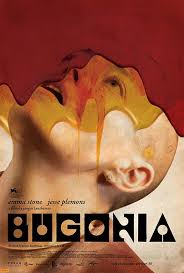
BUGONIA
US/Greece, 2025, 118 minutes, Colour.
Emma Stone, Jesse Plemons, Aidan Deblis, Stavros Halkias, Alicia Silverstone.
Directed by Yorgos Lanthimos.
The film doesn’t exactly explain the meaning of the title, though it gives some visual hints in its focus on bees. Bugonia refers to an ancient Greek and Roman belief that bees could spontaneously generate freshly life from the carcass of a young bull or cow.
The screenwriter, Will Tracy (touches of the bizarre with The Menu, The Regime) offers his comment: I think also, we just liked the ambiguity of the title as well. It kinda sounds like an insect, kinda sounds like a flower, kinda sounds alien, but also sounds like a place, maybe, that could be on Earth. It might also sound like an illness that someone might have. So, I think the non-specificity of it was also kind of attractive.
And it does start with a close-up of flowers, bees, and two cousins working the hives. And where it goes from there is quite unpredictable!
We are introduced to Teddy, conspiracy theorist par excellence, a striking performance from Jesse Plemons, straggly-looking and dressed, demanding the collaboration of his cousin (Aidan Deblis), setting up in his farmhouse basement quite an extraordinary IT communications centre – all in the aid of kidnapping and interrogating the CEO of a pharmaceutical company (Michelle), convinced that she is an alien, wanting her to admit it, torturing her for the confession, motivated by the illness of his mother and the use of experimental drugs to heal her.
Teddy also works during the day in the very ordinary role of packaging pharmaceuticals to be sent out to customers. He also has an old friend who is now in the police force, unfortunately trying to ingratiate himself in Teddy’s favour at quite the wrong time.
And, of course, there is Emma Stone who has had striking roles and an Oscar-winning performance working in Lanthimos’ films. She is an assured businesswoman, trying shrewdly to influence Teddy, but more skilful in her dealings with him, admitting, finally, as he wants, that she is an alien, subservient to her Emperor, to make contact with him in three days when there will be a lunar eclipse. Definitely the world of conspiracy theorists.
So, the main drama is in the interactions between Teddy and Michelle, his desperate rush to his mother’s bedside hoping for a cure, the sudden suspicion for the audience that Michelle is so convincing she could be an alien.
The film is based on a Korean film, How to Save the Planet, incorporating its critique of what humans are doing to the world, step by step towards its destruction, and opening up quite an extraordinary explanation of evolution as well as a different perspective on an apocalyptic future, and whether the world might end with a bang or, as T.S.Elliot suggested, with the equivalent of a whimper.
As with his other films, the director offers us strange combinations of the real and the absurd, and one extraordinary shock where the audience might find that, literally, the jaw drops (as it did for this reviewer).
There is a appointment irony with the use of the final song, Where have all the flowers gone…? And the haunting refrain into the credits, When will they ever learn, and the music then stops.
- The explanations for the title? Flowers, bees, a town, a planet…?
- The adaptation of a Korean film and its message about saving the planet? With some melodramatic, absurdist, takes on the theme?
- The work of the director, ironies, his working with the stars in other films? This achievement? The visual style, the pounding score, the use of songs?
- The opening, flowers, pollen and nectar, Teddy and Don going to work with the bees? The later discussion about bees, apiaries, construction and destruction? New life from rotting flesh?
- The portrait of Teddy, Jesse Plemons’ performance, age, look, clothes, cycling to work, at the headquarters, the parcels, the conversations? The revelation about the story of his mother, the experiments, in hospital, the failure of the experiment, his visit to his mother, thinking that he was healing her, her death? The impact, his desperately not wanting Michelle to name his mother? His angers?
- Teddy and his relationship with Don, Don and the actor on the spectrum, the performance, believing Teddy, trying to raise questions, put down, the capture of Michelle, on guard, with the rifle? The discussions with Michelle, her playing on his psychology, his wanting to escape – and the suddenness of his shooting himself?
- Teddy, conspiracy theories, his science, construction of his centre, his belief in aliens, that Michelle was an alien, out to destroy the humans? Working for her, his mother and the hospital, abducting her?
- Michelle, and Emma Stone’s performance, CEO, at home, exercise, medication and the contrast with Teddy and his tablets? Her lifestyle, manner, with her staff? Abducted?
- In the cellar, her head shaved because have provided for communications, the lotion, bound, over the period, the discussions, the interrogation, getting her to admit that she was an alien, different attempts, recorded, played back, and finally deciding to play along with Teddy, the explanations, the Emperor, the whole background of evolution over the millennia, human evolution, failures, the possibility of saving humanity, the Emperor beginning to think humanity was not worth saving?
- The screenplay, the audience not thinking that Michelle was an alien, but in her discussions, the screenplay even making the audience wonder whether she really was an alien?
- Casey, police, babysitting Teddy, wanting friendship, coming to the house, coming in, suspicions, the discussions about the abduction, going out to the fields, Teddy killing him?
- The buildup to the climax, Teddy and his desperation, cycling to the hospital and back, filling his mother with the antifreeze? His power over Michelle, her leading him on, the promise that he would meet the Emperor, going to headquarters, her injuries and limping, the wig, greeting people, his having the rifle, accompanying her?
- Her explanation of the closet, the entry to the portal? His believing her, wanting to go? The explosives? Her shrewdness, his going into the closet, her looking in, the explosion?
- The fact that Michelle was an alien, going to the Emperor, the alien creatures, their appearances, clothing, the final judgement against humanity?
- The collage of all the deaths, human life suddenly stopping wherever they were, the pathos of the world ending so quietly? And the animals surviving? Where have all the flowers gone? When will they ever learn?
Alma & Oskar

ALMA & OSKAR
Austria, 2022, 88 minutes, Colour.
Emily Cox, Valentin Posatimayr, Tatiana Pauhofova, Anton von Lucke, Mehmet Atesci, Marcello De Nardo.
Directed by Dieter Berner.
Alma was the wife and then the widow of genius music conductor and composer, Gustav Mahler. There are some scenes between the two, in the US, preparing for performances, her comments, their interactions, his self preoccupation, her concern about her own life in society. And he dies.
With her society background, Alma moves in cultured circles, with artists, with architect Walter Gropius, with conductor Bruno Walter, with agents, her American confidante… The film recreates all this atmosphere, focusing on the quite will for Alma and her life, relationship with her daughter, partners in companionship’s.
But, as the focus of the title suggests, it is the temperamental connection with the fastest, Oscar, with whom she has a relationship, tempestuous, in the meantime having a relationship also with Gropius and organising were no water to conduct performances of Mahler Symphony.
And Oskar is an extraordinarily eccentric character, poet, dramatist, painter, intense. The relationship with Alma has significant ups and downs, temperamental interchanges. However, towards the end of the film, Oskar’s involvement in service in World War I and his experiences presenting them in a more human and humane way.
And, they both lived for a long time, Alma until the 1950s and Oskar into his 80s.
In many ways, this film is a curiosity piece.
- Audience awareness of Gustav Mahler, his career, musical genius? His marriage to Alma, their daughter? Her ambitions, relationships, challenge to Marlow, his death? Her other relationships, with Walter Gropius, with Oskar Kokoschka?
- The period setting, 1911, New York City, music and concerts? The Berlin setting is with Walter Gropius? The Vienna settings, with Oskar, with the Crown Prince, concerts, art exhibitions? Austrian society? The outbreak of the war, war sequences, hospitals?
- The musical score, the music of Mahler, Alma and her compositions? Her piano performances, Debussy…?
- Period, costumes and decor, prewar, lavish, society? Homes and studios, concert halls? Hospitals? Nursing staff?
- The portrait of Alma, age 31, the affair with Gropius, Mahler preoccupied with his music, Gropius’s letter and Mahler reading it, upset, Alma and her accusations, his preoccupations? Their daughter? Her talk of divorce? His death, and this death mask, the encounter with Oskar, strange and eerie?
- Alma and Mahler’s death, the Ninth Symphony, her presence of rehearsals, her skill, advice in conducting, noting the performance, with the Crown Prince, seeking out Bruno Walter, the rehearsals, the final performance, Oskar and the kimono and his entrance, the aftermath, being excluded from the Crown Prince’s party?
- Oskar and his paintings, the performance of his play, men and women, heroics, the performance, the bodies, the dancing, the branding and the police raid? Alma and her intrigue, posing, his portraits, her absence and the substitute and his destroying the painting that paid for, the painting of them together? The final wall painting, Ride in the Wind? Character, obsessive, intensity of passion, the sexual relationship, the swim, Alma’s response? Her absences, his disillusionment, going to confront her, with Gropius and his mother, going to the war, his injuries, in the hospital, his commissioning the doll modelled on Alma? The performance of his play, Alma’s presence, seeing the doll and leaving? The information that they corresponded until her death, his dying in 1980?
- Alma, passionate, erratic, ambitious, the relationship with Mahler, preserving his memory, who work for his Ninth Symphony, the relationship with Gropius, living with him, his mother? His theories about men and space and creativity, contrast with women? Marriage, divorce? Her relationship with Oskar, passionate, her controlling, the sexual encounters, the paintings? Her friendship with Liesel, Liesel and her financial support, ever present? Her abandoning Oskar? Her subsequent history, marriage to Franz Wergel, her death in 1964?
- Liesel, America, financial support, her sexual orientation, friendship, always present, with Bruno Walter, Gropius, the performances? The symbolic walk along the beach with Alma?
- The music world, conductors, Alma instructing the conductor and conducting the orchestra, seeking out Bruno Walter, working with him, discussing the performance? The achievement?
- Oskar, his agent, the meetings in the bar, the commissions, his visiting during the war? Encouraging his work?
- World War I, the end of the 19th century, the beginning of a new century, art and experimentation, music?
Hooked
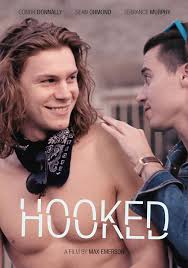
HOOKED
US, 2017, 92 minutes, Colour.
Conor Donnally, Sean Ormond, Terrance Murphy, Jared Sandler, Katie McClellan, Steve Hayes.
Directed by Max Emerson.
This is a gay-themed blend of comedy and serious drama. The central character is Jack, late teens, continually in touch with his mother by phone, but a hustler in New York City, boarding at a refuge, a partnership with a young man, Sean, who is sorting himself out as regards family and as regards his sexuality.
Conor Donnally is persuasive as Jack, sympathetic, but also sometimes the victim of his clients, especially at the beginning and, quite a deadly, literally, confrontation at the end. He has a sense of humour. He is cheeky, not afraid to taunt those he comes in contact with.
The main character he encounters is wealthy businessman, Ken (Terrance Murphy) who is seen buying some new clothes, is squirted with ketchup and mustard as Jack and Sean go on a mischievous spraying spree. It emerges that he is married, tension with his wife, but devoted to his baby son. He has or had problems as regards his sexual orientation and behaviour since he was young – there is a significant sequence in a park, talking to his priest friend who is supervising a group of youngsters playing, but who gives a listening ear, tries to be encouraging, positive, assuring Ken that he can make something of his marriage and overcome his gay proclivities.
Ken makes contact with Jack, a certain amount of tensions from the suspicious Jack, accompanies Ken to his comfortable condominium in Miami, is persuaded to inhale cocaine, go to clubs, some intimacy between them, Jack saying that he does not want to take money for this encounter. Rather, he urges Ken to pay for Sean’s fare to Miami and support them.
There are quite a number of sequences between Ken and his wife, her hardened attitudes towards him, hearing him on the phone, deciding to come to Miami and serve him divorce papers.
Things come to a dramatic head when Jack leaves Ken, out on his own, participates in a porn film, agrees to take on a client who is quite deranged – and some timing with Ken anxious about the divorce, going to the airport to meet Sean, worry about a phone call that Jack makes, Jack having a gun, a fight between the client and Jack, Sean actually shooting the client. Jack then suggests that he take the gun, fires it into the wall, phones the police and takes responsibility for the shooting.
The film leaves the audience to wonder where Jack’s life is leading him, the effect of these experiences, his relationship with Sean, and the role of Ken.
The impact of the film is stronger than might have been anticipated.
Monster Pies
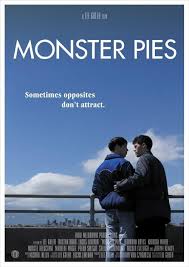
MONSTER PIES
Australia, 2013, 85 minutes, Colour.
Tristan Barr, Lucas Linehan, Rohana Hannah Hayes, Katrina Maree, Nicola Everleigh, Shane MacDonough, Petra Salsjo, James Liotta.
Directed by Lee Galea.
Googling AI indicates that the title "Monster Pies" refers to the scene in the film's opening where two brothers make "monster pies," which was a real-life activity of the director and his twin brother when they were children. The director chose this unique title to avoid a more generic-sounding name and to create a memorable title that was more specific to the film's personal origins.
This is a very sympathetic story of two 17 year olds at high school. It is the story of Mike, Tristan Barr, conscious that he is gay, in fact the recipient of barbs from fellow students, faggott. There is a sadness in his life that his twin brother died in a car accident, fiddling with the car door and falling out. His father, sympathetic and visiting him sometimes, has left home. Mike lives with his working mother.
He is often late for school, his teaching sending him out to get a late pass. And he works in a video store, some comic moments with a customer who comes every week asking for the same film which the store does not have. But, more seriously, a young woman, attracted by Mike, asking for advice, eventually kissing him and then accusing him of kissing her and his losing his job.
The new boy comes to the school, William, Will, a strong and sympathetic performance from Lucas Linehan. He has to sit next to Mike in class, sharing the copy of Romeo and Juliet, then participating in a project for the class for a creative interpretation of Shakespeare’s play. In fact, they begin to bond, Will being a photographer and the making and planning a film where Romeo and Juliet are Frankenstein and Wolfman, Will having a mask, Mike playing Frankenstein. The film shows them planning, filming, the footage – which will play some significance of the end of the film.
Mike relates well to a girl in class, Jenine, but she becomes aloof seeing him relate to Will, issues about who will invite him to the school dance, her reacting to Mike and Will in a huff at the dance – and Will turning up, and the two dancing together behind the curtain after a humorous dance performance by the staff. They are seen by the teacher who is sympathetic.
The complication is that Will’s mother has experienced brain damage and is in institution, his visiting her frequently, his alcoholic father resenting him and the situation, harsh at home, but a friendly Down Syndrome girl at the centre. And Will’s gift of a music box, a ballerina and Lara’s theme from Doctor Zhivago, his mother treasuring it.
The film is very persuasive, the writer-director drawing on his own experience, in the genuineness and authenticity of the love between the two boys, the screenplay and the performances and the direction making it very credible – significant for gay teenagers watching the film, for parents and teachers and understanding.
But, there are tragic implications, Mike’s mother discovering the videos and angrily phoning Will’s father to keep his son away. Which means exposure, hurt, and a tragic decision by Will. And the film ending with the sympathetic teacher showing Mike the video that Will submitted, which includes the discussions about the making of the film, the two monsters kissing, and, at the end, the genuine kiss.
But Mike also visits Will’s mother, encounters the Down Syndrome friend, and plays the music box. He also explains himself to his father who is understanding and sympathetic.
Mike watches the video, brings it back into the classroom after going out to the yard and weeping, putting it in the projector, some static… And the film ends. Will he show it to the class and confidently come out?
Spinal Tap: The End Continues
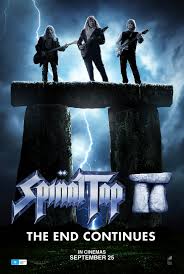
SPINAL TAP: THE END CONTINUES
US, 2025, 83 minutes, Colour.
Rob Reiner, Harry Shearer, Christopher Guest, Michael McKean, Kerry Godliman, Valerie Franco, CJ Vanstone, Jean Cromie Schmit, Garth Brooks, Tricia Yearwood, June Chadwick, Fran Drescher, Griffin Matthews, Elton John, Paul McCartney, David Furnish, Chad Smith.
Directed by Rob Reiner.
From the 1984 review of the original – the same for this sequel which indicates that the sequel is very much in the spirit of 40 years ago, a great deal of repetition but enjoyably so, especially for the fans over the decades and, hopefully, a happy surprise for newcomers.
“This is Spinal Tap is described as a rockumentary. It is an entertaining satire on the world of rock and roll, the false glamour, the gigs, the personalities, management, promotion. It has some comments on the stars, their way of life, the groupies, the effect of popularity on temporary celebrities.
The film was devised by Rob Reiner (son of Carl Reiner, from All in the Family etc.) and the costars, friends Christopher Guest and Michael McKean. There is a lot of improvisory comedy - which generally works. Particularly effective is American stars portraying English pop stars as they were in the '60s and '70s as well as in the '80s. Reiner acts the part of the trendy director of a trendy film. Parodying such movies as Martin Scorsese's The Last Waltz with its portrait of The Band, the film uses all kinds of television methods, interviews, live action, the backstage drama etc. The methods of making the film are clever and an effective part of the parody.
The film has become something of a cult film.
We are told that the group had been touring to 2015. Then there had been some falling out. But, through a contract with their now deceased manager, his daughter has the rights for a final concert. Director Rob Reiner reappears as the fictitious director, enjoyably tracking down his friends, now in England, discovering their past story and their relationships, and persuading them to regroup. Christopher Guest, Michael McKean and Harry Shearer are now in their mid to late 70s! But, donning the wigs and the clothes, the accents, playing their music with skill, they are back again.
So, enjoyable back stories, the gathering in New Orleans, the preparation for the concert, bickering at the rehearsals yet playing quite a number of their songs, quite extensive as we see during the final credits, a collage of trying to find a drummer and getting a very exhausting and exhaustive Valerie Franco entering into the spirit of the things.
And a bonus is a visit from Paul McCartney and his singing with them, and a visit from Elton John with David Furnish photographing, and Elton John singing in the final concert and experiencing the huge disaster when a reproduction of Stonehenge collapses on everyone!
Fans will appreciate the re-acquaintance and be delighted that they have not changed. And there is the enthusiastic fan atmosphere, especially at the final concert. And, again, the music, skilful instrumental performances, the lyrics.
But, for this reviewer, there was a continued delight in the verbal humour, quips, wisecracks, puns, plenty throughout the film, not dwelt upon, just throwing them out for our enjoyment. Some examples – a concert for The Night of the Assisted-Living Dead, not hearing the truth because of the sound of the mind shutting down… And even the title suggesting that the end continues!
- The popularity of the original film, music, bands, the 1980s in the previous decades? Spoof and satire? The characters, performances, parody?
- More of the same, 40 years later, the situation, the separation of the group after the performances? Marty, the director, his narration, the plans, to reunite the group, his going in search of each? Nigel and he is presence in England, his partner, cheese and guitars, the rate of exchange!? David, resenting Nigel, composing music, prime pod casts, holding music for phones? Derek, glue?
- The manager, dying, his daughter in heritage, her plans for a final concert, collaborating with Marty? The reuniting of the group, their distinctive personalities, interactions, the music together, lyrics, songs, arguments, arrangements?
- The music sequences, enjoyable, the creativity, the performances, yet the squabbles? The background of musicians, the videos, using the music, characters from the past, managers, interviews?
- All McCartney and his visit, the critique, singing? Elton John and David furnish, their presence, singing together, Elton John on stage – and the finale, the crash, hospital?
- The search for the drummer, the auditions, Dede Crockett and her energetic performance, Caucasian Jerry and his playing?
- The presence of Simon, collaborating with the daughter, the discussions, his lack of music sense and appreciation, his comments, interference, group irritated by him, the audience irritated by him – and the play of his name and the similarity to celebrity, Simon Cowell?
- New Orleans, the rehearsals, preparing the venue? The Stonehenge stage?
- Rehearsals, resolutions, the range of the songs, Hell to Pay – Hello Toupee, the night, going on stage, the performance, Dede and the movement of the Stonehenge Arce, Elton John, the plane, the fans and enthusiasm, the collapse, the injuries? The aftermath, hospital?
- And the verbal humour throughout, the wisecracks, the ironic commentary, the puns…?
Happyend

HAPPYEND
Japan, 2024, 113 minutes, Colour.
Yukito Hidaka, Hyato Kurihara, Shira Sano, Makiko Watanabe.
Directed by Neo Sora.
In the middle of Happyend, a high school student asks, with some astonishment, a fellow student, intense in her reading and studies, “you read books on paper?”. Although this Japanese film is set in the near future, this is a question for many of the younger generation today, a context for appreciating this drama.
This is a multi-award and nominated film from Japan. It was written and directed by Neo Sora, writer, director, cinematographer. In fact, he is the son of one of Japan’s most celebrated 20th-century composers, Ryûichi Sakamoto, and directed his father in his last days of terminal illness, a portrait as well as piano performance. (And there is quite a range of music here, piano, electro, quite a compliment – and, in fact, silence during an earthquake.)
The film made a strong impression on the Japanese audience. Audiences outside Japan will be challenged.
On the one hand, the straightforward theme of the film is the transition from adolescence to early adulthood, the ending of high school, the re-assessing of friendships, long time friendships, facing the prospects for the future. The focus is on a group of five friends from a prestigious school, seen trying to con their way into a nightclub, refused because under age, their intense love of electro music, their hopes for composition, two, the central friends, Kou and Yuta, actually getting in – but then the police raid.
As the film progresses, the bonds between the five friends are shown to be strong but also tested. They play an extreme prank, appending the school principal’s prized car, standing in vertical like a monument. Scenes of confrontations with the authorities. Accusations of “terrorism”.
But, for 21st-century audiences, there are very strong issues concerning the authorities, the movement worldwide in the 2020s of protests, demonstrations, tough tactics from politicians, harshness from the police, the invasions by technology on personal privacy. (The film was released in 2024 but by mid 2025 in the world watching the authoritarianism, fascist-like deprivation of personal rights in Donald Trump’s US, National Guard into the main American cities, masked ICE officials grabbing and deporting “illegals”, the clamping down on free speech… This film has suddenly become more contemporary.)
The focus is on the school and the students, suspicions of Japanese descended from migrants from other countries (here examples from Korea, Taiwan, African-American US). Police suspicions and interrogations, targeting in the streets, but also the establishment school of high-tech surveillance cameras, identifying individuals, photographing them, having them on record for further investigations.
And there are the arguments for and against, the fear attitudes of politicians (using the rationale of an anticipated devastating earthquake and dealing with it), school principals and apprehensive must about student terrorism…
Which means then that the theme of “coming-of-age”, significant as it is, especially in the final scenes where the two friends have to reassess the nature of their friendship since they were little boys and what it will mean for the future, one literally reaching out to the other, is experienced in this context of people living with suspicion and fears.
- The title and expectations? Light tone? Serious film?
- The work of the writer-director? Japanese background, American education background? Age? Music, the influence of his father, his film about his father? The range of music in the film, so much electro, at the clubs, with the young students, piano, orchestral, the silence during the earthquake?
- The Japanese setting, the near future? Tokyo, the city, the nightclub and its atmosphere and the police raid, the roof and the school, the classrooms and corridors, Kou and the restaurant, Yuta and his family? The background of the other students?
- The focus on music, the students want to get into the club, under age, the two using the back door, carrying the boxes? Wrapped with the music? The musician giving them the music? The police raid? The escape?
- The characters of the five friends, Q and his Korean background for several generations, the African-American-Japanese, the girl from Taiwan? The later issues of migration, descendants, suspicions in Japan? On the roof, the back stories, their studies, friendship, the two young men knowing each other since children, one serious, the other carefree?
- The principal of the school, his friend, the car, pride with the car? The prank of the students, taking the car, vertical, like a sculpture, the reaction of the principal? Asking for the truth, student reticence? The reaction of the principal, deeming the prank as terrorism? Interrogations, meetings?
- The reaction of the students, in the classroom, the serious student, her protest attitude, reading books? Her interventions?
- The background of the impending earthquake, the earthquake happening, not so much damage, anticipation of the further earthquake?
- The politicians, the discussions about security, readiness for the earthquake, the role of the police, the picture of the police, targeting students, interrogations, documents, taking them away? The growing severity of police action?
- The issues of privacy, surveillance, the installing of the cameras, the detailed photos of each student, the date, for further recognition, accusations? Questions about carrying documents? Police raids, the nightclub, with the students?
- The buildup to the graduation, the students approaching the principal, the city in, the long hours, the issue of food, the offer by the principal, the others coming to the door, eating? The stances of the students, the spokespersons, the demands? Justified?
- The reaction of the families of the young students, the young woman and her background, Taiwanese? The flamboyant young man, clothes, wearing the skirt? Cool and the background at the restaurant, prospects? His love of music? uta and his mother, the bag, hitting him in the street?
- The graduations, the consequences, the audience, the speeches?
- The future, Kou and Yuta, Kou and his serious attitude, reassessing his friendship, Yuta and his disappointment? The long take, its being held, the two separating, but Yuta holding out his hand, the outreach to Kou, the response? The possibilities for future mutual understanding – and a happy end? (But not for society with further impending harsh policing and surveillance?)
After the Hunt
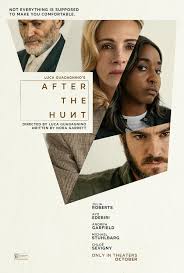
AFTER THE HUNT
US/Italy, 2025, 138 minutes, Colour.
Julia Roberts, Ayo Edebiri, Andrew Garfield, Michael Stuhlbarg, Chloe Sevigny.
Directed by Luca Guadagnino.
We can puzzle about the title. And the nature of the hunt. And the aftermath.
There are several senses and themes, honesty, integrity, issues of sexual assault in the aftermath of the #Me Too movement. And, for the aftermath, there is a very long, still scene, silent, at the end of the film, giving the audience time to think, perhaps to adjust judgements. And, there is an aftermath postscript, five years later.
To appreciate After the Hunt, it is important to ask who the target audience for the film actually is. It is certainly not the general audience looking for entertainment. Most would be bored, sometimes baffled, especially with the discussions and vocabulary – even when spoken by such a star as the popular Julia Roberts. After all, this is a drama set at the Ivy League university range of Yale. In the background is professional eagerness to achieve tenure and the academic and personal perils of losing it. There are tutorials that sound recondite and abstruse, theses on theories in the abstract.
And the cast of characters is strongly in this vein, difficult to like, let alone identify with even in a crisis of accusations of sexual assault which, if not true this time, probably true at another time, a focus on the presumptuous male. Then the victim, young, from a highly privileged generation, very self-conscious, drawing conclusions from the fact that she is black, queer, her parents huge donors to Yale, the staff feeling obliged to promote her, issues of genuine study and accusations of plagiarism. She is played by Ayo Edebiri (from television’s The Bear). The accused is a lecturer, also seeking tenure, played by Andrew Garfield.
In fact, at the centre is Alma, Julia Roberts’ character, a tough surface, brittle manner, intellectual, complex emotions in the present situation, confidante of the accuser, but also going back into her past memories and crises. Her husband is a psychoanalyst, played by Michael Stuhlbarg, provides an anchor for the audience, loving support of his wife but also critical and prone to act out this criticism, like playing booming music to upset her as she wakes each morning, or interrupting her during a serious conversation.
So, the faculty and discussions, board meetings, the student counsellor (Chloe Sevigny) and issues of confidentiality. Luca Guadagnino has directed challenging issues in films for 20 years, best known for Call Me by Your Name and Challengers. There is definitely emotional complexity (especially the revelation of hidden secrets and guilt) but couched in cerebral interchanges and arguments.
When the film was screened at the Venice film Festival, there were 50% love responses, 50% haste responses… And there is like and dislike 50% each way for this reviewer.
- The title? The actual hunt? The aftermath?
- The Yale setting, the reputation of Yale, the Ivy League, wealthy students, wealthy donors, board and management, the philosophy faculty? University sequences, home sequences, street and restaurants…? The range of the musical score? Pounding, quiet, background?
- Target audience, not the popular audience, the philosophy faculty, the philosophical discussions and issues, language and vocabulary, the tutorials and the discussions? Abstract?
- The introduction to the main cast, the University, the tutorials, Alma and the students, the discussions, their personalities? Maggie and her presence? The party, Alma and Frederic getting ready, their guests, Hank, Maggie? The immediate impressions of each, Alma, her age, Julia Roberts, more brittle personality, emotions and control? The issue of tenure? Hank, personality, lecturing, the issue of tenure? Maggie, her age, black, queer, her parents and donations, her thesis, praise, the underlying issue of plagiarism? Frederick, the host, his relationship with his wife, psychoanalysis, contribution to the discussions?
- The aftermath, Hank and drinking, escorting Maggie? Maggie approaching Alma, the accusation? Maggie’s reaction? Her relationship to Hank, memories of the past, his reputation with women? Her reaction to Maggie, the issue of plagiarism? The effect on Alma? Her relationship with Frederick, his support, the loud music in the morning, the issue of inviting Maggie to dinner? Her delay, Frederick and his reaction, Alma and Maggie talking, the loud music, his coming in and out?
- The authorities, the faculty, the discussions, with Alma, the Counsellor doctor, her presence, discussions with Alma, confidentiality? The like and dislike between them? Ultimate decisions? Hank, the issue of tenure, his being fired after the accusations? Alma and the tenuous situation?
- Alma, the discussions with Frederick, the revelation about her past, the seduction, her cooperation, age 15, the man, her devotion, the break, her accusation, his suicide? The consequences for her, immediate, over the decades?
- The encounter with Hank, his plea, the attraction, the kiss, her rejection?
- Maggie, her background, her family, the thesis, the plagiarism, sense of privilege, the issue being queer, her partner and explanations, being black? Her determination, the accusations, the case?
- Alma and the later tutorial, the students, the abuse, her responses, the silent student?
- Audience identifying or not with the characters, the issues? Judgement on Hank, judgement on Maggie? Alma and Frederic, the discussion – and the very long take, allowing the audience time to consider?
- Five years later, Maggie, still at the University, the meeting with Maggie, the discussions, Maggie and her career, her attitudes towards Alma, letting retribution go, not quite reconciliation? Alma and Frederic together? The future?
House of Dynamite, A
A HOUSE OF DYNAMITE
US, 2025, 119 minutes, Colour.
Idris Elba, Rebecca Ferguson, Gabriel Basso, Jared Harris, Tracy Letts, Anthony Ramos, Moses Ingram, Jonah Hauer-King, Greta Lee, Jason Clarke.
Directed by Kathryn Bigelow.
Highly explosive.
And, it is beyond highly explosive when there is a threat of nuclear destruction. And this is what A House of Dynamite dramatises, immersing the audience in the crisis, and asking the audience to decide what they would do, what decision they would make, in this world-grave situation.
Over the decades there have been quite a number of films about the nuclear threat. Several notable films emerged after the Russian-US confrontation in October 1962, the missiles of October. And the issue is dramatised in the many films and miniseries about JF Kennedy, especially 13 Days. In 1963-1964, there were Failsafe, Seven Days in May and the frighteningly satiric Dr Strangelove or; How I Learned to Stop Worrying and to Love The Bomb. There were a number of films in the early 80s in the same vein, Testament, The Day After.
But, here we are in the mid-2020s, Russian invasion of Ukraine, tensions with China, conflicts on the India-Pakistan border, Israel, Gaza and the Middle East, the bombing of Tehran…
This is an intense film, directed by Kathryn Bigelow who won an Oscar for her immersion in war, The Hurt Locker, then went on to the search for Osama bin Laden, Zero Dark Thirty. She brings the same tension to this film, giving a hypothetical scenario, the launching of a nuclear missile by an unknown attacker, threatening an American city, attempts to neutralise it, failures, a small window of time to ward off the attack, to make international contacts, diplomacy, the issue finally coming down to the decision of the American President.
The way that the drama heightens audience attention and anxiety is to introduce us to the wide range of officials in war departments, the White House, command posts in Alaska, crisis management groups in American cities, press briefings in Washington. Very quickly, the audience is introduced to, gets to know, sees in action, a wide range of experts, the pressure on them, intel coming in, changes in information, personal pressures, the demand for quick thinking, prudence, risk-taking, issues of responsibility and consequences.
In contact with Russian authorities, there is the powerful opinion of General Brody, Tracy Letts, strong hawkish stances. Important is the opinion of the Deputy National Security adviser played by Gabriel Basso, caught outside the White House, difficulties with connections, crowds, security getting into buildings, all the time having to make changing assessments as information comes in. His opinion is that the options for the president are national surrender or national suicide.
Just as the countdown is approaching, the screenplay goes back in time, the second part of the film focusing on the President, Idris Elba, enabling the audience to realise, even more fully, the responsibility of the President and his decision, personal cost, repercussions. And, memories of the version of Tom Clancy’s A Clear and Present Danger, the integrity and intelligence needed for the President with his finger on the nuclear button.
At each stage of nuclear fears over the decades, and the films dramatising the crises, audiences have been forced to focus very much on the strengths and weaknesses of incumbent presidents, Kennedy, Johnson, Reagan, George W. Bush – and, in 2025, Donald Trump.
A demanding film, an uncomfortable screen experience, and the film challenging each of us in the audience as to what decision, surrender or suicide, that we would make.
- Consciousness of the arms race, nuclear weapons proliferation, the danger of a nuclear attack? In the 21st-century?
- The dramatising of the possibility of such an attack? How plausible given 21st-century technology, surveillance, speed of reaction and information, possibilities for halting the attack?
- The screenplay, establishing the scenario of the attack, the situation in Alaska, the Armed Forces, their intelligence, their position near Russia? The recognition, communication? The officer in charge, his reaction, going outside into the snow? Contacting Washington? The role played during the attack?
- The screenplay and the narrative in Washington DC, the ordinariness of the day, Olivia Walker, at home, with her husband, depositions in Washington, going to headquarters? Her position, security issues, authorities, fellow workers? The significance of this room, security, the range of personnel, the backgrounds, personalities, interactions?
- The information about the attack, not identifying the source, the range of speculation? The film’s detailing the activities of each person, the responsibilities, their judgements, their personal reactions and the interplay for decisions?
- The connection with the various military personnel, shown in their situations, the Secretary for Defence, his location, personality, abilities, the connection with his daughter and contact with her, protecting her? On the move, his contact with the Deputy National Security Adviser? The adviser outside, the crowds, making his way to the office, phone calls, decisions, advice, security, entering the building? His being finally required to make an observation, Suicide or Surrender?
- The links with General Brady, his personality, staff, experience, at a distance, but surveillance connection? His hawkish attitudes? Listening for advice, following it, his assessment, the risk of defeat and humiliation?
- The failure to stop the missile? The visualising this on the screens? The repercussions for all concerned, disappointment, dismay, continuing planning? The uncertainty of the origins?
- The connection with the Russians, the disavowing the attack, the delays, the consultations, decisions and advice?
- The transition to the President, the screenplay going over the same time period, the activities of the President, his young Security Adviser in the car with him, the pressures on him, the social activities, everything genial, the crowds, the message, the president having to escape, the car, the advice?
- The personality of the president, his integrity, intelligence, capacity for decision-making, the range of the dilemmas presented to him, the personal repercussions for his wife and family, the nation, the advice of suicidal surrender?
- The screenplay not giving the final decision? Throwing it to the audience to empathise and identify with the situation, the decisions to be made, for the audience to make their decision and appreciate the basis for their decision?
Mrs Warren's Profession/National Theatre Live
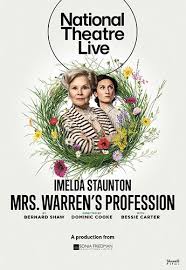
MRS WARREN'S PROFESSION/ NATIONAL THEATRE LIVE
UK, 2025, 120 minutes, Colour.
Imelda Staunton, Bessie Carter.
Directed by Dominic Cooke.
One of the great values of the British National Theatre Live productions is that they make available to world audiences dramatisation of plays which most would not have access to, plays that generally would not be produced as films for cinema or streaming.
This is the case here, the opportunity for audiences to see George Bernard Shaw’s initially quite controversial play, written in 1893, a performance in London in 1902, subject to criticisms by government authorities and popular opinion, finally being performed publicly in England in 1925. With the tone of the title, audiences might quickly conclude what Mrs Warren’s profession was, prostitution, then her management of a brothel. However, the drama is in her confrontation with her “modern” daughter who knows nothing of her mother’s life, is well educated, ambitious in work, workaholic, who is confronted by her mother and her business partner who has an eye for her.
The Wikipedia article on the play notes that Shaw said he wrote it "to draw attention to the truth that prostitution is caused, not by female depravity and male licentiousness, but simply by underpaying, undervaluing and overworking women so shamefully that the poorest of them are forced to resort to prostitution to keep body and soul together."
Mrs Warren does not appear early in the play. The focus is on her daughter, Vivie, Cambridge-educated, a talent in maths, ambitions to work in business. Marriage is not necessarily on her agenda although she is attracted to a young man, son of the local Reverend, a gambler who is relying on Vivie’s support. Another potential suitor, sent by her mother, arrives, catalyst for discussion about Vivie and her determination to make a life for herself.
Then, Mrs Warren arrives, flamboyant, aiming at style, her accent betraying her background. And, her business partner in her entourage, is revealed as somewhat lecherous in his support of Mrs Warren and his attraction towards Vivie. And the Reverend is revealed to have some secrets of his own in connection with Mrs Warren.
Audiences familiar with the plays of George Bernard Shaw will remember that he has a talent for exploring the issues that women face in their times – from Caesar and Cleopatra to St Joan to Eliza Doolittle in Pygmalion.
There are further dramatic complications and revelations throughout the play, but this is a tour de force drama for the two actresses, this time played by real-life mother and daughter, Vivie is played by Bessie Carter (resembling her father, Jim Carter, so familiar to many audiences as Carson, the butler, at Downton Abbey) and Mrs Warren is played by her mother, Imelda Staunton, memorable in such films as Vera Drake.
The set here is smaller than usual, more compact, but effective, especially with lighting and staging. The costumes are of the period, stylish.
The dialogue throughout the play dramatises Shaw’s social concerns, issues of society, poverty, pressures on women, the issues of prostitution, seen in their time over 100 years ago but, still strong issues worldwide in the 21st-century.
Crimen Argentino, Un/ A Singular Crime

UN CRIMEN ARGENTINO/ A SINGULAR CRIME
Argentina, 2023, 114 minutes, Colour.
Nicolas Francella, Matias Maeyr, Dario Grandinetti, Luis Luque, Malena Sanchez.
Directed by Lucas Combina.
The city of Rosario, Argentina. The 1980s, the dictatorship, the military.
There have been many films on this subject over the decades. This is something of a latecomer – and, interesting as it is, it is not quite as powerful as its predecessors.
A prominent citizen is abducted, and there is concern about his recovery. The military are involved, exercising their dominance. But, the civil authorities are also concerned, their overall chief, and two young officers who are involved in search and interrogation. And, their work is complicated by their relationships, and one of them deciding to move away from Argentina.
Aspect of the plot are quite complicated, especially suspects in criminal activities, a focus on one character, revelation of further sinister background and plotting.
The film does offer another opportunity for audiences to look back at this period of Argentinian history, its oppression, abuse of civil rights, and the consequences for society at that time.
- Based on actual characters and events? The final information about each of the characters?
- Argentina 1980, the rule of the generals, civil operation, the military, the judiciary, police force, torture? Judgements in retrospect?
- The atmosphere in the city of Rosario, the city itself, apartments, police precincts, the streets, the clubs, atmosphere? Musical score?
- The situation with the judiciary, Judge Suarez, Rivas and Torres as members of the court, their role in detection, surveillance? The responsibilities of the judge? The lieutenant colonel, his role, command, superiority over the judge? The role of various detectives and their being commissioned on cases? Rivalry, ambitions, brutality, torture?
- The situation with the disappearance of the wealthy man, the flashbacks to the club, his behaviour, his disappearance? The ransom message? The decision of the judge, payment, the discussions with the family, the grandmother sympathetic, other members not so sympathetic, the victim as a playboy? The rendezvous, Maria going into the toilet, leaving the money, the suspicious woman, the pursuit, the false trail?
- The role of the judge, his age and experience, influence with the two men, the discussions with the lieutenant colonel, the pressures on him?
- Rivas, relationship with Maria, summoned to the court, the partnership with Torres, Rivas and his attention to go to Spain, the collaboration with Torres, friendship, difficulties? The detailed presentation of their action, inquiries, stakeouts, with the family, with the authorities, the rival Detective and his methods? The role of the judge?
- The suspect, the story of him being in prison, out of prison, at the club, the interviews, his personality, making his case, information about his partner in prison, the visit to him, his amputation, the role of his sister? The revelation about enterprise, the making of sulphuric acid…?
- Marquez, calm, the discussions, the interrogations, protesting his innocence, waiting for a phone call from the abducted man? The decision that he should go home, wait for five days, the surveillance from the apartment opposite, recording him?
- His arrest, the brutal detective, the torture sequences, his eventually confessing?
- The discovery of the sulphuric acid, the bowl, the body consumed, the police, the expert and her examining the body, finding the relics, identification?
- Marquez, the hold over the abducted man, his cover, the destruction of the body? In prison, advising prisoners – and his later release?
- The title, the singularity of the murder and the mystery, the particular tone from Argentina, especially 1980?
