Displaying items by tag: Peter Malone's Movie Reviews
Housemaid, The/ 2025
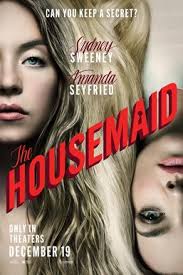
THE HOUSEMAID
US, 2025, 131 minutes, Colour.
Sydney Sweeney, Amanda Seyfried, Brandon Sklenar, Michele Morrone, Indiana Elle, Elizabeth Perkins.
Directed by Paul Feig.
Movie thriller fans may remember that titles which included maid or housemaid usually had sinister goings-on in the household. And audiences venturing out to see this version of the housemaid will not be entirely wrong. But, not in the way they might have expected.
The film opens with a young woman, Millie (Sydney Sweeney, anyone but You, Christie, Immaculate), driving up to a lavish mansion outside New York City for an interview with the lady of the house, Nina (Amanda Seyfried). Millie is warmly, exaggeratedly, made welcome, instantly hired, accommodation in the house, care for Nina’s daughter, anticipation of meeting her successful husband, Andrew. So, the opposite of sinister.
But…, the next day…
Millie really needs the job. She is on parole from a long sentence (explained later in the film), and is at pains to do the best she can. But, of course, from day to day, it is not enough, and it is Nina who is the character with the bizarre behaviour. Her charming husband, Andrew (Brandon Sklear) tries to support Milly. There is a complication in Nina’s little daughter obviously disliking Millie.
Just as the audience thinks the film is going in a relentlessly predictable direction, it certainly doesn’t!, Into the expected, there are all kinds of developments, some flashbacks, some past explanations, some twists and revelations.
Which means, of course, that any review has to stop any plot indications at this moment – except to warn audiences to expect the unexpected.
The film offers two tour-de-force performances by the two leading actresses. Brandon Sklenar is tall dark and handsome – and the object of envious gossip by the affluent mothers of the local PTA. Elizabeth Perkins has a cameo role as his haughtiest and most demanding of mothers.
As it turns out, The housemaid is a much more interesting and involving thriller than we might have anticipated.
- The title and expectations? The focus on the maid, the focus on the house, the owners?
- The mansion, the exteriors and the grounds, the vast interiors, furnishings…? The contrast with the parole office? The ballet school, the shops, the Broadway theatre, the lavish hotel? The funeral ceremony? The atmosphere for this kind of thriller? Atmospheric score?
- Audience expectations, the role of the maid, the onus? The predictability of the plot development? The sudden twist, unpredictable? And the building up of twists and explanations? The climax and the solution?
- The focus on Millie, her arrival, the car, the mansion and the grounds, the interview with the Nina, her exuberance, instantly hiring her, the tour of the house, introduction to her daughter, the upstairs room and the need of the window opening, the deadbolt and a key? The arrival of Andrew? The visit of his stern mother? And the opening sequences reinterpreted in the light of later explanations?
- Millie, revelation of the parole, the interviews, her need for a job, the accommodation, staying with a family? The later revelation of her crime, the man attacking the student, her killing him? The sentence and her serving it? Her behaviour in the house, cleaning, cooking, the hostility of the young daughter, the gradual revelation of Nina and her temperament, harsh commands, contradictory commands? Writing her journal?
- Andrew, his taking her side, comforting her, the expenses and his repayment? Nina giving her the lavish clothes? Again in the light of later explanations?
- Nina, her erratic behaviour, moods, angers, devotion to her daughter, the treatment of Millie, picking up her daughter, the clothes, the possibility firing, Millie cleaning, Nina relenting, the support of Andrew? Nina and the notes for her speech, accusing Millie and throwing them out, the meeting with the mothers and their gossip, their liking Andrew? Millie hearing everything?
- Nina, being away with her daughter, the booking for the theatre, the hotel, Andrew persuading Millie to go, the sexual encounter? The phone, the fact that Nina was seeing everything? Her return, Andrew ordering her to leave? Her storming away?
- Nina, meeting with her daughter, composing of the letter for her to read, the narration and the new interpretation of what had happened, the flashbacks, her pregnancy, at the office, the humiliation, Andrew supporting her, the relationship, the wedding, Andrew’s mother? The issue of pregnancies, Andrew’s wish, the buildup to the clashes between them, a different interpretation of what had happened, the issue of her hair and the colour roots, his locking her in the attic, the transformation of his character, abusive, self-centred, the demand for the hairs and follicles, making Nina do it again, her desperation?
- The revelation of Nina, knowing all about Millie, the plan,? Her intentions?
- Millie, Andrew supporting her, the issue of the crockery, his mother, the bonding between them? Her infatuation with Andrew?
- Andrew turning on Millie, locking her in the attic, the same treatment as for Nina, his demand about cutting herself? Doing it? The gardener at the door, Millie dropping the plates, packing, not washing the pieces, the bag, Andrew giving her the piece to cut herself?
- His unpleasant character, the taunts, self-centred? Millie having the knife, her attack on him, locking him in? Her demand, the issue of the front tooth and his charm for women, the pliers, pulling it out?
- Nina, coming back, to rescue Millie, for the truth? Her mistake, unlocking the door, Andrew escaping, pushing Nina down the stairs, the meeting of the two women, their collaborating, Nina urging Millie to run, the confrontation of Andrew, pushing him over the banister, his death? The help of the gardener to tidy the situation?
- The police, the interrogation of Nina, her plausible story, the police officer and the story of her sister, Andrew destroying the sister, the policewoman and the wound in the neck, creating a plausible accidental scenario?
- The funeral, Andrew’s mother, her speech about teeth, the mothers and their commentary and gossip?
- Millie, at the funeral, Nina and her daughter leaving, Millie applying for the job, needing giving the recommendation? The new wife talking about difficulties with her husband…, The knife…?
Funny Things Happen Down Under
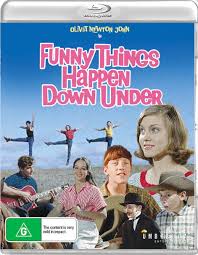
FUNNY THINGS HAPPEN DOWN UNDER
Australia, 1965, 86 minutes, Colour.
Susanne Haworth, Ian Turpie, Bruce Barry, Olivia Newton John.
Directed by Joe McCormick.
Very few feature films were made in Australia during the mid-1960s. This one is not essential viewing but it is an opportunity to see something of filmmaking and audience tastes as well as acting styles in the mid-1960s.
The film was a spin-off from the television series on Channel 9, The Adventures of the Terrible Ten. So, this is a popular television movie, designed for a family audience, focusing on a group of rather idealised youngsters and their enterprise, poking some fun at the oldies, touches of romance, and a number of songs, including a love song serenading, a song by Maori performer, Howard, a singing all Click Go the Shears and a Christmas song. This is something like a family narrative including the tone of a variety show.
But, the other main reason for looking at the film is that it featured a 16-year-old Olivia Newton John, a strong screen presence even though sweet, and an opportunity to hear her sing the Christmas song. (And it is still 13 years before Grease!)
The behaviour of the children is rather precocious, and, with the lines given them, there are quite articulate and generally well spoken (contrasting with the broad accent of the member of Parliament who is being sent up).
This is something of an idyllic presentation of life in the country town, the bonding with the children, the sheep and the wool industry, some journeys to Melbourne and the Wool Exchange. By accident, a goat devours some mixed chemicals and becomes rainbow-coloured. So, the enterprising youngsters, especially the very articulate boy, as if he had a degree in science, deciding then to use the chemicals to produce different coloured wools on the sheep (and some broad comedy with one of the lesser lights and deceiving him as to what he is seeing or not seeing in terms of colour). There are scenes where the group goes in to the Wool Exchange and have bargaining discussions with the experts – and the very precocious young man, a spokesman at times for them, pretends to be a Japanese scientist.
This may have been life in the mid-1960s but memory says that the 60s were changing, especially by the time this movie was made. It harks back more to the 1950s and Australia’s lifestyle then.
But, it has a significance in the history of Australian cinema, reminding audiences that the Renaissance of the Australian film industry was still some years away.
Cronoscrimines, Los/ Time Crimes

LOS CRONOCRIMINES/ TIME CRIMES
Spain, 2007, 90 minutes, Colour.
Karra Elejalde, Candela Fernandez, Barbara Goenaga, Nacho Vigalondo.
Directed by Nacho Vigalondo.
A film about crime but not in the way expected.
The film focuses on a middle-aged man, Hector, coming home from shopping and goods falling out of the bag, going for arrest, his wife busy doing woodwork. While he drowses in the chair in the grounds, his attention is taken by a young woman, and her seemingly being attacked. He ventures out, discovers the woman, perceives her pursuer, his head bandaged, pink. He flees, sees a building and makes contact with the scientist working there, hurrying and escaping into the building to elude the murderous pursuer.
To protect him, the young scientist, played by the film’s director, gets him into a vat – but, the young man has been experimenting on time travel via the vat and its contents and elaborate equipment.
The result is that the man goes back almost 24 hours, the scientist not knowing the subsequent story and his own involvement. The man is urged to stay in the laboratory but he goes out, encounters the young woman, she helping him, he trying to save her.
Which leads then to the fact that in his interventions, he is responsible for the young woman’s death, he is wounded, his face bandaged and pink with the blood, and then confronting his other self who is investigating what he saw, leading to emotional complications, his wife, the two Hectors and the creation of the third – and, the elimination of the subsequent Hectors and trying to get back to the right time.
Interesting in its playing with experiments in time.
Predator: Badlands
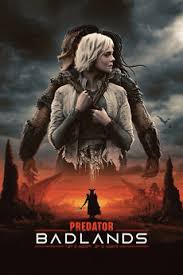
PREDATOR: BADLANDS
US, 2025, 107 minutes, Colour.
Elle Fanning, Dimetrius Schuster-Koloamatangi, Cameron Brown, Reuben de Jong.
Directed by Dan Trachtenberg.
Since Arnold Schwarzenegger appeared in the original Predator in 1987, there has been an ever-increasing franchise with the title, all kinds of variations on the theme, here on earth as well as in outer space and conflicts with aliens. Which, in fact, is the case in this story.
One of the first aspects to commend is that of the re-creation of space, the universe, planets, beauty, crags and mountains, weather, moods, sinister atmospheres, worlds of science fantasy and science fiction – and, with a comment for fans that this film definitely needs to be seen on a big screen in the cinema. And this is the case for a huge industrial complex on a far planet, a world of advanced technology as well as some desperate fighting.
On the first mysterious planet, a strange humanoid creature is wanting to assert himself, looked down on by his warrior father, helped by his brother, then going on a mission to save his planet.
On the other hand, when he arrives at another distant planet, there is already a group of investigators, sharing the same quest. But, while the characters on this mission look human, they are in fact what is called Synthetics. It is surprising to see Elle Fanning as one of the synthetics, humane in her attitudes and teaming up with the stranger, then her also appearing as her sister-Synthetic, female but heartless.
There is also a large squad of male Synthetics all mass-produced on an assembly-line, all looking the same.
There is a quest, a search for a deadly creature. But there is also a power struggle in who controls the technology and how it is exercised.
While a lot of the plot ingredients seem familiar, the screenplay is put together more intriguingly than usual and the non-human characters mirroring human behaviour. And, even though the characters do not have actual hearts, the heartlike elements prevail.
- The popularity of the franchise for almost 40 years? The variations? On Earth, aliens, in space, the future?
- The visual impact of this film, the widescreen, the landscapes, crags and mountains, countryside, suggestions of an alien planet, the huge industrial centre, the technology, the weather and moods, battles, hand-to-hand fighting? The musical score?
- Science fantasy, the future, beyond Earth in space? The references to Earth?
- The characters, Synthetics, the females synthetics and their control, the male synthetics as warriors? The contrast with the creatures from the other planet, aliens from the human point of view, their appearance, warriors, face, teeth/fangs/tasks? Clothing and armour? Their own language and communication, subtitles?
- The planet, the Yautja, Dek and his place in the clan, younger, the relationship with his brother, designated as the weakest? His father, giant, relegating Deck, his brother’s defence, their fight, his father killing his son? The impact on Deck, his determination to make his mark? The actor within the costume, the language, creating a credible character?
- Space, vehicles, deck going to the death planet, the flora and fauna, discovering the dangerous plants, explosions? The encounter with Fear? The female synthetic? Her legs severed? Her being trapped? Her mission? Deck releasing her, carrying her? The encounter with the creature, Barbed, collaborating, marking territory, the relationship with Deck? Theo, wanting to contact Tessa, Dick and the concept of sister? Theo liking it?
- The Earth mission, the range of synthetics, Tessa, Elle Fanning’s alternate characterisation? Relentless, the mission for all, to capture the Callous? Theo and her wanting to be reminded with her legs?
- The comic perceptions along with the action, the legs walking by themselves, the strategies and techniques, contribution to the fight? Theo and the confrontation with Tessa?
- Deck, barbed, the hunt for the bison, the uniting on the mission, deck as intentions, his trophy?
- Tessa, the machines, the confrontations, the sympathetic soldiers, all looking the same? The battles, the confrontations?
- The callous, barbed and the mother, the fighting, the contributions, Tessa’s destruction?
- Deck, having his trophy, Theo restored, Barred growing larger? The return to the original planet, deck and his confronting his father, the battle?
- And the future…? Sequel…?
Now You See Me, Now You Don't
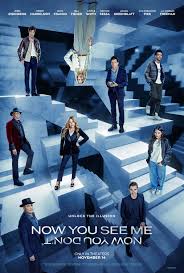
NOW YOU SEE ME, NOW YOU DON’T
US, 2025, 113 minutes, Colour.
Jesse Eisenberg, Woody Harrelson, Dave Franco, Isla Fisher, Justice Smith, Dominic Sessa, Ariana Greenblatt, Rosamund Pike, Morgan Freeman, Lizzy Caplan.
Directed by Ruben Fleischer.
Surprisingly, given the popularity of the original, this third part of the series comes 12 years after the first Now You See Me. Then there was the sequel two years later. And it has taken most nine years for this episode.
Fans will probably agree that it has been well worth the wait!
The attraction of the film is that it is about magicians and magic, sleight of hand, I deceptions, creation of illusions. And, with 21st-century special effects, there is no lack of magical turns, creative use of special effects, a whole range of deceptions.
The original team is back again, led by Jesse Eisenberg, so often primly determined. Woody Harrelson is also back with his laid-back charm. And, Dave Franco as well as either Fisher. And Lizzy Caplan, who joined the team and the second film, also returns. And, once again, the power behind the team, Morgan Freeman in his mid-80s.
While it is important to highlight the familiar team, the film actually opens with some very clever impersonations by a new young team, Justice Smith, Dominic Sessa, Ariana Greenblatt. They make quite an impression – but they also do impersonations of the original team, taking on the teams mantle of seeking justice, exposing criminals, taking them down. So we are treated to quite a spectacular performance, and we are deceived into thinking that it is the main team in action. But…
Jesse Eisenberg’s Atlas is not impressed and seeks out the young group. But, it emerges that some kind of overseer has sent cards to assemble everyone. They gather, and find that the villain of the piece is relic, daughter of a South African mogul, about to option a diamond. And, surprisingly, she is played by Rosamund Pike, rather relishing the role of a kind of evil femme fatale.
If this sounds intriguing, the two teams combining to confront Veronica, to steal the diamond, to pretend to destroy it, to try to trap her in her guilt, travelling around the world, from the Emirates to France, then audiences will be delighted to be intrigued.
While there are quite a number of spectacular magic episodes, we enjoy meeting the old team again but are trying to make out whether we like the new team, especially Dominic Sessa who is full of himself often able to justify his self-satisfaction with his skills. Justice Smith plays the very nice member of the group and plays a very interesting role in the final solution.
So, we know what to expect, more or less, and there is more rather than less. Already the rumour is around that there will be a fourth episode. And, in light of having two teams now, why not?
- The popularity of the first two films? The nine year gap until this one? The plausible explanations?
- The popularity of the cast, the characters? The appeal of magic? The portrayal of various magic tricks? Special effects and the lighting? Has part of the plot? The musical score?
- The past history, of the Four Horsemen, their performances, their skills, the team work, interactions? The role of Thaddeus and control? The presence of Dylan Roads? The breaking up of the group? Reassembling? The addition of Lula?
- The opening, the reassembling of the Horsemen, their personalities, on stage, the arrogance of the young man and his friends? The introduce introduction to Bosco, Charlie and June? Their jobs, behind-the-scenes, June at the bar, pickpocket? Confrontation with the young men, Merrick and his capacity for putting people to sleep, Bosco on stage, the sleep, the rest of the Horsemen and the confrontations, the money and the denunciation, the angry young man? And the Horsemen disappearing?
- The three friends, personalities, age, their talents? The appearance of Daniel, the confrontation? The magic, their show, using lanterns and projections, their achievement? Daniel’s criticism? Charlie, agreeable, June and friendly, Bosco and his surly attitudes and behaviour?
- Daniel and his proposition, joining with the trio, the master command, The I, planting cards for the others, their all coming together? Building on the old personalities and past stories? Daniel and his touch of arrogance, Merrick and his humour, heavily returning to the group, Jack and his genial presence? Exercising all their magic abilities?
- The situation, Veronica Vandeberg, her story, her father, the diamonds, his wife and her suicide, the housekeeper and his relationship with her, the quizzing his fortune to Veronica? The scenes in South Africa, Veronica and her personality, dominating, her bodyguard, her entourage, the plan to option the diamond, her shady contacts? Her performance to the public?
- The group, working together, the plan? The social, her wanting the photographs? Hiring the photographer with his arrogant manner? The magic tricks of the group, unit and her pickpocketing ability getting all kinds of passes, Charlie and his blending into the work background, Bosco impersonating the photographer? The photo shoot, and wanting to photograph the diamond with Veronica? The revelation of Charlie and the alternating of the cases, in and her manipulation, Bosco and the photographs, the presence of Daniel and his confrontation, the tricks with the opening of the glass case, the diamond, the substitute, smashing it? Confusion?
- The personalities of the group, their working together?
- The mystery of the cards, Charlie and the cards, the map, finding the location, the vast house, the encounter with Thaddeus? Memories of the past, his encouraging, the mystery of who had organised the action? The attack, the siege of the house, Thaddeus and his dying, his encouraging the group? The mystery of the house, revolving rooms, the confusion of the police attack? Finding Veronica’s client list? The arrest of gives one, in the police station?
- The police station, Veronica confronting Merit, his abilities with her, telling her story, the truth about her mother, contriving her death? The father’s relationship with the mistress, her death? The arrival of Muller, her collaboration with Merit, the escape for June? Merit imprisoned, and the possibility of a bargain, the diamond for The Release of Merit?
- The Emirates, the location for the driving exhibition, Veronica and the vehicles, the drivers? The arrival of the group, infiltration, Bosco and impersonations and driving the vehicle, Charlie and June in the background, the tasks?
- The driving and the display? Bosco the crashes? The rounding up of the four Horsemen, trapped underground? Veronica and her superiority, the sand coming into the basement? The discussions, using their wits, the idea of water and the sand, Jack and his using the wrench, the water, heavily using her ring to break the glass, there are escape?
- Veronica, the mysterious caller, challenge her about the diamond?
- The escape, Veronica and the confrontation by her brother, the revelation of Charlie, the revelation of the truth, his being her brother, the role of their father, his mother and her death?
- Veronica on stage, trapped, the revealing of the true story, the diamond?
- Charlie revealed as Peter, his intentions, his masterminding the whole plot, his time in the US, studying magic, befriending Moscow Bosco in June, planting the cards to entice the horsemen to help him with his plan to unmask Veronica?
- Peter, his decision, distributing his wealth to those in need? Fulfilling the aims for the Horsemen and justice?
- The postscript, the intervention of Dylan Rhoades, the achievement – and the future?
Howling VI: The Freaks
HOWLING VI: THE FREAKS
UK, 1991, 100 minutes, Colour.
Brendan Hughes, Michelle Matheson, Bruce Martyn Payne, Sean Sullivan, Antonio Fargas, Carol Lynley.
Directed by Hope Perello.
The Howling series was based on novels by Gary Brandner. The first film made quite an impact with horror fans with mixed feelings towards the various sequels, bloggers on this film considering it the best in the series as well as one of the worst – and many opinions in between.
This is a British production with British stars as well is an American cast and filmed in California.
In many ways, the film takes quite a while to get going, a stranger Brendan Hughes, wandering the desert with a strange bag, coming into American town, people suspicious, discovering he is British, then taken on by the pastor who needs his church rebuilt. The stranger does a very good job transforming the church. And there is also the pastor’s daughter (not a persuasive performance from Michelle Matheson). So, where is this going?
Then there is an announcement of a carnival coming to town, especially an entrepreneur, Harker (played by British actor in so many films in Britain and then internationally, often sinister, Bruce Payne). In fact, the troupe is quite extensive, and the audience sees quite a range of freaks as they set up in the town, then perform, quarrelsome amongst themselves.
However, Harker has his eye on the young stranger who, at the time of the full moon, has decided to leave. Audiences have been guessing where this will be going and it emerges then that the young man is a werewolf, Harker wanting to have him amongst the freaks – and so all kinds of horror sequences, transformations, to werewolf and back, threats to the pastor, to his daughter, to the people in the town.
As with all the sequels, the film has its horror moments, but, in comparison with so many of the other sequels, this one is comparatively straightforward, often much milder even with the horror sequences.
Sound of Silence
SOUND OF SILENCE
Italy, 2023, 93 minutes, Colour.
Penelope Sangiorgi, Rocco Marazzita, Lucia Caporaso.
Directed by Alessandro Sangiorgi, Daniel Lascar, Stefano Mandala.
Horror curiosity item. Italian film, much of it spoken in English, some settings in the United States but mainly in Italy.
The film was directed by a team company.
There is atmosphere in the opening, an old man tinkering with the radio, sounds emitted, a sense of a strange presence, his being overcome and hospitalised, his wife concerned. In the meantime, their daughter and her husband are living in America, she auditioning for singing but opting out nervously. Then the message that they should return to Italy.
The film is atmospheric although a number of bloggers are critical of the darkness, what they judge as stilted performances, demands of credibility.
The film involves the daughter sending her husband to buy food and his having difficulties, no money to pay the vendor. In the meantime, the daughter spends a lot of time with the radio, also tinkering, strange sounds, strange presences.
Then, suddenly, the film goes into exposition, return to the past, family photos, a grandfather who suffered from sound, wanting silence, and violence linked on his family. Some long scenes of the family, the troubles, violence between husband and wife, the children. (Which means and the last part of the film is the weird experiences of the daughter, her husband aggressive seemingly possessed. Then, back to New York, happy audition… But, then, a finale, where somebody finds a radio abandoned on the road and takes it to restore for restoration and the alarm on the woman serving in the shop.
For fans of the horror catalogue only.
Laxdale Hall
LAXDALE HALL
UK, 1953, 77 minutes, Black-and-white.
Ronald Squire, Raymond Huntley, Kathleen Ryan, Sebastian Shaw, Fulton Mackay, Jean Colin, Jameson Clark, Keith Faulkner, Prunella Scales, Kynaston Reeves, Andrew Keir.
Directed by John Eldridge.
A small film from the UK in the 1950s, the kind of film that offered a view of post-war Britain, politics in London, isolated life in the Scottish Highlands (and the Americans retitling the film for accessibility, Scotch on the Rocks!).
The film opens in Westminster, a member of Parliament, played by the always dignified (until he has a slight drunk scene here) Raymond Huntley. He has family connections with the Scottish town centred on Laxdale Hall. The inhabitants are refusing to pay their taxes demanding a better road and port accessibility (scenes illustrating the need). Assisting the MP are a more conciliatory visitor, Sebastien Shaw, and the secretary played by Fulton Mackay, looking very young and nothing like his middle-aged-older look when he was the prison guard continually clashing with Ronnie Barker’s Fletcher in Porridge.
The lord of Laxdale Hall is played genially by Ronald Squire with Kathleen Ryan as his proper daughter. In the meantime, there are all kinds of shenanigans with the locals, who poach fish, the local outspoken church minister, the midwife, the funeral director, the schoolteacher – and she is played by very young Prunella Scales, long before Fawlty Towers.
Most of the screenplay runs as expected, the visitors initially stranded because of a gale, coming to the town, the MP presumptuously giving a speech about moving all inhabitants in land to get industrial jobs and a regular salary but a huge reaction against his proposals. There is hospitality. There is some poaching. There are schoolchildren in classes. And there are a team of poachers on the prowl from Glasgow.
Some touches of romance, especially with the teacher and the secretary. Battle hijinks as the locals all band together one night to attack the Glasgow poachers. In the meantime, MP stranded in a car with a wheel that needs to be replaced, finding a bottle of whiskey and comforting himself during the night with drinking, and to be under suspicion by the police and arrested and handcuffed.
But, there was a pleasant scene with the MP sitting dangling his feet in the river – an indication that he will relent (although the incriminating photo may have some influence). Finally, as he leaves, he gives a speech encouraging the locals and their way of life.
One might say nicely and cosily British.
Society/ 1989
SOCIETY
US, 1989, 99 minutes, Colour.
Billy Warlock, Conchita D'Agnese, Ben Slack Evan Richards, Patrice Jennings, Charles Lucia.
Directed by Brian Yuzna.
A body-horror film long before the term was regularly used. Seen in the retrospect of the 2020s with such films as Substitute, Shell… It is still quite surprising in its visual impact and its allegorical theme.
The clue is given during the opening credits, bodies melting into each other – and these visuals taken up in the finale of the film with extraordinary grotesque vividness.
The focus is on a young man, son of the wealthy family, living in Beverly Hills, high society, style and rather care-free attitudes. But, he is not welcomed at home, difficulties with his parents and his sister as well as the young locals. And, it will appear, that he is adopted.
He is played by Billy Warlock who spent most of his career on the small screen in episodes of the very well known daytime soap opera series, Days of Our Lives,
He also becomes the target of a range of practical hoaxes and deceptions, some of his friends dying, visiting the mortuary, suspicious embalmment, and then the friends later turning up. And, he is continually mocked. There are all kinds of socials, dances, discussions about partners and invitations…
While the film establishes the superficiality and glamour of this kind of society and raising suspicions about its callous attitudes, the film then focuses on the torment of the young man, his being persecuted, chased, hazardous situations, mocked…
Ultimately, he is seen as an intended victim of this strange community, the doctor, the political leaders, this society emerging as aliens in human form, needing to feed on humans for their own satisfaction and morbid pleasure. Hence the scene of the bodies melting into one another, grotesque extensions, twists and turns – and, the hero emerging, unexpectedly, with the help of a rebel girl, and the destruction of this kind of imperious and self-indulgent society.
Horror fans, body horror – but ordinary audiences will find it difficult to sit through the climax sequence.
Jingle Bell Heist
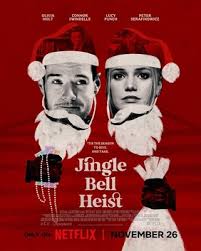
JINGLE BELL HEIST
US, 2025, 95 minutes, colour.
Olivia Holt, Connor Swindells, Lucy Punch, Peter Serafinowicz.
Directed by Michael Fimognari.
The film title indicates that this is a Christmas film. However, until we arrive at the role the sake happier, nicer ending, it is not so very Christmassy.
There is a prologue where a couple are ready to rob a safe – and then the flashback.
We are introduced to Sophia, a lively Olivia Holt, an American living in London, working in a popular store with its Christmas rush, looking after her ill mother in hospital. But, we see very quickly, that she can be tough, is an expert pickpocket, with a touch of generosity to those in need, and able to do some mini heists with aplomb.
She encounters Nick, a rather morose Connor Swindells, divorced father, devoted to his daughter. It emerges that he has put in the security system at the department store, but has gone to jail, accused of stealing and fraud. Sophia decides that he would be just the one to rob the safe of the store.
The arrogant manager of the store has a showy wife, popular in the public eye but behind the scenes clashes with her husband.
So, while the film has its humane story of the father and his family, the daughter and her sick mother, and the need for some high finance for her medical procedures, the film spends a lot of time on the store and her ability to develop her larceny skills, persuading Nick to collaborate with her.
So, a variation on a Christmas theme – but, some revelations as the film goes on, the charges against Nick and the reality behind them, and quite a surprise for the audience when Sophia targets the store manager and confronts him.
The safe is opened with all kinds of consequences which can then lead to a happy ending, family reunions, and the spirit of Christmas.
Whether such action is possible in real life, it doesn’t quite matter because it is all presented as a differently imagined heist with its intentions and motivations.
