Displaying items by tag: Amanda Seyfried
Testament of Ann Lee, The
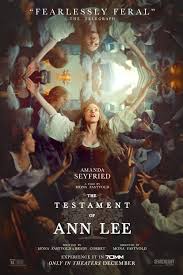
THE TESTAMENT OF ANN LEE
US, 2025, 137 minutes, Colour.
Amanda Seyfried, Lewis Pullman, Thomasin McKenzie, Matthew Beard, Christopher Abbott, Viola Prettejohn, David Cale, Stacy Martin, Scott Handy, Jeremy Wheeler, Tim Blake Nelson.
Directed by Mona Fastvold.
Who was Ann Lee – and a woman significant another to leave a testament? The answer to this question here is challenging, unsettling.
Norwegian writer-director Mona Fastvold, who writes and directs with her partner, Brady Corbett, especially the Oscar-winning The Brutalist, discovered that Ann Lee was significant in the 18th century establishment of the Shaker movement in New England, moving from the English city of Manchester. As the film shows in an initial startling Quaker episode where participants begin to shake, dangling arms loose, and young man and an old woman screaming incessantly, the Shakers were a development from the very quiet religious prayerful movement of the Quakers.
One of the striking features of this film is the recreation of the city of Manchester in the middle of the 18th century, the attention to detail, costumes and decor, the religious meeting places, homes, workplaces, the streets and markets, the intervention of the authorities. This film looks very impressive.
And, it sounds very impressive. The music direction has gone back to Shaker Spirituals of the period, disturbingly movement rhythms, forcefully sung, chanted, heavy pounding beats of the instruments, and all accompanied by an extraordinary choreography, men and women, period costume, rhythmic and erratic movement, shaking, stirring, stomping, the participants lost in some kind of spiritual ecstasy.
One might say this is a rather brutalist screen experience.
There is a voice-over narration of the story of Ann Lee, a devout little girl, always accompanied by her brother William, no playing with toys, rather a sense of prayer and the presence of God, continuing as she grew up, her Quaker involvement, her rebellion against formal Anglicanism and enthusiasm for popular movements like the Methodists. Personally, she experienced some lingering shock when witnessing her parents’ lovemaking, but marrying blacksmith, Abraham, having four children but their all dying young, and her spiritual sense and development moving her against all kinds of sexual experience. And requiring this her followers.
Ann Lee is played in an award-nominated performance by Amanda Seyfried, a powerful and intense performance, ensuring that Ann Lee comes across as intensely sincere, ecstatically prayerful, high standards for herself, her being acclaimed as Mother in the Shaker movement, and her belief that, while God came to earth as male in Jesus, God was to return to Earth for the second coming as female, in her.
There are also some arresting supporting performances led by Lewis Pullman as her brother William and continue disciple, and Christopher Abbott as her tormented husband, Abraham.
Ultimately, Mother has an inspiration that she should take her followers to America, just as the American Revolution was underway, an extraordinary storm scene which would make anyone wonder why men and women took the sea in those centuries, her trust and faith to find a land base, and the establishment of the various communities in this new world, becoming more numerous, significant prayer gatherings, a men’s door and a separate women’s door into the meeting room, then chant, stomping, gesticulating, until the time comes when Ann realises that she must leave this world.
Many audiences have found they are not on the wavelength of this particular religious history, its themes, its manifestations of faith, the peculiarities of this spirit manifested in bodily shaking. But, for those interested in what William James called the varieties of religious experience, this film is informative, interesting in its way, confronting and always challenging.
During the final credits there are continued statistical pieces of information, the maximum number in various communities at their peak in America, and the dwindling numbers to the present (remembering Ann Lee’s injunctions against spiritual sexual experience and her reliance on converts.)
- The history of the Quakers, the Shakers, the transition to the United States and establishing communities? The heritage?
- Audience knowledge of the Shakers, Ann Lee, of 18th century Manchester and the religious movements, the mission to America? The final statistics as to the number of continuing Shakers, the peak community numbers?
- The film is described as a musical drama, the emphasis on the drama of Ann Lee’s religious experience, the churches in Manchester, her marriage, children and their deaths, her emerging leadership? Described as Mother?
- The musical contribution: the traditional Shaker Spirituals, the movement, the lyrics, the dance, gestures, the pounding instruments? The titles on screen, the scriptural references to the woman? Choirs, the group and dancers, costumes, choreography? Their insertion into the narrative?
- 18th century England, the status of the Anglican church, the emergence of other movements, the indication of the Methodists? The Quaker meetings? The key visuals of the meeting, the man and his cries, gestures and contortions, the old woman and her very long crying out? Presence of God, presence of the Spirit, entering the psyche, entering the body, the mentality, the contortions, the shaking, a different kind of religious experience?
- The narrative, explaining Ann, her family, her situation, her brother William, her reaction to her parents copulating, Abraham, the marriage, the sexual encounters, the pregnancies, the four births, the difficulties, the babyirs dying? The effect on Ann, her rejection of physical sexuality, the bride of Christ in union with him? (And making converts but no marriages, and the lessening of the population of the Shakers?)
- Ann and William as children, his dependence, walking the city, the churches, their workplace, the relationship with the parents? Ann and her description of her life, prayer, conscious of God, not playing with toys, religion all through her life? And her growing up?
- Ann and her female qualities, the qualities of leadership, in Manchester, the role of William, her marriage to Abraham, his work, her praise of him, his sexuality needs, her refusals, the children and their deaths? Some alienation?
- Her going to the local communities, James Mawdsley and his wife, their leadership, welcoming and, the sessions, the religious fervour, prayer, dancing, shaking, gestures? The God language?
- The development of the group over the years, and growing older, William and his continued presence, separation from Abraham? The role of the Wardsleys? The response of the people of Manchester? Some converts? The role of Mary, her eyes, her friendship?
- The attitude of the churches, condemnation and rejection, the Shakers and their defiance, the local authorities?
- The sense of mission, the decision to go to America, the discussions, the appeal for finance to the member, his recommendation for a sponsor, the Wardsleys staying in England, Ann, William, Abraham and his going with them, the other members of the group?
- At sea, the vividness of the storm, the waves, the effect on the ship, on the passengers, and her defiance, providence, the calm, the criticisms of the crew of the denunciations, and confronting them?
- The small group, landing in America, the political situation, the background of the war of independence, through the city, finding the landlady, Ann and her visions and convictions, their being welcomed, the meals, the discussions? The young man and the girl, the sexuality issues, their leaving the dinner, together, found by their father, their having to leave?
- The small group, sailing north, the eccentric captain, going through the woods, the old man and his visions, shaking, pointing, the travelling, finding the land, settling in?
- The overview of the settlement developing, Ann and her leadership, the maps and her pouring over them, the buildings, the trees, logging, sawing, the houses and halls?
- The increasing congregation, people gathering? The assembly, the separate doors for men and women, the women’s dress, the prayer, the shaking, the dancing?
- The issue of the second coming, Jesus as male, the second coming for Jesus as female, God as male and female? Ann seen as Jesus in his second coming, Mother, The leader?
- The character of William, dependence on his sister, constantly with her, his role at the meetings, the prayer, always with the group, his ventures in America, his death?
- Mary, with Ann, Ann speaking of William coming, Mary explaining to her his death, Ann saying that he was coming to welcome her to happen, to her babies?
- And the continued impact of the Shaker songs, movement and choreography throughout the film?
- The overall experience, depending on the audience’s religious attitudes, scepticism, belief, different modes of prayer and spirituality, the impact of shaking, songs and dancing, gesticulating? Historically interesting? Relevance to the 21st-century?
Housemaid, The/ 2025
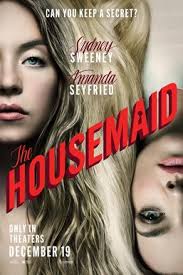
THE HOUSEMAID
US, 2025, 131 minutes, Colour.
Sydney Sweeney, Amanda Seyfried, Brandon Sklenar, Michele Morrone, Indiana Elle, Elizabeth Perkins.
Directed by Paul Feig.
Movie thriller fans may remember that titles which included maid or housemaid usually had sinister goings-on in the household. And audiences venturing out to see this version of the housemaid will not be entirely wrong. But, not in the way they might have expected.
The film opens with a young woman, Millie (Sydney Sweeney, anyone but You, Christie, Immaculate), driving up to a lavish mansion outside New York City for an interview with the lady of the house, Nina (Amanda Seyfried). Millie is warmly, exaggeratedly, made welcome, instantly hired, accommodation in the house, care for Nina’s daughter, anticipation of meeting her successful husband, Andrew. So, the opposite of sinister.
But…, the next day…
Millie really needs the job. She is on parole from a long sentence (explained later in the film), and is at pains to do the best she can. But, of course, from day to day, it is not enough, and it is Nina who is the character with the bizarre behaviour. Her charming husband, Andrew (Brandon Sklear) tries to support Milly. There is a complication in Nina’s little daughter obviously disliking Millie.
Just as the audience thinks the film is going in a relentlessly predictable direction, it certainly doesn’t!, Into the expected, there are all kinds of developments, some flashbacks, some past explanations, some twists and revelations.
Which means, of course, that any review has to stop any plot indications at this moment – except to warn audiences to expect the unexpected.
The film offers two tour-de-force performances by the two leading actresses. Brandon Sklenar is tall dark and handsome – and the object of envious gossip by the affluent mothers of the local PTA. Elizabeth Perkins has a cameo role as his haughtiest and most demanding of mothers.
As it turns out, The housemaid is a much more interesting and involving thriller than we might have anticipated.
- The title and expectations? The focus on the maid, the focus on the house, the owners?
- The mansion, the exteriors and the grounds, the vast interiors, furnishings…? The contrast with the parole office? The ballet school, the shops, the Broadway theatre, the lavish hotel? The funeral ceremony? The atmosphere for this kind of thriller? Atmospheric score?
- Audience expectations, the role of the maid, the onus? The predictability of the plot development? The sudden twist, unpredictable? And the building up of twists and explanations? The climax and the solution?
- The focus on Millie, her arrival, the car, the mansion and the grounds, the interview with the Nina, her exuberance, instantly hiring her, the tour of the house, introduction to her daughter, the upstairs room and the need of the window opening, the deadbolt and a key? The arrival of Andrew? The visit of his stern mother? And the opening sequences reinterpreted in the light of later explanations?
- Millie, revelation of the parole, the interviews, her need for a job, the accommodation, staying with a family? The later revelation of her crime, the man attacking the student, her killing him? The sentence and her serving it? Her behaviour in the house, cleaning, cooking, the hostility of the young daughter, the gradual revelation of Nina and her temperament, harsh commands, contradictory commands? Writing her journal?
- Andrew, his taking her side, comforting her, the expenses and his repayment? Nina giving her the lavish clothes? Again in the light of later explanations?
- Nina, her erratic behaviour, moods, angers, devotion to her daughter, the treatment of Millie, picking up her daughter, the clothes, the possibility firing, Millie cleaning, Nina relenting, the support of Andrew? Nina and the notes for her speech, accusing Millie and throwing them out, the meeting with the mothers and their gossip, their liking Andrew? Millie hearing everything?
- Nina, being away with her daughter, the booking for the theatre, the hotel, Andrew persuading Millie to go, the sexual encounter? The phone, the fact that Nina was seeing everything? Her return, Andrew ordering her to leave? Her storming away?
- Nina, meeting with her daughter, composing of the letter for her to read, the narration and the new interpretation of what had happened, the flashbacks, her pregnancy, at the office, the humiliation, Andrew supporting her, the relationship, the wedding, Andrew’s mother? The issue of pregnancies, Andrew’s wish, the buildup to the clashes between them, a different interpretation of what had happened, the issue of her hair and the colour roots, his locking her in the attic, the transformation of his character, abusive, self-centred, the demand for the hairs and follicles, making Nina do it again, her desperation?
- The revelation of Nina, knowing all about Millie, the plan,? Her intentions?
- Millie, Andrew supporting her, the issue of the crockery, his mother, the bonding between them? Her infatuation with Andrew?
- Andrew turning on Millie, locking her in the attic, the same treatment as for Nina, his demand about cutting herself? Doing it? The gardener at the door, Millie dropping the plates, packing, not washing the pieces, the bag, Andrew giving her the piece to cut herself?
- His unpleasant character, the taunts, self-centred? Millie having the knife, her attack on him, locking him in? Her demand, the issue of the front tooth and his charm for women, the pliers, pulling it out?
- Nina, coming back, to rescue Millie, for the truth? Her mistake, unlocking the door, Andrew escaping, pushing Nina down the stairs, the meeting of the two women, their collaborating, Nina urging Millie to run, the confrontation of Andrew, pushing him over the banister, his death? The help of the gardener to tidy the situation?
- The police, the interrogation of Nina, her plausible story, the police officer and the story of her sister, Andrew destroying the sister, the policewoman and the wound in the neck, creating a plausible accidental scenario?
- The funeral, Andrew’s mother, her speech about teeth, the mothers and their commentary and gossip?
- Millie, at the funeral, Nina and her daughter leaving, Millie applying for the job, needing giving the recommendation? The new wife talking about difficulties with her husband…, The knife…?
