Displaying items by tag: Justice Smith
Now You See Me, Now You Don't
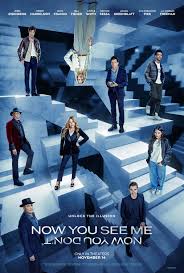
NOW YOU SEE ME, NOW YOU DON’T
US, 2025, 113 minutes, Colour.
Jesse Eisenberg, Woody Harrelson, Dave Franco, Isla Fisher, Justice Smith, Dominic Sessa, Ariana Greenblatt, Rosamund Pike, Morgan Freeman, Lizzy Caplan.
Directed by Ruben Fleischer.
Surprisingly, given the popularity of the original, this third part of the series comes 12 years after the first Now You See Me. Then there was the sequel two years later. And it has taken most nine years for this episode.
Fans will probably agree that it has been well worth the wait!
The attraction of the film is that it is about magicians and magic, sleight of hand, I deceptions, creation of illusions. And, with 21st-century special effects, there is no lack of magical turns, creative use of special effects, a whole range of deceptions.
The original team is back again, led by Jesse Eisenberg, so often primly determined. Woody Harrelson is also back with his laid-back charm. And, Dave Franco as well as either Fisher. And Lizzy Caplan, who joined the team and the second film, also returns. And, once again, the power behind the team, Morgan Freeman in his mid-80s.
While it is important to highlight the familiar team, the film actually opens with some very clever impersonations by a new young team, Justice Smith, Dominic Sessa, Ariana Greenblatt. They make quite an impression – but they also do impersonations of the original team, taking on the teams mantle of seeking justice, exposing criminals, taking them down. So we are treated to quite a spectacular performance, and we are deceived into thinking that it is the main team in action. But…
Jesse Eisenberg’s Atlas is not impressed and seeks out the young group. But, it emerges that some kind of overseer has sent cards to assemble everyone. They gather, and find that the villain of the piece is relic, daughter of a South African mogul, about to option a diamond. And, surprisingly, she is played by Rosamund Pike, rather relishing the role of a kind of evil femme fatale.
If this sounds intriguing, the two teams combining to confront Veronica, to steal the diamond, to pretend to destroy it, to try to trap her in her guilt, travelling around the world, from the Emirates to France, then audiences will be delighted to be intrigued.
While there are quite a number of spectacular magic episodes, we enjoy meeting the old team again but are trying to make out whether we like the new team, especially Dominic Sessa who is full of himself often able to justify his self-satisfaction with his skills. Justice Smith plays the very nice member of the group and plays a very interesting role in the final solution.
So, we know what to expect, more or less, and there is more rather than less. Already the rumour is around that there will be a fourth episode. And, in light of having two teams now, why not?
- The popularity of the first two films? The nine year gap until this one? The plausible explanations?
- The popularity of the cast, the characters? The appeal of magic? The portrayal of various magic tricks? Special effects and the lighting? Has part of the plot? The musical score?
- The past history, of the Four Horsemen, their performances, their skills, the team work, interactions? The role of Thaddeus and control? The presence of Dylan Roads? The breaking up of the group? Reassembling? The addition of Lula?
- The opening, the reassembling of the Horsemen, their personalities, on stage, the arrogance of the young man and his friends? The introduce introduction to Bosco, Charlie and June? Their jobs, behind-the-scenes, June at the bar, pickpocket? Confrontation with the young men, Merrick and his capacity for putting people to sleep, Bosco on stage, the sleep, the rest of the Horsemen and the confrontations, the money and the denunciation, the angry young man? And the Horsemen disappearing?
- The three friends, personalities, age, their talents? The appearance of Daniel, the confrontation? The magic, their show, using lanterns and projections, their achievement? Daniel’s criticism? Charlie, agreeable, June and friendly, Bosco and his surly attitudes and behaviour?
- Daniel and his proposition, joining with the trio, the master command, The I, planting cards for the others, their all coming together? Building on the old personalities and past stories? Daniel and his touch of arrogance, Merrick and his humour, heavily returning to the group, Jack and his genial presence? Exercising all their magic abilities?
- The situation, Veronica Vandeberg, her story, her father, the diamonds, his wife and her suicide, the housekeeper and his relationship with her, the quizzing his fortune to Veronica? The scenes in South Africa, Veronica and her personality, dominating, her bodyguard, her entourage, the plan to option the diamond, her shady contacts? Her performance to the public?
- The group, working together, the plan? The social, her wanting the photographs? Hiring the photographer with his arrogant manner? The magic tricks of the group, unit and her pickpocketing ability getting all kinds of passes, Charlie and his blending into the work background, Bosco impersonating the photographer? The photo shoot, and wanting to photograph the diamond with Veronica? The revelation of Charlie and the alternating of the cases, in and her manipulation, Bosco and the photographs, the presence of Daniel and his confrontation, the tricks with the opening of the glass case, the diamond, the substitute, smashing it? Confusion?
- The personalities of the group, their working together?
- The mystery of the cards, Charlie and the cards, the map, finding the location, the vast house, the encounter with Thaddeus? Memories of the past, his encouraging, the mystery of who had organised the action? The attack, the siege of the house, Thaddeus and his dying, his encouraging the group? The mystery of the house, revolving rooms, the confusion of the police attack? Finding Veronica’s client list? The arrest of gives one, in the police station?
- The police station, Veronica confronting Merit, his abilities with her, telling her story, the truth about her mother, contriving her death? The father’s relationship with the mistress, her death? The arrival of Muller, her collaboration with Merit, the escape for June? Merit imprisoned, and the possibility of a bargain, the diamond for The Release of Merit?
- The Emirates, the location for the driving exhibition, Veronica and the vehicles, the drivers? The arrival of the group, infiltration, Bosco and impersonations and driving the vehicle, Charlie and June in the background, the tasks?
- The driving and the display? Bosco the crashes? The rounding up of the four Horsemen, trapped underground? Veronica and her superiority, the sand coming into the basement? The discussions, using their wits, the idea of water and the sand, Jack and his using the wrench, the water, heavily using her ring to break the glass, there are escape?
- Veronica, the mysterious caller, challenge her about the diamond?
- The escape, Veronica and the confrontation by her brother, the revelation of Charlie, the revelation of the truth, his being her brother, the role of their father, his mother and her death?
- Veronica on stage, trapped, the revealing of the true story, the diamond?
- Charlie revealed as Peter, his intentions, his masterminding the whole plot, his time in the US, studying magic, befriending Moscow Bosco in June, planting the cards to entice the horsemen to help him with his plan to unmask Veronica?
- Peter, his decision, distributing his wealth to those in need? Fulfilling the aims for the Horsemen and justice?
- The postscript, the intervention of Dylan Rhoades, the achievement – and the future?
I Saw the TV Glow
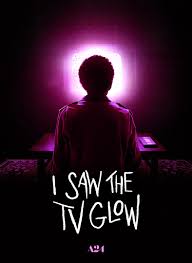
I SAW THE TV GLOW
US, 2024, 100 minutes, Colour.
Justice Smith, Brigette Lundy-Paine, Ian Foreman, Helena Howard, Lindsey Jordan, Danielle Deadwyler, Fred Durst.
Directed by Jane Schoenbrun.
Certainly a provocative title. And, alluring for those who love television and are caught up in its worlds. It has been billed as a horror film but that sets up expectations which may not be fulfilled and distracts an audience from trying to discern what kind of film it actually is.
The first comment is that it has divided opinions, right down the middle, many declaring it is one of the most boring films they have ever seen, finding it incomprehensible, many, on the other hand, praising its originality, its insight into youth and absorption into fantasy with consequences on real life.
Another approach would be that young audiences who are on its wavelength, identify with the characters, not only their response to the glow of television and television series, but in their personal issues, especially of family and parental experiences, loneliness and isolation, identity, gender and sexual identity. Older audiences may find themselves in a state of observing with interest, rather than identifying with the characters and the action.
The film was the work of writer-director, Jane Schoenbrun, who has given the number of interviews about their perspective on the film and its creation, its relationship to the director’s own life, awareness and decisions about gender identity and transitions.
The story opens in 1996, two high schoolers, Maddy (Brigitte Lundy-Paine), morose but strong minded, who lives with an abusive father, Owen (Justice Smith who tells the story and is the focal character) who lives with his parents, a stern father, she two years older than he. What brings them together is an interest in a television series, The Pink Opaque (with reference to the series, Buffy, the Vampire Slayer). Two loners meet and discuss their experiences and lives, Maddy attracted to girls, Owen unsure, attracted to the television series. The possibility arises that they could run away from home, Maddy doing so, Owen staying.
There are two time lapses during the action which jolt the audience, Maddy’s return after eight years, absorbed in the series, partly living the fantasy, the audience seeing some of the fantasy characters. Owen, on the other hand, has a humdrum life, works in the theatre which now closes down and he has to move to a fun fair.
Then a gap of 20 years, Owen, the same but visibly older, adapting his life, trapped in the memories, and a literal scream of desperation.
Which means then that the director offers a story and treatment and then it is over to us make of it what we will, what we can.
- The title, television and its impact, American audiences, younger audiences, teenage audiences, the 1990s setting, Buffy the Vampire Slayer and its influence? The repercussions as protagonists grew older? The Pink Opaque?
- The time settings, the mid-1990s, advancing two years, the gap of eight years, then 20 years and the sudden jolt for audience attention? The later years?
- The perspective of the writer-director, her comments about her own life experience, gender and transgender, growing awareness, consequences?
- The story of Owen, quiet, character, physical and psychological conditions? His age, at school, observing Maddy, her reading the book about The Pink Opaque, the discussions, friendship, his wanting to see the episodes, his curfew at home, going to her house, the excuse of the sleepovers, later visiting the mother of his former friend for her support? The effect of watching the episodes, their coming to life, the various characters, the girls, the villains each week, Mr Melancholy and appearances, Owen absorbed?
- Maddy’s story, family, abusive stepfather, wanting to leave, her age, befriending Owen, her disappearance? The sexual orientation, conscious, choices, to leave family in town?
- Maddy giving Owen the VHS cassettes, his watching them, absorbed, the characters, the stories, the mythology? Effect on him?
- Owen, relationship with his mother, African-American family, severe father, dismissing The Pink Opaque as for girls, remaining in the town, getting the jobs, quiet, his appearance, hair, slender, looking at himself in the mirror, the issue of relationships, girls, identity, male/female?
- Maddy’s return after eight years, her story about her jobs, her life, and living within the episodes of the show, the characters, their behaviour? Revealing this to Owen? His reactions, watching the show, smashing his head in the television set, his father saving him?
- Owen, staying at home, reticent, working in the movie theatre? The closure of the theatre, going to work in the Fun Park?
- The passing of time, Owen getting older, grey hair, stooped, nondescriptive existence? 2026, the outburst at the fair, the desperate screaming, no response from people, his returning home, cutting his chest, the television set glowing within? His return and apology? Whatever his future?
- The effect on the audience in the style of storytelling, events, long conversations, realism, fantasy, intermingling of both, personal identity, gender and sexual identity, isolation?
