Displaying items by tag: Peter Malone's Movie Reviews
Hamlet: National Theatre Live/ 2026
HAMLET: NATIONAL THEATRE LIVE
UK, 2026, 180 minutes, Colour.
Hiran Abeysekera, Francesca Mills, Alistair Petrie Geoffrey Streetfeild, Ayesha Dharker, Tessa Wong, Tom Glenister, Hari Mackinnon, Joe Bolland, Ryan Ellsworth, Siobhan Redmond.
Directed by Robert Hastie, Christine.Lalla.
So many performances, on stage, on screen, and for 400 years, so that Shakespeare’s Hamlet is very well known. (And enhanced by the 2025 film version Maggie O’Farrell’s novel and Chloe Zhao’s film, Hamlet.)
This version, using Shakespeare’s whole text, is very much of the 21st-century, and interesting and entertaining.
There is the issue of the contemporary interpretation, bringing the drama into the current age. But, we remember, after all it in the Globe Theatre, the actors were in the dress of the time and audiences responded accordingly. And, concerning the actors, all roles were played by males – so, in the 21st-century, why not male and females as characters, and with a cast ethnically and culturally diverse?
As regards the speaking of the text, the stage tradition came on to the screen, especially with the rhetorical dignity and the declaiming of the poetry by Laurence Olivier in 1948. And a continuing tradition. This version appreciates iambic pentameter but interpreted in speech rhythms, everyday speech rhythms, and the variety, serious, comic, offhand, incidental…
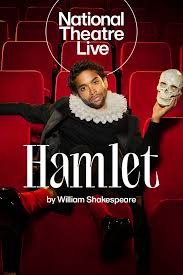
And the presence of Hiran Abeysekera as Hamlet. An actor from Sri Lanka, experienced in stage performance in England, especially his award-winning performance in The Life of Pi, Horatio in a version of Hamlet, here he looks to be in his 20s. Olivier was near 40 when he won the Oscar. Mel Gibson and Kenneth Branagh, in the 1990s, when their mid-30s. So, it is something of a surprise to find that Hiran Abeysekera is in fact 40. But, his performance is as Hamlet in his 20s, at the beginning of life experience, confusion, the death of his father and his shock, his mother’s remarriage, the treacherous uncle, first-time experiences, deepening him.
And, his performance is very contemporary, looking at the camera, looking the audience in the eye, very much in the vein of the stand-up comedian, the audience seeing him close-up, aware of all the nods, winks and nudges, and, especially, the body language, his lackadaisical stances, arms, eyebrows, quick expressions and finding justification for all this in the actual text. , Throughout, especially at the end, maintaining and dignity.
Younger audiences then will be able to identify with this Hamlet. Older audiences assessing him, his inexperience, the challenge to his maturity and growth.
Interesting aspects of the staging, especially the opening scenes on the battlements, dark, the characters using torches, the experience of the ghost. Then a transition to a lavish banquet hall, the chairs for the theatre, the graveyard scene for Alas! Poor Yorick.
The casting, Alistair Petrie a quietly convincing and ultimately ruthless Claudius, Geoffrey Streetfield, courtyard in contemporary clothing, and his babbling. Ayesha Dharker emotional as the Queen, Tessa Young a young female Horatio, the subservient and callow Rosencrantz and Guildenstern.
But, particularly striking is the presence and performance of Francesca Mills as Ophelia, quite a different interpretation, almost gung ho in various sequences, as if demanding equal time audience attention.
This is National Theatre Live version will certainly pave the way for more contemporary interpretations of Hamlet and Shakespeare’s plays.
Pillion
PILLION
UK, 2025, 106 minutes, Colour.
Harry Melling, Alexander Skarsgaard, Douglas Hodge, Leslie Sharp, Jake Shears.
Directed by Harry Lighton.
Riding pillion on a motorbike is something exhilarating for the central character of this unusual story, Colin, a rather introverted man in his 30s, parking ticket supervisor in the London suburbs, living at home with his parents.
Colin is played by British actor, Harry Melling, who embodies the complexity of timidity, anxiety, an unfulfilled life, hopes for relationship.
Colin sings in a pub with his father and brother, Barbershop Four. a capella, collecting donations but refused by a leather-jacketed man – who does write and note and puts it in Colin’s pocket, a rendezvous place and a phone number which Colin follows up.
This is a gay-themed story, Colin reserved, hoping for a partner, accepted and encouraged by his parents.
The narrative here parallels the rather familiar story of a dominant male with a female companion, made subservient to every wish and whim, humiliated, treated as a household slave and sexually exploited. Unfortunately familiar, but not often seen in terms of a dominant male and his male servant/slave.
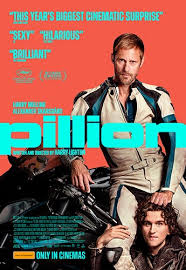
The biker, Ray, is played by Alexander Sarsgaard, supremely confident, arrogant, sometimes quietly playing classical piano, but involved in a local gay biker gang, who later, go to a seaside resort, dominance of their sex slaves, shown very directly and frankly, Colin, by this time, accepting his position in Ray’s house, but, here, publicly humiliated by Ray.
Colin’s mother is very ill with cancer, wants to meet Ray, surly in his refusal but then relenting. At the dinner, a very British baked dinner, she interrogates Ray, turning on him rather viciously. Colin is desperate.
There is a crisis, Colin celebrating his birthday at home, Ray ignoring it, but the bikers supporting him. Gradually, Colin, who Ray says has ‘a capacity for devotion’, tries to assert himself, ultimately asking for a day off. Again Ray dismissing the idea.
But, Ray relents again, allowing Colin to decide what to do on this day off, but it is a turning point for both of them. Ray rides off, Colin and his father searching for him. While Colin does achieve some self-respect after his willing, then unwilling, life with Ray, we are left wondering whether Ray is going to revert to his all-dominating self or whether the humanity of the day off has transformed and whether he can deal with a different, more human, self.
But Colin might have a better future.
- The title, motorbikes, passengers? And a symbol for subservience in a relationship?
- The setting, the suburbs, homes, flats, streets, the countryside,, cinema? Suburban feel?
- The music, the barbershop For an a cappella, Christmas, songs? Chris and singing, to the ladies in the square?
- The tone of the opening, the car on the highway, the bike, the cyclists, the taking? Ray, height, close, the bike, in the pub, not giving money, writing the note? His motivation? Attraction? In the Lane, the sexual encounter, Ray and his attitudes, Colin and the experience?
- Colin, his work with parking tickets, the angry woman outburst? His age, living at home, his orientation, accepted, especially by his parents? Very encouraging him? Introverted, manner, isolated, but wanting more?
- The character of Ray, enigmatic, dominating, at his flat,: subservient, cooking the meal, sleeping on the floor, the alarm, the list, making the breakfast, standing back? The piano, playing the classic melodies? Ray and the bikers, writing with them, the friendship? Living with them, the gathering? His attitude towards:, servant, sex slavery, aloof manner, orders? The audience is puzzled by his personality?
- Colin, attracted by rain, race, colour had a talent for devotion?: His emotional needs, obeying Ray, enduring humiliations? The effect?
- Colin and his parents, his mother, terminally ill, the wigs, his genial father, the singing, the scene with his brother at home, the concern about:, wanting to have a partner? Encouraging him? Ray the door, in the dark, his mother wanting to lease Ray, at the meal, Ray and his severe refusal? Is relenting, the details of a dinner, the conversation, Haiti, the severity of her questioning, intense, Colin and is embarrassed, his father quiet, Ray leaving?
- The birthday, the cake, Ray’s phone call, demanding, Ray not celebrating the birthday, the bike is with the cake and the candle?
- The outing, at the water, the range and bikie’s, their age, appearance, leather? Sexual behaviour, explicit, Kevin, personality, partner, kissing, the men at the table, the, Ray and his behaviour with Kevin, with Colin, the humiliation?
- :, The beginning of his reaction, needs, assertion, to be on the bed, the refusal? Continuing the routines, but a more positive attitude? The funeral, his mother’s death, the father speech?
- Colin and his asking for a day off, raise refusal, Colin and his reaction, Ray changing his mind, getting up, my making the breakfast, the decisions about going out, the ride, into town, Ray asking Colin to teach in to sing, the ladies listening, going to the cinema, racing out? The effect on Colin?
- Ray, the after-effect, on his bike, riding away, not seeing them again? Speculation has to his return to his dominating character? Or his having learnt some humanity and possible change?
- The after-effect of this experience, the searching for Ray, travelling with his father, the memories, his strong character after the experience, more self-assertion?
Epic: Elvis Presley in Concert
EPIC: Elvis Presley In Concert
Australia, 2026, 95 minutes, Colour.
Elvis Presley.
Directed by Baz Luhrmann.
The last words heard of the closing credits have Elvis say that he wanted to tell his story from his side. And this is what happens here. Except that it is Baz Luhrmann creating the perspective in presenting Elvis’s point of view.
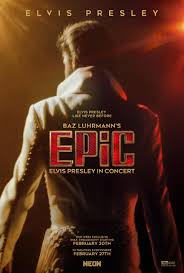
The opening credits are bright, spangly, full of colour, anticipating Elvis himself, his concert costumes, his imposing presence, his voice, movement, songs. And, certainly, that is what the audience get.
Most of this film captures Elvis in Las Vegas, especially during the 1970s, the fact that he never toured outside America, his many concerts in Las Vegas, the huge audiences, his band, his supporting singers, his public in raptures – and his capacity to read his audience, relate to them, please them.
As expected and hoped for, the bulk of the film is Elvis in rehearsal and, mostly, in performance. However, there are many sequences which fill in his life, his background and his parents, school, early singing, church and concert, discovery of his ability, popularity before 20, films and recordings, some attention to his military service and its effect on him, his marriage to Priscilla and the birth of Lisa Marie, glimpses of Colonel Tom Parker, clips from many of his films, but, the very positive look at Elvis himself, behind the scenes of his concert persona.
While preparing for the making of his Elvis, Baz Luhrmann discovered that there was a lot more material, especially Elvis in concert. And there had been two documentaries, Elvis – That’s the Way It Is and Elvis on Tour. And, of course, the films, news footage, a great deal of material to draw on for this portrait of Elvis the entertainer.
Everyone has their favourite Elvis songs. As a reassurance for those who like them and are waiting for them, towards the end of the film there is quite a grandstanding performance of Suspicious Minds, followed Can’t Help Falling in Love. And, Suspicious Minds is featured again during the final credits.
And there are some wonderful renditions of so many others songs, for example, In the Ghetto. And some religious songs, Gospel, especially O Happy Day and How Great Thou Art. And there are Elvis’s versions of the Beatles’ Yesterday and Paul Simon’s Bridge over Troubled Waters.
So, Elvis in his own words, talking to camera, with his friends, saying that each performance must be as if it is the first – and, certainly, that is how they come across. He explains himself, singing when very young, his first guitar, the religious background, Gospel, Rhythm and Blues. And, his explanation of his moving all the time – and, fascinating, with so many of the songs in concert, his left leg continually shaking. And, the various gyrations, the arms swinging, the postures, an extraordinary showmanship that came more from his inner self than calculated direction.
Elvis died in 1977 which means that there are no songs in Elvis repertoire composed after 1977. For the 21st-century audience, the younger audience discovering Elvis, the older audience remembering, appreciating, relishing their favourites.
So, an appreciation to Baz Lurhmann, not only for his feature film, Elvis, but for his creativity in this documentary.
Testament of Ann Lee, The
THE TESTAMENT OF ANN LEE
US, 2025, 137 minutes, Colour.
Amanda Seyfried, Lewis Pullman, Thomasin McKenzie, Matthew Beard, Christopher Abbott, Viola Prettejohn, David Cale, Stacy Martin, Scott Handy, Jeremy Wheeler, Tim Blake Nelson.
Directed by Mona Fastvold.
Who was Ann Lee – and a woman significant another to leave a testament? The answer to this question here is challenging, unsettling.
Norwegian writer-director Mona Fastvold, who writes and directs with her partner, Brady Corbett, especially the Oscar-winning The Brutalist, discovered that Ann Lee was significant in the 18th century establishment of the Shaker movement in New England, moving from the English city of Manchester. As the film shows in an initial startling Quaker episode where participants begin to shake, dangling arms loose, and young man and an old woman screaming incessantly, the Shakers were a development from the very quiet religious prayerful movement of the Quakers.
One of the striking features of this film is the recreation of the city of Manchester in the middle of the 18th century, the attention to detail, costumes and decor, the religious meeting places, homes, workplaces, the streets and markets, the intervention of the authorities. This film looks very impressive.
And, it sounds very impressive. The music direction has gone back to Shaker Spirituals of the period, disturbingly movement rhythms, forcefully sung, chanted, heavy pounding beats of the instruments, and all accompanied by an extraordinary choreography, men and women, period costume, rhythmic and erratic movement, shaking, stirring, stomping, the participants lost in some kind of spiritual ecstasy.
One might say this is a rather brutalist screen experience.
There is a voice-over narration of the story of Ann Lee, a devout little girl, always accompanied by her brother William, no playing with toys, rather a sense of prayer and the presence of God, continuing as she grew up, her Quaker involvement, her rebellion against formal Anglicanism and enthusiasm for popular movements like the Methodists. Personally, she experienced some lingering shock when witnessing her parents’ lovemaking, but marrying blacksmith, Abraham, having four children but their all dying young, and her spiritual sense and development moving her against all kinds of sexual experience. And requiring this her followers.
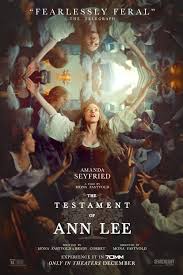
Ann Lee is played in an award-nominated performance by Amanda Seyfried, a powerful and intense performance, ensuring that Ann Lee comes across as intensely sincere, ecstatically prayerful, high standards for herself, her being acclaimed as Mother in the Shaker movement, and her belief that, while God came to earth as male in Jesus, God was to return to Earth for the second coming as female, in her.
There are also some arresting supporting performances led by Lewis Pullman as her brother William and continue disciple, and Christopher Abbott as her tormented husband, Abraham.
Ultimately, Mother has an inspiration that she should take her followers to America, just as the American Revolution was underway, an extraordinary storm scene which would make anyone wonder why men and women took the sea in those centuries, her trust and faith to find a land base, and the establishment of the various communities in this new world, becoming more numerous, significant prayer gatherings, a men’s door and a separate women’s door into the meeting room, then chant, stomping, gesticulating, until the time comes when Ann realises that she must leave this world.
Many audiences have found they are not on the wavelength of this particular religious history, its themes, its manifestations of faith, the peculiarities of this spirit manifested in bodily shaking. But, for those interested in what William James called the varieties of religious experience, this film is informative, interesting in its way, confronting and always challenging.
During the final credits there are continued statistical pieces of information, the maximum number in various communities at their peak in America, and the dwindling numbers to the present (remembering Ann Lee’s injunctions against spiritual sexual experience and her reliance on converts.)
- The history of the Quakers, the Shakers, the transition to the United States and establishing communities? The heritage?
- Audience knowledge of the Shakers, Ann Lee, of 18th century Manchester and the religious movements, the mission to America? The final statistics as to the number of continuing Shakers, the peak community numbers?
- The film is described as a musical drama, the emphasis on the drama of Ann Lee’s religious experience, the churches in Manchester, her marriage, children and their deaths, her emerging leadership? Described as Mother?
- The musical contribution: the traditional Shaker Spirituals, the movement, the lyrics, the dance, gestures, the pounding instruments? The titles on screen, the scriptural references to the woman? Choirs, the group and dancers, costumes, choreography? Their insertion into the narrative?
- 18th century England, the status of the Anglican church, the emergence of other movements, the indication of the Methodists? The Quaker meetings? The key visuals of the meeting, the man and his cries, gestures and contortions, the old woman and her very long crying out? Presence of God, presence of the Spirit, entering the psyche, entering the body, the mentality, the contortions, the shaking, a different kind of religious experience?
- The narrative, explaining Ann, her family, her situation, her brother William, her reaction to her parents copulating, Abraham, the marriage, the sexual encounters, the pregnancies, the four births, the difficulties, the babyirs dying? The effect on Ann, her rejection of physical sexuality, the bride of Christ in union with him? (And making converts but no marriages, and the lessening of the population of the Shakers?)
- Ann and William as children, his dependence, walking the city, the churches, their workplace, the relationship with the parents? Ann and her description of her life, prayer, conscious of God, not playing with toys, religion all through her life? And her growing up?
- Ann and her female qualities, the qualities of leadership, in Manchester, the role of William, her marriage to Abraham, his work, her praise of him, his sexuality needs, her refusals, the children and their deaths? Some alienation?
- Her going to the local communities, James Mawdsley and his wife, their leadership, welcoming and, the sessions, the religious fervour, prayer, dancing, shaking, gestures? The God language?
- The development of the group over the years, and growing older, William and his continued presence, separation from Abraham? The role of the Wardsleys? The response of the people of Manchester? Some converts? The role of Mary, her eyes, her friendship?
- The attitude of the churches, condemnation and rejection, the Shakers and their defiance, the local authorities?
- The sense of mission, the decision to go to America, the discussions, the appeal for finance to the member, his recommendation for a sponsor, the Wardsleys staying in England, Ann, William, Abraham and his going with them, the other members of the group?
- At sea, the vividness of the storm, the waves, the effect on the ship, on the passengers, and her defiance, providence, the calm, the criticisms of the crew of the denunciations, and confronting them?
- The small group, landing in America, the political situation, the background of the war of independence, through the city, finding the landlady, Ann and her visions and convictions, their being welcomed, the meals, the discussions? The young man and the girl, the sexuality issues, their leaving the dinner, together, found by their father, their having to leave?
- The small group, sailing north, the eccentric captain, going through the woods, the old man and his visions, shaking, pointing, the travelling, finding the land, settling in?
- The overview of the settlement developing, Ann and her leadership, the maps and her pouring over them, the buildings, the trees, logging, sawing, the houses and halls?
- The increasing congregation, people gathering? The assembly, the separate doors for men and women, the women’s dress, the prayer, the shaking, the dancing?
- The issue of the second coming, Jesus as male, the second coming for Jesus as female, God as male and female? Ann seen as Jesus in his second coming, Mother, The leader?
- The character of William, dependence on his sister, constantly with her, his role at the meetings, the prayer, always with the group, his ventures in America, his death?
- Mary, with Ann, Ann speaking of William coming, Mary explaining to her his death, Ann saying that he was coming to welcome her to happen, to her babies?
- And the continued impact of the Shaker songs, movement and choreography throughout the film?
- The overall experience, depending on the audience’s religious attitudes, scepticism, belief, different modes of prayer and spirituality, the impact of shaking, songs and dancing, gesticulating? Historically interesting? Relevance to the 21st-century?
Chien 51/ Dog 51
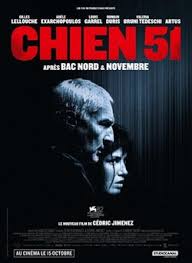
CHIEN 51/ DOG 51
France, 2025, 100 minutes, Colour.
Gilles Lellouche, Adele Exarchopoulos, Louis Garrel, Romain Duris, Valeria Bruni Tedeschi, Artus, Fyodor Atkine.
Directed by Cedric Jimenez.
So much discussion about AI in recent years, not only in terms of access to social media but also to technological developments, changes in workplace and employment, rapidity of information and service.
And, so many movies taking up the theme, remembering Spielberg’s AI and his Minority Report and how developments have moved from there. Minority Report took the theme into the areas of crime, policing, justice. And, in recent years this has come to the fore as in the American movie, Mercy. This French film is very much in this vein.
Paris in the near future, divided into three zones, wealthy class, middle class, the poor. And, to keep order, an inventor has come up with a system of surveillance, policing, Administration of Justice. And the film opens with the inventor being pursued and killed in the streets.
Which means that this film is a combination of futuristic science-fiction and AI as well as a murder mystery and the investigation into the assassination of the inventor.
At the centre is a middle-aged detective, former addict, identity Chien 51/ Dog 51. skilled at his work but often personally unreliable. He is partnered with an intense investigator who has an interesting back story of her own, especially as coming from the poor zone and, on a TV program, Destiny, being chosen to leave her family and moved to the more prosperous zone 2.
Complicating the issue and bringing in the political implications, there is a government Minister who gives smooth speeches and intervenes behind the scenes. And there is a rebel group, denouncing the AI system, and they themselves the target of the system itself.
Audiences looking for a futuristic thriller will enjoy the investigations of the detectives, identifying the killer, the driver of the getaway car, the increasing relentlessness of the justice AI system and the final revelations which, of course, serve as the film’s warning against AI out of control, in itself, but then beyond human control.
An added value is the cast, Gilles Lellouche and Adele Exarchoipoulos as the two detectives and leading men, Romain Duris and as the minister and Louis Garell the lead rebel, along with a humane doctor under threat, Valeria Bruni Tedeschi.
Very French but also accessible to a wide audience.
- The title, tags, identity bracelets, Zem, his police role, zone 3?
- Paris of the future, the three zones, zone 1 exclusive, 2 affluent and comfortable, 3 poverty? The visuals of each zone? The musical score?
- The AI theme, the development, police work, surveillance, footage, cameras and identification by eye, headquarters and surveillance information? Communication between police?
- The interest in the AI theme, the creator and his being killed, the support of the government, the developments in their exercise? And the final disillusionment that AI was taking over, its own criteria for justice, the need for it to be destroyed?
- Zem and his story, lack of sleep, late for work, discussions with the authorities, investigating the death of Kessel, the elite, interrogations, following clues? His being teamed with Saria? Initial resistance, the discussions, getting to know her, her problems in background, her links with the political authorities?
- The film working as a police investigation, murder mystery? The car pursuit, the death of the driver, the passenger escaping, found dead under the bridge, the young gang taking the belongings, Zem and his threats, recovering them? The later explanation of his identity?
- The picture of the resistance group, Breakwalls, Jon Mafrom, his appearance, his speeches, on the television screen, his following? The various members of the group, almost identical, revealing the truth, the one to sacrifice himself? The main Jon Mafrom and his contact with Zem, the information, supporting him? Reassurances about Saria?
- The character of Zem, revelations about his addiction, Irina and her work as a doctor, his taking the young man, the clients and her kindness? Her being targeted because of her association with Zem? His coming to warn her, the escape, the threats, the capture?
- Saria, her story, her mother, the TV program Destiny, young people being moved from zone 3 to zone 2, their joy, but the separation from their families, permitted family visits? Saria at her work, overcoming the past? The pressures of work, the association with Zem, the clues, the investigations, her learning more about him, the murder, her being attacked, the confrontation, her being shot, contact with Zem, his helping her, the surgery, survival? Her work on the autopsies, her friend, discovering the material from the autopsies? His death?
- Her discussions with the Minister, his TV interviews, his praise of the system, the revelation of the truth, AI, taking control, the information, using the drones, the revelation about the death of the inventor?
- Zem, saving Saria, his with the carriage, the attack and the young friend and his death? Zem wounded, the hospital, his dying? The final image?
- The film as a murder mystery, a police detection drama, the future and AI, and the warnings about AI?
Scream 7
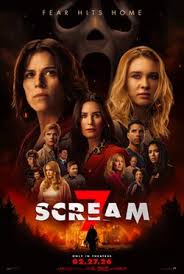
SCREAM 7
US, 2026, 114 minutes, Colour.
Neve Campbell, Courtney Cox, Isabel May, Jasmine Savoy Brown, Lisa Gooding, Anna Camp, Joel McHale, Celeste O'Connor, Sam Recher, Acer Germann, Mackenna Grace, Matthew Lillard, David Arquette, Laurie Metcalf, Ethan Embury, Michelle Randolph, Jimmy Tatro.
Directed by Kevin Williamson.
Firstly, back to the origins. As for the others in the series, there is a dangerous prologue, this time a young couple (he rather intolerable and his over-eager enthusiasm for pressuring the audience to be on side with Ghostface to get rid of him). This is the house of Scream, a Memorial Museum, a whole range of mementos, body outlines on the floor, posters for the movie series Stanb, and a threatening mechanical replica of ghost face. Lots of references to the past and to other horror films, open fans in the audience eager to check off their knowledge of the franchise. Needless to say, the couple will have to go hyper- gruesomely.
Then, back to middle America, family life, school students, putting on a musical play, teenage shenanigans. With a focus on Tatum, Isabel May, who is the eldest daughter of the key character in the series, Sydney Prescott, the return to the screen by the initial star, Neve Campbell, now married to a police officer, Joel McHale. Tatum is rebellious, her mother trying to protect her, having written a book, the film series, Stab.
It doesn’t take too long before Ghostface appears again, and, not just the one, the sinister figure, the sad face with the drawn-out mouth and the black cloak.
One of the features of the film (an opportunity for past stars to make cameo appearances) is that the new menacing killers use AI, creating messages using the faces of those who have died (and chance to see Matthew Lillard again as well as David Arquette and Laurie Metcalf). (So, is the film in favour of a a all during photos and film clips?) And, trying to track down whether Stuart, Matthew Lillard’s character, could still be alive, includes a visit to a mental institution which is significant for the solution.
And, of course, with her tempestuously-evocative climate name, Gail Weathers, turns up again, Courtney Cox continually re-visiting, wanting the scoop, bonding with Sydney, getting her to the television station to lure the mysterious Ghostface to a meeting. And, her two interns, highly ambitious to make media success – but, becoming victims, almost.
In the meantime, plenty of appearances, a bit of a shock to find so many of the students, the next generation, dispatched, attacks on Sydney, the stabbing of her husband, and the continually menaced Tatum. This leads to a dramatic confrontation, the benefit of mobile phones and screens with Sydney able to give tactical advice to her daughter. But, of course, final physical confrontation.
Some of the fans, prepared to give Scream 7 a chance, comment on how they felt let down by the solution and revelation. This reviewer, but with no high-stakes success for the franchise, was surprised, disappointed, with all the final explanations.
This version was cowritten and directed by the initial creator of the series and first director, Kevin Williamson. He has had a very successful career over the 30 years but he might have created a better solution to the series and been able to improve on rather pedestrian dialogue, lots of crass exclamations and added overdoing of every character coming to someone wounded and having defied death repeating “you okay!”.
Scream 7 did very well at the box office on its opening weekend so, one presumes, there will be Scream 8 (with better plotlines and dialogue, hopefully).
Plainclothes
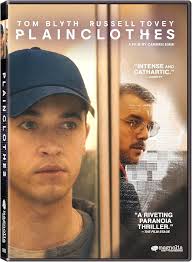
PLAINCLOTHES
US/UK, 2025, 95 minutes, Colour.
Tom Blyth, Russell Tovey, Maria Dizzia, Gabe Fazio.
Directed by Carmen Emmi.
Plainclothes is more than ordinary wear. It indicates police undercover. And, this is the scene of this film, set in Syracuse, New York state, 1997.
The precise theme of the film is entrapment, the role of the plainclothes police and their techniques for luring suspects into compromising situations and arresting them.
In particular, here, the theme is the entrapment of gay men – very much a feature in some societies of the 20th century like the UK and the US. But, then the changing of legislation and, in some countries, the legalisation of same-sex marriages (in the US, sometimes only a decade or more.
The central character here is Lucas, British actor Tom Blyth, seen involved in a mall, a young man, keeping an eye on potential targets, linking with fellow plainclothes officer, finding the suspect, attracting him, following him into the toilet area, the suspect making a move, the plainclothes officer moving out, signalling to the arresting officer, the man taken away. But the audience sees that Lucas is not entirely happy.
There are scenes at home, some grief over the death of his father, his relationship with his mother, other members of the family, especially his divorced uncle. And, paralleling this, scenes at the police station, discussions about methods of entrapment, the training of a new recruit to this area, possibilities for further entrapment by the installing of mirrors and cameras in the toilet area.
But, of course, the drama is that Lucas himself is not comfortable in identifying himself as gay, let alone to the police or his family. And, this comes to a head when he sees an older suspect, Chris, played by British actor Russell Tovey, a lot of eyeing off, and then the eventual encounter, Lucas and the attraction, letting Chris off but his giving Lucas a note with his phone number.
While the film operates on a realistic level and the continuous timeline, there are quite a number of flashbacks which need audience attention to place them well in terms of Lucas’s life and his self-awareness. There are also some surrealistic sequences, imagination, and quite a number of hand-held camera sequences which tend to jolt the audience response to what they see and how they are responding to Lucas and then to Chris.
When Lucas finally meets Chris at home, there are quite a number of surprises for Lucas as well as for the audience, further complications, Lucas using his father’s nickname as identification with Chris leading to some strong family crises – and the ultimate challenge to Lucas to be honest, to come out…
The film as a contribution to the exploring of the identity of a gay man in the 21st-century – as well as reflection on family and society responses.
- The 1997 setting, the city of Syracuse, New York state? Police work, and entrapment, the gay community, criminalisation of homosexuality? In the light of subsequent changes in the 21st-century?
- The film as a drama, police work, family, relationships, and entrapment? A drama with a message?
- The introduction to Lucas, his age, in the mall, plainclothes, his contacts, his eyeing off potential gay men, links, following them into the toilets, behaviour, his leaving, signalling to his fellow officer, the arrests? His sympathy for the man arrested and taken away?
- Later explanations of his becoming a policeman, his candidature for the entrapment, the leader, the explanations, the techniques? The new recruit for entrapment, his personality, in action in the Mall?
- The episode with Andrew, older, his appearance, glasses and respectability, his looking, to the toilet, the confrontation with Lucas, Lucas not giving the signal for the arrest? Andrew slipping him the phone number?
- The style of the film, in the present, flashbacks, flashforwards? The blend of realistic straightforward photography? Hand held camera? The point of view of camera observation? The visual flourishes, touches of imagination, indicating Lucas’s point of view? The overall effect?
- Lucas at home, the other members of the family, his relationship with his mother, his uncle Paul, divorced, girlfriend, Maria, long time friendship? Lucas and his reticence at home, social, quiet? His care for his mother? The death of his father, the ceremony, indications of Catholic background, the church? The effect of his father’s death on him?
- Lucas and the discussions with the officer, the techniques for entrapment, the new recruit, the work in the mall, the camera in the toilet, collecting evidence, the man arrested and taken away? The effect on Lucas and his not wanting to do this anymore?
- The decision to phone Andrew, stopping, starting again, hesitancy? Andrew phoning him? The discussions, making the rendezvous, Lucas and his approach to kissing, Andrew’s response, the bond between them, Lucas’s commitment and first experience, Andrew and his hesitancy, meeting some men only a few times, his marriage, Lucas getting his car registration, finding his address, discovering the church, Andrew as a pastor, in the church, the discussions with him, the break? Andrew and his respectability, preserving his marriage, his church work, his emotional and sexual needs and picking up men?
- The family issue, Maria, the break with her, discussions, her understanding and support?
- His using the name Gus, his father’s nickname? The parcel arriving, the note for Gus? Uncle Paul and his reaction, his mother’s upset, the implications that his father was having an affair? The dramatic pressure, the effect on the family, the fight with Paul, Lucas and his assertions, his silence, the grief of his mother?
- The buildup to the final words and his telling the truth? The relief for his mother, understated from the family, but his own life and orientation and future?
Great Entertainer, The, Brian Walsh
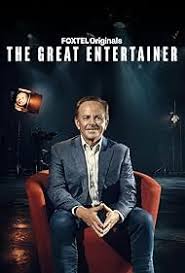
THE GREAT ENTERTAINER
Australia, 2025, 81 minutes, Colour.
Brian Walsh.
Directed by Borce Damcevski.
A memoir, a tribute to media entrepreneur, Brian Walsh.
This documentary offers two perspectives. There is a story Brian Walsh himself, Sydney born, Irish Catholic background, school and university, showing films to students while at school, wanting a job on radio to SM, then the biggest radio station with music in Sydney, I by John Brennan, tourism boss, becoming more and more involved in the 1970s into the 1980s with production of certain films and distribution, becoming interested in sport, the links with the National B can legally, the famous Tina Turner, Only the Best campaign for the NRL.
Brian Walsh is a very private man but there are many testimonies, opening closing with Hugh Jackman, praising Walsh for encouragement of talent and openings for their careers. Quite a deal of Australian talent praising Walsh, highlighting that he was not after any kind of acclamation himself. His life was private, his companion to and died, only when he won a final life award did he acknowledge, on stage, his sexual orientation.
This film has been produced by Fox tell, the company which he lived for many years, always alert to trends, even anticipating them, especially for streaming television channels. It was also successful in the UK, with the Murdochs, with sports functions. (Although there is the sequence of the cast of 42nd Street ready to perform at half time at a match and the electrical engineer failing and their having to march off.)
But, the documentary is also an overview of Australian media from the 1950s, the coming of television, the range of campaigns and advertising, whilst encouraging a variety of television shows, the moving of Neighbours from Channel 7 to channel 10 and its ultimate worldwide success, camera and edited with The Perfect Match, and miniseries up to Colin from the Office, he interviews with Patrick Bramble and.
Many of the witnesses acknowledge that Brian Walsh could be very direct, jokes about his freezing people, then reconciliations. But, the wide range of television executives, the NRL, stars of cinema and television, a full sum in their acknowledgement of him as a person and his abilities and vision.
Marty Supreme
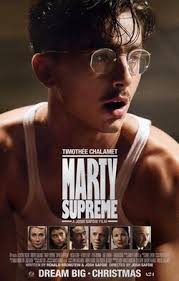
MARTY SUPREME
US, 2025, 159 minutes, Colour.
Timothee Chalamet, Gwyneth Paltrow, Odessa A’zion, Kevin O'Leary, Tyler Okonma, Abel Ferrara, Luke Manley, Geza Rohring, Koto Kawaguchi, Penn Jilette, David Mamet, Fred Hechinger, Levon Hawke, Fran Drescher, Emory Cohen, Sandra Bernhard.
Directed by Josh Safdie.
This is not the most modest of titles! And modesty is not a word associated with the central character, New Yorker, in his 20s, the 1950s, Marty Mauser. The film opens with Marty unwillingly working in a shoe shop owned by his uncle. But then the reveal, that Marty is something of a champion table tennis player. (While there are many sport films, it is something of a surprise to find such a big budget entertainment focusing on table tennis, some wonderfully filmed games, fast, lightning flash, some acrobatics, quite a sport!).
Timothee Chalamet has been nominated for awards for his performance. He has had extraordinary success on screen for almost 20 years, his range most recently including Willy Wonka, Paul Atreides in the Dune films, and Bob Dylan. His Marty Mauser is an entirely different character and Timothee Chalamet offers an exhilarating performance.
As we watch Marty and his manipulations to get himself to London for the British tournament, conning people, taking money, not worried about consequences, we realise that on the surface, he can be quite beguiling but the real Marty? Borrowing from another reviewer who listed some of his characteristics: a young man who is at once charming, a rogue, a hustler, arrogant, likeable, infuriating, flamboyant flair, driven and supremely confident. We spent 2 ½ hours in his company.
And, there is a lot going on, his approach to ageing film star, Gwyneth Paltrow, seductive, offering advice for her stagecraft, but still stealing her necklace. Then there is her husband, a wealthy CEO for a pen company, proposals for a PR table tennis match in Japan, Marty versus the top Japanese player, fake defeat – but then Marty makes some sort of self-assertion.
Meanwhile, Marty’s married girlfriend, Rachel, is pregnant. Marty clashes with his mother, Fran Drescher, goes to a hotel, told not to use the bath, then its crashing through the roof on top of a mobster, played by director, Abel Ferrara, and some complications, ultimately quite violent, in the search for his runaway dog. One never knows what tangle Marty will be caught up in next.
The film was actually based on the real-life Marty Reisman and his 1974 autobiography, The Money Player: The Confessions of America's Greatest Table Tennis Champion and Hustler. The film stays in the 1950s but it is worth Googling Marty Reisman who was still playing table tennis in the 1990s and lived into the 21st-century.
There is a great deal to enjoy while watching Martin Supreme, the star performance, the complications of the character who is able to move chameleon-like from one situation to the next, even capitalising on failures, always with the smart word, unscrupulous in manipulating even his closest friends, with a huge ambition to be the best in his chosen vocation of table tennis. He is a rogue who can get away with anything even when he is losing.
But, the filmmakers chose several endings for the film, some realistic, some surreal, deciding not to take Marty beyond the 1950s – but, to audience relief in some ways, an unexpectedly gentle finale.
The screenplay has been co-written and directed by Josh Safdie who used to make films with his brother Ben, who made the 2025 wrestling sports film, The Smashing Machine.
- Based on a true story, the 1950s, Marty’s subsequent careers?
- The title and tone, Marty and his ego, con man, charm, exploiting people?
- The table tennis film, audience interest, the game, players, competitions, post World War II, Japan?
- The introduction to Marty, his age, moustache, selling shoes, interaction with the customer, the encounter with Rachel, his uncle, his fellow worker, the offer to be manager, his refusal? Lloyd and the money, the gun, taking the money?
- Marty, his family, distance, home, the scenes with his mother?
- The production of the table tennis balls, with Marty Supreme? Dion, his enthusiasm, the uncle, Dion and his support?
- Marty, getting to London, in the competition, his skill, reputation, his goals? The encounter with the competition manager, the accommodation, going to the hotel, his presumptuous demands? The encounter with Kay, the phone call, talk, her husband, the CEO of the company?
- His games with the former champion, his history and a concentration camp, friendship?
- Meeting Kay, her career, her marriage, the sexual encounter?
- With Rockwell, intruding into his office, the talk, the proposal about the exhibition match?
- The encounters with Endo, his skill, ordinary worker, death, Communications? Winning?
- The ups and downs of the proposal, the championship, integrity, promotion? Marty and his associate, there vaudeville performances with the Harlem Globetrotters?
- Back to New York, the police, Rachel and her pregnancy, her angry husband?
- The friendship with Wally, driving the taxi, the table tennis group, the old hotel, told not to use the bath, its collapse?
- Ezra, the mobster, his dog, the bar falling on him, the dog, the promise to take the dog to the vet, in the car, Marty at the bowling alley, hustling, the money, going to the gas station, the attack, the damage to the taxi, the garage fire? The dog running away?
- Kay, the play, the rehearsals, the director, the actor, Marty intruding, offering his advice? Taking the necklace, trying to pawn it? The sexual encounter, Kay telling him it was costume jewellery? The offer to give him another necklace?
- Dion, Marty’s sponging on him, with Rachel, the accommodation? Taking his car, searching for the dog, the house in the countryside, the man with the gun, the shooting, the car crash? Dion angry, throwing away all the ping-pong balls?
- The encounter with Kay, in the park, police, the bad reviews, Kay returning, not able to see Marty?
- Rockwell, Marty trying again for the competition, the humiliating episode of the literal spanking?
- Ezra, kidnapping, Marty and Rachel with the fake dog, going to the farm, the shootout and deaths, Rachel wounded? Discovering the fake reward paper, impact? Rachel, the injuries and her husband, going into labour, the hospital, giving birth?
- At the hospital with Rachel, the split second timing to get on the plane to go to Japan, the issue of the fine, his not being allowed entry into the competition? The clash with the official?
- The exhibition, going according to plan, his loss, the humiliation, the humiliation of kissing the pig, the Japanese crowd? His dignity, willing to play a proper game?
- The rematch, the tension, US military support, Marty winning, on the plane home with them?
- The end, hospital, with his mother, Rachel, the baby, holding it – and his tears? Prospects for Marty’s future?
Strangers, The: Chapter 2
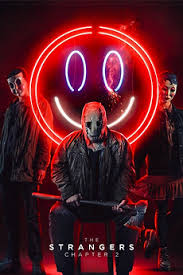
THE STRANGERS. CHAPTER 2
US, 2025, 98 minutes, Colour.
Madelaine Petsch, Gabriel Basso, Ema Horvath, Richard Brake, Pedro Leandro.
Directed by Renny Harlin.
This is very much an interim film. Chapter 1 was released in 2023 – a remake of a well-received menace horror film, The Strangers from 2008.
The focus is on a young woman, Maya, played by Madelaine Petsch. She and her husband were menaced by a group of strangers, wearing masks, unexplained. The focus was on menace and terror. And, similarly, the death of the couple at the end of chapter 1.
Chapter 2 begins with the masked group, their continuing to menace, the discovery that Maya had survived. For the first third of the film they are in desperate pursuit of Maya, the screenplay full of menace, full of vicious attacks, Maya going to the hospital, a mysterious absence of the staff, the strangers coming in to attack her, her escape – and whole series of escapes chases, the strangers catching up with her, her going out into the woods, surviving, an extraordinary encounter with a vicious boar (very similar to that of the boar hunting by Rachel McAdams in Send Help). There are also mysterious strangers, Maya hiding in cars, getting a lift and escaping, fearfully, a number of those challenging her or threatening her killed by the strangers.
There is also the presence of the sheriff from the first film and his assistant, investigating, but also suspicious.
Interspersed throughout are mysterious flashbacks to children at school, also with a great sense of menace.
Ultimately, Maya is rescued by the mysterious group in the car – but, as with so many of the characters, they are attacked by the strangers – though Maya is able to kill one of them and his mother was removed.
The sudden ending and the caption, To be Continued…
