Displaying items by tag: Harry Melling
Pillion
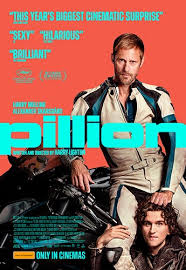
PILLION
UK, 2025, 106 minutes, Colour.
Harry Melling, Alexander Skarsgaard, Douglas Hodge, Leslie Sharp, Jake Shears.
Directed by Harry Lighton.
Riding pillion on a motorbike is something exhilarating for the central character of this unusual story, Colin, a rather introverted man in his 30s, parking ticket supervisor in the London suburbs, living at home with his parents.
Colin is played by British actor, Harry Melling, who embodies the complexity of timidity, anxiety, an unfulfilled life, hopes for relationship.
Colin sings in a pub with his father and brother, Barbershop Four. a capella, collecting donations but refused by a leather-jacketed man – who does write and note and puts it in Colin’s pocket, a rendezvous place and a phone number which Colin follows up.
This is a gay-themed story, Colin reserved, hoping for a partner, accepted and encouraged by his parents.
The narrative here parallels the rather familiar story of a dominant male with a female companion, made subservient to every wish and whim, humiliated, treated as a household slave and sexually exploited. Unfortunately familiar, but not often seen in terms of a dominant male and his male servant/slave.
The biker, Ray, is played by Alexander Sarsgaard, supremely confident, arrogant, sometimes quietly playing classical piano, but involved in a local gay biker gang, who later, go to a seaside resort, dominance of their sex slaves, shown very directly and frankly, Colin, by this time, accepting his position in Ray’s house, but, here, publicly humiliated by Ray.
Colin’s mother is very ill with cancer, wants to meet Ray, surly in his refusal but then relenting. At the dinner, a very British baked dinner, she interrogates Ray, turning on him rather viciously. Colin is desperate.
There is a crisis, Colin celebrating his birthday at home, Ray ignoring it, but the bikers supporting him. Gradually, Colin, who Ray says has ‘a capacity for devotion’, tries to assert himself, ultimately asking for a day off. Again Ray dismissing the idea.
But, Ray relents again, allowing Colin to decide what to do on this day off, but it is a turning point for both of them. Ray rides off, Colin and his father searching for him. While Colin does achieve some self-respect after his willing, then unwilling, life with Ray, we are left wondering whether Ray is going to revert to his all-dominating self or whether the humanity of the day off has transformed and whether he can deal with a different, more human, self.
But Colin might have a better future.
- The title, motorbikes, passengers? And a symbol for subservience in a relationship?
- The setting, the suburbs, homes, flats, streets, the countryside,, cinema? Suburban feel?
- The music, the barbershop For an a cappella, Christmas, songs? Chris and singing, to the ladies in the square?
- The tone of the opening, the car on the highway, the bike, the cyclists, the taking? Ray, height, close, the bike, in the pub, not giving money, writing the note? His motivation? Attraction? In the Lane, the sexual encounter, Ray and his attitudes, Colin and the experience?
- Colin, his work with parking tickets, the angry woman outburst? His age, living at home, his orientation, accepted, especially by his parents? Very encouraging him? Introverted, manner, isolated, but wanting more?
- The character of Ray, enigmatic, dominating, at his flat,: subservient, cooking the meal, sleeping on the floor, the alarm, the list, making the breakfast, standing back? The piano, playing the classic melodies? Ray and the bikers, writing with them, the friendship? Living with them, the gathering? His attitude towards:, servant, sex slavery, aloof manner, orders? The audience is puzzled by his personality?
- Colin, attracted by rain, race, colour had a talent for devotion?: His emotional needs, obeying Ray, enduring humiliations? The effect?
- Colin and his parents, his mother, terminally ill, the wigs, his genial father, the singing, the scene with his brother at home, the concern about:, wanting to have a partner? Encouraging him? Ray the door, in the dark, his mother wanting to lease Ray, at the meal, Ray and his severe refusal? Is relenting, the details of a dinner, the conversation, Haiti, the severity of her questioning, intense, Colin and is embarrassed, his father quiet, Ray leaving?
- The birthday, the cake, Ray’s phone call, demanding, Ray not celebrating the birthday, the bike is with the cake and the candle?
- The outing, at the water, the range and bikie’s, their age, appearance, leather? Sexual behaviour, explicit, Kevin, personality, partner, kissing, the men at the table, the, Ray and his behaviour with Kevin, with Colin, the humiliation?
- :, The beginning of his reaction, needs, assertion, to be on the bed, the refusal? Continuing the routines, but a more positive attitude? The funeral, his mother’s death, the father speech?
- Colin and his asking for a day off, raise refusal, Colin and his reaction, Ray changing his mind, getting up, my making the breakfast, the decisions about going out, the ride, into town, Ray asking Colin to teach in to sing, the ladies listening, going to the cinema, racing out? The effect on Colin?
- Ray, the after-effect, on his bike, riding away, not seeing them again? Speculation has to his return to his dominating character? Or his having learnt some humanity and possible change?
- The after-effect of this experience, the searching for Ray, travelling with his father, the memories, his strong character after the experience, more self-assertion?
Shoshana

SHOSHANA
UK/Italy, 2023, 121 minutes, Colour.
Douglas Booth, Irina Starshenbaum, Harry Melling, Aury Alby, Ian Hart.
Directed by Michael Winterbottom.
With newsreel footage from the period, especially the rise of Nazism and the migration of Jews to Palestine in the mid 1930s, the audience is introduced to tensions between Jews and Arabs, British administration after World War I, underground groups, sabotage and terror, the years preceding the establishing of the state of Israel in 1948.
The film was released at the time of the Hamas massacre of Israelis and the taking of hostages in 2023. It was screened during the subsequent year, Israel’s attack on Hamas, the bombardment of Gaza, the deaths of tens of thousands, and then the attack on Hezbollah and the bombardment of Lebanon during night 2024.
While the title focuses on a young Jewish woman, work is a journalist, daughter of a pioneer Zionist Socialist, the screenplay often moves away from her for quite some time, focusing more on the British police and the Haganah group, religious and literary inspiration, but underground terrorism, bombs and sabotage to make their presence felt.
The film also focuses on the British police presence, Harry Melling portraying Morton, severe and single-minded, working in the North, informants, exercising life and death authority, shootings, public executions. Douglas Booth, by contrast, is Tom Wilkin, a pleasant gentleman, working in Tel Aviv which is building itself up as a city. Irina Starshebaum plays Shoshana, in a relationship with Wilken, on and off, especially with her loyalties to him as well as to the Jewish movement.
Michael Winterbottom has been directing films since the 1980s, quite a wide range of topics and themes, but interested in political films such as Welcome to Sarajevo, In this World about migrants from Afghanistan, Trishna with an Indian setting.
- The title, the focus on Shoshana, as a character, in the context of the 1930s and Palestine, the British, her work, relationships?
- Audience knowledge of this period, the release of the Nazis in Germany in the 1930s, Jewish migrants to Palestine? Post-World War I, the British administration? The issues of the Jews, Zionist movements, protests, undercover activities? The Arabs, the sense of displacement, protests and activities? Leading to the experience of the war, knowledge of the Holocaust after the war, the state of Israel? The introduction, the use of newsreel footage, information, moods?
- The recreation of the period, the information about Europe, Germany, the migrants, the British authorities, the Jewish Governor, successful administration or not? The role of the military, in the North, severity, interrogations and executions? The creation of Tel Aviv, activities in Tel Aviv and Jerusalem? Underground activities, sabotage, explosions, Arab deaths, Jewish deaths?
- Tel Aviv is a city, building itself up during this period?
- The introduction to Shoshana, her family, the reputation of her father, the Zionist Socialist, the Haganah, the organisation, paramilitary, her ability to shoot, activities? Her work as a journalist, in the office, the party, the encounter with Tom, her relationship, scenes with him, intimacy? The ups and downs of the relationship?
- Shoshana and the title but her disappearing from large parts of the film?
- The British, post-World War I, talent for administration, failures? The police, Tom and his role as police, Morton and his work in the North, the police chief, Cairns, the torture sequences, the attack on Cairns and his death? Robert Chambers, his authority, the contacts, sympathies, loyalty to government, observing the executions?
- The leader of the secret group, poet, communication with people? The range of the members of the Haganah, their meetings, activities, sabotage, the deaths, the police pursuit? The protecting of the poet?
- Morton, personality, his police role, in the North, informants, arrests, interrogations, torture? The shooting individuals? Public executions?
- The complexity of the relationship between Tom and Shoshana, his personality, with the British, socially, politically, working with Morton, Morton in charge, Morton and his wife?
- The years passing, the underground group, young, the men, the weapons, police pursuit, having to move, their being killed, arrested?
- Shoshana and her moving away from Tom, yet returning to him?
- The arrest of the poet, the interrogation, his defiance, becoming a martyr?
- Morton and Tom being targeted, Tom being blamed for the execution, the dangers, his being killed?
- This film as an introduction to the decades succeeding the state of Israel, the place of the Arabs, the subsequent wars? And, after the release of this film, the Hamas attack on the bombardment of Gaza and then of Lebanon?
