Displaying items by tag: Russell Tovey
Plainclothes
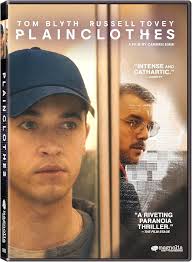
PLAINCLOTHES
US/UK, 2025, 95 minutes, Colour.
Tom Blyth, Russell Tovey, Maria Dizzia, Gabe Fazio.
Directed by Carmen Emmi.
Plainclothes is more than ordinary wear. It indicates police undercover. And, this is the scene of this film, set in Syracuse, New York state, 1997.
The precise theme of the film is entrapment, the role of the plainclothes police and their techniques for luring suspects into compromising situations and arresting them.
In particular, here, the theme is the entrapment of gay men – very much a feature in some societies of the 20th century like the UK and the US. But, then the changing of legislation and, in some countries, the legalisation of same-sex marriages (in the US, sometimes only a decade or more.
The central character here is Lucas, British actor Tom Blyth, seen involved in a mall, a young man, keeping an eye on potential targets, linking with fellow plainclothes officer, finding the suspect, attracting him, following him into the toilet area, the suspect making a move, the plainclothes officer moving out, signalling to the arresting officer, the man taken away. But the audience sees that Lucas is not entirely happy.
There are scenes at home, some grief over the death of his father, his relationship with his mother, other members of the family, especially his divorced uncle. And, paralleling this, scenes at the police station, discussions about methods of entrapment, the training of a new recruit to this area, possibilities for further entrapment by the installing of mirrors and cameras in the toilet area.
But, of course, the drama is that Lucas himself is not comfortable in identifying himself as gay, let alone to the police or his family. And, this comes to a head when he sees an older suspect, Chris, played by British actor Russell Tovey, a lot of eyeing off, and then the eventual encounter, Lucas and the attraction, letting Chris off but his giving Lucas a note with his phone number.
While the film operates on a realistic level and the continuous timeline, there are quite a number of flashbacks which need audience attention to place them well in terms of Lucas’s life and his self-awareness. There are also some surrealistic sequences, imagination, and quite a number of hand-held camera sequences which tend to jolt the audience response to what they see and how they are responding to Lucas and then to Chris.
When Lucas finally meets Chris at home, there are quite a number of surprises for Lucas as well as for the audience, further complications, Lucas using his father’s nickname as identification with Chris leading to some strong family crises – and the ultimate challenge to Lucas to be honest, to come out…
The film as a contribution to the exploring of the identity of a gay man in the 21st-century – as well as reflection on family and society responses.
- The 1997 setting, the city of Syracuse, New York state? Police work, and entrapment, the gay community, criminalisation of homosexuality? In the light of subsequent changes in the 21st-century?
- The film as a drama, police work, family, relationships, and entrapment? A drama with a message?
- The introduction to Lucas, his age, in the mall, plainclothes, his contacts, his eyeing off potential gay men, links, following them into the toilets, behaviour, his leaving, signalling to his fellow officer, the arrests? His sympathy for the man arrested and taken away?
- Later explanations of his becoming a policeman, his candidature for the entrapment, the leader, the explanations, the techniques? The new recruit for entrapment, his personality, in action in the Mall?
- The episode with Andrew, older, his appearance, glasses and respectability, his looking, to the toilet, the confrontation with Lucas, Lucas not giving the signal for the arrest? Andrew slipping him the phone number?
- The style of the film, in the present, flashbacks, flashforwards? The blend of realistic straightforward photography? Hand held camera? The point of view of camera observation? The visual flourishes, touches of imagination, indicating Lucas’s point of view? The overall effect?
- Lucas at home, the other members of the family, his relationship with his mother, his uncle Paul, divorced, girlfriend, Maria, long time friendship? Lucas and his reticence at home, social, quiet? His care for his mother? The death of his father, the ceremony, indications of Catholic background, the church? The effect of his father’s death on him?
- Lucas and the discussions with the officer, the techniques for entrapment, the new recruit, the work in the mall, the camera in the toilet, collecting evidence, the man arrested and taken away? The effect on Lucas and his not wanting to do this anymore?
- The decision to phone Andrew, stopping, starting again, hesitancy? Andrew phoning him? The discussions, making the rendezvous, Lucas and his approach to kissing, Andrew’s response, the bond between them, Lucas’s commitment and first experience, Andrew and his hesitancy, meeting some men only a few times, his marriage, Lucas getting his car registration, finding his address, discovering the church, Andrew as a pastor, in the church, the discussions with him, the break? Andrew and his respectability, preserving his marriage, his church work, his emotional and sexual needs and picking up men?
- The family issue, Maria, the break with her, discussions, her understanding and support?
- His using the name Gus, his father’s nickname? The parcel arriving, the note for Gus? Uncle Paul and his reaction, his mother’s upset, the implications that his father was having an affair? The dramatic pressure, the effect on the family, the fight with Paul, Lucas and his assertions, his silence, the grief of his mother?
- The buildup to the final words and his telling the truth? The relief for his mother, understated from the family, but his own life and orientation and future?
