Displaying items by tag: Lewis Pullman
Remarkably Bright Creatures
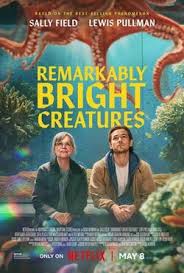
REMARKABLY BRIGHT CREATURES
US, 2026, 111 minutes, Colour.
Sally Field, Lewis Pullman, Colm Meaney, Joan Chen, Kathy Baker, Beth Grant, Sofia Black-D'Elia, Donald Sales, voice of Alfred Molina.
Directed by Olivia Newman.
The remarkably bright creatures in this story are sea creatures, especially an octopus who spent over 1000 days out of the ocean, now in the display in the aquarium. His name is Marcellus, and he is a central character here, telling the story of his life in the voice of Alfred Molina, making comments about the humans and their limitations and the superiority of sea creatures.
While the humans in the story may not be as remarkably bright as the sea creatures, the audience will find themselves identifying more and more with two of them.
At this stage in review, it is probably important to note that this is a film for audiences who enjoy feelings, emotions, not afraid to run the risk of sentimentality. Which means that it is definitely not for audiences who have more serious attitudes towards life and emotions, thatnthey are not really for display, especially in films like this.
This having been noted, Remarkably Bright Creatures will engage most audiences. And there is Sally Field, almost 80, 60 years of top-lining film and television, a widow in a small town on the US north-west coast, keeping busy as she cleans the aquarium, chatting to Marcellus, revealing her sadness, especially in the loss of her son. The other main character is Eric, Lewis Pullman, something of a drifter, with a band, the other members pulling out, his being stranded in the town, no money, helped by the sympathetic storekeeper, Ethan (a genial Colm Meaney) and getting a job to replace Tova at the aquarium.
We observe. Marcellus observes, all this. Eric is not very good and Tova takes him under control cleaning detail. And she has to make decisions, offered a place in an aged care centre, whether to sell her house, urged on by her longtime gossipy friends, but, all the time wondering about the death of her son.
We enjoy the bonding between Tova and Eric, also some stories about Ethan and his devotion to Tova, Tova learning more about her son and his past.
And, for audiences who love sweet endings, and more than a touch of cheerfulness, the ending here they will find one of the best.
- The title and expectations, tone? And the sea creatures, seen underwater, seen in the tanks, the focus on the octopus, devil eel?
- The small town setting, on the coast, American north-west, weather, atmosphere? The aquarium, display, the children, behaviour, licking the glass,, leaving the mess? Tovs and the cleaning, so much of the action in this space? Her home, the views, the town itself, shops, the streets, atmosphere? The musical score?
- Marcellus, the octopus, the voice of Alfred Molina, the commentary, his life story, captured, counting the days, his life coming to an end, his observations about humans, the skills of an octopus, superior, his sympathy for Tova, reaction to Eric, gradual sympathy, intervening? His escapes, Tova rescuing him? Finally, his observations about the friendship, the future, Tova and her rescuing him, returning him to the sea? And the rescue of the next octopus, the background story, the continuity of the display?
- Tova, Sally Field’s presence, her story, her age, love for her son, the clash, his going out in the boat, the finding of the boat, the speculation that he had committed suicide? Tova and her searching for a reason? Over the decades? And the death of her husband? Living alone, managing, keeping busy at the aquarium, the phone calls, the offer of the room at aged care, her finally agreeing? Her friends, the meeting, all the gossip, their personalities, trying to organise Tova, the lunch, the daughter arriving, Tova asking her for the yearbook, encounter with the couple to buy her house, indication of a name, finding the name? The son and his girlfriend?
- The decision to sell the house, the agent, pressing the house, the preparation for sale?
- Eric, driving into town, car failure, not enough money for repairs, the encounter with Ethan, his store, kindly, suggesting the job, going to the aquarium, the discussions with Terry, Tova and her breaking her ankle, needing replacement at work, her criticisms of Eric, the detailed explanation of how to clean? And Marcellus observing?
- Eric, the band, his ambitions, his absent mother, the flashbacks, no explanation of his father? The phone call, the band members, the pregnancy, pulling out? His surviving in his van? The encounter with Avery, the attraction?
- Gradually bonding with Tova, her becoming motherly, reprimanding, teaching, encouraging the date, their walking, talking, the effect on him? The outing with Avery, the paddles, the discovery that she had a son, his reaction and moving away?
- Ethan and his devotion to Tova, setting up the dates, his telling his story and following bands, the awkwardness, spilling and stains? Eric explaining things to Tova?
- The ups and downs of the relationship, Tova and her moods, the move, the gossip from her friends, concern about her son, Eric fixing the house and her ousting him? His finding the box under the floor, the photo?
- The significance of the ring, Eric with his father’s ring, the phone call to the suspected father, difficulty tracking him down, eventually meeting him, the fact that the man was gay?
- The importance of the reading, EEL, Marcellus and his intervention, Tova seeing it, her son’s name, and a realisation for Eric who his father was, for Tova?
- The future, mother and son, life together…?
Testament of Ann Lee, The
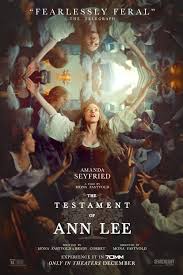
THE TESTAMENT OF ANN LEE
US, 2025, 137 minutes, Colour.
Amanda Seyfried, Lewis Pullman, Thomasin McKenzie, Matthew Beard, Christopher Abbott, Viola Prettejohn, David Cale, Stacy Martin, Scott Handy, Jeremy Wheeler, Tim Blake Nelson.
Directed by Mona Fastvold.
Who was Ann Lee – and a woman significant another to leave a testament? The answer to this question here is challenging, unsettling.
Norwegian writer-director Mona Fastvold, who writes and directs with her partner, Brady Corbett, especially the Oscar-winning The Brutalist, discovered that Ann Lee was significant in the 18th century establishment of the Shaker movement in New England, moving from the English city of Manchester. As the film shows in an initial startling Quaker episode where participants begin to shake, dangling arms loose, and young man and an old woman screaming incessantly, the Shakers were a development from the very quiet religious prayerful movement of the Quakers.
One of the striking features of this film is the recreation of the city of Manchester in the middle of the 18th century, the attention to detail, costumes and decor, the religious meeting places, homes, workplaces, the streets and markets, the intervention of the authorities. This film looks very impressive.
And, it sounds very impressive. The music direction has gone back to Shaker Spirituals of the period, disturbingly movement rhythms, forcefully sung, chanted, heavy pounding beats of the instruments, and all accompanied by an extraordinary choreography, men and women, period costume, rhythmic and erratic movement, shaking, stirring, stomping, the participants lost in some kind of spiritual ecstasy.
One might say this is a rather brutalist screen experience.
There is a voice-over narration of the story of Ann Lee, a devout little girl, always accompanied by her brother William, no playing with toys, rather a sense of prayer and the presence of God, continuing as she grew up, her Quaker involvement, her rebellion against formal Anglicanism and enthusiasm for popular movements like the Methodists. Personally, she experienced some lingering shock when witnessing her parents’ lovemaking, but marrying blacksmith, Abraham, having four children but their all dying young, and her spiritual sense and development moving her against all kinds of sexual experience. And requiring this her followers.
Ann Lee is played in an award-nominated performance by Amanda Seyfried, a powerful and intense performance, ensuring that Ann Lee comes across as intensely sincere, ecstatically prayerful, high standards for herself, her being acclaimed as Mother in the Shaker movement, and her belief that, while God came to earth as male in Jesus, God was to return to Earth for the second coming as female, in her.
There are also some arresting supporting performances led by Lewis Pullman as her brother William and continue disciple, and Christopher Abbott as her tormented husband, Abraham.
Ultimately, Mother has an inspiration that she should take her followers to America, just as the American Revolution was underway, an extraordinary storm scene which would make anyone wonder why men and women took the sea in those centuries, her trust and faith to find a land base, and the establishment of the various communities in this new world, becoming more numerous, significant prayer gatherings, a men’s door and a separate women’s door into the meeting room, then chant, stomping, gesticulating, until the time comes when Ann realises that she must leave this world.
Many audiences have found they are not on the wavelength of this particular religious history, its themes, its manifestations of faith, the peculiarities of this spirit manifested in bodily shaking. But, for those interested in what William James called the varieties of religious experience, this film is informative, interesting in its way, confronting and always challenging.
During the final credits there are continued statistical pieces of information, the maximum number in various communities at their peak in America, and the dwindling numbers to the present (remembering Ann Lee’s injunctions against spiritual sexual experience and her reliance on converts.)
- The history of the Quakers, the Shakers, the transition to the United States and establishing communities? The heritage?
- Audience knowledge of the Shakers, Ann Lee, of 18th century Manchester and the religious movements, the mission to America? The final statistics as to the number of continuing Shakers, the peak community numbers?
- The film is described as a musical drama, the emphasis on the drama of Ann Lee’s religious experience, the churches in Manchester, her marriage, children and their deaths, her emerging leadership? Described as Mother?
- The musical contribution: the traditional Shaker Spirituals, the movement, the lyrics, the dance, gestures, the pounding instruments? The titles on screen, the scriptural references to the woman? Choirs, the group and dancers, costumes, choreography? Their insertion into the narrative?
- 18th century England, the status of the Anglican church, the emergence of other movements, the indication of the Methodists? The Quaker meetings? The key visuals of the meeting, the man and his cries, gestures and contortions, the old woman and her very long crying out? Presence of God, presence of the Spirit, entering the psyche, entering the body, the mentality, the contortions, the shaking, a different kind of religious experience?
- The narrative, explaining Ann, her family, her situation, her brother William, her reaction to her parents copulating, Abraham, the marriage, the sexual encounters, the pregnancies, the four births, the difficulties, the babyirs dying? The effect on Ann, her rejection of physical sexuality, the bride of Christ in union with him? (And making converts but no marriages, and the lessening of the population of the Shakers?)
- Ann and William as children, his dependence, walking the city, the churches, their workplace, the relationship with the parents? Ann and her description of her life, prayer, conscious of God, not playing with toys, religion all through her life? And her growing up?
- Ann and her female qualities, the qualities of leadership, in Manchester, the role of William, her marriage to Abraham, his work, her praise of him, his sexuality needs, her refusals, the children and their deaths? Some alienation?
- Her going to the local communities, James Mawdsley and his wife, their leadership, welcoming and, the sessions, the religious fervour, prayer, dancing, shaking, gestures? The God language?
- The development of the group over the years, and growing older, William and his continued presence, separation from Abraham? The role of the Wardsleys? The response of the people of Manchester? Some converts? The role of Mary, her eyes, her friendship?
- The attitude of the churches, condemnation and rejection, the Shakers and their defiance, the local authorities?
- The sense of mission, the decision to go to America, the discussions, the appeal for finance to the member, his recommendation for a sponsor, the Wardsleys staying in England, Ann, William, Abraham and his going with them, the other members of the group?
- At sea, the vividness of the storm, the waves, the effect on the ship, on the passengers, and her defiance, providence, the calm, the criticisms of the crew of the denunciations, and confronting them?
- The small group, landing in America, the political situation, the background of the war of independence, through the city, finding the landlady, Ann and her visions and convictions, their being welcomed, the meals, the discussions? The young man and the girl, the sexuality issues, their leaving the dinner, together, found by their father, their having to leave?
- The small group, sailing north, the eccentric captain, going through the woods, the old man and his visions, shaking, pointing, the travelling, finding the land, settling in?
- The overview of the settlement developing, Ann and her leadership, the maps and her pouring over them, the buildings, the trees, logging, sawing, the houses and halls?
- The increasing congregation, people gathering? The assembly, the separate doors for men and women, the women’s dress, the prayer, the shaking, the dancing?
- The issue of the second coming, Jesus as male, the second coming for Jesus as female, God as male and female? Ann seen as Jesus in his second coming, Mother, The leader?
- The character of William, dependence on his sister, constantly with her, his role at the meetings, the prayer, always with the group, his ventures in America, his death?
- Mary, with Ann, Ann speaking of William coming, Mary explaining to her his death, Ann saying that he was coming to welcome her to happen, to her babies?
- And the continued impact of the Shaker songs, movement and choreography throughout the film?
- The overall experience, depending on the audience’s religious attitudes, scepticism, belief, different modes of prayer and spirituality, the impact of shaking, songs and dancing, gesticulating? Historically interesting? Relevance to the 21st-century?
Thunderbolts*
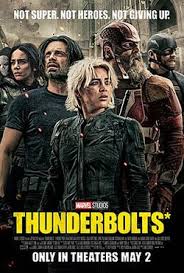
THUNDERBOLTS*
US, 2025, 126 minutes, Colour.
Florence Pugh, Sebastian Stan, Julia Louis-Dreyfus, Lewis Pullman, David Harbour, Wyatt Russell, Hannah John-Kamen. Olga Kurylenko, Geraldine Viswanathan, Wendell Pearce.
Directed by Jake Schreier.
A recent listing declares that there have been 36 Marvel Studios films over almost 20 years. Thunderbolts*is the latest and seems to have appealed at the box office.
The Marvel Studios superhero team has been The Avengers – their working together to save civilisation, a number of back stories and further developments. So, the question: who are the Thunderbolts? This is not an action story showing them working together. Rather, it is their origin story of their moving to work together. In fact, the characters have appeared in a variety of Marvel films, as well as in the S*H*I*E*L*D television series. Several of them have appeared in the Captain America films or in the Antman films.
So, who are they now and what is the mission? (And an indication to audiences who rush out during the credits, there is a longer than usual post-credits sequence indicating the future.)
First to be introduced is Yelena, a strong presence with Florence Pugh. She is an assassin, getting tired of her work, controlled by a political mastermind, Valentina. Julia Louis Dreyfus was Veep, but here she is even more powerful, facing the Senate enquiry, masterminding laboratories for developing weapons and reconditioning human beings. Clearly, Julia Louis Dreyfus is thoroughly enjoying this sinister and commanding role.
Then there is return of Bucky Barnes, Sebastian Stan, familiar from the Captain America films, here seen in a political context, confronting Valentina. Then we are reintroduced to Alexi Shostakov, David Harbour, prominent former Russian agent, now down on his luck driving taxis. There is Ghost (Hannah John-Kamen) who can appear and disappear through walls, from the Antman films. And, again from Captain America, a possible Captain, John Walker, Wyatt Russell, supremely self-assured.
Then there is Bob, a reconditioned human, Lewis Pullman. He is a mysterious presence, lacklustre one minute, energised the next, – and the character from Marvel comics, The Sentry.
The first part of the action shows each of these characters in action, but, with Valentina’s sinister plans, a great deal of conflict and fighting with each other. When they eventually do begin to understand each other, see how they are being controlled by Valentina, and the concern about Bob, they join to become an active force, building up to an action-packed confrontation.
In many ways, this group consists of a rather unprepossessing lot. Anti-heroes? Not many superpowers, rather relying on determination, intelligence, physical force, available weapons. And, by and large, they don’t radiate immediate charm! So, it will be interesting, as well as a challenge, to move into their next film, working together as a unit, assertive, and, with the*in the title, moving towards being new avengers.
The director, Jake Schreier, has, up till now, had a strong career in music videos and television series.
- Marvel Studios, the Thunderbolts comics, this film as the New Avengers introduction rather than a thunderbolts adventure?
- Marvel Studios and superheroes, action adventure, futuristic, the New York setting, destruction of New York, Washington, the variety of centres and experimentation, signs? Special effects? Musical score? Theme song?
- The range of characters, the introduction to each, their interactions, Bob as the common bond, Valentina, politics, impeachment, hearings, her control, experiments, budget, setting the base for New Avengers films?
- The introduction to Yelena, assassinations, controlled by Valentina, top of the building, falling, Parachute? Getting out from assassinations? The encounter with Alexi, the taxis, his squalid situation, his past career, the apartment, costumes? Relationship with you Lena, her dead sister?
- Audience knowledge of Bucky Barnes, Winter Soldier, the past films, in politics, the interview, concern about Valentina? The socials?
- John Walker, here character but yet,, his family, the possibility in the past of his being Capt America? His role in the team?
- Ghost, her presence, personality, contribution, less a member of the team?
- Bob, the comic character, simple, affable, his past, ambitions, the transformation, his becoming the Sentry/Floyd? Participation with the group, the influence of Valentina, is mixed experiences, dangerous, affable? The resolution?
- Valentina, the influence of her assistant, advice, yet prepared to betray her? The political background, the Senate enquiries and interrogations, her influence, control, plans?
- The building up of the new team, not so much with superpowers, the contrast with the Avengers, the final action sequences, CGI, stunt work, battles, the team winning, the role of Bob, the defeat of Valentina?
Skincare

SKINCARE
US, 2024, 96 minutes, Colour.
Elizabeth Banks, Lewis Pullman, Luis Gerardo Mendez, Michaela J (M.J.) Rodriguez, Nathan Fillion, Eric Palladino, John Billingsly.
Directed by Austin Peters.
The title is very straightforward and for audiences who follow the beauty industry, the developments for skincare, the range of products, the applications, endorsements by celebrities, there is much to enjoy. However, this is a tongue-in-cheek focus on an ambitious businesswoman, 20 years working, Hollywood and LA clientele, about to launch her own beauty line.
Non-skincare fans may well cross off this film for their viewing list. But, a hesitation. Some have called it a thriller. There is some violent action, a death, police investigation, twists and betrayals. But, it may be better to avoid the word thriller with its expectations these days of continued fast action, and see Skincare as something of a dark comedy with satiric touches.
The audience is certainly taking into the world of skincare, beauty centres, rivalries, marketing, finance and difficulties, promos on popular television shows. And, at the centre, making up her face in the mirror in close-up during the opening credits, is Elizabeth Banks as Hope Goodman. All seems to be going well (except for her landlord demanding the rent which she doesn’t quite have), anticipating the launch, and having her moments being interviewed on a television chat show.
In fact, for most of the running time, the plan goes to pieces. First of all, Latino charmer, Angel, with slick expertise sets up Shimmer Beauty only 20 paces away from Hope Goodman’s Salon. And she loses a lot of her clientele because of his publicity. As expected. And he gets the television slot instead of her.
Then things go quite skewiff. Enter a young man, (Lewis Pullman) martial arts training, setting himself up as a life counsellor, charming Hope, ready to intervene. Especially as a horrifying online campaign against her spreads like social media wildfire, false texting, manufactured photos, and even the advertising of sex programs at the salon. She needs Jordan’s help. And after her tires slashed, she needs the help of her friend, Amin, where her new stock is stored.
Most of us in the audience will pick up what is happening before Hope does. Which is a pity, because she tangles issues, her calls for help, attacks on Angel, some disillusionment for her – and the police arriving.
If this sounds interesting and/or entertaining, that is certainly what we are offered. And, her TV interview finally being played but with excerpts edited in a twist against her. Entertaining if not memorable.
- Based on a true story, Hollywood, the beauty industry, rivalries, tactics, violence, consequences?
- The title, the opening and Hopes face, the range of cosmetics, preparing herself, the arrival of the police? The action going back two weeks?
- The Los Angeles setting, Hollywood atmosphere, affluence, business, the beauty industry, realistic aspects, satirical aspects? Implied criticisms?
- Elizabeth Banks as Hope Goodman, her age, career, devoting herself to beauty, her clients, facials and massages, her own line, made in Italy, the preparation for the launch? Marina working with her, loyal assistant? At the television station, the popular compere is, the filming, her confident talking (and this later being used against her)?
- Hope and her relationship with our clients, the list, the visits? The business opposite her, her going over, the encounter with Angel, Shimmer as his title, beauty, his premises, his clients?
- Hope and her reaction, going to the landlord, business is business, the threats about the rent, her plea? Lyons visit and her bringing Jordan, young, his age, the discussions, her attraction?
- Jordan, initial information, in jail, photographer, his photographing Hope and his charm, flattery? His being a life counsellor? Hope and the conversations about Angel, the various clients and meeting with Hope, that changing and going to Angel, her challenging them?
- Use of the Internet, messages in texting, for some messages, photos, sex programs listed? The effect on Hope, with Marina, desperate, tires slashed going to her friend, Men, and his holding the boxes of her cosmetics before the launch? The effect on Hope her becoming more and more desperate? The slashing of her tires? The big men approaching her, violent, sex, Jordan arriving and fighting them?
- Hope, the police and complaints, listening and not listening?
- Television, Angel and his appearance and talk, the host, Hope contacting Brett, his sexual proposal, her reaction, recording him? His desperation, her saying she deleted the recording? Holding it over him, the phone calls, putting her segment to air? The mysterious man watching her in the diner, following her in the street – and the final revelation that he was hired by Brett and said that the tape was deleted?
- Hope, following Angel, at home, his karaoke singing?
- Hope, the phone calls, demanding on Jordan, his coming, waiting, and the audience knowing who really was, the men in his martial arts and life course, hiring them for a further attack on Hope? His becoming more and more desperate, phoning the police anonymously about Hope?
- Hope, finding the truth about Jordan, his slashing the tires? Her wanting to set him up?
- Yet her continued animosity towards Angel, going to Amin, his going to the house, assaulting Angel, his own wound, driving, his crash?
- Marina, a relationship with Jordan, giving up hope the address, her going to confront him, the baseball bat?
- The police, the assault on Angel, suspicions?
- Angel in his recovery, the effect on Hope, the suspicions because of the men and Jordan, the police coming to get her, her moment in the limelight, photographed?
- Brett and the host, playing the interview with Hope, her own words implying that she had gone into action against her arrival?
Caine Mutiny Court-Martial, The/ 2023
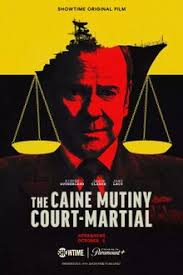
THE CAINE MUTINY COURT MARTIAL
US, 2023, 108 minutes, Colour.
Kiefer Sutherland, Jason Clarke, Jake Lacey, Monica Raymund, Lewis Pullman, Jay Duplass, Tom Riley, Lance Reddick, François Baptiste, Gabe Kessler.
Directed by William Friedkin.
In 1954, audiences worldwide were very impressed by Edward Dmytryk’s film adaptation of Herman Wouk’s celebrated novel, The Caine Mutiny. With a very strong cast including José Ferrer, Van Johnson, Fred MacMurray, the attention was on Humphrey Bogart as Captain Queeg, not the usual kind of character that he played. He was the captain of the ship, his subordinates accused of mutiny against him, the revelation of his character, his fixations, his nervousness…
In 1988, Robert Altman made a television version of the play based on the novel, The Caine Mutiny Court-Martial.
2023 saw a new version of the play, filmed for television, and, in fact, the last film by celebrated director William Friedkin (The Exorcist, Oscar for The French Connection). He directed the film in his late 70s.
Time and location for this story has been updated to the 2020s, specific dates, a situation of mines in the Persian Gulf. And there is all the contemporary technology to draw on. And, another change, the prosecutor has been changed from male to female, now played by Monica Raymund.
There is a very interesting male cast, Jason Clarke at his best as the defender, Jake Lacey in a much more serious role than usual as the officer accused of mutiny, Lewis Pullman as the sinister presence.
The film is dedicated to veteran actor, Lance Reddick, who appears as the presiding judge, a strong role, his last film role.
Where this version differs is that Captain Queeg is not presented initially so strongly neurotic as in the other versions. Here he is played by Kiefer Sutherland, defending himself, speaking forthrightly, the touch of the trembling hands. However, he is later called as a witness for the defence, the defence badgering him, and all his neuroses revealed – especially in the context of the testimony of eccentric behaviour explained by the main witnesses for the defence.
While Captain Queeg is condemned, the defence lawyer gives a speech honouring his service to the country over so many decades, the lawyer drinking, going to a celebratory party, and denouncing the sailor, the novelist, who, insinuating, brought on the fall of Queeg. And the film stops.
It is over to the audience, to relive their experience of the trial, the various testimonies, contradictions, denials, personal motivations, integrity… and make their own assessments and judgments.
- The long popularity of the novel and the film? The stage play the court-martial, Robert Altman’s version? William Friedkin’s version? The updating to the 2020s and contemporary technology?
- The film based on a play, the emphasis on dialogue, interactions? The audience imagining the episodes talked about? The end, leaving the courtroom, in the street? At the party? The musical score?
- The episode, the relieving of Captain Queeg of his office, the situation with the mines, Maryk taking responsibility? The episode seen as mutiny?
- The introduction to Maryk, age and experience, discussions with Barney Greenwald, his appointment a few days before, accepting him as defence?
- The proceedings of the court, the presiding judge, his focus of attention, decisions about objections, his interrogating the witnesses, the decision about reprimanding Greenwald or not? The other members of the bench attentive?
- Greenwald, his background, his tactics, his interviewing the range of witnesses, turning Queeg into the equivalent of the accused, little interrogation of him, awaiting his return? The eliciting of information, description of the episodes about Queeg? The cumulative effect?
- Challee, the prosecutor, a woman in this version, the attitudes, his determination, the questioning of witnesses, the defensive Queeg, her objections, not always sustained? The cumulative effect, her final speech and criticisms of Greenwald?
- Queeg, his presence, the impact, issues of his mental stability, his answers to questions, his explanation of the situation? Maryk listening to him, looking at him?
- Keith, his friendship with Maryk, his explanation of the range of stories about Queeg? Greenwald drawing him out? The contrast with Keefer, the novelist, advising Maryk, friendship with Maryk, the decision to go to the higher authorities, backing out?
- The young sailor, 20 years old, awkward, not familiar with court proceedings, his testimony?
- The witnesses for mental health, the psychologist, the defensive Queeg and his abilities? The intricacies of the cross examination? The doctor, limited experience in his work, of the Navy, his defensiveness?
- Maryk and his testimony, the prosecutor hostile, indicating his limitations of education and comprehension? Greenwald, drawing out the stories, Queeg’s strange behaviour, the stories, the key, the searching of the personnel naked, his testing out all the keys, the bucket of keys? The story of the banning of films? The banning of water because of one man having a shower? The persecution of the men? Maryk and keeping his log, quoting from it, Keefer’s advice?
- Queeg going on the stand, booking, the denials, issues of memory, his nervousness, twiddling his thumbs, the balls in his pocket, Greenwald and his further interrogations, the tangle of the stories, the cheese, the strawberries, his further entangling himself, his beginning to rant, self-justification, his condemnation of the men, their lack of discipline, order, his extremism, shirt hanging out…? Greenwald getting him to read out his positive testimony about Maryk?
- The final effect of Queeg testimony? The prosecutor and her business? Greenwald and his final comments? Talking with Maryk, saying he had murdered Queeg? Doing his duty as a defence lawyer?
- Discussions of mental health, sanity and insanity, signs and symptoms, control, paranoia, self-esteem, self-justification? Perfectionism?
- The aftermath, the issue of the party, whether Greenwald would go or not, his drinking, arrival, his harsh words, the confrontation with Keefer, exposing him as the power behind the throne, Keefer wanting to get Queeg, writing the novel, the money? And throwing the drink and his face?
- The finale, the sudden stop, leaving the audience to assess what they had seen, the defensive Queeg and his long service, yet his failure in command? The role of Maryk, respect and disrespect? Experience? And the malice of Keefer?
Salem's Lot/ 2024
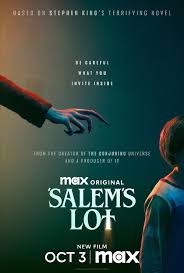
SALEM'S LOT
US, 2024, 170 minutes, Colour.
Lewis Pullman, Mackenzie Leigh, Jordan Preston Carter, Alfre Woodard, Bill Camp, John Benjamin Hickey, Spencer Treat Clark, Plou Asbaek, Alexander Ward, William Sadler.
Directed by Gary Dauberman.
Salem’s Lot is one of Stephen King’s earliest works. It has been filmed several times, most successfully for television.
Here is a 21st-century version – which has not received the hoped-for acclaim.
It is a story of a town in Maine, Stephen King territory. There has been atmosphere, disturbing, in the town, and a writer returns to investigate his past. His played by Lewis Pullman. At the same time, a wealthy man buys a property and imports a large box – revealed to be the container for a vampire.
So, this is a vampire film, strikingly visual as regards the vampires but their behaviour resembling that of many zombie films.
The writer is attracted to a young woman in the estate agency, dominated by her mother who eventually turns out to be the servant of the vampire owner. There are sympathetic characters in the town, especially the school principal. The most sympathetic character is a young boy, Jordan Preston Carter being a strong screen presence. He is bullied, discovers, to his horror, that some of his young close friends who supported him have become vampires.
There are not so many surprises in the vampires taking over except the death of the young woman, so no ultimate romance. But the school principal is taken over – played by Bill Camp. On hand is the local doctor, very tough, played by Alfre Woodard.
One of the most interesting features is that the town streets are deserted, no cars, discovering them all at the drive-in, the zombies in the boot of the car, ready to emerge as soon as darkness falls. One of the best features is the young boy driving a car, knocking down the drive-in screen so that the sun burns up the emerging vampires.
However, there are some ultimate confrontation is very little of a happy ending.
- A Stephen King novel? Previous film and television versions? 21st-century interpretation?
- Atmospheric horror, the mysterious removal at the opening, ominous sense, the box, is one, the dirt…? Setting the tone?
- Salem’s Lot as a Maine town, atmosphere, small, homes, diner, schools…? The musical score?
- The arrival of the visitor, renting the old house, the storing of the coffin? Mysterious?
- The school, the boys, the bully, Mark, Danny and his friends, the second attack, Mark tripping him, the fight, the principal, breaking the fight, supportive of Mark? Mark and his family?
- Ben, driving into town, his past story, growing up, parents killed in the crash? His career as a novelist? Looking for accommodation, Susan and the book, realisation of who he was? Later visiting him, the attraction, discussions, the scene at the drive-in? The sexual relationship? Her back story, her possessive mother?
- Barlow and his background and dominance? Straker and his role in the town? The young boys, families? the range of town characters – and the preparation for them to be vampirised?
- Ben, his presence in the town, interactions with people, memories of the past, Susan’s mother warning him off? His research?
- The time, the dark, the manifestations of the vampires, their appearance, zombielike behaviour?
- The taking of the town, the various confrontations, including Susan? The school principal, the caretaker, his intervention, his becoming a victim?
- The doctor, her role in the town, tough, sceptical, becoming involved? Susan’s mother and antagonism?
- The buildup to the climax, Mark and his interventions, his family? The other boys – and the scenes of their being pursued in the forest, taken over by the vampires? Vampires themselves, their appearances, confrontations?
- The means of warding off the vampires, the crosses and the light, on the vampires’ faces, and the personal interventions, especially Mark and his young friend? The attempts to resuscitate Susan, her turning on them?
- Mark, using his wits, into the house, locked in, escaping, the drive-in? The absence of cars on the streets, all at the drive-in? The huge screen? Looking in the boot of the car, the vampires all hidden? The setting sun, the coming of the darkness, trying to open Barlow’s coffin? The dark and the vampires emerging at the drive-in, Mark and his driving, knocking down the screen, prolonging the light, and the light consuming the vampires? The buildup to the final confrontations, Susan’s mother shooting the doctor? Mark arriving and knocking her down?
- Surviving, Mark and Ben, and driving out of Salem’s lot?
