Displaying items by tag: Thomasin McKenzie
Testament of Ann Lee, The
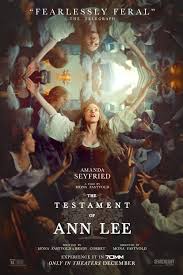
THE TESTAMENT OF ANN LEE
US, 2025, 137 minutes, Colour.
Amanda Seyfried, Lewis Pullman, Thomasin McKenzie, Matthew Beard, Christopher Abbott, Viola Prettejohn, David Cale, Stacy Martin, Scott Handy, Jeremy Wheeler, Tim Blake Nelson.
Directed by Mona Fastvold.
Who was Ann Lee – and a woman significant another to leave a testament? The answer to this question here is challenging, unsettling.
Norwegian writer-director Mona Fastvold, who writes and directs with her partner, Brady Corbett, especially the Oscar-winning The Brutalist, discovered that Ann Lee was significant in the 18th century establishment of the Shaker movement in New England, moving from the English city of Manchester. As the film shows in an initial startling Quaker episode where participants begin to shake, dangling arms loose, and young man and an old woman screaming incessantly, the Shakers were a development from the very quiet religious prayerful movement of the Quakers.
One of the striking features of this film is the recreation of the city of Manchester in the middle of the 18th century, the attention to detail, costumes and decor, the religious meeting places, homes, workplaces, the streets and markets, the intervention of the authorities. This film looks very impressive.
And, it sounds very impressive. The music direction has gone back to Shaker Spirituals of the period, disturbingly movement rhythms, forcefully sung, chanted, heavy pounding beats of the instruments, and all accompanied by an extraordinary choreography, men and women, period costume, rhythmic and erratic movement, shaking, stirring, stomping, the participants lost in some kind of spiritual ecstasy.
One might say this is a rather brutalist screen experience.
There is a voice-over narration of the story of Ann Lee, a devout little girl, always accompanied by her brother William, no playing with toys, rather a sense of prayer and the presence of God, continuing as she grew up, her Quaker involvement, her rebellion against formal Anglicanism and enthusiasm for popular movements like the Methodists. Personally, she experienced some lingering shock when witnessing her parents’ lovemaking, but marrying blacksmith, Abraham, having four children but their all dying young, and her spiritual sense and development moving her against all kinds of sexual experience. And requiring this her followers.
Ann Lee is played in an award-nominated performance by Amanda Seyfried, a powerful and intense performance, ensuring that Ann Lee comes across as intensely sincere, ecstatically prayerful, high standards for herself, her being acclaimed as Mother in the Shaker movement, and her belief that, while God came to earth as male in Jesus, God was to return to Earth for the second coming as female, in her.
There are also some arresting supporting performances led by Lewis Pullman as her brother William and continue disciple, and Christopher Abbott as her tormented husband, Abraham.
Ultimately, Mother has an inspiration that she should take her followers to America, just as the American Revolution was underway, an extraordinary storm scene which would make anyone wonder why men and women took the sea in those centuries, her trust and faith to find a land base, and the establishment of the various communities in this new world, becoming more numerous, significant prayer gatherings, a men’s door and a separate women’s door into the meeting room, then chant, stomping, gesticulating, until the time comes when Ann realises that she must leave this world.
Many audiences have found they are not on the wavelength of this particular religious history, its themes, its manifestations of faith, the peculiarities of this spirit manifested in bodily shaking. But, for those interested in what William James called the varieties of religious experience, this film is informative, interesting in its way, confronting and always challenging.
During the final credits there are continued statistical pieces of information, the maximum number in various communities at their peak in America, and the dwindling numbers to the present (remembering Ann Lee’s injunctions against spiritual sexual experience and her reliance on converts.)
- The history of the Quakers, the Shakers, the transition to the United States and establishing communities? The heritage?
- Audience knowledge of the Shakers, Ann Lee, of 18th century Manchester and the religious movements, the mission to America? The final statistics as to the number of continuing Shakers, the peak community numbers?
- The film is described as a musical drama, the emphasis on the drama of Ann Lee’s religious experience, the churches in Manchester, her marriage, children and their deaths, her emerging leadership? Described as Mother?
- The musical contribution: the traditional Shaker Spirituals, the movement, the lyrics, the dance, gestures, the pounding instruments? The titles on screen, the scriptural references to the woman? Choirs, the group and dancers, costumes, choreography? Their insertion into the narrative?
- 18th century England, the status of the Anglican church, the emergence of other movements, the indication of the Methodists? The Quaker meetings? The key visuals of the meeting, the man and his cries, gestures and contortions, the old woman and her very long crying out? Presence of God, presence of the Spirit, entering the psyche, entering the body, the mentality, the contortions, the shaking, a different kind of religious experience?
- The narrative, explaining Ann, her family, her situation, her brother William, her reaction to her parents copulating, Abraham, the marriage, the sexual encounters, the pregnancies, the four births, the difficulties, the babyirs dying? The effect on Ann, her rejection of physical sexuality, the bride of Christ in union with him? (And making converts but no marriages, and the lessening of the population of the Shakers?)
- Ann and William as children, his dependence, walking the city, the churches, their workplace, the relationship with the parents? Ann and her description of her life, prayer, conscious of God, not playing with toys, religion all through her life? And her growing up?
- Ann and her female qualities, the qualities of leadership, in Manchester, the role of William, her marriage to Abraham, his work, her praise of him, his sexuality needs, her refusals, the children and their deaths? Some alienation?
- Her going to the local communities, James Mawdsley and his wife, their leadership, welcoming and, the sessions, the religious fervour, prayer, dancing, shaking, gestures? The God language?
- The development of the group over the years, and growing older, William and his continued presence, separation from Abraham? The role of the Wardsleys? The response of the people of Manchester? Some converts? The role of Mary, her eyes, her friendship?
- The attitude of the churches, condemnation and rejection, the Shakers and their defiance, the local authorities?
- The sense of mission, the decision to go to America, the discussions, the appeal for finance to the member, his recommendation for a sponsor, the Wardsleys staying in England, Ann, William, Abraham and his going with them, the other members of the group?
- At sea, the vividness of the storm, the waves, the effect on the ship, on the passengers, and her defiance, providence, the calm, the criticisms of the crew of the denunciations, and confronting them?
- The small group, landing in America, the political situation, the background of the war of independence, through the city, finding the landlady, Ann and her visions and convictions, their being welcomed, the meals, the discussions? The young man and the girl, the sexuality issues, their leaving the dinner, together, found by their father, their having to leave?
- The small group, sailing north, the eccentric captain, going through the woods, the old man and his visions, shaking, pointing, the travelling, finding the land, settling in?
- The overview of the settlement developing, Ann and her leadership, the maps and her pouring over them, the buildings, the trees, logging, sawing, the houses and halls?
- The increasing congregation, people gathering? The assembly, the separate doors for men and women, the women’s dress, the prayer, the shaking, the dancing?
- The issue of the second coming, Jesus as male, the second coming for Jesus as female, God as male and female? Ann seen as Jesus in his second coming, Mother, The leader?
- The character of William, dependence on his sister, constantly with her, his role at the meetings, the prayer, always with the group, his ventures in America, his death?
- Mary, with Ann, Ann speaking of William coming, Mary explaining to her his death, Ann saying that he was coming to welcome her to happen, to her babies?
- And the continued impact of the Shaker songs, movement and choreography throughout the film?
- The overall experience, depending on the audience’s religious attitudes, scepticism, belief, different modes of prayer and spirituality, the impact of shaking, songs and dancing, gesticulating? Historically interesting? Relevance to the 21st-century?
Fackham Hall

FACKHAM HALL
UK, 2025, 97 minutes, Colour.
Thomasin McKenzie, Ben Radcliffe, Damian Lewis, Katherine Waterston, Tom Felton, Emma Laird, Adam Woodward, Jason Done, Tim McMullen, Anna Maxwell Martin, voice of Hayley Mills.
Directed by Jimmy O'Hanlon.
The trailer offered an alert. The writers were identified as those watched the first two seasons of Downton Abbey. They had not watched in Downton Abbey with great reverence. So, what better than to parody period costume drama, heightened with melodrama, all in the spirit of spoof? And, here it is. (And the caution as to how to pronounce the title, especially if you drop h in hall).
So, a country mansion, quite splendid in its exteriors, the costumes and decor and decorations in the interiors both upstairs and downstairs. And, a parade of the upper-class, not being respectful one of the prerequisites for writing the dialogue of these characters or directing their performances. And, depending on the audience’s class upbringing, amusing, funny, or very funny. And some spoof of downstairs.
And, there is an extra introduction to the film, the 20th century variation on Oliver Twist, a pickpocket, Eric, Ben Radcliffe, more than swift and adept with watches (and, later, trousers!), An orphanage background, with the nuns, now entrusted with the message to take to the Lord of Fackham Hall (but circumstances making him forget about the message until the end – which, of course, changes the whole narrative!).
Lord Devenport is played by Damian Lewis, taking time off from espionage and enjoying his pomposity. Katherine Waterston is the image of the concerned parent, especially in terms of property-through-valuable marriages, the aristocrat. There is sadness in the Davenport’s life, the mysterious deaths of the four sons, John, Paul, George and Ringo. Daughter, Poppy is to marry her cousin (one needs to check the Latin motto on the crest of the Hall), the obnoxious Archibald, boastfully bad shot with his rifle, and played by the original Lucas Malfoy, Tom Felton.
Eric encounters Rose, Thomasin McKenzie, pining for true love, but forthright in her opinions, attracted to Eric, saving him from being fired by the harsh servant surpervisor, Mrs McAllister (Anna Maxwell Martin) but liked by the very literal butler, Cyril, (Tim McMullen).
This is not an outloud laughter all the time comedy, though seen in a cinema, some loud laughter might be infectious. Rather, smiles, silly shenanigans, slapstick, pratfalls, innuendo, some not so innuendo jokes, puns, plus literal interpretations (“did you fight with him?”. “No, I fought alongside”!).
There are some flashbacks to action in World War I, reminding us of so many films in the trenches – but, again, with spoof.
But, for this reviewer, best of all is the simple comic device, performed by Jimmy Carr as the Reverend (and he was one of the writers) with reading texts and mistakenly omitting the full stops and having to correct the sense of what he was reading (“you may kiss the altar boys…; Correction: “you may kiss. The altar boys will sing..). Happily, there are about five of these the film.
As they say, you get the picture. And, if you enjoy the British spoofing themselves unashamedly, by all means visit Fackham Hall.
Joy/ 2024
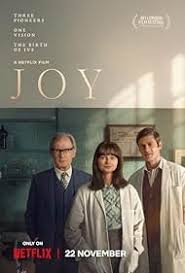
JOY
UK, 2024, 115 minutes, Colour.
Thomasin McKenzie, James Norton, Bill Nighy, Rish Shah, Tanya Moodie, Joanna Scanlon.
Directed by Ben Taylor.
The 21st century audience takes IVF procedures for granted. It was not always the case as this film dramatises.
This is an interesting and enjoyable drama, fairly straightforward in its presentation. It opens in 1968, the year in which the central characters started to work together towards success in IVF procedures, the naming of particular years on the screen, until 1977 and success with the pregnancy and in 1978, the birth of the first baby, Louise Brown, in England.
The is one follows the science steps of those involved, insights, experiments, many failures, and some scepticism from the science community. The film also follows the scientists and surgery working with a range of infertile women, full of hope that they will be able to conceive and give birth. And, the screenplay gives a great deal of attention to ethical issues, criticisms, the accusation of interfering with nature, fears of the consequences in health for the children born.
At the opening of the film, there is a tribute to the three people key to the development of IVF and the comment that one of them, a young woman at the time, a trained nurse with an interest in science, Jean Purdy, who had died at age 39 from cancer, had not been included in the plaques or tributes. And the surgeon who was key to the processes, Patrick Steptoe, had also died. The survivor, named as a Nobel prizewinner Robert Edwards, is honoured but makes an appeal for recognition of the other two.
With this introduction, we see the young Jean Purdy (New Zealand actress, Thomasin McKenzie) eager to meet the creative scientist, Bob Edwards (James Norton), successful in catching a runaway mouse in the lab, immediately getting a job. They go to hear the surgeon, Patrick Steptoe, played by Bill Nighy in one of his most agreeably positive roles, in dispute with other scientists, noting some of his surgical breakthroughs.
The action taking place over a decade, we see the young woman moving from her 20s to 30s, deeply involved, her religious mother disagreeing with her, not wanting her to visit her or the church, a sacrifice for the religiously-minded Jean. The quality Jean brings to the procedure is the personal interaction with the women, not just the science and the medicine, but the personal, emotional, the psychological – the first group of women calling themselves the Ovum Club.
James Norton is intense as Edwards, a family man with several daughters, aggressive, especially in a range of television interviews where he is challenged, his procedures are denounced, his becoming despondent, deciding to stand for politics but not being elected, persuaded by Jean to go back to the enterprise.
Patrick Steptoe offers the medical contribution, the precise and typical procedures for the impregnation, number of attempts, having to communicate failure to the hopeful would-be mothers, supported by his wife over the years.
The last part of the film is the encounter with the Browns, the success, the pregnancy, the caesarean birth, the joy of the parents, the happiness of the trio – and the Browns offering them to suggest the middle name for their daughter, the group suggesting Joy.
- Audience knowledge of the development of IVF, the 1960s and 1970s, science, ethics, media, religion, public opinion?
- The title, the joy of women giving birth, the team’s name for the middle name for Louise Brown?
- Based on a true story, the opening speech, Robert Edwards and his point that Jean Purdy had been ignored, his plea for acknowledgement for her? For Patrick Steptoe? The visualising of the plaque at the hospital?
- Introduction to Robert Edwards, his scientific background, the beginnings of IVF, his laboratory work, his team, his interest in Patrick Steptoe, at the lecture, Steptoe and his interrupting the speaker, his irritation? Indications of clashes between scientists and their subjects, possibilities, ethical issues?
- Jean, her age, her background work as a nurse, science, her interest in Bob Edwards, coming to the office, wet shoes, holes, the chasing of the mouse, catching it, being hired?
- Jean, her personality, religious, church, the Vicar? Her mother, devout? Her mother correcting her, not stooping…? The mother’s response to her daughter’s work, public opinion, wanting her to give it up, not going to the church, not coming to the home, the pain for Jean, the loss of religious comfort in the church, the separation from her mother, the later visit to the church, with the vicar? The hostile helper? Leaving the treat for her mother at the door?
- Bob Edwards, his intensity, at home, his wife, his daughters, home life? The discussions? His continued investigations, persuading Patrick Steptoe, Steptoe and his techniques, laparoscopy, assisted by Marian, Matron, Jean’s shock to discover he was doing abortions? Matron’s explanation of backyard abortions, women’s choice?
- The highlighting of dates, from 1968, various moves to 1977, the stages of experiments, the scientific explanations given, the close-ups of the work, confidence, the group of women, arriving, talking, tests, the procedures,, disappointments, audience sympathy for the women? The calling themselves the Oval Club? Jean and her personal listening, the outing to the beach?
- The effect of all this work over the years on Jean? Her looking sad, often morose? The interactions with Patrick, especially concerning her illness and the possibility of having children? The interactions with Bob, the enthusiasms, the disappointments, fresh ideas and possibilities?
- Her leaving, going back to her mother, caring for her mother, her mother’s death? The funeral, Patrick and his wife coming?
- The continued interest, ideas, the contact with Bob, his standing for the Labor Party, his defeat? The group getting together again?
- The new group of women? Moving to 1977?
- Bob, direct, the media, trying to avoid journalists, television interviews, the discussion with the scientist and his development of DNA? The public hostility in the television audience? Scientists and their condemnations? Ethical issues? His arguments in the developments in contact lenses, false teeth…? And the risks of failure?
- The buildup to the first success, Leslie Brown and her husband, an ordinary couple, their consent, the details of the IVF work, her pregnancy, the caesarean birth, the first IVF baby, her father, the joy of the team, the process being filmed, the photos? The decision to offer the name Joy for the baby?
- The importance for audiences to see this story, the human issues in the context for scientific development, ethical issues, decisions? The final information about the statistics of babies born through IVF?
Eileen
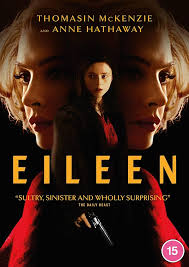
EILEEN
US/UK, 2023, 97 minutes, Colour.
Thomasin McKenzie, Anne Hathaway, Shea Whigham, Sam Nivola, Owen Teague, Siobhan Fallon Hogan.
Directed by William Oldroyd.
A young woman, Eileen (New Zealand’s Thomasin McKenzie) lives in a drab music Massachusetts town in the 1960s, alone with her ex-policeman father (Shea Whigham), alcoholic, menacing with his gun, always putting her down. She works in reception at the local prison.
Into her life comes a new expert, Rebecca, Harvard trained, blonde Marilyn Monroe look, a striking performance from Anne Hathaway. Anne Hathaway takes a liking to Eileen, affirms her, goes out for a drink with her, Eileen flattered by the attention.
While the film spends a lot of time focusing on Eileen, her ugly life at home, getting her father to surrender the gun to her, keeping him under control, despising him yet caring for him, and some of the personal squalor of her own life, clothes, cleanliness, as well as her voyeurism at night a local meeting place, early in the film, the film then moves to the complexity of her response to Rebecca. And the audience wonders whether there is a real liking there or Rebecca is using Eileen.
The complexity of the plot focuses on a young man whom Eileen continually observes and imagines, accused of killing his policeman father. His mother is interviewed by Rebecca, leading to a striking confrontation – and a later twist in the plot, violence, Eileen having to check her relationship with Rebecca, making final decisions, freeing herself from her father and from the town.
Continually intriguing.
- The title, the focus on Eileen? Based on an award-winning novel, screenplay by the author and her husband?
- The setting, Massachusetts, the 1960s, the small town, the weather, dismal, the streets, the prison and offices, homes, the bar? The surrounding countryside, bleak?
- The range of songs, accompanying the action, the lyrics commenting on characters and action?
- The portrait of Eileen, age 24, the introduction, in her car, voyeurism, sexual experience, at home with her father, his drinking and violence, his gun with people in the street, the police protesting, giving up his gun to Eileen, her narrow life, stopping studies, at the prison, letting visitors in and searching them, the reactions of the two women in the office, a humdrum existence? Use of health, cleanliness, uncleanliness?
- Life in the prison, her looking out the window at Lee Polk, watching the guard, her fantasy about him, the physical reactions? Sitting in public? The work in the prison, the files?
- The arrival of Rebecca, the Marilyn Monroe look, blonde hair, costumes and style, the impact of her arrival, her haughty manner, Harvard, her role in the prison, with members of the staff, the significance of the Christmas pageant, the presentation, the mockery, the fight, happening every year? Her reaction, Eileen’s reaction?
- The relationship between Rebecca and Eileen, the glamour versus the plain, Eileen caught up, admiration, fascination, Rebecca talking to her, the invitations, outside smoking, the discussions, the drink at the bar, the dancing, Eileen infatuated?
- Polk’s situation, Eileen always watching him in the yard, alone, his mother’s arrival, Rebecca sweeping her in, Eileen watching the discussion, Lee silent, the mother’s reaction, sweeping out in anger? The consequences, the issue of the son killing his father, the echo for Eileen at her own father?
- At home, her father’s drinking, complaints, mocking her, memories of his wife, the fact that he was abusive, his saying she forgave him, the continued treatment of Eileen, out all night, being sick on the car, locking her out, the criticisms, the accident, going to the doctor, the drinking would kill him, coming home? The final talk with some kind of understanding of her?
- Christmas Eve, Rebecca gone, Eileen dismayed? The phone call, going to the house, the bottle of drink, the talk, audience anticipation, a different consequence, Mrs Polk, in the basement, tied up, the interrogation, her collapse and telling the truth about father and son, her own behaviour? Eileen with the gun, holding it, wounding Mrs Polk, forcing the drugs down?
- Rebecca, staying to tidy up, never appearing again? Eileen to take the body, at home, her decision to drive out, leaving the body wounded and drugged, going to the highway, getting a lift, going to a future, with the money she had saved, smiling?
- The unpredictability of the plot, intimations of direction of the plot, but the plot going in different directions?
