Displaying items by tag: Alexander Skarsgaard
Moment, The
THE MOMENT
UK/US, 2026, 115 minutes, Colour.
Charli XCX, Alexander Skarsgaard, Kater Berland, Rachel Sinnott, Isaac Powell, Jamie Demetriou, Rish Shah, Ben Castle-Gibb, Michael Workeye, Rosanna Arquette,
Directed by Aidan Zamiri.
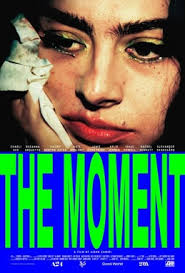 The film has been described as a “Mockumentary”. This puts it in the vein of This Is Spinal Tap. While there is quite an amount of satire on the popular music industry with parody sequences, the portrait of the artist, in herself, with those in attendance, planning, interactions and betrayals, mean that there are serious themes underlying the whole venture.
And, it is a project of Charlie XCX, ideas and treatment, which raises a question of how much it is a vanity project or not.
And, the success of the film and its popularity will depend on the reputation of the singer, over so many years, her albums, success, the BRAT Summer, her personality in herself, her personality on stage and screen. Her fans will accept her. Those who do not know her as a singer (some knowing her for her song compositions for Emerald Fennell’s version of Wuthering Heights) may not find her as a particularly striking personality.
And, for those not caught up in life behind the scenes, some of the material may be quite uninteresting, some using the word “boring”,. And some of it might seem quite pretentious, self-indulgent.
The thing is that this is the story of Charlie XCX and her Essex origins, her success, her team, various managers, especially Tim, her falling out with Celeste, the importance of the business connections and promotions with characters played by Rosanna Arquette and the various British entrepreneurs linking up with promotion companies like Amazon, and a significant presence of the director of the concert film, played eccentrically by Alexandder Skarsgaard, enjoying the opportunity and, while Charlie herself is hoisted high, trying to direct her, in another scene, explaining how she might recite introductory lines, doing a much better impersonation of a diva than the singer herself!
And, the style of the film is very much television and streaming promotion, words, dates, neon signs et cetera flashing throughout the film all over the screen. Some of the editing is fast paced – but the more dramatic sequences rather slow. Ultimately, there is the staging of the concert in London’s Dome.
There are also the personal dilemmas of the singer herself and a particularly striking sequence where she goes to a skin specialist who begins to criticise her, her skin, her tensions, her inner self, then refusing to work with the singer. Upset, she leaves and encounters a rival star who enthuses about the specialist, then is forced to buy a whole lot of goods from the Centre, using her special BRAT credit card – leading to complete financial crisis and bankruptcy for the backers sponsoring the singer.
If this sounds interesting, audiences should have a look. If it does not sound interesting – it will not be interesting to watch.
Pillion
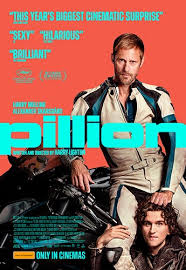
PILLION
UK, 2025, 106 minutes, Colour.
Harry Melling, Alexander Skarsgaard, Douglas Hodge, Leslie Sharp, Jake Shears.
Directed by Harry Lighton.
Riding pillion on a motorbike is something exhilarating for the central character of this unusual story, Colin, a rather introverted man in his 30s, parking ticket supervisor in the London suburbs, living at home with his parents.
Colin is played by British actor, Harry Melling, who embodies the complexity of timidity, anxiety, an unfulfilled life, hopes for relationship.
Colin sings in a pub with his father and brother, Barbershop Four. a capella, collecting donations but refused by a leather-jacketed man – who does write and note and puts it in Colin’s pocket, a rendezvous place and a phone number which Colin follows up.
This is a gay-themed story, Colin reserved, hoping for a partner, accepted and encouraged by his parents.
The narrative here parallels the rather familiar story of a dominant male with a female companion, made subservient to every wish and whim, humiliated, treated as a household slave and sexually exploited. Unfortunately familiar, but not often seen in terms of a dominant male and his male servant/slave.
The biker, Ray, is played by Alexander Sarsgaard, supremely confident, arrogant, sometimes quietly playing classical piano, but involved in a local gay biker gang, who later, go to a seaside resort, dominance of their sex slaves, shown very directly and frankly, Colin, by this time, accepting his position in Ray’s house, but, here, publicly humiliated by Ray.
Colin’s mother is very ill with cancer, wants to meet Ray, surly in his refusal but then relenting. At the dinner, a very British baked dinner, she interrogates Ray, turning on him rather viciously. Colin is desperate.
There is a crisis, Colin celebrating his birthday at home, Ray ignoring it, but the bikers supporting him. Gradually, Colin, who Ray says has ‘a capacity for devotion’, tries to assert himself, ultimately asking for a day off. Again Ray dismissing the idea.
But, Ray relents again, allowing Colin to decide what to do on this day off, but it is a turning point for both of them. Ray rides off, Colin and his father searching for him. While Colin does achieve some self-respect after his willing, then unwilling, life with Ray, we are left wondering whether Ray is going to revert to his all-dominating self or whether the humanity of the day off has transformed and whether he can deal with a different, more human, self.
But Colin might have a better future.
- The title, motorbikes, passengers? And a symbol for subservience in a relationship?
- The setting, the suburbs, homes, flats, streets, the countryside,, cinema? Suburban feel?
- The music, the barbershop For an a cappella, Christmas, songs? Chris and singing, to the ladies in the square?
- The tone of the opening, the car on the highway, the bike, the cyclists, the taking? Ray, height, close, the bike, in the pub, not giving money, writing the note? His motivation? Attraction? In the Lane, the sexual encounter, Ray and his attitudes, Colin and the experience?
- Colin, his work with parking tickets, the angry woman outburst? His age, living at home, his orientation, accepted, especially by his parents? Very encouraging him? Introverted, manner, isolated, but wanting more?
- The character of Ray, enigmatic, dominating, at his flat,: subservient, cooking the meal, sleeping on the floor, the alarm, the list, making the breakfast, standing back? The piano, playing the classic melodies? Ray and the bikers, writing with them, the friendship? Living with them, the gathering? His attitude towards:, servant, sex slavery, aloof manner, orders? The audience is puzzled by his personality?
- Colin, attracted by rain, race, colour had a talent for devotion?: His emotional needs, obeying Ray, enduring humiliations? The effect?
- Colin and his parents, his mother, terminally ill, the wigs, his genial father, the singing, the scene with his brother at home, the concern about:, wanting to have a partner? Encouraging him? Ray the door, in the dark, his mother wanting to lease Ray, at the meal, Ray and his severe refusal? Is relenting, the details of a dinner, the conversation, Haiti, the severity of her questioning, intense, Colin and is embarrassed, his father quiet, Ray leaving?
- The birthday, the cake, Ray’s phone call, demanding, Ray not celebrating the birthday, the bike is with the cake and the candle?
- The outing, at the water, the range and bikie’s, their age, appearance, leather? Sexual behaviour, explicit, Kevin, personality, partner, kissing, the men at the table, the, Ray and his behaviour with Kevin, with Colin, the humiliation?
- :, The beginning of his reaction, needs, assertion, to be on the bed, the refusal? Continuing the routines, but a more positive attitude? The funeral, his mother’s death, the father speech?
- Colin and his asking for a day off, raise refusal, Colin and his reaction, Ray changing his mind, getting up, my making the breakfast, the decisions about going out, the ride, into town, Ray asking Colin to teach in to sing, the ladies listening, going to the cinema, racing out? The effect on Colin?
- Ray, the after-effect, on his bike, riding away, not seeing them again? Speculation has to his return to his dominating character? Or his having learnt some humanity and possible change?
- The after-effect of this experience, the searching for Ray, travelling with his father, the memories, his strong character after the experience, more self-assertion?
Lee
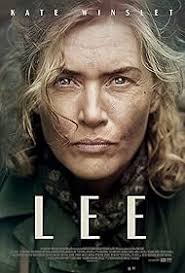
LEE
UK/US, 2024, 117 minutes, Colour.
Kate Winslet, Andy Samberg, Alexander Skarsgaard, Marion Cotillard, Andrea Riseborough, Noemi Merlant, Josh O'Connor, James Murray.
Directed by Ellen Kuras.
A film about a significant war corresponded, World War II. Lee was released at the time of the first anniversary of the Hamas attack on Israel, October 2023, world audiences seeing a year of invasion, bombings, destruction, Israel’s invasion revenge, the deaths of so many Palestinians followed by the bombings and invasion of Lebanon. Audiences worldwide depend on war correspondents and war photographers for these images and information. 2023-2024, more than 200 wounded and dying on the job.
Lee is Lee Miller, a one-time model, turned photographer, an American who spent a lot of time pre-World War II in France and travelling, developing her talents as a photographer, links with artists and French society. She is played by Kate Winslet, reminding us that for almost 30 years Kate Winslet has been a significant screen presence in film and television, multi-award-winning. As expected, this is a very strong and persuasive performance.
The film opens with some war action, Lee Miller, explosions, after the D-Day invasion. But, after showing her with her friends in France, the film moves to 1977, the older Lee Miller being interviewed by a young man, Josh O’Connor, about her war experiences, their examining a lot of the photo she took leading to flashbacks building up e herxperiences during the war years, and the device for returning to 1977 for some kind of break and, with some of the war experiences, some breathing space and relief for the audience.
Lee Miller went to London at the beginning of the war with artist Roland Penrose (Alexander Skarsgaatd). She offered her services for Vogue magazine, under the editorship of Audrey Withers (Andrea Riseborough). She was able to visit some camps, photograph service men and women, link up with David Scherman of Life Magazine (a surprisingly serious performance from comedian Andy Sandberg). The British would not employ her but, as an American, she worked with the American military, in action in San Malo, entering Paris when it was liberated, some harrowing sequences as she sought out her prewar friend and discovered their occupation experiences, also discovering the disappearance of so many thousands, especially Jews.
The most harrowing part of the film is when she and David travel from France through Western Europe to the German border, an experience of Hitler’s hideout (and the serious/comic episode with Hitler’s bath), and, most tellingly, the concentration camps, the trains with corpses, the prisoners in their pyjama-striped uniforms, Lee continually photographing, and especially the sadness, the pathos of the faces of the women and children who suffered.
There is an explanation of the interview sequences at the end, information about Lee Miller, the re-discovery of her photos in the 1970s, book, photo publication – and, as usual now in such films, many of the actual photos shown during the final credits along with the episodes from the film.
Important for memories of World War II. Important for the 21st-century, the number of wars, the war correspondent, their courage, sharing the up-close details of their experiences, dangers, deaths.
- Lee Miller? As a person, as a photographer, as a war photographer?
- The portrait by Kate Winslet, a long career, portraying variety of personalities? Awards? Embodying Lee Miller in the 1930s, in the 1940s and the war experience, the retrospective of 1977?
- Audience knowledge of Lee Miller, her work during the war, British Vogue not publishing her photos, American Vogue publishing them? After the war, the opinion in Britain that people should not be too disturbed? Her photos and memories in the attic? Her son finding them, writing the book, publication?
- The opening of the film, the war sequence in France, the dangers, the rescue? The sequence repeated later? Indication for the war correspondent?
- 1977, Lee being interviewed, audiences realising it was her son or not? The interaction between the two, the questions for Lee, his looking at the photos, the impact of the revelations for him? Her finally asking him questions, his growing up, her distance, that she was not a successful mother, memories of his father, the discovery of the photos, the impact on him? The final glimpse, looking out the window, turning, and her not being there? Information about her death?
- The 1977 sequences as a framework for the flashbacks? And as some relief for the audience immersed in the war experiences, the interview sequences as moments for a breather and relief?
- Lee, a model, her career, her French friends, in France, on the coast, the holidays together, Lee taking local photos, atmosphere of the 30s, freedom of expression, comfortable nudity? The discussions about Hitler, but not expecting his victory? The situation for France? For Britain? The company, Picasso and the artists? Atmosphere?
- Roland arriving, the initial interaction, painter, paint on his hands? Her analysis of his character? His analysis of hers? Up the steps from the beach? His invitation to come to London, the war, the blitz, the interview with Audrey at Vogue, the irritating presence of Cecil Beaton? Roland and his work, conscientious objector, camouflage? His moving away to location? Her signing up, photography, at the camp, the women’s quarters, the officer? Women being excluded? Her going into the briefing, disguise, the Colonel and his reaction? Eventually transferring her to France?
- Work at Vogue, the photos, the support of Audrey? The role of the magazine during the war? Lee and her contacts with Audrey during the war, the comfort of England compared with the war front, especially in liberated Paris, the discovery about the disappearing Jews, her friends, Solange disappearing, Lee finding her again and their talk? The emergence of Paul and his wife, Jews in hiding? The plane flying over and his poem been distributed? Emotional impact for Lee? Trying to communicate this to Audrey?
- The encounter with David, Life Magazine, his mirror shining the light on the women workers? Friendship, their bonding, in England, his access, her limitations, friendship with Roland, inviting him to stay at the house? His reminder that she was an American, the British refusing permissions, her getting American permissions? Their going to occupied France, the battle sequence and the dangers? The discovering the realities, the people in poverty, the young woman and her romance with a German, the hostilities of the locals, the later sequence of the women, the shaving of the heads?
- The various photos from France, the medical centres, the wounded, the doctors, the GI with his face masked in the photo?
- To liberated Paris, driving through, the exhilaration, the photos? Roland and his visit, wanting her to go back to London? His not appreciating what she had experienced?
- The bonding with David, the vehicle, driving through Western Europe, to the German border, Hitler’s house, their bribing their way in with cigarettes, the letter, the bath, the photo in the bath with Hitler’s picture? David and his wariness? His eventual weeping?
- The horror of the concentration camps, the arrival, the smell, the soldiers, the train, the carriage with dead decaying bodies, the bodies laid out, concentration camp clothes? The waiting with the cart with the bread? Lee following the woman, the group of women and children, the bread, the nervous little girl, photographed?
- London, the magazine, please photos not there, her angry confrontation of Audrey, her coming down, Audrey sending the photos to get Vogue America?
- 1977, Antony and his looking at the photos, the discussions with his mother, the impact of the war experience? The aftermath, his work with his father, the book, publication? His father’s death? The setting up of the foundation?
- The final credits, the actual photos, the information about Lee and her death, Roland, Antony?
- The film released in September/October 2024 at the time of the one-year anniversary of the Hamas atrocity in Israel, Israel’s response in Gaza?
