Displaying items by tag: Marion Cotillard
Tour de Glace, La/ The Ice Tower
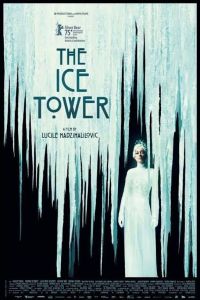
THE ICE TOWER/ LA TOUR DE GLACE
France, 2025, 170 minutes, Colour.
Marion Cotillard, Clara Pacini, August Diehl, Aurelia Pettit, Cassandra Louis Urbain, Gaspar Noe.
Directed by Lucile Hadzihalilovic
A difficult, challenging film to watch, interpret, understand.
This is a response to the film, rather than a review. Over to the critics for further elaboration. The Little White Lies website, refers to it as a ‘mesmerising riff on the famous Hans Christian Andersen fairy tale is a true triumph of imagination’. And, perhaps in the vein of the screenplay, ‘A moonlit metacinematic mountain mystery’. It was awarded the Silver Bear for Artistic Contribution at the Berlin Film Festival, 2025.
The Ice Tower has a particular, serious French sensibility. There is also a female sensibility from its co-writer and director as well as the two central stars and their performances. They have drawn on the fairytale by Hans Christian Andersen and have taken it in the direction of fairy tales with the victim heroine, Snow White, Sleeping Beauty, and their conflict with their vain and self-centred Queens, “Mirror, Mirror on the wall…”.
The film opens with kaleidoscope colliding shapes and images, floating and swirling, inviting the audience to imagine. The narrator tells us that there are so many perspectives. Boundless.
At first, there is the reality of a life story, a young woman, Jeanne, orphaned, foster care, harsh treatment, the desire to move away to live her own life – which she does, even trudging through snow and storms to the city.
But, she reads the story of The Snow Queen to a little girl in the home, Rose, who imagines the story more happily. But she grieves when Jeanne leaves, refusing to eat, persuaded by phone call to eat and Jeanne promises she will tell her stories when she comes home. Rose lives in an imaginative fairytale world.
.
Then the introduction of movies, moviemaking, the realism of the set and the cast, the filming, but also the fact that movies create myths, other worlds, fairy tales which can be grim, fairy tales with happy endings. The Snow Queen is set in a grim, brittle, icy, cold-emotional world.
And then the world of the star, a haughty actress, embodying The Snow Queen in film character as well as on set and in her personal life. Which introduces the theme of the alter ego, the doppelgänger, the character dramatised in the film and her behaviour, the life of the actress herself, comparisons and contrasts.
Jeanne calls herself Bianca, echoes of Snow White, is resourceful, hides out in the studio building, becomes part of the extras, is intrigued by Cristina, the actress, is favoured by her, charmed, promised loving attention – intrigued by both Cristina and the narcissistic Queen. The Queen/Cristina wants the sacrifice of complete love, the temptation to kill herself for the Queen. The fairy tale can be destructive.
Fairytales have jewels, Jeanne with a necklace of beads, one of which she gives to Rose, almost losing the necklace in the snow, and a bead which Cristina finds, a threat to the bond with Rose. And fairytales also have sinister birds, blackbirds, crows and ravens, here as part of the drama of The Snow Queen, Jeanne having to handle’ soothe the bird on set, seeming to kiss it only it to peck at her lip. Symbols.
And, a Prince to rescue the Princess? Enter the character of Cristina’s longtime doctor, protector, who knows the truth about her but who steps in then to rescue Jeanne, to save her and send her back to reality, real life.
And the end of this reality, the end of this destructive fairytale? Jeanne returns to Rose, to the fairytale, giving her the gift of the crystal that she stole from the Queen’s dress, and the camera invites us to draw on what we have experienced and look at the swirling images once more in the crystal. Boundless.
Lee
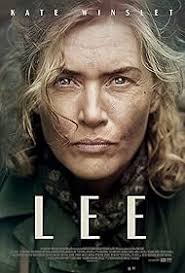
LEE
UK/US, 2024, 117 minutes, Colour.
Kate Winslet, Andy Samberg, Alexander Skarsgaard, Marion Cotillard, Andrea Riseborough, Noemi Merlant, Josh O'Connor, James Murray.
Directed by Ellen Kuras.
A film about a significant war corresponded, World War II. Lee was released at the time of the first anniversary of the Hamas attack on Israel, October 2023, world audiences seeing a year of invasion, bombings, destruction, Israel’s invasion revenge, the deaths of so many Palestinians followed by the bombings and invasion of Lebanon. Audiences worldwide depend on war correspondents and war photographers for these images and information. 2023-2024, more than 200 wounded and dying on the job.
Lee is Lee Miller, a one-time model, turned photographer, an American who spent a lot of time pre-World War II in France and travelling, developing her talents as a photographer, links with artists and French society. She is played by Kate Winslet, reminding us that for almost 30 years Kate Winslet has been a significant screen presence in film and television, multi-award-winning. As expected, this is a very strong and persuasive performance.
The film opens with some war action, Lee Miller, explosions, after the D-Day invasion. But, after showing her with her friends in France, the film moves to 1977, the older Lee Miller being interviewed by a young man, Josh O’Connor, about her war experiences, their examining a lot of the photo she took leading to flashbacks building up e herxperiences during the war years, and the device for returning to 1977 for some kind of break and, with some of the war experiences, some breathing space and relief for the audience.
Lee Miller went to London at the beginning of the war with artist Roland Penrose (Alexander Skarsgaatd). She offered her services for Vogue magazine, under the editorship of Audrey Withers (Andrea Riseborough). She was able to visit some camps, photograph service men and women, link up with David Scherman of Life Magazine (a surprisingly serious performance from comedian Andy Sandberg). The British would not employ her but, as an American, she worked with the American military, in action in San Malo, entering Paris when it was liberated, some harrowing sequences as she sought out her prewar friend and discovered their occupation experiences, also discovering the disappearance of so many thousands, especially Jews.
The most harrowing part of the film is when she and David travel from France through Western Europe to the German border, an experience of Hitler’s hideout (and the serious/comic episode with Hitler’s bath), and, most tellingly, the concentration camps, the trains with corpses, the prisoners in their pyjama-striped uniforms, Lee continually photographing, and especially the sadness, the pathos of the faces of the women and children who suffered.
There is an explanation of the interview sequences at the end, information about Lee Miller, the re-discovery of her photos in the 1970s, book, photo publication – and, as usual now in such films, many of the actual photos shown during the final credits along with the episodes from the film.
Important for memories of World War II. Important for the 21st-century, the number of wars, the war correspondent, their courage, sharing the up-close details of their experiences, dangers, deaths.
- Lee Miller? As a person, as a photographer, as a war photographer?
- The portrait by Kate Winslet, a long career, portraying variety of personalities? Awards? Embodying Lee Miller in the 1930s, in the 1940s and the war experience, the retrospective of 1977?
- Audience knowledge of Lee Miller, her work during the war, British Vogue not publishing her photos, American Vogue publishing them? After the war, the opinion in Britain that people should not be too disturbed? Her photos and memories in the attic? Her son finding them, writing the book, publication?
- The opening of the film, the war sequence in France, the dangers, the rescue? The sequence repeated later? Indication for the war correspondent?
- 1977, Lee being interviewed, audiences realising it was her son or not? The interaction between the two, the questions for Lee, his looking at the photos, the impact of the revelations for him? Her finally asking him questions, his growing up, her distance, that she was not a successful mother, memories of his father, the discovery of the photos, the impact on him? The final glimpse, looking out the window, turning, and her not being there? Information about her death?
- The 1977 sequences as a framework for the flashbacks? And as some relief for the audience immersed in the war experiences, the interview sequences as moments for a breather and relief?
- Lee, a model, her career, her French friends, in France, on the coast, the holidays together, Lee taking local photos, atmosphere of the 30s, freedom of expression, comfortable nudity? The discussions about Hitler, but not expecting his victory? The situation for France? For Britain? The company, Picasso and the artists? Atmosphere?
- Roland arriving, the initial interaction, painter, paint on his hands? Her analysis of his character? His analysis of hers? Up the steps from the beach? His invitation to come to London, the war, the blitz, the interview with Audrey at Vogue, the irritating presence of Cecil Beaton? Roland and his work, conscientious objector, camouflage? His moving away to location? Her signing up, photography, at the camp, the women’s quarters, the officer? Women being excluded? Her going into the briefing, disguise, the Colonel and his reaction? Eventually transferring her to France?
- Work at Vogue, the photos, the support of Audrey? The role of the magazine during the war? Lee and her contacts with Audrey during the war, the comfort of England compared with the war front, especially in liberated Paris, the discovery about the disappearing Jews, her friends, Solange disappearing, Lee finding her again and their talk? The emergence of Paul and his wife, Jews in hiding? The plane flying over and his poem been distributed? Emotional impact for Lee? Trying to communicate this to Audrey?
- The encounter with David, Life Magazine, his mirror shining the light on the women workers? Friendship, their bonding, in England, his access, her limitations, friendship with Roland, inviting him to stay at the house? His reminder that she was an American, the British refusing permissions, her getting American permissions? Their going to occupied France, the battle sequence and the dangers? The discovering the realities, the people in poverty, the young woman and her romance with a German, the hostilities of the locals, the later sequence of the women, the shaving of the heads?
- The various photos from France, the medical centres, the wounded, the doctors, the GI with his face masked in the photo?
- To liberated Paris, driving through, the exhilaration, the photos? Roland and his visit, wanting her to go back to London? His not appreciating what she had experienced?
- The bonding with David, the vehicle, driving through Western Europe, to the German border, Hitler’s house, their bribing their way in with cigarettes, the letter, the bath, the photo in the bath with Hitler’s picture? David and his wariness? His eventual weeping?
- The horror of the concentration camps, the arrival, the smell, the soldiers, the train, the carriage with dead decaying bodies, the bodies laid out, concentration camp clothes? The waiting with the cart with the bread? Lee following the woman, the group of women and children, the bread, the nervous little girl, photographed?
- London, the magazine, please photos not there, her angry confrontation of Audrey, her coming down, Audrey sending the photos to get Vogue America?
- 1977, Antony and his looking at the photos, the discussions with his mother, the impact of the war experience? The aftermath, his work with his father, the book, publication? His father’s death? The setting up of the foundation?
- The final credits, the actual photos, the information about Lee and her death, Roland, Antony?
- The film released in September/October 2024 at the time of the one-year anniversary of the Hamas atrocity in Israel, Israel’s response in Gaza?
