Displaying items by tag: Peter Malone's Movie Reviews
Carry on Nurse
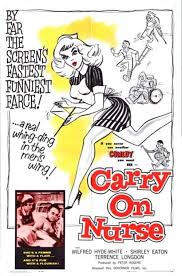
CARRY ON NURSE
UK, 1959, 86 minutes, Black-and-white.
Kenneth Connor, Kenneth Williams, Charles Hawtrey, Hattie Jacques, Joan Sims, Wilfrid Hyde White, Shirley Eaton, Terrence Longden, Bill Owen, Leslie Phillips, Susan Stephen, Susan Beaumont, Ann Firbank, Joan Hickson, Michael Medwin, Rosalind Knight, Norman Rossington, Jill Ireland, June Whitfield, Ed Devereaux, Susan Shaw, Irene Handl.
Directed by Gerald Thomas.
In retrospect, very much a film of its time, British comedy in the late 1950s, beginning the transition to explicit comedy, still a lot of innuendo but also a great number of ogling male characters.
This is the second of the Carry on series, beginning with Carry on Sergeant. Sid James, a staple of so many of the later films, had not yet joined the cast. However, a great number of the continuing cast appear here, most of the men spending their time as patients in the hospital ward. The women are nurses or visiting their husbands and boyfriends.
Hattie Jacques begins her several appearances as matron, Joan Hickson as a rather strict numbers (anticipating Miss Marple), Shirley Eaton, five years before Goldfinger, leads the nursing staff, and Joan Sims, the most regular of Carry on characters appears for the first time. There are some guest appearances by Wilfrid Hyde White and Michael Medwin. And there are some amusing cameos by various British character actors including Bill Owen, a myopic Rosalind Knight, Irene Handl and an early appearance by Jill Ireland.
While Kenneth Williams is more subdued, less facial idiosyncrasies, he plays the superior patient, interested in studying, until, at the end, the men in the ward, with drink and laughing gas, trying to remove a bunion on Leslie Phillips‘ foot, Kenneth Williams in charge of surgery. Kenneth Connor, always plays quite a different role in each film and here he is a boxer.
A lot of the verbal humour, a lot of expected hospitals shenanigans in the ward, innuendo, the 1950s British male gaze – and seeming very much more slight and innocent the later developments in the Carry on series.
- Carry on Nurse movie
- Gerald Thomas
- Joan Sims
- Hattie Jacques
- Kenneth Williams
- Kenneth Connor
- Charles Hawtrey
- Leslie Phillips
- Norman Rossington
- Wilfrid HydeWhite
- Peter Malone's Movie Reviews
- Susan Stephen
- Jill Ireland
- Rosalind Knight
- Irene Handl
- Shirley Eaton
- Bill Owen
- Ed Devereaux
- Susan Shaw
- Joan Hickson
- Michael Medwin
Eaten Alive/ 1976
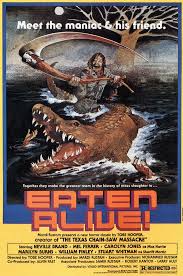
EATEN ALIVE
US, 1976, 91 minutes, Colour.
Neville Brand, Mel Ferrer, Carolyn Jones, Marilyn Burns, William Finley, Stuart Whitman, Roberta Collins, Kyle Richards, Robert Englund, Crystin Sinclaire.
Directed by Tobe Hooper.
The breakout of horror films in the mid-1970s, Tobe Hooper with the Texas Chainsaw Massacre, filmed by Wes Craven, Friday the 13th…
Eaten Alive is Tobe Hooper’s immediate film after Chainsaw Massacre. It is very much in the vein, not a film about Cannibals, rather a range of victims hounded by the insane hotel owner into the jaws of an alligator/crocodile.
In retrospect, quite an exploitation film of brutality and violence as well as provocative nudity and sexuality. Often repellent.
It is a surprise to find some of the older stars in the film, Neville Brand committing himself wholeheartedly into his mad brutal villain role, Mel Ferrer rather dapper, Carolyn Jones as the local madam 20 years after her film heyday. Stuart Whitman as his regular screen presence – and, surprisingly, a rather young Robert Englund some years before he turned into Freddy Krueger.
Threads of plot, a runaway girl, caught in a brothel, running away, the mad hotel owner, a family arriving and the little girl spending the whole film hiding under the house to avoid the alligator, a father and his daughter searching for their runaway, and some of the harsh young locals – most of them finishing up in the deadly jaws.
Mostly for the record, the horror films of the time, the career of Tobe Hooper which extended from the early 1970s to 2013, a wide range of feature films including televisions Salem’s Lot and the more popular Poltergeist.
Lee Cronin's The Mummy
LEE CRONIN's THE MUMMY
Ireland/US, 2026, 134 minutes, Colour.
Jack Reynor, Laia Costa, May Calamawy, Natalie Grace, Shiloh Molina, Billie Roy, Veronica Falcon, Hayat Kamille.
Directed by Lee Cronin.
While this version of the mummy reminds us of the old versions, the embalmed and buried creature, the breaking of a spell, the rising from the dead, terrorising, Lee Cronin’s very personal version might remind audiences of the young girl, possessed, in The Exorcist.
There is a prologue, an Egyptian family driving, some terror, finding a crypt, the opening of the tomb, the death of the father, the control of the mother, escape with the daughter. Then the tone changes, contemporary Cairo, an American broadcaster, his family. But, literally at the end of the garden for their young daughter, a mysterious presence and her being possessed and becoming the mummy, disappearing, the family distraught.
Eight years later, the family is back in New Mexico, still grieving the absence of their daughter, in touch with the detective who handled the case originally. The couple have a new baby. And they live with the grandmother.
In fact, this is a very long film, 2 ¼ hours. And, probably as a warning to audiences expecting something of a mixture between PG and M rating adventure, much of the film can be described not just as horror but is quite horrible. The recovery of the daughter, her being possessed, her wreaking havoc on returning to New Mexico, the growing desperation of the parents, the intervention of the detective and her coming to the US, all building up to quite graphic horror/horrible sequences.
And, finally, the equivalent of the exorcism, the possession of the father – and, the possibility of a ritual recovery.
This version has the courage of its convictions – but they may be too much for many an audience.
- The many mummy films? The tradition? Female and older? This time the young girl, others possessed?
- The treatment, graphic, detailed violence, the horrible in horror?
- The settings, in Egypt, the family travelling, the vault, Cairo, the family’s apartment, the garden, the play in the garden, the disappearance? The interrogations by the police, the detective, her work Cairo? New Mexico, the home, world of television, the return home of Katy?
- The situation, the family, driving, the children, the severe mother, the vault, going down, opening the grave, the reawakening, the graphic death of her husband? The mother, magician, her powers, enticing Katy in the garden, the chocolate, the tricks, the friendship with Leo, and her? The pursuit, the loss?
- The family, Charlie, television correspondent, his gestures, the children’s criticism, 80, mischievous, critical, the clashes with Cinnamon? Lewis, pregnant, Hispanic background? Her work, the interrogations, blaming Charlie?
- Eight years later, the return to New Mexico, his job? The obsession with Katie? The birth of more, growing up? Said older? Family life?
- The detective, in Cairo, the situation with the plane crash, the sarcophagus, Katie inside? The explanations of the flooding of the valley, saving the Mummy, the magician, her house, Laylah?
- Katie and her return, her condition, physical, psychological? The sense of menace? The family, doctors, supervision? Her pervading influence, the influence on board, her behaviour at school, swearing at the teacher? Said, the gradual influence, Katy tantalising him?
- The grandmother, her presence in the house, jovial and likely? Character Katie? The attack, her death, the funeral, her reappearance, menace?
- Katie and the influence on her brother and sister, their behaviour, possessed?
- Larissa, her anxiety, the relationship with Charlie, the blame, wanting to care for her daughter, possesses? The death of her mother? The increasing oppression?
- Charlie, his devotion, the mystery of Katy’s body, the wounds, the skin coming apart, the text, taking into the expert, his reading of the text? The understanding of the Mummy and family preserving the tradition? Getting the name later, going through all the letters, making connections, contacting the detective?
- The detective, her confronting the magician, the wounds to herself? Coming to America?
- The buildup to the confrontation, Katie, personality, her with her teeth, communication, her brother and sister, destructive, cruel? The detective and her memorising the incantation?
- Charlie, to himself to say Katie, his being possessed, the finale, the survival of the family, the detective, Charlie seated in the chair, wrapped as the mummy? The detective and the possibilities of the incantation releasing Charlie?
Jean Valjean
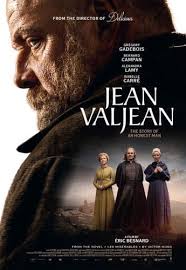
JEAN VALJEAN
France, 2025, 98 minutes, Colour.
Gregory Gadebois, Bernard Campan, Alexandra Lamy, Isabelle Carre, Dominique Pinon, Romane Libert.
Directed by Eric Besnard.
The story of Jean Valjean stealing the Bishop’s candlesticks in Les Miserables is very well known and the episode has appeared in all film versions.
This, rather brief, film begins four days after Jean Valjean has been released from the galleys. He is wandering the countryside, seeking food, knocking on doors, angrily rejected because he is a convict. An old woman recommends that he knock on a particular door, that of the Bishop, he given the name Myriel and the nickname Bienvenue/Welcome. He lives with his sick sister, not a believer, and their maid, highly self-righteous and instantly condemning the convict. She is fearful and judgemental.
Jean Valjean is welcomed by the Bishop, sharing their simple meal, the maid reluctant to serve, the Bishop welcoming, the sister showing some concern. During the night, Jean Valjean imagines what he could do, brutally kill the Bishop in his peaceful bed, attack the sister, kill the maid. But, he does not. He steals the silver cutlery, embossed with the Bishop’s seal, but is caught by the police and returned. The Bishop speaks of the cutlery as a gift and goes to get the candles, saying that Jean Valjean has forgotten to take them.
Isabelle Carre as the Bishop’s sister is an interesting and unexpected character, ill, disappointed in life, lacking faith in God, supportive of her brother and his charity. Alexandra Lamy as the maid shows how an upright character and be blinded by prejudice.
Writer-director, Eric Besnard, has used the first two books of Victor Hugo’s Les Miserables but then has “freely adapted” the story, giving an extensive back story for the Bishop, married, travelling in Italy, the loss of his wife, subsequent anger and hatred, becoming a cleric, becoming a bishop, relishing his status and pomp. But he meets a hermit, a rebel whom he is to condemn but who accepts him, enables him to find grace and change. He then visits the sick in a crowded infectious hospital, offers the Bishop’s Palace as the hospital and he and his sister live in the old building, a life of poverty and charity, and able to pass on his experience of grace to Jean Valjean who, as we know, will be transformed into one of the great saviour figures of literature.
Later in the film there is a back story to Jean Valjean himself, the poverty, the stealing of the loaf, the arrest, and some vividly brutal sequences especially in quarries. Gregory J Dwyer is a rather hulking presence as Valjean, eliciting audience sympathy with the prejudice against him but not a sympathetic personality. And, at the end, is confrontation with the little boy with the call-in and his mean-minded behaviour, it is repellent – but, of course, the occasion for a new awareness, repentance, a change of heart.
The screenplay is rather rhetorical, especially with the voice-over commentary, making the film something like a homily cinema experience – and a reminder of the urging of Pope Francis that shepherds should have the smell of the sheep, go out to the existential peripheries, a message urged on by Pope Leo the XIV and his first major letter, Dilexi te (I have loved you).
- The importance of Victor Hugo and Les Miserables? 19th-century, 20th century, the various film versions, television, 21st-century?
- The popularity of the episode of the Bishop’s candlesticks? The writer-director and his “free adaptation” of the first four books of the novel? The basic story, the Bishop, kindness to Jean Valjean, the welcome, the theft, the police and the return, the Bishop and his giving them as a gift, the effect on, Jean Valjean, his transformation, his future and his being a saviour-figure?
- Four days after his release from the galleys, wandering the countryside, his impact, size, poverty, reputation as a convict, the cafe and his being ousted, knocking on doors, begging, rejected? The old lady, advising him to visit the Bishop? Knocking on the door, the maid, unwilling, critical, condemnatory, despising him? The welcome from the Bishop, his sister, at the table, the food, the cutlery embossed, the conversation?
- The film amplifying the story of the Bishop, seeing him with the patients in the crowded hospital, harsh situations, his giving over the Episcopal Palace for the hospital, his leaving the hospital, poor conditions? The flashbacks to his personal story, marriage, travel to Italy, death of his wife, his anger, resentment, entering the clergy, becoming ambitious, a bishop, enjoying the pomp and circumstance, his visit to the rebel, intending to condemn him, the conversation, the impact of the rebel, communicating grace, his change, travel and the house?
- The Bishop’s sister, unwell, her story, not believing, the conversation about faith? The trust of her brother, welcoming Jean Valjean? The contrast with the response of the maid, serving, reluctant, condemning?
- The night, Jean Valjean imagining attacking the Bishop in bed, taking the cutlery, the confrontation with the sister, her death, confronting the maid, her falling to her death? But his not taking that option, his escape with the cutlery, arrested, the police returning him?
- The response of the Bishop, the cutlery symbol of wealth, his letting it go, welcoming Jean Valjean, the reaction of the sister, the maid, and telling him he should have taken the candlesticks? The police leaving? The impact on Jean Valjean? His leaving?
- Wandering, the encounter with the young boy, the boy’s enthusiastic, his coin, Jean Valjean with his shoe on it, refusing the boy, the boy upset and fleeing, Jean Valjean coming to his senses, trying to find the boy, moment of insight, repentance, hope for the future?
Limelight: Soldiers of the Cross, 1900
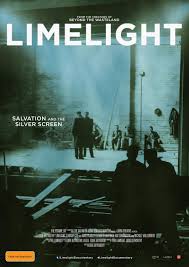
LIMELIGHT: SOLDIERS OF THE CROSS, 1900.
Australia, 2024, 96 minutes, Colour and black and white.
Directed by Eddie Beyrouthy.
Limelight is a 2025 Australian documentary on the first Australian film, Soldiers of the Cross, 1900.
It raises three important questions about cinema in Australia. Do you know the answers?
Here are the questions: what was the first film screened in Australia? When and where was it shown? And who produced it?
The answers are surprising. The film was Soldiers of the Cross. The venue was Melbourne town Hall on September 11, 1900, a rainy night but 4000 are said to have attended. And the producers? The Salvation Army Limelight Company at 69 Bourke Street, Melbourne, near Parliament House.
This very interesting documentary has been produced by the Salvation Army, using film material from the 1890s with some Army experts and other media commentators offering us a surprising history.
Soldiers of the Cross was, in fact, a multi-media event, slides, lecture material and film clips. After all, it was early days for cinema, only five years after the Lumiere Brothers in Lyon, France, publicly screamed film clips which lasted a minute. It was only four years since the Pathe Company, also from France, filmed an Australian first documentary, the 1896 Melbourne Cup!
The program lasted 2 ½ hours. Over and above the lecture segments, there were slides featuring songs and hymns, 3000 feet of film footage, re-enactments of events in the life of Christ and the early church martyrs, over 120 in the cast, a full piece orchestra of 20 musicians, costume drama, the violence of martyrdom… There were reports of some crying, screaming, fainting and relief in the wide audience. The majority of the footage was filmed in Melbourne, the attic at Bourke Street, the tennis court of the Murrumbeena Girls Home, the pool at Richmond Baths.
The first movie spectacular in the world – but it also had a proselytising ending, part of the mission of the Salvation Army.
But it was not a sudden spectacle.
.
The first part of Limelight offers a very interesting history of visual entertainment, the world of the Magic Lantern and its variations. We are taken back to the 1870s in France, light and projected images and such words as Phantasmagoria. And in the 19th century, diorama, cyclorama, Cosmopolygraphicon. This history might be called the development of special effects, the use of lenses, rapid movement of slides, rotating discs, ways of enlarging and projecting. This was not just black and white entertainment as with the first films, but a world of theatre and colour.
And then, as the documentary shows, the writing of scenarios, the forerunners of screenplay writing, telling stories through slide episodes, tales of travel, special effects of night and day, weather changes, atmosphere of danger. This history takes up the first part of Limelight.
With the second half, we go back to the Salvation Army and the involvement in film. We are introduced to the pioneers, especially Joseph Perry from England, his combination of skills with photography and the evangelising and charity work of the Army. His first Magic Lantern show was in South Melbourne, 1891. He was called Prince of Lantern lists.
A studio was set up in Bourke street for the development of stock and equipment, but also the practical aspects of filming, documentary subjects and performances. There was a heightened enthusiasm with the experts as well as the involvement of family, spouses and children. And the screenings went on tour, travelling six weeks with the films around country towns, the precursor of “the Picture Show Man”.
So much of this media history has been forgotten but several experts in cinema have been researching, collecting material, digitising.
So, 1900 was something of a peak and Soldiers of the Cross now finds itself in the histories of Australian cinema listed as number one. Its success brought Perry and his work to public and government attention, even to filming events like the declaration of the Commonwealth in 1901, covering royal visits. Perry made 400 brief films. His motto: Shoot almost everything.
But, for all movie stories, the anticipation is a happy ending or a sad ending.
Unfortunately, the story of Limelight has an unhappy ending. In the 1890s and 1900s, there was a huge enthusiasm and progress even if there was some debate in the Salvation Army about the appropriateness of this media as part of the Army’s ministry.
Suddenly, in 1910, James Hay, an Army official, closed the studio in Bourke Street overnight. The declaration that this work was “incompatible with true Salvationism”. In retrospect, a sad loss of ministry and creative endeavour.
Limelight, then, is an interesting and entertaining documentary, opening up a period of Australian cinema tradition.
For further interest and research the Limelight movie website. The Wikipedia article on Soldiers of the Cross is recommended as is the portrait of Perry by Ina Bertrand in The Australian Dictionary of Biography (1988).
https://www.limelightdocumentary.com/
Daddio
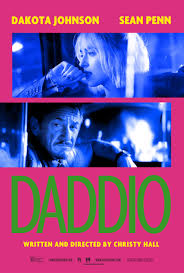
DADDIO
US, 2024, 100 minutes, Colour.
Dakota Johnson, Sean Penn.
Directed by Christy Hall.
There are many styles of presenting a two hander drama. And there are many films set within vehicles, especially cars, like the British Locke and several of the films by Iranian director, Abbas Kierostami. And the screenplays provide material which could easily be adapted for theatrical presentation.
Writer Christy Hall (also writer of the screenplay for It Ends With Us), directs her first film. And her two players are Dakota Johnson and Sean Penn.
The film is persuasively photographed by veteran cinematographer, Phaedon Papamichael, and the editing is skilful, moving from face-to-face, the use of the rear vision mirror, the driver turning his head, the to-ing and fro-ing of conversations, the camera resting during pauses for reflection.
Dakota Johnson is (strangely/provocatively) referred to as Girlie. In her 20s, arriving at Kennedy airport, and eventually getting a taxi to go home, she encounters Sean Penn as a driver with decades of experience. He notes she doesn’t immediately go for her phone for the trip, begins a conversation with her, she responding. He has been driving taxis so long that he has become something of character spotter, noting clues, interested, capacity for sympathy, and empathy.
The conversation takes place during the drive to Manhattan, halted by an accident, giving plenty of time for the conversation to develop. Girlie is polite, interest aroused, responding to conversation questions. Clark, the driver’s name though he would prefer Vinnie and at the end would opt for Mikey, is very direct, frank in dialogue and vocabulary, not so many filters.
What happens is gradual revelations, Girlie and her background in Oklahoma, present relationship, family issues, memories. Clark is also able to talk about himself, his marriages, his behaviour, his opinions on male status and treatment of women, women and their responses. Each of them begins to vie with telling episodes – but, just when we think they have done some self-revelation which has been worthwhile, Girlie tells a much more telling personal experience.
The cab acts as something of a therapy room, a confessional, and the audience realising that everybody needs to surface their issues, be able to articulate, appreciate an empathetic listener, enabling some kind of salvation/redemption through confession and an experience of some kind of healing.
- The impact of the drama set within a taxi, two characters, conversations, sympathy, clashes, empathy?
- The airport, the taxi line, the roads from the airport, traffic accident and block, the visuals of New York at night? The musical score underlying the conversation?
- The performances, the writing, the ordinary beginning, initial interactions, gradual revelation of character, truths, lies, stories, becoming deeper, and the final story and its impact?
- Calling the female character, Girlie? Dakota Johnson’s performance, delivery of lines, quiet times, the effect of the conversation on her? Her story, Oklahoma, harsh background, half sister, the impact of her father, and the separation, memories of his shaking her hand, leaving? The work and study, programming? The relationship, the phone communication, his being married, the comment on his wife, the three children, the texting and the children going to bed, the issue of whether he loved her not?
- Her response to clerk, the cab driver, years of experience, pleasant, listening, pleased that his passenger did not initially isolate herself with her phone, the gradual involvement, the rival stories and revelations, expressing her bucket list, the herbs, diving from the Greek cliff… ? Her final story to Clsrk? The sudden depth of experience, her expressing it, profound, the pregnancy, decisions, concealing, the blood, the miscarriage, the fetus leaving her, her not leaving the fetus? Her final text to the lover, her uncertainty?
- Clark, 20 years, Sean Penn’s performance, appearance, worldly -wise, chatting with passengers, reading people, commenting, few filters on his conversation? His eliciting responses from Girlie? His listening, silences, questions, challenges? Gradual revelation of his own story, frank, meeting his first wife, blonde, beautiful, not intelligent, but optimistic, his enjoying moments with her, her getting older, putting on weight, h is is further affairs, second wife, his attitudes towards women? His attitude towards men, summing up the lover, the use of the word love or not, reading his character, his analysis of men, their attitudes towards women, vying with each other in terms of position, masculine status?
- The impact of the final story on him, her arriving home, his telling her of his preference for the name, Vinnie, instead of Clark, but finally preferring Mikey?
- The cab as the equivalent of a therapy room, confessional, highlighting the need for people to communicate, to reflect in-depth, to surface responses, to express them, the possibilities for healing?
KPop Demon Hunters
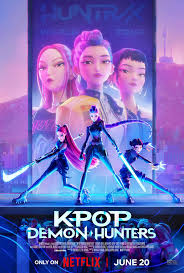
KPOP DEMON HUNTERS
US, Canada, 2025, 95 minutes, Colour.
Arden Cho, May Hong, Ji-young Yoo, Ahn Hyo-seop, Yunjin Kim, Ken Jeong, Lee Byung-hun, Daniel Dae Kim, Rumi Pak, Jpe; Kim Booster, Lizza Koshy, Alan Lee, Sung Won Cho, Maggie Kang.
Directed by Chris Appelhas, Maggie Kang.
The popular entertainment and cinema phenomenon of 2025.
Very popular at the box office, sessions offering singalong experiences, then breaking all records on Netflix. The popularity was with the younger audiences, and perspectives (and the 2026 Eurovision management offering a place to Korea and several other Asian nations).
The principal impact seems to have been the music and the singing, the popularity of boy bands, girl bands, and their increasing presence in such countries as Korea, moving out of Korea into the wider world. And, in fact, the music was Oscar-nominated and the song, Golden, won the Oscar for Best Song, 2025, breaking charts records and status on Billboard.
And there was the excitement of the animation, the sets and decor, the bright colours, the constant movement, the depiction of the characters, especially the Demon Hunters, the boy band, the contrast with the villains, especially the Demon Ruler. And the context of the songs in concert, on stage, compere hosts, the enthusiastic audience, and behind the scenes. The film also won the Oscar for Best Animation, 2025.
For younger audiences, teenage identification, young adult identification, struggles, life and friends, secrets, betrayals. The Demon Hunters and their lyrics, and the combination of Asian and Western themes. And the introduction of the boy band and the competition.
The film draws on Korean mythology, demonology, storytelling. Then there are the mythological themes inviting young audiences to identify with the characters, good and evil, power, the good and evil within the central character, the need for some kind of cleansing, purity, but all the while the secrecy. And then the conflict between male and female, the boy band members, attraction, the demonic. The story of Rumi and her quest, her secrecy, her interaction with her friends, the gradual revelations, her confidence, confrontation of the Demon Ruler, the defeat of the boys, the redemption.
For those interested in media influence, this is a film that needs to be seen, revealing so much about younger sensibilities and interests in 2025. Older audiences who watch the film may find that they are they are not drawn into it, sitting observing, perhaps questioning. On the other hand, many older audiences, drawn in by the music, the singing and enthusing, have let themselves go in enjoyment.
Hollow Man II
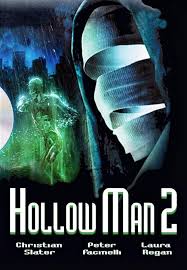
HOLLOW MAN II
US, 2006, 91 minutes, Colour.
Christian Slater, Peter Facinelli, Laura Regan, David McIlwraith, William MacDonald, Sarah Deakins.
Directed by Claudio Fah.
In 2000, Hollow Man was a popular drama, technological and scientific development of the popular Hollow Man/Invisible Man theme. It was directed by Paul Verhoeven who is an executive producer of this sequel.
The critical responses and the popular response to the sequel was mild. It is a variation on the theme, scientific experiments, illegal, allegedly military motivation, secret political motivations, destruction of enemies. And the use of veterans from Iraq and Afghanistan, in danger from court-martial, agreeing to be subject of the experiments.
The action of this film takes place over two days, the murder of a scientist at a social, some drama as the victim, isolated by the camera, subject to violence, his assailant unseen. The authorities are presented as secretive and sinister, especially the scientist doctor, using his assistant as bait to track the invisible man.
The main hero of the film is, in fact, not a super hero but a Seattle detective, played by Peter Facinlli, and with the death of his partner, not particularly warming to his surveillance of the science researcher, Laura Regan. But, with the attack of the hollow man, the role of the authorities, the two go on the escape route, building up to the final confrontation with the hollow man, the researcher using her wits, the ordinary police detective becoming something of a hero.
- The popularity of the original film, themes, drama, invisibility? The problem with sequels, measuring up to the original?
- The Seattle setting, city vistas at night, social events, police headquarters, the FBI, military? The streets, homes, warehouses…?
- The opening, the social, the behaviour of the scientist, erratic, victim of the invisible man, his murder? The authorities?
- The situation, Dr Reisner, his ambitions, creating the drugs, Maggie Dalton assisting, the choice of Michael Griffin, his military career, beyond the bounds, saved from court-martial, subject of the experiment, his personality, the injection, the effect? His being the third in the experiments?
- Griffin, invisible, the promise of the buffer to restore him, the authorities withholding it? The first murder, the clue to Maggie Dalton, following her, to the house, the killing of the female detective? The consequences, the chases?
- The authorities, secrecy, wanting to retrieve Griffin, destroy him?
- Frank, his partner, the initial investigation, the authorities taking over, friends clash with his boss, go on surveillance guard, interactions with his partner, her death, the effect, the interactions with Maggie Dalton, her manner, the home, the laboratories, her work, the visit from her sister?
- The house, the invasion of all the authorities, the escape, vehicles, pursuit, the dangers, Frank and his motivation, intense, Maggie and her mood and motivation, telling the truth? The buildup to the drama, the confrontation, the fight with Griffin, his taking Maggie’s sister, the meeting at the station, the injection, Maggie injected, Griffin injected, Frank injecting himself?
- Frank, the attack, the fights between the two invisible men, Michael becoming visible? Maggie’s sister, Maggie’s collapse? The truth about the rat poison? Frank killing Griffin?
- The aftermath, making hospital, her sister, Frank, keeping vigil – and a possible sequel?
Primo Natale, Il/ Once Upon a Time in Bethlehem
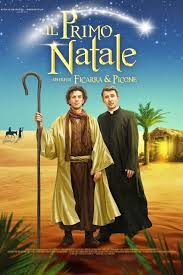
PRIMO NATALE, IL, ONCE UPON A TIME IN BETHLEHEM
Italy, 2019, 100 minutes, Colour.
Salvatore Ficarro, Valentino Picone, Massimo Popolizio.
Directed by Ficarro and Picone.
Christmas cribs and Christmas pageants are popular everywhere. This time in Italy. And the work of the comedy duo, Salvatore Ficarro and Valentino Picone. Valentino Picone plays an Italian parish priest in a regional town, in the vein of a 20th century Don Camillo. The plan is to have an elaborate crib, townspeople as live characters, finding animals, and a great number of comic auditions. In the meantime, Salvatore Ficarro plays the thief, auditioning for the role of Joseph, and stealing the statue of the infant Jesus.
The priest pursues the thief and, suddenly, they are transported back to the time of Jesus’ birth, a whole lot of adventures, help from a kindly family, passing themselves off to join the rebels, pursued by Herod’s special guards, arrested and tortured, the priest confessing to save his friend.
Looking for Mary and Joseph, they assist at a birth only to find it is the wrong couple! In fact, they do find the real Mary and Joseph, assist at the birth of Jesus, but find the real crib was simplicity itself. (And the priest is hoping that Mary will be able to provide a miracle that they can get back to the 21st-century.)
The two play a variation on the Magi, Herod wanting information from them. They realise that Herod will pursue all the mothers – and they have made friends with a mother who has given birth. Thief and priest ride horses to mislead Herod and save the families who eventually are given passage on a boat by a friendly Sicilian. The thief falls in love and stays in the past. The priest is kissed by a fierce rebel warrior (and thief suggests he hurried to confession) goes with the families onto a ship, a vast storm, then the girl who effected the time travel appears and Valentino arrives back in his parish – and the plan to have a more real and simple crib.
- A Christmas story, a Christmas pageant? Italian style?
- The reputation of the stars, acting, comedy, direction?
- The popularity of films with Christmas pageants? The recreation of the crib? Characters, animals, life ]-like…?
- The thief, character, mannerisms, sly, the initial robbery, making money? Hoarding? The infant, auditioning as Joseph, stealing, Valentino chasing him?
- Valentino, the Italian parish priest, touches of naive, with the parishioners, the Christmas pageant, the comedy of all the auditions, the parish assistant and her choices?
- The little girl, an Angel, chasing the two into the desert, back 2000 years? Bewilderment? Their adventures, the repartee between them?
- Finding the rebels, the family, the engagement, the poverty, the thief and his stealing the food, the celebration? The young couple, the leader, the pregnant woman, giving birth?
- Herod, the satire, as King, pompous, seeking the advice of the Sage, the parallel with the Gospel story, the foreign strangers, getting information, the Sicilian, the pursuit of the families, at the edge of the sea, defeated? Sending his two guards to find the foreigners?
- The Roman soldiers, Herod and his court, his advisor?
- The rebels, tough, the battles?
- The background of the Nativity story, Valentino and his expectations, a miracle from Mary to send them back, finding the couple, the wrong assumption, the wrong couple?
- The warriors, the warrior intent on Valentino, the kiss? Joke about going to confession? Salvo, the young woman, the romance?
- The various adventures, imprisoned, the torture, Valentino giving the information? To save Salvo?
- Finding Mary and Joseph, the simplicity, just themselves, no animals, Mary giving birth? The reverent treatment of the actual Nativity?
- Herod’s intentions, the killing of the children, rounding up families, the two and their riding to help, the Sicilian and his friendship, the boat, their all escaping, Herod frustrated?
- The boat, the storm, the need of a miracle, Salvo and love, staying in the past? The young girl appearing, Valentino returning, and his new perspective on the Christmas pageant and crib?
Michael
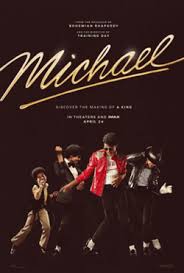
MICHAEL
US, 2026, 127 minutes, Colour.
Jafaar Jackson, Colman Domingo, Nia Long, Miles Teller, Juliano Valdi, Larenz Tate, Kendrick Sampson, Laura Harrier.
Directed by Antoine Faqua.
Michael is a cinema extravaganza, a celebration of the music and talent of Michael Jackson. It is for his fans, older, as well as up-and-coming. And it is also the story of an unusual man, his character, childlike in many ways, enthusiastic, but also growing into a man of steely intentions and ambitions. And he achieved them.
And, while there is a great deal of celebration of his music, his stage and screen presence, singing, dancing, his energetic feet, there is a great deal of the underlying family drama. Fans of Michael Jackson will know that his father, Joseph, a miner from Gary Indiana, was a dominating, even frightening presence in the household, intense ambitions for his sons to be successful in show business, the Jackson Five, with little Michael at the centre, the star. Colman Domingo is a frighteningly powerful presence as Joseph. Throughout the film there are highly dramatic moments, violent confrontations with his son, belting him, making demands, then, finally challenged by his son, life-defiance.
Which means then that this is basically a musical with an underlying family story. And, it ends in 1988, a peak of musical performance success, Michael a world star. Which raises the questions in many audience’s minds about the subsequent years of his life, his unlikely marriage to Lisa Marie Presley, the building of Neverland, his eccentric lifestyle, and, then, the accusations of sexual molestation. These are not a part of this film. There have been documentaries like, Leaving Neverland, probing Michael Jackson’s later years. They could be part of a further film about Michael.
But, what we have here, is the Jackson exuberance, and a strong star performance by Michael Jackson’s nephew, Jafaar (son of Jermaine), its lip-syncing to Michael Jackson singing, but displaying all the energy that marked his uncle’s singing and dancing. And the young actor, Juliano Valdi, playing little Michael, is a vital talent, singing and dancing, and the scenes with him and his bullying father. (Michael sister, Janet Jackson, chose not to be a participant in the film at all and her absence does seem strange.)
The supporting cast is strong, some veterans like Larenz Tate as Berry Gordy. Miles Teller plays Michael Jackson’s agent and promoter, John Branca, with glimpses into the racist attitudes at MTV and the CBS executive (a cameo from Mike Myers) pressurising a breakthrough. And there is Joseph Jackson approaching sports entrepreneur, Don King, to promote concerts. And some re-creations of the filming of Thriller.
By 1988, Michael Jackson, ambitious, had achieved his childhood hopes, his adult efforts, a key musical figure of the 20th century. But, as we know, there was more to come.
- Michael Jackson as a 20th-century celebrity, in the US, around the world? This film as a tribute to his talent and celebrity? Singing, dancing, stage presence, television presence, as a child, growing up, as adult?
- The involvement of the Jackson family in this production, Jafar Jackson as Michael’s nephew, impersonation of his uncle, dancing and feet movement, sinking the songs?
- The inclusion of so many Jackson 5 songs, Michael Jackson’s own songs, the situation of songs inclusion in the film, rehearsal, performance, small clubs, concerts and tours, studios, the Farewell Concert, London…? And the filming of sequences from Thriller?
- Comment about the omission of some characters, Janet Jackson, Michael Jackson’s personal life, marriage, children? And the personal issues in the court cases? The film stating that it continues and that being a different film and different issues?
- The impact of Joseph Jackson, Colman Domingo’s presence and performance, his background, mining, his long-suffering and devoted wife, his ambitions for his sons, the Jackson 5, the opening sequences of rehearsal, his demands, especially on Michael, the eye line, the violence of the belting, the revelations about his character, intensity, exercise of power? And the impact, physically, mentally, emotionally on Michael?
- The initial success, the gig, Michael and his presence, audience response? Michael growing up, the background of his brothers, their working together, the musical talent, the singing, supporting their brother?
- Gary Indiana, the mining background, the moves to California, money coming in, the change of life, style, clothes…? Joseph and his becoming the manager and entrepreneur? Promoting the Five, the discussions with various producers, the significance of the discussion with Don King, King and his support, sporting background, promotions, Michael to be at the centre, and the veiled threat to Joseph about honesty?
- Michael, as a child, reading, Peter Pan, the characters, his father as Captain Hook? The eternal boy, never growing up, living in Neverland? His reading in the car, a refuge? And pets, as he grew up, the snake, the discussions about the llama and spitting, actually getting a giraffe? In the grounds of the house? His childlike delight?
- But his ambitions, to be a world star, wanting to be on his own, breaking the hold of his father, their various meetings and confrontations, even his father’s threat to belt him as an adult, his mother’s intervention?
- His meeting with the executives, reputation of John Branca, his giving the right answers, the executives, Michael choosing him, and the scenes of their work together over the years? Branca’s achievement for Michael success?
- The gangs, the style of dancing, Michael’s visit, gathering them together, explanations, the dancing style, his inventiveness? And the filming of Thriller, John Landis the director, Michael’s make up, the living dead, the dancing, focus on his feet? The visit to CBS, Branca and Michael making the demands, the executive offering him everything, the phone call to MTV the producer, the racist background of excluding African-American videos, the pressure, the consent, the record-breaking sales and views?
- Joseph Jackson, his reaction to Michael, pride as well as his own pride hurt, the confrontations, Michael and his mother, the brothers?
- The pressure to do the tour of the Jackson 5, the Don King backing, Michael agreeing, the performances, the scenes of the crowds, the venues, the excitement, the performances?
- Michael, his determination, and to get away from his father, the buildup to the sequences of the Farewell Concert in LA, the success, the response, and the drama of Michael’s announcement that that was the end of the Jackson 5, his father, listening, the response, Michael defiant?
- The London concerts, the British crowds and their response?
- And the film ending there, the achievement of success, the musical phenomenon of the 20th century, Michael’s future, and the reality of the behind-the-scenes, Neverland, marriage, children, abuse accusations, court cases, his death, and the documentaries about him?
