Displaying items by tag: Eddie Beyrouthy
Limelight: Soldiers of the Cross, 1900
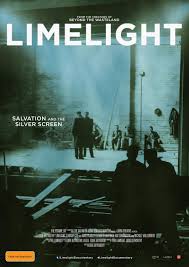
LIMELIGHT: SOLDIERS OF THE CROSS, 1900.
Australia, 2024, 96 minutes, Colour and black and white.
Directed by Eddie Beyrouthy.
Limelight is a 2025 Australian documentary on the first Australian film, Soldiers of the Cross, 1900.
It raises three important questions about cinema in Australia. Do you know the answers?
Here are the questions: what was the first film screened in Australia? When and where was it shown? And who produced it?
The answers are surprising. The film was Soldiers of the Cross. The venue was Melbourne town Hall on September 11, 1900, a rainy night but 4000 are said to have attended. And the producers? The Salvation Army Limelight Company at 69 Bourke Street, Melbourne, near Parliament House.
This very interesting documentary has been produced by the Salvation Army, using film material from the 1890s with some Army experts and other media commentators offering us a surprising history.
Soldiers of the Cross was, in fact, a multi-media event, slides, lecture material and film clips. After all, it was early days for cinema, only five years after the Lumiere Brothers in Lyon, France, publicly screamed film clips which lasted a minute. It was only four years since the Pathe Company, also from France, filmed an Australian first documentary, the 1896 Melbourne Cup!
The program lasted 2 ½ hours. Over and above the lecture segments, there were slides featuring songs and hymns, 3000 feet of film footage, re-enactments of events in the life of Christ and the early church martyrs, over 120 in the cast, a full piece orchestra of 20 musicians, costume drama, the violence of martyrdom… There were reports of some crying, screaming, fainting and relief in the wide audience. The majority of the footage was filmed in Melbourne, the attic at Bourke Street, the tennis court of the Murrumbeena Girls Home, the pool at Richmond Baths.
The first movie spectacular in the world – but it also had a proselytising ending, part of the mission of the Salvation Army.
But it was not a sudden spectacle.
.
The first part of Limelight offers a very interesting history of visual entertainment, the world of the Magic Lantern and its variations. We are taken back to the 1870s in France, light and projected images and such words as Phantasmagoria. And in the 19th century, diorama, cyclorama, Cosmopolygraphicon. This history might be called the development of special effects, the use of lenses, rapid movement of slides, rotating discs, ways of enlarging and projecting. This was not just black and white entertainment as with the first films, but a world of theatre and colour.
And then, as the documentary shows, the writing of scenarios, the forerunners of screenplay writing, telling stories through slide episodes, tales of travel, special effects of night and day, weather changes, atmosphere of danger. This history takes up the first part of Limelight.
With the second half, we go back to the Salvation Army and the involvement in film. We are introduced to the pioneers, especially Joseph Perry from England, his combination of skills with photography and the evangelising and charity work of the Army. His first Magic Lantern show was in South Melbourne, 1891. He was called Prince of Lantern lists.
A studio was set up in Bourke street for the development of stock and equipment, but also the practical aspects of filming, documentary subjects and performances. There was a heightened enthusiasm with the experts as well as the involvement of family, spouses and children. And the screenings went on tour, travelling six weeks with the films around country towns, the precursor of “the Picture Show Man”.
So much of this media history has been forgotten but several experts in cinema have been researching, collecting material, digitising.
So, 1900 was something of a peak and Soldiers of the Cross now finds itself in the histories of Australian cinema listed as number one. Its success brought Perry and his work to public and government attention, even to filming events like the declaration of the Commonwealth in 1901, covering royal visits. Perry made 400 brief films. His motto: Shoot almost everything.
But, for all movie stories, the anticipation is a happy ending or a sad ending.
Unfortunately, the story of Limelight has an unhappy ending. In the 1890s and 1900s, there was a huge enthusiasm and progress even if there was some debate in the Salvation Army about the appropriateness of this media as part of the Army’s ministry.
Suddenly, in 1910, James Hay, an Army official, closed the studio in Bourke Street overnight. The declaration that this work was “incompatible with true Salvationism”. In retrospect, a sad loss of ministry and creative endeavour.
Limelight, then, is an interesting and entertaining documentary, opening up a period of Australian cinema tradition.
For further interest and research the Limelight movie website. The Wikipedia article on Soldiers of the Cross is recommended as is the portrait of Perry by Ina Bertrand in The Australian Dictionary of Biography (1988).
https://www.limelightdocumentary.com/
