Displaying items by tag: Christian Slater
Hollow Man II

HOLLOW MAN II
US, 2006, 91 minutes, Colour.
Christian Slater, Peter Facinelli, Laura Regan, David McIlwraith, William MacDonald, Sarah Deakins.
Directed by Claudio Fah.
In 2000, Hollow Man was a popular drama, technological and scientific development of the popular Hollow Man/Invisible Man theme. It was directed by Paul Verhoeven who is an executive producer of this sequel.
The critical responses and the popular response to the sequel was mild. It is a variation on the theme, scientific experiments, illegal, allegedly military motivation, secret political motivations, destruction of enemies. And the use of veterans from Iraq and Afghanistan, in danger from court-martial, agreeing to be subject of the experiments.
The action of this film takes place over two days, the murder of a scientist at a social, some drama as the victim, isolated by the camera, subject to violence, his assailant unseen. The authorities are presented as secretive and sinister, especially the scientist doctor, using his assistant as bait to track the invisible man.
The main hero of the film is, in fact, not a super hero but a Seattle detective, played by Peter Facinlli, and with the death of his partner, not particularly warming to his surveillance of the science researcher, Laura Regan. But, with the attack of the hollow man, the role of the authorities, the two go on the escape route, building up to the final confrontation with the hollow man, the researcher using her wits, the ordinary police detective becoming something of a hero.
- The popularity of the original film, themes, drama, invisibility? The problem with sequels, measuring up to the original?
- The Seattle setting, city vistas at night, social events, police headquarters, the FBI, military? The streets, homes, warehouses…?
- The opening, the social, the behaviour of the scientist, erratic, victim of the invisible man, his murder? The authorities?
- The situation, Dr Reisner, his ambitions, creating the drugs, Maggie Dalton assisting, the choice of Michael Griffin, his military career, beyond the bounds, saved from court-martial, subject of the experiment, his personality, the injection, the effect? His being the third in the experiments?
- Griffin, invisible, the promise of the buffer to restore him, the authorities withholding it? The first murder, the clue to Maggie Dalton, following her, to the house, the killing of the female detective? The consequences, the chases?
- The authorities, secrecy, wanting to retrieve Griffin, destroy him?
- Frank, his partner, the initial investigation, the authorities taking over, friends clash with his boss, go on surveillance guard, interactions with his partner, her death, the effect, the interactions with Maggie Dalton, her manner, the home, the laboratories, her work, the visit from her sister?
- The house, the invasion of all the authorities, the escape, vehicles, pursuit, the dangers, Frank and his motivation, intense, Maggie and her mood and motivation, telling the truth? The buildup to the drama, the confrontation, the fight with Griffin, his taking Maggie’s sister, the meeting at the station, the injection, Maggie injected, Griffin injected, Frank injecting himself?
- Frank, the attack, the fights between the two invisible men, Michael becoming visible? Maggie’s sister, Maggie’s collapse? The truth about the rat poison? Frank killing Griffin?
- The aftermath, making hospital, her sister, Frank, keeping vigil – and a possible sequel?
Good Shepherd, The/ The Confessor

THE GOOD SHEPHERD/THE CONFESSOR
US, 2014, 91 minutes, Colour.
Christian Slater, Molly Parker, Stephen Rea, Gordon Pinsent, Nancy Beatty, Von Flores, Colin Glazer.
Directed by Lewin Webb.
The Good Shepherd winter video at the time of its release, a modest thriller. It was also released under the American title, The Confessor, different emphases for the themes, the Good Shepherd focusing on the person of Jesus, his pastoral ministry and care, the alternate title focusing on the issue of the confessional and its relationship to the murders.
The film has a strong Catholic background, not received entirely sympathetically at the time, especially with its presentation of the clergy, Cardinal, the persistent monsignor, the priest fundraising and the business side of the church, then issues of scandals, saving the reputation of the church, the hierarchy more concerned with legal and reputation issues rather than feeling or showing any compassion.
The film opens with a murder, group of young men living in an institute supported by the church, ran for 20 years by a severe widow. She discovers a priest bending over the body of a murdered young man, a male prostitute. He is arrested, protesting his innocence, but having information from confession and bound by the Seal of confession, holding fast to this, an interview with a television journalist, then his being found hanged in his cell.
The principal character has Christian Slater as Father Clemens, a talented financier, strong on fundraising, able to mix socially, wearing his clerical suit, relied on by the Cardinal to make media reports and save the reputation of the church. A very unsympathetic picture of ecclesiastical bureaucrats.
However, Father Clemens becomes persuaded that the priest is innocent, framed, then murdered in the prison. He makes contact with a reporter with whom he was linked in the past. She interviews the priest, raises further issues. Father Clemens is touched by the situation, defies the Cardinal, offers to take over the parish of the dead priest, leaving aside his clerical suit, trying to reach out to the young people, discovering that they go to confession only when forced to by the woman in charge.
Then some of the young people run away, refuge in the church, and the discovery that the confessions are being taped and being used by the woman in charge, who has a drug problem, and a hold over the young people. Then she is found murdered.
There will be a surprise as to the identity of the killer, his confession, his motivations, his killing himself.
The film ends with Father Clemens, vested, honouring the dead priest and rehabilitating, the hierarchy present.
Molly Parker is the journalist. Stephen Rea is a friend of Father Clemens and supportive in his work.
- The original title, focus on Jesus as the good Shepherd, on pastoral ministry? The alternate title and the focus on confession and the drama and melodrama?
- The American city, the church, rectories, institutes for the young, the business aspects of the church, the pastoral dimensions? The musical score, the inclusion of religious chant?
- The situation, the church, the street, the young men, the pickup, the murder? The background of the dead young man, prostitute, confessions?
- Father Clemens, age and experience, fundraising, the dinner, the hierarchy and the joke, the gift of wine to the donors, his skills? Well-dressed, the later comments about his way of life, golf, associates, dinners…? His being the spokesperson for the diocese? But his travelling also for fundraising and financial meetings? The image of a priest?
- Father Andrews, with the dead boy, his denials, the accusations, arrest, in prison, the reaction of the cardinal, the reputation of the church, no humanity or pastoral outreach? His asking for Father Clemens, the interview, Father Clemens and the touch of disdain, yet believing him, arranging the interview with Maddy, her questions? The sudden news of his alleged suicide?
- The portrait of the Cardinal, nothing spiritual, hard, business, reputation of the church, his demands on Father Clemens? The public statement on the death of Father Andrews? The Bishop associate, a touch more humane, working with the flowers, attentive to the cardinal? The Monsignor, his continued presence, attitude towards Father Clemens, looking and observing?
- The encounter with Maddy, Father Clemens not making contact, the revelation about the past, his choices, her marriage, its fate, her talent as a reporter? The interview, the sharp questions?
- McCaran, his friendship with Father Clemens, his role with the diocese, finance, advice? The meetings, his support?
- Mrs Gallagher, finding Father Andrews with the body, her strictness with the young people? Her personality? The two running away, seeking help from Father Clemens? Her pursuit, harshness?
- The pastoral crisis for Father Clemens, the cardinal and his ultimatum, his decided to give up the fundraising, to go to the centre, to become a pastor, his visit to the church, the spiritual dimension for his life and ministry? The young man coming to confession, revealing that he was obliged to by Mrs Gallagher?
- The youngsters, in the church, their fear of Mrs Gallagher, her approaching Father Clemens and Maddy, Maddy searching, the recording of the confessions?
- Going to the house, finding Mrs Gallagher dead?
- The detective, the interview with Father Clemens, suspicions, Father Andrews being framed?
- The further investigations, Maddy supportive of Father Clemens, the church, McCaran arriving, the revelation that he had done the killings, his motivation, his wife, picking up the young men? The confrontation, the confession, the police arriving, his shooting himself?
- The aftermath, the dedication to Father Andrews, Father Clemens investments, the cardinal others present, praying the Lord’s prayer?
If I Had Legs, I Would Kick You
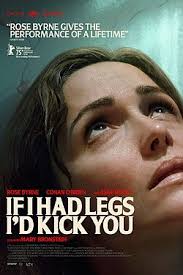
IF I HAD LEGS, I'D KICK YOU
US, 2025, 113 minutes, Colour.
Rose Byrne, Delaney Quinn, Mary Bronstein, Conan O'Brien, Christian Slater, A$AP Rocky, Danielle Macdonald, Ivy Wolk, Mark Stolzenberg, Daniel Zolghadri.
Directed by Mary Bronstein.
This disturbing and challenging drama was released at the same time as Die My Love with Jennifer Lawrence. Die My Love dramatised a mother descending into deep depression after the birth of her baby, a film which the female audience could identify with, a film that made demands on the male audience for appreciation and understanding.
This is true of If I Had Legs – only much more so. It is quite emotionally demanding of its audience, often a hard watch but a film which dramatises so much of the pain that a woman, a mother and wife, sometimes has to suffer. And, once again, there would be enormous empathy for a female audience watching this film. And, once again, a challenge to a male audience for appreciation and understanding, to elicit some empathy.
Rose Byrne has had a long career in Australian and international films for over 30 years. Critics are referring to her performance here as Linda, mother of a young daughter needing medical care, her husband away with contact only by phone, herself a therapist but also undergoing her own therapy and not coping at all well, at times not coping at all, as the performance of a lifetime.
For so much of the drama the words frantic and desperate best describe what is happening for Linda, required to give constant attention and presence to her child, seeing her clients for therapy (and another disturbing subplot with a young mother not coping at all and disappearing) and Linda having sessions with her own therapist (played by television’s, Conan O’Brien), proving to be an antagonistic and uncooperative client.
Then, sudden disaster in the apartment, her daughter (not seen throughout the film until the end, but always a presence, always a voice) finding her room filling with water and the discovery of the roof caving in flooding the apartment, the camera returning to the gaping hole in the roof throughout the film. Added pressures, her husband away, the landlord uncooperative, delays in repairs, mother and daughter having to stay in a hotel, sad memories of an early abortion.
Linda’s behaviour becomes more and more erratic, sometimes keeping composure in working with her clients, but even that beginning to disintegrate. She is also required to join a women’s group to help to cope with their daughter’s illness, but Linda is defiant, rude, bluntly outspoken towards the leader as well as some of the distraught mothers in the group. (The leader of this group is played by the writer-director, Mary Bronstein, her screenplay drawing on some of her own experiences.)
While there are some sympathetic characters, especially a neighbour played by rap singer A$ap Rocky, who becomes entangled in Linda’s moods, we see Linda becoming the victim of so many others’ moodiness, her therapist, her clients, the pedantic woman at the store… little miseries to add to the overall misery of Linda’s experience, her love for her daughter, the continued demands and weariness of constant care.
A review of this film should offer an alert that is not just a movie to go to for some entertainment. Rather, it is significant in offering its audience a harrowing experience, some empathy for a suffering woman who is not always sympathetic.
- The title, tone? Expectations? The work of the writer-director, her experiences?
- An American story and setting, universal characters, themes and issues?
- The American city, homes and apartments, hospitals, conference rooms, therapists’ rooms, shops, and the final open space and the beach and the sea? The musical score?
- Audience response to Linda? Rose Byrne’s performance? Age, marriage, her husband in service, away, her daughter, her age (not seen, heard, seen at the end), her illness, the constant care and presence? How sympathetic a person, mother?
- Linda, the effect of the demands of her daughter’s illness, taking her to school, the demands of the parking attendant and his aggression and her aggressive response, asking others to take her daughter into school? The conversations with the doctor, her presence expected at the discussion sessions with the mothers, her putting off the appointments? Discussions about her daughter’s illness, the treatment, the possibilities of terminating the treatment?
- The water in the apartment, her daughter’s reaction, the flood in the apartment, the crashing down of the roof? Further exasperation? Mother and daughter having to live in a hotel, the neighbours, Linda going to the store, wanting the alcohol, the assistant and his strictness, Jamie and his sympathetic response, trying to talk to her, her walking away, her surly attitudes towards him, his later help, going to the house, falling through the hole in the roof, injuring himself? Linda and her attitudes?
- Linda and her therapist, her tantrums and silence, his reactions, the relationship, sympathy, hostility, losing patience, her memories and telling of an early abortion? Then discovering Linda as a therapist, with Caroline, the baby, depression, the absent husband, ringing during the night, coming to the apartment, dependence, disappointment, her disappearance, Linda and the police, the questioning, Caroline’s husband on the phone and his attitude? Caroline reappearing, Linda’s handling of the situation, failing, Caroline running away towards the sea?
- Linda, her clients, Stephen, dreams and emotions, the young woman waiting?
- The building, the phone calls, the landlord, reasons for delay, no repairs? Staying in the hotel, Jamie and his mother?
- The building up of exasperation, the phone calls to her husband, his response, her cutting him off?
- Linda going to the meeting, surly towards the leader, harsh towards the mother with her story, trying to be blunt and honest? Saying there was no hope, walking out? Going to her daughter, the information about the tube, removing it, the hole healing up?
- Chris, eventually arriving, his uniform, the repairs in the apartment, his exasperation, her response?
- Linda, running away, to the beach, into the successive waves, washed up on the beach?
- Seeing her daughter, her husband’s return, her depression, what future?
Crossing the Line
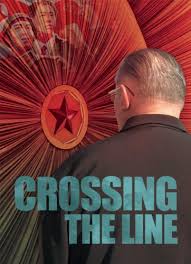
CROSSING THE LINE
UK, 2006, 86 minutes, Colour.
Narrated by Christian Slater.
Directed by Daniel Gordon, Nicholas Bonner.
While this documentary was made in the early 2000s, it continues to be interesting, especially because of the place of North Korea in world politics since the middle of the 20th century and its continued ambitions into the 21st century.
This is a British production, the directors interviewing James Dresnock, the American soldier who crossed the line from South Korea to North Korea in 1952 and stayed there for the rest of his life.
While the focus is on Dresdock and three other American soldiers, there is a great deal of background footage and explanations of Asia the end of World War II, the defeat of the Japanese, the Japanese in Korea, the links with North Korea and China and the newly emerging Communist Party under Mao Tse Tung. There are explanations of the Korean War, the American presence, the dislike of the Americans and their treatment of the North Koreans. There are explanations of the division between the North and South and the consequences.
There are a number of interviews with American officers from Korea at the time, those who had the defectors in their forces, background stories to what it happened, comments on the characters, opinions on their behaviour and the relationships between North Korea and the US, issues of propaganda.
Because North Korea can be so secretive, a film like this where the directors were able to be in the country and freely interview some of the defectors is significant. There are explanations, showing their lives over the decades, visuals of life in North Korea, cut off from the rest of the world, yet promoting English because of its access to technological developments, the regimentation, the vast crowds organised, the goose-stepping military…
But, the focus of attention, is on James Dresdock, willing to be interviewed 50 years after his defection. He gives an explanation of his difficult childhood, parents, orphanages, joining the military, service in Korea, working with other soldiers, the hard life of the soldiers, the drinking, the prostitutes, and his decision to cross the line to North Korea. There are some details of three other men who defected, two soon after Dresdock, one in the 1960s.
Dresdock is very affable in his interviews, smiling, giving explanations, his childhood, what it was like at his age to be in a foreign country, issues of language, culture, race, the treatment by the authorities, the indoctrination and his acceptance of this, then details of his marriages, his children, their American appearance yet their Korean mentality, their education, his role in giving lectures, and, perhaps surprisingly, the involvement of the defectors in the Korean film industry, propaganda films and their playing “ugly Americans”.
Some attention is given to the defector, Charles Robert Jenkins, his wife, a captured Japanese, his eventually leaving career to return to his wife and writing a book about his experiences.
There is a certain sympathy initially for James Desdock, his background, sad experiences, immaturity, and the consequences for living the rest of his life in North Korea. His doctor reveals he is in poor health, the smoking and the drinking. However, from the American point of view, he is a defector, a traitor, working for decades against America and its interests.
