Displaying items by tag: Gregory Gadebois
Jean Valjean
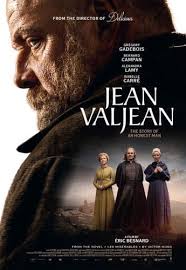
JEAN VALJEAN
France, 2025, 98 minutes, Colour.
Gregory Gadebois, Bernard Campan, Alexandra Lamy, Isabelle Carre, Dominique Pinon, Romane Libert.
Directed by Eric Besnard.
The story of Jean Valjean stealing the Bishop’s candlesticks in Les Miserables is very well known and the episode has appeared in all film versions.
This, rather brief, film begins four days after Jean Valjean has been released from the galleys. He is wandering the countryside, seeking food, knocking on doors, angrily rejected because he is a convict. An old woman recommends that he knock on a particular door, that of the Bishop, he given the name Myriel and the nickname Bienvenue/Welcome. He lives with his sick sister, not a believer, and their maid, highly self-righteous and instantly condemning the convict. She is fearful and judgemental.
Jean Valjean is welcomed by the Bishop, sharing their simple meal, the maid reluctant to serve, the Bishop welcoming, the sister showing some concern. During the night, Jean Valjean imagines what he could do, brutally kill the Bishop in his peaceful bed, attack the sister, kill the maid. But, he does not. He steals the silver cutlery, embossed with the Bishop’s seal, but is caught by the police and returned. The Bishop speaks of the cutlery as a gift and goes to get the candles, saying that Jean Valjean has forgotten to take them.
Isabelle Carre as the Bishop’s sister is an interesting and unexpected character, ill, disappointed in life, lacking faith in God, supportive of her brother and his charity. Alexandra Lamy as the maid shows how an upright character and be blinded by prejudice.
Writer-director, Eric Besnard, has used the first two books of Victor Hugo’s Les Miserables but then has “freely adapted” the story, giving an extensive back story for the Bishop, married, travelling in Italy, the loss of his wife, subsequent anger and hatred, becoming a cleric, becoming a bishop, relishing his status and pomp. But he meets a hermit, a rebel whom he is to condemn but who accepts him, enables him to find grace and change. He then visits the sick in a crowded infectious hospital, offers the Bishop’s Palace as the hospital and he and his sister live in the old building, a life of poverty and charity, and able to pass on his experience of grace to Jean Valjean who, as we know, will be transformed into one of the great saviour figures of literature.
Later in the film there is a back story to Jean Valjean himself, the poverty, the stealing of the loaf, the arrest, and some vividly brutal sequences especially in quarries. Gregory J Dwyer is a rather hulking presence as Valjean, eliciting audience sympathy with the prejudice against him but not a sympathetic personality. And, at the end, is confrontation with the little boy with the call-in and his mean-minded behaviour, it is repellent – but, of course, the occasion for a new awareness, repentance, a change of heart.
The screenplay is rather rhetorical, especially with the voice-over commentary, making the film something like a homily cinema experience – and a reminder of the urging of Pope Francis that shepherds should have the smell of the sheep, go out to the existential peripheries, a message urged on by Pope Leo the XIV and his first major letter, Dilexi te (I have loved you).
- The importance of Victor Hugo and Les Miserables? 19th-century, 20th century, the various film versions, television, 21st-century?
- The popularity of the episode of the Bishop’s candlesticks? The writer-director and his “free adaptation” of the first four books of the novel? The basic story, the Bishop, kindness to Jean Valjean, the welcome, the theft, the police and the return, the Bishop and his giving them as a gift, the effect on, Jean Valjean, his transformation, his future and his being a saviour-figure?
- Four days after his release from the galleys, wandering the countryside, his impact, size, poverty, reputation as a convict, the cafe and his being ousted, knocking on doors, begging, rejected? The old lady, advising him to visit the Bishop? Knocking on the door, the maid, unwilling, critical, condemnatory, despising him? The welcome from the Bishop, his sister, at the table, the food, the cutlery embossed, the conversation?
- The film amplifying the story of the Bishop, seeing him with the patients in the crowded hospital, harsh situations, his giving over the Episcopal Palace for the hospital, his leaving the hospital, poor conditions? The flashbacks to his personal story, marriage, travel to Italy, death of his wife, his anger, resentment, entering the clergy, becoming ambitious, a bishop, enjoying the pomp and circumstance, his visit to the rebel, intending to condemn him, the conversation, the impact of the rebel, communicating grace, his change, travel and the house?
- The Bishop’s sister, unwell, her story, not believing, the conversation about faith? The trust of her brother, welcoming Jean Valjean? The contrast with the response of the maid, serving, reluctant, condemning?
- The night, Jean Valjean imagining attacking the Bishop in bed, taking the cutlery, the confrontation with the sister, her death, confronting the maid, her falling to her death? But his not taking that option, his escape with the cutlery, arrested, the police returning him?
- The response of the Bishop, the cutlery symbol of wealth, his letting it go, welcoming Jean Valjean, the reaction of the sister, the maid, and telling him he should have taken the candlesticks? The police leaving? The impact on Jean Valjean? His leaving?
- Wandering, the encounter with the young boy, the boy’s enthusiastic, his coin, Jean Valjean with his shoe on it, refusing the boy, the boy upset and fleeing, Jean Valjean coming to his senses, trying to find the boy, moment of insight, repentance, hope for the future?
Fil, Le/ The Thread
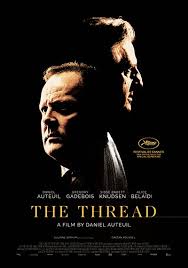
LE FIL/ THE THREAD
France, 2024, 115 minutes, Colour.
Daniel Auteuil, Gregory Gadebois, Sidse Babett Knudsen, Alice Belaide, Gaetan Roussel, Florence Janas.
Directed by Daniel Auteuil.
The Thread is a courtroom drama, French style. It is very much a film by Daniel Auteuil, the celebrated French actor for many decades, who has written, produced, directed and acted in the central role of the defence lawyer, Maitre Jean Monier.
The film is based on an actual place, and a memoir by the lawyer defending. A woman has been killed, an alcoholic, wife and mother, suspicion on her husband, who is seen at home with the children, devoted, preparing their meals, a kind man, suddenly arrested, the main plausible suspect in the murder.
Jean is separated from his lawyer wife but works in collaboration with her, discussing his meeting with the accused, his belief in his innocence, the intensity of his commitment to defending the accused. The proceedings become something of a crusade for Jean.
While there are many similarities to court cases dramatised in English-language films, there are differences, a bench, judges presiding, the way testimony of witnesses is handled, the behaviour of the prosecution as well as the defence – and the interventions of the judge.
Courtroom dramas do tend to be interesting, the audience invited to be members of the public in the court but also to take on some of the attitudes of the jury, sympathy or not for the accused, the credibility of the witnesses, one or other of them in this case losing their temper in the stand. How much evidence is circumstantial? The reliability of witnesses? Beyond reasonable doubt?
The focus of the case is the accused going to see his friend at the local bar, their discussions, the possibility for committing the murder and burying the body.
Which means then that there is the double interest throughout the film, the proceeding of the case, sympathy for the accused, something of a laid-back performance from Gregory Gadebois, a large man, quiet, seemingly bewildered by what is happening to him.
And, the case proceeds, verdicts, and intervention by the judge. And, probably, the film’s audience winding down, everything clear and settled – but, it is not, and the final part of the film has quite some dramatic impact, a highly emotional and moral challenge.
- Based on a true story? The memoir of the lawyer? The title, the focus on the thread, evidence?
- 21st-century murder case, the episodes in 2017, the family situation, the arrest of Nicolas, the meal with his children, his being held for three years? The flashbacks to his going to the bar, the discussions with Roger, the discussions with Roger’s wife? The reconstruction of the situation, Nicolas’s wife and her alcoholism, absence, on the city bench? The car, the witnesses about the car, the man who saw the three figures, his interpretation? The finding of the body?
- Jean, his reputation as a lawyer, losing a case, prosecutor, his wife and the relationship, her work? His going to the station, the meeting with Nicolas, the discussions, the questions? The impact on him, his decision to take the case? Convinced of Nicolas’ innocence? The preparation for the case, the evidence, after three years and Nicolas consistent?
- Nicolas, scene with his children, the meal, his arrest, in prison, the three years, meek, listening, attitude towards Jean, gratitude towards him? Receiving respect from Jean?
- The French legal process, the Judge, the bench, the jurors? The interrogations, the witnesses? The technical witnesses about the wounds, the body? The witnesses observing the scene, the young woman, the driver and his angry reactions, rebuked by the judge? Roger’s wife and her testimony?
- The character Roger, the flashbacks, his attitude towards Nicolas’s wife, urging him to get rid of her? His death, not able to testify?
- The questions, the skill of the prosecutor, the defence, the interventions of the judge? The final speeches? The seeming guilt, no other possibilities for murderer? The decision of the jury, the juror explaining to Jean the influence of the judge for the decision?
- Nicolas, his resigned reaction, 20 years, keeping the children, the background discussions of their mother, the tensions, prospects for divorce, her death?
- The effect on Jean, years passing, summoned to Nicolas – and audience response to the revelation about his sexual behaviour, his wife’s knowledge, the threats, divorce and her making manifest the truth, killing her?
Choses Simples, Les/ A Great Friend
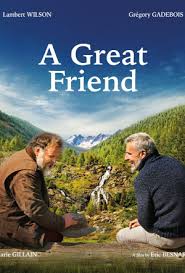
A GREAT FRIEND/ LES CHOSES SIMPLES
France, 2023, 95 minutes, Colour.
Lambert Wilson, Gregory Gadebois, Marie Elaine.
Directed by Eric Besnard.
Two titles but with very different emphases. On the one hand, we are expecting to see a growing friendship between two rather different characters – and this happens. On the other hand, there is a prologue starting with plankton and early forms of life in the sea building up to enormous complexities in the cosmos, on Earth, in humans building up our contemporary world which is far from the simple things of the French title.
By the end of the film, having shared the journey with the two men, having observed the complexities of modern life as well as possible escapes to the simple things, we have been asked to think about our own lives, what is of value, what we can let go of, what do we really want without lives.
The film opens in the Alps, majestic scenery which we can contemplate throughout the film. An impatient businessman, Vincent (played by veteran actor Lambert Wilson), seemingly stranded when his car breaks down on a remote road, but a biker, Pierre (Gregory Gadebois who can be seen in a very different rule in The Sitting Duck) a gruff loner, offers to help.
Vincent, in fact, is one of the huge movers and shakers in French society, even on an international level. With experience of some solitude in the mountains, sharing a meal with Pierre, we might wonder whether this is going to be something of an equivalent of a Camino experience, a pilgrim alone in the countryside, discovering his inner self.
Well, not quite.
In fact, while Vincent is exactly what he seems, Pierre is not. And, however unlikely it seems at the beginning of the film, with a great deal of sparring and moments of antagonism, there will be a friendship. One of the means of opening up the friendship is Vincent’s discovery that Pierre looks after his widowed sister-in-law, his niece, and does have some social life – and charm. On the other group hand, while Vincent’s charm is often very obvious, he is a much more devious character.
Yes, this is the story of a friendship which might eventually be great. But, it is also a questioning of contemporary values, life in our busy cutthroat world – and the need for some kind of simplicity, discovering what are those simple things.
- The French title and the emphasis on simplicity and simple things? By way of contrast, the English title and the friendship, unlikely?
- The opening visual collage, in the sea, the plankton, evolution, through the centuries, humanity, progress, modern cities – the opposite of simple things?
- The setting in the Alps, the beauty of the mountains, the remoteness, the roads, the hearts and the wooden dwelling? The musical score?
- The contrast with the business world, corporations, meetings, dinners?
- The situation, Vincent stranded, the breakdown of the car, peer on the bike, coming back, offering to fix the car? Vincent staying, the quiet, sleeping, his talking, Pierre and his monosyllabic responses? Wanting Vincent gone? Vincent is and his return, Pierre having fixed the car, Vincent staying, sharing the meal, staying in the hut?
- The media interview with Vincent, his walking out, the media and the long explanation of Vincent and his success in the commercial world, international, the variety of projects undertaken, dating sites, scientific research…?
- Vincent’s return, wanting to stay with Pierre, climbing the mountain, Pierre and his woodwork, Vincent finding some exhilaration? The young girl, wanting to fish with Pierre? Pierre dressing up, going to the dinner, Vincent following, Pierre and his shyness, his sister-in-law, the death of his brother in an accident, care for the niece? Vincent seeing that Pierre loved his sister-in-law?
- The arrival of the people in the company, their pressures on Vincent? The revelation of the truth, Vincent and the set up of the car breakdown, his wanting to employ Pierre? Discovering his hut, the interactions with the dog, Pierre and to scientific research, the background, his opting out of life, if the offer for employment in the United States?
- The buildup to confrontation, the arguments, Vincent and his pressure? Setting up the deal, that Pierre propose to his sister-in-law, his hesitation because of the visit of the forester? Pierre going down, the sister-in-law, his awkwardness, her playful responses, the niece of Vincent watching through the binoculars? The dancing, the proposal, the joy?
- The theme of the film, Pierre and his life with the simple things get the complexity of his research and its contribution to world development? Vincent and simple things, his complex life, yet the effect of his being with Pierre, the carpentry, yet the business?
- The development of the friendship, Vincent and his future, Pierre and his research, Pierre and his marriage, the future for Pierre?
- The film wanting a complex response from the audience, appreciating the friendship, appreciating life and simple things, but this is not entirely possible in the complex modern world.
Syndacaliste. La/ The Sitting Duck
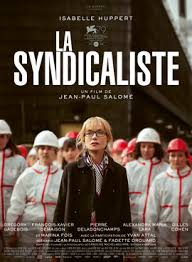
THE SITTING DUCK/ LA SYNDACALISTE
France, 2023, 121 minutes, Colour.
Isabelle Huppert, Gregory Gadbois, François-Xavier Demaison, Pierre Deladojnchamps, Alexandra Maria Lara, Mara Taquin, Yvan Attal, Marina Fois..
Directed by Jean-Paul Salome.
The English title, indicating an obvious target, does not quite do justice to the French title which indicates someone who is a member of a trade union. And this is the case with the central character, based on an actual people and events in France, starting in 2011, Maureen Kearny.
French actress, Isabelle Huppert, has been top lining films for more than 50 years, an impressive career and skill in bringing to life an enormous range of roles. Here, she does not look like herself, a face pale instead of freckles, blonde hair with a fringe, wearing spectacles. It is a commanding performance especially as we see her initially in Hungary, taking the sides of the female workers whose jobs are threatened, then returning to Paris, working with authorities, she and her female boss looked down on, snide but semi-loud comments from the male executives. It is clear that this is going to be a significant confrontation between men and women in the corporate world, and the corporate world and its confrontation with unions.
At the centre of this corporate world is a nuclear company, Avara, in competition with a French company but the French company in secret conversations with China, China wanting to expand its building nuclear reactors around the world. Maureen’s boss loses her job, a less competent executive is appointed in her place, quite some clashes with Maureen.
A whistleblower approaches Maureen with damning documents and, what follows, is tangles with bureaucracy, the change of the French president, looking down on Maureen because she is a woman, because she is a Unionist. Then, she is viciously assaulted in her home.
The screenplay then veers away from the complexities of the nuclear companies, indicating what happened in fact, Chinese expansion of French jobs. Maureen is continually supported by the unions and their leaders.
The film then focuses on Maureen, the attack, the police investigation, the audience finding, once again that the word of the woman is not immediately accepted, is doubted, she herself coming under suspicion, especially when there has been trauma in the past, drinking, a suicide attempt.
While Maureen might have been the sitting duck for this assault, and she does cave in to the police for a time, the latter part of the film is her standing up for herself, even taking years, examining the situation, the work of skilful lawyers, a court appearance and her vindication.
Maureen Kearny is a strong character, to be admired in the early part of the film and, compassion for her and her struggles after the assault and the police investigations. She is supported by her husband of 20 years, Gregory Gadebois quite the opposite of his leading role in A Great Friend, and a complex relationship with her daughter.
Interesting themes in themselves, very relevant in these times of #MeToo, and yet another fine performance from Isabelle Huppert.
- Based on a true story? 2011-2017?
- A French story, French corporations, nuclear corporations, the unions, union representatives, deals, international deals, secrecy, whistleblowers? And the targeting of the union representative, a sort, police investigations, court cases?
- The opening, Maureen in Hungary, with the workers, standing up to the authorities, a return to Paris, is seven as her boss, her being relieved of her job, the meetings with the male executives, their mutterings and insults? The expose of male domination in the workplace?
- Maureen as union representative, the support of the unions, the meetings? The background, 20 years with her husband, his support, sometimes exasperation? Her daughter, sometimes rebellious, sometimes supportive? The background of her drinking, attempted suicide, mental states?
- The whistleblower, the documentation, the situation with the company, financial difficulties, change of CEO, the new official, the opinion of him as weak, the meetings with Maureen, flaring up? The Chinese, the deals behind the scenes, documentation? Politicians?
- Maureen and her interventions, suspicions, union support, the change of government, the new President, going to see the minister the discussions with Anne, tensions??
- The impact of the assault, seeing it at the beginning of the film, the aftermath, the effect on Maureen? The screenplay coming back to the assault, the effect on Maureen, her fears, husband’s response, daughter?
- The police investigation, the chief investigator, interrogations, the screenplay highlighting how a woman is treated in this this kind of assault case, a man? The questions, the replay of the situation, suspicions, her work being doubted, seeming inconsistencies? The pressure on her, her confessing that she had made it up? The police response, the media, her name being black and?
- Her change of heart, the reaction of the police, the years taken in going back over the case, the re-creation, the possibilities and import possibilities, the reality of Maureen and her injured shoulder (and the sequences of the doctor’s consultations and tests), employing the more skilled lawyer, the case, her case being proven, the condemnation of the police investigator, of the treatment of women?
- The impact of the film as a portrait of Maureen, her work, the attack, the consequences, her reputation, her vindication?
- The impact of the film and corporations, deals, political implications, the unions?
- The impact of the film in the context of the 2010s, the #MeToo movement and greater awareness of male bullying, exploitation and treatment of women?
