Displaying items by tag: Isabelle Carre
Jean Valjean
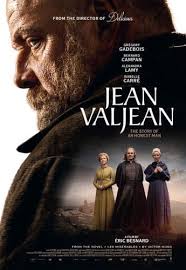
JEAN VALJEAN
France, 2025, 98 minutes, Colour.
Gregory Gadebois, Bernard Campan, Alexandra Lamy, Isabelle Carre, Dominique Pinon, Romane Libert.
Directed by Eric Besnard.
The story of Jean Valjean stealing the Bishop’s candlesticks in Les Miserables is very well known and the episode has appeared in all film versions.
This, rather brief, film begins four days after Jean Valjean has been released from the galleys. He is wandering the countryside, seeking food, knocking on doors, angrily rejected because he is a convict. An old woman recommends that he knock on a particular door, that of the Bishop, he given the name Myriel and the nickname Bienvenue/Welcome. He lives with his sick sister, not a believer, and their maid, highly self-righteous and instantly condemning the convict. She is fearful and judgemental.
Jean Valjean is welcomed by the Bishop, sharing their simple meal, the maid reluctant to serve, the Bishop welcoming, the sister showing some concern. During the night, Jean Valjean imagines what he could do, brutally kill the Bishop in his peaceful bed, attack the sister, kill the maid. But, he does not. He steals the silver cutlery, embossed with the Bishop’s seal, but is caught by the police and returned. The Bishop speaks of the cutlery as a gift and goes to get the candles, saying that Jean Valjean has forgotten to take them.
Isabelle Carre as the Bishop’s sister is an interesting and unexpected character, ill, disappointed in life, lacking faith in God, supportive of her brother and his charity. Alexandra Lamy as the maid shows how an upright character and be blinded by prejudice.
Writer-director, Eric Besnard, has used the first two books of Victor Hugo’s Les Miserables but then has “freely adapted” the story, giving an extensive back story for the Bishop, married, travelling in Italy, the loss of his wife, subsequent anger and hatred, becoming a cleric, becoming a bishop, relishing his status and pomp. But he meets a hermit, a rebel whom he is to condemn but who accepts him, enables him to find grace and change. He then visits the sick in a crowded infectious hospital, offers the Bishop’s Palace as the hospital and he and his sister live in the old building, a life of poverty and charity, and able to pass on his experience of grace to Jean Valjean who, as we know, will be transformed into one of the great saviour figures of literature.
Later in the film there is a back story to Jean Valjean himself, the poverty, the stealing of the loaf, the arrest, and some vividly brutal sequences especially in quarries. Gregory J Dwyer is a rather hulking presence as Valjean, eliciting audience sympathy with the prejudice against him but not a sympathetic personality. And, at the end, is confrontation with the little boy with the call-in and his mean-minded behaviour, it is repellent – but, of course, the occasion for a new awareness, repentance, a change of heart.
The screenplay is rather rhetorical, especially with the voice-over commentary, making the film something like a homily cinema experience – and a reminder of the urging of Pope Francis that shepherds should have the smell of the sheep, go out to the existential peripheries, a message urged on by Pope Leo the XIV and his first major letter, Dilexi te (I have loved you).
- The importance of Victor Hugo and Les Miserables? 19th-century, 20th century, the various film versions, television, 21st-century?
- The popularity of the episode of the Bishop’s candlesticks? The writer-director and his “free adaptation” of the first four books of the novel? The basic story, the Bishop, kindness to Jean Valjean, the welcome, the theft, the police and the return, the Bishop and his giving them as a gift, the effect on, Jean Valjean, his transformation, his future and his being a saviour-figure?
- Four days after his release from the galleys, wandering the countryside, his impact, size, poverty, reputation as a convict, the cafe and his being ousted, knocking on doors, begging, rejected? The old lady, advising him to visit the Bishop? Knocking on the door, the maid, unwilling, critical, condemnatory, despising him? The welcome from the Bishop, his sister, at the table, the food, the cutlery embossed, the conversation?
- The film amplifying the story of the Bishop, seeing him with the patients in the crowded hospital, harsh situations, his giving over the Episcopal Palace for the hospital, his leaving the hospital, poor conditions? The flashbacks to his personal story, marriage, travel to Italy, death of his wife, his anger, resentment, entering the clergy, becoming ambitious, a bishop, enjoying the pomp and circumstance, his visit to the rebel, intending to condemn him, the conversation, the impact of the rebel, communicating grace, his change, travel and the house?
- The Bishop’s sister, unwell, her story, not believing, the conversation about faith? The trust of her brother, welcoming Jean Valjean? The contrast with the response of the maid, serving, reluctant, condemning?
- The night, Jean Valjean imagining attacking the Bishop in bed, taking the cutlery, the confrontation with the sister, her death, confronting the maid, her falling to her death? But his not taking that option, his escape with the cutlery, arrested, the police returning him?
- The response of the Bishop, the cutlery symbol of wealth, his letting it go, welcoming Jean Valjean, the reaction of the sister, the maid, and telling him he should have taken the candlesticks? The police leaving? The impact on Jean Valjean? His leaving?
- Wandering, the encounter with the young boy, the boy’s enthusiastic, his coin, Jean Valjean with his shoe on it, refusing the boy, the boy upset and fleeing, Jean Valjean coming to his senses, trying to find the boy, moment of insight, repentance, hope for the future?
Tasting, The/ La Degustation
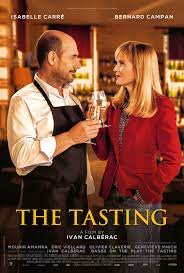
THE TASTING/ LA DEGUSTATION
France, 2022, 92 minutes, Colour.
Isabelle Carret, Bernard Campan, Mounir Amamra.
Directed by Ivan Calberac.
There is a lot of wine throughout this film. And, there is a key tasting sequence, the explanations for those who are not familiar with such tasting is, and something of a test in expertise for those who are familiar. So, this is a film for fans of wine themes. It has been a long tradition of films about Vineyards, vintages, processes, Sommeliers, International rivalries… This is a 90 minute contribution to those traditions.
However, especially as the film progresses, there are very strong human interest themes, especially to do with relationships, family and children. So, some issues which may interest audiences for whom some of the wine themes may seem a touch esoteric.
The two central characters of the film are in their 40s. We are introduced to Jacques (a fine performance by Bernard Campan), lifting cases of wine in his cellar, collapsing with a heart attack, his good friend the doctor just around the corner saving him, but reading the riot act about no drinking and giving him a card for an AA group. Joke is not interested at all, defending himself – but eventually going to the meeting, participating, and giving up the drinking. The other central character is Hortense (sometimes affecting Isabelle Carre), a midwife (who so loves fondling the new born that they have to tell her to give the child back to its mother!). She comes into Jacques’s shop wanting a bottle of wine to share with a group of homeless men that she supports.
Long story Short, so to speak, Hortense returns to the shop, wants to participate in the tasting, the local bookseller turning up, hopeless at wine tasting but flirting with Hortense, on the other member of the group, Steve, a young man with drug issues, Jacques having been persuaded to take him on as an intern (despite his laziness and the smooth word for every situation). While Hortense enjoys the tasting, easily tipsy, Steve actually has a talent for recognising the qualities of the wines.
But, if that were the whole film, it would have its limited specialist audience.
Jacques has a back story, tragic in its way, revealed towards the end of the film, explaining some of his behaviour, especially towards Hortense. And, Hortense, seen devoutly at Mass (and tasting the communion wine at the recommendation of the parish priest), also has a past, has meals with her mother who continually criticises her, then they play Scrabble. Actually, there is a fine scene after the mother dies, some letters in her hand which her daughter then has to place together to find the word – and it is quite moving.
Which means then that, while there is a tour of the Vineyard and the processing of the group, shark leading Hortense’s group of homeless men, the wind theme lessons (though still some dramatic moments to come) and the focus is very much on the issues between Jacques and Hortense.
The film has a Catholic context, Hortense devout, and raises questions of moral issues in connection with church teaching.
- The title, the wine focus, the presence of wine throughout the film, the episodes of tastings?
- The locations, the town, the aerial overview, the central square, the church, facade, tower,, interiors and Mass, the streets, homes, the wine shop, the bookseller? The local countryside, the Vineyards? The visit to the cellar, the details of wine processing? The visit to Spain, the clinic, the son and the water? The musical score?
- Jacques and his story, in his shop, carrying the boxes, the collapse, the wine is spilled, the attack, the immediate presence of the doctor, in hospital, the doctor and is warning about drinking, the car for AA, the Jacques and his stubbornness? Later filling in of his background, the birth of the child, the long drive, the accident, the death of his child, the visit to the cemetery, the gravestone and the presence of an Angel, his wife leaving him? More than 15 years by himself?
- Hortense, at Mass, the priest and the taste of the altar wine, her coming to the shop, the discussions with Jacques, the variety of wines, his recommendations, her buying the wine for the group of homeless men, the meal, her serving the wine, their response? Her work as a midwife, holding the babies with tenderness? The visits to her mother, at Mass, the meals at home, her mother’s criticisms, playing Scrabble? The mention of four years in the later revelation of her marriage being abandoned? The revelation of her wanting a child, on the record in Spain, eggs, sperm donor? Loneliness, friends at work?
- Her insisting on the tasting, the encounter with Steve, the social worker, persuading Jacques to take him, drugs, always with an excuse, slow in work, tidying the cellar, complaining of claustrophobia, time off for a smoke, riding the bike, his connection with the thugs, the box of wine for the doctor, giving it to the thugs, the later threat him, the damage in the shop? But his saving the special wine by changing the label?
- At the tasting, Jacques and his expertise, the bookseller, Hortense, Steve? The explanation of the look, the colour, the smell, identifying, the taste, the spitting, the swallowing? Steve and his talent? The bookseller and his continued flirting, not being accurate? Hortense and her response, printing, the collapse, leaving the phone?
- The building up of the relationship, the flirting of the bookseller, the overt comments by Steve? Hortense and her return for the phone, continued returns, the music, the dancing, the kiss? Jacques and his supplying the tasting for her homeless men? The tour of the Vineyard, his driving her home? The sexual encounter, the restaurants, at her place, his discovery of the cot and the revelation of the truth? The effect on him? His comments about children, the audience later learning about his child?
- Hortense, upset, Jacques leaving the restaurant, at Mass with her mother, her Frank talking with her mother, her mother dying, the Scrabble letters and later deciphering “pardon”?
- Jacques and his visits to AA, his denials, the doctor in charge, the support, his explanations, the group? His going to AA instead of the theatre?
- The funeral, his attending, the flower, Hortense walking, seeing him at the headstone, the later visit, asking the bookseller for an explanation, putting the rows on the grave? Jacques and his being upset, not answering her calls? Going to Spain?
- His collapse, drinking again, the doctor, Steve finding him and calling for help? Recovery?
- The episode with Steve, Jacques prepared to pay for his training as a Mentally, the destruction, playing the game at the club Steve, forgiveness?
- Hortense, in Spain, the phone call, the music, shark downstairs? Reconciliation? But the question open about her pregnancy and the future?
