Displaying items by tag: Peter Malone's Movie Reviews
Romance in Style
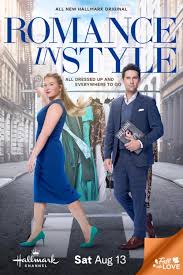
ROMANCE IN STYLE
US/Canada, 2022, 84 minutes, Colour.
Jaicy Elliott, Benjamin Hollingsworth, Connie Manfredi, Jorja Cadence, Dalyin Willis, Laura Soltis, Jason Salamandyk.
Directed by Michael Robison.
Fans of Hallmark movies find this one quite engaging. And, it lives up to its title, a definite romance but a focus on style, especially the world of fashion style.
Central character, played by Jaicy Elliott, is Ella (there are quite a number of references to Cinderella and the central character saying she is fond of the story but sometimes wonders whether she is the Ugly Sister). Ella is from Pittsburgh, a designer, working in sewing but with huge ambitions in New York, supported by her friend Katie who works at the fashion magazine The Look, admired by friends in the garment district, and introduced to a key fashion executive who appreciates Ella’s work.
On the way to work one morning, she encounters Derek (Benjamin Hollingsworth) on the phone, holding up the line for getting their morning coffee. Ella is very direct in what she says, complaining, then she is walking with him along the street, entering the same building, entering the same floor, and discovering that he is the son of the executive for a range of companies including The Look and that Derek is there to produce the online version of the magazine and to promote finance.
One of the points being made by the film is that fashion magazines cater to an imaginary female look, that of models, their fashion measurements… But Ella, like most women, is not the fashion magazine image. And she wants to change that, with her attitudes, with the outreach of the magazines, with her own designs.
While there is something of a battle of the sexes, Derek becomes ever more sympathetic, that he has set up an athletic club for deprived youngsters, coaches them, clashes with his father but is reconciled, very much dislikes the arrogant editor of the magazine and her subservient assistant, decides to have Ella as his instructor in the details of the world of fashion – which she does, both falling more and more in love!
There is a crisis at the end, not quite credible in so far as Ella would believe the harsh insinuations of the editor’s assistant about Derek and does something of a tantrum. But, he is sincere, has worked on all kinds of means, including an article by Ella’s best friend for the magazine about her, and an opportunity to display her work.
A pleasing Hallmark experience.
Eddington
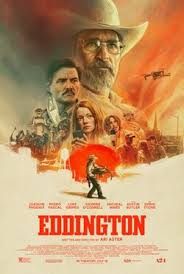
EDDINGTON
US, 2025, 148 minutes, Colour.
Joaquin Phoenix, Deirdre O'Connell, Emma Stone, Micheal Ward, Pedro Pascal, Cameron Mann, Matt Gomez Hidaka, Luke Grimes, Amelie Hoeferle, Clifton Collins Jr, William Belleau, Austin Butler.
Directed by Ari Aster.
Writer-director, Ari Aster (Heredity, Midsummer, Beau is Afraid) is not afraid of making demands on his audiences, a lot of thinking, a lot of discussion. He urges us to remember where we were in May 2020, the early covid months and lockdown, masks, vaccinations, controversies, conspiracy theories. He immerses us in Eddington, New Mexico, May 2020, and invites the audience to make comparisons.
But, this is the US, compliance and protest, the story of the sheriff, some American righteousness with devious intentions, campaigning to be mayor. While there is his storyline, the atmosphere widens with Black Lives Matter protests, some screaming left wingers, some disruptive right-wingers and increasing chaos and Antifa interventions. (It is amazing to know that President Biden was elected five months later, but then January 6th seven months later. Actually, with the second Trump presidency, it all looks strangely more familiar than we might have imagined.)
Aster stressed that he saw the pandemic as an inflection point that merely accelerated an inevitable series of events. Our brains were already broken by technology and media polarization, 2020 just provided a lethal dose of social isolation that permanently destroyed the societal norms we had been living with for the past century. Christian Zilko IndieWire
We see dramatised anger, paranoia, distortions, insanity, violent calculations and eruptions, conspiracies. A Rorshach test – beserk.
For over 30 years Joaquin Phoenix has been giving complex performances and this is amongst his best, playing the sheriff. Pedro Pascal, frequently present on our screens at this time plays his rival, the mayor. There are some interesting casting is, Emma Stone as the sheriff’s disturbed wife, Austin Butler as a right-wing evangelical agitator, British Michael Ward as the deputy sheriff.
There is always movement during the film but, as it moves towards its violent climax, it becomes, literally, all guns blazing – and an emotional unexpectedly calm but ominous ending.
- The date, may 2020, Covid, locked down, conspiracy theories, the Trump presidency? Seen in retrospect and memory?
- Eddington, New Mexico, the town itself, the streets and neighbourhoods, homes, mansions, offices, the hillside, the industrial complex? The musical score?
- The challenge to American audiences, international audiences observing, the 2020s, Covid, the Biden years, the second Trump presidency? Extreme right and conspiracies, militant action? Left-wing demonstrations? Political atmosphere?
- Joe Cross, an Everyman American, sheriff, his attitudes and behaviour, his views, relationship with his wife and tensions, with his mother-in-law, the sequences at home? With his deputies and relying on them, the racial mix? His clashes with the Mayor, the confrontations in the street, ideologies, business interests and development? The campaign for mayor? His decision, his posters, his billboards, those of the Mayor? His attitude towards masks, vaccines, spaces in lines, his behaviour in the supermarket? His wife unstable, the tensions and meals at home, issue of children, his mother-in-law and conspiracy theories?
- Industrial background, the financial interests, the buildings, the plants, work, development?
- Joe and his campaign, meeting people, confrontations with Ted, his two deputies and his reliance on them, their characters and behaviour, race issues?
- Ted, Mayor, his place in the town, contribution, his family, travelling with his son? Indications of the previous contact with Louise and its consequences for Joe? The campaign? His son and his relationship with him, the son’s friendship with Bryan, Brian and his background, political stances, demonstrations, Sara, the demonstrations, her political stances, Bryan wanting favour with her, a relationship?
- Vernon, his visit and meal with the family, his religious stances, the religious right? His interventions? His campaigns and rallies? On television? Ultimately Louise leaving home, joining him, seen on the television, pregnant?
- The situation of Black Lives Matter, Minneapolis and the demonstrations, the death of George Floyd? The occasion for demonstrations, protests, the involvement of citizens in the town, Joe and his dealing with the demonstrations?
- The switch in tone, Joe confronting tent, the slap, the humiliation, Joe and his killing the vagrant and putting his body in the water, confronting Ted, killing him and his son? Going to the house, setting up the robbery scenario, and his writing on the wall (and that later being the revelation of his guilt)?
- The further switch in tone, the plane load of protesters and their arrival? The intervention of Butterfly humane is, the people and nation, his authority, the shooting on the land, his investigations, examining the house, confronting Joe?
- Beginning of the mayhem, the armed pursuers, the protesters, Brian and Sarah and their interventions, Joe, covering himself, the clashes at home, getting the guns from the store, the transition to an all guns blazing scenario? Joe and his being wounded? And is being unmasked by Butterfly who sees the campaign poster in the office and makes the connection with the house?
- Joe, his involvement, the guns, his being stabbed, saved by Brian?
- A year later, Joe and his injuries, quadriplegic, cared for? His mother-in-law and her presence? Status, authority?
- Brian, symbolising ambitions and complacency? The television program with Vernon and his right-wing religion, Louise present? And Michael, surviving the fires and explosions, deputy sheriff?
- An American response to the film, depending on stances, political issues, conspiracy theories?
Sons of Steel

SONS OF STEEL
Australia, 1989, 97 minutes, Colour.
Rob Hartley, Roz Wason, Jeff Duff, Dagmar Blahva, Ralph Cotterill, Mark Hambrow.
Directed by Gary.L.Keady.
A bizarre experience, to say the least. It is not a very well-known film from Australia in the 1980s has something of a cult following, the umbrella company promoting it on Australian streaming television.
It is billed as science fiction, as a comedy, as a musical. And, it is difficult to know how much is parody and how much is meant to be straightforward. Her science fiction it goes into the future, a compact amongst the countries of the Pacific Ocean, issues of nuclear submarines, one coming into Sydney Harbour and the plan to cause damage to bridge and Opera house. As comedy, it is all highly exaggerated, seemingly very amateur, cast given their head to improvise. And the difficulties whether the audience is laughing with and laughing at the cast. As a musical, there is a band, Sons of Steel, a singer from the present who is projected into the future in order to save the day, confront politicians, unmask plots, and singing a rather large number of rock songs. This is the only film for Rob Hartley who acts and sings as Black Alice.
While, as mentioned, this is a cult film for some. For others it must be very much on the list of worst films seen.
However, SBS has an article online which gives the background to the writer-director, and Gary L.Keady, the devil is in production, distribution, presence in Cannes, some support from David Stratton, and its subsequent history or non-history.
https://www.sbs.com.au/whats-on/article/back-from-the-brink-sons-of-steel/48htsy04h (from 2010).
Together
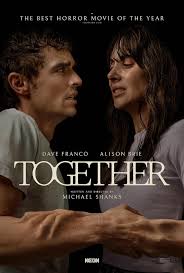
TOGETHER
Australia/US, 2025, 102 minutes, Colour.
Dave Franco, Alison Brie, Damon Herriman.
Directed by Michael Shanks.
The couple, played by Americans Dave Franco and Alison Brie, actually married for many years in real life, are together in this film in more ways than we might have imagined. Together is being categorised as an example of Body Horror, audiences noting the success of 2024’s Oscar-nominated, The Substance, with Demi Moore.
It is probably more than prudent to state that some of the sequences later in the film, especially a prolonged and intense encounter between the couple in a corridor, are certainly not for the fainthearted. Nor the climactic bodily togetherness that might make audiences aghast. In fact, for this reviewer, they are sequences so visceral that one finds one’s feet pressing towards the floor to get some steadiness and balance. Which, probably, is a compliment to the director and the creator of the special effects.
While the couple seems ordinary enough, both in their mid-30s, he a would-be musician, she a teacher, they move to a country town so that he can compose and go on tour and she will work in the local school. In fact, the writer-director of the Michael Shanks, is Australian and the film was made in the Dandenong ranges at the edge of Melbourne. There are some attractive forest sequences until they become quite sinister, a frightening pit where a local church for a kind of cultish group sank and disappeared under the ground.
But, there is something askew with Tim, Dave Franco, not quite right, dependent on Millie, Alison Brie. And, when they fall down the pit by accident, and he drinks the water, there are strange transformations and nightmares that he experiences. Milly, on the other hand, his practical but is wary that there is something definitely role with Tim.
A teacher at the school, also a neighbour, Jamie, played by Damon Herriman (who has played some sinister characters in his day, including Charles Manson) who offers support – and, finally, some frightening revelations.
The first part of the film intimates some psychological disturbance which will lead into horror experiences. The second part of the film puts the characters and the audience on edge, especially when the first intimations of the bodies basically connecting and needing to be pried apart. The third part of the film brings in the religious and superstitious beliefs and behaviour behind the horror - with some speculation is based on Plato’s philosophy of human beings, and references to his shadows in caves.
Rather different in story and treatment than might have been expected – and, once again, the caution for audiences that some of the sequences are more than disturbing.
- The title, love, partnership, marriage? And physically literally interpreted?
- Themes of body horror, religious cults? Supernatural themes?
- The setting, the mountains and forests, the opening and the forest and search, the pit in the mountains, the submerged Chapel, the interiors, the religious symbols, the paintings and icons, together?
- The ordinary settings, house, streets, school, railway station, railway lines…? The musical score?
- The situation, Tim, age 35, his musical ambitions, moderate success, tours, playing the guitar, technical equipment, lack of self-confidence, depending on Millie? Millie, love for Tim, leaving the city, the on-line chat with her sister giving the situation? Her teaching?
- Indications of tension, Tim and his mental health, dependence, the party, Millie and the proposal, Tim’s hesitation, embarrassment, indication of things to come?
- Settling into the house, the decision to go for a hike, getting lost, falling into the pit, the injuries, spending the night, drinking the water, the religious symbols, getting out the next day? The consequences for Tim, at home, the sudden fits, spasms, loss of consciousness, nightmares?
- Millie, at school, meeting Jamie, pleasant friendship, his visit to the house, the drinks?
- Tim, Millie driving him to the station, the overwhelming experience, leaving his gear, wandering the streets, to the school, the toilet sequence, the little boy, Jamie, the embarrassment? Millie arriving to apologise?
- The indication of the physical and psychological togetherness, the lakes together in the pit, the pain of separating, the gashes in their legs, the psychological consequences nightmares?
- Millie, going to Jamie’s house, for the car keys, talking with him, his knowledge of togetherness, the story of his marriage, the photos of the couple, the video, the pastor, the ceremony, then the reality of the merging, Jamie as the combined couple? Billy and her fear, escape?
- The physical and psychological impact of the merging into one sequences, in the corridor, the two fighting to keep separate, visuals, visual, the effect on the audience watching this merging?
- Tim, going to the pit, going down, searching, the together icon on the wall?
- The two returning, trying to remain separate, hanging on, gradually coming together, their willingness to blend, the visuals of their becoming one character?
- The parents arriving, the one character coming to the door? The future?
Friend, The
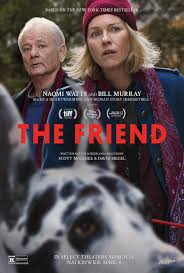
THE FRIEND
US, 2024, 119 minutes, Colour.
Naomi Watts, Bill Murray, Sarah Pidgeon, Carla Gugino, Noma Dumezweni, Constance Wu, Josh Pais, Felix Solis, Owen Teague, Ann Dowd, Tom McCarthy.
Directed by Scott McGehee, David Siegel.
The old adage was that a dog is a man’s best friend. Rather mail-centred as we look back – and now we have a film which definitely shows that a dog can be a woman’s best friend.
This film is based on a prize-winning novel by, exploring the relationship between a writer and the dog which she reluctantly accepts. The writer-directors have opened up this basic story, supplying a range of characters which give understanding to the dog experience.
While the film begins with Bill Murray, offering, once again, what seems his regular performance on screen presence, as Walter, writer and teacher, jogging in New York and discovering the dog which becomes his friend, this is really Naomi Watts’s film.
She is Iris, one-time student of Walter, herself a writer, emotionally close as a student to Walter who has been married three times. Now he has committed suicide, unexplained, strong effect on Iris, different effects on his three wives, on his daughter through an affair, and his publisher and friends. There is a celebration on the boat sailing on the Hudson and the ritual of scattering his ashes.
Iris, who is collaborating with Val, Walter’s daughter, on producing a book presenting and exploring his letters, is suddenly summoned by the third wife told that Walter has asked that she take on his dog. She lives in an apartment block which forbids dogs, is not enthusiastic about dogs herself, finds that the other wives are not enthusiastic about taking on the dog either.
And, there is the dog, an iconic presence, with a classic name, Apollo, a large and dignified great Dane. While Apollo has the power to irritate and exasperate Iris, he does seem to ingratiate himself into the audiences appreciation.
For dog-lovers, no problem, probably making comparisons with their own experiences. For non-dog lovers, may be a reinforcement of prejudices and difficulties. For those who are neutral, the screenplay does make a case for the human-canine relationship, especially whether the dog is just a pet or is a commanding presence on the owner. And, of course, these are the issues throughout the film is Iris wonders whether she is dependent on Apollo or Apollo on her.
The main drama, apart from the growing friendship, is whether she can keep the dog in the apartment which she has inherited from her parents. The superintendent has to keep telling her that the dog can’t be present – but he has a soft heart, especially when there is a happy ending. In part of the drama is a visit to Iris’s doctor, played by writer-director, Tom McCarthy, a sympathetic probing of who depends on whom and the importance of the self-confident dog learning to know its place with a sympathetic owner.
While the dog looks impressive and imposing, strength of the film is in Naomi Watts’ performance, especially towards the end when she decides on doctor’s orders to write about Walter, she imagines meeting him and, dead, the chats for Bill Murray to reappear, to explore their relationship.
The Friend certainly makes the case for dogs.
- Title, focus, humans and dogs?
- The New York story, the opening, Walter and his jogging, seeing Apollo, the editing cut, the return to the sequence of the end, seeing Apollo like an icon, taking him into care?
- Walter and the friendship with Apollo, Iris and her experience of becoming a friend? The responses of other characters to Apollo and his presence? The regulations forbidding dogs in apartment blocks? Hector and his role, warning Iris, yet his ultimate sympathy? Iris and her attempts for the other wives to take on Apollo?
- Walter’s story, a Bill Murray character, a writer, a teacher, his three wives, his relationship with Iris, the affair, friendship, his relationships, his reputation, his love of reading, sequences seeing Walter reading his work, the story of his suicide, no explanations, leaving Apollo to Iris? His appearing in flashbacks? More significantly, the sequence where Iris imagines writing her book, going to interview the dead Walter, their interactions, the conversations, his explanations of himself? Her perceptions?
- Iris’s story, a writer, published, her career and reputation, the classes with Walter, his being married to Elaine, the continued friendship, the party sequence and the conversation, especially about his finding Apollo? His death and its impact? Her own life, the apartment, memories of her father, literature? Her working with Val, those emails, 30,000, Val and her friend getting into the texts, working on the book, Iris letting things go, leaving it to Val?
- Iris and her relationship with the other wives, their not wanting the dog, Barbara and the meeting, Barbara’s character, offloading the dog, Tuesday, harassing Iris, taking the dog, the dog on the couch, her not wanting the dog?
- The funeral, on the boat, the ashes and flowers? The poem read by Jerry, his role with the publishing firm, the meeting with Iris and urging her to complete the book and the commercial reasons?
- Apollo, greater Dane, large, statuesque, iconic? Iris and her reaction, on the leash, to the apartment, Hector and his complaints, not wanting to go into the elevator, in the apartment, immediately going to the bed, commandeering it, Iris sleeping on the floor? Leaving him, playing the music, her return and his mischief in the apartment? Beating him, walking him, dog loving audiences identifying?
- The increasing bond between Iris and the dog, yet her wanting to find an alternate home, forbidden in the apartment block, the complaints, the notices? Hector and his interventions? The other wives and not taking on Apollo?
- Iris going to see Dr Warren, the discussions, his sympathy, the issue of dependents, Iris dependent on Apollo, Apollo dependent on Iris, the report, going to the lawyers, the decision that Apollo could stay? Dr Warren and his advice for Iris to take control rather than Apollo to take control?
- The advice about the Sunday meetings with the great Danes, Iris taking Apollo, the bonding between the dogs?
- Passing of time, the letters book being published, Val and her achievement, Val as Walter’s daughter, the absent mother? Offering her house by the water for Iris to write?
- Apollo, age, lying on the seashore, Iris upset, but is eventually dying? Presented as a noble character, iconic photographing of him?
Suspect/ The Risk
SUSPECT/THE RISK
UK, 1960, 81 minutes, Black-and-white.
Tony Britton, Virginia Maskell, Peter Cushing, Ian Bannen, Raymond Huntley, Thorley Walters, Donald Pleasence, Spike Milligan, Kenneth Griffith, Robert Bruce, Anthony Booth, Basil Dignam, Sam Kydd, Murray Melvin.
Directed by John Boulting, Roy Boulting.
British Nigel Balchin wrote thrillers and wrote the screenplay for this brief film. The Boulting brothers had a strong presence in British cinema from the 1940s. Their intention with this film was to enhance the quality of British supporting features, small budget, filmed in 17 days, brief running time. Critics at the time were harsh on the film, American critics more sympathetic.
With the writing, the Boulting Brothers’ direction, and the considerable quality of the supporting cast, serious issues of scientific experimentation, wartime security, espionage and stealing secrets, there is quite a lot of material in 81 minutes. The locations are confined, home, laboratory, restaurants, espionage. With the supporting cast so articulate, the dialogue makes a strong impression.
In fact, Tony Britton and Virginia Maskell as the stars are not as strong as the character actors, some veterans like Raymond Huntley as the politician, Peter Cushing as the professor, Kenneth Griffith as his assistant, Donald Pleasence, always sinister, Thorley Walters as an eccentric investigator, Ian Bannen as the cynical war invalid, all bring quality to the performances. And there are quite a number of interesting cameos from actors like Spike Milligan, serious and comic at the end, Sam Kydd, Murray Melvin, Anthony Booth.
A curiosity item of the period but an interesting and entertaining 80 minutes.
- Small-budget supporting feature, a television filming style?
- Nigel Balchin thriller, his writing the screenplay, nation, science, politics, espionage, romance? Popular ingredients?
- The cast, the range of British character actors, the focus on dialogue, interactions, intensity, themes articulated in the British style?
- The focus on scientific experimentation, the professor, years of experience, Peter Cushing’s style, the staff, summoned by the government, closure on his experiments, his reactions, the staff, the situation with the dedication of the statue? His discovery of Marriott with the documents, his reaction, the police, covering for Marriott?
- Bob Marriott and Lucy Byrne, colleagues, skills, the date to the pictures, Lucy and her reticence, the situation with Alan, losing his arms in war, her caring for him, past fiancee, his manner, cynical? His meeting with Marriott, charming exterior, undermining him, the connection with Brown, the situation about the government ban, the documents, saving the experiments, handing them over?
- Lucy, her work, with Marriott, the attraction, her helping with Alan, the meeting with Brown, her ignorance, her being interrogated?
- Marriott, his character, dedicated to his work, the experiment with his arm, his reaction to the ban, led on by Alan, the meeting with Brown, taking the documents, the meeting with the spies?
- Dr Shole, collaboration, personality, Mr Prince making the contact, with his assistant, the suspicions, summoning him, the information? The scenes with the professor?
- Mr Prince, his role in the investigations, sometimes doddery, absent-minded, his office a mess, the meetings with Dr Shole, relying on his assistant, the interviews, his hypotheses?
- Brown, his background, sinister, Donald Pleasence’s style, his eyes, the arrangements, the meeting, being the documents, the person in charge, the police, gunshots?
- The politics, the Minister, calling in the professor, good mannered but intense, forbidding the experiments, danger for enemies getting hold of them, the dedication of the statue, his assistant, his visit to the laboratory in meeting the staff?
- The assistant at the office, Spike Milligan, more serious – the final comedy with the monkey?
- British politics in world politics in the late 1950s? This film seen in retrospect?
Kangaroo Island

KANGAROO ISLAND
Australia, 2024, 115 minutes, Colour.
Rebecca Breeds, Adelaide Clemens, Erik Thomson, Joel Jackson, Julie Wood, Louis Henbest, Nicholas Hope, Sally Gifford, Glenda Linscott.
Directed by Timothy David.
Kangaroo Island, South Australia, a local community, bonds, and a scenic attraction for tourists. This is a strong setting for an Australian drama, family, relationships, ambitions, betrayals, and many personal challenges. And the scenery often looks magnificent, the coast, the roads and glimpses of animals in their settings.
As a film, Kangaroo Island makes quite a strong impact, and, while the story is universal and could take place anywhere, it reminds us that Australian audiences want to see these Australian stories, characters that they can identify with, events and themes that may not be part of their family experience, but are part of families that they know.
The focus is on Lou, a telling performance by Rebecca Breeds. The film opens with her, in her 30s, Los Angeles, drained and depressed, a character in a popular TV series but the producers dissatisfied with her performance. And she has broken with her boyfriend. Her father has bought her a plane ticket home. She is hostile.
Through a series of unexpected events, she finds herself on the plane and back home. As she travels, some flashbacks begin, building up the portrait of the family, a strong bond with her sister, Freya (Adelaide Clemens), their stern father (Erik Thomson), surfers, Ben and Todd (Joel Jackson and Louis Henbest). Possible romances, Lou going to the United States, Freya marrying Ben and having a family.
With the flashbacks, the film builds up some emotional tension in all the relationships, enabling us to share in the challenges of the present, Lou and settling back home, or not, Freya becoming a devout and rather evangelical Christian, her two polite sons, marriage tensions, financial tensions, and the state of health of their father.
One of the great strengths of the screenplay, written by director Tim Piper’s wife, Sally Gifford, is that every few minutes a new angle, a new piece of information is introduced, credibly, but continually altering the audience perspectives on each of the characters and what is going on. In fact, this continues right until the sudden comic/serious moments at the end between the two sisters. The narrative is continually moving, interesting developments, quite a lot of serious dialogue, in fact, science, religion, creation, the presence and absence of God, suffering, churchgoing, illness and the question of assisted suicide, law and morality. They are well integrated into the narrative.
Kangaroo Island is a strong indication of how important local content is and how, if it is well done as here, it can make quite an impact for local audiences who can identify with the issues that they know personally or that they observe around them.
- The title, locations, the island, the beaches and clips, the homes, shops, hospital? Atmosphere? The musical score?
- The universal story, families, relationships, careers and ambitions, betrayals? The particular Australian feel of the film, audiences identifying with the characters, locations, characteristic Australian behaviour?
- The impact of the screenplay, the dialogue, every few moments and added ingredients to the development of the plot, different angles, altering the audiences view of characters and situations? The impact of the humorous dialogue?
- The significance of the serious discussions, the role of science in creation, God or not, god intervening with suffering or not, philosophy and religion? And Ben and Lou and their using God and Jesus as profanities and phrases comment?
- The focus on Lou, in Los Angeles, her age, experience, television star, in decline, the opening, waking, her look, depression, break with a boyfriend? Her having to move? Going to the studio, her being dismissed, her reaction, in the car, stopped, the police, her talking away out, the police driving her to the airport, her not intending to fly, her father buying the ticket, the drinks with the friends, on the plane, arrival, the issue of her luggage (and the earnest search throughout the film of the final joke), away for 10 years? Her character, self-centred?
- The family, her father, stern manner, memories of her dead mother, the bond with Freya? The flashbacks, Ben, Todd, swimming and surfing, barbecues, the attraction? Her decision to go to Los Angeles? Her pregnancy, the birth of her son, his death, Freya and the sequence of her talking to Lou, immobile, the boy’s death? Lou and the wedding, the discussion with Ben, Freya suspicious? The aftermath and Los Angeles, Freya and her visit, apprehensive, the flight?
- Lou and her return, the reunion, Freya older, her religious conversion, the religious language, intensity, Lou being put off? The boys and their manners, the religious background and training?Aunty Rose present, steadying in the family, then, his career, his attention to Lou? Further revelations about him, Lou the pub, meeting the student, the betrayal with the phone call, Ben and his not wanting Lou to tell Freya, Lou and her reaction, the discussions with Freya, in the water, the decision for the divorce, a very good father with the boys, about husband? His reaction?
- Lou, having nothing, the clothes, going to the shops, the discussion with Mary, the news about the Christian building on the property, blew upset, confronting Freya? The issue of the inheritance, their father’s announcement, everything to Freya, to manage the property? Lou’s reaction, the special birds and their nest, going to the councilmember to discuss it?
- Rory, state of health, his announcement, Lou Gehrig’s disease, gradual deterioration, his decision to end his life, the buying of the tablets, in the kitchen? Lou’s reaction, sympathetic and sad? Freya’s reaction, religious, against the law? Her taking the tablets?
- Lou, in a huff, driving, the crash, in hospital, Freya sitting with her and talking frankly? Lou actually hearing it? The clashes, their father and his annoyance, trapping them in the shed, they’re talking, some kind of reconciliation?
- The police, the warning about assisted suicide being against the Law?
- Rory, the decline in health, swimming and snorkelling with Lou, his hopes, his going out to swim, Lou searching for him, the news of his body being found? And juxtaposition of the finding that there was no luggage, rye black humour?
- Todd, in the past, friendship with Ben, swimming and surfing, Lou’s return, his continued devotion to her?
- The focal from Los Angeles, the offer of the starring role, Lou accepting, accumulation of the events, her final phone call, the anger of the agent, her staying home?
- With their father, the two sisters, the religious discussions in the past, life after death, God? And the irony of the last conversation, Lou with a sense of God, Freya without?
Reagan
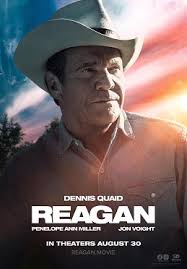
REAGAN
US, 2024, 141 minutes, Colour.
Dennis Quaid, Penelope Ann Miller, Mena Suvari, Tommy Ragan, Kevin Dillon, Trevor Donovan, Olek Krupa, Alex Sparrow, Robert Davi, Justin Chatwin, Jennifer O'Neill, Dan Lauria, Leslie-Ann Down, Zander Berkeely, C. Thomas Howell, Elya Baskin, Kevin Sorbo, Nick Searcy, Pat Boone.
Directed by Sean McNamara.
In recent decades there have been many cinema portraits of American presidents, particularly Franklin D Roosevelt but, also of Kennedy, Nixon, and the later 20th century presidents in the portrait of life in the White House, The Butler. It is now the turn of Ronald Reagan.
This is a two hour 20 minutes study of Reagan as a person and his stances as US president. It is been directed by Sean McNamara, noted for some faith and hope films like Soul Surfer. It is definitely a sympathetic presentation of Reagan. For those who admired him, much to enjoy. For those critical of him, an opportunity to give more considered thought in retrospect about his strengths compared with his alleged weaknesses.
The choice to play Reagan is Dennis Quaid and he acquits himself with a blend of the folksy as well as the determined. Penelope Ann Miller plays his strong-minded wife and support, Nancy. There is a rather large supporting cast bringing to life some of his career in Hollywood, Kevin Dillon as Jack L. Warner and, surprisingly, a somewhat unsympathetic portrayal of actress Jane Wyman, his first wife, by Mena Suvari.
The film uses a very interesting device which may or may not please audiences. The framework for looking at Reagan as a person, as an actor, as a politician, is a very earnest Soviet supporter going to interview Victor Petrovich (played by Jon Voight), a long-time analyst of personalities, looking at Reagan over the decades, making reports to the politburo. Throughout the film, then, he is questioned about Reagan and elaborates on how he has studied him for so long, and the conclusions, rather admiring, calling him The Crusader, that he has drawn and presented.
Which means that Victor Petrovich controls the narrative in many ways, staking opinion and leading to flashbacks covering Reagan’s family and childhood, alcoholic father, religious mother, his early talent for public speaking, good memory, sport, radio, actor, then VP of the Screen Actors’ Guild. There is enough detail in these flashbacks to build up a significant portrait of Reagan young.
His life then moves to politics, his reading about communism, his antagonism towards Communist philosophy, his stances against infiltration of the Actors’ Guild, his political ambitions, becoming Governor of California for two terms. And, his initial encounter with actress Nancy Davis, his marrying her and her continued influence and support.
Also covered is the 1976 campaign, the Republican nominee being Gerald Ford, the victory of Jimmy Carter – and then the campaign of 1980, victory, his presidential commitment, the assassination attempt, and his earnest wanting the elimination of nuclear weapons, the outreach to Russia, to Gorbachev, successes and failures in their interactions, final success, his speech at the Berlin wall – and the consequences of its fall and the collapse of the Soviet Union.
Finally, his acknowledgement of his oncoming Alzheimer’s, his life at the ranch, loving horseriding, and the voice-over of his final speech about his future and his mental state. And a great number of photos during the final credits.
Definitely for Reagan fans. A challenge for non-Reagan fans.
- A portrait of Ronald Reagan, sympathetic and admiring?
- Audience memories of Ronald Reagan, those who lived through his career and presidency, audiences after Reagan? Favourable? Critical?
- An overview of American society from the 1920s to the 1990s?
- The opening, Reagan inaugurated, his speech, pro America, insertion of jokes, jovial? The Secret Service, Rawhide as his codename, the assassination attempt and leaving that sequence till later?
- The device of introducing Victor Petrovich, his background in providing dossiers, the politburo, the KGB, his studying Reagan and his methods of study, his principles, techniques? The young officer and his patriotic ambitions, interviewing patronage? And the device of perceiving Ronald Reagan’s life through Petrovich’s eyes, his assessment of Reagan, nicknaming him The Crusader? His insights?
- The selection of sequences to illustrate Reagan’s early life, rural America, alcoholic the genial father, eyes mother, her supporting him, the nickname, Dutch, his reading in church, ability to memorise, bullied but his mother telling him to stand up for himself, sports, radio announcing, reading, ambitions?
- The selection of sequences for his Hollywood career, his marriage to Jane Wyman, tensions, her success, children, the death of the child of one day, the cemetery sequence, her walking away, the divorce? His film career, some success, B-star? Vice president of the actors union, taking this seriously, wanting to do good, the conversation with Jack L Warner, Harry Sorrell and the Soviet influence in the unions, the hearings of the late 1940s, into the 1950s, Reagan and his stances, ambitions?
- The encounter with Nancy Davis, in his office, the two names, his being charmed, the evening out, in the restaurant alone, sharing, the horse riding, marriage, children? Her continued support for the next 40 years?
- The 1960s, political ambitions, the Democrats moving away, Republican, Barry Goldwater, Reagan speeches, making his mark, his wanting to be Governor, campaigning, success? Eight years as governor?
- Reagan and his reading about communism, the perspective of the 1930s, the discussions with writers like Dalton Trumbo, his attitude at Warner Bros, his speeches, hostility towards communism?
- And the comments by Victor Petrovich throughout these sequences, his perspectives on Reagan, his intelligence, reading, perspectives, tactics, strategies?
- The campaign for presidential nomination, competitiveness with Gerald Ford, Ford winning, against Jimmy Carter, his disappointment, the issue of age? Nancy and her support, the quiet years, the ranch, making friends and allies?
- The 1980 election, his speeches, the attack on Carter? His promises? Success, the portrait of his associates, co-workers, Dayna and his camping on the lawn, his being called in as speechwriter? James Baker, the ethos, George Shultz, Casper Weinberg? The meetings, the Cabinet discussions, the issue of communism? The assassination attempt, Nancy at the hospital, his gradual recovery?
- The issue of the Cold War, Petrovich’s perceptions and analyses, the sequences with Brezhnev and the other leaders, watching the television, analysing the speeches, the status of the Soviet Union in the 1980s? The building of the Berlin Wall?
- Reagan, his certain simplicity, seeming naivete, folksy style, with Nancy? The decision to deal with the Russians, the focus on Gorbachev, the first meeting in Geneva, the discussions, the conditions, possibilities, failures? The meeting in Iceland, the entourages, the discussions, friendships, difficulties, aiming for nuclear disarmament?
- The meetings with Margaret Thatcher, her perspectives, support, calling him a cowboy? The later scene with her acclaim at his success?
- Re-election, his age, stumbling with the debate with Walter Mondale, his joke about age and referring to Mondale? More opposition taunts, his policies, the criticism about not doing anything for the AIDS epidemic? Nancy and her just say no to drugs campaign?
- The final years, meetings, his Vice President Bush present at meetings? His sitting at home for the future?
- Age, retirement, at the Ranch, John and his skill at riding, assigned to ride with the Reagan’s, 10 years, the issue of Alzheimer’s coming on, Nancy and John discussing it, John and his raising the issue, going to the last ride? And the voice-over of Reagan commenting on the onset of Alzheimer’s?
- The final credits, the recapitulation through photos, the tribute to Reagan, the tribute to Nancy Reagan?
- A satisfying movie portrait for those who favoured Reagan? An opening out of perspectives for those who did not favour Reagan?
New Guy, The
THE NEW GUY
US, 2002, 88 minutes, Colour.
D.J.Qualles Eliza Dushku, Zoe Deschanel, Eddie Griffin, Ross Patterson, Matt Goggin, Horacio Sanz, Tony Hawke, Geoffrey Lewis, Charlie O'Connell, Jerry O'Connell, Gene Simmons, Tommy Lee, Henry Rollins, Illeana Douglas, Kurt Fuller, Vanilla Ice, David Hasselhoff.
Directed by Ted Decter.
There is really no need to see this film. However, it is typical of teen comedies in the late 1990s, early 2000s. Many audiences enjoyed it at the time and later because of its parody of teen characters, teen ambitions, teens overreaching themselves in the midst of all the cliches of teen and school life.
Other audiences who did not like it at all called it “mindnumbing stupidity”.
The basic idea is a kind of Dr Jekyll and Mr Hyde’s story, a scrawny put upon student, played by D.J.Qualles, who is close to a group of nerdy friends with a band at school, is continually humiliated, though supported by his father, Lyle Lovett. Included in the band is the young Zoe Deschanel.
With trouble at school, he reacts violently and finds himself in prison, under the tutelage of the eccentric Luther (Eddie Griffin) who coaches him with the magic eye which controls everyone he stares at. But, this enables him to transform into a new personality, tough, eyeing of the jocks, successful in fighting, imitating George the Scott as Patton, Mel Gibson as Braveheart, leading the College troops to support the football team which has never won in the past!
Of course, girls swoon and pursue him. But, like all moral fables, no matter how corny and nerdy, the Mr Hyde betrays his friends from his Dr Jekyll days…
However, he has to have a conversion experience and acknowledge his true self, apologise to everyone, run the risk of being exposed and ridiculed as a liar, but, ultimately triumphant as himself.
There are quite a lot of guest cameos during the film, including Gene Simmons as the Reverend conducting a Gospel choir, Geoffrey Lewis as a school principal, Kurt Fuller as a principal, and a final interview with David Hasselhoff.
This was back in 2002 – comparisons can be made with contemporary teen comedies. For the record.
Superman
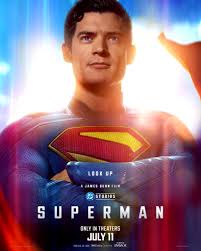
SUPERMAN
US, 2025, 129 minutes, Colour.
David Corenswet, Nicholas Hoult, Rachel Brosnahan, Anthony Carrigan, Nathan Fillion, Isabella Merced, Wendell Pierce, Skye Gisondo, Pruitt Taylor Vince, Frank Grillo.
Directed by James Gunn.
Here is a Superman movie for the 21st-century – although, we realise that we have already had a 21st-century Superman in the form of Henry Cavill, his action in Gotham city but also his participation in the action of the Justice League. (And, those older, thinking back to the comic strips and comic books, may remember the black-and-white films of the 1940s with George Reeves but, with great fondness, the Superman presence of Christopher Reeve.)
This time Superman is a David Corenswet, who looks somewhere in between Christopher Reeve and Henry Cavill. But, the action is updated to the present. We do get flashbacks to Superman’s parents and their sending him to earth and the message for him to be a man of peace. And we do get flashbacks to the Kent family and the wise advice of his earthly foster father. And, this time, a significant character is Superman’s dog, called Krypton. And he does get involved significantly in the action.
And there is Rachel Brosnahan as Lois Lane, a touch antagonistic but also in love, making demands in interviews with Superman. And, there is the editor of the Daly Planet and Jimmy Olsen. Still familiar.
And, as we expect, the villain is Lex Luthor, played arrogantly by a bald Nicholas Hoult, but this time a villain of the 21st-century involved in all kinds of AI, manipulating complex social media outlets for fake and destructive news, defence systems, a power hungry villain with a considerable staff with all kinds of technological expertise.
But, this time there are alternate universes, strange places and atmospheres, Lex Luthor manipulating, imprisoning, overpowering Superman. But, this time Superman is not alone. Coming in from the Justice League is Green Lantern, as well as a few other characters with superpowers, Mr Terrific, Metamorpho, Hawkgirl.
For audiences not in the know, this can be quite confusing. Probably the best thing is to sit back, relax when possible, take the action and characters as they come, be amazed at the overreaching ambitions of Lex Luthor, especially as he unleashes a terrifying power that cuts through Manhattan, a vast rift, buildings collapsing – and, definitely the need for Superman to the rescue as well as his support team.
And, it seems, that this update of the franchise has proven very popular.
- The long history of DC comics, early films, cereals, television series, the range of films from the 1970s, Christopher Reeve, Henry Cavill? His expectations?
- The work of the director, Guardians of the Galaxy, writing and directing this film? The basis on DC comics in more recent decades?
- Audience awareness of Superman, Krypton, his parents, sent to earth, the farewell message? The recreation of these sequences here?
- The opening, the play on 30 and three, tracing Superman coming from Krypton?
- Superman, Clark Kent, working at the Daily Planet, his knowing Lois Lane, relationship with her, the significance of the initial interview, his own story, her questions, the tension between them, resolution? The editor, Jimmy Olsen as the enthusiastic reporter? The, her relationship with Lex Luthor, infatuation with Jimmy?
- Lex Luthor, a 21st-century interpretation, age, appearance, bald, technological skills, his range of associates in his office, the IT, advice, support? Wanting to capture Superman, his dog, getting the code, capturing and imprisoning Superman? Creating the counterbalance, Ultraman? Their eventually confronting each other, Superman discovering his alter ego, the fighting, destroying his alter ego?
- Luthor and his plans of power, narcissistic, psychopathic behaviour?
- Superman, David Corenswet’s interpretation, his relationship to the dog, the many dog sequences?
- The capture of Superman, the Pocket Universe, Superman and his weaknesses, his strengths, with or and the interview with Superman, the public holding him in regard, his strength to help people, the reinterpretation, putting on a bad light, people turning against him, criticisms, disillusionment?
- The squad helping Superman, Green Lantern and his personality, Mr Terrific, his style, Metamorpho and his situation, powers, Hawkgirl? The tradition of the DC comics, their participation in the action, stepping in and helping Superman?
- The public, the creation of the rift, the special effects showing the rift pursuing the city, the collapse of the buildings, disaster…? Closing the rift, Mr terrific?
- Superman, the struggle with himself, the escape, the help of the squad, the collaboration with Lois, with the editor, with Jimmy, the role of Eve, her disillusionment with Lex Luthor, his treatment of her, her making contact, the sending of the information, the unmasking of Lex Luthor?
- The final resolution, the heroes, Superman and Lois and the kiss, the cousin coming in, the return of the dog. And sequels?
