Displaying items by tag: Peter Malone's Movie Reviews
Smooth as Silk

SMOOTH AS SILK
US, 1946, 64 minutes, Black-and-white.
Kent Taylor, Virginia Gray, Milburn Stone, John Litel, Jane Adams, Danny Morton, Charles Trowbridge, Teresa Harris, Harry Cheshire.
Directed by Charles Barton.
A small film from Universal Studios in the immediate postwar period, the period of the popularity of film noir. Those wanting a good example of this genre, Smooth as Silk is well worth seeking out.
There is a lot going on in the 64 minutes running time. The cast is not topline but featuring many character actors who were frequently seen in films of this kind, effective in their roles.
The film introduces a smooth as silk lawyer, Kent Taylor, getting an alcoholic off a charge of manslaughter, paying witnesses to lie. As the film progresses, he is more and more unlikable, looking behind the scenes, manipulating. He is also in love with an actress, played by Virginia Gray, a scheming and unscrupulous femme fatale, starring a play, an agreement with the lawyer that he do a deal with an entrepreneur, John Litelon the, to cast her in the forthcoming play. The entrepreneur refuses.
What follows is a great deal of manipulation, especially part of the actress, manipulating her younger sister who has come to live in New York, urging the various men attracted to her, the lawyer, the entrepreneur, the alcoholic young man. In fact, the young man is due to inherit into a large amount of money administered by the entrepreneur.
Unexpectedly, the actress is seductive and successful with the entrepreneur, even to having him announce their engagement at a party, to the surprise of the lawyer.
The film then becomes a murder story, the lawyer attacking the entrepreneur at a party, allegedly coming to apologise, shooting him, setting up the scene as if it was the actress who killed the entrepreneur. There is an honourable lawyer in the background and he is persuaded to take on the task of defence but investigates the possibilities, the various aspects of the lawyer’s story, re-creating the scene, complicated by the actress turning up and confused in her testimony.
Ultimately, the lawyer then tries to frame the young man but is caught in the act.
A lot of action in 64 minutes, complex characters, a film in which only the sister, the African-American maid, this time also a confidante of the actress, the entrepreneur’s butler and the honourable lawyer, supporting characters, are the only characters with some moral integrity.
How to Make a Killing
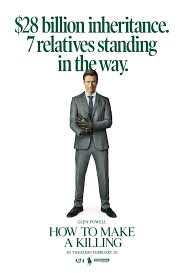
HOW TO MAKE A KILLING
US, 2026, 105 minutes, Colour.
Glen Powell, Margaret Qualey, Jessica Henwick, Bill Camp, Ed Harris, Topher Grace, Zach Wood, Andrew Lukis.
Directed by John Patton Ford.
Quite a slick 21st century American entertainment, the world of wealth, loss of wealth, ambitions, amoral, turning immoral, murder – murders.
And a generally glossy affluent setting, some moderate hardships in New Jersey, the affluent world of New York. And, leading the cast is popular Glen Powell, several starring roles each years since his break out in Maverick, along with Margaret Qualley, an even more frequent screen presence in recent years.
This is a murder drama, a touch of the serious, a touch of the satiric, not intending to be a film for thoughtful reflection on ethical and moral issues – though, there is quite an unexpected twists towards the end which certainly gets the central character thinking.
In the final credits, there is an acknowledgement that this film was inspired by the 1949 British film, Kind Hearts and Coronets, and the novel on which was based. This was a film, certainly, from another era, effective serious/satiric British filmmaking, and the famous tour-de-force performance by Alec Guinness playing all those to be murdered by the ambitious central character.
The origins of How to make a Killing may be of little interest to the 21st-century audience. However, those who remember and appreciated the original have the advantage of knowing what is going to happen. But, they will have the regrets that while there are victims here to be killed, they are played by a varied including Bill Camp, Topher Grace and, ultimately, Ed Harris.
So, the audience is invited to have sympathy for Glen Powell’s ability to bring grinning charm despite his ordinary upbringing even though he discovers he is heir to millions. He is Beckett Redfellow, his pregnant mother disowned by her wealthy father, having to go to work, and Beckett finishing up in a clothing store.
As a boy, he fell for the charms of the rather dominating Julia who grows up to be the dominating Margarette Qualey, false charms, ready to twist any man around her little finger. And she does.
The screenplay, remembering the original, has the whole story told in flashback, Beckett on death row, execution imminent, and the prison chaplain, a serious priest, asking the question and spending the whole film listening to Beckett’s interesting story and his murderous quest for his fortune – including quite the finale and the deathly confrontation with his grandfather.
The unexpected twist towards the end leads the story in a somewhat different direction.
An easy night out kind of entertainment.
- The 21st century American entertainment, ambiguous hero, romantic entanglements, ambition and greed, murders, the law?
- The credit with the note about Kind Hearts and Coronets, 1949, inspiring this film?
- Beckett Redfellow, his story, in death row, execution close, the arrival of the priest, prison chaplain, Beckett telling his story, the priest listening, his interventions, encouraging? The execution time, the prayer?
- The flashbacks to the past, Mary, wealthy family, her dominating father, the attraction, the date, her pregnancy, the birth sequence, the father collapsing and dying? Her father confronting her, denunciation, cutting her off? Bringing up her baby, encouraging him, her hard work, Beckett as an adult, his life, prospects?
- Explaining the issue of money, the family, the family tree, those between him and the fortune?
- His mundane life, accommodation, his job, the clothing store, Julia arriving, the flashbacks to the flirtation in the past, her being dominating, his response? In the store, memories, announcing her engagement? His having to give up his job because of the owner and replacement? Going to the warehouse, working there, the beginning of his plan? The encounter with his uncle, sympathetic, giving him the job, privileges?
- The first victim, playboy, extravagant, wild scenes, on the yacht, Beckett present, the plan, the rope, the anchor, his death?
- The final sequence – and the repetition for each of the victims?
- Noah, music and art, the gallery, the encounter with Beckett, the discussions, friendship, revelations, Noah and his death?
- The FBI, the couple, the interrogations?
- Stephen, money, swindles, religion, his following, his speeches, Beckett pretending to interview him, the boastful interview, the sword, the revelation, Stephen’s many enemies, the contrivance of his death?
- The aunt, the adoptions, her charity, her personality, her teeth, the whitening, her death?
- Julia, her continued appearances, dominating, charm and ruthlessness, her husband, his inefficiency, wealth, losing, her asking for the loan, the various visits to Beckett, seductive and tantalising, the ultimatum? The timing, blackmail, Beckett hurrying to the office, the encounter with Lyle, the confrontation, collapse, the FBI, the accusation, the evidence, the murder?
- Ruth, her relationship with Noah, about to break it, the attraction to Beckett, him to her, her life, working in the garment industry, the outings with Beckett, his falling in love with her, the time together, the proposal, the plan for the engagement, the party, and their fashionable apartment?
- Beckett, prospering, arrogant, wealth, lifestyle, the meetings of the wealthy board, his uncle, his uncle’s collapse and death?
- His grandfather, personality, in the shadows, emerging, inviting Beckett to dinner, his dilemma about his engagement party, his arrival, the vast mansion, the meal, the discussions, the grandfather and his rifle, eating attacking his grandson, Beckett and his defence, firing the arrows, the death of his grandfather? His hurrying back to the party? Ruth and her waiting, her decision to walk out on Beckett?
- The arrest, the irony of his being arrested for a murder he did not commit? Interrogation, the evidence, the trial, being found guilty? Julia, her testimony, talking of Beckett always loving her? Julia with the incriminating photos?
- His finishing his narration for the priest, going to execution, the stay, Julia and her letter assisting him, her visit to the prison, the breakup, his desperation? Her deal, his signing away all his wealth to her?
- The finale, the priest in the bar contemplating what he had heard, Beckett released, Ruth, meeting him, giving him the hair token of his mother which he often looked at, motivation, her driving away? Julia in the parking lot – and future, Beckett subservient to her?
Joint Security Area

JOINT SECURITY AREA
Korea, 2000, 110 minutes, Colour.
Lee Ung-hun, Lee Yeong-ae, Song Kang-ho, Kim Tae-woo.
Directed by Park Chan-wook.
Released in 2000, the story of the border between North and South Korea, still seems very relevant.
It was the third film to the maid by Park Chan-work. With its success, nine features followed over the next quarter of a century, all of them receiving critical acclamation, including Oscar nominations, and international distribution. They include Old boy, The Handmaiden, Decision to Leave and other Choice.
As a server the background to the division between North and South Korea and the Korean War are included throughout the film, the division of the country, Communist loyalties and enclosure of the North, the freedom of the South, the issue of what happened to soldiers fighting for the North.
There has been an incident on the border, some deaths, a possible kidnapping of soldier from the South. An international committee, including a Korean woman, son of a fighter in the Korean War, but living on screen is a key member of the investigating committee.
There are various questionings, so deceitful behaviour by Korean authorities, despising the international visitor. And there are tensions with the alleged soldier kidnapped, as well as the North Korean who is being held responsible.
What is effective about the film is that it provides initial impressions of the various accused as well as of the interrogators, gradually more information coming to the surface, the discovery of friendship between the two sites, the possibility of some kind of ending together (remembering the Christmas meetings of Germans and French in the trenches during World War I in films like Joyeux Noel). In fact, the audience finds themselves more on side with the soldiers from the North and the South as they share, gifts, talk, hopes, it still strong in their ideologies.
The audience will hope that this meeting between North and South might end well – but, of course, the reality is telling us that this will not be the case.
Fine performances – and, interesting to note, the key soldier from the South is the main star, 25 years later, in the Oscar-nominated No Other Choice.
- The work of the director, at the beginning of his career, this film seen in the retrospect of his career and awards?
- The impact for a Korean audience, for American audiences, European, those not so familiar with the north-south situation? The perspective of the late 1990s – seen in the light of later developments and the succession?
- The background of the Korean War, the separation between North and South, the demarcation lines? Troops on either side? Tensions, outbursts? The contrast with the two ideologies? The visualising of the past, the major and the story of her father, North Korean general, the aftermath of the war and the choices for people to go over to North, to South? South Koreans living with this heritage?
- The situation, and North-South clash, the soldier, kidnapped, or defecting? The decision to call in international arbitrators, from Switzerland and Sweden? Their role, the possibilities for interviewing the chief characters from each side?
- The Swiss major, growing up in Switzerland, her Korean heritage, European perspective, ability with the language? Meeting her Swedish associate? Meeting the commander? Approval of her or not? The local military chief and his disdain?
- The laying out of the situation, the depositions, the audience trying to understand what happened? The Major and her methods, the interviews, the responses of the central characters, sullen, the injuries, psychological responses?
- The details of the various procedures taking up the earlier part of the film, the introduction of the character of Lee, quiet and sullen, wounded? The interrogation Oh, also wounded, turning his face from the major? The presence of Nam and his further involvement?
- After this background, the actual narrative of what had happened? Lee, his abilities, with Nam, genial, friendship with Nam, correspondence with the actress? Coming to the end of his service? His experiences at the border, the demarcation line, the tourists and the buildings, the tourist losing her, Oh and his returning it, Lee observing?
- Lee and his motivation, out in the fields, the break, the others leaving, his being stranded, stepping on the mine? Oh and his friend arriving, the dog, guns drawn, the psychology of the situation, hostilities and ideology, history, the decision to work on the mine, Oh giving Lee the mechanism as a souvenir?
- The beginning of the friendship, its development, Lee going over, the discussions with the two, the friendships, shared stories? Nam discovering that Lee had crossed the line, Nam sleeping on duty, his being persuaded to go with Lee, the initial suspicions, the buildup of the friendship, the visits, jovial, drinking, the chocolate cakes…? Yet the pride of each side in its own ideology?
- The buildup to the officer arriving at the door, the situation, guns drawn, the talk, Oh and his mediation, tensions, confusion, Nam and his fear, Lee and his control?
- The shootings, the death of the North Korean, the officer, Lee and the shots? Oh and his asking Lee to wound him?
- The further interrogations, in the light of what had been seen, Oh and his deposition, the two together, Oh and his expression of loyalties, condemnation of the South Korean puppets? Saving Lee? Lee, being escorted out, to the hospital area, his wound?
- The interrogation of Nam, his confusion, admissions, decision to suicide, the gun, not working, going to the roof, throwing himself down? Lee, his reaction, blaming the Major and attacking her?
- The major, the reaction of the authorities, the local Korean authority who had always been dismissive of her? The Swedish connection? Her decision to continue?
- The discussions with Lee, asking him to tell her the true story, the effect on him? His getting the gun, going out, shooting himself?
- The aftermath, the deaths, the Major returning home?
- And the memories, Lee and his hopes for some kind of reunification, friendship, for peace, ideals but attitudes and violence?
Prayers for the Stolen/ Noche del Fuego
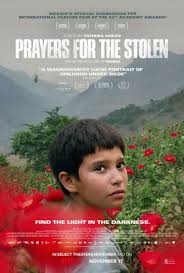
NOCHE DE FUEGO/ PRAYERS FOR THE STOLEN
Mexico, 2021, 111 minutes, Colour.
Mayra Batalla, Marya Membreno, Ana Cristina Ordonex Gonzalez, Memo Villegas.
Directed by Tatiana Huego.
There are many reasons for seeing this drama. The Mexican title indicates a night of fire and that is the culmination of the film, the audience watching several years in the Mexican village, hardships, oppression, exploitation.
However, the English title, the title of the novel on which the film was based, focuses more on the children in this Mexican village. The central character is Ana, the audience seeing her as a child, her absent father, her hard-working mother, the pressures on her mother, the little girl with her friends at school, the good experiences at school, yet the hardships of work in the fields, and the role of the police, but, the oppressive and pervasive influence of the cartels.
The film spends a lot of time with Ana and her school friends, her exhilaration with school, the sympathetic teachers, the precarious careers of the teachers, having to move on, pressurised by the cartels.
And, the young girls, the journey to puberty, changing awareness, the young girl with the hare lip and having it fixed, her brother and his skill at riding, and the role of the various mothers.
The put-upon Rita, mother of An, initially tries to take her child from the authorities by burying her. And, by the end of the film, it is the same technique to save her daughter. But, an uprising of the people, the teacher presents, the mothers, but lamentably absent daughters – and the prospect of the situation in the villages not changing for the future.
- The Mexican title, the ending and the fire and insignificance? The English title for the novel? Humanely moving title?
- Mexico, the 21st century, the small villages, poverty, menial way earning money and not sending it, the single mothers and their children, and life, schooling and insecurity the teachers being able to stay, in the fields, the poppies, the other crops?
- The background of the cartels, the power, the drugs, the networks, the thugs, harassment, violence, the threats to the teacher’s permanent employment, the threat to the women, the abduction of the young girls? And the role limitations of the local police?
- The central focus on Ana and her mother, the action taking place over five or so years, the opening, the burying of an, and the end and Rita burying her daughter taking to save her? Rita, the work, at home, in the fields, the women with their phones the fields trying to contact their husbands, no money coming in for years? The effect on morale?
- Ana, a strong character, even as a girl, with her mother, learning the truth about the situation, her friendship with the other girls, Maria (and this surgery on her head), Paula, together, the games, the mind reading? At school and the teacher, the activities? And saying she wanted to be a teacher?
- The men in the town, the work, Maria and her brother, the boys and their attitudes, with the girls, his being tied, growing up, action, the riding of the ball, defiance?
- Ana and her changing over the years, the different attitudes towards her mother, confronting, reconciling, the frustrations of her mother? The visit of the teacher, his giving the report about an hour, enabling her to continue studies? Anna and the classes, the talks by the little girls, about living things, the exercise of making the body and all the scraps from home?
- The taking of Maria, the grief her mother, her brother, for her friends? Paula and the threats, her character, friendship and support of an? Reading each other’s minds?
- The arrival of the vehicles, the men coming to search, wanting to take Ana, her mother hiding her again, the violence of the men, not finding Ana? Ana, the experience of the period, the matter-of-fact behaviour her mother? And, at her running along the road?
- The night of the fire, everybody gathered, the teacher concluded, piling everything on the fire – and to what purpose?
- Packing up, the people moving away, mother and daughter, to what future?
- A vivid portrait of the plight of ordinary people in the Mexican countryside?
Is This Thing On?

IS THIS THING ON?
US, 2025, 121 minutes, Colour.
Will Arnett, Laura Dern, Andra Day, Bradley Cooper, Sean Hayes, Ciaran Hinds, Christine Ebersole, Amy Sedaris, Peyton Manning.
Directed by Bradley Cooper.
That’s the usual, sometimes desperate, call from a stand-up comedian who feels that there is no response from the audience – microphones fault!
One commentator describe this film as A Comedy of Remarriage. Which is a tantalising thought. But, at the opening of this film, the long marriage between Alex and Tess has come to an end, divorce, not quite as amicable as hoped for, and two boys depending on their parents affection.
Alex is played by comedian Will Arnett, no stranger to stand-up comedy. Tess is played by Laura Dern, no stranger to marriage dramas, with an Oscar for her role as the counsellor in Marriage Story.
Alex, feeling down and out, wanders the streets, goes into a comedy Café, is told that he has to pay and his name go on the list for performance. He does – and, though some of the audience and management of the criticism, he does come across with his story of a broken marriage. And he goes back. Each time he gains more confidence in talking about the marriage, the difficulties, the break. Then, one night, Tess and a friend turn up, he is a routine, Tess somewhat overwhelmed, confronting Alex.
In fact, Tess hearing Alex analyse their marriage and relationship, happiness, difficulties, Break, is quite moved in her way, seeing Alex in another light – and, the potential for what might be called remarriage.
The film was cowritten and directed by Bradley Cooper and he appears in an oddball role as an eccentric friend of the couple, having his own marriage difficulties with his partner, Christine, Andra Day.
The film gets more interesting as it goes along, Tess with the possibility of resuming her career as a potential volleyball player in the past, now with coaching. Alex trying to connect with her and posting up a photo of her from her successful past. And the boys are performing in a play at school.
No final answers, unexpected new bonding between Alex and Tess – but where will it go in the future?
- The title, speakers at microphones and asking the question? Especially when little response is heard?
- The description, A Comedy of Remarriage?
- The American city setting, homes, workplaces, comedy venues, volleyball courts…? The musical score?
- The situation, the long marriage, failing, divorce, relationships between husband and wife, relationship to the boys? Friendship with Balls and Christine?
- Alex as the central character, Will Arnett and his screen presence, in himself, age, the experience of marriage, the relationship with tests, the diminishing of the marriage, his relationship with his sons? Wandering, at the cafe, paying, on the list, call to perform, his capacity for performing, the response of the audience, the continued stand-up comedy routines, telling his life in story, the reaction of the crowd, responses? The staff, the management? The stand-up comedy community?
- Tess, her story, in herself, her reactions to Alex, her relationship with her sons? Her friends? The past, the situation of the volleyball, her talent, prospects, giving it up? Her further career, opportunity to coach, decisions?
- Laird, friendship, careers, Tess meeting with him, going to the stand-up comedy, his reactions?
- Tess and the effect of the routine, watching, listening, confronting Alex, talking, going out, the continued discussions, the attraction, the sexual encounter?
- Balls and Christine, the characters, comedy support, doubts about their marriage, Christine blaming Alex? Balls and his eccentricities?
- Tess, the coaching job, Alex and the photo, the boys helping, Tess and reaction against the photo, her image from the past, rather than the present? The blame?
- Alex’s parents, their personalities, the quiet father, the intervening mother?
- Alex and his desperate performance, his rant about the marriage, his father present, his father’s response and advice?
- Balls and Christine, reuniting?
- Alex and Tess, covering up, the deeper relationship, the finale, the school, the musical, their sons, the response to the performance? The future?
Beast of War
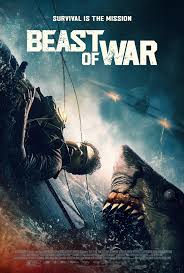
BEAST OF WAR
Australia, 2025, 87 minutes, Colour.
Market Coles Smith, Joel Nankervis, Sam Delich, Maximillian Johnson, Lee Tiger Halley, Sam Parsonson, Tristan MacKinnon, Aswan Reid, Lauren Grimson, Laura Brogan Browne, Steve Le Marquand.
Directed by Kiah Roache-Turner.
This is a small Australian film worth noting.
On the one hand, this is a World War II story. On the other hand, it is a shark drama. And, the shark episode is based on an episode in the Timor Sea.
The early part of the film, set in 1942, introduces a set of rather raw recruits, given a speech on Gallipoli and mateship, funded at by one of those sergeant majors supervising drills, made to go through all kinds of preparations for battle. A key episode focuses on Leo, an indigenous recruit, and youngster, Will, who gets bogged down in quicksand like mud but is rescued by Leo. And praised by the leader as an example of Australian mateship in time of crisis. However, there is one young arrogant recruit, ignorantly racist.
Leo, the centre of the film, is played by Mark Coles Smith who has emerged as one of Australia’s leading actors in film and television in recent years. Newcomer Joel Nankervis is Will. Sam Delich is Des Kelly, the racist.
Australian audiences will be interested in this re-creation of moments in Australian war history.
Then these young soldiers are on their way to battle, their ship bombed, few survivors, the atmosphere foggy, Leo offering a great deal of leadership. There have been stories about soldiers stranded in the ocean and the danger from sharks. And this is the drama of the second part of the film, a Great White female shark, circling, attacking, the men and their attempts at surviving, the lack of food, the lack of water, the challenge of drinking urine, and various tensions amongst the men.
Any shark story will remind audiences of jaws – as this film does, but mainly the shark’s circling and then some horror moments as it leaps out of the water. And, finally, the Japanese plane flying over, a Japanese survivor and moral decisions about life and death.
And, there is a mystical dimension to the film, opening with Leo and the young Archie (Aswan Reid from The New Boy) in difficulties underwater, these sequences were occurring in Leo’s memory and, offering a kind of salvation memory for survival.
The writer-director, Kiah Roache-Turner, has previously directed horror films. Here he has some horror but, more importantly, a great deal of humanity.
- The title, expectations? The war theme? The shark theme?
- Australian production, small budget? Re-creation of war training, bombardment, on the waters, the shark attack? The musical score?
- Australia, 1942, the young recruits, training? The impact of the training sequences, the commander, losing his arm, memories of Gallipoli in World War I, mateship? The sergeant and his aggressive tone with the men? The demands, to return to camp, four hours, Will and the quicksand, Leo rescuing him, just in time? Sam and his criticisms, prejudice, racism? The details about silent attack, knives and stabbing, the range of demands?
- Leo, his indigenous background, a commanding presence, memories of the encounter with Archie setting a tone at the beginning, his memories of Archie throughout the film, trying to save him, Archie saving him, the final salvation?
- Leo, the response of the men, the continued criticisms by Sam?
- The portrait of the other men, their age, background, the training? Ready to go to war?
- The transport, interactions amongst the men, Sam and Leo? The bombardment, the destruction of the ship, the deaths, the men in the water?
- The group saved, wounding, Leo and his abilities, Will and his contribution, the other men, their personalities, wounds? Thompson and his wounds? The practicalities of survival?
- The shark theme, audience memories of jaws, World War II stories and the menace of sharks on troops in the water? The visuals of the shark, the attack, the Great White, female, circling, attacking, the teeth, the victims, the blood? The grenades?
- The issue of food and water, Thompson eating all the peaches, the issue of urine, Sam and his reaction, Leo leading the way, everybody following, giving some more days of survival?
- The motorboat, Leo and his action, leaping from the various surviving pieces to the other? The rope, pulling it in, the engine not working?
- The plane, the bombardment, Leo wounded, the deaths? The later arrival of the Japanese, giving up his sword, seeming to surrender, Will not willing to shoot him, the attack, the fight, desperation?
- Leo, prepared to die, in the water, saving Will again, the images of Archie and beckoning them to the surface?
- The final survival, Will fixing the motor, the future – in Australia at war, and race issues? Mateship?
Plague, The/ 2025
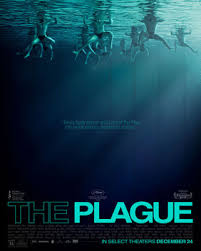
THE PLAGUE
US, 2025, 98 minutes, Colour.
Joel Edgerton, Everett Blunck, Kayo Martin, Kenny Rasmussen, Lucas Adler, Caden Burris, Elliot Heffernan, Lennox Espy, Kolton Lee, Nicolas Rasmussen.
Directed by Charlie Polinger.
Seeing this title, audiences may be expecting a film about an epidemic, spreading, challenges, the response of authorities in handling these challenges. An expectation from the Covid-experience, perhaps.
But, it is not that kind of plague.
Rather, this is a story about youngsters, 12 and 13 years old, taking part in a summer camp, swimming, water polo, an opportunity for enjoyment, letting off steam, character building.
Though set in 2003, here is a warning, that youngsters around the world, at least in affluent countries, can be infected by an immoral, emotional, destructive plague Jews were from expectations of masculinity.
It asked whether an audience would like the film, the reply is probably both a yes and a no. Yes to the raising of difficult social questions, no to the experience of watching this cross-section of ordinary boys, their bonding, the bullying, some unsubtle domination, cruelty, precocious sex attitudes, and their seeming lack of awareness or the presumption that this is how their life and behaviour should be.
The moral anchor in the film is the supervisor at the camp, played by Joel Edgerton, meeting the boys, hoping to train them, but having to talk seriously with some of them, urging them to have a sense of shame for some of their behaviour.
One boy emerges from the others, Ben (Brown), ordinary background, rather more introverted, caught up in the expectations of how he ought to behave, it becoming more and more sensitive to another boy, Eli (Rasmussen) with a severe rash, always wearing a T-shirt, isolated, ridiculed, rather eccentric in his behaviour, an easy outlet for an attack by the leaders and followers. They declare he has the plague, urging each other not to go near, touch, or if contaminated, wash and wash.
One of them has a charming smile, Jake (Martin), initially beguiling, emerging as smug, cruel, manipulative. The smile becomes a self-satisfied smirk, even when the supervisor asks whether they have ever felt shame, Jake speaking out and telling the supervisor that that is what he is actually doing to him publicly.
The experience becomes almost too much for Ben, kindly rubbing lotion into Eli’s rash, condemned as having the plague, wanting to escape the camp, finally having to face his 13-year-old self, going to the camp dance, a frenzy, dance, motion… And the audience wondering: what now? Retreating from the issues or Ben finding strength to be his better self?
- The title, overtones of plague, plagues in history, plagues in films?
- The focus on 12 and 13-year-old boys, memories of Lord of the Flies? But in 2003, no stranded island, a youth camp, swimming pools and dining rooms…?
- The setting, the camp, outside, the swimming pools, the constant underwater photography, the showers and changing rooms, the dining room and self-service, the dormitories, long corridors…?
- The introduction to the camp, boys, their age, the later introduction of the girls, the superintendent, his speech, explanations – and his later interventions, the interview with Jake, the discussions with Ben, making decisions, discipline, his speeches about shaming?
- The range of boys, their cohering as a group, meeting each other, their ages, pre-puberty, yet frank sexual talk, eyeing the girls, leaders and followers, the swimming, horseplay the water polo, the superintendent asking them, their reticence in replying? Leadership emerging, Jake and his look, smile, seeming innocence? The boys’ response, the followers?
- Eli, separate from the rest, the discussion about the plague, always clothed, even in the water? Boycotted, alone, his behaviour by himself? With the big cardboard cutout? Eating alone, sleeping, in the corridor? With the swimming? The joke with Ben and slicing his finger?
- Gradual focus on Ben, his story, not much explanation, age, appearance, quiet, on the camp, the influence of Jake, interaction with the others, trying to keep up, yet introverted? His interest in Eli, reaching out to him, talking to him, sympathy, the lotion and his back, the reaction of the boys, the theory of washing after any contact with Eli, self-consciousness, the pimples of his face, the emergence of the rash, the plague, and the rest of the group separating from him?
- Jake, the smug look, being confronted by the superintendent, Ben seeing this, the later public discussion, the issue of shaming and Jake’s interview with the superintendent, the issue of shaming him in public?
- The effect on Ben, the life of the camp, with Eli, overwhelmed, phoning his mother, her phoning the superintendent, his collecting him, the discussions with Ben, affirming him, to be himself?
- The dance, Ben going in, Eli dancing with the cardboard cutout, taking it, cutting it up, Eli in the corridor, the trick with his finger the blood, his actually cutting his finger off, the superintendent and Ben hurrying through the corridor, the blood dripping, to the car, to hospital?
- The effect on Ben, his going into the dance, the gradual motion, dancing, frenzy, and outburst?
- The future for Ben, the film ending with the frenzy of the dance, what now? A retreat into himself or having the courage to go beyond himself?
- The themes, contemporary, boys, young men, bullying, mail image, “toxic masculinity”, confidence and self-identification?
Falls, The
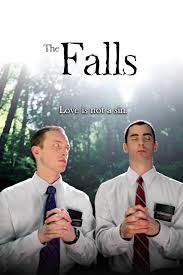
THE FALLS
US, 2012, 91 minutes, Colour.
Nick Ferrucci, Benjamin Farmer, Brian Savile Allard. Quinn Allen, Paul Angelo, Harold Phillips.
Directed by Jon Garcia.
The Falls films comprise a trilogy, the story of two young men, significantly members of The Church of Latter Day Saints, the Mormons, from devout families, committed families, who undertake the required mission, encountering people in the streets. The first film elaborates the start of the mission, practical details, the challenge to faith, temptations in the form of alcohol and drugs, the two young men encountering an Iraq veteran with PTSD, befriending him, his opening up a world beyond their experience.
However, in the first film, there is the sexual attraction between the two, hesitations, doubts, prayer, moral principles, defiance and decisions.
The same actors appear through the three films, Nick Ferrucci as RJ, Benjamin Farmer as Chris. The young men’s parents also appear throughout the films. Each film was written and directed by Jon Garcia.
The second film features the aftermath of the decision, the two going on travels but returning home, RJ leaving the church, becoming a writer, Chris severing connections, going back home to Salt Lake City, marrying, starting a family, working as a salesman but belonging to the church, heavily influenced by his parents. RJ’s parents are much more sympathetic.
The death and funeral of the PTSD friend brings the two together, Chris hesitant, RJ more impetuous, intruding on the family and Chris’s wife.
This is significant in the second film, her discovering the truth, sense of betrayal, the camera dramatising her experience with a great number of close-ups, intense.
The emphasis is on the struggle, each handling the meetings in a different way, Chris having to face his father and the church, RJ in a dramatic (which some find and realistically overdramatic) scene where he kisses Chris during a public function.
The third film has each of the two accepting their sexual orientation, RJ in a relationship but breaking it, the need for him to be reunited with Chris. The funeral of Chris’s mother is an occasion, with RJ’s father also attending, the confrontation, reconciliation, and a challenge to Chris’s father, his role with the elders of the church, the change to his beliefs.
Ultimately, there is the reconciliation and the families participating in a marriage ceremony.
Important is the director’s perspective on the Mormons, as a church, its origins, American history, presence in Salt Lake City, the mission, the young missionaries and their service, the governments, the elders, the quorum, the president. There is the Church’s language of Heavenly Father, images of Jesus but few references to him in prayer, the quality of faith and prayer, pervading every-day life. Then the film and its critique of the Mormons – but this trilogy as a challenge to the Church’s stances of same-sex relationships, no baptism of children in same-sex relationships, the plea for humanity and God’s love and interpreting the letter of the law.
So, the three films and the portrait of the two men, their faith, the mission, their identity, sexual orientation, relationships, struggles and alienation, faith, faith, convictions and the films as a plea for faith and belief but also for an acknowledgement of God’s role in human lives, love, tradition morality, challenges.
- The title, the reference to The Falls, the Park, the gay park? Symbolic?
- The focus on the Church of Latter Day Saints, zeal response, interested, sympathetic, not? The approach of the writer-director, appreciation, understanding, life, commitment, mission, the traditions, Joseph Smith, his life and teachings, his behaviour? Criticisms? Respect even with the different perspectives on moral issues?
- The focus on RJ Smith? 20, family, brought up as Mormon, faith, zeal? His parents and sister? Going on mission? The accommodation, meeting Elder Harris, introduction to Elder Merrill, sharing the room, Elder Merrill and his background, experience of mission?
- The two working together, sharing the room, exercise, jogging? On mission, in the streets, Merrill and his experience and advice, RJ and his inexperience, the coaching of how to approach people, the book of Mormon, quoting texts? People passing by, interested, not interested, comments? The meal with the man and his comments, friendly, then criticising Joseph Smith for polygamy and being a paedophile? Their reactions?
- The routine, the regime, supervision, reporting back, success of mission or not?
- The visit to Rodney, his background, Iraq, his brother and death, PTSD, brought up Catholic, his mother, interested to meet the two, at home with them, the visits, giving him the book, texts, his watching television and then reading the book, his questions? Their liking him, his way of life, pot, television, watching pornography? Their mellowing, RJ and his trying out the pot, Chris and his reaction? The bond and friendship – and the later consequences?
- Relaxing the regime, going to the movies, taking time off?
- In the woods, relieving themselves, the bikes, the approach, the attraction, the sexual encounter? In the room, their emotions, sexual experiences? Their being caught by Elder Harris?
- The authorities, the reactions? RJ, his parents, their expectations, his father, the explanations, his mother sympathy? His having to go home?
- His audience with the bishop, the camera focused on RJ? His going home, facing the reality, explanations to his father, athletics, wrestling, his achievements, but his sexual orientation?
- Issues of faith, believing in the Mormon tradition, wanting understanding, moving away from church practice? His future?
Falls, The: Testament of Love

THE FALLS: TESTAMENT OF LOVE
US, 2014, 118 minutes, Colour.
Nick Ferrucci, Benjamin Farmer, Hannah Barefoot, Bruce Jennings, Thomas Stroppel.
Directed by Jon Garcia.
The Falls films comprise a trilogy, the story of two young men, significantly members of The Church of Latter Day Saints, the Mormons, from devout families, committed families, who undertake the required mission, encountering people in the streets. The first film elaborates the start of the mission, practical details, the challenge to faith, temptations in the form of alcohol and drugs, the two young men encountering an Iraq veteran with PTSD, befriending him, his opening up a world beyond their experience.
However, in the first film, there is the sexual attraction between the two, hesitations, doubts, prayer, moral principles, defiance and decisions.
The same actors appear through the three films, Nick Ferrucci as RJ, Benjamin Farmer as Chris. The young men’s parents also appear throughout the films. Each film was written and directed by Jon Garcia.
The second film features the aftermath of the decision, the two going on travels but returning home, RJ leaving the church, becoming a writer, Chris severing connections, going back home to Salt Lake City, marrying, starting a family, working as a salesman but belonging to the church, heavily influenced by his parents. RJ’s parents are much more sympathetic.
The death and funeral of the PTSD friend brings the two together, Chris hesitant, RJ more impetuous, intruding on the family and Chris’s wife.
This is significant in the second film, her discovering the truth, sense of betrayal, the camera dramatising her experience with a great number of close-ups, intense.
The emphasis is on the struggle, each handling the meetings in a different way, Chris having to face his father and the church, RJ in a dramatic (which some find and realistically overdramatic) scene where he kisses Chris during a public function.
The third film has each of the two accepting their sexual orientation, RJ in a relationship but breaking it, the need for him to be reunited with Chris. The funeral of Chris’s mother is an occasion, with RJ’s father also attending, the confrontation, reconciliation, and a challenge to Chris’s father, his role with the elders of the church, the change to his beliefs.
Ultimately, there is the reconciliation and the families participating in a marriage ceremony.
Important is the director’s perspective on the Mormons, as a church, its origins, American history, presence in Salt Lake City, the mission, the young missionaries and their service, the governments, the elders, the quorum, the president. There is the Church’s language of Heavenly Father, images of Jesus but few references to him in prayer, the quality of faith and prayer, pervading every-day life. Then the film and its critique of the Mormons – but this trilogy as a challenge to the Church’s stances of same-sex relationships, no baptism of children in same-sex relationships, the plea for humanity and God’s love and interpreting the letter of the law.
So, the three films and the portrait of the two men, their faith, the mission, their identity, sexual orientation, relationships, struggles and alienation, faith, faith, convictions and the films as a plea for faith and belief but also for an acknowledgement of God’s role in human lives, love, tradition morality, challenges.
- The story continues? Five years later? The presuppositions from the first film?
- The settings in Seattle, apartments, workplaces? The settings in Salt Lake City? Homes, workplaces, motels, the Mormon centre? The musical score, the various humans?
- RJ’s narrative, the breaking up of the mission, the year travelling around America, the relationship with Chris? The return, RJ and his alienation from the church, yet his faith, Mormon underwear, where? His writing, publishing e-books, editing the magazine? His relationship with Paul? Domestic? His writing to Chris, no replies?
- News of the death of Rodney, the decision to go to the funeral, RJ and his family, the letter, seeing Chris? Talking with Chris, the formalities? Walking him to the door? The effect on him, the return to Seattle? His relationship with Paul, Paul meeting his parents, the decision to break? Paul’s reaction?
- Audiences identifying with RJ, on his intrusion into Chris’s life, emotions? Getting the time of, going to Salt Lake City, coming to the house, agreeing to come to the meal, meeting Emily and the baby, the decision to stay the night? Intrusive? The meetings with Chris, the talk, Chris and his responses, emotion, the further meetings, and releasing the kiss?
- The second part of the film with a focus on Chris, the story of his return, the judgement of the elders, his being readmitted, no penalty, the role of his father, therapy, not telling his mother? Chris’s motivations, feeling stronger, the attraction to Emily, the wedding ceremony, the family, the house, the pharmaceuticals job, Emily and her work, his work on mission?
- The impact of RJ coming to Salt Lake City, Chris having to face the realities, gay, relationships? His confession to RJ? Emily, the bond with her, the baby, her ceremony with the red jacket, driving home, seeing the kiss? The confrontation?
- The device of having close-ups on Emily’s face for the key emotional sequences, the audiences identifying with her, the intensity of the emotions?
- Chris, his father, the influence, upset?
- RJ his presence, the anguish in the hotel room, his mood, destroying the underwear, attempts at prayer? Loss of faith?
- The discussions with Emily, the issue of divorce, the future? His father’s anniversary, the ceremony, Chris singing the hymn, RJ coming in, walking to the centre, challenging Chris, the public kiss, doing his father’s speech?
- The various reactions, Chris and his brother, his sister in law and her support?
- The future, Chris being honest, time for Emily, the family? The father’s phone calling RJ’s father, his father’s strong stands in terms of the church, honesty, support of children?
- The final talk between Chris and his father, his father wanting to leave, Chris refusing, the talk, his father and his faith, the shame of having a gay son, the final weekly and embrace? What future?
Falls, The: Covenant of Grace
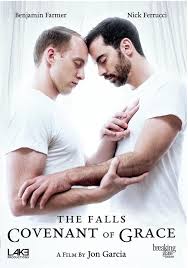
THE FALLS: COVENANT OF GRACE
US, 2016, 119 minutes, Colour.
Nick Ferrucci, Benjamin Farmer, Curtis Edward Jackson, Bruce Jennings, Harold Phillips, Malaya Garza.
Directed by Jon Garcia.
The Falls films comprise a trilogy, the story of two young men, significantly members of The Church of Latter Day Saints, the Mormons, from devout families, committed families, who undertake the required mission, encountering people in the streets. The first film elaborates the start of the mission, practical details, the challenge to faith, temptations in the form of alcohol and drugs, the two young men encountering an Iraq veteran with PTSD, befriending him, his opening up a world beyond their experience.
However, in the first film, there is the sexual attraction between the two, hesitations, doubts, prayer, moral principles, defiance and decisions.
The same actors appear through the three films, Nick Ferrucci as RJ, Benjamin Farmer as Chris. The young men’s parents also appear throughout the films. Each film was written and directed by Jon Garcia.
The second film features the aftermath of the decision, the two going on travels but returning home, RJ leaving the church, becoming a writer, Chris severing connections, going back home to Salt Lake City, marrying, starting a family, working as a salesman but belonging to the church, heavily influenced by his parents. RJ’s parents are much more sympathetic.
The death and funeral of the PTSD friend brings the two together, Chris hesitant, RJ more impetuous, intruding on the family and Chris’s wife.
This is significant in the second film, her discovering the truth, sense of betrayal, the camera dramatising her experience with a great number of close-ups, intense.
The emphasis is on the struggle, each handling the meetings in a different way, Chris having to face his father and the church, RJ in a dramatic (which some find and realistically overdramatic) scene where he kisses Chris during a public function.
The third film has each of the two accepting their sexual orientation, RJ in a relationship but breaking it, the need for him to be reunited with Chris. The funeral of Chris’s mother is an occasion, with RJ’s father also attending, the confrontation, reconciliation, and a challenge to Chris’s father, his role with the elders of the church, the change to his beliefs.
Ultimately, there is the reconciliation and the families participating in a marriage ceremony.
Important is the director’s perspective on the Mormons, as a church, its origins, American history, presence in Salt Lake City, the mission, the young missionaries and their service, the governments, the elders, the quorum, the president. There is the Church’s language of Heavenly Father, images of Jesus but few references to him in prayer, the quality of faith and prayer, pervading every-day life. Then the film and its critique of the Mormons – but this trilogy as a challenge to the Church’s stances of same-sex relationships, no baptism of children in same-sex relationships, the plea for humanity and God’s love and interpreting the letter of the law.
So, the three films and the portrait of the two men, their faith, the mission, their identity, sexual orientation, relationships, struggles and alienation, faith, faith, convictions and the films as a plea for faith and belief but also for an acknowledgement of God’s role in human lives, love, tradition morality, challenges.
- The third film in the trilogy? Building on the first two films, the central characters, same-sex love, the Mormon church, morality? Changing perspectives in the 21st-century?
- The dramatic coming out at the end of the second film? For RJ, for Chris, for RJ’s parents and acceptance, for Chris’s father and non-acceptance, Chris’s brother and disapproval? The breaking of Chris’s marriage? Relationship with his daughter? Staying in Salt Lake City? RJ and his work in Portland?
- The atmosphere of the American cities, Portland work, Salt Lake City, homes, work, the pervading atmosphere of the Mormons? The musical score? Songs and hymns?
- The film as a resolution between RJ and Chris, the 2010s and American attitudes and same-sex marriage, the church of theLatter Day Saints?
- The director’s perspective on the Mormons, as a church, its origins, American history, presence in Salt Lake City, the mission, the young missionaries and their service, the governments, the elders, the quorum, the president? The Church’s language of Heavenly Father, images of Jesus but few references to him in prayer, the quality of faith and prayer, pervading every-day life? The film and its critique of the Mormons – but this trilogy as a challenge to the Church’s stances of same-sex relationships, not baptism of children in same-sex relationships, the plea for humanity and God’s love and interpreting the letter of the law?
- Completing RJ’s story, his work as an editor, the reconnection with Chris, communication with him, the visits? Phone calls? His daughter? The death of Chris’s mother, going to the funeral, his father coming with him, the encounter with Chris and his father? The meal together, his father taking a stance? RJ’s father and his talking with Chris’s father? Chris’s brother and his continued disapproval?
- RJ, Ryan, his friendship, at the nightclub, Ryan and his love for RJ, the scene together, RJ supporting him, holding him back, the phone call to his coworker, in the middle of the night, the favourable response, the invitation to come, Ryan seen driving away, the photo of the couple?
- Chris, with his daughter, applying for a university place? The effect of his visits to RJ and their love? The funeral, his family?
- Chris’s father, giving thought to the discussions, Chris and his plea, his going to the quorum, the interview with the president, the visual completely on the father, the president and the disagreement, the agreement for a discussion? The issue of not baptising children in same-sex families? Alienating for RJ?
- RJ, the basic faith, the alienation, the consequences, his angers, yet going to the service, singing the hymns? Chris getting the place at the university, his future, sharing his daughter with his wife? The issue of marriage, legal in the US, his proposal, RJ’s acceptance?
- The ceremony, the commitment, the celebration, the families present, Chris and his father, RJ and his family?
- The three films and the portrait of the two men, their faith, the mission, their identity, sexual orientation, relationships, struggles and alienation, faith, faith, convictions? The film as a plea for faith and belief but also for an acknowledgement of God’s role in human lives, love, tradition morality, challenges?
