Displaying items by tag: Mark Coles Smith
Beast of War
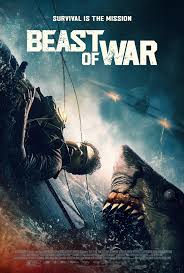
BEAST OF WAR
Australia, 2025, 87 minutes, Colour.
Market Coles Smith, Joel Nankervis, Sam Delich, Maximillian Johnson, Lee Tiger Halley, Sam Parsonson, Tristan MacKinnon, Aswan Reid, Lauren Grimson, Laura Brogan Browne, Steve Le Marquand.
Directed by Kiah Roache-Turner.
This is a small Australian film worth noting.
On the one hand, this is a World War II story. On the other hand, it is a shark drama. And, the shark episode is based on an episode in the Timor Sea.
The early part of the film, set in 1942, introduces a set of rather raw recruits, given a speech on Gallipoli and mateship, funded at by one of those sergeant majors supervising drills, made to go through all kinds of preparations for battle. A key episode focuses on Leo, an indigenous recruit, and youngster, Will, who gets bogged down in quicksand like mud but is rescued by Leo. And praised by the leader as an example of Australian mateship in time of crisis. However, there is one young arrogant recruit, ignorantly racist.
Leo, the centre of the film, is played by Mark Coles Smith who has emerged as one of Australia’s leading actors in film and television in recent years. Newcomer Joel Nankervis is Will. Sam Delich is Des Kelly, the racist.
Australian audiences will be interested in this re-creation of moments in Australian war history.
Then these young soldiers are on their way to battle, their ship bombed, few survivors, the atmosphere foggy, Leo offering a great deal of leadership. There have been stories about soldiers stranded in the ocean and the danger from sharks. And this is the drama of the second part of the film, a Great White female shark, circling, attacking, the men and their attempts at surviving, the lack of food, the lack of water, the challenge of drinking urine, and various tensions amongst the men.
Any shark story will remind audiences of jaws – as this film does, but mainly the shark’s circling and then some horror moments as it leaps out of the water. And, finally, the Japanese plane flying over, a Japanese survivor and moral decisions about life and death.
And, there is a mystical dimension to the film, opening with Leo and the young Archie (Aswan Reid from The New Boy) in difficulties underwater, these sequences were occurring in Leo’s memory and, offering a kind of salvation memory for survival.
The writer-director, Kiah Roache-Turner, has previously directed horror films. Here he has some horror but, more importantly, a great deal of humanity.
- The title, expectations? The war theme? The shark theme?
- Australian production, small budget? Re-creation of war training, bombardment, on the waters, the shark attack? The musical score?
- Australia, 1942, the young recruits, training? The impact of the training sequences, the commander, losing his arm, memories of Gallipoli in World War I, mateship? The sergeant and his aggressive tone with the men? The demands, to return to camp, four hours, Will and the quicksand, Leo rescuing him, just in time? Sam and his criticisms, prejudice, racism? The details about silent attack, knives and stabbing, the range of demands?
- Leo, his indigenous background, a commanding presence, memories of the encounter with Archie setting a tone at the beginning, his memories of Archie throughout the film, trying to save him, Archie saving him, the final salvation?
- Leo, the response of the men, the continued criticisms by Sam?
- The portrait of the other men, their age, background, the training? Ready to go to war?
- The transport, interactions amongst the men, Sam and Leo? The bombardment, the destruction of the ship, the deaths, the men in the water?
- The group saved, wounding, Leo and his abilities, Will and his contribution, the other men, their personalities, wounds? Thompson and his wounds? The practicalities of survival?
- The shark theme, audience memories of jaws, World War II stories and the menace of sharks on troops in the water? The visuals of the shark, the attack, the Great White, female, circling, attacking, the teeth, the victims, the blood? The grenades?
- The issue of food and water, Thompson eating all the peaches, the issue of urine, Sam and his reaction, Leo leading the way, everybody following, giving some more days of survival?
- The motorboat, Leo and his action, leaping from the various surviving pieces to the other? The rope, pulling it in, the engine not working?
- The plane, the bombardment, Leo wounded, the deaths? The later arrival of the Japanese, giving up his sword, seeming to surrender, Will not willing to shoot him, the attack, the fight, desperation?
- Leo, prepared to die, in the water, saving Will again, the images of Archie and beckoning them to the surface?
- The final survival, Will fixing the motor, the future – in Australia at war, and race issues? Mateship?
We Bury the Dead
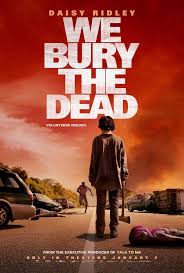
WE BURY THE DEAD
Australia, 2024, 94 minutes, Colour.
Daisy Ridley, Brenton Thwaites, Mark Coles Smith, Matt Whelan.
Directed by Zach Hilditch.
As with so many post-apocalyptic stories, the dead seem to have a life of their own before they are buried after being killed a second time.
The screenplay for this film does not use the word zombie but refers to those who have died and have some kind of continuing thread of life within them. And the situation is dire, a nuclear situation gone wrong, a brief visual indication that the US is to blame, an explosion along the east coast of Tasmania, centering on Hobart and its large population but affecting the surrounding coast and towns, half a million killed.
Many volunteers arrive in Tasmania, military and police control, the allotting of tasks, finding bodies, those with some continuing life in them, destroying and burying them, identifications. One of the volunteers is Ava, Daisy Ridley, whose husband has been attending a retreat weekend in southern Tasmania. A sympathetic guard allows her to become part of the squad for finding the dead, teaming her up with a divorced tradesman, from Melbourne, Clay, Brenton Thwaites.
While there are some grotesque moments, the emphasis is on the drama but not highlighting, as in some of the zombie films, the increasing menace of the threatening living dead. But Ava is eager to continue south, with the help of Clay, his motorbike, but a difference and his disappearing.
The next drama concerns Riley, Mark Coles Smith, military, on training in Queensland at the time of the disaster, returning home to find his pregnant wife. Suspicions, help, and a sense of betrayal and Ava’s determination to go further south, even walking.
The opening of the film did indicate something of the relationship between Ava and her husband, the wedding, the aftermath but intimations that all was not well, confirmed when she does eventually find him dead in the resort.
The film has been written and directed by Western Australia director, Zach Hilditch, whose previous film, Their Final Hours, also explored disasters and consequences. And, interesting to note concerning landscapes and coasts, while the film is set in Tasmania, the filming was done in Western Australia.
An interesting variation on the living dead dramas.
- Post-apocalyptic story – set in the present? In Australia, Tasmania, the destruction of Hobart? An American accident, incident?
- The Tasmanian settings, the countryside, the coast, the city of Hobart, the resort? But filmed in Western Australia? The musical score?
- The title and its tone, the words on never mentioned, the dead, some “coming online again”, the squad to identify, to destroy?
- Expectations of a zombie film, this film is different, comparatively few living dead sequences, threats, drama, but humanity? Need for execution? The difference, the central characters, personal stories, sense of humanity, identifying the dead, their lives, a and her search for her husband, Riley and his dead pregnant wife, the men digging the grave for his family, her helping him? A different tone?
- The background of the explosion, the explanations, the demonstrations in America, the visuals of the explosion, the aftermath, smoke, the number of people dead?
- A over at her story, in herself, her relationship with Mitch, the continued flashbacks, the development of the relationship, together, the dance, the wedding, the aftermath, explanation of morals, his going to the resort, her reading, committed search for him, the discovery of his body, the card for the woman, taking off his wing? Her response?
- Ava, volunteering, the large number of volunteers, their task, the military, seeds of detail of the work, identifying the bodies? And throughout the film the number places where bodies are discovered, single, vast assemblies of corpses? Ava teaming with a Play, his Melbourne background, building, separation from his family, unable to get out of his own way, his language? The work, working with a, the danger, finding corpses, those online, the killings?
- Clay, the motorbike, Ava persuading him to take her South, the ride, the visuals of the highway, the stranded cars, the dead? The authorities, the confrontation with Clay, Riley, Clay and his escape?
- The episode with Riley, sympathetic, intelligible with the military, finding his pregnant wife dead, the hopes, the decision to take a, at his home, his moods, the memories while, a in her clothes, the dance, the music and the earpiece, the effect on him, the effect on her, her reaction, the confrontation, her attack on him?
- The decision to walk, the episode with the man digging the grave, helping with the burial? Her finding the bed-and-breakfast, her husband, the woman, talking to her husband, eventually taking of her ring? The disappointment and disillusionment?
- Finding Clay, together, Clay and his future, Ava and her future?
Kid Snow
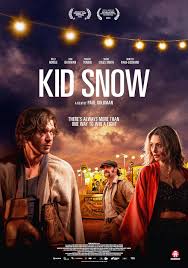
KID SNOW
Australia, 2024, 127 minutes, Colour.
Billy Howle, Tom Bateman, Phoebe Tonkin, Mark Coles Smith, Hunter Page-Lochard, Nathan Philips, Jake La Torre, Robert Taylor, Tristan Gorey, Vito de Francesco, Tasma Walton.
Directed by Paul Goldman.
Once upon a time in Australia, there were travelling fairs, including a boxing troupe, with a boxing tent, featuring boxing stars ready to take on the locals as part of the show. They were popular during World War I and continued. In fact, the story opens in 1961, the main action taking place in 1971. The fairs were very popular, beginning at the time of the introduction of radio, before television, certainly long before social media. In fact, in one sequence here, a boxing bout is watched on television, black-and-white, even in 1971 before the coming of colour TV.
A reviewers noted that this is the kind of film we used to make in Australia. It is a story of ordinary people, very ordinary people, often referred to in the past as “battlers”, and not just because of the boxing, but of the struggles in making a living. The characters here all have these stories, Irish migration, fixed fights and betting, returning from Vietnam, single parents, dancing in Kings Cross nightclubs, aboriginals involved in the boxing troupes, sometimes hand-to-mouth subsistence…
In 1961, we are introduced to two boxing brothers, Rory and Kid. Their father manages them, bets, tough fights, setups, knockouts, Kid knocked down, giving way to his brother – drinking, driving, a disastrous car crash.
1971, Rory, with a limp from his leg injured in the crash, runs the touring fair, Kid being the featured boxer, the backup from some of the aborigines travelling with them. British actor, Billy Howle, plays Kid, looking unkempt, often bewildered, his brother dominating him. British actor Tom Bateman plays Rory. Mark Coles Smith and Hunter Page-Lochard feature in the entourage. Haunting them is the memory of the defeat by the national champion, Hammer (Tristan Gorey) who runs a boxing training centre.
An American journalist, played by Robert Taylor, from Life Magazine is following Hammer, interviewing Rory and Kid, trying to get a story about the boxing world in Australia, such travelling troupes not part of the American boxing scene.
A further complication is Sunny (Phoebe Tonkin), battling with her young son, Darcy, her husband has been wounded in Vietnam, time in jail, slyly picking pockets of the boxing audience, confronted by Rory, becoming a dancer with her own tent, able to survive with her son, a strange relationship with Kid who become something of a babysitter for the boy, creating a bond.
In the background the entrepreneurs are trying to organise a bout between Kid and Hammer (who hates Kid), a set up, betting and profit, Rory indebted to these entrepreneurs, forcing Kid to train.
Which means there are a number of boxing sequences, especially that final fight. However, a lot of the film focuses on personal struggles, the two brothers, resentments, yet brotherly feelings, Sunny and her situation and background, concern for Darcy, the interventions of the American journalist, a truth confrontation between the two brothers.
We know where the story is going but, satisfyingly, it is not exactly what we might have expected and the final, perhaps inevitable, visualising of the meeting leaves the audience satisfied.
- The title and the focus on Kid? In the context of his family? In the context of boxing and the troupe?
- An Australian story, the travelling boxing troupes, the fairs and the fairgrounds, the small country towns, the tents, the shows, boxing, the dancing? The audiences? The tradition from the First World War years to the 1970s?
- The West Australian settings, the small towns, the range of the countryside, deserts, farmland, the coastal sequences? Atmosphere? Musical score?
- The opening fight, the introduction to Kid, Rory, to their father? To Hammer and his trainer, Frank? The situation of the fight, the competition, the bets, the arrangements for knockouts? Kid, his fight, falling? Rory and the arrangement to win? Hammer and his dominance?
- The aftermath, the drive, Kid and his drinking, the arguments, the oncoming truck, the accident? The father’s death? Rory and his leg injury?
- 1971, Rory and the setting up of the travelling fair, the visuals of the tents, exteriors and interiors? The dance tent, the eyes, the lascivious sketches of the women?
- The entourage, Rory as the boss, unable to fight? Kid, the fighter, the locals and taking them on, the bets? The other members of the group, the aboriginal men and their presence, Bill and his being a follower? His later taking Kid’s place in being brutalised by Kid’s antagonists? The atmosphere, their characters, performances, the crowds?
- Sunny, coming into the tent, Rory watching her, picking the pockets, his confronting her, her concern about Darcy in the car? The interactions, the job, her dancing, the money, costumes, the tent and its style, the increasing audiences, their responses to her? Her suspicions of Kid, mellowing, letting him be babysitting for Darcy? The growing attraction? Darcy and his wariness, memories of father, the father and his Vietnam experience? Sunny, her explanations of herself, growing up, jail, dancing at Kings Cross, Betty teaching her? With the bigger audiences, better dresses, more elaborate performances, popularity? Rory and his approach, her resisting, Darcy attacking, her being sent away? Going to the coast, meeting Betty again, the ice cream parlour for the tourists?
- The journalist from Life Magazine, visiting Australia, comparisons with the US, his interviewing Hammer, Hammer at his gym? Interviewing Rory? Interviewing Kid? Rory’s attack on him, typing the story, present at the finale?
- Darcy taking the money, kid in pursuit, Darcy not knowing the money was Kid’s? Returning it?
- Rory, the entrepreneurs, the setting up of the fight against Hammer, Rory and his memories, Kid and his abilities, fixing the match but not telling Kid? Kid the training, the aboriginal trainers and his running, exercise? And continuing with the bouts with the locals?
- The buildup to the confrontation between Kid and Rory, the accident, Rory and his limp, the fixing of matches, treatment of Sunny? Kid leaving, driving, finding Sunny and Darcy, reuniting? The prospect of the fight?
- The decision to fight, going into training, the return, his visit to the entrepreneurs, the bet to win that he could last three rounds? The visuals of the fight, hard, collapsing, lasting the three rounds? Going to the fourth, throwing in the towel, the fans, Rory’s reaction? And the entrepreneur making money, money for Kid?
- The reconciliation with Rory, his going to find Sunny and Darcy, the ice cream parlour, and the way that the final sequence was handled, expected but controlled?
