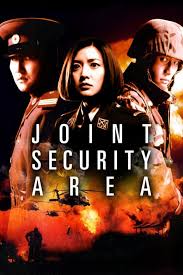
JOINT SECURITY AREA
Korea, 2000, 110 minutes, Colour.
Lee Ung-hun, Lee Yeong-ae, Song Kang-ho, Kim Tae-woo.
Directed by Park Chan-wook.
Released in 2000, the story of the border between North and South Korea, still seems very relevant.
It was the third film to the maid by Park Chan-work. With its success, nine features followed over the next quarter of a century, all of them receiving critical acclamation, including Oscar nominations, and international distribution. They include Old boy, The Handmaiden, Decision to Leave and other Choice.
As a server the background to the division between North and South Korea and the Korean War are included throughout the film, the division of the country, Communist loyalties and enclosure of the North, the freedom of the South, the issue of what happened to soldiers fighting for the North.
There has been an incident on the border, some deaths, a possible kidnapping of soldier from the South. An international committee, including a Korean woman, son of a fighter in the Korean War, but living on screen is a key member of the investigating committee.
There are various questionings, so deceitful behaviour by Korean authorities, despising the international visitor. And there are tensions with the alleged soldier kidnapped, as well as the North Korean who is being held responsible.
What is effective about the film is that it provides initial impressions of the various accused as well as of the interrogators, gradually more information coming to the surface, the discovery of friendship between the two sites, the possibility of some kind of ending together (remembering the Christmas meetings of Germans and French in the trenches during World War I in films like Joyeux Noel). In fact, the audience finds themselves more on side with the soldiers from the North and the South as they share, gifts, talk, hopes, it still strong in their ideologies.
The audience will hope that this meeting between North and South might end well – but, of course, the reality is telling us that this will not be the case.
Fine performances – and, interesting to note, the key soldier from the South is the main star, 25 years later, in the Oscar-nominated No Other Choice.
- The work of the director, at the beginning of his career, this film seen in the retrospect of his career and awards?
- The impact for a Korean audience, for American audiences, European, those not so familiar with the north-south situation? The perspective of the late 1990s – seen in the light of later developments and the succession?
- The background of the Korean War, the separation between North and South, the demarcation lines? Troops on either side? Tensions, outbursts? The contrast with the two ideologies? The visualising of the past, the major and the story of her father, North Korean general, the aftermath of the war and the choices for people to go over to North, to South? South Koreans living with this heritage?
- The situation, and North-South clash, the soldier, kidnapped, or defecting? The decision to call in international arbitrators, from Switzerland and Sweden? Their role, the possibilities for interviewing the chief characters from each side?
- The Swiss major, growing up in Switzerland, her Korean heritage, European perspective, ability with the language? Meeting her Swedish associate? Meeting the commander? Approval of her or not? The local military chief and his disdain?
- The laying out of the situation, the depositions, the audience trying to understand what happened? The Major and her methods, the interviews, the responses of the central characters, sullen, the injuries, psychological responses?
- The details of the various procedures taking up the earlier part of the film, the introduction of the character of Lee, quiet and sullen, wounded? The interrogation Oh, also wounded, turning his face from the major? The presence of Nam and his further involvement?
- After this background, the actual narrative of what had happened? Lee, his abilities, with Nam, genial, friendship with Nam, correspondence with the actress? Coming to the end of his service? His experiences at the border, the demarcation line, the tourists and the buildings, the tourist losing her, Oh and his returning it, Lee observing?
- Lee and his motivation, out in the fields, the break, the others leaving, his being stranded, stepping on the mine? Oh and his friend arriving, the dog, guns drawn, the psychology of the situation, hostilities and ideology, history, the decision to work on the mine, Oh giving Lee the mechanism as a souvenir?
- The beginning of the friendship, its development, Lee going over, the discussions with the two, the friendships, shared stories? Nam discovering that Lee had crossed the line, Nam sleeping on duty, his being persuaded to go with Lee, the initial suspicions, the buildup of the friendship, the visits, jovial, drinking, the chocolate cakes…? Yet the pride of each side in its own ideology?
- The buildup to the officer arriving at the door, the situation, guns drawn, the talk, Oh and his mediation, tensions, confusion, Nam and his fear, Lee and his control?
- The shootings, the death of the North Korean, the officer, Lee and the shots? Oh and his asking Lee to wound him?
- The further interrogations, in the light of what had been seen, Oh and his deposition, the two together, Oh and his expression of loyalties, condemnation of the South Korean puppets? Saving Lee? Lee, being escorted out, to the hospital area, his wound?
- The interrogation of Nam, his confusion, admissions, decision to suicide, the gun, not working, going to the roof, throwing himself down? Lee, his reaction, blaming the Major and attacking her?
- The major, the reaction of the authorities, the local Korean authority who had always been dismissive of her? The Swedish connection? Her decision to continue?
- The discussions with Lee, asking him to tell her the true story, the effect on him? His getting the gun, going out, shooting himself?
- The aftermath, the deaths, the Major returning home?
- And the memories, Lee and his hopes for some kind of reunification, friendship, for peace, ideals but attitudes and violence?
