Displaying items by tag: Jeremy Strong
Springsteen: Deliver Me from Nowhere
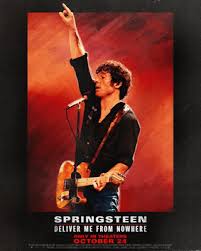
SPRINGSTEEN: DELIVER ME FROM NOWHERE
US, 2025, 120 minutes, Colour.
Jeremy Alan White, Jeremy Strong, Stephen Graham, Odessa Young, Gaby Hoffman, David Krumholz, Paul Walter Hauser, Harrison Sloan Gilbertson, Grace Gummer, Mark Maron, Matthew Anthony Pellicano Jr.
Directed by Scott Cooper.
Bruce Springsteen is a significant figure in American and world music, 20th century, 21st-century. This is a portrait of Springsteen in 1981-1982 rather than a biography, rather than an exuberant immersion in his music. That is the tone of the title, Deliver Me from Nowhere. And, in one sequence where a car salesman says to Springsteen, “I know who you are”, Springsteen replies “at least that’s one of us”.
Some background on Springsteen himself for those unfamiliar or less familiar with his life and career, courtesy of Wikipedia:
Springsteen has released 21 studio albums spanning six decades; most of his albums feature the E Street Band, his backing band since 1972. Springsteen is a pioneer of heartland rock, combining commercially successful rock with poetic, socially conscious lyrics that reflect working class American life.
And there is some Catholic background:
Springsteen attended the St. Rose of Lima Catholic School in Freehold, where he was at odds with the nuns and rebelled against the strictures imposed upon him, though some of his later music reflected a Catholic ethos and included Irish Catholic hymns with a rock music twist. In 2012, Springsteen said that it was his Catholic upbringing rather than his political ideology that most influenced his music. He said his faith gave him a "very active spiritual life" but joked that this "made it very difficult sexually" and added "once a Catholic, always a Catholic… I don't participate in my religion but I know somewhere... deep inside... I'm still on the team.”
This is very serious portrait and becomes more serious as it continues. There are black and white flashbacks to Springsteen’s childhood, a protective mother, a seriously alcoholic father, sometimes violent, demanding his son to be a man. Gaby Hoffman plays the mother and British actor, Stephen Graham (significant this year for his contribution to the series, Adolescence) is his father. But, Springsteen has the opportunity for some reconciliation with his father.
In 1981-1982, Springsteen worked in his bedroom, moved by watching the film, Badlands (1978) with Martin Sheen. It led to his reflections and a series of songs, just acoustic guitar, with very serious themes, Nebraska. And, at the same time, he composed what became something of an anthem, Born in the USA. (He is shown watching, several times, Robert Mitchum in the 1955 The Night of the Hunter, taken by his father to see it, the scenes of menace on the little boy.)
Springsteen is played effectively by Jeremy Alan White, award winner for his television series The Bear. Some have remarked that he does not look like Springsteen but, in his performance, he is able to communicate much of what drives the loner as well as the hyper-vigorous concert performances.
Supported strongly by his manager, Jon Landau, another fine performance from Jeremy Strong (Succession and frightening as Roy Cohn in The Apprentice), and by sympathetic waitress, Faye, Odessa Young, all kinds of opportunities offered to him by record companies and fans, Springsteen is often a recluse, feeling haunted many times, and an eventual acknowledgement of depression.
Which means that this film is a piece of Americana, on 20th century popular culture, an opportunity to appreciate Springsteen’s imagination and creativity, some insights into his perceptions of the US, the performance of some songs and songs in process, the American response (despite recent public condemnations of Springsteen by President Trump) rather than a concert musical.
- The title, the focus on Springsteen as a loner, depression? The experience of his loan composition of the album, Nebraska?
- Audience response to Springsteen, six decades of music, performance, public figure? Reputation, honest, medal from President Biden, criticism from President Trump?
- The film not as a concert experience although songs and performance included? The film is a portrait, flashbacks to childhood, 1981-1982, tours, composition, Nebraska, Born in the USA? Collaboration with Jon Landau? Record companies and agents, the recordings and the complications?
- Bruce Springsteen as a singer, performer, poet, creator, lyricist? And the performance by Jeremy Alan White?
- A picture of Bruce Springsteen, the New Jersey background, home life, his protective mother, going to the bar to ask his father to come home, the violence towards his mother, a to spy with his father, his father hitting him, the drinking, taking him to see The Night of the Hunter, Bruce with the baseball bat? The placing of these memories throughout the film?
- The opening concert, the energy, the performance, the exhaustion, the fans and interviews? His relationship with Jon Landau, over the years, friendship? Landau serious, knowing Springsteen’s genius, listening, advising, at home with his wife and testing ideas? Connections with the record companies, promotion, especially concerning Nebraska and the response of A whole Teller? The issue of Nebraska, the recording, the orchestra, Springsteen’s dissatisfaction, perfectionism? The mental health issues and Jon Landau’s support?
- The creation of Nebraska, watching Martin Sheen in Badlands, researching the story, the issues, resentment against society, the murders, the motivations and reactions? Is visualised? Impact, the suggestion of stories, the suggestion of songs? And the significance of the many sequences with the composing of the songs, their being played? Different from his other songs?
- At home, alone on the guitar, friendship with Mike, bringing the equipment, listening, the cassette, the limitations, the echo, Springsteen wanting this exact replication, the extent of the technicians in reproducing the sand? Then the album to be issued without name, press, promotion, tour? The scepticism of the industry?
- The episode with born in the USA, film, Paul Schrader? The composition, possessed in the performance? The promoters wanting it out there? It is being held until after Nebraska?
- Springsteen and his personal life, loner, awkward relationships, meeting the friend from school, Faye, the conversation, her being a fan, going to house, meeting her daughter, the outings, the play, his ability at being a father figure for the daughter? The merry-go-round is and all kinds of entertainment? The sexual relationship with Faye? Then his absence, not answering the phone, the conversations with Faye, leading up to her confronting him, and his leaving, her accusing him of always running away from himself?
- The issue of knowing himself or not, the quote from Flannery O’Connor about going back to the past which was not there? The car salesman and Springsteen’s response? The eventual admission of depression, going out to California, the encounter with his father, age, drink, losing his job, his mother’s concern, taking his father to hospital?
- Going to therapy, his weeping? 10 months, some recovery?
- The concert, performance, John and his support, his mother present, his father, going to see his father, the invitation to sit on his lap, the reconciliation?
- The final information, the success of Nebraska, Born in the USA, his later career – and the film over 40 years later?
Different Man, A
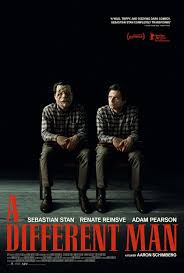
A DIFFERENT MAN
US, 2024, 112 minutes, Colour.
Sebastian Stan, Renate Reinsve, Adam Pearson.
Directed by Aaron Schimberg.
What makes the leading character a different man is his physical condition, neurofibromatosis, and its psychological and social repercussions. We are introduced to Edward, played by Sebastien Stan in a performance that won him the Silver Bear at the Berlin film Festival. He participates in videos which are produced to help the public understand people with different conditions. He lives alone, walks the streets with his head down, wondering what it would be like if he were just like everyone else rather than different.
Writer-director, Aaron Schimberg, he himself had a cleft palate when young and had to do with it, the repercussions after corrective surgery. And he saw the film, Wonder, with Julia Roberts and Owen Wilson with his son, played by Jacob Tremblay, has a facial condition. This inspired him to create the character of Edward, especially with the help of extraordinary facial prosthetics.
The first part of the film has Edward, lonely, meeting his next-door neighbour, a lively young woman, Ingrid (Renate Reinsve) friendly, accepting Edward, wanting to be a playwright, realising that Edward would be a good subject for a drama.
The second part of the film leads from Edwards medical treatment, special drugs, and the transformation of his face – not only to ordinary, but striking and handsome. The screenplay takes for granted his success after the change, a job, wealth, lavish apartment.
But it then becomes a focus on Ingrid’s play, her not recognising Edward who now calls himself Guy, his auditioning, wanting to play the part of Edward, using a mask aesthetic of his former face. But, then another “different man” arrives, Oswalt, played by Adam Pearson who does have the neurofibromatosis condition. British Pearson has appeared in a number of films and television productions including Aaron Schimberg’s former film, Chained to Life. He plays Oswald is a lively personality, extroverted, charming, generally unaware of his condition and appearance. Of course, he gets the part, leaving Guy rather stranded, wondering the benefits of looking like everyone else, perhaps pining for what he used to be like. And his mental condition deteriorates with disastrous consequences.
The film was billed as a black comedy and certainly that aspect is true. However, it also serves as a parable, what does it profit to gain… And the audience left to mull over Edward/guys experiences as to what is the best experience of life.
- Tone of the title, Edward, his life and facial condition, his transformation? From different to becoming the same? Oswald as being a different man?
- Focus on Edward, his physical condition, his head and face, the repercussions? Sebastien Stan’s performance? His transformation? Oswald and his presence, his condition, the reality of his life and his performance?
- The New York setting, apartment blocks, film studios, hospitals, theatre world? The musical score?
- Audience empathy with Edward? Reaction to his appearance? Reaction to his personality? Understanding his condition? People’s reaction, looking, avoiding looking? His age, his life, acceptance of his condition, non-acceptance? His participating in the videos making a plea for understanding? His collapses? At home, simple life in his apartment, walking the streets, head down, food? The encounter with Ingrid, booking, helping, visits, eating together, explaining himself?
- The doctors, the analyses, the drugs, the experiment? The consequences for Edward, side-effects? The experience of his tearing his skin from his face, the transformation? What he might have wished for? Looking ordinary? Looking charming?
- Ingrid, her background, cheery, wanting to write a play, friendship with Edward, helping him, the gift of the typewriter?
- Edward has a different man with his condition? Becoming similar to many with his transformation? His expectations? Hopes, life, career, socialising, women, sexual experiences? The sketch of his work for the real estate, the colleagues, the posters, set for life? His new apartment, luxury?
- The theatre, meeting Ingrid, her associates, her play? His wanting to be in the performance? Audition, rehearsals, his wearing the mask and becoming Edward of old? The effect on him, the relationship with Ingrid, personal, sexual, professional?
- The appearance of Oswald, his interest, his personality, outgoing, his condition? Performing the play, full of advice, comments, for Ingrid, for Edward and his new personality and name? Audience responding to Oswald? Doing the extroverted things despite his handicaps?
- The development of the play, Edward/Guy not able to remember his lines, Oswald taking over, Oswald and his relationship with Ingrid, Guy and his exasperation, on stage, the attack, the collapse of the equipment, his hospitalisation?
- The therapist, his comments, Guy stabbing him, prison, the years passing, release?
- Meeting Oswald and Ingrid again, their marriage, success, the play, the film, further work, to retire to the commune? Leaving Guy alone and his prospects?
Apprentice, The/ 2024
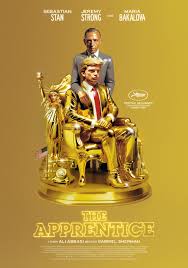
THE APPRENTICE
US, 2024, 122 minutes, Colour.
Sebastian Stan, Jeremy Strong, Maria Bakalova, Martin Donovan, Catherine McNally, Charlie Carrick, Ben Sullivan, Mark Rendall.
Directed by Ali Abbasi.
Once upon a time, there was a young American, ambitious, a touch tentative… And this was in 1974-1984. And the young American, from age 28 to 38, was Donald Trump. And, as they say, this is the beginning of his story. But, of course, we know what happened in years to come. And, as The Apprentice is released in mid-October 2024, there is an atmosphere of apprehension of what is to come on election day.
For audiences observing, this is a very interesting film. The first comment should be in praise of Sebastian Stan for his impersonation of Trump, the look, the hair, the swagger, the various tics, the tone of voice, his increasing apprehension about his weight, all looking authentic. The screenplay, by Gabriel Sherman (who wrote the very telling television series on Fox News’ Roger Ailes, played by Russell Crowe, the accusations of sexual harassment and his ousting by Rupert Murdoch, The Loudest Voice) is strong enough, along with Stan’s performance, to show how Trump “developed” in the times of Nixon’s downfall (no mention of Jimmy Carter) to the time of Reagan’s re-election. Trump had moved from huge ambitions through politicking and power contacts and manoeuvres to the achievement of the Trump Tower and casinos in Atlantic City.
But, the key figure in this film is that of notorious lawyer and power manager, Roy Cohn, a most telling performance from Jeremy Strong (Succession). When Trump approached Cohn tentatively for advice, Cohn took a shine to him, becoming something of a patron, advice, fixing, manipulation, and instilling principles that, repeated at the end of this film, Trump incorporated into his managing, attack, attack, attack, say what you like about your opponent, never admit defeat.
Another interesting character in the film is his father, Fred, played by Martin Donovan, ruthlessly relentless, condemning of his older son, Fred, an airline pilot who cannot live up to expectations, his demands on Donald, not believing in him and then shocked by the successful results of Roy Cohn’s interventions.
And, there are memories of Cohn’s interventions in the McCarthy era, the Rosenbergs going to the electric chair (and a moment of dialogue where Cohn rejects the appeal against the death penalty for a mother and t declareshat that is no excuse for betrayal of country and therefore she should be executed). There is his closeted homosexuality, his denials, a scene of a birthday party hosted by Trump in Florida and Cohn’s disillusionment with his protégé. And his television denial that he had AIDS, was dying of liver cancer.
There are some moments when Trump might have been a touch humane, the attraction to the celebrated model, Ivana (Maria Bakalova), declaring his love for her, the marriage, the birth of Donald Jr – but, he grows tired of her, wanting to discard her, sexually aggressive, finding new partners. With his subsequent career and court cases with women, it is amazing how his followers, even fundamentalist Christians, can be so forgiving and dismissive of his moral misbehaviour.
But, the focus of the film is on building, development, clashes with the city of New York, with Mayor ced Loch, offering financial investment and incentives, manipulating for tax breaks, ignoring of the protests of ordinary people evicted, losing jobs…
Which means that The Apprentice will be viewed in partisan ways by those who believe in Donald Trump and by those who remember his presidency and dread a further presidency.
- Donald Trump? Audience responses? His loyal followers? His critics? American response? Outside the US?
- The reality of Donald Trump, his family, money deals, real estate, achievements, television show, The Art of the Deal, Ivana, the marriage, his son? 1974-1984?
- The facts of his family, his father coming to America, success, business? Fred as the older son, the pilot, disappointment to his father, the family dinner, his death? Donald, following his father’s footsteps, interest in real estate, building the Trump Tower, New York, Atlantic City? Success? Marriage and courtship?
- The audience knowing the aftermath of 1984, 30 years later and the presidency, the next election and the uprising on January 6? His campaigning in 2024?
- 1974-1984, the period, Nixon and the interviews, his resignation, Watergate? No mention of Jimmy Carter and his presidency? The acclaim for Ronald Reagan, the Reagan era? New York politics, riots, poverty, building, investment in taxes and tax breaks, it, Mayor Ed Koch?
- The performance and impersonation by Sebastian Stan? Look, manner, idiosyncrasies, touching the hair, Trump in his 20s, his look, ageing over the 10 years, becoming larger (and the issue and visuals of his surgery), his hair? Beginning more tentatively, the impact of his father, approaching Roy Cohn, the gradual change, success?
- Audience response to Roy Cohn, knowledge about him, his reputation, the McCarthy era, his comment on the execution of the Rosenbergs and American loyalty? Stating that America was his client? Tough, closet homosexual, his companion, Russell, relationships with men? His social status, legal talent, his skills, advice, deals and manipulation, behind the scenes?
- Donald Trump approaching Roy Cohn, not immediately accepted, Cohn’s invitation at the meal, accepting Trump, giving him his approval, a kind of surrogate son (and the implicit gay tones)? At the table, the gangsters, relying on Russell? The various meetings, his skills, in court, issues of taxes and investment, his taping people, exercising blackmail, with New York City officials and forcing decisions? The issue of the Commodore, Trump Tower, meetings and protests, the philosophy of investment, Trump becoming more confident?
- Fred Trump, patriarch, success in business, relationship with his wife, her strong stances? The family dinner, the taunting of Fred? Spurning the pilot? Fred, approaching Donald, giving up the airline, ill, his death? The family morning? The Trump going to the hearings, not confident in Donald, surprise at Cohn’s success? Going older, senility?
- Ivana, model, her girlfriends, attractive, her work, the encounters with Trump, his falling in love, the issue of the prenuptial arrangement, Cohn’s insistence, her almost giving up? Trump persuading her, the wedding in the celebration? Appearing in public? Trump falling out of love, the rape sequence, her account, the later denial? Appearing in public, but the hostility? Her son and trumps devotion?
- The parties, the clubs? Trump naive, especially about Cohn? Seeing the gay activities and his shock?
- Cohn and his asking for Russell and help, Trump agreeing, but avoiding Cohn, ousting Russell, Russell’s death? The issue of AIDS? Inviting Cohn to Florida, the birthday party, the gift of the cufflinks, Ivana explaining they were fake, Cohn and his speech, disillusionment, the cake? Cohn and the TV interviewer, the denial of being gay, liver cancer? His death?
- The end, Cohn’s principles of attack, denigrate, never admit failure? The subsequent story of Donald Trump?
