Displaying items by tag: Odessa Young
Springsteen: Deliver Me from Nowhere
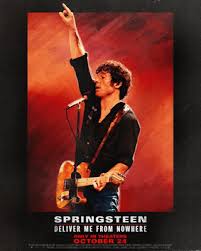
SPRINGSTEEN: DELIVER ME FROM NOWHERE
US, 2025, 120 minutes, Colour.
Jeremy Alan White, Jeremy Strong, Stephen Graham, Odessa Young, Gaby Hoffman, David Krumholz, Paul Walter Hauser, Harrison Sloan Gilbertson, Grace Gummer, Mark Maron, Matthew Anthony Pellicano Jr.
Directed by Scott Cooper.
Bruce Springsteen is a significant figure in American and world music, 20th century, 21st-century. This is a portrait of Springsteen in 1981-1982 rather than a biography, rather than an exuberant immersion in his music. That is the tone of the title, Deliver Me from Nowhere. And, in one sequence where a car salesman says to Springsteen, “I know who you are”, Springsteen replies “at least that’s one of us”.
Some background on Springsteen himself for those unfamiliar or less familiar with his life and career, courtesy of Wikipedia:
Springsteen has released 21 studio albums spanning six decades; most of his albums feature the E Street Band, his backing band since 1972. Springsteen is a pioneer of heartland rock, combining commercially successful rock with poetic, socially conscious lyrics that reflect working class American life.
And there is some Catholic background:
Springsteen attended the St. Rose of Lima Catholic School in Freehold, where he was at odds with the nuns and rebelled against the strictures imposed upon him, though some of his later music reflected a Catholic ethos and included Irish Catholic hymns with a rock music twist. In 2012, Springsteen said that it was his Catholic upbringing rather than his political ideology that most influenced his music. He said his faith gave him a "very active spiritual life" but joked that this "made it very difficult sexually" and added "once a Catholic, always a Catholic… I don't participate in my religion but I know somewhere... deep inside... I'm still on the team.”
This is very serious portrait and becomes more serious as it continues. There are black and white flashbacks to Springsteen’s childhood, a protective mother, a seriously alcoholic father, sometimes violent, demanding his son to be a man. Gaby Hoffman plays the mother and British actor, Stephen Graham (significant this year for his contribution to the series, Adolescence) is his father. But, Springsteen has the opportunity for some reconciliation with his father.
In 1981-1982, Springsteen worked in his bedroom, moved by watching the film, Badlands (1978) with Martin Sheen. It led to his reflections and a series of songs, just acoustic guitar, with very serious themes, Nebraska. And, at the same time, he composed what became something of an anthem, Born in the USA. (He is shown watching, several times, Robert Mitchum in the 1955 The Night of the Hunter, taken by his father to see it, the scenes of menace on the little boy.)
Springsteen is played effectively by Jeremy Alan White, award winner for his television series The Bear. Some have remarked that he does not look like Springsteen but, in his performance, he is able to communicate much of what drives the loner as well as the hyper-vigorous concert performances.
Supported strongly by his manager, Jon Landau, another fine performance from Jeremy Strong (Succession and frightening as Roy Cohn in The Apprentice), and by sympathetic waitress, Faye, Odessa Young, all kinds of opportunities offered to him by record companies and fans, Springsteen is often a recluse, feeling haunted many times, and an eventual acknowledgement of depression.
Which means that this film is a piece of Americana, on 20th century popular culture, an opportunity to appreciate Springsteen’s imagination and creativity, some insights into his perceptions of the US, the performance of some songs and songs in process, the American response (despite recent public condemnations of Springsteen by President Trump) rather than a concert musical.
- The title, the focus on Springsteen as a loner, depression? The experience of his loan composition of the album, Nebraska?
- Audience response to Springsteen, six decades of music, performance, public figure? Reputation, honest, medal from President Biden, criticism from President Trump?
- The film not as a concert experience although songs and performance included? The film is a portrait, flashbacks to childhood, 1981-1982, tours, composition, Nebraska, Born in the USA? Collaboration with Jon Landau? Record companies and agents, the recordings and the complications?
- Bruce Springsteen as a singer, performer, poet, creator, lyricist? And the performance by Jeremy Alan White?
- A picture of Bruce Springsteen, the New Jersey background, home life, his protective mother, going to the bar to ask his father to come home, the violence towards his mother, a to spy with his father, his father hitting him, the drinking, taking him to see The Night of the Hunter, Bruce with the baseball bat? The placing of these memories throughout the film?
- The opening concert, the energy, the performance, the exhaustion, the fans and interviews? His relationship with Jon Landau, over the years, friendship? Landau serious, knowing Springsteen’s genius, listening, advising, at home with his wife and testing ideas? Connections with the record companies, promotion, especially concerning Nebraska and the response of A whole Teller? The issue of Nebraska, the recording, the orchestra, Springsteen’s dissatisfaction, perfectionism? The mental health issues and Jon Landau’s support?
- The creation of Nebraska, watching Martin Sheen in Badlands, researching the story, the issues, resentment against society, the murders, the motivations and reactions? Is visualised? Impact, the suggestion of stories, the suggestion of songs? And the significance of the many sequences with the composing of the songs, their being played? Different from his other songs?
- At home, alone on the guitar, friendship with Mike, bringing the equipment, listening, the cassette, the limitations, the echo, Springsteen wanting this exact replication, the extent of the technicians in reproducing the sand? Then the album to be issued without name, press, promotion, tour? The scepticism of the industry?
- The episode with born in the USA, film, Paul Schrader? The composition, possessed in the performance? The promoters wanting it out there? It is being held until after Nebraska?
- Springsteen and his personal life, loner, awkward relationships, meeting the friend from school, Faye, the conversation, her being a fan, going to house, meeting her daughter, the outings, the play, his ability at being a father figure for the daughter? The merry-go-round is and all kinds of entertainment? The sexual relationship with Faye? Then his absence, not answering the phone, the conversations with Faye, leading up to her confronting him, and his leaving, her accusing him of always running away from himself?
- The issue of knowing himself or not, the quote from Flannery O’Connor about going back to the past which was not there? The car salesman and Springsteen’s response? The eventual admission of depression, going out to California, the encounter with his father, age, drink, losing his job, his mother’s concern, taking his father to hospital?
- Going to therapy, his weeping? 10 months, some recovery?
- The concert, performance, John and his support, his mother present, his father, going to see his father, the invitation to sit on his lap, the reconciliation?
- The final information, the success of Nebraska, Born in the USA, his later career – and the film over 40 years later?
Order, The
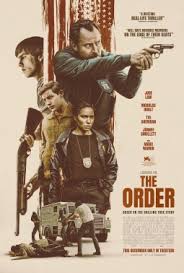
THE ORDER
US, 2024, 116 minutes, Colour.
Jude Law, Nicholas Hoult, Tyler Sheridan, Jurnee Smollett, Walter Slezak, Odessa Young Alison Oliver.
Directed by Justin Kurzel.
The events in this investigative thriller took place in the 1980s. But, a film about extreme right-wing groups in the United States in the 2020s will immediately alert audiences to the attack on the American capital, January 6th, 2021. And, in fact, at the end of the film, the link is made.
The name, The Order is taken from the 1977 novel by William L.Pierce, the Turner Diaries, seemingly intended for younger readers but something of a manual for an uprising against the state, and how it is achieved in stages. This book features in the film highlighting its influence. Already, in 1988, there was a film about these events, Betrayed, directed by Costa Gavras and featuring Tom Berenger and Debra Winger. Early in 1989, the book on which this film is based was published. Its title, The Silent Brotherhood: Inside an American Racist Conspiracy, by Kevin Flynn and Gary Gerhardt. Kevin Flynn is noted in the credit as a consultant for the film.
The film has been directed by Justin Kurzel, well noted for his crime dramas and his skill in portraying mentally and emotionally disturbed men – especially in Australia, The Snow Twown, The True Story of the Kelly Gang, Nitram (and not forgetting his Macbeth).
The framework of this story is the investigation by FBI agent, Terry Husk, a fine role for Jude Law, one of his best (his role before this one as the ageing Henry VIII in The Firebrand). He works in collaboration with an earnest young deputy, Jamie Bowen, played by Tye Sheridan, and a local agent played by Jurnee Smollett. The setting is Washington State – so much of the scenery, the mountains, filmed beautifully as background.
At the centre of the brotherhood is a young enthusiast, all-American, Bob Matthews. This is a very interesting and different performance by Nicholas Hoult who resembles closely the photos of Matthews himself, at times baby faced, an innocent despite the prejudices and violence he is spouting (scenes of his intensity in close-up looking like Nicholas Hoult more than 20 years earlier as a boy in About the Boy). The actual Bob Matthews, we find there is a strong resemblance between him and Nicholas Hoult.
Terry Husk has his own personal problems, his long career, sometimes an intense recklessness in pursuing the criminals. Matthews has the support of his wife, of his pregnant girlfriend, of a lot of the Proud Boy types of the 1980s, moving to bank robberies, explosions to distract from the robberies, a Bricks job on the highway, building up his coffers to start a militia. The screenplay also emphasises the biblical underlining of this Brotherhood, the transfer of promised land to the Jews (to be taken away from them), to the white Americans who see themselves as God’s chosen people, ready to rise up against any immoral society and a two-permitting government.
The pace is strong. The characterisation powerful. The issue is more than challenging. And, while it is a reminder of movements in the past, The Unibomber, bombings in Oklahoma, Waco… It is a sober alert to movements, beliefs, conspiracy theories in Trump’s America.
- The title, the reference to the book, The Turner Diaries, the manual for insurrections and the group called The Order?
- The film based on fact, the 1980s, the book basis for the film, The Silent Brotherhood? The popularity of white supremacist groups at this time? The Reagan era? The social standing of members of the group, white groups, the biblical basis, church preachers, neo-Nazi attitudes, the active leaders and insurrection, turning to crime to finance militias?
- The settings, Idaho, Washington state, the beauty of the mountain scenery? The city sequences, the streets, banks, porn cinema and explosions, homes, the church, the highways and robberies?
- The focus Terry Husk, Jude Law’s performance, FBI background, moving to Idaho, the phone call and the separation from his wife and daughters, his long experience, long friendship with Joanne Carney, working with her, her authority and jurisdiction, tested by Husk and his taking initiatives? The work together, investigations?
- The focus on the group, Richard Butler, as a church minister, his ideology, preaching, the Bible, white supremacist presuppositions about the land, anti-Semitic, swastikas and neo-Nazi attitudes? His meetings with Bob Matthews, the threats, Matthew standing up to him at the gathering, his withdrawing?
- Bob Matthews, his background, age, manner, relationship with his wife, relationship with his girlfriend, her pregnancy? His friends, their thug background? Interviewing the Mexican who pretended he was Spanish for racial supremacy? His hold over the men, his leadership? Later, the arrest and Husk interviewing and getting information?
- The decision to rob banks, the money, for themselves, but for funding a militias? The sequence of the robbing of the bank, intimidation, the driver and the getaway, his gun on the policeman outside, their exhilaration? Matthews and his wife and his girlfriend? The planting of the bomb in the cinema, a distraction, the robbery of the van? The bigger plans, the Brinks van, on the highway, the hold-up, cars on the highway, the chain across the road, their effectiveness, the dangers, guns and shooting, escape?
- The local police, the chief, rather more easy-going, Jamie Bowen, his earnestness, relationship with his wife, children? Giving information to Husk? Husk relying on him, going to the motel, the stakeout, the gun, Jamie freezing, Husk and his reaction? His change, becoming more involved, going into action? Husk and the interview with his wife and her fear of him? The confrontation, the shootout, the chase, Jamie shot, his death? The funeral, Husk, Jamie’s wife?
- The focus on Bob Matthews, his personality, relationships, his plans, his wife, unable to have children, the young girlfriend and the birth of the child, the money for them? Husk and his interview, getting information, the location for hide out?
- The impact of the church gathering, Butler speaking, Matthews intervening, powerful speech, bigotry?
- The hideout, the thugs, guard, the FBI attacked, the siege, the shooting? The fire, Bob Matthews staying, Husk going into the building, withdrawing, the collapse of the building, Matthews’ death?
- Husk and his achievement, Joanne Carney and her work, the regrets for the death of Jamie Bowen? The atmosphere of uprisings in the 1980s?
- The final information, the references to January 6th, the siege of the Capitol, The Proud Boys and other groups, imprisonment, President Trump pardoning them – and the future during the second Trump presidency?
