Displaying items by tag: Peter Malone's Movie Reviews
Light of the World
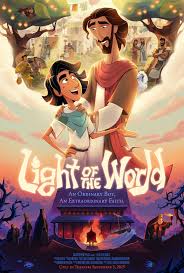
LIGHT OF THE WORLD
US, 2025, 91 minutes, Colour.
Voices of: Ian Hanlin, Benjamin Jacobson, Vincent Tong, Colin Murdoch, Jesse Inocalla, Sam Darkoh, Erin Matthews, Dave Pettitt.
Directed by Tom Bancroft, John J.Schaffer.
In John’s Gospel, Jesus is the Light of the World. Here is a Jesus’ film, animation, storytelling for the younger audiences but with an appeal to all generations.
Many classical stories have benefited by being imagined and told via animation. The basic plot is there. Central characters sometimes fascinatingly drawn, different visual vitality. And well-known events can be dramatised in a way beyond the realistic. And the same with humour…
Over the centuries there have been attempts to combine the four Gospels into a continuous narrative – not really possible! And, we remember that the events in Jesus’ life are not presented exactly chronologically in each of the Gospels, and a number of particular details differ. Which offers the opportunity for many writers and filmmakers to draw on the Gospels to create their own atmosphere, timeline, emphases on characters, highlighting different events.
And that is what the writers have done here, interestingly introducing the Gospel by a visual recap of the creation story and the sin of Adam and Eve, the need for a Messiah.
The animation style is strong and vivid, well-defined characters, generally strong features, colour, the information that one of the directors, Tom Bancroft, worked for Disney for 25 years, especially in the 90s with those strong films like Beauty and the Beast, Aladdin, The Lion King.
Animation films, especially for younger audiences, want to find a creative way to draw the audience in. We might remember that in 2024, the animation The King of Kings, based on Charles Dickens’ story, had the device of Dickens’ son entering into the biblical action. This time, the writers have chosen to focus on Zebedee and his wife, Salome, and their two sons, James, but especially, the very young, sometimes rowdy, sometimes not very practical, John.
In fact, our focus is very much on John, young boy, then teenager, trying to do good, sometimes failing, worried about Zebedees’ thinking the Messiah is a fiction, but confident in his mother’s belief and hope. He is always on the alert, takes a cue from Andrew, goes down to the Jordan to discover the Baptiser (certainly not our usual image of John the Baptist!). Which leads him to Jesus.
Jesus here is very engaging, sometimes unassuming, sometimes speaking out, tall, a strong look, and frequently, a slight whimsical smile.
Many Gospel episodes appear here arranged in in unexpectedly different order from what we might imagine (including a flashback to Cana, introducing Mary, John observing the miracle of water and wine), some go by very quickly, like Jesus blessing the bread and the indication of the feeding of the thousands. Audiences will have their favourite moments – fishing sequences on the Sea of Galilee and Jesus’ call, the special effects for the storm at sea, an unexpected young Judas, shrewd, and, particularly touching, the healing of Mary Magdalene and her saying that the voices in her head were disappearing.
The centurion is also an interesting character, an aggressive Roman, irritated by John, who has to learn to love neighbour, especially after Jesus tells the story of the Good Samaritan (the only parable in the film). His servant is healed as he observes Jesus healing. And he is at the cross.
And, the film moves towards quick scenes of the Last Supper, his agony in Gethsemane, the kiss of betrayal, Pilate’s condemnation, carrying the beam of the cross, the crucifixion – and a different approach to highlighting the reality of the resurrection, the breakfast by the lake, Mary Magdalene and the final optimism of the Ascension.
The film is quite evangelical with a post-credits invitation to the audience to make contact, scanning and on-screen QR code, if they would like further inspiration and understanding.
Life of Chuck, The
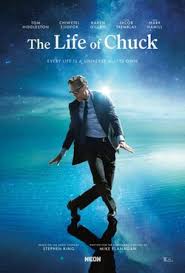
THE LIFE OF CHUCK
US, 2024, 111 minutes, Colour.
Tom Hiddleston, Jacob Tremblay, Benjamin Pajak, Chiwitel Ejiofor, Karen Gillan, Mia Sara, Carl Lumbley, Mark Hamill, David Dastmalchian, Q’Orianker Kilcher, Matthew Lillard, Taylor Franck.
Directed by Mike Flanagan.
Chuck is a very popular name, especially in the US, amiable, ordinary, your next door neighbour… So, we can expect that the life of Chuck would be nice, amiable. And, in many ways it is. But, in the eyes of America’s most prolific writer, Stephen King, always considered a master of horror stories, it could be anybody, or Anybody. Which means that Chuck is being set up as an Everyman Figure. Chuck, or a variation on him could be any of us, men or women.
Stephen King published this short story in 2020 – the initial year of the pandemic.
Writer-director, Mike Flanagan (who directed film versions of King’s Gerald’s Game, Doctor Sleep, and the fascinating Catholic-themed miniseries, Midnight Mass) has adapted the story in ways audiences who have not read the story, would be surprised. (For any audiences who intend to see Life of Chuck and knows nothing about it, best to stop here and read reviews after your own experience.)
In fact, the film tells its story in reverse, three acts. Act three starts ordinarily enough, at school, a sympathetic teacher played by Chiwitel Ejiofor. But, very soon we move into a kind of apocalyptic, end of the world scenario, news of disasters like California North lapsing into the sea, but highlighted in a suburban kind of way by the loss of Wi-Fi, interruptions to television programs, the electricity going out, sinkholes in the streets, cars abandoned, forlorn people walking home alone. All this is really alarming, but quietly communicated, especially by conversations of hapless people facing a diminishing future.
However, suddenly lit up in all the windows of houses and buildings, images of Chuck, messages of thanks for his 39 years. So, where is Stephen King going from here?
Act two steps back in time, and we meet Chuck, quiet-mannered, well dressed in his suit, an accountant at a conference, and played by Tom Hiddleston (whom many remember as Loki). In fact, this is a brief sequence in the narrative that makes an extraordinary impact: dancing in the street. A young drummer sets up her instruments in the town square, Chuck walks along, stops, looks, listens to the beat and one of the most joyous intense sequences on film follows. And Chuck is joined by a disappointed young woman whose boyfriend has suddenly cut her off. A growing crowd shares this increasing joy.
Many directors have used the theme of the Dance of Life – and this is a wonderful example.
The theme of the end of the world is put on the back burner as we go back to Chuck’s childhood, accidental death of his parents and unborn sister, cared for by his grandparents, a charmingly dancing Mia Sara, a wonderful portrait of a crabby old man, a monologue which will be valued by anybody devoted to mathematics, and played by Luke Skywalker, Mark Hamill, almost 50 years since Star Wars.
The young Chuck, a wonderful experience with the lively performance by Benjamin Pajak, grieves, listens to his grandfather, shares some mysterious ghostly experiences, but, it is revealed, at school is where he learned to dance – and a kind of prom night dance sequence which again is exhilarating.
So, who is Chuck? Could be any of us. And while he is a white American male, there is a wide range of multi--ethnic characters for multicultural experiences including the African-American drummer. And, what is Chuck’s life telling us – a quotation from Walt Whitman’s Song Of Myself he heard at school, “I contain multitudes”. So, for Every Man and Every Woman, there can be an extraordinary vitality of life. And, a realisation that life comes to an end, as the world will come to an end (in a realism aspect of this tale telling or in Chuck’s inner consciousness?).
Generally audiences have appreciated The Life of Chuck, a number of critics dismissing its sentiment and what they see as superficial observations. But, most will find the opening sequence arresting, arousing curiosity, and, as the film goes on, especially with the exuberance and dances of life, the possibilities for deeper life reflections.
- The title, expectations, Chuck as an ordinary name? Anybody? Leading to an Everyman character?
- The perspectives of Stephen King, his career, human nature, end of the world? The quote from Walt Whitman, I contain multitudes?
- The structure of the film, in reverse? The impact of the end of the world, humans facing the end of the world, the signs of thanks for Chuck? His death?
- The atmosphere of Act three, the introduction to Marty, his work at the school, students, the news of disasters, California, around the world, his talking with the parents, urging the children to school? Loss of Wi-Fi? Reading and writing? Marty at home, watching the television, communication with Felicia, their marriage, her work at the hospital, the doctor and the suicides, people deciding to go home to be with family? The long conversation with Gus and his aspirations? The conversation with Sam, reminiscing, his being revealed as working with Chuck and Albie? The many people walking home, alone, dropping their bags? The sinkhole, Marty in the car, cars parked? The contact with Felicia, wanting to be together, their love, the end of the world?
- The signs in the window, images of Chuck, messages of thanks, 39 years? The glimpse of him, his wife and son, his death?
- Act two, the explanation of Chuck, accountant, well-dressed, at the accountants’ meeting, walking along the street, Taylor, with her manager, the drums and her busking, looking at Chuck, his looking at her, the beat, the beginning of the dance, the extensive and varied choreography, the exhilaration for Chuck, the story of Janice, walking along the road, bitter, her boyfriend cutting off, invited to dance, her exuberant response, Taylor and her excitement, the crowds gathering, sharing the joy and rhythms, the money, it is one giving the gift to Janice and to Chuck, then not continuing, the dance of life?
- Act one, Chuck and his story, the accident on the ice, death of his parents, the unborn sister? Living with his grandparents? The grief? His grandmother, coming alive, the dancing, urging Chuck to dance? Albie, grief, the accountant, drinking, the locked room upstairs and his attack on Chuck? Apology? The long discourse about mathematics and its explaining everything, rationally and accurately? Urging Chuck ac to be an accountant?
- Chuck at school, short, some bullies, the encounter with Cal, the poetry teacher, the students not interested, the quotation from Walt Whitman, his song, I contain multitudes? Its meaning? The teacher’s response? The dance teacher, the lineup, her urging, the music, the range of songs and dances, illustrated (and the clip from Gene Kelly and Rita Hayworth in Cover Girl)? Chuck and his dancing skills, with Cal? Dressing up for the school evening, the teachers present, Marty and Felicia, Chuck and his reluctance, his sore leg, the teacher challenging him, going outside, his return, and the exhilaration of the dancing, the jealous boy? And the story of the scar on his hand, blaming the boy, actually jaggling it on the wire?
- Albie, going to the cupola, the ghosts and deaths, his heart attack? The funeral? The Jewish background?
- The older Chuck, discussions with Sam, his prospects, and going to the cupola, unlocking it, the contemplation? The end?
- Audience popularity, critics attacking the film, sentiment, superficial philosophising? Audiences caught up in the story, the personalities, reflections?
Sniper: The White Raven, The
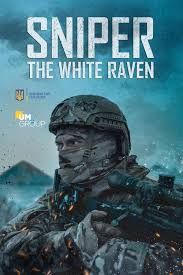
THE SNIPER: WHITE RAVEN
Ukraine, 2022, 111 minutes, Colour.
Pavlo Aldoshyn, Maryna Koshkina.
Directed by Marian Bushan
Ukraine, the Donbass region, 2014, Russian invasion, the annexation of Crimea. This film began production in 2019 with government assistance, help from military authorities and personnel and vehicles for the filming. The background to the film was the personal experience of the director and co-writer, his work as a teacher, tragedy, his enlisting, training to be a sniper, war involvement against the Russians.
The film was intended as morale-boosting for Ukraine and its interactions with Russia, reaction to Russian ambitions and annexations. However, as the film was nearing postproduction, Russia invaded Ukraine in February 2022. A scene was added to the end of the film indicating this new Russian invasion. And the film was released in July-August 2022.
This film is significant for Ukraine and the continuing conflict with Russia, certainly morale boosting during the consequent years of the war. With his story, and showing of the training of the Ukrainian volunteers, their intensity, loyalties, the involvement in battles, outwitting the Russians, attacked by the Russians, it provides vivid images of the 2020s’ realities of war for the Ukrainians. But, with the subsequent support for Ukraine, the role of President Zelinsky, issues of morale and arms support, NATO, the policies of the Biden administration, then the experience of the Trump administration, the European union of the Willing, international diplomacy, Putin meeting Trump in Alaska, issues of ceasefire, issues of disputed areas of Donbass and Donest, the film is very helpful in enabling audiences outside Ukraine to visualise what the war is like for those participating – and some consequences for the ordinary citizens.
The first part is arresting, the introduction to the couple, she pregnant, living a simple lifestyle outside the city, environment conscious. Then some scenes of him teaching in the city, and some hostile students sympathetic to the Russian influence rather than mainstream Ukrainian. But, the Russian presence, invading, the confrontation with his wife and himself at their home, culminating in the death of his wife.
The rest of the film focuses on the teacher, anger, vengeance, sadness, the burial of his wife, the Russians burning down his home, his going to volunteer for the Ukrainian Armed Forces, undergoing many sequences of rigid training, his testing to become a sniper, knowledge of guns, his abilities, being tested, succeeding. The rest of the film shows the many sequences of war, out in the open fields and troops well camouflaged, the camouflaging of vehicles, some aerial bombardments, sequences with Russian snipers and their attacks on the Ukrainians, the single mission of the teacher to confront the Russian snipers.
Which means that this part of the film is a continuous and strong close-up of war and warfare.
The screenplay is sympathetic to the teacher, a strong performance by the actor who has some physical reminders in face and manner, angry intensity, of American actor, Michael Shannon.
Towards the end of the film the action moves forward for years, fighting continuing, the time of preparation for the filming of this story.
And, finally, a small epilogue, February 2022.
Commentary on the quality of the film is mixed, some, even some Ukrainians, critical of the filmmaking, of the incorporation of what they call stereotypical tropes of war films, and some accusations of bias. However, bias is not quite the word. This is a very strong film on the part of Ukrainians to dramatise their war experience and conflict with Russia and Russian invasion. To that extent, the film serves as a plea to the rest of the world.
Do-Over, The

THE DO-OVER
US, 2016, 108 minutes, Colour.
Adam Sandler, David Spade, Paula Patton, Kathryn Hahn, Nick Swardson, Matt Walsh, Renée Taylor, Sean Astin, Natasha Leggerp, Luis Guzman, Michael Chiklis, Torsten Voges. Jackie Sandler.
Directed by Steven Brill.
An Adam Sandler comedy, 20 years after Happy Gilmore. By this stage, Adam Sandler had consolidated his reputation and career in comedy as well as several serious roles for which she was praised, Anger Management, Punch Drunk Love. This was a collaboration with Netflix and from that time his company provided a succession of comedies, some serious dramas (Uncut Gems), the Murder Mystery series…
If this was the first Adam Sandler film that anyone saw, it would be most probable that they would never want to see another. Devotees of this film might find a lot to amuse. However, most audiences would be put off. There is an element of plot here, two men, one ill, the other henpecked, renew the friendship from school days and decide that they will take on the identities of two other characters and live a comfortable life. Basically, they do did this but, unfortunately for them, the characters they assume were involved in all kinds of financial swindles and violence.
One of the difficulties with this film is that the Adam Sandler character is minimally sympathetic – more sympathy for the David Spade character. And, there is quite a crassness about the character development, aspects of behaviour, some gross sexuality, incessant course language and profanities, not necessary and quite offputting.
While there are some moments of Sandler talent, and, eventually, a certain amount of sympathy for his illness, and, of course, quite a twist in the financial and violent drama it is not enough to satisfy an audience, an audience with some good taste and standards.
Idaho Student Murders, The
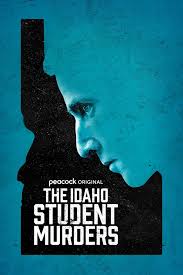
THE IDAHO STUDENT MURDERS
US, 2025, 90 minutes, Colour.
Directed by Catherine Park.
In Moscow, Idaho, the University campus, four students were stabbed to death in November 2022.
The first part of this crime documentary focuses on the victims, establishing them as persons, personalities, their characters, likability, their family families and friends. The device is having four girls, close friends of the victims, sitting at a table, being interviewed about the friendship, tearfully sometimes, smiling at other times, bringing their dead friends to life. There are many photos, there are many video clips, a lot of tick-tock photography, and many close-ups of the four victims, very attractive in their appearance and personalities, sympathetic to the audience.
The next part of the film focuses on the initial investigations, indications, footage of a car circling the apartment block where the murders took place, the finding of a knife she is and the exploration of DNA and connections.
There are quite a number of experts who speak to camera, giving explanations of procedures, the defence lawyer questioning some of the evidence and its reliability, the prosecuting lawyer highlighting the importance of evidence and procedures. There are some criminologists interviewed, journalists covering the case, and a former FBI agent elaborating on procedures.
What follows then is the focus on the chief suspect, from Pennsylvania, studying at the University of Washington, studying criminology. The mysterious car is linked to him. There are interviews with his family. Gradually there is a buildup of his family background, tensions, his personality, his being bullied at school, his exercise in reducing his weight, some heroine addiction back recovery, his going to study criminology.
Once again, there is video material from his past, quite a number of photos, the camera dwelling on them, especially in close-up. He is named, a number of witnesses talking about him and his personality and life, his studies.
He is arrested, charged, pleading not guilty.
There are some sequences at the beginning of 2025, especially with the brother of one of the murdered women, and his discussing with a pod cast are who specialises in crime and who has been interviewed throughout the film, especially with her investigations and her pod casts.
The film and suddenly with, in 2025, the accused pleading guilty.
Tel Aviv on Fire
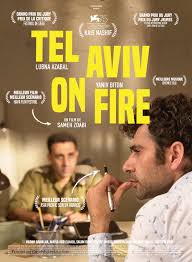
TEL AVIV ON FIRE
Israel/Luxembourg , 2018, 100 minutes, Colour.
Kais Nashif, Lubna Azabal, Yaniv Biton, Nadim Sawalha.
Directed by Sameh Zoabi.
Somebody remarked that this was a soap opera about a soap opera. It is an Israeli production but was filmed in Sound Studios in Luxembourg and was nominated for consideration for the Academy Award by Luxembourg.
The film is very much for an Israeli audience, for an Arab audience. The setting for the television program, Tel Aviv on Fire, a month prior to the set Six Day War of 1967, a spy, to be played by an imported actress from Paris, and her lover, his getting her a different identity card, her working for an Israeli general, to seduce him and get his secrets.
However, though there are financial backers, the series is being written on the run, an elderly uncle using and drawing plotlines from American movies like The Maltese Falcon and Hitchcock’s notorious. His nephew, rather a sad sack type in love with a nurse from the hospital, is employed because of his knowledge of Hebrew for those aspects of the dialogue. The jokes about translation will be lost on those who don’t speak Hebrew.
In fact, much of the atmosphere of the comedy will be lost on audiences outside Israel and Palestine, very topical, farcical situations but also some very serious situations.
The best part of the comedy is that the nephew is held up at a checkpoint (and visitors to Israel will be familiar with the brusque and sometimes brutal behaviour of the soldiers at checkpoints with their guns) and is interrogated by the official whose wife is a great fan of the television series. What happens is that the official becomes very interested, contributing plot developments in character, doing deals with the writer, demanding a wedding at the end, the writer bringing him boxes of hummus.
Then, there are the discussions with the uncle, with the financial backers, with the main screenwriter, with the French actress who has a tantrum when her character suddenly develops cancer and wants to return to France, the timing, the discussions, some of the preposterous ideas, the Israeli official wanting a wedding, taking the writers identity card to have a hold over him…
The film was released in 2018, after the earlier intifada but before the tragic events of 2023 and the home us massacre of Israelis and the consequent horrors of the war and attack on Gaza and the consequent family.
(All the bloggers on IMDb a very favourable – reviewers outside Israel and Palestine, not so.)
Get Away
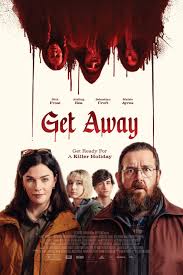
GET AWAY
UK/Finland, 2024, 86 minutes, Colour.
Nick Frost, Aisling Bea, Sebastian Croft, Maisie Ayres, Ville Virtanen, Anitta Suikkari.
Directed by Steffen Haars.
An English family decide on holiday, a getaway, in Sweden. However, this is a British-Finnish co-production, filmed in Finland and with the supporting cast all from Finland!
The British family is fairly conventional, the jovial Nick Frost as the father, Aisling Bea as the enthusiastic mother who finds he has a connection with old Swedish history, and their two children, young adults, typical enough, quarrelling, then working together to defend the family.
The setting is an island where there is a celebration every year, especially with an eight hour performance of a historical event with the British conquering the island, the Islanders giving them gifts, then turning on them and massacring them.
While the family enjoy their holiday, there are all kinds of developments with the characters on the island, especially a ferocious old woman who stirs up the community. There is the host of the B&B where the family are staying who has television surveillance. There is a young man in the store who wants the family to go. And there is a detective from the mainland.
So, a lot of atmosphere, the celebration, the performance.
And, then it all goes berserk as the family lets loose on the Islanders, a massacring, blood and gore.
The screenplay was written by Nick Frost who also worked with Simon Pegg, more successfully, on Shaun of the Dead. Hot Fuzz, The End of the World.
Enthusiasts have enjoyed the film – many have found it ultimately too gory and the switch in attitudes of the family and their relishing the massacre far from credible except in the mind of the screenwriter.
Relay
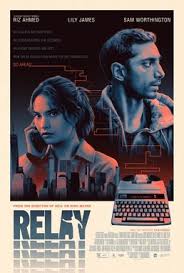
RELAY
US, 2024, 112 minutes, Colour.
Riz Ahmed, Lily James, Sam Worthington, Willa Fitzgerald, Jarad Abrahamson, Pun Bandhu, Elsa Davis, Victor Garber.
Directed by David Mackenzie.
For most of the time, this is one of those paranoid thrillers that were popular decades ago, industrial espionage, technological surveillance, threats, dangers, counter surveillance.
The setting is New York. The issue is a big company, food company, working on developments but finding debilitating side-effects in their products, concealing the documentation. And these situations which lead to conscientious whistleblowers, pursuit of the whistleblowers, the recovery of documents.
In this case, the whistleblower is Sarah Grant, played by Lily James, in hiding, with documents, menaced by the company’s agents, taken on by a mysterious personality, a broker (the original name for this film). He is played very effectively by Riz Ahmed, able to live a shadowy existence, master of disguise, unobtrusively infiltrating situations. And, significantly, his mode of communication with Sarah Grant as well as her pursuers, is via at tri-state communication system, Relay.
With Relay, messages are typed for the central exchange and then voiced to the recipient by the staff. This is a method used for hearing impaired people. It also offers an opportunity for voice disguise and identity anonymity.
The group of pursuers is led by Sam Worthington. (Interesting that this New York story is directed by Scottish David Mackenzie and the two leads are British and Sam Worthington, born in England, growing up in Australia.)
What brings some humanity to the film is a gradual revelation of the broker’s story, Muslim background, New York City, 9/11, work on Wall Street, business exposes and his becoming a freelancer broker. But, the way this is revealed is through his attending of AA meetings, bringing some more personal depth to his character.
And, as might be expected, there is a twist in the drama. For this reviewer, the twist was too much, throwing too much doubt on the “realism” credibility of all that we had seen previously. And, while weapons previously were verbal threats and challenges by Relay, the culmination brings us to guns and knives, desperate chases…
Some have relished the dynamism of the story and for most of the film this is quite strong Others have found the twist and its consequences too much.
- The original title, The Broker, and the focus on –? The film title and the focus on the communication system, tri-state, for hearing impaired, for voice disguising? Its use throughout the film?
- The New York settings, the city, apartment blocks, the streets, offices, Grand Central station, since in Poughkeepsie? The musical score?
- The initial situation, setting the tone? Hoffman, the meeting with McVie, with Ash? Documents, payments, at the train station? The introduction to Ash?
- The new situation, Sarah Grant, the company, third development and experimentation, concealing failures in research, whistleblower, needing protection? Her presence, her character, communication with Ash via Relay? Her speaking, “Go ahead”? The quibble about “all right”? Her isolation, needing protection, the documents?
- The character of Ash, seeming loner, a lonely life, the importance of the AA meetings, the discussions with Wash? After the meetings? The later meetings and his revelation about himself, Muslim, in New York, 9/11, his drinking, Wall Street, his tasks, broker and cover-ups? The explanation of himself, his personality?
- The dealings with Sarah, the relay calls, his watching her, his various disguises? Her vulnerability, alone, jogging?
- The corporations group, their personalities, working together, pursuit, the van, the phone calls through Relay?
- The details of the plans for the documents, Ash and his cupboard, using US Post, the details, forwarding, collecting them? The news about the missing pages, Sara apologising, her mistake? The plan to put them in the newspaper, the group watching, the false tracking, photos and the use of many cameras, identifying Ash?
- The plans for the money, sent to California, to be forwarded to Poughkeepsie? The plan is to save Sarah? Her being taken by the group, the Schubert concerto, Ash pulling the alarm, the escape?
- The twist in the plot, credible or not? Undermining the realism of everything that had gone before, especially Sarah’s character and performance? The extreme detail in presenting the pursuit and finding the truth about it?
- The shift from menace, paranoia, phones and cameras, Relay? The van, the tasers, guns, capitation his escape, the running, wounded? His previous phone call to Wash, the police arriving, the arrests?
- The credibility of Sarah, the situation, the reality, her harsh toughness after the seeming romance?
- Audience interest in this kind of thriller, espionage, psychology – but how much affected by the final twist and the ending?
Irena's Vow
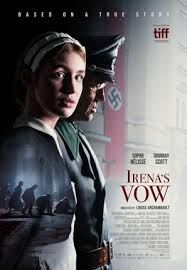
IRENA’S VOW
Canada/Poland, 2024, 121 minutes, Colour.
Sophie Nelisse, Dougray Scott, Andrzej Seweryn, Maciej Nawrocjki.
Directed by Louise Archambault.
There is always a place for significant dramas from World War II, especially those stories of hiding and sheltering persecuted Jews. The Diary of Anne Frank has stood out over the many decades. A fine Polish film, recommended, is the 2009 The Courageous Heart of Irena Sandler: The story of Irena, a social worker who was part of the Polish underground during World War II and was arrested by the Nazis for saving the lives of nearly 2,500 Jewish children by smuggling them out of the Warsaw ghetto.
Irena’s vow is also set in Poland. And she shares her Christian name with Irena Sendler.
Irena is a young trainee nurse when her hospital is bombed as the Germans invade Poland, 1939. The film emphasises that she is a Catholic, seen at Mass, Communion brutally interrupted by the German military, Irena picked out from the congregation to go to work in a munitions factory. A sympathetic supervisor transfers her to to supervise a group of 11 Jews, professionals who are now employed in sewing and mending for the invaders and their servants.
The film has some graphic moments about the treatment of the Poles by the Germans, especially an abhorrent moment with the brutal death of a baby and its mother, the occasion for the horrified Irena to vow that she will try to save lives.
The main part of the film is her being appointed, because of her skills in cooking and waiting tables, to be the housekeeper for an arrogant German official, played by Dougray Scott. Even though she is only about 20, Irena, played with strength and sensitivity by Sophie Neilsse, is enormously enterprising in being able to save and conceal the 11 Jews in the cellar of the mansion where she manages. And, some humorous relief as they help her surreptitiously with cooking and serving banquets, cleaning the house, always unbeknown to the official.
Of moral interest, over and above the saving of the Jews, are two issues. One of the Jewish women becomes pregnant and there is discussion about an abortion so that the group may remain hidden safely – Irena, drawing on her faith, speaks very strongly for the preserving of the baby’s life. Later, when the official discovers that there are some Jews hiding in his cellar, he is afraid for his career but also then professes love for her Irena, pressurising her to become his mistress to save the Jews.
These issues are always a challenge to audiences and they are dramatised here very strongly.
As with so many films based on true stories, the final credits give a lot of information as to what happened not only to Irena (imprisoned by the Soviets for collaboration with the Germans but then escaping with a false passport) but to the various Jewish prisoners whom the audience has got to know quite well, and her meeting decades later with the baby born in captivity.
Yes, we have seen this kind of story many times before – but, as with this one, they are all worth seeing and reflecting on.
- A true story? The sheltering of Jews in World War II? Poland? (The final information about all the characters, their surviving and subsequent lives?)
- A Canadian production, Polish production? Film and in Poland? Canadian leading lady, Scottish leading actor? The rest of the cast Polish?
- The Polish settings, 1939, throughout the war, Warsaw, the German invasion, bombs, the persecution of the Poles, German occupation, the threats to the Jews? The poles as servants? The market sequences, the lavish mansion and the interiors? The cellar?
- Irena, her age, working in the hospital, the bonds, searching for her mother’s house, lost, the story of her parents, her lively mother, her sisters, losing them? Her going to church, the Catholic background, Mass, the priest, the communion, the communion being interrupted and the congregation being ousted? Being rounded up, the back of the truck, her being chosen? Working in the munitions factory, her collapse? The sympathetic Mr Shultz? Transferring her, cooking in kitchen duties, serving?
- Her work in the kitchen, going to the market, buying the food, the upsets in the street, the German offices, brutality, the episode with the mother and baby, the officer trampling the baby, shooting the mother, the effect on Irena, had vow to save lives?
- The personalities of the officers, audience response to the German occupation, to the SS and their behaviour? The offices in the streets and treatment of the people, the contrast at headquarters, the meals, the lifestyle, joking, camaraderie, Christmas in singing? The focus on Rokita, young, blonde, dairy and, superior, his brutality, callous attitudes, with the women, at the busy though? (And the final information that he survived and was not found guilty?)
- , His personality, managing the factory, his role, German attitudes, conscious of rank? His being given the mansion, the attraction to Irena, offering her the job? To reorganise the house, to supervise the restoration? The transformation? Is living there, living alone, hosting the lavish parties, appreciative of Irena’s work, regularity of life, the chauffeur, to work?
- Irena, working with the Jews, their tailoring work, meeting them, their introductions, explanations of their careers, husbands and wives, the separation from families, professionals? The coming deadline, for the roundup of the Jews, the dates and the renovation of the mansion?
- Irena is decisions, dangers, her courage, the transfer of the Jews from the tailor workshop, getting them into the house, hiding them? Next day, the transferred to the cellar, the finding the passageway, the large secret room built by the Jewish owners? There transferring their, setting up their life, Irena and newspapers, cards, food and supplies?
- The sequence of their helping with the preparation for the banquet, lavish banquet and its success? The later helping with the cleaning of the house?
- The personalities of the group of Jews, the women, the pregnant woman, her cough, some strong stances? The men, their various occupations? The woman from the market, watching, shielding the Jew, transferring him to the shelter in the mansion?
- The note at the door, the blackmail threat, the issue of secrecy, the solution of cutting off the address to Irena, showing the major, his reaction, phoning his contacts, the personal insult, Irena taking the money, her screen when touched by accident, the police, the rest of the blackmailer, his being shot?
- The abortion issue, life, or the threat to the lives of the whole group? Irena, a religious Catholic background, her affirmation of life, the mother, the group accepting this?
- The continued dangers, the major, coming home early and seeing the three women, his approach to Irena, protecting her, his attraction, the sexual arrangement, her being criticised and mocked in the market? The moral decision, to save the Jews, Irena not telling him of the number of the whole group?
- The complaints to Berlin about the major, his relationship with Irena, his being recalled? His planning for her to take the Jews to the forest, the vehicle? Their disguise in the vehicle, the joke as they passed the guard, free in the forests, the partisans, the saving of the Jews, the farewell?
- The focus on the face of Irena, after the war, imprisoned by the Soviets, the friends getting her the passport – and her later story and freedom? Her meeting the son who was born in captivity, her long life? Her achievement? Symbolic of those who saved and protected the Jews?
Mack & Rita

MACK & RITA
US, 2022, 94 minutes, Colour.
Diane Keaton, Elizabeth Lail, Taylour Paige, Loretta Devine, Dustin Milligan, Lois Smith, Simon Rex. Voice of Martin Short.
Directed by Katie Aselton.
This is very much a “Girls Night Out” movie. It features the central character as a young girl, as a young adult, and her 70-year old self. A night out for all the girl generations. (There are a couple of male characters, one romantic, the other something of a magician – and the voice of Martin Short as the heroine’s dog!).
The central character, Mack, seen as a little girl enjoying life with her grandmother, then thirtysomething, an author, a best friend, pestering agent, the friend next door. The main point of the story is one of those identity changes – this time not someone into someone else’s body but rather the central character ageing, from 30 to 70, and finishing up in the form of an exuberant Diane Keaton, channelling something of what Annie Hall might have been at 70!
Lots of misunderstandings, the 70-year-old pretending to be the 30 year old’s aunt Rita, nice encounters with the man next door, search for the magician who was able to transform Mack into Rita, some occasions with all the girlfriends for a wedding shower, and lots of friendly chats with the exuberant older ladies who include Lois Smith and Loretta Devine.
Reviews were not very kind to this film – and, of all things, a Razzie nomination for worst actress for Diane Keaton.
So, it could be said that potential audiences were warned or advised!
