Displaying items by tag: Vincent Lacoste
Vie Privee/ Private Life
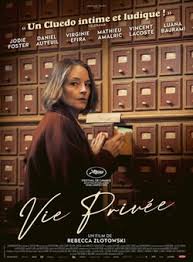
VIE PRIVEE/ A PRIVATE LIFE
France, 2025, 109 minutes, Colour.
Jodie Foster, Daniel Auteuil, Virginie Efira, Mathieu Amalric, Vincent Lacoste, Luana Bajrami, Noam Morgensztern, Sophie Guillemin, Frederick Wiseman, Aurore Clement, Irene Jacob, Park Ji-min.
Directed by Rebecca Zlowtoski.
Jodie Foster, very American in her award-winning career for over 50 years, nevertheless had quite an education in French and has appeared previously in French films. Here is a star vehicle for her, working along some of the most prominent of contemporary French actors.
She is Lillian, divorced from a Frenchman, and eye-doctor, Gabriel (Daniel Auteuil) with a son she does not communicate well with who is married with a baby son (Vincent Lacoste). She is a psychiatrist, quite a clientele, working with some of her patients for many years – and glimpses of her at work, with an angry client who wanted to give up smoking and failed after so many years and has gone to see a hypnotist with an instant cure and he wants his money back! So, serious themes with touches of humour.
But, she is visit by the daughter of one her long-term clients with the news that her mother has died. Lillian goes to the memorial but is angrily rejected by the dead woman’s husband (Mathieu Amalric), her being blamed for the death which turns out to be a suicide.
Which means then that the film turns into something of a detective story, Lillian worried about the suicide, coming to the conclusion that it was really murder, suspicions on the husband, and then the erratic behaviour of the daughter. And she enlists her genial ex-husband to help her find evidence. Thedead woman, Paula (Virginie Efira) appears in flashbacks.
At one stage, Lillian also visits the hypnotist because she has started to weep cannot prevent the tears. The therapy includes quite a startling episode, imagining a former life, 1942, Lillian with the dead woman, musicians in Orchestra, the husband the conductor drawing a gun, and the police arriving, led by her son. Which seems to indicate that Lillian herself is in serious need of some kind of therapy.
While Jodie Foster is a strong screen presence, her character here is rather superior in the American way, sometimes alienating the other characters and, sometimes, the audience.
With all the investigations, the complexity of relationships, and, it should be mentioned, strong Jewish background, there are many threads to be followed. With its complexity, the temptation is to say that it is all very much psychologised or, more accurately, psychiatrised.
- The title? For Lillian and, for Paula, the other characters?
- The French setting, atmosphere, psychiatrists, opticians, the range of clients, sessions? Background, apartments, restaurants, the home invasion, the countryside? The musical score?
- The film’s perspective on psychiatrists, their patients, years in sessions, effective, not effective, listening, hypnosis, special techniques? Psychiatrists and their personal life interfering with their practice?
- Lillian, American, American superiority, her skills as a psychiatrist, interactions with her patients, the patient and smoking, hypnosis, wanting his money back? The sketches of other clients and their talking, on the couch? Lillian and her life, marriage to Gabriel, her professional work, the separation, her relationship with her son, the grandchild, offhand? Superior?
- Valerie, the visit, Paula’s death, Lillian going to the wake, Jewish ceremony, Simon and his hostility, ousting Lillian? Valerie explaining the suicide? Lillian and the long years of therapy, the relationship with Paula? Not listening to her final tape? Suspicions, the psychiatrist mind, questioning, suspecting Valerie and her motivations, suspecting Simon, the visit to the funeral, his hostility, the decision to go with Gabriel to find the stolen tape? His coming to her office, making her lie down, his speech explaining the situation, all, Paula, choosing him as the father of her child, the death of the hunt?
- Paula, seen in flashbacks, character, relationship to Simon, relationship to Valerie, the long years of therapy, her aunt and the death, the issue of the medication, ending her suffering, the repercussions, her suicide? Or murdered by her daughter, Simon using the medication to kill her?
- Gabriel, working with eyes, love for Lillian, the marriage, the separation, her going to him for advice, her weeping, the meetings, the meals, the friendship and response, going to Simon’s house, pretending to be out of petrol, the aftermath?
- The ransacking of the office, the stealing of the tapes, and a confession of the patient with the smoking problem, apology?
- Lillian going to see her son, the technical issues, her using old-fashioned tapes, her set? Difficulties with her son, the glimpse and her grandchild? The later visit, the apologies? Her daughter-in-law?
- Going to see the hypnotist, the session, going to the imagination, a past life, the war, the orchestra, relationship with Paula, Simon is the conductor, her son as the military presence? Her escaping? The hypnotist, not wanting to see her again, Lillian listening to the tape, the imagination?
- The resolution of the issues, Lillian and her problems, needing some kind of therapy, the contribution of all of the characters? And peaceful ending with the family?
Lyceen, Le/ Winter Boy
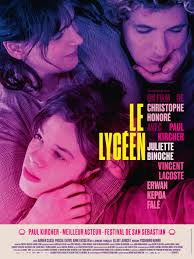
LE LYCEEN/ WINTER BOY
France, 2022, 122 minutes, Colour.
Paul Kircher, Vincent Lacoste, Juliette Binoche, Erwan Kepoa Fale.
Directed by Christophe Honore.
Christophe Honore has written and directed a number of films which are emotional dramas, films about identity, relationships, sexual orientation. This is one of his later films but dramatising the same themes.
The English title does not translate accurately the French title which simply means High School Student. And the central character, Lucas, aged 17, is at high school, a boarding school. Lucas is played by Paul Kircher who won a number of awards for this performance.
Lucas bonds strongly with his devoted mother, another fine performance from Juliette Binoche. His somewhat distant from his father, played by Christophe Honore himself, a man who does reach out to his son but is soon killed in an accident on an open road, raising the question of whether it was an accident or deliberate on the part of the father.
These are some of the grief questions that haunt the film. There is also an older brother, Quentin, Vincent Lacoste, an artist who lives and works in Paris.
One night at boarding school, a teacher wakes Lucas with the news of his father’s accident and is taken to the hospital where the extended family has gathered. From here, the drama highlights how the mother and her two sons respond to the situation, the details of their grief, and the effect of the grief on each other.
And a key issue for Lucas is that he is gay. He says he has known this since he was eight or nine and that his father knew this and was disappointed in him, grating a feeling that his father did not like him and that Lucas wanted him to – and Quentin continually tries to reassure him. Honore dramatises Lucas as in no way confused about his orientation, certainly uninhibited in his behaviour – and there are some explicit sexual encounter scenes.
Quentin decides that Lucas should come to stay in Paris with him, opening Lucas’s eyes to the city, but also some encounters, with Quentin’s art associate friend, Lillio, which leads to some unexpected aspects of the gay issue. But, Lucas also goes to a church, meets a sympathetic priest, looks at some of the baroque paintings of Jesus and the passion, Lucas is honest with the priest asking what resurrection means and the priest giving a credible brief explanation about risen life, new life and hope. This makes an impact on Lucas even though this is an isolated religious sequence.
Honore uses the device of Lucas talking and reviewing his life and emotions straight to camera, a kind of explanation of himself to his father and to the audience. And, at the end, his mother, also addressing his father, talks about the effect of all this experience on herself which enables her to come to terms with her grief and resume her life teaching at a school.
The film is well acted and draws the audience into the lives of these characters, sometimes sympathetically, sometimes provocatively, sometimes with edge. But, this is what life is like. The director acknowledges sadness but also indicates hope.
- The literal title, High School Student? The emphasis on age, the boy at school, his coping with the crises in his life?
- The setting, the countryside, the town, homes, travel along the roads? The boarding school, corridors and rooms? The contrast with Paris, the apartment, streets and buildings, the atmosphere of Paris? The musical score, the songs and their significance, performance, lyrics, by Lollio, by Lucas?
- Time shifts, the focus in the present, the flashbacks to sequences with the father and husband, the interspersing of the action with Lucas speaking to camera, or to his father, explaining himself? Isabelle and her talking to camera, confiding in her husband and his continuing presence?
- The bond between Lucas and his mother, driving, his moods, nonchalant, withdrawn? Life at school, his relationship with Oscar, horseplay at the school, the later sequence of the sexual relationship?
- Lucas as a gay character, his accepting it, taking it for granted from the age of eight, his father recognising it, his reaction to his father’s disapproval? Wanting his father’s approval? The relationship with Oscar but non-commitment? His brother aware of his situation? His mother not making any reference? In Paris, the initial encounter with Lillio and the attraction, interest, discovering Lillio and the paid sexual encounter? Lucas and his contact with the young man in Paris and the sexual encounter and discussion?
- The visit to the church, questioning of the priest about the resurrection, the police explanation, new life and hope? The insertion of this religious dimension into the narrative?
- Lucas, his age, attitude towards school, no plans for his future? At night, the teacher coming with the news of his father in hospital, going to the hospital, the extended family gathering, discovery of the truth, his mother upset because she wanted to tell him? The film’s focus on the aftermath of the death and its impact, on Isabelle, on Quentin and his grief and sometimes weeping, on Lucas, disoriented, wanting his father, wanting his father’s approval? Disturbed?
- The decision to go to Paris, the apartment, Quentin and his art, his girlfriend, the curator’s visit, getting upset with Lucas, getting him up, the bed, breakfast, sending him out, giving him the money? Quentin and his friendship with, Lillio, the meeting with the artist, her implying that Lillio was anti-Semitic, the aftermath? Quentin and his reaction to Lucas being with the paying man? Wanting him to go back home?
- With Lillio, the attraction, the discussions, the visit with his mother, her strong-minded opinions, Lillio and the song, the aftermath?
- Lucas, depression, sitting, watching, slitting his wrists, in the institution, his mother and the care, not speaking, therapy, the Christmas visit, the meal, Quentin and the desert, the happy atmosphere? Lillio’s visit, their going on the run, Lucas leaving him at the station? His mother, her joy, his speaking?
- Isabelle, going back to school, talking to camera and her husband, the basketball, going back to some kind of normal and ability to cope with grief? The good news to Quentin about Lucas speaking?
- Lucas, running, greater self acceptance, possibilities for his future?
Beating Hearts/ Amour Ouf
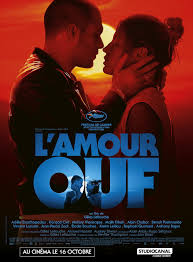
BEATING HEARTS/ L'AMOUR OUF
France, 2024, 166 minutes, Colour.
Adele Exarchopoulos, François Civil, Malik Frikah, Mallory Wanecque, Alain Chabat, Benoit Poelvoorde, Vincent Lacoste, Anthony Bajon, Elodie Bouchez.
Directed by Gilles Lelouche.
Phew Love.
An unexpected beginning to a review. However, Google tells us that this is the English translation for the French title, Amour Ouf. The English title of Beating Hearts sounds more respectable, rather highlighting the nature of the love between a young man who is afflicted with the name, often mocked, of Clotaire, and Jacqueline, always called Jackie, who live in an industrial city in France.
This is a very long film, 2 ¾ hours, immersing the audience in the atmosphere of the town, the neighbourhoods, factories, the port, crowded homes, violence in schools, the 1970s and 1980s.
The first half of the film introduces us to these two central characters, very striking performances from Malik Frikah as Clotaire and Mallory Wanecaue as Jackie. Even at home, when very young, Clotaire imposes himself on everyone around him, his impatient factory working father, his mother, the siblings. Jackie, on the other hand, has lost her mother in a sudden car crash, lives with her earnest father who wants only the best for her. While Clotaire throws his weight around at school, tough with fists, tough with language, he is attracted to the young girl and she to him, some very romantic sequences, dancing, comfortable together, beating hearts.
Music is a very important part of the film, the songs of the period playing throughout the whole film, popular, memories for audiences, significant lyrics.
But, this is also a crime story, Clotaire and his friends, gradually getting caught up in a world of drug dealing, rivalries, gangs, violence, bosses appreciating Clotaire’s carefree and violent talents. Many French writers and directors enjoy making action crime films. Director, Gilles Lelouche, prominent star in French cinema for many decades, has appeared in several of these films and energises the action here in an elaborate heist sequence during the protest by sacked workers at the port, an eruption of violence and Clotaire going to prison.
As something of a balance to Clotaire’s story, there is a focus on the interaction between Jackie and her father, his constant concern for her, the ups and downs of her crises, reacting against his protection but always going back to him for support, love and advice.
The second half of the film has Jackie, not allowed to visit clutter in prison, encountering an up-and-coming businessman, Jeffrey (Vincent Lacoste) fending him off, marrying him, yet, we might say, her heart definitely not beating for him. And then Clotaire gets out of prison. He seems subdued, and for a moment, we hope that his life has changed. But, there is the issue of taking a fall for others and seeds of revenge kindled.
The adult Clotaire and Jackie are played by starts Adele Exarchopoulos and Francois Civil.
So, after such a long time sharing the beating hearts of Clotaire and Jackie, how can it possibly end? As with the words of the French title, Phew Love.
- The tone of the original title, Phew Love, a mad love? The contrast with the serious intensity of the French title?
- The impact of the film as a whole, the long running time, the storytelling over decades? The social context, the romance, crime and punishment? The skill of the director and his experience in acting?
- The end of the 20th century, the final decades? Friends and its issues? The northern town, industrial, the port? The poorer neighbourhoods? Schools? Families? Homes? Deals, criminality? Drugs? Bosses, gangs and rivalries?
- The focus on Clotaire, within the family, his dominance of the of the children, his personality, clashes with his father, the role of his mother? Going up, the team, dominant, extroverted, violent, clashes with students, his range of friends, the going together, the criminal side, the gangs, the encounter with the bosses, doing deals, confronting bosses, the violence, Clotaire’s standing up to them, ingratiating himself, becoming part of the gang, proving himself to the boss and his liking him, the boss’s son?
- The plan for the big heist, the background of the industry, the port, the sacking of the workers, including Clotaire’s father, the consequences? The decision for the robbery during the protest at the port? The group, interactions, the plan, the containers, the trucks, the robbery? The security guards, the gun, the boss’s son shooting the guard dead? Clotaire trying to revive him? The escape? The police? The arrests?
- Clotaire, the implications that he was the murderer, his lawyer, ineffectual, his becoming the victim? 10 years imprisonment?
- The romance story, introduction to Jackie, the death of her mother, her relationship with her father, her studies, competence, intrigued by Clotaire sequences together, the dancing, romance, her highly emotional involvement, ups and downs emotionally, her father, his character, expectations, trying to help his daughter, her variety of moods? Clotaire and his imprisonment? His not allowing her to visit him?
- The 10 years passing, the effect on Clotaire, seemingly calm, out of prison, with his family again, the support of his mother, relationship with his brother? Finding his black friend again? And his friend being killed? His looking for Jackie, the visit to her father, the father protecting his daughter? The possibilities for clarity, a different life?
- The seeds of revenge, going to see the boss, his age, decline, explanations of his shielding his son, letting Clotaire take all the blame? The visit of the son, his prosperity, arrogance, drug deals, the club? Clotaire and his friends, the confrontation with the son, shootout?
- Jackie’s story, not seeing Clotaire for 10 years, Jeffery, her work, slack, her offhanded manner with him, his response, proposal, the marriage? The tensions within the marriage, her pining for Clotaire, his travels, suspicions, confronting her?
- The impact of the opening sequence, the older Clotaire, his gang, the raid, the confrontations, the shootout? This sequence occurring again, but with a different ending, Clotaire’s moving away?
- Jackie, the phone, the confrontation with Geoffrey, Clotaire and Jeffrey, Jackie and her love?
- The future, Clotaire and his vengeance of violence,, the relationship and Jackie?
