Displaying items by tag: Daniel Auteuil
Vie Privee/ Private Life
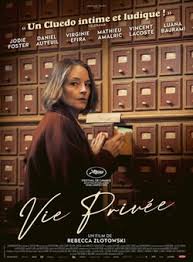
VIE PRIVEE/ A PRIVATE LIFE
France, 2025, 109 minutes, Colour.
Jodie Foster, Daniel Auteuil, Virginie Efira, Mathieu Amalric, Vincent Lacoste, Luana Bajrami, Noam Morgensztern, Sophie Guillemin, Frederick Wiseman, Aurore Clement, Irene Jacob, Park Ji-min.
Directed by Rebecca Zlowtoski.
Jodie Foster, very American in her award-winning career for over 50 years, nevertheless had quite an education in French and has appeared previously in French films. Here is a star vehicle for her, working along some of the most prominent of contemporary French actors.
She is Lillian, divorced from a Frenchman, and eye-doctor, Gabriel (Daniel Auteuil) with a son she does not communicate well with who is married with a baby son (Vincent Lacoste). She is a psychiatrist, quite a clientele, working with some of her patients for many years – and glimpses of her at work, with an angry client who wanted to give up smoking and failed after so many years and has gone to see a hypnotist with an instant cure and he wants his money back! So, serious themes with touches of humour.
But, she is visit by the daughter of one her long-term clients with the news that her mother has died. Lillian goes to the memorial but is angrily rejected by the dead woman’s husband (Mathieu Amalric), her being blamed for the death which turns out to be a suicide.
Which means then that the film turns into something of a detective story, Lillian worried about the suicide, coming to the conclusion that it was really murder, suspicions on the husband, and then the erratic behaviour of the daughter. And she enlists her genial ex-husband to help her find evidence. Thedead woman, Paula (Virginie Efira) appears in flashbacks.
At one stage, Lillian also visits the hypnotist because she has started to weep cannot prevent the tears. The therapy includes quite a startling episode, imagining a former life, 1942, Lillian with the dead woman, musicians in Orchestra, the husband the conductor drawing a gun, and the police arriving, led by her son. Which seems to indicate that Lillian herself is in serious need of some kind of therapy.
While Jodie Foster is a strong screen presence, her character here is rather superior in the American way, sometimes alienating the other characters and, sometimes, the audience.
With all the investigations, the complexity of relationships, and, it should be mentioned, strong Jewish background, there are many threads to be followed. With its complexity, the temptation is to say that it is all very much psychologised or, more accurately, psychiatrised.
- The title? For Lillian and, for Paula, the other characters?
- The French setting, atmosphere, psychiatrists, opticians, the range of clients, sessions? Background, apartments, restaurants, the home invasion, the countryside? The musical score?
- The film’s perspective on psychiatrists, their patients, years in sessions, effective, not effective, listening, hypnosis, special techniques? Psychiatrists and their personal life interfering with their practice?
- Lillian, American, American superiority, her skills as a psychiatrist, interactions with her patients, the patient and smoking, hypnosis, wanting his money back? The sketches of other clients and their talking, on the couch? Lillian and her life, marriage to Gabriel, her professional work, the separation, her relationship with her son, the grandchild, offhand? Superior?
- Valerie, the visit, Paula’s death, Lillian going to the wake, Jewish ceremony, Simon and his hostility, ousting Lillian? Valerie explaining the suicide? Lillian and the long years of therapy, the relationship with Paula? Not listening to her final tape? Suspicions, the psychiatrist mind, questioning, suspecting Valerie and her motivations, suspecting Simon, the visit to the funeral, his hostility, the decision to go with Gabriel to find the stolen tape? His coming to her office, making her lie down, his speech explaining the situation, all, Paula, choosing him as the father of her child, the death of the hunt?
- Paula, seen in flashbacks, character, relationship to Simon, relationship to Valerie, the long years of therapy, her aunt and the death, the issue of the medication, ending her suffering, the repercussions, her suicide? Or murdered by her daughter, Simon using the medication to kill her?
- Gabriel, working with eyes, love for Lillian, the marriage, the separation, her going to him for advice, her weeping, the meetings, the meals, the friendship and response, going to Simon’s house, pretending to be out of petrol, the aftermath?
- The ransacking of the office, the stealing of the tapes, and a confession of the patient with the smoking problem, apology?
- Lillian going to see her son, the technical issues, her using old-fashioned tapes, her set? Difficulties with her son, the glimpse and her grandchild? The later visit, the apologies? Her daughter-in-law?
- Going to see the hypnotist, the session, going to the imagination, a past life, the war, the orchestra, relationship with Paula, Simon is the conductor, her son as the military presence? Her escaping? The hypnotist, not wanting to see her again, Lillian listening to the tape, the imagination?
- The resolution of the issues, Lillian and her problems, needing some kind of therapy, the contribution of all of the characters? And peaceful ending with the family?
Fil, Le/ The Thread
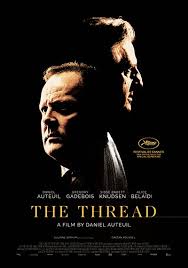
LE FIL/ THE THREAD
France, 2024, 115 minutes, Colour.
Daniel Auteuil, Gregory Gadebois, Sidse Babett Knudsen, Alice Belaide, Gaetan Roussel, Florence Janas.
Directed by Daniel Auteuil.
The Thread is a courtroom drama, French style. It is very much a film by Daniel Auteuil, the celebrated French actor for many decades, who has written, produced, directed and acted in the central role of the defence lawyer, Maitre Jean Monier.
The film is based on an actual place, and a memoir by the lawyer defending. A woman has been killed, an alcoholic, wife and mother, suspicion on her husband, who is seen at home with the children, devoted, preparing their meals, a kind man, suddenly arrested, the main plausible suspect in the murder.
Jean is separated from his lawyer wife but works in collaboration with her, discussing his meeting with the accused, his belief in his innocence, the intensity of his commitment to defending the accused. The proceedings become something of a crusade for Jean.
While there are many similarities to court cases dramatised in English-language films, there are differences, a bench, judges presiding, the way testimony of witnesses is handled, the behaviour of the prosecution as well as the defence – and the interventions of the judge.
Courtroom dramas do tend to be interesting, the audience invited to be members of the public in the court but also to take on some of the attitudes of the jury, sympathy or not for the accused, the credibility of the witnesses, one or other of them in this case losing their temper in the stand. How much evidence is circumstantial? The reliability of witnesses? Beyond reasonable doubt?
The focus of the case is the accused going to see his friend at the local bar, their discussions, the possibility for committing the murder and burying the body.
Which means then that there is the double interest throughout the film, the proceeding of the case, sympathy for the accused, something of a laid-back performance from Gregory Gadebois, a large man, quiet, seemingly bewildered by what is happening to him.
And, the case proceeds, verdicts, and intervention by the judge. And, probably, the film’s audience winding down, everything clear and settled – but, it is not, and the final part of the film has quite some dramatic impact, a highly emotional and moral challenge.
- Based on a true story? The memoir of the lawyer? The title, the focus on the thread, evidence?
- 21st-century murder case, the episodes in 2017, the family situation, the arrest of Nicolas, the meal with his children, his being held for three years? The flashbacks to his going to the bar, the discussions with Roger, the discussions with Roger’s wife? The reconstruction of the situation, Nicolas’s wife and her alcoholism, absence, on the city bench? The car, the witnesses about the car, the man who saw the three figures, his interpretation? The finding of the body?
- Jean, his reputation as a lawyer, losing a case, prosecutor, his wife and the relationship, her work? His going to the station, the meeting with Nicolas, the discussions, the questions? The impact on him, his decision to take the case? Convinced of Nicolas’ innocence? The preparation for the case, the evidence, after three years and Nicolas consistent?
- Nicolas, scene with his children, the meal, his arrest, in prison, the three years, meek, listening, attitude towards Jean, gratitude towards him? Receiving respect from Jean?
- The French legal process, the Judge, the bench, the jurors? The interrogations, the witnesses? The technical witnesses about the wounds, the body? The witnesses observing the scene, the young woman, the driver and his angry reactions, rebuked by the judge? Roger’s wife and her testimony?
- The character Roger, the flashbacks, his attitude towards Nicolas’s wife, urging him to get rid of her? His death, not able to testify?
- The questions, the skill of the prosecutor, the defence, the interventions of the judge? The final speeches? The seeming guilt, no other possibilities for murderer? The decision of the jury, the juror explaining to Jean the influence of the judge for the decision?
- Nicolas, his resigned reaction, 20 years, keeping the children, the background discussions of their mother, the tensions, prospects for divorce, her death?
- The effect on Jean, years passing, summoned to Nicolas – and audience response to the revelation about his sexual behaviour, his wife’s knowledge, the threats, divorce and her making manifest the truth, killing her?
Silence, Un/ A Silence
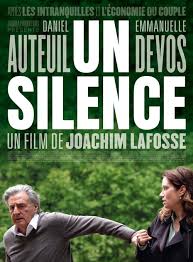
UN SILENCE/ A SILENCE
Belgium/France/Luxembourg, 2023, 99 minutes, Colour.
Daniel Auteuil, Emmanuelle Devos, Mathieu Galoux, Jeanne Cherhal.
Directed by Joachim Lafosse.
By the time we watch the final credits of A Silence, we realise that there are many silences that we have been made aware of.
This is a serious film with serious themes. There is an immediate intimation as the camera focuses at great length (and this will recur throughout the film) in close-up of the face of the key character, Astrid (fine performance from veteran actress Emmanuelle Devos), travelling in a car to a police station. There are some suggestions as to what is going to develop, suspense and questioning on the part of the audience.
Astrid’s husband, François (also a fine performance from veteran actor Daniel Auteuil) is a celebrated lawyer, prosecuting a sexual predator who has victimised two young girls. François is passionate about his cause, giving interviews, an eager press often camped out at his house. And the house is quite a mansion, comfortable, large swimming pool. The couple has a daughter who is married with a child. Their 17 year old adopted son, Raphael, is at school, living at home.
The film is based on actual events and actual characters. In Belgium, 1995, a serial predator, Marc Dutroux, is revealed as acting his victims and imprisoning them, abusing them. A Silence is based on the lawyer who defended him and Astrid on his wife.
There is great complexity in the development of events, a situation of abuse in the past, attempted therapy and the questions of how therapy is long-lasting or not and one of the particular silences, that of those who are aware of the abuse and did not speak up at the time.
Another aspect, is that of the silence of someone who has been abused, unable and unwilling to reveal the truth at the time, silence for decades, then, in the current atmosphere of revelations and prosecutions, speaking out and searching for justice.
And, while the theme is of sexual abuse, there is also the 21st-century reality of on-line pornography, accessibility to the young on their computers, international markets on the black web and networks of photos/video of abused children.
Which means that this is a film of significant contemporary issues, the reality of the abusers and their lives and concealment, issue of those made aware of the issues but who do not understand them, or did not appreciate their severity in the past, and the consequences as time has gone on.
The treatment is sombre, the photography often dark, the great use of extreme face close-ups to focus audience attention on each of the characters.
For audiences who belong to churches and religious denominations, who have experienced the revelations of church leaders and abuse, cover-ups and/or ignorance and lack of awareness, this film has no ecclesiastical connections which means that the audience can look at these situations much more objectively and assess the gravity, and appreciate the pain of survivors.
- Based on actual characters and events? The case in Belgium, the prosecutor against the serial killer, Marc Dutroux, the investigation, child pornography on the Internet, trial and sentence, and the wife sentenced for negligence?
- The fictionalising of the case, the parallels, the lawyer, his family, his prosecution, the expose an investigation, the establishing of the family, the past sexual abuse, addiction, therapy, not effective? The family, the daughter and her marriage, the son at school and his problems, the abused uncle?
- The city setting, offices, police precincts, the mansion, the interiors, the grounds, the swimming pool? School? The streets? The paparazzi? The final courts? The musical score?
- The style of the film, comparatively low key, intense and interior, the focus on Astrid, the many close-ups, the face, profiles, in the car, in the car mirror? Audiences identifying with her, sympathy, but learning more about the past, her relationship with her husband, her brother, the abuse, keeping silent, hoping her husband had benefited by therapy? Her love for her daughter, the tension because of the case and the daughter urging the uncle to prosecute? Her love for her son, his problems, expulsion from school, supporting him? Audience sympathy for her character, her experiences with the secret, the prospect of prosecution, relationship with her daughter and grandchild, urged to reveal the truth to her son, her telling him, the tensions with her husband, looking at his computer, the police, the search of the house, moving with her son to the hotel, his leaving?
- The screenplay, indicating the basic elements and the police interview with Astrid, then the audiences further discovery, emotional complexities, moral issues?
- François, his reputation, the prosecution of the sexual predator, sympathy for the abused daughters, contact with the parents? Press interviews, television, his taking a righteous stand against the abuser? At home, relationship with his family? The gradual revelation of his personal life, going to his computer, the audience just hearing sounds rather than visuals of the pornography? Relationship with his son, watching the tennis, tensions? The paparazzi and his forbidding photos, their waiting outside his home? The arrival of the police, the fact that they had been tracking the international pornographer, six months investigation François, the sequence where they were operating surveillance of his home? His realisation that he would be exposed, going out to the media, explaining that he was withdrawing from the case, politicising it, the media questions, his staying at home?
- Raphael, his age, relationship with his father, his mother doting on him? Money for spending? His friends, missing from school for two weeks, the interview, the expulsion? The truth about his father? His father’s computer? His own computer? His growing anger, going to the exam, the sympathy of the teacher, presumption of father’s innocence? The search of the house, his computer? Going to the hotel, with his mother, leaving?
- Raphael and his going to his sister, growing anger, drinking, confronting his father, the talking, the knife, the visuals of his father having been stabbed, the police arriving, rescuing François, taking Raphael?
- The interrogations, Astrid and her giving information, but withholding the story of the past? Looking at her husband’s computer? François and his denials, looking at the websites for his case? The revelation about the peddler of child images, over 7000 hits, his addiction? The interrogation of Raphael, his story about looking at the computer, even when he was eight, looking at his father’s computer, the contacts on his own? His attack on his father?
- The court sequence, the crowds, the court judgement, referral and the leniency, the condemnation of François, and the effect on Astrid?
