Displaying items by tag: Paul Kircher
Lyceen, Le/ Winter Boy
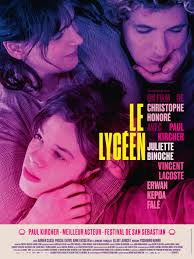
LE LYCEEN/ WINTER BOY
France, 2022, 122 minutes, Colour.
Paul Kircher, Vincent Lacoste, Juliette Binoche, Erwan Kepoa Fale.
Directed by Christophe Honore.
Christophe Honore has written and directed a number of films which are emotional dramas, films about identity, relationships, sexual orientation. This is one of his later films but dramatising the same themes.
The English title does not translate accurately the French title which simply means High School Student. And the central character, Lucas, aged 17, is at high school, a boarding school. Lucas is played by Paul Kircher who won a number of awards for this performance.
Lucas bonds strongly with his devoted mother, another fine performance from Juliette Binoche. His somewhat distant from his father, played by Christophe Honore himself, a man who does reach out to his son but is soon killed in an accident on an open road, raising the question of whether it was an accident or deliberate on the part of the father.
These are some of the grief questions that haunt the film. There is also an older brother, Quentin, Vincent Lacoste, an artist who lives and works in Paris.
One night at boarding school, a teacher wakes Lucas with the news of his father’s accident and is taken to the hospital where the extended family has gathered. From here, the drama highlights how the mother and her two sons respond to the situation, the details of their grief, and the effect of the grief on each other.
And a key issue for Lucas is that he is gay. He says he has known this since he was eight or nine and that his father knew this and was disappointed in him, grating a feeling that his father did not like him and that Lucas wanted him to – and Quentin continually tries to reassure him. Honore dramatises Lucas as in no way confused about his orientation, certainly uninhibited in his behaviour – and there are some explicit sexual encounter scenes.
Quentin decides that Lucas should come to stay in Paris with him, opening Lucas’s eyes to the city, but also some encounters, with Quentin’s art associate friend, Lillio, which leads to some unexpected aspects of the gay issue. But, Lucas also goes to a church, meets a sympathetic priest, looks at some of the baroque paintings of Jesus and the passion, Lucas is honest with the priest asking what resurrection means and the priest giving a credible brief explanation about risen life, new life and hope. This makes an impact on Lucas even though this is an isolated religious sequence.
Honore uses the device of Lucas talking and reviewing his life and emotions straight to camera, a kind of explanation of himself to his father and to the audience. And, at the end, his mother, also addressing his father, talks about the effect of all this experience on herself which enables her to come to terms with her grief and resume her life teaching at a school.
The film is well acted and draws the audience into the lives of these characters, sometimes sympathetically, sometimes provocatively, sometimes with edge. But, this is what life is like. The director acknowledges sadness but also indicates hope.
- The literal title, High School Student? The emphasis on age, the boy at school, his coping with the crises in his life?
- The setting, the countryside, the town, homes, travel along the roads? The boarding school, corridors and rooms? The contrast with Paris, the apartment, streets and buildings, the atmosphere of Paris? The musical score, the songs and their significance, performance, lyrics, by Lollio, by Lucas?
- Time shifts, the focus in the present, the flashbacks to sequences with the father and husband, the interspersing of the action with Lucas speaking to camera, or to his father, explaining himself? Isabelle and her talking to camera, confiding in her husband and his continuing presence?
- The bond between Lucas and his mother, driving, his moods, nonchalant, withdrawn? Life at school, his relationship with Oscar, horseplay at the school, the later sequence of the sexual relationship?
- Lucas as a gay character, his accepting it, taking it for granted from the age of eight, his father recognising it, his reaction to his father’s disapproval? Wanting his father’s approval? The relationship with Oscar but non-commitment? His brother aware of his situation? His mother not making any reference? In Paris, the initial encounter with Lillio and the attraction, interest, discovering Lillio and the paid sexual encounter? Lucas and his contact with the young man in Paris and the sexual encounter and discussion?
- The visit to the church, questioning of the priest about the resurrection, the police explanation, new life and hope? The insertion of this religious dimension into the narrative?
- Lucas, his age, attitude towards school, no plans for his future? At night, the teacher coming with the news of his father in hospital, going to the hospital, the extended family gathering, discovery of the truth, his mother upset because she wanted to tell him? The film’s focus on the aftermath of the death and its impact, on Isabelle, on Quentin and his grief and sometimes weeping, on Lucas, disoriented, wanting his father, wanting his father’s approval? Disturbed?
- The decision to go to Paris, the apartment, Quentin and his art, his girlfriend, the curator’s visit, getting upset with Lucas, getting him up, the bed, breakfast, sending him out, giving him the money? Quentin and his friendship with, Lillio, the meeting with the artist, her implying that Lillio was anti-Semitic, the aftermath? Quentin and his reaction to Lucas being with the paying man? Wanting him to go back home?
- With Lillio, the attraction, the discussions, the visit with his mother, her strong-minded opinions, Lillio and the song, the aftermath?
- Lucas, depression, sitting, watching, slitting his wrists, in the institution, his mother and the care, not speaking, therapy, the Christmas visit, the meal, Quentin and the desert, the happy atmosphere? Lillio’s visit, their going on the run, Lucas leaving him at the station? His mother, her joy, his speaking?
- Isabelle, going back to school, talking to camera and her husband, the basketball, going back to some kind of normal and ability to cope with grief? The good news to Quentin about Lucas speaking?
- Lucas, running, greater self acceptance, possibilities for his future?
