Displaying items by tag: Elodie Bouchez
Classe Moyenne/ The Party's Over

CLASSE MOYENNE/ THE PARTY’S OVER!
France, 2025, 95 minutes, Colour.
Laurent Lafitte, Elodie Bouchez. Ramzu Bedia, Laure Calamy, Sami Outalbali, Noee Abits, Mahia Zrouki.
Directed by Antony Cordier.
While watching this very French film with very French issues, the audience may be responding with a great variety of moods. The French title simply highlights the middle-class and leaves the implications to the various standpoints of the audience. The English title, on the other hand, suggests a moral and social judgement on the middle class.
At first, the film seems to be something of a family drama with a tone of satire. The middle-class family, and a holiday at their holiday beach house which they use for only three months of the year, the pompous lawyer father, the former actress and film star mother, the daughter preparing for an acting audition, helped by her boyfriend, from a very different class, and ethnically different, from North Africa. So far, so middle-class (or with higher ambitions?).
The lawyer, with a sense of entitlement, makes impetuous demands on their caretaker, he and his family living in a house on the property, with financial arrangements for work and living arrangements, not declared for taxation purposes. And this has been going on for six years.
But, in a moment of carelessness and drinking, an outburst from the caretaker leads to all kinds of emotional, legal eruptions. Then the satire does become more serious, a lot of parody in the characters of both families – with the young lawyer boyfriend caught up in the middle, offering to be a mediator, but a victim from both sides.
The behaviour of each member of the family has its reprehensible moments, some funny to watch for the audience, some calculatingly vicious and alarming but, all the time, a lurking disapproval, amazement at the schemes, betrayals, insults, legal and illegal ploys on offer.
And, just as there seems to be some kind of resolution, there is an extraordinary and an unexpected cynical ending. So, this is the story of the middle-class and its conflicts. This is what the English title means, the party certainly over. But… Is not quite the end, and the screenplay, with a savage parody of an earlier sequence involving acting and tears, means that as the final credits roll, the epilogue ending is even more cynical.
- The title, family expectations? Class issues, the audience identification with each family/not?
- The tone of the title, the English title? The reality of the classes, picturing them, satirical, even cynical?
- The French film, a French story, universal? The tone, French cultural differences, a French class distinctions?
- The setting, the south of France, the mansion, exteriors, interiors and rooms, the grounds? The contrast with the cottage on the property? Interiors? The path between the houses? The land, the sea? The musical score?
- The theme of acting, performance, deception? The introduction with governments and In, choosing a stage name, reversing, dramatising? Reality and fake? Her mother, long career, her films, her daughter inheriting her talent? Preparing for the auditions, her mother’s coach? The issues being able to weep? (And the end?)
- The parents, filling in the law, their careers, middle-class wealthy, the holiday home, three months of the year? The arrangement with the caretakers, the deals, money, cash, tax issues? Security? Their personalities, arrogant manner, the quality of legal Latin? Middle-class better or worse?
- Mehdi and his origins, Africa, studying law, all background, achievement, hopes, in love with The rounds, living in, his intentions, her parents and their tolerance? Her being in love? The discussion about her stage name, rehearsals, the issue of crime? Their time together, her hedonistic style, his being tolerated?
- The caretaker family, the father and his role, of jobs, strong-minded wife, the daughter and her friendship with The rights? The personalities? The security of their home and work? You are treated as inferior, working class?
- The situation, the plot sink, have been going to ask the father to come, wanting instant help, no matter what, the family celebrating their daughter’s birthday, advising to tap, the wife turning it on, the splatter over the work, the result?
- Issues of apology, Philippe and his reluctance, the suggestion to buy gift, the pen?
- Tony, his drinking, his outburst against the family, the issue of his shirt on the stone, class issues? The reaction of the parents, Philippe and his anger?
- The clash, the fight, legal issues? The effect on personalities? Interpretations of the law, privacy, insults, the meetings and discussions? The tactics, each aggressive? The phone in the specially-prepared gourmet meal? Destruction of the vegetables? The sauna and the wife and her dragging the mother into the water? The meeting the two girls, friendship, anger and deceiving her friend? Stealing the cash account? The case and discussions depending on it?
- Mehdi, offering to be a mediator, his attitudes towards both? The meetings, in the middle, the discussions? Mehdi in between the physical violence? The attitudes of everyone there?
- The confrontation, the guns, audience response to the shooting, the death of Mehdi? The results, the discussions and the dealings, the arrangements, contracts? Securities?
- The cynical ending with the death of the sympathetic character, lying dead and abandoned on the beach?
- The even more cynical addendum, the daughter, the audition, her actually weeping at her self-satisfaction?
- The effect of the satire, engine challenge, the services of?
Beating Hearts/ Amour Ouf
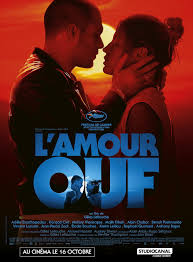
BEATING HEARTS/ L'AMOUR OUF
France, 2024, 166 minutes, Colour.
Adele Exarchopoulos, François Civil, Malik Frikah, Mallory Wanecque, Alain Chabat, Benoit Poelvoorde, Vincent Lacoste, Anthony Bajon, Elodie Bouchez.
Directed by Gilles Lelouche.
Phew Love.
An unexpected beginning to a review. However, Google tells us that this is the English translation for the French title, Amour Ouf. The English title of Beating Hearts sounds more respectable, rather highlighting the nature of the love between a young man who is afflicted with the name, often mocked, of Clotaire, and Jacqueline, always called Jackie, who live in an industrial city in France.
This is a very long film, 2 ¾ hours, immersing the audience in the atmosphere of the town, the neighbourhoods, factories, the port, crowded homes, violence in schools, the 1970s and 1980s.
The first half of the film introduces us to these two central characters, very striking performances from Malik Frikah as Clotaire and Mallory Wanecaue as Jackie. Even at home, when very young, Clotaire imposes himself on everyone around him, his impatient factory working father, his mother, the siblings. Jackie, on the other hand, has lost her mother in a sudden car crash, lives with her earnest father who wants only the best for her. While Clotaire throws his weight around at school, tough with fists, tough with language, he is attracted to the young girl and she to him, some very romantic sequences, dancing, comfortable together, beating hearts.
Music is a very important part of the film, the songs of the period playing throughout the whole film, popular, memories for audiences, significant lyrics.
But, this is also a crime story, Clotaire and his friends, gradually getting caught up in a world of drug dealing, rivalries, gangs, violence, bosses appreciating Clotaire’s carefree and violent talents. Many French writers and directors enjoy making action crime films. Director, Gilles Lelouche, prominent star in French cinema for many decades, has appeared in several of these films and energises the action here in an elaborate heist sequence during the protest by sacked workers at the port, an eruption of violence and Clotaire going to prison.
As something of a balance to Clotaire’s story, there is a focus on the interaction between Jackie and her father, his constant concern for her, the ups and downs of her crises, reacting against his protection but always going back to him for support, love and advice.
The second half of the film has Jackie, not allowed to visit clutter in prison, encountering an up-and-coming businessman, Jeffrey (Vincent Lacoste) fending him off, marrying him, yet, we might say, her heart definitely not beating for him. And then Clotaire gets out of prison. He seems subdued, and for a moment, we hope that his life has changed. But, there is the issue of taking a fall for others and seeds of revenge kindled.
The adult Clotaire and Jackie are played by starts Adele Exarchopoulos and Francois Civil.
So, after such a long time sharing the beating hearts of Clotaire and Jackie, how can it possibly end? As with the words of the French title, Phew Love.
- The tone of the original title, Phew Love, a mad love? The contrast with the serious intensity of the French title?
- The impact of the film as a whole, the long running time, the storytelling over decades? The social context, the romance, crime and punishment? The skill of the director and his experience in acting?
- The end of the 20th century, the final decades? Friends and its issues? The northern town, industrial, the port? The poorer neighbourhoods? Schools? Families? Homes? Deals, criminality? Drugs? Bosses, gangs and rivalries?
- The focus on Clotaire, within the family, his dominance of the of the children, his personality, clashes with his father, the role of his mother? Going up, the team, dominant, extroverted, violent, clashes with students, his range of friends, the going together, the criminal side, the gangs, the encounter with the bosses, doing deals, confronting bosses, the violence, Clotaire’s standing up to them, ingratiating himself, becoming part of the gang, proving himself to the boss and his liking him, the boss’s son?
- The plan for the big heist, the background of the industry, the port, the sacking of the workers, including Clotaire’s father, the consequences? The decision for the robbery during the protest at the port? The group, interactions, the plan, the containers, the trucks, the robbery? The security guards, the gun, the boss’s son shooting the guard dead? Clotaire trying to revive him? The escape? The police? The arrests?
- Clotaire, the implications that he was the murderer, his lawyer, ineffectual, his becoming the victim? 10 years imprisonment?
- The romance story, introduction to Jackie, the death of her mother, her relationship with her father, her studies, competence, intrigued by Clotaire sequences together, the dancing, romance, her highly emotional involvement, ups and downs emotionally, her father, his character, expectations, trying to help his daughter, her variety of moods? Clotaire and his imprisonment? His not allowing her to visit him?
- The 10 years passing, the effect on Clotaire, seemingly calm, out of prison, with his family again, the support of his mother, relationship with his brother? Finding his black friend again? And his friend being killed? His looking for Jackie, the visit to her father, the father protecting his daughter? The possibilities for clarity, a different life?
- The seeds of revenge, going to see the boss, his age, decline, explanations of his shielding his son, letting Clotaire take all the blame? The visit of the son, his prosperity, arrogance, drug deals, the club? Clotaire and his friends, the confrontation with the son, shootout?
- Jackie’s story, not seeing Clotaire for 10 years, Jeffery, her work, slack, her offhanded manner with him, his response, proposal, the marriage? The tensions within the marriage, her pining for Clotaire, his travels, suspicions, confronting her?
- The impact of the opening sequence, the older Clotaire, his gang, the raid, the confrontations, the shootout? This sequence occurring again, but with a different ending, Clotaire’s moving away?
- Jackie, the phone, the confrontation with Geoffrey, Clotaire and Jeffrey, Jackie and her love?
- The future, Clotaire and his vengeance of violence,, the relationship and Jackie?
