Displaying items by tag: Anne Hathaway
Devil Wears Prada 2, The
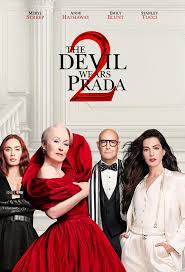
THE DEVIL WEARS PRADA 2
US, 2026, 190 minutes, Colour.
Meryl Streep, Anne Hathaway, Emily Blunt, Stanley Tucci, Kenneth Branagh, Justin Theroux, Lucy Liu, Tibor Feldman, B.J.Novak, Patrick Brammel.
Directed by David Frankel.
We all enjoyed the original film 20 years ago. What could happen in 20 years? What are they all like now? Has Meryl Streep’s Miranda mellowed in any way? And what about Andy and Emily, just beginning their careers in those days? Have they had success? And, the ever faithful Nigel. Is he still working for Runway?
As we launch into this enjoyable sequel, overcoming the two decade gap, the entity is mainly, yes. And it is still very much the same, Meryl Streep obviously enjoying this dominating and controlling personality, very much evident as she encounters Andy and Emily again, disdain, feigning not to know them and wonders have they ever met! But, the times are certainly changing. There are threats to Miranda’s dominance. (However, she now has a husband and, unseen in the film, twins – and the advantage of having Kenneth Branagh playing her husband.)
But, the success story is Anne Hathaway’s Andy, an award-winning journalist, and, during an award ceremony just before her acceptance speech, a text to tell her and her fellow-journalists that they are fired.
In fact, this is a strong theme of this sequel, the changes from 2006 to 2026 in terms of print media, magazines, online publication, social media, the struggle to find followers, the threats to traditional publications, challenges for the future. In this way, the film is rather pessimistic about journalism, outlook and future.
But, back to Alex, she is employed again by Runway, a feature writer, still put down by Miranda, encountering Emily once more, Emily Blunt, setting up some conflicts along with challenges to business models, corporation executives, and, with quite some flourishes towards the end at a fashion show in Italy, the management of the world of fashion.
There is also a scene in the Dominican Priory in Milan with Leonardo da Vinci’s Last Supper on the wall, as a location for a social event. (And a touch of inventiveness for the romance, Andy finding an Australian boyfriend, Patrick Brammel.)
Same writer, same director as before, and they bring the relish they had two decades ago to this sequel, not so surprising, of course, but old audiences welcoming the opportunity to see and engage with these characters again. And delighting a new audience.
- The popularity of the original film? 20 years? Continuity of the stars, age, 20 years later? Memories of the original characters?
- New York, the world fashion, publishing, business and corporations? International sequences, Milan, fashion, the catwalks, the visit to the Dominican priory and da Vinci’s Last Supper? The musical score?
- 20 years and changes in publications, social media, the role of journalists, reorganisations, sackings, online communications, articles, target audiences and success not? Attempts at revitalising journalism?
- The focus on Andy, with Miranda 20 years earlier, with Nigel, with Emily? As a success, a roving journalist, the initial awards ceremony, her win, the text of their all being sacked, her vigorous speech, Irv and his son and seeing it, the offer of the job, and the later revelation that Nigel urged him on? Her life, her good friends, sharing, the enthusiasm, going to Runway, the initial encounter with Miranda and Nigel, their not knowing, going to the meeting?
- Andy, after 20 years, success, relationships? The visit to the apartment, the encounter with Peter, Australian, friendly, her initial faux pas, meeting him again, dating conversations, his Australian direct personality? Her leaving for Milan, leaving him stranded?
- Miranda, over the years, her manner, remembering Andy and Emily, the touch of disdain, her success? The surprise to find she was married, her husband, pleasant, musician, past drinking, supportive? That she had twins and did not spend time with them? The dependence on Nigel, taking him for granted? The upset, the meeting with Irv and his son, the plan for her to be head of editing, the attitude towards Andy?
- Andy, hard work, writing the articles, the apology for the precarious situation about fashion and child workers? At the board meeting, raising it, Miranda off-hand? Relationship with the staff, with Miranda’s imperious assistant, with Charlie, with her new assistant, friendly?
- Irv, the celebration, birthday, everybody gathered, Miranda and hopes for the announcement, his collapse and death? His son taking over, casual, in his father’s shadow, his board meeting, advice, the 2020s and the different approach?
- Sasha, her success, wealth, seclusion, Miranda wanting an interview, Andy and her many attempts, final success, session pleasant, the interview, the article and success? And her past relationship with Benji? The later plan, her investment, coming to the rescue?
- Emily, after 20 years, her manner, failed marriage, children, her manner, her work, retail? Meeting Miranda again and disdain? Meeting Andy again? Her relationship with Benji, his character, manner, imposing, wealth, promises to Emily? The meeting with Benji, the deals, Emily and negotiating with Andy, not telling the t//ruth, the buying of Runway, her being editor, wanting to be on the cover…?
- Milan, the fashion show, the range of models, elaborate? The dinner, the visit to the Dominican priory, the Last Supper and Miranda’s comment about the leader? Her giving her speech, Andy advising Nigel to do it? Nigel, in the background, his fashion sense, friendship with Miranda, the difficulties, persevering over the years? Writing speeches – and his giving the speech and place of Miranda?
- Andy, her ideas, collaboration with Miranda, the phone calls, all day, the plan, the final revelation, Benji and the sale, the break with Emily, Sasha and the rescue?
- The happy ending, everybody nicer, happier? Miranda, her relationship with her husband, the discussions, his support? Her mellowing, changing – but at the end her manner and style? Andy, older and wiser, enterprising, her future?
Mother Mary

MOTHER MARY
US, 2026, 111 minutes, Colour.
Anne Hathaway, Michaela Cooel, Hunter Schaefer, FKA twigs, Jessica Brown Findlay.
Directed by David Lowery.
What would most audiences, seeing the title, Mother Mary, b is e expecting? The Christian overtones of the title are visualised in Mary, the popular singer and her concerts, her dresses, headdress with rays, reminders of Mary, Mother of Jesus. And, throughout the film, there are verbal references, in conversation, and in the songs, to the Spirit, Pentecost, faith, belief…
This is a weird experience, to say the least. And, some audiences have felt it too much, too confusing, the verbal, visual weirdness.
In fact, this is a psychodrama, a two hander encounter between two strong actresses in two strong performances, Anne Hathaway as the popular singing star, Mother Mary, and British Michaela Coel (also confronting Ian McKellen in The Christophers) as Sam Anselm, longtime dressmaker, now alienated from Mary.
Mary is desperate, an accident in performance (deliberate or not?), Emotionally disturbed, offering to apologise to Sam, requesting her best address for Mary’s London comeback, reinstating her as a star.
There is a lot of psychological to-ing and fro-ing, some serious game-playing, Sam generally in control, hurt by Mary in the past, alienation for twenty five years, once an avid fan, now Mary eliminated from her life, but intrigued, affronted, by Mary’s arrival and request for the dress.
Mention is made of metaphors and there are many of these, visualised, in word and in rituals, interactions of psyches, interactions of imaginations, floating, swirling red material, ingested, excised… A dark ritual, a circle drawn, echoes of magic and exorcism.
Fans of popular stars may relish this strange exploration of a singer and her relationships. Writer-director, David Lowery, noted that he was drawing on the impact of Taylor Swift. Anne Hathaway referred to Beyonce as an influence on her performance. And, significantly in Anne Hathaway’s recent film, The Devil Wears Prada 2, there is a powerful sequence between Meryl Streep’s Miranda priestly and Lady Gaga about a performance at a fashion show. Some of the songs for Mother Mary were written by Charli the XCX who was also the subject of a film about a singer and her career, the moment.
With the popularity of such stars, this film offers a great deal of appeal, an invitation to go behind the scenes, go behind the faces, go behind the facades, wondering what they will find -perhaps weirdness and truth.
- The application of the title, the Virgin Mary, Catholicism, spirituality, statues of Mary, images, garments, head raise…?
- The world of international stars, singers, concerts, application Taylor Swift, Lady Gaga, beyond say? Songs by Charli XCX, the presence of FKA twigs?
- The range of songs, the lyrics, the musical score, performance, elaborate costumes, choreography?
- The film as a dramatic two hander, Mary and Sam, memory and hurt? The presence of the supporting cast, friends, the assistant, the dancers?
- The film as a psychodrama, the human psyche, sanity, emotions? Physical, health? The use of the imagination? Metaphors and symbols? The words describing them? Actions? Visual symbols?
- The realism and the images, the red material, floating, absorbed, cut out, extracted, final floating? Panic and liberation?
- The final ritual, the touch of the supernatural, application of exorcisms?
- The relationship between Mary and Sam, 25 years, the bonds of the past, celebration, the dressmaking, Mary and her success, Sam and enthusing? The break, the separation, the hurt, the image of the broken tooth and extraction? Mary returning after so long?
- Mary, as a character, celebrity, enjoying her celebrity, singing, dancing, composing songs? 25 years? Falling out with Sam? The reason for her visit?
- Sam, in herself, her work, the office, the big barn, its layout, the mannequins, materials? As a fan of Mary, addresses and success, the tooth, the break,?
- Mary’s arrival, the encounter with Hilda, the final meeting with Sam? Their talking, Sam and her hurt, distance, psychologising Mary, taunting her, the questions, her wisdom, the use of symbols, rituals, the issue of apology?
- The request of the dress, the aftermath of the accident, intentional or not, the fans, the dress, the idea of the train, all the images from her concerts and life? The to-ing and fro-ing of the argument? The psychological implications of the dress? Moving towards reconciliation, friendship, the ritual, the making of the dress – or no reconciliation?
- The impact of the ritual, the two women, the circle, the incision, the blood, the drawing out of the material, healing?
- The finale, Mary and her performance, the dress, removing it? Hilda describing the event to Sam?
- And, the final threefold apology?
Eileen
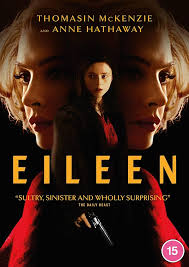
EILEEN
US/UK, 2023, 97 minutes, Colour.
Thomasin McKenzie, Anne Hathaway, Shea Whigham, Sam Nivola, Owen Teague, Siobhan Fallon Hogan.
Directed by William Oldroyd.
A young woman, Eileen (New Zealand’s Thomasin McKenzie) lives in a drab music Massachusetts town in the 1960s, alone with her ex-policeman father (Shea Whigham), alcoholic, menacing with his gun, always putting her down. She works in reception at the local prison.
Into her life comes a new expert, Rebecca, Harvard trained, blonde Marilyn Monroe look, a striking performance from Anne Hathaway. Anne Hathaway takes a liking to Eileen, affirms her, goes out for a drink with her, Eileen flattered by the attention.
While the film spends a lot of time focusing on Eileen, her ugly life at home, getting her father to surrender the gun to her, keeping him under control, despising him yet caring for him, and some of the personal squalor of her own life, clothes, cleanliness, as well as her voyeurism at night a local meeting place, early in the film, the film then moves to the complexity of her response to Rebecca. And the audience wonders whether there is a real liking there or Rebecca is using Eileen.
The complexity of the plot focuses on a young man whom Eileen continually observes and imagines, accused of killing his policeman father. His mother is interviewed by Rebecca, leading to a striking confrontation – and a later twist in the plot, violence, Eileen having to check her relationship with Rebecca, making final decisions, freeing herself from her father and from the town.
Continually intriguing.
- The title, the focus on Eileen? Based on an award-winning novel, screenplay by the author and her husband?
- The setting, Massachusetts, the 1960s, the small town, the weather, dismal, the streets, the prison and offices, homes, the bar? The surrounding countryside, bleak?
- The range of songs, accompanying the action, the lyrics commenting on characters and action?
- The portrait of Eileen, age 24, the introduction, in her car, voyeurism, sexual experience, at home with her father, his drinking and violence, his gun with people in the street, the police protesting, giving up his gun to Eileen, her narrow life, stopping studies, at the prison, letting visitors in and searching them, the reactions of the two women in the office, a humdrum existence? Use of health, cleanliness, uncleanliness?
- Life in the prison, her looking out the window at Lee Polk, watching the guard, her fantasy about him, the physical reactions? Sitting in public? The work in the prison, the files?
- The arrival of Rebecca, the Marilyn Monroe look, blonde hair, costumes and style, the impact of her arrival, her haughty manner, Harvard, her role in the prison, with members of the staff, the significance of the Christmas pageant, the presentation, the mockery, the fight, happening every year? Her reaction, Eileen’s reaction?
- The relationship between Rebecca and Eileen, the glamour versus the plain, Eileen caught up, admiration, fascination, Rebecca talking to her, the invitations, outside smoking, the discussions, the drink at the bar, the dancing, Eileen infatuated?
- Polk’s situation, Eileen always watching him in the yard, alone, his mother’s arrival, Rebecca sweeping her in, Eileen watching the discussion, Lee silent, the mother’s reaction, sweeping out in anger? The consequences, the issue of the son killing his father, the echo for Eileen at her own father?
- At home, her father’s drinking, complaints, mocking her, memories of his wife, the fact that he was abusive, his saying she forgave him, the continued treatment of Eileen, out all night, being sick on the car, locking her out, the criticisms, the accident, going to the doctor, the drinking would kill him, coming home? The final talk with some kind of understanding of her?
- Christmas Eve, Rebecca gone, Eileen dismayed? The phone call, going to the house, the bottle of drink, the talk, audience anticipation, a different consequence, Mrs Polk, in the basement, tied up, the interrogation, her collapse and telling the truth about father and son, her own behaviour? Eileen with the gun, holding it, wounding Mrs Polk, forcing the drugs down?
- Rebecca, staying to tidy up, never appearing again? Eileen to take the body, at home, her decision to drive out, leaving the body wounded and drugged, going to the highway, getting a lift, going to a future, with the money she had saved, smiling?
- The unpredictability of the plot, intimations of direction of the plot, but the plot going in different directions?
Idea of You. The

THE IDEA OF YOU
US, 2024, 115 minutes, Colour.
Anne Hathaway, Nicholas Galitzine, Ella Rubin, Annie Mumolo, Reid Scott.
Directed by Michael Showalter.
This is a romantic comedy with a difference. Society has always accepted that older men can have romances, relationships, marriage with younger women. However, this is not the case with the older women and a relationship with a younger man, this variation on the May-December situation.
This is at the centre of this film, which makes more impact than might have been initially anticipated. There is the strength of the presence of Anne Hathaway as the Gallery owner turning 40, Solene, divorced, a sense of betrayal by her husband, and a teenage daughter to whom she is devoted. The other aspect of the casting is having British actor Nicholas Galitzine as a lead singer in a Boy Band. Anne Hathaway has a 20 year career in films, including an Academy award for her portrayal of 17 in Les Miserables. Nicholas Galitzine has shown quite an ability in diverse roles, a Marine in Purple Hearts, an American college jock in Bottoms, a British Prince in red, White & Royal cope blue, as well as the ambiguous George in his relationship with James I in the television series, Mary and George.
The situation of the two meeting is credible enough, a mistake on the part of Solene, the interested response of Hayes and his singing for her at one of his performances.
From the point of view of the older woman, the film shows both risk and caution, hesitation and getting to know the young man better, very much attracted and making a life-changing decision. From the point of view of the young man, this is an opportunity to be taken seriously, to enter an adult relationship.
There are a pleasant aspects of the story, the touch of affluence, the art world and the Gallery, popular music and the band’s performances.
While there are idyllic scenes as Solene goes on European tour with Hayes, touristic glimpses as well as romantic episodes in famous cities, there is the inevitable opening up of consequences for each of the characters, their being photographed in Paris, the inevitable posting of photos on social media, the consequences, the exposure, and, very strikingly in this film, the extraordinary hostility and injustice of condemnations of the older woman, blaming her for the relationship, blackening her name, condemning her as a person.
Which means that the later part of the film shows this conflict, how each of the characters handles the situation and the consequences for themselves personally. Just as the film was about to end, there is a postscript, five years later, what the five years have meant and indications for the future.
- Romantic comedy with a difference? The issue of age difference? Different attitudes for older men, for older women?
- The Los Angeles settings, homes and families, rock concerts, art galleries, affluent society? The scenes in New York? The international travel and the key spots of Europe?
- The musical score, the background, the range of songs, Boy Bands, performance, insertion of songs in the action, the lyrics?
- The stage performances, the members of the group, Hayes and his style, the personalities of each of the members of the group?
- Solene, Anne Hathaway’s performance, her career? Turning 40? The story of her life, studies, meeting Daniel, marriage, birth of the daughter, his infidelities, gossip and her humiliation, the divorce? Her love for her daughter? Her Gallery, her staff, clients, the works of art, sculpture, ceramics, paintings…? The plan to go off to camp? Daniel and his impositions, her going to the concert, the noise, the crowds, for the toilet, the caravan, the mistake, encountering Hayes?
- Hayes, his age, story, family background, singing, auditions, the Boy Band, friends with the members of the group, the travelling lifestyle, the performances? His more serious approach?
- The credibility of the May-December romance? His singing, her being in the audience, the dedication, turning up at the Gallery, the tour, offering to buy everything? The discussion of the art? Her special painting – and his later buying it and delivering it? The paparazzi outside, driving away and his concealing himself?
- At the house, the talk, the attraction, cleaning the fridge, sandwiches, the attraction, the kiss, the reactions? Solene and her self-consciousness?
- Izzy, her age, friends, the concerts, teenagers on pop culture, her relationship with her mother, with her father, going to the summer camp?
- Hayes and his invitation for Solene to go to New York, her decision to go, the time together, the sexual relationship, falling in love, her return to LA? His invitation to her to accompany him, the hesitation, accepting, the plane, the other members of the group, the groupies, various cities, the concerts, the relationship, their time together? The different cities and their style, glamour, the couple kissing, the risk, the photographs?
- The swimming pool scene with the young women, bikinis, Solene’s self-consciousness, the talk, humiliated, leaving, aggressive towards Hayes?
- The return, Solene and her secrecy, her friends and wanting information? The warning about social media, her shock, the photos?
- The impact of social media, audience response to the trolling, the vicious comments, the range, the effect for Solene? For Hayes? Her breaking with Hayes, regrets, his visits, the discussions?
- Daniel and his confronting the couple? Izzy and her response?
- The issues of the paparazzi, photographers, gossip magazines, social media, the viciousness of attitudes towards older women with younger men (and not with older men with younger women)?
- The hard decision for Solene, the break, handling the situation, with Hayes? Her listening to his music – the seeming end of the film?
- Then five years later, Hayes and his career, performances, on the Graham Norton show, Solene watching, the return? The future?
