Displaying items by tag: Peter Malone's Movie Reviews
Il Testimone Invisibile/ Invisible Witness, The
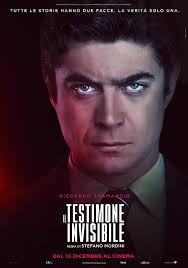
THE INVISIBLE WITNESS/ IL TESTIMONE INVISIBILE
Italy, 2018, 102 minutes, Colour.
Riccardo Scamarcio, Miriam Leone, Fabrizio Bentivoglio, Maria Paiatto, Sara Cardineletti.
Directed by Stefano Mordani.
It should be noted first that this is a detailed remake of the Spanish thriller, Contratiempo, released two years earlier. Critics have praised the Spanish film as superior to the Italian remake.
However, many audiences will come to the Italian film without having seen the Spanish version.
This is a drama about a successful businessman from Milan, wife and daughter, successful enterprises, but entangled with the mistress and involved with her death. Then arrested for murder.
One of the benefits of the film is that popular Italian actor, Riccardo Scamarcio plays the central role. While action is in the present, especially when the businessman meets his lawyer, a strong-minded older woman who challenges his explanations at every step, there are many flashbacks to his basic situation, his family life, travelling with his mistress, a car accident on a highway in the countryside, a witness, and the behaviour of the couple, the disposing of the body…
In the later part of the film, the story is told from the perspective of the dead woman, the audience having to retrace the steps, and with an entirely opposite explanation of the scenario.
And the psychological impact is strengthened when the audience is introduced to the parents of the young man who was killed in the car accident – and revelations about their involvement in the investigation and prosecution of the businessman. And, to the surprise of most audiences, a revelation about the lawyer.
This reviewer has not seen the Spanish version. But, this Italian treatment of the story is interesting and intriguing.
- The title? The crimes, reconstructions, explanations, the range of potential invisible witnesses?
- The setting, the city and offices, homes, the luxury hotel in the mountains, interiors, the highways, forests and lakes, atmosphere? The musical score?
- A remake of a Spanish film, close use of the original screenplay? Italian perspective?
- The complexity of the screenplay, audience attention? The basic situation, the death of Laura and Adriano accused, the accident on the highway and the cover-up? The interconnections?
- Adriano and his character, professed love for his wife and children, his relationship with Laura, the business deals and money? His arrest, accusation for the murder of Laura? Paolo and his legal aid, the phone calls? The hiring of Virginia?
- Virginia, strong character and presence, not having lost cases, the discussions with Adriano, testing him, giving alternatives, his contradicting himself, his fears, confidence, the power of gradually persuading him to tell the truth? The relationship between them, intense interactions? Her skills, phone calls, information about witnesses, anonymous, the DA? The discussion about the accident, the flashbacks, what happened, Laura and the family, the dead man, framing him for robbery? Building up the support for Adriano, her getting him to tell the truth, contradict himself, her suggesting the opposite scenarios? The final revelation of who she was, the literal unmasking? The real Virginia arriving at the end?
- The situation of the accident, Adriano meeting with Laura, the respective spouses, the deceit, not in Paris? The rendezvous? Driving, the deer, the driver crashing, the decisions, from Laura’s perspective, her taking charge, the driver passing by, her concealing the body, the blood, taking the wallet? Leaving Adriano to dispose of the body, in the woods, his sensing someone present, the car in the lake? And Virginia’s later reversing the scenario and its being visualised, Adriano and his initiative, Laura in fear?
- The story of Laura, the breakdown, Tommaso passing by, offering to help, going to his house, his fixing the car, meeting his wife, the story of his son? Laura’s realisation? Her leaving? The consequences, her husband, the meeting with Adriano, the remote hotel, the scenario of her death, the possibilities for Tommaso following, killing her, framing Adriano? The later possibility of Adriano having murdered Laura?
- The character of Tommaso, love for his son, relationship with his wife, his presence, at the hotel, the revelation of the apartment opposite, an invisible witness, watching, he and his wife setting up Adriano and Laura? With the police, the interrogations?
- The complexity by the end of the film, the possible scenarios, Adriano and guilt, Laura and guilt, the revelation of the real identity of Virginia? The husband and wife pursuing Adriano?
- The end, the audience taking stock of what they had seen, responsibilities, characters, deceptions, the future?
Beast Within, The
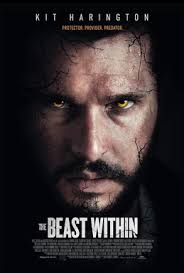
THE BEAST WITHIN
UK, 2024, 97 minutes, Colour.
Kit Harrington, Ashleigh Cummings, Caoillin Springall, James Cosmo.
Directed by Alexandre J. Farrell.
An atmospheric horror thriller, somewhat different from what might have been expected. It is a werewolf story but the setting is in the forests of Scotland.
The audience is reminded about the mythology of the werewolf as the film opens. Ultimately, there will be the visual, frightening manifestations of the werewolf. But, at the beginning, the focus is on a family in the forests, the father, played by Kit Harrington, a worker, his wife, Caoillin Springall, tense, working at home, focusing on their daughter, Ashleigh Cummings, a reader, caught up in her own imagination, and concerned about her father. The other member of the family is the grandfather played by veteran James Cosmo.
There are dramatic tension is in the house, and gradual revelations that, monthly, the father has to withdraw, to be locked up, his experiencing the werewolf transformation. And this has repercussions, often violent, on the rest of the members of the family.
As anticipated with some tension, there are final confrontations and revelations, visually frightening, menacing for the members of the family.
Most werewolf films from the past have an American setting. This one than is quite different.
- A Scottish werewolf story? The opening quotation? The mythology of werewolves, the full moon, the blood moon, the werewolves and their will form, and the beast within?
- The Scottish settings, the landscapes, the ancient wall, the countryside, atmosphere? The home, the shed, the cars on the roads? The musical score?
- The family, ordinary, the relationships, the work, Noah as the father, husband, work, the relationship with each member of the family? Imagine, wife and mother, devoted? Willow, her age, breathing apparatus, her reading, the only child, alone, loneliness, her relationship with her parents? The grandfather, his place in the house, with each of the family members?
- Ominous suggestions, the blood moon, the seasons, Willow and her room, reading, her observing out the window, standing at the upper landing? The title and expectations?
- Noah, his experience, seeing him at work, with each member of the family? The early intimations, the gradual revelation of his transformation, locked in the shed, Willow and her watching, concern? The visualising eventually of the wolf, the walls, the pain, the encounter with his wife and daughter? The grandfather, his concern, his being impaled on the stag horns? Carrying him outside?
- The film highlighting the contrast between Noah and his ordinary life, and for his transformation, the preparations, the isolation?
- The bond between mother and daughter, outings together, protective?
- The finale, the confrontation – and the future?
So Little Time

SO LITTLE TIME
UK, 1951, 88 minutes, Black and white.
Marius Goring, Maria Schell, Lucy Manheim, Gabrielle Dorziat, Barbara Mullen, John Bailey.
Directed by Compton Bennett.
So Little Time is based on a novel, stating that the central character was not a heroine. In fact, she is a 20-year-old Belgian girl, living a sheltered and affluent life, experiencing the German occupation of Brussels and the country.
The subject of women collaborating with the Germans has been the theme of many films, arrest, shaven heads, imprisonment, executions, shame and denunciations. Which means that this story of the young girl captivated by the German Commandant resident in her mansion, his musical talent, his tutoring her and her success, her falling in love with him, is a controversial theme for a British film, especially one being released so soon after the end of World War II.
The film is a star vehicle for Austrian actress, Maria Schell, the camera often focusing on her in close-up as well as her playing the piano. It is also a star vehicle for Marius Goring who was able to portray so many German characters in British films.
The film was directed by Compton Bennett who had just made King Solomon’s Mines and was to go on to direct films and television in the 1950s and 1960s.
- The tone of the title? For Nicole, life, love, death? For Gunther?
- The release of the film, so soon after the end of World War II? British attitudes towards and memories of the Germans the war experience? Issues of collaboration?
- Based on a novel, Je ne suis pas une Heroine?
- The Belgian setting, the countryside and the mansion, the visit to the opera? The musical score, Liszt and Mozart?
- World War II, memories involved in the occupation in World War I? The arrival of the Germans, arrests, the soldiers presence, the taking over the mansion, the room for the Commandant?
- The family, devotion to Philippe, his portrait? Nicole, her age, sheltered life, devotion to her mother, her mother aristocratic, age and illness, the heart attack? Living under occupation?
- Nicole, quiet, piano practice, her teacher? Her friends and the various meetings and discussions? Patriotism? Anti-German? The encounter with the Commandant, his playing the piano, her listening, her own playing, his instructions, her improvement, affirmation? Being with him, expressing resistance, the change in response, falling in love? The importance of the episode at the Opera, meeting the singer?
- The aftermath, her friends, staying late, the rebel, asking for permits to return home, his angry outburst, the Commandant preventing his arrest?
- Nicole, the conflict of emotions, with her mother, with her friends, with the Commandant, the expression of emotions, the age difference, the Commandant and his background, the Castle, his philosophy of war, doing one’s duty no matter what?
- Philippe, Making demands on Nicole, drugging the Commandant, the key impression, the second request and the documents? Her being caught by the Commandant? Her conflict?
- Philippe and his capture, the interrogation, in the vehicle, the ambush, the resistance, shooting the soldiers, Philippe’s escape? Nicole, with the Commandant, the ambush, her being shot, brought home, her final words, the pathos of her death? The Commandant killing himself?
- The comparison with British films of the time, resistance heroines? The issue of punishment of women who collaborated with the Germans?
Josh Jarman
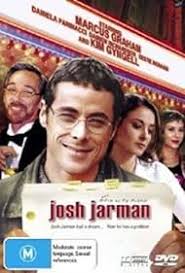
JOSH JARMAN
Australia, 2004, 96 minutes, Colour.
Marcus Graham, Daniela Farinacci, Damien Richardson, Kestie Morassi, Kim Gyngell, Susie Cato.
Directed by Pip Mushin.
Josh Jarman is a pleasant variation on romantic comedies along with some satire at the commercialisation of art in the name of public taste. A modest success in Australia, but popular at some festivals overseas.
The film was written and directed by actor and director, Pip Mushin, who co-wrote from experience and obviously enjoyed writing and directing this film. It is a star vehicle for Marcus Graham who has had a long career in Australian cinema (and some overseas experience, especially in Mulholland Drive). There is an engaging supporting cast and some broad comedy from the popular comedian, Kym Gyngell.
Josh Jarman has written several plays and has had 28 total members in the audience (including his mother twice). He shops his play around, its being rejected as too serious and not popular. He is turned down by wealthy and rather crass producer, played by Kim Gyngell. And there is an encounter with his daughter and the contract which requires him to be a companion to the daughter to facilitate its production.
Josh is genial, sometimes dithering, a mixed self-image, good friends with Russ, Damien Richardson, would-be actor, gambler, and taking on masked robberies at fast food outlets, the most inept attempts one could see!
Thrust of the parody is the gradual transforming of Josh’s serious play, from making the protagonists younger rather than older, the woman becoming a nurse, the man a doctor, and, eventually, inserting some and dances in comedy in the Broadway style.
What should Josh do? Go with the public flow and celebrity? Denounce the transformation of his play? Make a new start, write a new play, win the girl who plays the cello in an ensemble…? Of course.
- A variation on a romantic comedy? The playwright hero and his vicissitudes? The cello player and her struggles?
- The Melbourne sitting, the atmosphere of the city, blocks of flats, small theatres, Her Majesty’s, fast food franchises…? The musical score – and, eventually, the musical numbers in the play?
- Marcus Graham as Josh Jarman, genial, his ambition in writing plays, the small performances, his mother going twice, shopping his play around, the various refusals, going to see Stan Billows, meeting Sasha? The beer with her, conversation, the night together? His friendship with Russ, their discussions, Russ and his career, auditions, his gambling, masks and lame and amateur hold-ups? His philosophy of robbing multinationals and neglecting to note the casinos were multinationals?
- In himself, quiet, writing, theatre? The encounters with Maxine, the cello, her group, Brahms, her going to the counsellor, the sexual experience? Reading Josh’s play, her sadness at the issues?
- The invitation by Stan Billows, his home, the meal, his wife and her seductive behaviour? Sasha and the meal? The decision to produce the play? The relationship with Sasha, part of the contract to be her partner, and the comic visualisation of her past partners and errors? And finishing with Russ?
- The satire in what happened with the play, modest production, concern about the public and taste, introduction to the director, his notes, the comedy of the transition from the simple title of a man and a woman to Doctors and Nurses, the glimpses of Josh’s intention with the elderly couple, becoming younger, the nurse, the doctor, turning it into a comedy, the first night, the fulfilment of his dreams, dressed up, in the audience, the audience laughing at applauding, the insertion of the musical numbers, the crass style of lyrics, acting, dancing?
- The episode with Russ, having to begin up, the gambling debts, the police? Coming home and finding Maxine, sad after reading the play?
- His going on stage, his eventual denunciation, Sasha applauding? Russ applauding, Maxine at rehearsals and reading the news?
- Months later, finding Maxine again, writing the new play, the modest production, the applause – and the title, and the references, Brahms and Maxine’s cello experiences?
Downton Abbey: The Grand Finale
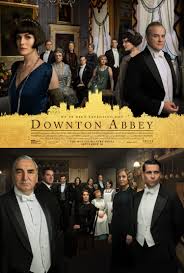
DOWNTON ABBEY: THE GRAND FINALE
UK, 2025, 125 minutes, Colour.
Michelle Dockery, Hugh Bonneville, Elizabeth McGovern, Joanne Froggatt, Paul Giamatti, Dominic West, Laura Carmichael, Phyllis Logan, Alessandro Nivola, Jim Carter, Penelope Wilton, Joely Richardson, Alan Leech, Robert James-Collier, Simon Russell Beale.
Directed by Simon Curtis.
The title says it all: Downton Abbey: The Grand Finale. But, Julian Fellowes, creator and writer of the series and the movies, invites us to watch it all. And, it is probably all that Downton Abbey audiences are hoping for.
It is 1930. The Great Depression as hit the United States and, because of Cora, Lady Grantham, American, there are repercussions of the Depression for Downton Abbey itself in the upstairs aristocracy that we have come to know as well as the downstairs servants whom we have also got to know very well. And, although divorce statistics have increased, they are not acceptable in the English upper-class. Lady Mary has filed for divorce, unacceptable, she is shunned, but her family and some of the shocked servants, as well as ourselves, are there to support her.
We are introduced to all the familiar characters, so many of them most getting older, especially Lord Grantham, some retiring. And, with the first part of the film set during the season in London, especially with buildings and billboards in Piccadilly Circus, the theatre season as well, we are immersed in the London experience, especially a visit to Bitter Sweet, Noel Coward’s play, and an introduction to Coward himself, many of his songs and lyrics throughout the film and, the presence of the playwright in London and a visit to Downton along with his star, played by Dominic West. In fact, Noel Coward is going to save the day several times throughout this drama - rehabilitating is Mary (and a wry joke about his play, Private Lives) and his brainwave for his play Cavalcade, seen as a potential investment!.
But, back to Downton, beautiful, sumptuous, the beautiful grounds, limbs and decor, grand dinners… As well as all the familiar faces downstairs and the bonds between those upstairs and downstairs, though, dining separately!
And there is the annual affair, the haughty president, quite misogynistic, what meetings, and the challenge from the new cook at Downton, spurred on by a defiant Lady Merton.
The main drama concerns Cora’s brother, Harry, played by Paul Giamatti, arriving at Downton to sort out their mother’s estate, and the revelation that he has lost money, but is accompanied by his grinning American financial adviser, played by Alessandro Nivola. Lady Mary is taken in by him – but we aren’t. And it takes a very striking sequence by Mary’s sister, Edith, talking very straight at him and unmasking him – all at the seasons races Ascot!
With the financial difficulties, Lady Mary is to take over Downton, her parents move aside, and of an era – and, we should mention, the portrait of Violet, glimpsed many times through the film and some footage from the past of Maggie Smith at her imperious best. This film is dedicated to her.
And, at the end, with the various farewells, and the focus on Lady Mary, she treats us to a whole range of her memories, the events of the past, vignettes of the various characters, meaning that this is a very nostalgic farewell.
The grandeur of Downton Abbey and the memories of its aristocratic and comfortable life are very seductive. Most of us surrender as we watch – but, it is seduction because most of us would be very uncomfortable were we invited in real life to Downton, our reaction to the manner and manners of the aristocratic class, the fact that most of us are quite egailitarian in our attitude to society.
At the end, it is almost as if we should start singing There’ll Always be an England. But history and reality reminds us that while this Downton life still continues, it is diminishing, but are still part of the dreams and fantasies of the 21st-century audience. So, the film was right in the final credits’ song is Noel Coward’s I’ll See You Again from Bitter Sweet.
(And for trivial pursuit aficionados, the link between director, Simon Curtis, and star, Elizabeth McGovern, is that they were married in 1993 and have two children.)
- The popularity of the television series and the various films over such a long period? And popular internationally?
- The settings, the Abbey, exteriors, the grounds, the lavish interiors, upstairs and downstairs? The contrast with the London sequences, flats in the city, the season in London in the late 1920s, early 1930s? And the American connections? The overriding presence of Maggie Smith, references, portraits?
- Audience familiarity with the main characters, the generations of characters, marriages? And American connections?
- The downstairs characters, butler, cook, various maids, companions, the details of life downstairs, the etiquette, the cooking, serving, the meals together downstairs? The accepted status quo?
- The establishing of the characters, the London sequences, the generation getting older, the next generation, financial issues, moves to London, selling properties? The reality of divorce, acceptable or not in British society, attitudes towards Lady Mary? At popular functions, criticisms, denunciations, her having to leave?
- Back at Downton Abbey, the financial situation, Robert and Cora, reluctance, decisions, the divorce situation, interactions with Mary? The possibility for moving? To London?
- Mary, the divorce, memories of her husband, working with her sister, the various connections and in-laws, discussions, support?
- Cora, her brother arriving, memories, funerals, financial issues? Harold bringing Gus, Gus and his American charm, the racing connections, his behaviour with Mary, the affair, Ascot, his horse, the revelations about his being a conman, taking in Harold, his being unmasked and ousted? Background of the Depression in the US and its consequences worldwide?
- The various complications with the downstairs characters, changes, retirements, audiences identifying with the range of characters?
- The local stories, Sir Hector and his hold over the socialising and organisations in the district, Isabel Merton, antagonism, the committee, her friendship with the cook, inviting her to be on the committee, the drama at the various meetings, the cook assertive? And the day itself, at the fair, the various competitions, rides and enjoyment, the crowds, and a comeuppance for Sir Hector?
- The theatre background, Noel Coward, the musical themes, his celebrity, playwright and his film connection, Noel Coward and his companion, the connection with Downton, all the organisation and secrecy to bring Noel Coward to Downton?
- Noel Coward, his arrival, downstairs, upstairs, his companion, able to move from upstairs to downstairs, the invitation to the staff to come upstairs, the symbolic changing of society in the 1930s? Howard and his influence, financial investment, and ideas for future plays?
- The farewell to Downton Abbey, Robert and Cora, Mary and her new responsibilities?
- The wide popularity of these characters and their situations – and, yet, audiences enjoying the fiction but critical of the class differences and realities?
Electric State, The

THE ELECTRIC STATE
US, 2025, 125 minutes, Colour.
Chris Pratt, Millie Bobby Brown, Woody Norman, Jason Alexander, Giancarlo Esposito, Ann Russo, Greg Cromer, Stanley Tucci, Holly Hunter, voices of: Woody Harrelson, Ke Huy Quan, Alan Tudyk, Anthony Mackie, Jenny Slate, Brian Cox, Hank Azariah, Colman Domingo, Kurt Loder.
Directed by Anthony Russo, Joe Russo.
There were high expectations for this big-budget action fantasy adventure, set in an alternate world in the 1990s. It was directed by the Russo Brothers who had moved from smaller popular films to three Captain America superhero epics and then to two Avengers adventures, Avengers Endgame registering the highest box office.
Then came this ambitious fantasy adventure, based on the graphic images by Simon Stalenhag, adapted by the Russo Bros regular writers for the Marvel Universe films. And a very strong cast of character actors led by Chris Pratt and Millie Bobby Brown and including Stanley Tucci, Woody Harrelson, Holly Hunter, Anthony Mackie, Brian Cox, Colman Domingo…
However, reviews were unfavourable and the film was not popular. However, there is much to appeal to audiences who like imaginative, futuristic fantasy adventures.
- The status of the film, the budget, the cast, the directors? Based on an illustrated novel? Pull critical response?
- The 1990s, the title, an alternate world history, humans versus robots? The title?
- The American cities, the war, the deserts and outposts? The musical score?
- Ethan Skate as hero and villain, his technology an empire, the robots, taking over the consciousness of human minds, the reaction of the humans, many living and vegetative life, rising up against the robots, the human victory, robots to the Exclusion Zone?
- 1994, Michelle, history of the crash and her parents, in foster homes, Ted and his lazy life, Michelle at school, not using AI technology for her work?
- Cosmo, the sense in robot, the TV character, Michelle’s brother, Christopher and his delight with Cosmo? Cosmo programmed with gestures, sounds, controlled by Christopher’s consciousness?
- The sense of mission, the encounter with Keats, his history, his character, offhand, soldier? The visit to Dr Amherst and his declaration the Christopher was dead?
- The adventure, the journey, the trek through the desert, Keats and is exploitations? The Exclusion Zone, home of the robot, Mr Peanut? Characters and voices?
- The confrontation with Skate, his character, presumptions, using Christopher and his mind and consciousness, the impact for humans, robots?
- The pursuit of Christopher, Col Bradbury, the deadly mission, candle Bradbury and is disillusioned with Skate, changing his attitude?
- Michelle, PC at the robots, the confrontation with skate’s Army? The role of Bradbury?
- Christopher, the explanation, his wanting to be disconnected, Michelle disconnecting? The further attacks, the attack on Herman, the smaller version?
- The aftermath, Christopher dying, Skate and his loss of control, arrest? Michelle and her explanation of what it happened? And the possibility of humans and robots and the Exclusion Zone in the future?
Come Closer

COME CLOSER
Israel, 2024, 107 minutes, Colour.
Lia Elaiouf, Darya Rosenn, Netta Garti, Ido Tako.
Directed by Tom Nesher.
While this is definitely an Israeli story, its themes and characters are universal. And, in many ways, it is quite disturbing.
We are introduced to an engaging young man, cycling, a momentary accident, and his being kidnapped – in fact, by his sister, for a rather wild beach party to celebrate his birthday. But, during the night he moves away in order to meet up with his girlfriend, a secret from his family. And, in a dire accident, he is killed.
While he does appear in some flashbacks, this is very much a film about his sister and her relationship with her brother. She is an intense personality, frequently alienating the audience, consumed by grief at her brother’s death, but in her interactions, with the family and friends, she makes the grief and the event all about her. She is eccentric, moody, conscious of her hair, colour and style, make up, appearance and impact, but hardly aware of the alienating behaviour she exhibits towards most people, her mother and father long divorced, some devotion to her father, impatience with her mother with whom she lives.
It would seem that brother and sister had a strong co-dependence – but, as it begins to be revealed, dependence on her part rather than his.
The main part of the action, now a psychological drama, a portrait of a young woman in self-centred distress, discovering her brother’s girlfriend, pursuing her, the girlfriend somewhat apprehensive, but the beginning of an association, some friendship, again the possibilities of mutual dependence.
This relationship certainly changes the young girlfriend and challenges her stability. And the relationship certainly changes the sister, medically, and sometimes melodramatically, forcing her to become self-aware as she discovers the truth about her brother, his plans, his relationship, and his secrecy from the rest of the family.
Very much in the atmosphere of Israel, the city of Tel Aviv and an excursion to the Sinai. But, the main locations are in the psyche of the central characters.
- An Israeli story? An international story? Relationships, intensity?
- The Israeli settings, the city of Tel Aviv, the countryside, the visit to Sinai, the coast? The musical score?
- The title, relationships, intensity, seduction, subjugation, self-assertion and reconciliation?
- The situation, Nati, on his bike, Not by the car, his arrest, abducted, his group of friends, on the beach, his birthday, the drinking, drugs, wild music and dancing, asleep, the intensity of his relationship with Eden? Her organising the celebration? His leaving during the night? His being killed in the accident? The visit to the hospital, his funeral?
- The focus on Eden, her age, her appearance, hair, make up, relationship with her mother, father, the divorce, long since, the argument about the house? Her seeing Maya at the funeral, wondering?
- The relationship between Nati and Eden, their parents’ divorce, their dependence, the pact, the effect on Nati, growing up, the secret relationship with Maya? Eden, keeping the pact, her jealousy, obsessions?
- The character of Eden, the relationship with Nati, possessive, self-centred, her narcissistic attitudes, sociopathic behaviour? Confronting Maya at the bowls, following her, her motivations?
- The character of Maya, the relationship with Nati, secrecy, her knowing about the family, confronted by Eden, the interrogation, her explanations, the exams and plans, at Eden upset at not knowing?
- The background of the discussions with her parents, not paying attention at the meeting, the issue of the house? Her relationship with each parent? Her father story about the naming of his restaurant?
- The meetings with Maya, Maya and her character, with her mother of the funeral, leaving, apprehensive about Eden, eventually the meetings, the discussions, confidentiality, meeting at the room, Eden and her putting on her brother’s clothes at the Shiva occasion? The tent and Maya’s gift, sitting in the tent, the collapse?
- The growing friendship, the meetings, mutual dependence? Maya relaxing? Decision to go to Sinai? The relationship, the intimacy, the kiss, the effect on Maya? Eden’s motivations? The episode with the young men, the dancing, Maya running away, affected by the kiss, puzzled? Loving Eden? The confrontation the water, Eden trying to drown Maya? Surviving, the return?
- The aftermath, the effect of all this on Eden, losing the make up, becoming ordinary, staying with her mother?
- The year anniversary, the gathering, the cemetery, Maya coming, the final talk, calm, the embrace, the future?
- The audience pondering what it happened to Eden and this character change and development? And with Maya?
Soda
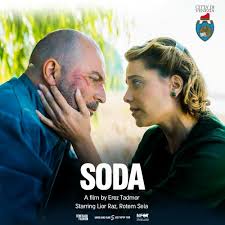
SODA
Israel, 2024, 96 minutes, Colour.
Lior Raz, Rotem Sela, Netta Shpigelman, Zohar Strauss.
Directed by Erez Tadmor.
Soda has two meanings for the film: it refers to the soda factory in Israel, the bottles containing the soda and their unreliability, open to explosions and injuries; and the Hebrew meaning is “her secret”, which refers to the war experience of one of the central characters, Eva.
There is a highly dramatic prologue to the film, Poland 1944, Nazi soldiers on patrol, their being caught in an ambush and killed by the local resistance – and the daughter of the central character, Esti, daughter of Shalom, tells the audience that this was the moment her mother first realised she was pregnant. Esti says she has no knowledge of this period of her initial life.
But, the action of the film is quite different, even though the memories surface frequently with some vehemence. It is the mid-1950s, a decade after the war and the resistance, refugees and migrants from Europe now living in security and some comfort and ease in Israel. It is six years plus after the establishment of the state of Israel.
On the one hand, there is the ordinary life of the town, homes and families, the streets and socialising, the soda factory. But, most of these people have experienced hardship, imprisonment and torture during the war. Tension still smoulder.
Immediately we see some trouble in the soda factory, Shalom in charge, the workers highlighting the danger of the fragile glass used for the soda – and, while the audiences may have forgotten about this, it re-emerges rather disastrously towards the end of the film.
In the meantime, we find that Shalom’s wife, who found some zest in life in the resistance, is now depressed, declining physically. She is dependent on her daughter. Her illness has taken its toll on Shalom’s emotions and, when an attractive widow and her young daughter arrive in the town, we see that he has a roving eye.
The affair is expected but what is not expected is the accusation that Eva was a kapo in the concentration camp, in Auschwitz, and she is denounced. There are, of course, many emotional repercussions, denunciation by the townspeople, a particular hatred by one of Shalom’s close friends from the resistance, Asher, who keep listening to radio programs about the finding of survivors of the camps. Rejected by Eva, he becomes a leader in her denunciation. His anger is further exacerbated by meeting with an associate from the past and learning the truth about his dead wife.
Audiences will find that their emotional response to the characters sometimes change throughout the film, some dislike and then sympathy, some sympathy and then some dislike…
While we have seen so many films about the Holocaust, this is a contribution to Israeli life post-Holocaust.
- The title, the soda factory, the Hebrew meaning of “her secret”?
- The prologue and tone, Poland, 1944, the Nazis, the resistance, the ambush on shooting? Esti and her comment about her mother discovering that she was pregnant? Esti knowing nothing of this life?
- Israel, the mid-1950s, the refugees from Europe, settlers, the town, the Orange Grove, the soda factory, the homes and the streets, restaurants, views of the sea? The musical score?
- The soda factory, Shalom and his work, the men gathering, the confrontation, the dangerous bottles, the explosion, the fight? Setting a tone?
- Shalom and his ground, leader of the resistance, support of the refugees? His work at the factory? At home, his wife, her emotional collapse, unwell? Esti at home, going to school, the atmosphere in the family?
- The other men, the Polish background, working in the factory? The focus on Asher, during the ambush? His work in the factory? His listening to the radio, searching for news of his wife, Shalom’s wife listening, her obsession with radio, Shalom and his disdain?
- The arrival of Eva, her daughter, in the opposite house, at the gathering, Shalom and his gaze, her response? Indications of what would happen? Asher, the attraction, wanting to marry? Going to visit, the bunch of flowers, asking her out, her refusal?
- The friendship between the two girls, their age, sharing, the beach…?
- Shalom and his attraction, finding occasions, visiting the house, at the factory, the sexual encounter?
- The visit to the restaurant, the discovery of Shalom’s cousin, his wife, marrying her in the concentration camp, Asher and his anger? Shalom organising the dinner, the cousin and his wife, the buildup to the confrontation, Asher and his anger, the revelation about the cousin’s present at Asher’s wife’s death? The later revelation that Shalom was present, his cousin disappeared, his recovering the bodies and burying them and the ritual?
- The cousin’s wife, identifying Eva as a kapo in the concentration camp? The denial? Shalom and his belief? Asher and his spreading the news, her being shunned, the attacks, the women in the bus, he were and her daughter? Shalom and his questioning her? The witness, denying that Eva was a kapo, Shalom going to her again, her wanting to give anyone a second chance?
- The tension, Shalom and his wife, her knowing what was happening, her going to the centre, listening to the radio, antagonising her roommate, the roommate breaking the radio, then their talking, the wife beginning to walk, her return home, intimacy with her husband? Support of her daughter?
- The crisis at the factory, the reliability of the bottles, the dangers, the bottle in the fridge, the explosion, Eva’s injuries, hospital?
- The move to 1957, the community, the message that he were was in Ausraltia and would welcome Shalom? His remaining at home?
Two Prosecutors Zwei Staatsanwälte
TWO PROSECUTORS/ Zwei Staatsanwälte
Germany, 2025, 117 minutes, Colour.
Alexander Kuznetzov, Anatolliy Velly, Aleksander Filippenko.
Directed by Sergey Loznitso.
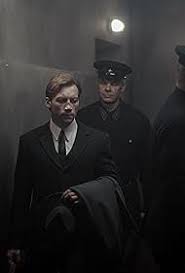
Watching Two Prosecutors is a very serious experience. The setting is Russia in 1937, 20 years after the revolution, well into the Stalinist era, an era of repressions as well as of social progress.
For the first hour of the film, the audience is immersed in a Soviet prison, vast buildings, concrete corridors and dingy cells, innumerable iron gates, locking and unlocking, stonefaced guards. And watching old men prisoners, one carrying a bundle of paper upstairs to be burnt, his looking at some of the contents, complaints against the authorities. He keeps one which has been written in blood. 12 minutes and the title of the film appears.
A young lawyer, recently graduated, appointed prosecutor for the area, arrives in the prison with the blood-written document, asking to see his client. The guards are hostile, blank hostile faces. The local authority makes the lawyer wait, eventually allows him to see the governor of the prison (who as been seen relaxing and joking with his subordinate). The governor has a spiel designed to block the lawyer, talking about infectious diseases amongst the prisoners, but eventually the lawyer standing his ground is allowed to see the prisoner.
Already, an atmosphere of paranoia which the audience shares, wary and suspicious like the prisoner himself, checking the lawyer’s credentials and finally believing him, revealing the many wounds on his body from beatings and torture, explaining the situation in the region, the uprising of the NKVD, the secret police agency, corrupt and undermining the ethos of the revolution.
After the hour, we are released with the lawyer, travelling by train with him to Moscow where he nods off despite the boisterous storytelling of an amputee former soldier and his quest to have an audience with the Lenin about his war pension. Certainly different pacing for the film from what has gone before, lively storytelling, the revolution from the point of view of an ordinary soldier – and while the lawyer nods off, we are attentive.
The lawyer makes every attempt to try to see the Prosecutor General, kept waiting, but finally able to explain his case, the Prosecutor General rather impassive, but finally giving the impression that he has listened to the lawyer and is sending him back home to investigate and bring evidence of the torture.
The lawyer is a good man, authentic, earnest in search for the truth, not nearly as suspicious of everyone as the audience has become by this stage. So, meeting two jovial men in the train home, some food, some drink, one playing guitar and singing, all seems to be well.
The lawyer does not anticipate what happens – but the audience most probably has.
A sombre opportunity to revisit Russia and the Soviet Union in the grim decade before World War II – and to reflect on the NKVD whose successor was the KGB, notorious over the decades, and a reminder that Vladimir Putin emerged from the KGB.
- The 1937 setting, 20 years after the revolution, the repressive Stalinist era? Looking back at Russia, the Soviet Union, hopes for the revolution, reactions, NKVD?
- The pace of the film, immersing the audience in the atmosphere and period, the first hour in the prison, the many gates and locks, unlocking the gates, the men on guard? The numbers in the prison, the atmosphere?
- The opening, the men in the yard, the old men coming out of their cells, the old man carrying the bag, up the stairs, burning the documents, his reading some of the documents, finding the document, written in blood? His keeping it?
- The transition to the young prosecutor, suit and tie, coat and hat, documents? His background, appointed prosecutor, three months after graduation, loyal Soviet, member of the Communist Party, but his integrity? His arrival, treatment by the authorities, asking to see the governor, his being kept waiting for hours, finally meeting the governor, the governors comments about the prisoner’s health, warning the lawyer off, his demanding to see his client? The long march to the corridor is, the outside yards, gates and locks?
- The prisoner, legal background, the lawyer remembering his talk at the University, believing him and his urging for truth? The prisoner, wary and suspicious, examining the documents, interrogating the lawyer? The guards, unlocking the cell, the squalid conditions, the prisoners health, showing the lawyer his wounds? His message, his explanation of the situation the district, the authentic revolution and memories of the past, the younger men, taking over, authority, not qualified, the role of the NKVD?
- The end of the interview, the guards confronting the lawyer, staring, his being allowed through? Urge to travel to Moscow?
- The sequence of the train ride, the crowded people in the carriage, the old man, no arm, no leg, the energy of his long story about his trying to see Lenin, dragging out the story, eventually the encounter with Lenin, finally get his pension? The questions from the others on the train, the range of characters? His prodding the lawyer, the lawyer falling asleep? An opportunity for the audience to hear something about the revolution from the ordinary old soldier’s point of view?
- Going to the Prosecutor General, his inexperience, waiting at the door, going upstairs, the encounter with the past fellow student and his enthusiasm, going to the reception, the discussion, the lawyer’s insistence, being allowed to wait?
- The long wait, his finally getting into the Prosecutor, given the limited time, presenting the document, explaining the situation, the Prosecutor General listening? Lawyer believing him – but the audience now sharing the paranoia, suspicions? The Prosecuter General giving him safe passage, the train ride, advice as to how to behave on returning?
- On the train, the jovial companions, engineers, the food, the drink, jovial, his sleeping? On arrival, getting the lift, the audience’s paranoia and suspicions about the two men, justified, the locked car, revealing their identities, arresting the lawyer? And the double-dealing of the Prosecutor General?
- The film finishing, the audience immersed in the period, and the uncertainties, paranoia, and judgements about this era in Soviet history?
Sorry, Baby
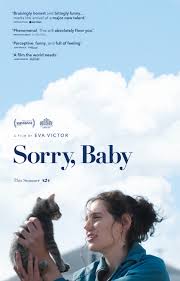
SORRY, BABY
US, 2025, 105 minutes, Colour.
Eva Victor, Noemi Acke, Louis Cancelmi, Lucas Hedges, John Carroll Lynch, Kelly McCormack, E.R.Fightmaster.
Directed by Eva Victor.
This is something of a demanding watch. It is often deadly serious. It is sometimes wryly comic. And, its audiences will not be surprised to learn that the writer-director, Eva Victor, born in Paris but moving with her parents as a child to the US, previously directed a television series, four episodes of Eva vs. Anxiety. Although her name is Agnes in this film, she is still victim as well as confronting anxiety.
This is a very frank film, focusing on identity, personality, relationships, sexuality.
Audiences have to be very alert as to the time sequences of the scenario. There are several headings indicating “The Year of…”. But, the screenplay moves around backwards and forwards during these title chapters, moving from one year sometimes back to another.
Agnes is an intellectual, participated in literature seminars and writing workshops, has completed a successful thesis, eventually offered an opportunity in the local college. In the past, she was a strong friend of Lidie (Noemi Ackie) who is seen eventually in a union with her partner, Fran, and their new baby. Also in the literature workshop is the insecure and jealous Natasha (Kelly McCormack), simmering with envy during classes, continually demanding attention.
And the attention demanded is that of the professor, Preston Dekker (Louis Cancelmi), praise for Agnes but soon becoming a sign of contradiction, Me Too# issues which take their toll on Agnes, compounding her anxieties, her loneliness, her need for affirmation, especially from a friendly neighbour, Gavin (Lucas Hedges).
This is definitely a film for women’s audiences, identification with Agnes, responses to Lidie, contrasting responses to Natasha, and a very interesting sequence where Agnes is called up for jury duty is and the prosecutor is caught up in a long discussion about Agnes’s state of mind and emotions. This contrasts with a sympathetic but unhelpful interview with College authorities.
And, one might also say, this is definitely a film for men’s audiences. Except for Gavin and the judge, the men, especially the professor and a doctor in a hospital sequence, a dramatised quite unsympathetically – challengingly for the male audience. But, unexpectedly towards the end, there is a pleasingly down-to-earth conversation between Agnes and Pete, an older man she encounters after pulling up in her car with a panic attack. His played by John Carroll Lynch and audiences, both men and women, will appreciate this sequence.
As might be expected, reviews and bloggers are divided about the impact of the film, some almost dismissing it as slight and self-indulgent or self pitying, others appreciating the raising of the male and female issues, and the handling of abuse.
But, and maybe this is something of a spoiler but worth saying, a final sequence where Agnes is left alone to mind the new born baby, holding her, talking to her, wonders aloud about her future and the world in which she will grow up, offers a very humane experience as Agnes says to the child, Sorry, Baby.
