Displaying items by tag: Lior Raz
Tuner

TUNER
Canada/US, 2025, 107 minutes, Colour.
Leo Woodall, Dustin Hoffman, Havana Rose Liu, Tovah Feldshuh, Lior Raz, Jean Reno, Herbie Hancock.
Directed by Daniel Roher.
In fact, there are two piano tuners, first, the young Niki, and second, the older Harry, veteran musician and tutor. Niki is played by Leo Woodall. And, the pleasure of seeing Dustin Hoffman as Harry. His is a cameo role but, in the minds of the filmmakers, his cameo is really a homage to him and his career (and, at the hospital, when asked the details of his life, the birthdate given is Dustin Hoffman’s actual birthdate).
But, Tuner begins with the characters in quite some difficulties. Niki, a young talented musician with perfect pitch, suffers from hyperacusis, finding loud noises intolerable, his having two years of therapy to try to adjust his hearing, having to wear earplugs. But, he is an expert tuner. Harry is his mentor, an old friend of Niki’s father, but his difficulty is age, also he can be very cheeky to everyone, but hospitalised and finding that he has not been keeping up his insurance payments.
Which offers the setting for something of a thriller and, when Niki encounters Ruthie (Hayley Rose Liu), a highly determined musician and composer, working on her piano, and egged on by Harry, the film is also a pleasant romance.
When Niki encounters a group of security guards one night when he is tuning a piano at the house of a wealthy client, it turns out that he has a skill in hearing the sounds as he unlocks safes. Not too unpredictable to work out what is about to happen. Our sympathies are with Niki and with Harry and his wife Maria (Tovah Feldshuh). And sympathies also with the payoffs that the security guards who target the owners of the homes they guard, just stealing enough to not draw attention to what they are up to. But, course, it can’t last. Ambitious criminals hire lower criminals to do their dirty work and a buildup to some dramatic confrontations.
In the meantime, Ruthie is working, often desperately, on her composition, intense in rehearsals, yet falling in love with Niki, it’s all building up. of course, to a dramatic conclusion and, a twist of fate in bringing the safecracking to an unexpected/expected conclusion.
New York setting, sympathetic characters, the real Herbie Hancock turning up at Harry’s funeral, and quite a lot of music, popular and concert performance throughout the film for an enjoyable thriller/romance.
- The two tuners? Niki, memories of his father, working with Harry, Harry his mentor? The scenes of piano tuning, the skills, the sounds of the piano as a whole?
- The New York setting, apartments, wealthy homes, diners, the music school, the auditorium? The safes, the safe breaking? The Maestro, his office, his home, the future? Hospital, recovery, Niki’s final play?
- Niki, his age, the past, musician, hyperacusis, the impact of noise, his two years’ therapy, his wearing of earplugs? His pitch perfect work on the pianos? Demonstrating it? Seeing him at work, thorough? The interaction with clients? The bond with Harry, at home, with Maria, at the bar, Harry urging him on with Ruthie? Harry, the collapse, the visits to the hospital? Trying to support Maria?
- The encounter with Ruthie, student, composer, her ambitions, energy, skills? The piano tuning, interactions with Niki? At the bar, carrying her books, walking her home? Influence of Harry? The gradual bonding between them, conversations, the music, her composing, practice, open to be employed by the Maestro? Falling in love? The visits to Harry? The intensity of the relationship, the clash, Ruthie and the composition, Niki’s suggestions, the falling out, the actual recital, Maria present, Niki absent, success, the Maestro, the watch, her approaching Niki?
- Harry, tribute to Dustin Hoffman, personality, the past, musician, tuner, his death, the gathering, actual Herbie Hancock present?
- Niki, the encounter with the security guards, interactions, his hearing, able to open safes? Their employing him, his moral dilemma, the money for Maria, the collage of opening the safes, the boss and his associates, Benny and the dog? The money, banking it for Maria? The thieves and their taking smaller items, items the owners would not notice missing?
- The Korean gang, employing the security guards, their getting Niki, his refusal, the violence and pressure, success, the uncle arriving, forcing Niki to swallow the code? The later able to revive the code? The violence? Benny shooting?
- The staging of the recital, Ruthie’s skill, the musicians, the Maestro, meeting her?
- Niki, the violence, the hospital, his running to the recital, late? The issue of the watch, discussions with the Maestro, Ruthie working for him, his going to the game, recovering the watch and giving it back?
- His recovery, the effect on his hearing, having to Ruthie again, his performance, Tenderly, his achievement? The future? And his comment that E flat was out of tune?
Soda
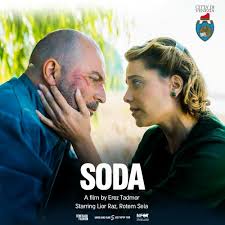
SODA
Israel, 2024, 96 minutes, Colour.
Lior Raz, Rotem Sela, Netta Shpigelman, Zohar Strauss.
Directed by Erez Tadmor.
Soda has two meanings for the film: it refers to the soda factory in Israel, the bottles containing the soda and their unreliability, open to explosions and injuries; and the Hebrew meaning is “her secret”, which refers to the war experience of one of the central characters, Eva.
There is a highly dramatic prologue to the film, Poland 1944, Nazi soldiers on patrol, their being caught in an ambush and killed by the local resistance – and the daughter of the central character, Esti, daughter of Shalom, tells the audience that this was the moment her mother first realised she was pregnant. Esti says she has no knowledge of this period of her initial life.
But, the action of the film is quite different, even though the memories surface frequently with some vehemence. It is the mid-1950s, a decade after the war and the resistance, refugees and migrants from Europe now living in security and some comfort and ease in Israel. It is six years plus after the establishment of the state of Israel.
On the one hand, there is the ordinary life of the town, homes and families, the streets and socialising, the soda factory. But, most of these people have experienced hardship, imprisonment and torture during the war. Tension still smoulder.
Immediately we see some trouble in the soda factory, Shalom in charge, the workers highlighting the danger of the fragile glass used for the soda – and, while the audiences may have forgotten about this, it re-emerges rather disastrously towards the end of the film.
In the meantime, we find that Shalom’s wife, who found some zest in life in the resistance, is now depressed, declining physically. She is dependent on her daughter. Her illness has taken its toll on Shalom’s emotions and, when an attractive widow and her young daughter arrive in the town, we see that he has a roving eye.
The affair is expected but what is not expected is the accusation that Eva was a kapo in the concentration camp, in Auschwitz, and she is denounced. There are, of course, many emotional repercussions, denunciation by the townspeople, a particular hatred by one of Shalom’s close friends from the resistance, Asher, who keep listening to radio programs about the finding of survivors of the camps. Rejected by Eva, he becomes a leader in her denunciation. His anger is further exacerbated by meeting with an associate from the past and learning the truth about his dead wife.
Audiences will find that their emotional response to the characters sometimes change throughout the film, some dislike and then sympathy, some sympathy and then some dislike…
While we have seen so many films about the Holocaust, this is a contribution to Israeli life post-Holocaust.
- The title, the soda factory, the Hebrew meaning of “her secret”?
- The prologue and tone, Poland, 1944, the Nazis, the resistance, the ambush on shooting? Esti and her comment about her mother discovering that she was pregnant? Esti knowing nothing of this life?
- Israel, the mid-1950s, the refugees from Europe, settlers, the town, the Orange Grove, the soda factory, the homes and the streets, restaurants, views of the sea? The musical score?
- The soda factory, Shalom and his work, the men gathering, the confrontation, the dangerous bottles, the explosion, the fight? Setting a tone?
- Shalom and his ground, leader of the resistance, support of the refugees? His work at the factory? At home, his wife, her emotional collapse, unwell? Esti at home, going to school, the atmosphere in the family?
- The other men, the Polish background, working in the factory? The focus on Asher, during the ambush? His work in the factory? His listening to the radio, searching for news of his wife, Shalom’s wife listening, her obsession with radio, Shalom and his disdain?
- The arrival of Eva, her daughter, in the opposite house, at the gathering, Shalom and his gaze, her response? Indications of what would happen? Asher, the attraction, wanting to marry? Going to visit, the bunch of flowers, asking her out, her refusal?
- The friendship between the two girls, their age, sharing, the beach…?
- Shalom and his attraction, finding occasions, visiting the house, at the factory, the sexual encounter?
- The visit to the restaurant, the discovery of Shalom’s cousin, his wife, marrying her in the concentration camp, Asher and his anger? Shalom organising the dinner, the cousin and his wife, the buildup to the confrontation, Asher and his anger, the revelation about the cousin’s present at Asher’s wife’s death? The later revelation that Shalom was present, his cousin disappeared, his recovering the bodies and burying them and the ritual?
- The cousin’s wife, identifying Eva as a kapo in the concentration camp? The denial? Shalom and his belief? Asher and his spreading the news, her being shunned, the attacks, the women in the bus, he were and her daughter? Shalom and his questioning her? The witness, denying that Eva was a kapo, Shalom going to her again, her wanting to give anyone a second chance?
- The tension, Shalom and his wife, her knowing what was happening, her going to the centre, listening to the radio, antagonising her roommate, the roommate breaking the radio, then their talking, the wife beginning to walk, her return home, intimacy with her husband? Support of her daughter?
- The crisis at the factory, the reliability of the bottles, the dangers, the bottle in the fridge, the explosion, Eva’s injuries, hospital?
- The move to 1957, the community, the message that he were was in Ausraltia and would welcome Shalom? His remaining at home?
