Displaying items by tag: Paul Giamatti
Downton Abbey: The Grand Finale
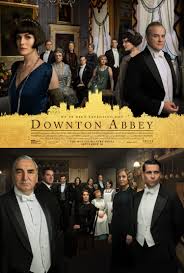
DOWNTON ABBEY: THE GRAND FINALE
UK, 2025, 125 minutes, Colour.
Michelle Dockery, Hugh Bonneville, Elizabeth McGovern, Joanne Froggatt, Paul Giamatti, Dominic West, Laura Carmichael, Phyllis Logan, Alessandro Nivola, Jim Carter, Penelope Wilton, Joely Richardson, Alan Leech, Robert James-Collier, Simon Russell Beale.
Directed by Simon Curtis.
The title says it all: Downton Abbey: The Grand Finale. But, Julian Fellowes, creator and writer of the series and the movies, invites us to watch it all. And, it is probably all that Downton Abbey audiences are hoping for.
It is 1930. The Great Depression as hit the United States and, because of Cora, Lady Grantham, American, there are repercussions of the Depression for Downton Abbey itself in the upstairs aristocracy that we have come to know as well as the downstairs servants whom we have also got to know very well. And, although divorce statistics have increased, they are not acceptable in the English upper-class. Lady Mary has filed for divorce, unacceptable, she is shunned, but her family and some of the shocked servants, as well as ourselves, are there to support her.
We are introduced to all the familiar characters, so many of them most getting older, especially Lord Grantham, some retiring. And, with the first part of the film set during the season in London, especially with buildings and billboards in Piccadilly Circus, the theatre season as well, we are immersed in the London experience, especially a visit to Bitter Sweet, Noel Coward’s play, and an introduction to Coward himself, many of his songs and lyrics throughout the film and, the presence of the playwright in London and a visit to Downton along with his star, played by Dominic West. In fact, Noel Coward is going to save the day several times throughout this drama - rehabilitating is Mary (and a wry joke about his play, Private Lives) and his brainwave for his play Cavalcade, seen as a potential investment!.
But, back to Downton, beautiful, sumptuous, the beautiful grounds, limbs and decor, grand dinners… As well as all the familiar faces downstairs and the bonds between those upstairs and downstairs, though, dining separately!
And there is the annual affair, the haughty president, quite misogynistic, what meetings, and the challenge from the new cook at Downton, spurred on by a defiant Lady Merton.
The main drama concerns Cora’s brother, Harry, played by Paul Giamatti, arriving at Downton to sort out their mother’s estate, and the revelation that he has lost money, but is accompanied by his grinning American financial adviser, played by Alessandro Nivola. Lady Mary is taken in by him – but we aren’t. And it takes a very striking sequence by Mary’s sister, Edith, talking very straight at him and unmasking him – all at the seasons races Ascot!
With the financial difficulties, Lady Mary is to take over Downton, her parents move aside, and of an era – and, we should mention, the portrait of Violet, glimpsed many times through the film and some footage from the past of Maggie Smith at her imperious best. This film is dedicated to her.
And, at the end, with the various farewells, and the focus on Lady Mary, she treats us to a whole range of her memories, the events of the past, vignettes of the various characters, meaning that this is a very nostalgic farewell.
The grandeur of Downton Abbey and the memories of its aristocratic and comfortable life are very seductive. Most of us surrender as we watch – but, it is seduction because most of us would be very uncomfortable were we invited in real life to Downton, our reaction to the manner and manners of the aristocratic class, the fact that most of us are quite egailitarian in our attitude to society.
At the end, it is almost as if we should start singing There’ll Always be an England. But history and reality reminds us that while this Downton life still continues, it is diminishing, but are still part of the dreams and fantasies of the 21st-century audience. So, the film was right in the final credits’ song is Noel Coward’s I’ll See You Again from Bitter Sweet.
(And for trivial pursuit aficionados, the link between director, Simon Curtis, and star, Elizabeth McGovern, is that they were married in 1993 and have two children.)
- The popularity of the television series and the various films over such a long period? And popular internationally?
- The settings, the Abbey, exteriors, the grounds, the lavish interiors, upstairs and downstairs? The contrast with the London sequences, flats in the city, the season in London in the late 1920s, early 1930s? And the American connections? The overriding presence of Maggie Smith, references, portraits?
- Audience familiarity with the main characters, the generations of characters, marriages? And American connections?
- The downstairs characters, butler, cook, various maids, companions, the details of life downstairs, the etiquette, the cooking, serving, the meals together downstairs? The accepted status quo?
- The establishing of the characters, the London sequences, the generation getting older, the next generation, financial issues, moves to London, selling properties? The reality of divorce, acceptable or not in British society, attitudes towards Lady Mary? At popular functions, criticisms, denunciations, her having to leave?
- Back at Downton Abbey, the financial situation, Robert and Cora, reluctance, decisions, the divorce situation, interactions with Mary? The possibility for moving? To London?
- Mary, the divorce, memories of her husband, working with her sister, the various connections and in-laws, discussions, support?
- Cora, her brother arriving, memories, funerals, financial issues? Harold bringing Gus, Gus and his American charm, the racing connections, his behaviour with Mary, the affair, Ascot, his horse, the revelations about his being a conman, taking in Harold, his being unmasked and ousted? Background of the Depression in the US and its consequences worldwide?
- The various complications with the downstairs characters, changes, retirements, audiences identifying with the range of characters?
- The local stories, Sir Hector and his hold over the socialising and organisations in the district, Isabel Merton, antagonism, the committee, her friendship with the cook, inviting her to be on the committee, the drama at the various meetings, the cook assertive? And the day itself, at the fair, the various competitions, rides and enjoyment, the crowds, and a comeuppance for Sir Hector?
- The theatre background, Noel Coward, the musical themes, his celebrity, playwright and his film connection, Noel Coward and his companion, the connection with Downton, all the organisation and secrecy to bring Noel Coward to Downton?
- Noel Coward, his arrival, downstairs, upstairs, his companion, able to move from upstairs to downstairs, the invitation to the staff to come upstairs, the symbolic changing of society in the 1930s? Howard and his influence, financial investment, and ideas for future plays?
- The farewell to Downton Abbey, Robert and Cora, Mary and her new responsibilities?
- The wide popularity of these characters and their situations – and, yet, audiences enjoying the fiction but critical of the class differences and realities?
Holdovers, The
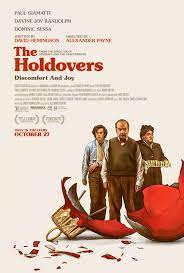
THE HOLDOVERS
US, 2023, 133 minutes, Colour.
Paul Giamatti, Dominic Sessa, Da' Vine Joy Randolph, Carrie Preston.
Directed by Alexander Payne.
In the long ago good old days, students who didn’t go home for the holidays were described as “staying back”. The Staybackers doesn’t sound like a very good title for a movie. The American, Holdovers, sounds better.
The Holdovers has been nominated for many awards, Paul Giamatti winning a Best Actor Golden Globe, and, not surprisingly when we watch the film, Da’Vine Joy Randolph has won more than a dozen Best Supporting Actress awards.
The setting is 1970, one of those elite boys boarding schools, perhaps not too far from the school in Dead Poets Society. But, the boys we are to look at here have no great yen for learning, let alone poetry. And, the teacher we focus on, Paul Hunham, played with fascinating complexity by Paul Giamatti, might have shared the ideals of Robin Williams’ creative teaching, but has almost given up long since.
Perhaps a better comparison with teachers in the film world might be a Goodbye Mr Chips variation.
When we know that some of the students can’t go home for the Christmas break and that the obsequious Headmaster (currying favour with financial donors) asks Mr Hunham to be responsible for the holdovers, two weeks, we are not surprised at some of the turn of events. However, there really are some very surprising turns of events which keep us attentive, even to the ending.
The screenplay was written by David Hemingson who has had long experience writing for television. It is often slick, smart, sarcastic and ironic. But, at its core, there is heart. And direction is by Alexander Payne, a strong reputation with films like Sideways, The Descendants (and his high school drama about an ambitious young student clashing with her teacher, Election).
The thing is that Mr Hunham is a reclusive grump, a love for ancient civilisations and the ability to quote and refer to Roman and Greek characters. The students dislike him intensely. And, it would seem, he doesn’t like himself all that much. The main student, holdover, is Angus, played by Dominic Sessa, 17, surly, expelled from previous schools, abandoned for the holidays by his mother and her new husband. As expected, lots of clash.
The other principal character is the cook, Mary, Da’ Vine Joy Randolph, whose son, an African-American exception student at the school, has just been killed in Vietnam. She is a strong character. She is a shrewd character. And, sometimes, she is a facilitator between teacher and student.
As the film goes on, we are reminded that we are often very secretive about our lives. Gradually, we do learn a lot about Mr Hunham, sadly. And we learn more about Angus, especially in the ever more intense interactions between the two. They are not heroes of the film. They are not villains. There is something of both, especially, to our surprise, as more truth is told – and, altruistically, non-truth is told.
It is good to see Paul Giamatti back on the big screen after so much television (84 episodes of Billions). He is one of the US’s best versatile actors.
- The title? The elite schools, the staff, the students, gatherings, religious dimensions, prayer, the breaks?
- The 1970, the background of the Vietnam war, the changes during the 1960s, rebellion, criticisms, student attitudes towards staff?
- The school, the grounds, the interiors, hall, chapel, corridors, kitchen? Classrooms? Student accommodation? Mr Hunham’s apartment?
- The visit to Boston, the city, cinema, restaurant, mental institution? The musical score?
- Films about unpopular teachers? Goodbye Mr Chips? Audience anticipating some kind of reconciliation by the end?
- Paul Giamatti, as a teacher, his manner, gruff, condescending to the students, demanding, quoting the classics, disliked? The gradual revelation of his story, studies, Harvard, accusations, rivals, his career, saved by the headmaster, at the school, staying for 20 years and more, settling into routine, no relationships, his drinking, embittered?
- The headmaster, helping students to universities, their low grades, financial donations? The teacher excusing himself for winter supervision? Mr Hunham having to take over? Unwilling?
- The prayer, the ethos of the school, the priest? The students going for the break? Mr Hunham and his class, the failed assignments, Angus and his smart comments, the demand for study during the break? The holdovers? The gathering, the Korean boy and his loneliness, the Mormon boy and his being proper, the racist boy and his attitudes, antagonism towards Angus? The sportsman, genial, his father coming to get him? The father taking all the boys except Angus?
- Angus, age, background, expelled from schools, the story of his dead father, his mother, remarrying, antagonism towards his stepfather, promise of the Caribbean holiday, denial, the honeymoon instead? His resentment at staying back?
- The interactions with the holdovers, studies, discipline, work in the snow? Angus, verbal bitterness, insulting Mr Hunham, the accommodation, the study?
- Mary, her son dead in Vietnam, grief, her work in the kitchen, supervising, staying back during the break, her personality, interactions with Mr Hunham, with Angus? Assessing them well? The story of her son, African-American, able to study at the school? Portrait, remembrance at assemblies?
- The meals, Mr Hunham and Angus, Mary joining? The Christmas atmosphere?
- The challenges to Mr Hunham, the issue of truth and lies, the ethos of the school? Mr Hunham finally telling his true story after the encounter with his rival from the past? Angus and his lies about his father?
- The challenge for going to Boston, justifying it as a field trip, the regulations, the two going together, the experience in Boston, Angus and his exhilaration, freedom, going to see Little Big Man, his escaping from the cinema, Mr Hunham following, going to the institution, the truth about his father, the sadness of his father’s mental deterioration, paranoia about his food being poisoned? The effect on Angus?
- Truth telling, enjoyment of the time in Boston, eating together, the buying of the tree? Gifts? Mr Hunham giving the same classic book?
- The final confrontation, the headmaster, the parents coming, the story of Angus’s father and his being upset, the interview with Mr Hunham, his taking on the responsibility for the outing, complete responsibility, his being fired?
- Angus saved, uses of truth and lies, Mr Hunham wanting to give Angus a chance in life, to stay at the school, not to have to go to the military academy?
- The two central characters – heroes, part villains? The humanity of this film?
